|
Sherwood Archer Article
Tualatin River National Wildlife Refuge Complex – Planting and Community
By Natalie Balkam, Park Ranger
With 2021 at a close, the Tualatin River National Wildlife Refuge saw the near completion of a years-long endeavor – the Chicken Creek Restoration project. It is exciting to be able to look back at the work – see the water flow through the excavated creek channel, the plants thriving with new leaves, or raptors perching on the large woody debris. Between the years of planning and labor, it was a significant effort to accomplish. Now that the project work is nearly completed, it will require the continued efforts from many community members and partners.
Connecting the community to the project is a key element in this work – while so much has been done to positively alter the landscape, in order for this restoration to be long term and effective, it needs to be a living, breathing organism, drawn from, and supported by an engaged community. Much like the success in establishing Tualatin River as a National Wildlife Refuge was dependent on community advocacy, the project needs the support and authentic belief from the community that this work is important and worth investing in. But this connection won’t happen unless they are directly involved in the work – one example is the role of service events such as plantings. While restoration work parties are only a small slice of the pie in conservation, it nonetheless demonstrates a clear example of the bridge between restoration and community.
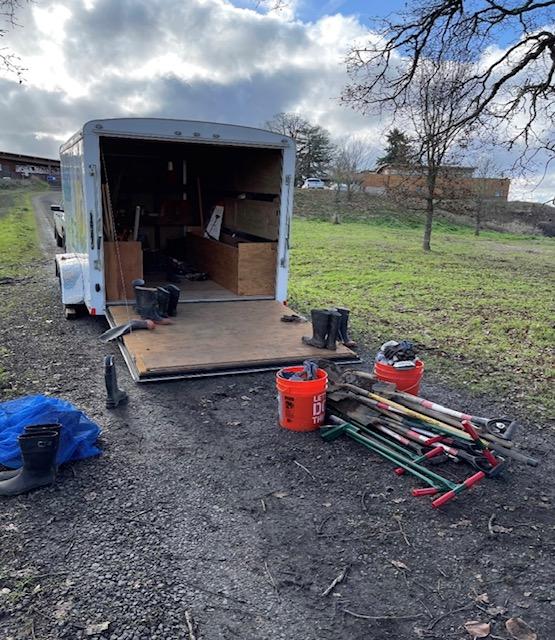
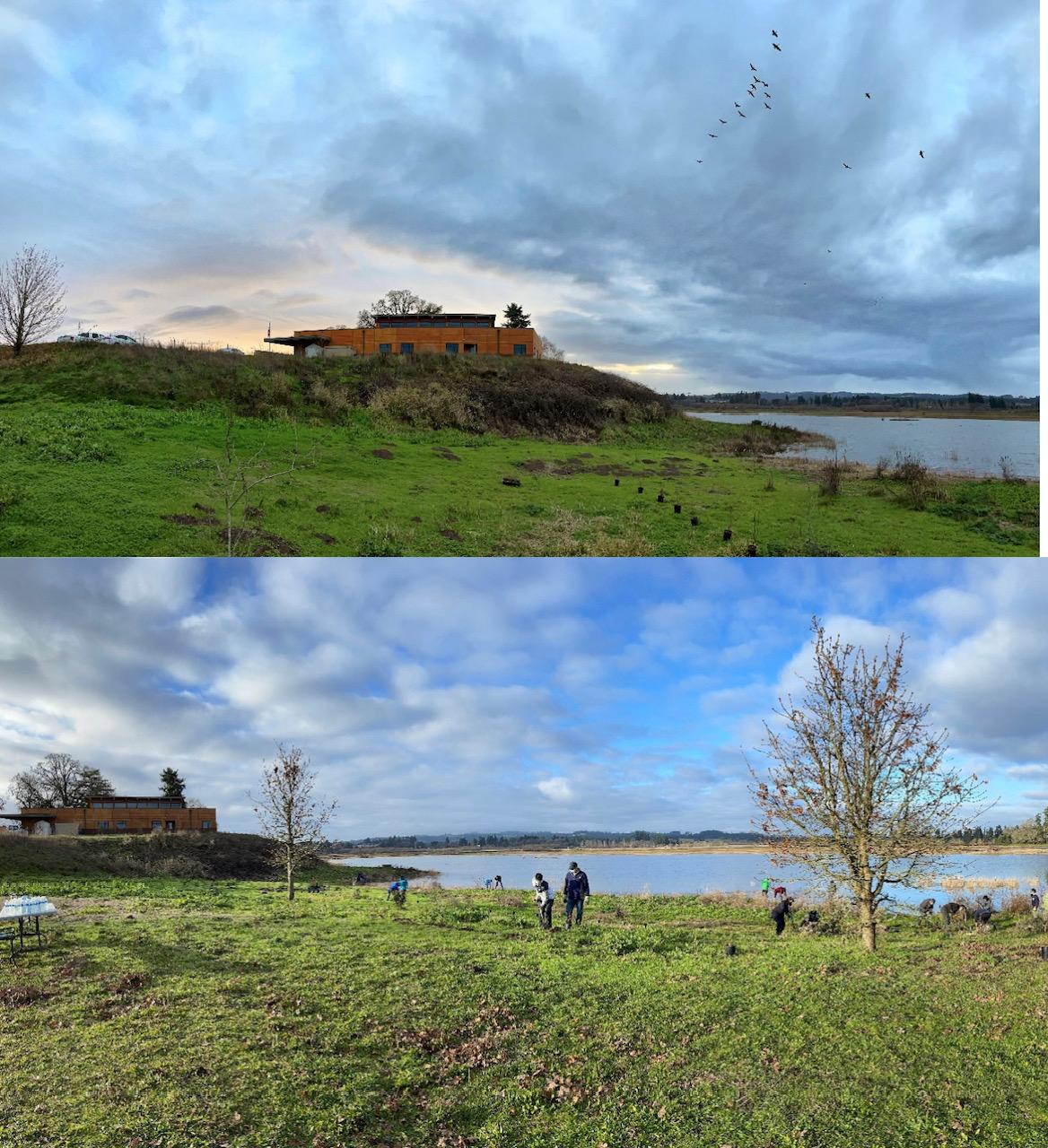
The refuge hosted a total of three community plantings in the restoration area; two for planting woody shrubs and one planting for a listed threatened species in Oregon, Nelson’s checkermallow. The plantings contrasted each other in many ways (the checkermallow planting occurred on a very wet and cold December day, while the shrub plantings were on sunny and clear days), but nonetheless, we were able to get all of the intended plants in the ground. The rain poured, the sun was bright, geese flew overhead, and salamanders were found crawling around in the soil. Ultimately, all plantings were very successful – most of the planted shrubs reemerged the next season, and many new checkermallow plants came up, as a result of the planting and seeding efforts. All were very memorable days, not just because of the weather, but because of the volunteers who came out. Events such as these not only benefit the refuge biologically, but do important work to build community and connection. It provides people with the opportunity to feel empowered in their ability to participate in conservation and to make a difference. Oftentimes, I think people see restoration as something that happens separate from them – inaccessible. But using a shovel to dig out a spot for a shrub, or cutting through a thicket of blackberry is physical and visceral. However, it is beyond feeling rewarded for these positive results - it is the feeling of responsibility and respect for the land as you tend to it.
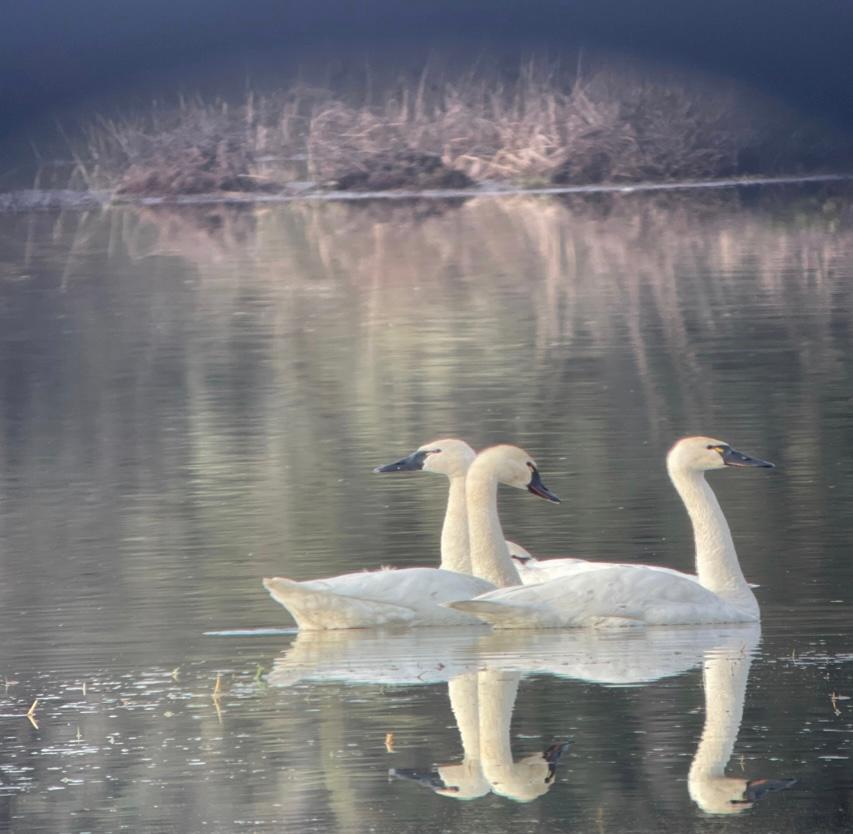
While the refuge provides necessary habitat for wildlife, without visitors and community, we are just a place; we need to be a resource and a point of connection for people to the outdoors. In order for conservation to “work” it needs to be supported by communities built on that connection. Restoration projects such as Chicken Creek provide important opportunities for the public to be engaged in positive transformation, and work such as plantings are both real and visible evidence of community restoration. Restoration is an appropriate metaphor for necessary change; as work on the Chicken Creek Restoration project nears the end, there is an opportunity for both reflection and projection to the future. While more work lies ahead to steward Chicken Creek, these community efforts represent an optimistic preview of restoration at the refuge.
To join our restoration efforts, please visit our website at fws.gov/refuge/tualatin_river or send an email to tualatinriver@fws.gov to be placed on a contact list.
|