|
The Corresponder
The Newsletter of the Committees of Correspondence for Democracy and Socialism
| |
|
Fear is Our Best Hope: Moving From
Climate Anxiety to Climate Action.
January 27th 8pm EST
Register: https://us02web.zoom.us/meeting/register/-BeF1EE3R4-YCsci1GKcMQ
Honest climate change education is scary. We have a moral obligation to be honest in our efforts. Fear and the associated emotion, anger, are motivational but they can also paralyze. How can we get the dosing right? How can we manage our emotions to fuel action and stay mentally healthy?
| |
|
Don’s work in public outreach, teacher education, teacher professional development and curriculum materials development marries deep understandings of how people learn with deep understandings of the Earth system. He is a past president of the National Association of Geoscience Teachers, and a nationally regarded expert in climate and energy education, place-based and technology-rich Earth and environmental science education.
He also is co-author of the books, The Teacher-Friendly Guide to Climate Change and The Science Beneath the Surface: A Very Short Guide to the Marcellus Shale.
| |
|
In Don's words: Fear and anger are fundamental to why I have worked in climate change and energy education for decades. I know hundreds of scientists, educators, and activists working to address the climate emergency. I have discussed fears with scores of them and all of them have acknowledged that fear is a part of what motivates them to do the work.
Fear and anger at the appropriate dosage, makes us get busy.
Fear and anger can also be brought to bear on the state of climate change education. Ask any young person today if they have received the climate change education that they want and deserve and almost universally you will hear that no, they have not. If they have learned about climate change in depth, this has typically occurred outside of the classroom. Many of them are furious about this situation and some are working to change that. Though I am not young, I join them in furiousness and in their action.
This is an argument for courage, not for doom and gloom. It jeopardizes mental health to either misinform learners or to obscure the scientific consensus about climate change. To knowingly do so is both unethical and ultimately proves to be transparent.
Fear and anger are natural and healthy responses to threats. These emotions have also changed history. Fear and anger led the Allies to take up arms against the Nazis. Fear and anger led to the Clean Air and Clean Water Acts. It was fear that led Ronald Reagan to initiate nuclear arms reduction. It was fear that led to the Montreal Protocols.
Ironically, teaching with a focus on optimism lacks empathy though it is likely inspired by empathy. Empathy has always been an integral part of good teaching. The existential crisis we face amplifies its importance. The best way to address anxiety and depression is to work on the problems driving these emotions and to ideally do so in community. I will address the balancing of emotions and employ strategies in the session that will bring fear, anger, and joy and hopefully build courage along the way.
Register now.
| |
|
Danny Rosenberg
January 11, 2025
Portside
Mark Ira Solomon – historian, author, teacher, organizer, and socialist – passed away December 19, 2024, at the age of 92.
,
Mark Ira Solomon – historian, author, teacher, organizer, and socialist – passed away December 19, 2024, at the age of 92. He was predeceased in 2023 by his wife and closest companion Pauline Sarelakos Solomon, and his son David in Berlin in 2015. He is survived by his son Bill, nephew Jeff Shapiro and his family, and many loving cousins. They include Nora Lester Murad, her husband Hani, and their daughters Serene, Jassi, and Maysanne. The daughters considered Mark and Pauline as their Boston grandparents.
Mark and Pauline fearlessly fused the progressive legacies of Jewish and Greek activism. Mark Grew up in the predominantly Black community of Bedford-Stuyvesant in Brooklyn. Mark attended Public School 35 at the corner of Fulton Street and Utica Avenue, a reputed “problem school” where “Lift Every Voice and Sing” was a school anthem. He graduated from Franklin K. Lane High School. There was a strong Left presence in the community, exposing him to movements and public figures for racial equality and peace, most notably Party leader James W. Ford. Communist and American Labor Party sound-trucks often drove through the neighborhood, while soapbox orators challenged the anti-Communist Smith Act.
In this setting, Mark began his first political involvement. He would encounter such important African American figures in New York as Benjamin J. Davis, Paul Robeson, Lorraine Hansberry, John Oliver Killens, Douglass Turner Ward, Esther Cooper Jackson and James E. Jackson. A close follower of jazz, Mark approached Charlie Parker to endorse Du Bois and heard Miles Davis perform for the Labor Youth League.
In the 1940s and 50s, Mark was an active participant in the American Youth for Democracy and the Labor Youth League, where he met Pauline. That was despite the United States Attorney General denouncing the American Youth for Democracy as subversive.
Mark circulated the Stockholm Peace Appeal to ban nuclear weapons, initiated by the World Peace Council despite condemnation of the appeal by the State Department and the labeling of the council as a “Soviet-inspired” communist front by the Central Intelligence Agency. Undeterred, Mark stumped in for leftist scholar W.E.B. Du Bois in the latter’s 1950 U.S. Senate campaign in New York. Mark gathered signatures for the “We Charge Genocide” petition decrying oppression of African Americans.
The petition was presented to the United Nations by its author, William L. Patterson, head of the Civil Rights Congress, and the courageous actor, singer and athlete Paul Robeson. DuBois was a signatory to that petition.
Dismissed from the military for refusing to sign a loyalty oath, Mark sued and won his GI Bill tuition benefits. He went on to earn a bachelor’s degree in history from Wayne State University in Detroit and a master’s degree in history at the University of Michigan.
The Solomons lived in Detroit from the mid-1950s to the early 1960s. While there, Mark worked with union activist Coleman Young, who would eventually become the city’s first African American mayor. The Solomons moved to eastern Massachusetts in 1963. In 1967, he began teaching at Simmons College in Boston. He was active in a host of progressive peace movements in Massachusetts, and a prime mover for the Massachusetts leg of Shirley Chisholm’s 1972 run for president. He met with her on numerous occasions and chairing local rallies. Chisholm had working relationships with the Left going back to the 1950s. Later in life, Mark recalled her as “magnetic” and “warm,” without “a trace of pretense.
Along with later New York mayor David Dickinson and Congressmember Yvonne Brathwaite Burke, he recorded an oral history of Chisholm for the Hutchins Center.
In the 1970s and 80s, Mark was a founding member and co-chair of the U.S. Peace Council, an editor of the magazine Labor Today, and a founding leader of the Committees of Correspondence for Democracy and Socialism, which emerged from the exodus of more than a thousand people from the Communist Party USA in 1992. He worked closely with many well-known people, among them the late former Mayor of Berkeley, California, Gus Newport, and the longtime leader of the Committees of Correspondence, Charlene Mitchell.
| |
|
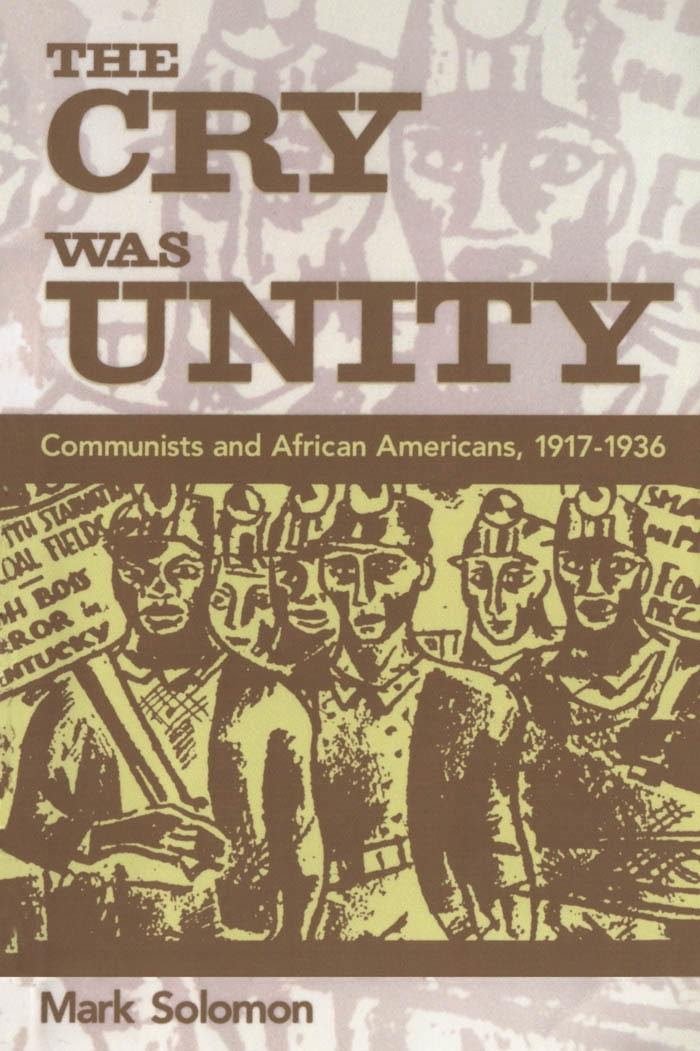
An accomplished scholar, Mark’s most noteworthy work was The Cry Was Unity, a study of the Communist Party USA’s work with and relationship to movements for African American equality. At times, The Cry was Unity includes Mark’s autobiographical reflections. Decades of research flowed into his book as he traced the African Blood Brotherhood, the League of Struggle for Negro Rights, the Southern Negro Youth Congress, the National Negro Congress, and the roles of Communists therein.
The Cry Was Unity documents the evolution of Party stances toward Black nationalism, self-determination, and anti-segregation engagements, North and South. It shows how anti-Communism after World War II undermined the strength and cohesion of the radical postwar generation. The book punctuated what literary historian and friend Alan Wald praises as “Mark’s “multi-decade long immersion in the CP organization and political culture that produced a person of high integrity, deep humanity, and an astute critical self-consciousness about his own human limitations and mistakes.” Read more
| |
|
Comrades,
I remain saddened by the loss of Mark, a lifetime person of the left, who was a founder and co-chair of CCDS for many years. He also was a scholar of southern freedom struggles and the role of the left in them.
Below is a short presentation he gave as the moderator of a panel at the CCDS 2009 convention followed by a useful biography which illustrates his lifetime work building a viable left. Finally, there is a link to a panel in which he participated discussing left unity. Mark was a major advocate for building a progressive majority, left unity, and for developing a vibrant Socialist Education Project.
Although we only met after the formation of CCDS I regarded him as a friend, mentor, and inspiration.
Harry Targ
| |
Merging knowledge with humility yields wisdom. Mark Solomon was one of the wisest people I’ve known. For example, in that conference room down the street from the CPUSA’s 25th National Convention where we gathered to begin figuring out what comes next, Mark rose and suggested Committees of Correspondence would be a good name for our developing movement. Later I thanked Mark, but he claimed it was Herbert Aptheker who made that suggestion, but I know what I heard.
Mark became co-chair of the Committees of Correspondence, alongside Comrade Charlene Mitchell and other giants of our movement. But he never bore any rancor toward the comrades who chose to remain in the Communist Party.
Pauline and Mark’s home in Newton was a frequent venue for the coming together of activists, scholars, journalists and others for a cross-fertilization of ideas. Mark always sought the broadest possible principled unity in the fight against white supremacy and its global expression, war. As we fight against genocide, forever wars, regime-change misadventures and the threat of species extinction, we sorely miss Mark’s wisdom and influence. He never forgot his working-class roots.
Mark Solomon, Presente!
Remark at the celebration of Mark Solomon’s life, January 11, 2025
Sandy Eaton
| |
|
Our Weekly Editorial
by Carl Davidson
January 12, 23025
Nearly all of us have known bullies in our school days, those kids who would laugh and push younger and smaller kids around just to humiliate them.
We also knew arrogant schoolmates, the know-it-alls who looked down on others as stupid. Even when they were in the wrong, they could never admit it, because they were 'never wrong.'
At times we knew arrogant bullies who managed to combine both negative qualities at once. They often came from wealthier families. They had to have access to wealth because, without it, they would have no friends at all. Even so, their ‘friends’ were usually in it for whatever perks might come their way, with the friendships lacking all authenticity.
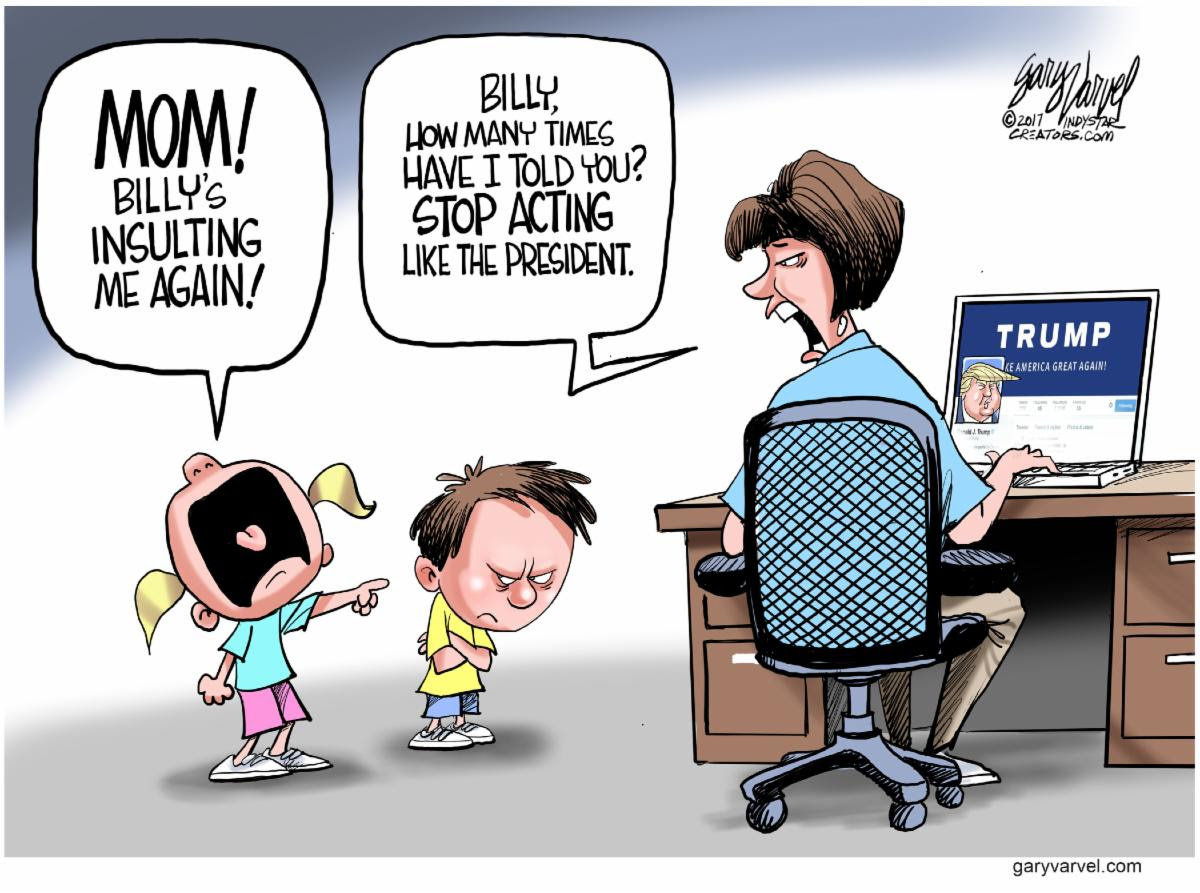
If you’ve guessed that we’re leading up to a discussion of Trump, you’re quite right. In fact, these days, if you mention the words ‘arrogant bully,’ President-elect Trump is likely the first image to enter your mind. For a test, just enter the three words—Trump, arrogant, and bully—into Google and see what happens.
A little research will show you that these failings are not new to Trump. From the age of five years on through college, it’s what people remember most about him. As a pre-teen, he was known for throwing rocks at toddlers in their play pens. At school, it got so bad that his father sent him off to a military school known to meet such behavior with violence.
What about college? Actually, we know very few facts. He went to Fordham for two years and dropped out with no significant achievements. His father pulled some strings and got him into Wharton, where he graduated in two years, but just getting a BA. He was in the prestigious graduate school for higher degrees,' but he sought a lower-level degree. All we really know is he attended, he graduated, and he never made the Dean’s List or received any other honors. His grades and test scores are kept completely private. His claims of achievements are all made up from thin air.
Trump’s now nearly 80 years old, and his arrogant bullying hasn’t softened a bit. Those Americans who think a few perks might fall their way for their support of him may dismiss or make little of it. But ask nearly any Canadian, Panamanian, Mexican or Dane, and laughter is the most polite response you’ll get in return. Trump recent antics would make a die-hard national chauvinist blush.
Most psychologists tell us that bullying and arrogance are rooted in low self-esteem and deep feeling of insecurity. There’s nothing that special about it. Aristotle said exactly the same thing in his Rhetoric about 2500 years ago. Arrogance and bullying overlap. Arrogance is usually an attitude taken toward others, while bullying is action, or threatened action, taken against the other.
If Trump were simply a private citizen, even one of great wealth, all of this would matter little to us. But Trump is far from a private person. For the next four years, he’s our designated head-of-state. And the U.S. is not just any state, but an imperialist superpower with over 4000 nuclear weapons and nearly 800 military bases around the world. Only China closely matches our strength, with Russia coming in second to them. Russia is also in a tough situation, pulling its forces out of Syria while still bogged down in the Ukraine. China, by contrast, has no substantive bases abroad, and its troops beyond its borders are all deployed as part of the UN’s ‘peacekeeping’ divisions. It has between 250-500 nuclear weapons cable only of a ‘second strike’ to deter any U.S. first strike, and China and India are the only powers with nukes making a ‘no first use’ pledge.
Nearly a week goes by when Trump doesn’t display arrogance or make threats against China, the EU, Mexico or other powers (Russia under Putin seems to be the exception). Chairman Xi may show some annoyance at this behavior, but he doesn’t retreat from it. Like Aristotle of classical times and our psychologists today, Xi knows its deeper meaning: Trump is very unsure of himself, and works hard at covering up his weaknesses. Many of the world’s ‘strongmen’ also know a secret about the vain: if you want to manipulate them, simply flatter them. The vain are easily deceived. Flattery, in their eyes, is just an expression of truth about them.
Our job here is not to educate Trump, or any other U.S. leader, on how to do better in running a superpower. But if we were to do so, it would be the same advice we would give to any head of state in today’s world: Hold to the UN Charter, its Universal Declaration of Human Rights, and the Five Principles of Peaceful Coexistence. As a practical priority, we would put seeking an immediate and permanent ceasefire in Gaza at the top.
But we are opposed to those elements of our political classes who want to turn Trump’s vices into virtues. We do not want to see U.S. troops invading or even threatening Panama. Nor do we want to see U.S. bribes or military maneuvers used against Greenland or Denmark for seeking rare earths and oil that can simply be purchased.
Likewise, with threats to send military teams to Mexico to deal with ‘drug cartels.’ The drug problem is largely rooted on the demand side, in the U.S. If illegal drugs were made legal, as in Portugal, the profits would be gone, along with violence. Abuse would remain but as a public health and social education problem.
The leadership of both parties in our country, however, have gone to great lengths to fan the flames of ‘the Taiwan question.’ Our advice would be to return to the 1972 Shanghai Commique, agreed to by Richard Nixon and Mao Zedong. The key passage is summarized as the United States acknowledging there is only one China and that Taiwan is part of China. The US side declared: "The United States does not challenge that position. It reaffirms its interest in a peaceful settlement of the Taiwan question by the Chinese themselves." For their part, the Chinese have also proclaimed a path of peaceful reunification, but with one exception. Should anyone inside or outside of Taiwan move toward a unilateral declaration of independence, all bets are off. This is where any recklessness on Trump’s part would be worrisome.
Apart from these concerns in and around the world’s hot spots, Trump’s arrogant bullying is our cross to bear. Nearly all Americans are wise enough is see it as a social drawback and bad behavior by their own children. But something odd seems to happen in the junior and senior years in high school, when these negative qualities somehow become positive. Is the practice of bullying and arrogance an advantage on the football field, one that we then generalize as legitimate for all contests and conflicts? Even sports have their referees that require us to observe the rules of the game or pay a penalty. But doing away with any rules and penalties that apply to him is exactly what Trump aims to achieve. We need to stop it now.
[All LeftLinks editorials, unless otherwise designated, express the views of our stalwart editor, Carl Davidson, and not necessarily any organizations he is connected with. Everyone, of course, is welcome to steal them and shamelessly pass them around, far and wide, with or without permission. A thank you note would be welcome, though!]
Get a free sub here weekly Leftlinks
| |
|
By Sergio Olmos on Januray 11, 2025
Farmworkers work on a field outside of Bakersfield. Photo by Larry Valenzuela, CalMatters
Resumen is running this local article to underscore that despite the significant role that immigrant workers, documented or undocumented, play in the US economy they live in constant fear of the government; Republican or Democrat.
Acres of orange fields sat unpicked in Kern County this week as word of Border Patrol raids circulated through Messenger chats and images of federal agents detaining laborers spread on local Facebook groups.
The Border Patrol conducted unannounced raids throughout Bakersfield on Tuesday, descending on businesses where day laborers and field workers gather. Agents in unmarked SUVs rounded up people in vans outside a Home Depot and gas station that serves a breakfast popular with field workers.
This appears to be the first large-scale Border Patrol raid in California since the election of Donald Trump, coming just a day after Congress certified the election on January 6, in the final days of Joe Biden’s presidency. The panic and confusion, for both immigrants and local businesses that rely on their labor, foreshadow what awaits communities across California if Trump follows through on his promise to conduct mass deportations.
“It was profiling, it was purely field workers,” said Sara Fuentes, store manager of the local gas station. Fuentes said that at 9 a.m., when the store typically gets a rush of workers on their way to pick oranges, two men in civilian clothes and unmarked Suburbans started detaining people outside the store. “They didn’t stop people with FedEx uniforms, they were stopping people who looked like they worked in the fields.” Fuentes says one customer pulled in just to pump gas and agents approached him and detained him.
Fuentes has lived in Bakersfield all her life and says she’s never seen anything like it. In one instance, she said a man and woman drove up to the store together, and the man went inside. Border Patrol detained the man as he walked out, Fuentes said, and then demanded the woman get out of the vehicle. When she refused, another agency parked his vehicle behind the woman, blocking her car. Fuentes said it wasn’t until the local Univision station showed up that Border Patrol agents backed up their car and allowed the woman to leave.
Fuentes says none of the regular farm workers showed up to buy breakfast on Wednesday morning. “No field workers at all,” she said.
Growers and agricultural leaders in California and across the nation have warned that Trump’s promised mass deportations will disrupt the nation’s food supply, leading to shortages and higher prices. In Kern County this week, just the word of the deportations inspired workers to stay away from the fields.
“If this is the new normal, this is absolute economic devastation,” says one local economist.
“People are freaked out, people are worried, people are planning on staying home the next couple of days,” said Antonio De Loera-Brust, director of communication for the United Farm Workers. De Loera-Brust said the Border Patrol detained at least one UFW member in Kern County as they “traveled between home and work.”
Videos shared in local Facebook groups and Instagram pages show Border Patrol agents pulling over vehicles along the 99 Highway on Tuesday and Wednesday in Bakersfield.
“They were stopping cars at random, asking people for papers. They were going to gas stations and Home Depot where day laborers gather,” said Antonio De Loera-Brust. “It’s provoking intense anxiety and a lot of fear in the community.”
U.S. Customs and Border Protection did not respond to a request for comment. On social media, Gregory K. Bovino, the Border Patrol chief in El Centro, called the sweeps “Operation Return to Sender.”
“We are taking it to the bad people and bad things in Bakersfield,” the El Centro Border Patrol said in response to a comment on its Facebook page. “We are planning operations for other locals (sic) such as Fresno and especially Sacramento.”
It’s unclear how many people have been detained by Border Patrol or how long the operation would last.
“We’re in the middle of our citrus harvesting. This sent shockwaves through the entire community,” said Casey Creamer, president of the industry group California Citrus Mutual, on Thursday. “People aren’t going to work and kids aren’t going to school. Yesterday about 25% of the workforce, today 75% didn’t show up.”
He pushed back on the Border Patrol’s claims they’re targeting bad people. He said they appeared to be general sweeps of workers.
“If this is the new normal, this is absolute economic devastation,” said Richard S. Gearhart, an associate professor of economics at Cal State-Bakersfield.
In the short term, he predicted farms and dairies could make up the losses, but that homebuilders, restaurants and small businesses would be most hurt financially.
But he’s worried about the long-term.
“You are talking about a recession-level event if this is the new long-term norm,” he said.
Agriculture comprises about 10 percent of Kern County’s gross domestic product and undocumented workers may comprise half of the workforce, he said. And the Central Valley provides about a quarter of the United States’ food.
“So, you WILL see, in the long run, food inflation and food shortages,” he wrote in a text message.
He predicted immigrants, even ones with documents, would stop shopping, going to school and seeking health care.
“So, this could have some serious deleterious long run impacts beyond lost farm productivity. Losses in education and health would be catastrophic,” he said. “Basically, you know how Kern County complains about oil? This event would be analogous to shutting down oil production. Economic catastrophe.”
Source: Cal Matters
| |
|
RootsAction Team
1:44 PM (3 hours ago)
Donald Trump has promised to begin mass deportation of millions of immigrants the day he’s inaugurated on January 20. This threatens to ruin many millions of lives, make a disaster of foreign relations, establish a model for the domestic use of the U.S. military, and do severe damage to the U.S. economy and particular industries.
Here are three quick steps you can take to push back:
1. Register to join us for a webinar Wednesday, January 15 at 8pm EST / 5pm Pacific with Jennifer Connor, Executive Director of Justice for Migrant Families, a frontline advocacy organization, who will share actions that can be taken to protect our communities in the face of threats of mass deportations.
2. Pledge noncooperation with mass deportation. By signing this one-sentence pledge, you can help to set an example for people across the country. All signers will receive occasional emails from RootsAction with updates about a wide range of action options against mass deportation, ranging from letter-writing to nonviolent civic protests.
3. Contact your U.S. Senators and media outlets to oppose the "Laken Riley Deportation Bill" that has already passed through the U.S. House. This bill would unconstitutionally mandate the imprisonment (potentially indefinite) without bail of undocumented immigrants arrested for (but not convicted of) minor offenses like shoplifting. The Congressional switchboard number is 202-224-3121.
Thanks for doing what you can!
Here are some great new resources:
>> ACLU: "Know Your Rights"
>> CHIRLA: "My Rights Hub"
In solidarity,
The RootsAction team
| |
The politics of this race do not make any sense unless one factors in racism and revanchism, the seeking of revenge. (Written in 2020, the Lessons hold up well)
Carl Davidson
Jan 14
∙By Carl Davidson and Bill Fletcher, Jr.
Organizing Upgrade, November 9, 2020
Hypothesis No. 1. One cannot understand this election unless one begins with a recognition of voter suppression: Since 2008, the Republican strategy has increasingly focused on voter suppression. The weakening, if not evisceration, of the Voting Rights Act was one significant piece of that. In the lead up to 2020 the Republicans, under Trump, have pushed this further by undermining the basic right to vote; making it more difficult; encouraging intimidation; undermining the U.S. Postal Service, long voting lines, fewer polls in Black neighborhoods, and so on.
1.1 Thus this election was about racism and revanchism: The politics of this race do not make any sense unless one factors in racism and revanchism, the seeking of revenge. The Trump message of allegedly keeping America great, was a message against traditionally marginalized populations, including but not limited to African Americans, non-immigrant Latin@s, women, and immigrants from the global South. Trump continued to stoke fear among whites, while also playing to “colonial mentality” among some populations of color. His message to Latin@ immigrants seemed to imply that a vote for him was a vote for them having the chance of becoming ‘white.’ But the election was about a broader sense of revanchism. There was anti-communism aimed at Cuba and Venezuela. It was also a revanchism aimed at shifting gender roles.
THERE IS A RIGHT WING MOVEMENT
Hypothesis No. 2. There is no doubt that there is a right-wing mass movement: Much of the U.S. Left has attempted to deny or equivocate on the existence and strength of the right-wing populist movement. One can no longer debate this. This movement exists and it has an armed wing. Along with overtly fascist groups in its core. It is a movement against the 20th century victories of progress. The fact that anyone could be convinced that Biden was a socialist not only illustrates the irrationality of the movement, but also should remind us that Sanders would not have had it any easier had he been the nominee. The right-wing movement sees any progressive reforms as equaling socialism. While many on the Left have fallen into the trap of thinking or wishing that were true, we must be in touch with reality and recognize that reforms under democratic capitalism do not equal socialism.
2.1 The Trump vote was a vote against reality: This is one of the most difficult conclusions from this election. In the face of the worst global pandemic since 1918-1919; one in which the total incompetence of the Trump administration has been on display, millions were willing to live in absolute denial, many of them continuing to believe that COVID-19 is nothing more than a bad flu. This rejection of reality translates into other areas including, but not limited to, racial relations, foreign policy, and the environmental catastrophe. This is a movement whose slogan really should be the closing line of the comedian George Wallace who would say: “That’s the way I see it, and that’s the way that it ought to be.”
2.2 Every vote must be counted: In the context of massive voter suppression, every vote must be counted, whether the vote was offered in person, through the mail or in drop-boxes. There is no Constitutional reason that a vote count should be stopped.
2.3 There is no monolithic Latin@ vote; there are Latin@ voters: The election results illustrate that there is no cohesive Latin@ vote. The Puerto Rican vote in Florida, for instance, bore absolutely no resemblance to the Cuban or Venezuelan vote. The reasons that various populations have come to the U.S.A. and the class character of many of those who have arrived here, have helped to shape their politics. Trump played to the fear among many Floridian Latin@ immigrants regarding socialism and communism. That did not work so well with Puerto Ricans. They also played to social conservatism among Chican@ voters in Texas. Though this was shrewd politics on Trump’s part, we on the Left must not fall into the trap of believing that there is a monolithic population out there. That said, the Democrats made a significant error in their work in Florida and Texas in not putting greater resources into reaching and mobilizing Latin@ voters.
ASSESSING THE DEMOCRATIC PARTY CAMPAIGN
Hypothesis No. 3. The main problem in this election was not the Democratic Party leadership; the strategic situation has become far more complicated: There are already those on the Left who believe that the main problem in this election was the leadership by the Democratic Party establishment. While there were many errors made, including the matter of polling (which needs to be studied in order to understand the errors), and insufficient support and vetting of statehouse candidates, (no gains were made) to a broader array of mass initiatives, the explanation for why there were not greater victories in the election cannot be dropped simply on the D.P. The factors noted above are far more significant, especially the power of right-wing populism at the base. That said, there must be major changes made, including a DP rural organizing project, continuous outreach, stronger organization at the county level, and support of electoral efforts among traditionally marginalized groups (including but not limited to African Americans and Latin@s). Though the D.P. platform was probably among the most progressive in D.P. history, the party must champion a progressive, populist message that is both anti-neo-liberal but also anti-right-wing populist. This is a critical fight to wage within the D.P., and it’s one that will strengthen the Bernie-inspired forces at the base over the Third Wave centrists.
3.1 This is a moment where we must initiate a mass campaign of “one person, one vote”: The Electoral College was created in order to support the slave-owning states and to limit the strength of the nation-state. It is an archaic institution that must be brought to an end. In almost any other country on this planet, the person who receives the most votes wins…period. Our reliance on the Electoral College means that, in effect, only certain states really matter. The struggle for “one person, one vote” needs to be a national campaign for the expansion of democracy. This includes alternative methods for allocating votes, e.g., proportional delegates rather than a state committing all of its delegates to the top vote getter, as well as new and concrete efforts to undermine voter suppression
“MOVEMENT BUILDING”?
Hypothesis No. 4. We need to think through this election in a wider context of ideas related to strategy and tactics. We can start with ‘movement-building.’
4.1 ‘Building a Movement’ is a flawed concept. But you can find it at the end of nearly every article or speech. It appears so often that it has more uses than aspirin as a cure for our ills. But we need to set it aside, or get a deeper understanding. Why? Because we don’t build them. Mass movements are largely built by capitalist outrages inflicted upon us, and capitalism will continue to do so, whether it’s another police murder, and invasion abroad, or a poisoning of a city water system. At most, we can fan the flames, which is fine but secondary. Our real task is to build organizations and campaigns within mass movements.
4.2 But we need to know the terrain. The ground of the current conjuncture is in motion. Like everything else in the universe, social movements move in waves. They flow and they ebb. You can count on it. What’s important is to know when to cast our nets out, making wide alliances and broad agitation when they are flowing, and when to pull our nets in, gathering new recruits and doing deeper education as they start to ebb. This way, with each wave, riding from the peak of one to the next, we grow stronger or stronger as an organization, gaining many new friends, until we shift the balance of forces for victories.
4.3 ‘Taking to the streets’ has serious limitations. We love street heat tactically. But as strategy it sucks. Why? Because its hidden subtext has one of two flaws. First, it has the aim of mass pressure on liberals in government to do the right thing. This often works, but as strategy, liberals approve of it. Why? Because it avoids the tasks of taking political power for ourselves, of replacing liberals in government with socialists of the AOC and her ‘squad’ variety. Moreover ‘street heat’ is often advocated as an alternative to electoral strategy, rather than a vital part of it. In short, it becomes a variety of militant liberalism.
Second, if ‘street heat’ is held up as strategy, it then becomes what can be called ‘the street syndicalist deviation.’ Its projected means of taking power is mainly through the mass political strike or general strike. It seeks to avoid exhausting existing parliamentary means by bypassing them with embryonic instruments of dual power that will draw the masses away from elections and into local mass assemblies. If the current conjuncture were one of being on the cusp of armed insurrection, this would be useful. But most often, it’s not, and in these conditions, it’s simply the myth of the general strike as a cover to skip the organization of the means to take power in government. Gaining government seats, in and of themselves, are likewise limited. But holding them enables us to sharpen contradictions and wage battles on a much higher level.
4.4 Neither movement-building nor street heat are minor matters. They have been the default position of the left and wider progressive forces for at least 50 years. One major reason is the tax code, allowing exemptions to 501C3-designated groups. The catch is they are not allowed to tell people to vote for this or that candidate, or this or that piece of legislation. They have to pull their punches to the ‘education but no endorsement’ boundary. This amounts to a back-handed federal subsidy to the street-syndicalist deviation, keeping people in their separate silo and always short of forming and instrument that can win elections and place socialists and their close allies in seats of power. We can still form and work with 501C3 group, but we have to escape the cul-de-sac they can keep us without alternative forms of organizations.
WHO ARE OUR FRIENDS? WHO ARE OUR ADVERSARIES?
Hypothesis No. 5. The key question of strategy, ‘who are our friends, who are our adversaries,’ when read closely, demands three answers. The one often overlooked is ‘Who’ is ‘the We’ implied by ‘Our’? Is it simply the revolutionary party? The left more widely? The working class? It can be all of these, but a workable answer is ‘the forces demanding change and a new order.’ Then we divide it into two, the critical force and the main force.
5.1 The critical force is a militant minority, usually young, that takes a radical action, often disruptive, against an injustice, and holds a mirror up to society, stating ‘this is what you have become. Is this what you want to uphold? Or take down?’ Think of the original Woolworth sit-ins, or John Lewis on the bridge, or Vietnam vets taking over the Statue of Liberty, or throwing their medals back at Congress. They can be a powerful expression, even a spectacle that spans the globe.
5.2 But when all is said and done, the militant minority is not yet the main force, the millions of the all the oppressed, alongside the workers and their close allies. Step by step, these come to form an insurgent and awakening progressive majority, one that ceases to be the object of history and begins to find their agency, to make history. They start with less drama, mainly going to meetings, debating, and voting in elections. But they begin to be protagonists. The critical force that unites with them will thrive. If they can’t, they will be trapped in a cul-de-sac and fade away.
5.3 Now, let’s turn to the two obvious questions about adversaries and friends. Our adversary is usually defined as capitalism in its neoliberal mode. This is fine, but it’s at a very high level of abstraction. It’s useful to analyze capitalism at various levels of abstraction, as Marx does with genius in Capital. But we’re doing something different. We want to overthrow a particular capitalism as rooted in our country and as its current forms hold us down today where we are. There are a variety of capitalisms in our world, and while they have much in common, they vary from place to place. Our capitalism in the U.S. started as a racialized capitalism from the start, and one that spent at least half its life growing from a settler-colonial slave republic into today’s hybrid of racialized neoliberal capitalism with both global and national dimensions.
5.4 But how does that break down on the terrain today? One certainty is we do not want to fight all our adversaries at once. Where to make the first cut? One prominent feature of our last 40 years and its miseries is the vast expansion of the financial sector, where capitalism often ‘makes money’ while not creating new wealth. Think of financial capital as a globalized cannibal devouring other sectors and as a vampire feasting of the blood of the wealth creators, the working classes, here and elsewhere. So we make the first cut between finance capital and productive capital.
5.5 Productive capital also divides into two, high road and low road. Low-road capital is familiar to us as an adversary. They are the ones who brought us the Rust Belt, exported jobs, the climate crisis, unions at less than 10 percent of the workforce, and flat wages for forty years. High road capital is less familiar but it exists. They want to make money from a stable, skilled and unionized workforce. They don’t mind protecting the environment, and will even try to find ways to make money doing it through green innovation. But they still will drive a hard bargain with their workers for their own profits. What begins to take shape as our key adversary, then, is racialized finance capital and its low road partners here and around the globe. High road capital in many instances – creating jobs for a Green New Deal – can be a tactical ally. Likewise, in the financial sector, a recent ‘Green Bloc’ has taken shape that thinks a green industrial revolution is a wise bet for future long-term investors. Even if most of their kind are wrapped up in the day-trading casinos of pure speculation without investment, they are willing to explore a new venture. To take on the climate change emergencies quickly, they will have to be part of the solution.
5.6 So why does ‘racialized’ matter? It’s not simply that capitalism on this continent started with the expropriation of African labor and natives’ lands, alongside the exploitation of indentured European laborers. It’s that every feature of capitalist production was shaped by ‘race’ – chain gangs for ‘vagrants’ after the defeat of reconstruction, debt peonage for Black and Mexicans and Chicanos, Chinese ‘coolie’ labor on the railroads followed by exclusion, resource confiscation from Native lands, and Jim Crow extending up to the 1960s and beyond. Abstractly, there is only one working class here. But in daily life, racialized hierarchies existed and still exist in major industries and workplaces, not to mention neighborhoods and schools. It’s not the distant past, but the past persisting in various ways, old and new, well into the present day.
THE ‘WHITE RACE’
Hypothesis No. 6. Our adversaries, as Gramsci has taught us, don’t like to rule by force alone. They aim to combine coercion with consent, using persuasion, direct and hidden. In our racialized capitalism, the primary way was through the ‘invention’ or social construction of ‘the white race’ along with all the subaltern ‘color races’ that partnered with it. By ceding undue advantages to European laborers early on, making them ‘white’ as something they shared with the upper crust, the colonial elite was able to form a white united front with labor in the white-skin. So as long as you could maintain the ‘common sense’ that there was such a thing as the ‘white race’ and those with pale European skin were members of it, the ruling elites had a form of social control. They had a form of consent, conscious or unconscious, that could divide the whites from the rest, and even the ‘red’, ‘yellow’, and ‘brown’ against each other as well. The ‘common sense’ of the white race enabled African slavery and Native dispersal to grow and thrive. Even after the 13th Amendment partially abolishing slavery, the ‘white race’ continued its grip in the conflicted consciousness of the masses, and allowed the reformation of slavery in other forms and names up to the present.
6.1 If we abolish the ‘white race,’ don’t we abolish the ‘Black race’ too? It’s a fruitful question often asked. The straightforward answer is ‘yes.’ The descendants of Africans here are no more a ‘race’ than the descendants of Europeans. Biologically speaking, there is only one race, the human. But this opens an important question. What are African Americans? Due to their conditions of bondage and oppression in the Deep South, Africans brought here from diverse tribes, languages, and religions developed into a new and distinct people with their own culture, language, economic stations, and religion. They have been variously called Colored, Negro, Black, and now African American. But just as Irish-Americans are no longer much like their Irish ancestors, the same is true of Blacks and Chicanos. They are all components of the demographic of the United States of America, but they are also distinct nationalities within a multi-national country. Original national ancestry, from here or elsewhere, is not a ‘race.’ And the sooner we can get rid of this old order category in our thinking, the easier a more democratic class and national consciousness can emerge from what Marx called ‘all the old muck.’
Carl Davidson is a national committee member of Committees of Correspondence for Democracy and Socialism, a Left Roots Compa and a member of Steel Valley DSA. He edits LeftLinks and founded the Online University of the Left,
http://ouleft.org
| |
|
Beaver County Blue: Voice of the 17th CD of Progressive Democrats of AmericaRead on blog or Reader
Posted By carldavidson on January 13, 2025
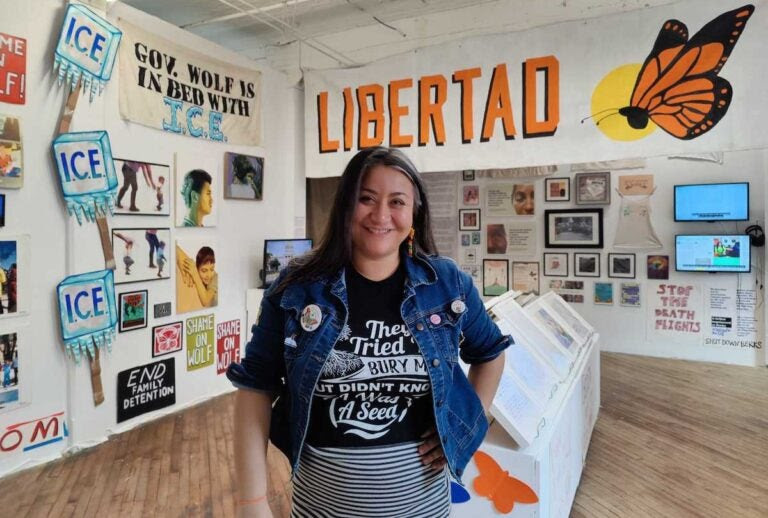
Photo: Jasmine Rivera was an organizer with the Shut Down Berks Coalition, and curated the exhibition “Queremos Justicia: Cómo cerramos Berks,” at the Vox Populi gallery in Philadelphia in 2023. (Peter Crimmins/WHYY)
By Jeffrey Lichtenstein
One PA
Jan 7, 2025 - We’re holding several big questions as we move into 2025 that we hope to learn and struggle through together with our funding partners. All of our work, especially our organizing, advocacy, and outreach efforts, will be working through these questions.
Quality vs Quantity of Doors
Where and when can we initiate and join conversations about the quality of field work rather than simply the quantity of door knock and phone call attempts? The efficacy of canvassing in low-salience elections is statistically unquestionable but in presidential election cycles there is suddenly a great amount of noise. Some of this noise is the result of large-scale vended field programs with weak quality control practices or very low contact rates.
What could it look like to move toward an eco-system wide model for field work that prioritizes the number and quality of conversations, volunteers recruited, and leaders trained? One PA prides itself on high contact rates and rigorous quality control but we still have much to learn. We hope to share and leverage best practices across locally rooted partners and begin to shift the paradigm around field work from quantity alone, to quality and quantity.
Making organizing power more legible
Even the strongest most rigorous electoral field program faces structural challenges with management, hiring and training under conditions of limited funding and time. These efforts also, by their nature, are demobilized and dismantled after an election, even when we know there is another election just around the corner, not to mention countless other opportunities for voters to flex their voice in government and strengthen their civic participation. Political and civic organizing, unlike electoral campaign mobilizations, grow rather than diminish in efficacy and power over time. What would it look like to quantify, validate, resource and scale the civic power of organizing? One PA was successful in 2024 in using every door conversation to begin an organizing pathway. We identified 33,000 hot leads to join One PA. We’re proud of this work, but we have real areas of growth in learning how to maximize the conversion between hot leads and new volunteers.
Dimensions and Cost of Building Precinct Based Structure
The term ‘organizing’ has been stretched in recent years to mean all manner of engagement. At One PA we are working with multiple battle-tested organizing models in an attempt to integrate the best practices of each in a way that can be quantified, studied and validated at every stage using contemporary data tools and tech. Our model combines dues-based membership, structure based organizing units, systematic leadership development, polarizing campaigns and experimentation. We are proud of our work in 2024 to launch a guardians of democracy and elections captains program.
In the year ahead we plan to scale the program by a factor of five, and are holding questions about what level of resource and training this will require at each level of the organizing structure. Independent Voice It is clear our movement must get upstream of elections in the battle to make meaning out of our communities' lived realities. By the time candidates win their primaries, the ability to shape what that election will be about is out of the hands of most people except the elite few with an extraordinary amount of influence on the candidates. We are asking ourselves the question: what capacities and practices do we need as a movement to help frame the questions in front of people long before an election?
How can we roll into a cycle with voters broadly knowing already that housing is too high because of slumlords and rollbacks on government investment, not because of immigrants? We know part of the answer is an independent voice for Black and multi-racial working class communities, to help compensate for brand weakness in the Democratic party, to ensure voters feel they are heard, and to guarantee a more healthy mix of ideas about what it will take to fix this country. How can we build the power and independence of this voice in a way that our more traditional and conservative allies won't attempt to smother in its cradle?
Winning the Internet
We’re also holding questions about how to respond to the reality that the Internet is increasingly becoming a place our communities rely on for social and political queues. Cynical or hateful voices have a head start in offering narrative frames in the digital space. We are holding questions about what it looks like to bring an organizing approach and significant investment in mass communications to organize our base in digital space, win over leaders and taste makers in non-legacy media, and contest for narrative primacy on the internet.
Training to Win next quarter and next decade
Training is critical for nearly every aspect of our plan, especially the proposition that we grow in capacity and power over time, and the responsibility to rebuild a majority. We are clear that we must level up the rigor and scale of our training program, and sit with the question about what kind of training school and content will meet the need. We know curricula must include a breakdown of the structures and histories of power and resistance; song, poetry and other forms of culture that bring people together at an emotional register; practical application of ideas through repetition of organizing, storytelling, writing and other skill practice. We’re sitting with the question: how can all those pieces best fit together and what kind of resourcing will it take to hold a training program sustainably that can meet these goals?
A renewed tech advantage
We’re also holding a question about technology. For about 20 years, democratic institutions and networks held an advantage in the use of tech in politics - the VAN, click-to-call tools, ActBlue and early P2P text platforms are all examples. But today republican networks and institutions have caught up or surpassed. What kind of tools allow us to easily give an inspired volunteer a list of the 50 closest target people to them, to register them to vote, get them to sign a petition, or have a persuasive conversation about candidates? How do we move away from site-based voter registration only, and use contemporary data to scale door to door registration programs? How do we use new models, like the Steven Phillips “New Majority Index,” to help us assess opportunities and threats?
Cities: Most of our base lives in cities.
Cities are the places where the housing and homelessness crises are worst. Cities are some of the places with the highest income inequality and violent crime. It’s difficult to live in cities unless you’re rich. There is a relationship between our bases’ weakened sense of political agency and their perception of the corruption of government on one hand, and the way our cities are being run on the other. What does it look like to have an intentional plan to broadcast positive accountability messaging when city leaders accomplish something that improves peoples lives? How do we combine that with real resourcing for primary campaigns to support candidates who are committed to using the government to deliver material gains for working class people.’ And what does it look like to add real resourcing for advocacy and pressure campaigns to encourage local leaders on the fence to move toward policies that will demonstrate in real terms how democratic governance is good for people?
Alignment
Last, we’re holding a question about how to build alignment between progressive base-building organizations to have sufficient power to help win the fights that each of us aren’t strong enough to win on our own. We’re proud of the work that we’ve done to build unity through the cycle of the last several races with several partners, especially PA United , Working Families Party , APIPA, Make The Road, 215 People’s Alliance and UniteHERE. How do we strengthen and build on these existing relationships?
| |
Monday, December 30, 2024
Happy Holidays and Have a Progressive New Year
CELEBRATING PROGRESSIVE CULTURE (a repost)
(Racism, misogyny, poverty, war, environmental disaster, and extraordinary military waste make this new year difficult for many of us to celebrate. However, we too have our history and our promise for a better future. HT)
Harry Targ
Creator: Carolyn Kaster | Credit: ASSOCIATED PRESS
Social movements are defined in several ways; their leadership, their membership, their vision, their strategies, their resources, and their successes and failures. We often forget, however, that each of these elements are woven together by a culture. This culture can be poetic, dramatic, pictorial, or musical, or some of each. The culture provides a way for people in all different places, engaged in all different parts of the mass movement, to experience a common sense of themselves and what they share with others. It may be the case that a movement without a culture is a movement without a sense of vision, of shared purpose, of passion.
It is these thoughts that come to mind this week as we remember Pete Seeger, a man who brought song to our hearts and minds for 70 years. Pete and those musicians who were inspired by him helped influence many of us to join the great twentieth century movements for social change: labor, civil rights, feminist, ecology, anti-war. It was through his practice, getting sometimes thousands of fans to sing together in unison about building a better world, that people learned that working together is how change occurs.
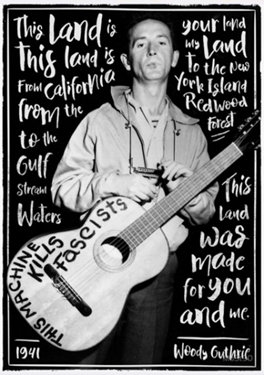
And when progressives look back at the twentieth century and see a very mixed record of successes and failures, glorious victories and tragic defeats, it is the culture that reminds people of the nobility of the goals that social movements pursued and what still needs to be achieved. And no greater symbol of redemption of twentieth century progressive movements and cultures was evidenced than Pete’s leading 500,000 people in front of the Lincoln Memorial two days before the inauguration of President Barack Obama in singing Woody Guthrie’s “This Land is Your Land.” Pete included the verses that delegitimized private property and celebrated the continued struggle for fundamental social change.
That performance reminded older people of the fundamental justice of the old movements and the need to create new movements with new cultures in the 21st century. Vital to that brief sing out also was the message that the old political culture should not be forgotten even as new politics and culture is created. The old and the new are like links in a chain.
A few additional words:
Paul Robeson: “Continued study and research into the origins of the folk music of various peoples in many parts of the world revealed that there is a world body-a universal body-of folk music based upon a universal pentatonic (five tone) scale. Interested as I am in the universality of (hu)mankind-in the fundamental relationship of all peoples to one another-this idea of a universal body of music intrigued me, and I pursued it along many fascinating paths.
| |
|
Woody Guthrie: “I hate a song that makes you think that you are not any good. I hate a song that makes you think that you are just born to lose. Bound to lose. No good to nobody. No good for nothing. Because you are too old or too young or too fat or too slim. Too ugly or too this or too that. Songs that run you down or poke fun at you on account of your bad luck or hard traveling. I am out to fight those songs to my very last breath of air and my last drop of blood….”
| |
|
Pete Seeger: “Imagine a big see-saw, with a basketful of rocks sitting on one end. That end is down on the ground. At the other end, up in the air, is a basket half full of sand. Some of us are trying to fill it, using teaspoons. Most folks laugh at us: “Don’t you know the sand is leaking out even as you put it in?” We say that’s true, but we’re getting more people with more teaspoons all the time. One of these days that basket of sand will be full and you’ll see this whole see-saw just tip the opposite way. People will say, “Gee how did it happen so suddenly?” Us, and our goddam teaspoons.”
“Take it easy. But take it.” Woody Guthrie
And the discussion continues:
A trailer for the new movie about Bob Dylan and Pete Seeger: "A complete Unknown"
| |
Divest From Death From Appalachia to Gaza
Why you can trust us
Rebecca Croog & Noa D’ror Dettwyler
Nov 7, 2024
Reprinted from Yes! Magazine
.
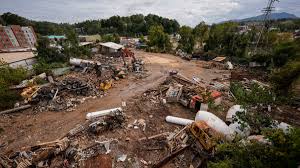
On Friday Sept. 27, 2024, the residents of Asheville, North Carolina, awoke to the devastation of a once-in-a-thousand-year storm. We awoke to houses destroyed, massive downed trees blocking roads, and debris everywhere. We texted our loved ones to make sure they were OK and anxiously waited for responses. After the initial shock, it soon sunk in that we would not return to our normal lives for a long time.
The two of us have spent the past year protesting the Israeli military’s assault on Gaza, which is funded by the United States government. The day after the storm, as we surveyed the destruction all around us wrought by Hurricane Helene, we thought of the people of Gaza, whom the Israeli government has relentlessly bombed for the past year, destroying their homes, schools, markets, hospitals, places of worship, as well as crucial components of their water and food systems.
We have always opposed the Israeli military’s destruction of Gaza—one that began long before Oct. 7, 2023—but in observing the destruction in our own backyards and neighborhoods that day, we felt more committed than ever before to ensuring that our government stops sending the bombs that destroy life, land, and infrastructure in Palestine. In our grief, we committed to working toward the restoration of life from Asheville to Gaza.
Since Oct. 7, 2023, the U.S. government has sent $17.9 billion in military aid to Israel, including $3.8 billion from a supplemental appropriations act in April 2024. Meanwhile, a request from FEMA for an additional $9 billion for disaster relief efforts in the U.S. did not make it into the most recent funding bill, a shortfall that limits recovery efforts in Western North Carolina and other areas hit by Hurricane Helene. The numbers tell the story: The U.S. government invests in death while neglecting the lives of people and our planet.
As Western North Carolina University professor Robert Clines wrote in a recent op-ed in Mondoweiss: “The devastation from Hurricane Helene and Israel’s escalation in the Middle East may not seem connected. But they are linked through the United States’s commitment to mass militarization, imperial arrogance, exacerbation of climate change, and refusal to work toward a just global future.”
We and other Appalachian Jews are speaking up from the depths of climate devastation, demanding collective liberation now. Anti-Zionist Jews like us live in every corner of the United States and are essential activists and organizers in Southern struggles for environmental justice and collective liberation. Promoting Jewish safety means investing in life rather than death. It looks like fighting real antisemitism in communities that we love and protect, even when we’re cast out by pro-Zionist institutions, including our own religious congregations.
And that is why, on Oct. 6, 2024, we made the decision to still hold a tashlich action that we had been planning for months. Tashlich is a ritual that is part of the Jewish high holiday season and centers on atonement and repair. Out of necessity, we shifted the location from a riverfront park—as the riverbank was washed out and much of the surrounding area was coated in toxin-laden mud—to a bridge overlooking the French Broad River, a waterway so inundated by Hurricane Helene that its currents smashed buildings; carried away people, animals, and vehicles; and spread rocks and mud and trees on its banks for many miles.
The two of us stood on the Haywood Road bridge together and talked of teshuvah—repentance—contemplating how our country’s unwavering support for the Israeli apartheid regime makes all Americans complicit in the genocide of Palestinians. Rather than toss pebbles into the water, as is customary, we opted not to add to the debris lining the riverbed; instead, we placed them on the railing of the bridge, a choice that we later realized was reminiscent of the Jewish tradition of placing stones at gravesites to mark the occasion of visiting the deceased.
In Asheville, we have begun the process of rebuilding from the hurricane. Gazans, on the other hand, cannot, because the Israeli military has not stopped dropping thousand-pound bombs on their land. Human Rights Watch has reported that the Israeli military is even targeting aid workers—those who are instrumental to the process of survival. Between October and May, the Israeli military targeted at least eight convoys of aid workers. This is a horrid violation of international law and a devastating act of inhumanity.
In mid-October, Israeli forces killed four water engineers who were on their way to conduct repairs to Gaza’s water infrastructure, which is itself being destroyed by Israeli air strikes. Receiving news of such killings is always heartbreaking, but after spending the past three weeks contributing to water-crisis response efforts here in Western North Carolina (along with other community-led efforts being coordinated by the Rural Organizing and Resilience and Holler Harm Reduction networks), a story like this hits even harder, as we imagine the horror of doing this already-challenging work of delivering aid and humanitarian efforts while under constant threat of state violence.
As we continue to rebuild and heal here in Western North Carolina, we recognize that the destruction we face is a fraction of what the people of Gaza endure daily. While we recover from a single storm, Gazans endure an unrelenting succession of human-made storms being driven by a genocidal war campaign, even as the people working toward recovery and crisis response are themselves being targeted as enemies in this war.
We will continue to demand that our government stop funding the Israeli military, and to instead spend our tax dollars on repairing harms in Gaza, Asheville, and everywhere there is human suffering.
.
Rebecca Croog is a Jewish activist living in Asheville, North Carolina. She researches and writes about environmental justice issues and is a member of Jewish Voice for Peace. She speaks English and Spanish.
Noa D’ror Dettwyler is a science fiction writer originally from Delaware. They have lived in North Carolina for the last five years. They have worked in the LGBTQ rights movement for nearly 20 years, and have worked in the labor union struggle for a decade. They speak English and Spanish.
| |
|
With the winning of the Trump/Vance ticket along with the far right in leadership of all 3 branches of government we need to bury our differences and build the left and the Progressive Majority, a majority that we know exists on most issues of public policy.
We need to build our organizations to defend democracy, in our communities and at the state and national levels including progressive gains won over several decades.
IN GENERAL WE NEED TO REBUILD OUR LEFT: PEACE ACTIVISTS, FEMINISTS, WORKERS, ENVIRONMENTALISTS, AND ALL HUMANISTS WHO UNDERSTAND THAT. (HOWEVER WEAK) US DEMOCRATIC INSTITUTIONS ARE UNDER ATTACK AND THE VERY PEACE AND ENVIRONMENTAL CONDITION OF THE WORLD ARE UNDER ATTACK
Harry Targ
| |
|
Our Amazing Resource for Radical Education
CURRENT FEATURE: In the 'Study Guides' Section
A 4-PART STUDY OF THE SHAPING OF THE
RUST BELT WORKING CLASS.
From the settlers to the present, and how its consciousness is conflicted. Prepared by Carl Davidson and Rebecca Tarlau,
with some help from the DSA Rust Belt group.
There are hundreds of video courses here, along with study guides, downloadable books and links to hundreds of other resources for study groups or individuals.
Nearly 10,000 people have signed on to the OUL for daily updates, and more than 150,000 have visited us at least once.
Karl Marx's ideas are a common touchstone for many people working for change. His historical materialism, his many contributions to political economy and class analysis, all continue to serve his core values--the self-emancipation of the working class and a vision of a classless society. There are naturally many trends in Marxism that have developed over the years, and new ones are on the rise today. All of them and others who want to see this project succeed are welcome here.
NEW UPDATES...
On our Blog Page:
How to Create a Future of Cheap Energy for All
The WIRED & Octopus Energy Tech Summit in Berlin was bursting with innovative ideas for reaching net zero and on working together at an ever-greater scale.
How to Build an Underground Resistance Force in 16 Steps
Lessons from Blue Virginia, a community-based organization of women
Our Latino/a Studies Dept:
Forced Amnesia: The Hidden History Of America’s Far West
An emotional and historical journey through the American West on the tracks of the pre-1848 border, to meet families that lived there since long before the US takeover.
Our History Dept:
Marcus Rediker on the Quaker Abolitionist and Seaman Benjamin Lay – History from Below after the Transnational Turn.
This seminar subtitled “The Case of a Forgotten 18th-century Revolutionary,” was given by Marcus Rediker as part of the Development Studies Seminar Series on 24 October 2017 at SOAS University of London
To get regular updates, be sure to ‘Like’ us at http://facebook.com/ouleft.org Be sure to also, under ‘Like’, pick ‘Get Notifications.’ You can also ‘subscribe’ to our FB page and send in articles for our blog at the OUL main site, http://ouleft.org
Read more
http://ouleft.org
| |
|
Timothy Sheard | 415 Argyle Rd. 6A | Brooklyn, NY 11218 US
| |
|
Victor Narro tells us that justice work is filled with the values attributed to spirituality: love, compassion, empathy for those in need, and a lifelong commitment to bringing justice into their lives.
El trabajo por la justicia está lleno de los valores atribuidos a la espiritualidad: amor, compasión, empatía por los necesitados y un compromiso de por vida para llevar la justicia a sus vidas. You
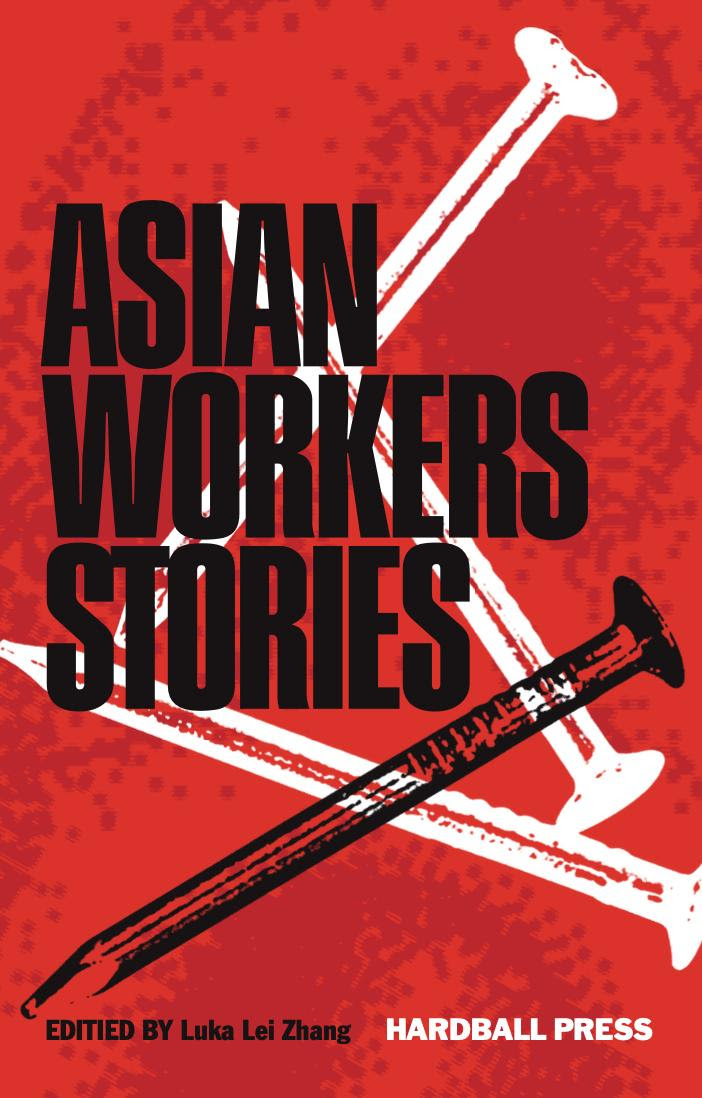
His new book is now available in Spanish from Hard Ball Press: El Spiritu Activista
| |
|
Check out the latest in union organizing materials from our good friend Alice Torres' great online resource: Labor's Bookstore.
| |
|
|
The Old Dawg Songwriter to release 77 songs for his 77th birthday.
This January Tim Sheard begins releasing one song/week for 77 weeks: songs about justice, tolerance, love, climate renewal, family and more. Check them out at his Mighty Rivers Music Co.
| | |
|  |
|
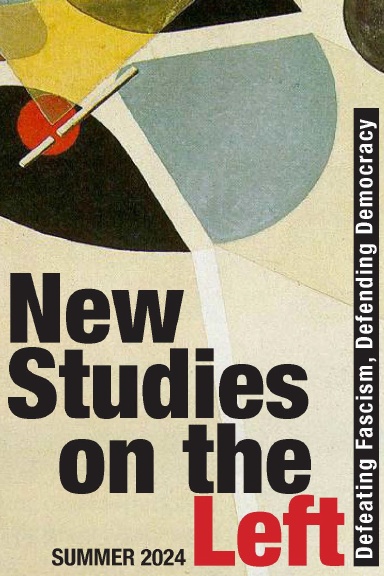
New Studies
on the Left
Paperback $19.95
...is a journal of socialist theory and practice. It is the successor to ‘Dialogue and Initiative, published as an annual journal of the Committees of Correspondence for Democracy and Socialism in book form from 2012 to 2022. It will continue the CCDS policy of left unity, including articles with a variety of left perspectives, including debates.
This issue contains over 30 articles grouped under the headings of Analysis and Global Reach, Debate and Controversy, Labor, Socialism, and Book Reviews. Some are reprinted from other sources, but many appear here for the first time.
Among the authors are David Bacon, Joan Braune, Carl Davidson, Bill Fletcher, Jr., Jerry Harris, Jay Jurie, Paul Krehbiel, Sun Liping, Adewale A. Maye, Duncan McFarland, Jasmine Payne-Patterson, Vijay Prashad, Nikhil Pal Singh, Harry Targ, and Janet Tucker.
Table of Contents
Click HERE to purchase
| | |
CHANGEMAKER PUBLICATIONS: Recent works on new paths to socialism and the solidarity economy
Remember Us for Gift Giving and Study Groups
We are a small publisher of books with big ideas. We specialize in works that show us how a better world is possible and needed. Click Gramsci below for our list.
| |
522 Valencia St.
San Francisco, CA 94110
415 863-6637
| | | | | |