|
|
|
Illinois Prescription Monitoring Program
Update - January 2025
| |
On the Radar: Illinois Legislature Passes Stricter Rules for Accessing Prescription Data, Awaits Governor's Signature | |
|
The Illinois Senate and House have passed HB 5373, a bill that states that ordering, prescribing, dispensing, administering, or paying for controlled substances, including opioids, shall not be predetermined by specific morphine milligram equivalent guidelines for chronic pain patients. In addition, this bill eliminates ambiguity by explicitly prohibiting arbitrary limits and requiring adherence to current evidence-based guidelines. This bill also clarified ILPMP authority in context to the ILPMP Peer Review Committee (PRC), and outlined new requirements for authorized data requestors to obtain confidential data from the ILPMP. The bill now awaits the Governor's signature. If signed into law, it will take effect immediately, amending the Illinois Controlled Substance Act.
Under the new amendment, authorized data requests for ILPMP confidential information must be supported by one of the following:
- A valid court order or subpoena, or
- An administrative subpoena issued specifically by the Department of Financial and Professional Regulation
The amendment aims to ensure all requests are legally documented, reducing the risk of unauthorized access to sensitive patient data.
Other changes addressed include:
- Specifies that decisions regarding treatment with controlled substances, including opioids, should not be restricted by CDC Morphine Milligram Equivalent guidelines, unless required under federal law.
- Language stating ILPMP PRC retains full authority to use MME threshold for clinical oversight and monitoring.
- Adds trained designee may review and release ILPMP information upon review.
- Confidential information shared from Opioid Treatment Programs or confidential information otherwise protected under federal confidentiality of substance use disorder patient records regulations under 42 CFR Part 2 shall not be included in the information shared.
For more information, you can view the full text of HB 5373. The ILPMP is exploring options to receive this the supporting legal documentation electronically and further guidance is forthcoming.
| |
Illinois Prescription Monitoring Program Awarded $1 Million Grant | |
|
The Illinois Department of Human Services’ (IDHS) Illinois Prescription Monitoring Program has successfully applied for and been awarded a grant from the Bureau of Justice Assistant (BJA), Office of Justice Programs, Harold Rogers Prescription Drug Monitoring Program. The grant totals $1,000,000 and will be allocated over a 24-month period.
The funding will support several key initiatives, including:
- Enhancing the quality and accuracy of ILPMP data.
- Assessing the efficiency and effectiveness of the ILPMP.
- Developing and disseminating educational materials.
- Facilitating the electronic sharing of prescription monitoring information among states.
These initiatives aim to strengthen the ILPMP's capabilities and promote better healthcare outcomes withing the designated project timeframe.
| |
DEA Releases 2024 Updated Drugs of Abuse Guide | |
|
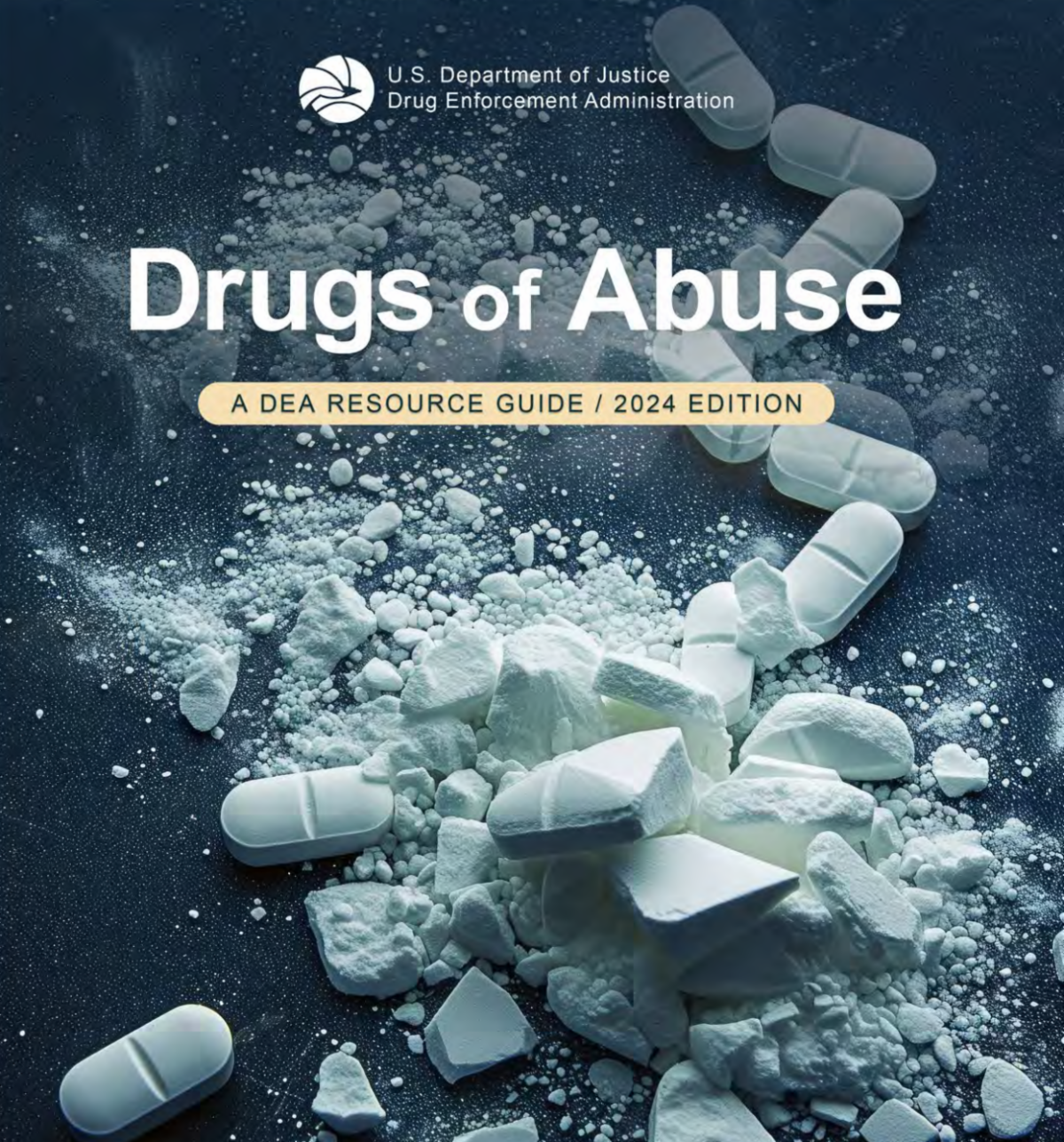
The U.S. Drug Enforcement Administration (DEA) has published the 2024 edition of Drugs of Abuse: A DEA Resource Guide. This guide serves as a reliable resource on the most commonly used and misused drugs in the United States. Released periodically, Drugs of Abuse provides scientific information on the harms and effects of drug use, including their impact on the body and mind, overdose risks, origins, legal status, and other critical factors.
The 2024 edition builds upon the 2022 publication, offering updated details on emerging trends in drug misuse and abuse. It includes information on substances such as fentanyl, methamphetamine, marijuana, concentrates, vaping products, stimulants, and counterfeit pills. The guide also outlines U.S. drug regulations, including drug scheduling and chemical controls.
Recognizing the importance of education in preventing substance abuse, the guide is designed for use by medical professionals, law enforcement, educators, families, and communities. It provides access to additional drug education and prevention resources, including the DEA's websites: DEA.gov and GetSmartAboutDrugs.com.
| |
ILPMP Releases Fiscal Year 2024
Annual Report
| |
|
The ILPMP has released its Fiscal Year 2024 (FY24) Annual Report, highlighting significant achievements in the monitoring of Schedule II-V controlled substances, selected drugs of interest, and other health information.
Through these efforts, the ILPMP continues to prioritize patient safety with the program's comprehensive approach and ongoing enhancements that reflect its dedication to addressing the challenges of substance use and ensuring the well-being of Illinois residents.
| |
|
|
Opioid Replacement Myths
Buprenorphine / naloxone is a life-saving medication when used for opioid use disorder (OUD). Unfortunately, this drug is still misunderstood by both health care professionals and lay persons. This short, animated video briefly discusses the myths surrounding opioid replacement therapy for the treatment of OUD. Brought to you by the Southern Illinois University Edwardsville School of Pharmacy and the Illinois Prescription Monitoring Program.
| |
Newly Released, FREE, Continuing Education Available for Pharmacists and Pharmacy Technicians on the Importance of PMP Data Integrity | |
|
Take advantage of this free ACPE accredited educational opportunity providing 1 hour of continuing education for pharmacists and pharmacy technicians. This program, developed in partnership with NASCSA and 12 prescription monitoring program (PMP) administrators, analyzes the importance and value of complete, accurate data reported by dispensers to PMPs and assesses the impact of intentional or non-intentional data entry errors and data omissions on patient safety. It also discusses the downstream impacts of pharmacy-reported PMP data on clinical decision-making processes and helps pharmacy staff identify and implement changes that can be made in their practice setting to improve PMP data integrity.
Visit https://ce.talemhealth.com/a/MWEORC
If you received credit for this CE prior to 10/22/24, you are still able to retake the CE and receive credit.
| |
Navigating Pain Management, Safe Opioid Prescribing, and Opioid Use Disorder
A three-hour program designed to meet the educational needs for physicians, nurses, and pharmacists. The program is accredited in 6, 30-minute modules.
| |
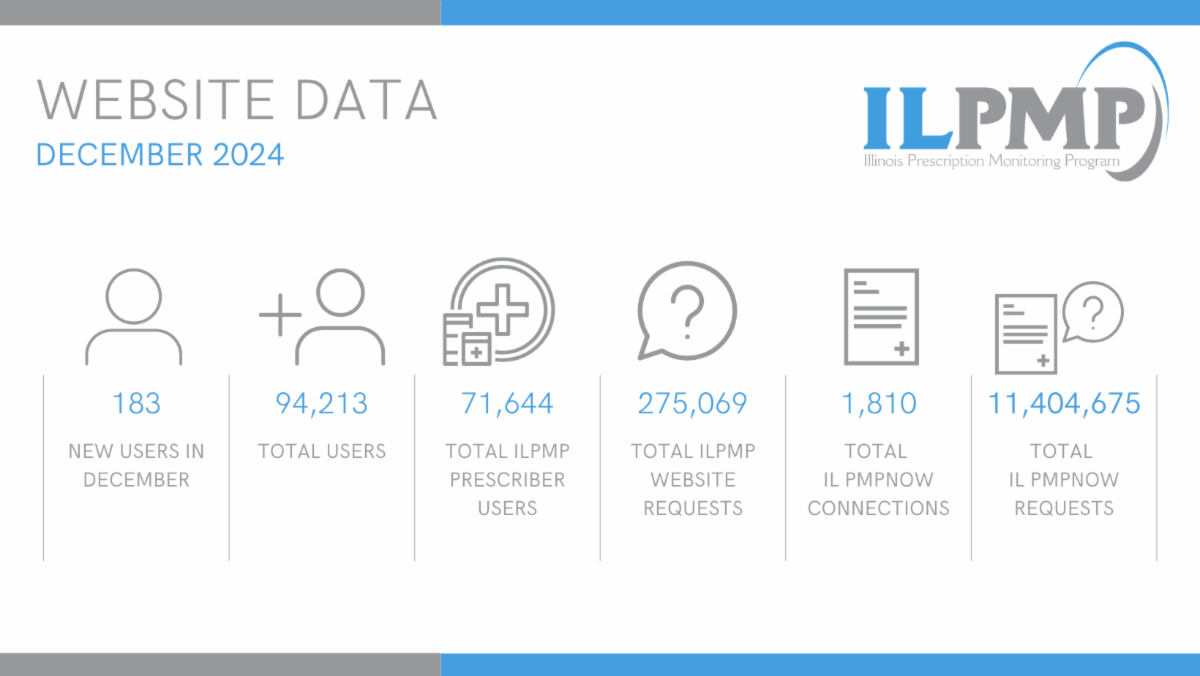
ILPMP.ORG & IL PMPnow Monthly Data | |
If you have questions about the information that appears in this update or suggestions for future content, please email dhs.pmp@illinois.gov. Visit www.ilpmp.org for more information. | |
The Illinois Prescription Monitoring Program (ILPMP) is an electronic database that collects, tracks, and stores reported dispensing data on Schedule II-V controlled substances, selected drugs of interest, and other health information. The Illinois Department of Human Services oversees the ILPMP, authorized by the Illinois Controlled Substances Act (720 ILCS 570/316). The ILPMP adheres to HIPAA and all access, disclosure, and confidentiality provisions of Illinois Law. | | | | |