|
Some feedback from our 2025
25th anniversary
The DSR changed my life! We are aware of and in touch with 33 other donor half-siblings, thanks to this website! Thank you, Wendy and Ryan! Forever grateful
***
A huge thank you to you both! As I scroll through my phone and see the many back-to-school pictures of my daughter’s half-siblings, and reflect on the visits that we had together this summer, … absent your efforts, this would not have been possible, and our hearts wouldn’t be nearly as full. What you’ve gifted us, well … words simply cannot describe. And so, again, thank you, from the bottom of my heart. Because of you both, my daughter’s life and my life are all the richer.
***
Congratulations. This has made a really significant difference to my daughter’s life. She’s 23 now and so blessed to have her siblings and her donor in her life. We joined 20 years ago now, and I can remember the excitement of each and every contact. Well done.
***
Thank you on behalf of myself and my community for shining the spotlight on the importance of donor sibling relationships and donor linking. Your site provides a wealth of resources and a way for all three sides of the triad to begin to learn from one another and to find common ground.
***
Thank You so Much. After lurking for a few months, I joined in Feb 2008 our first match showed up a couple of weeks later (she was also a lurker) in April a 3rd mum joined (she had also been lurking until she saw posts) we now have 19 families with 25 children. 4 of whom are now 18.
| | |
PUBLIC NOTICE FROM LEGAL COUNSEL
I am writing to alert the reproductive medicine community about a serious matter.
I was retained by an established genetic counseling company working in the donor and ART space after it discovered that Graceful Beginnings distributed altered genetic counseling summaries to multiple clinics and intended parents. In several documented cases—including one involving Huntington disease family history—risk language and exclusion criteria were removed prior to distribution, and the ASRM risk classification was altered.
Subsequently, additional altered reports were identified at a separate clinic within the same network, which indicates that this was not an isolated error but a repeated practice.
These alterations were not administrative edits; they materially changed disease-risk information central to informed consent, recipient decision-making, and future child health. As you know, genetic summaries are medical documents. Editing, redacting, or reclassifying them outside the authority of the licensed genetic counselor who authored them constitutes unauthorized alteration of medical records, misrepresentation of clinical risk, and suppression of material genetic information, which is unlawful under multiple state health-record statutes and consumer-protection laws. It is a direct violation of SEEDS standards prohibiting misrepresentation and falsification, and it conflicts with ASRM standards, which require accurate, unbiased disclosure of donor medical and genetic risk information to ensure valid informed consent.
What I am asking of the community:
If your clinic, agency, or intended parents worked with a Graceful Beginnings donor, I strongly recommend that you:
Locate the genetic summary on file.
Confirm with the original genetic counselor that the version you possess is authentic and unaltered.
If embryos have been created or a child already exists, offer follow-up genetic counseling review based on the authentic report.
Because Graceful Beginnings may have coordinated with additional genetic counseling practices beyond my client, the total number of affected cases may be larger than currently known.
Why I am sharing this publicly:
Formal filings and regulatory notices are underway, but immediate community awareness is necessary to protect patients, intended parents, and donor-conceived individuals from relying on inaccurate or manipulated genetic risk information. This notice is not intended to inflame, but to ensure timely verification, correction, and disclosure when medical records have been altered without authorization—something that is both ethically unacceptable and illegal. Efforts to obtain a full list of clinics and intended recipients who were provided altered summaries have been initiated with Graceful Beginnings, but to date that list has not been produced or confirmed.
Thank you for responding promptly, reviewing your records, and supporting transparency within the field.
|
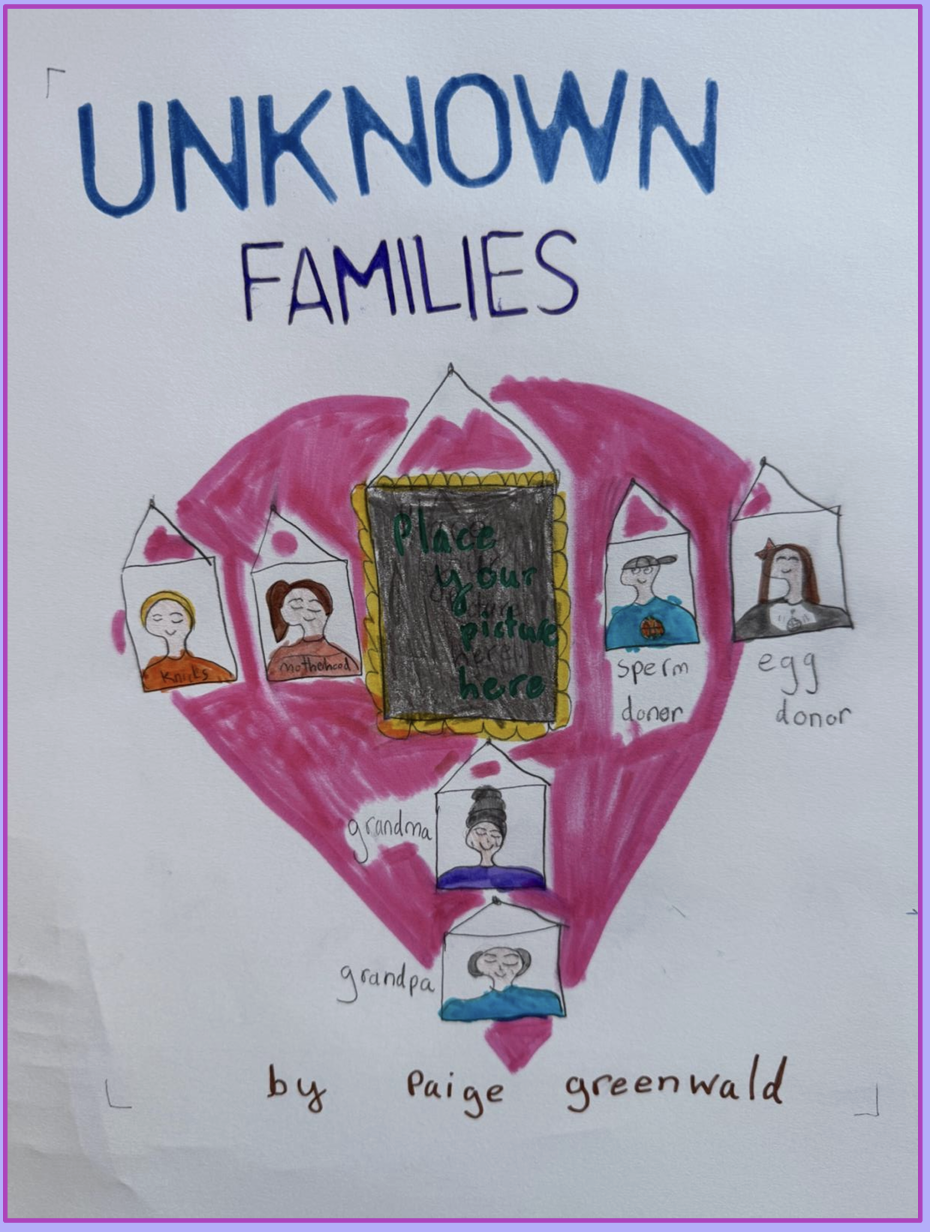
Hi, I’m Paige. I’m eight years old. I live in Manhattan, New York. I’m a donor kid.
I felt it was important to write this book because many things about my family are
unique, and I felt it was important to describe the many feelings I have about my
life and the people in it. I hope my book inspires you. I hope it makes you
understand your family tree and every single branch in it. If you have any
questions or just want to chat with me, please contact me through my mom’s email, jcgbeanie@gmail.com. I would love to hear from you!
| |
Donor Experiences
I was a donor starting in 1984, and I've had one "child" (she turns 40 this year) contact me through donorsiblingregistry. We shared some information back & forth through that website, a few years ago, but no other contact. She has a brother, also my offspring, but no interaction between us.
I have a half-sister who got some unexpected hits from a 23 & Me inquiry. Judging from the ages, probably my offspring. But no follow up on that.
My wife would rather I left any of these connections unexplored, and I respect that. When I was a donor in the late 80s' none of this was expected. The assumption was I'd be anonymous forever. I have mixed feelings about connecting with these young people. I did sign up with www.donorsiblingregistry.com, so I might be discoverable. And I shared some info about my life, ancestry & health with the woman who contacted me.
I'd be happy to answer questions, or offer more thoughts about the whole thing. FWIW I just turned 69.
******
I have had several relationships open and close with my (minor) biological children and their custodial parents over time. I would definitely say it's been an up-and-down experience! I wish there were more research and awareness around donors who take an active role in the children's lives growing up, because the emotional experience is very different than meeting them as adults.
I consider them my children. Certainly not "my children" to the exclusion of their custodial parents, but in addition to. If I were to describe my role, it would be more like an uncle than a father, but many accounts of donors meeting their children as adults portray a feeling of distance that doesn't feel present for me.
The relationships are complicated and have worked out or not worked out to varying degrees. One family is no longer in contact with me, and it has to do with the emotions the dad was feeling. Losing that contact has been hard.
Another (single) mom asked me to marry her! I said no. For a little while, that relationship sputtered along fine, and then more recently, we had an argument that centered in part around that, and she cut off contact with me.
These are meaningful relationships to me. I often feel that the recipient parents have not done sufficient work to consider how important these children (or even the adults involved) would be to me.
I've told the adults that they're a part of my family as well, certainly as much as a sibling or a sibling-in-law, and that has been met with varying degrees of reciprocity. One family described me as "one of their best friends," but I think the enthusiasm was asymmetrical between the husband and wife. When that came to a head, they expressed a fear that I might say "I love you" to their daughter, and I said, of course, whatever rules they had, I would follow. But obviously, I do love her, and why wouldn't I say that?
Two families have had in-person visits with me for two consecutive years, and that has been very rewarding. At the same time, even those relationships have had complications. One mom, a SMBC, really didn't talk to me for a year after first meeting me the one summer, and that was extremely hard on me. A lot of that was brought about by pressure from her family. But a year later we did meet, and now we sometimes exchange emails.
The other family, a trans couple, is extremely warm, and I have a good relationship with them. I think because the dad has many adoptive siblings, he has been one of the parents who has been able to adjust best to the weird expectations of donor relationships. The mom lost a close family member a few months after our (the three of our) son was born, and I also feel as though her awareness of the fragility of life has made her take the relationship more seriously, and perhaps with more hope and less fear.
Ultimately, I try to keep my eyes on the long term, to the children getting older and having more independence to form the relationships they want.
| |
Donor Sibling Registry Website Tips
DSR Tip #1: If you're posted on the DSR and receive email notification of a new match, please message that person to welcome them. People need to know that the DSR is a safe landing space and that they'll be welcomed into any group of parents/half-siblings/donors that already exists. Thank you!
DSR Tip #2: If you have checked the DSR for matches but don’t see any, it’s crucial to add your posting anyway. Many people are out there, watching the site, waiting for the first person to post their donor number. So be the first! Too many people have missed out on years of connecting because they and their matches were sitting back and waiting to see a match post first. If this has happened to you, please share your experience.
DSR Tip #3: Because sperm banks ship to many clinics worldwide, it’s important to post under the originating sperm bank, not your local clinic or doctor.
DSR Tip #4: When adding your posting to the DSR, please fill in as much information as possible about the donor, such as birthdate, height, weight, hair and eye color, education, and hobbies. This can help those who might not have a donor number recognize themselves (donors) or the descriptions from the donor profile (parents and DCP).
DSR Tip #5: If you are new to the DSR and match immediately after adding your posting, it’s a good idea to message your matches promptly. That way, they’ll know you’re interested in connecting and/or sharing information. If our automatic emails notifying them of the new match/new message get bounced back to us as undeliverable, don’t worry; I’ll mail them a letter via the USPS!
DSR Tip #6: Ensure that you enter the full and correct donor number/ID on the DSR, as consistency is crucial. If you’re unsure how to enter your facility’s donor number, please look at the postings already on the DSR to see how others have done it. Here are a few examples:
- If the sperm originated at Xytex, when there are 3 letters before the 4 numbers, make sure to include them with a space in the middle, like this: ABC 1234.
- If the sperm originated at Seattle Sperm Bank/European Sperm Bank/Nordic Sperm Bank, Cryos, (even Xytex), etc., and the donor ID has both a number and an alias name, please enter it like this: 10009 “Wendy”.
- If you used Follas Labs and have an “F” before the donor number, please enter the “F” in front of the donor number without a space, as shown here: F999.
- If you used Cryobiology and your donor ID starts with “CB” (or other letters) followed by numbers, please enter with a space between, like this: CB 999.
- If you used the Fertility Center of CA-Orange/San Diego/Santa Anna and have letters and numbers, please enter the letters first, then the numbers, with no space, like this: SL123.
- If you used Egg Donor Solutions, please enter EDS followed by the number without a space, like this: EDS999.
- If you used International Cryogenics and have letters before the number, please don’t leave a space, like this: AA999.
- If the sperm originated at the New England Cryogenic Center, please enter donor numbers with a dash after the “D”, like this: D-9990.
DSR Tip #7: If you are a parent who joined and posted on the DSR when your child was under 18, and they are now 18+ and wish to connect independently, please hand over your DSR login information (username and password) to them. We don’t want them joining and posting separately, as this would result in duplicate postings and they would match themselves. (Not good.)
Tip #8: If you messaged a match via the DSR and haven’t received a reply, you can email me, and I'll try to reach out as well. Please make sure that your last attempt was recent. All people posted on the DSR are notified about new matches, new messages, or new medical information posted for their donor. If the email notifications are kicked back to us as undeliverable, people are then sent a letter via the USPS. If that letter is returned as undeliverable, or if they still don’t reply, we can only hope they return to the DSR someday. Please ensure that your email address is up to date on the DSR.
| | |
Consult/Advice/Support Video Chat |
|
Current Donor-Conceived People Research Studies
Volitional Attachment Change in DC Adults: Moving Towards Implementation Science, a collaboration with Elizabeth B. Lozano, PhD, California Northstate University
The proposed research employs an implementation science approach to improve attachment style among donor-conceived people (DCP). Specifically, the objectives are two-fold: (1) To conceptually replicate previous research by Hudson and colleagues (2020) which showed that people can willingly change their attachment style with the implementation of “change goals”; (2) To examine whether volitional change in attachment can be extended to DCP. This study will complete data collection in January 2026.
Donor-Conceived Adults Study: Relationships, Origins, Outcomes, and Self-Identity among Donor-Conceived People. The purpose of this study, conducted in collaboration with Dr. Shelby Scott, Assistant Professor at the University of Texas at San Antonio and the Donor Sibling Registry, is to understand the experiences of donor-conceived people and to identify unique factors related to their relationships, origins, outcomes, and self-identity. Data from over 750 has been collected and is currently being analyzed.
|
Recent Speaking Engagements
| |
November 2025: The 33rd World Congress on Controversies in Obstetrics, Gynecology and Infertility (COGI). Counseling Donor Family Members (poster presentation) and Words Have Power in Sperm and Egg Donor Families: A Study of 555 Donor-Conceived People (oral presentation), Rome, Italy.
| |
BOOK: Counseling Donor Family Members
| |
Published by Ethics Press, this guide will be of interest to therapists, counselors, psychologists, sociologists, physicians, and other mental health professionals who may encounter this topic in their specific settings with patients who have a variety of presenting problems, as well as professionals in the reproductive medicine industry.
And yes, this guide is also helpful for donors, parents, and donor-conceived people. Understanding the layers of emotional depth and the specific challenges that all stakeholders might face is very helpful when maneuvering through your own personal journey.
| | | |
Psychology Today 2022-2025 Articles
2025 Published Articles
1/28/25
Donor Conception Disclosure: Telling Others
Making the decision to disclose donor conception to family, friends, and others.
2/18/25
The Hidden Ties That Bind
Donor sibling meetups sometimes mask a deeper truth.
3/24/25
From Fate to Destiny: Finding Donor Relatives
Donor-conceived people can be empowered to search for and find answers.
4/9/25
Breaking the Zero-Sum Myth: Expanding Donor Families
Love often grows when families do—as many donor families find out.
5/19/25
A Paradox in Donor Conception
The desire for genetic connection in donor families is bilateral.
2024 Published Articles
1/4/24
DNA Matters: Psychological Differences in Donor Families
Accurate and updated mental health information is vital for families and donors
1/25/24
The Ethical Sperm Bank: An All-Open Sperm Bank
An idea whose time has come.
2/26/24
The Problems With Donor-Sibling Groups of 50, 250, or More
Important medical, psychological, and social implications for donor offspring.
3/29/24
What Rights Are Important to Donor-Conceived People? Personal Perspective: A bill of rights for the infertility field.
4/30/24
Accurate Terminology in Egg Donation Families: T The person who contributes the egg is the biological or genetic mother.
5/30/24
Gamete Donors Connecting With Offspring and Their Families
Barriers: the perception of rejection, worry, fear, and other concerns.
6/19/24
Donor Families: Mutual Consent Contact
Personal Perspective: Mutually agreed-upon contact can be quite different.
8/5/24
Enhancing Family Connections in Donor Conception
A call for simplicity and transparency in donor-family relations.
8/19/24
Donor-Conceived People: The Search for Ancestry and Identity
Discovering family history enhances self-understanding and connection.
9/18/24
Bypassing Trauma in Donor-Conceived People
The power of early disclosure and donor family connections to reduce trauma.
10/15/24
Widening the Family Circle: Sperm and Egg Donors' Families
A donor's partner, parents, and children can support broadening the family.
11/5/24
Parents of Young Donor Children: Modeling Conversations Empowering donor-conceived children to be confident and proud of their origin story.
12/11/24
Donor Families: Navigating Disenfranchised Grief
When donor family members have feelings of unacknowledged loss and or rejection.
2023 Published Articles
1/6/23
Why are Sperm and Eggs Still Sold Anonymously?
Personal Perspective: The consequences of donor anonymity.
1/27/23
Cornerstones of the Donor Family: Kindness and Empathy:
From choosing a donor to expanding one's family to include donor relatives.
3/2/23
Tips for Donor-Conceived Adults Who Just Found Out the Truth:
The road might be bumpy for a while, with a multitude of difficult emotions.
4/3/23
Donor-Conceived People Who Have Always Known the Truth:
Being donor-conceived can have inherent challenges, even if told early on.
4/24/23
Egg and Sperm Donors: It's Complicated:
Some common thoughts and feelings surrounding selling one's gametes.
5/8/23
Donor-Conceived People: Curiously not Curious:
Some insist that they are not at all curious about their donor origins.
6/12/23
Parents of Donor-Conceived People: Researching the thoughts and feelings of biological and non-biological parents.
7/10/23
Reaching Out to Sperm and Egg Donors: Weighing the risks and rewards when deciding whether to attempt contact.
7/27/2023
Why Is There a Shortage of Black Egg and Sperm Donors?
Creating a more diverse donor landscape.
8/7/23
Donor-Conceived Children Meeting Their Half-Siblings
Widening one's family circle with enriching, lifelong relationships.
9/5/23
Gamete Sellers: It's More Than Just a Financial Transaction
Common themes, topics, and issues that arise with former egg and sperm donors.
10/2/23
Sperm Banks, Egg Facilities, and the Backfire Effect
Why have gamete sellers been resistant to evolving ideas about donor families?
11/1/23
Contacting a Gamete Donor for the First Time: The Letter.
You might not get a second chance to make a first impression.
12/4/23
Donor Offspring: Curiosity, Connecting, & Attachment Theory
Securely attached individuals are more likely to have a positive experience.
2022 Published Articles
3/6/22
Supporting Donor Family Members:
Adequate counseling and education are vital.
3/25/22
A Brief History of Donor Conception:
Looking at eight centuries of manipulating sperm.
4/19/22
Words Have Power in Sperm and Egg Donor Families:
The language of reproductive medicine can be tricky.
5/5/22
Happy Mother's Day to Solo Moms (of Donor Kids):
Personal Perspective: A special shout-out to single mother (only) parents.
5/27/22
Donor Conception: Questions for Prospective Parents:
Issues and themes to ponder when considering using donor gametes.
6/23/22
Truth and Honesty in Families of Donor-Conceived Children:
Early disclosure is crucial for building a happy and healthy family.
7/21/22
A Dearth of Adequate Gamete Donor and Recipient Counseling:
Education and counseling before selling or buying sperm and eggs is crucial.
8/25/22
Are You Thinking About Donating Your Sperm or Eggs?
A few practical, ethical, emotional, and medical issues to consider.
9/26/22
Nature and Nurture in Donor Families:
Biological and non-biological parents matter.
10/26/22
Tips for Parents of Adult Donor-Conceived People:
Are you about to disclose, or do you have a child who just found out the truth?
11/28/22
DNA: Donors Not Anonymous:
Sperm and egg donor anonymity has not been possible since 2005.
12/13/22
Secrecy v. Privacy in Donor Families: Walking the fine line between privacy and secrecy is inherent in donor families.
| | | | |
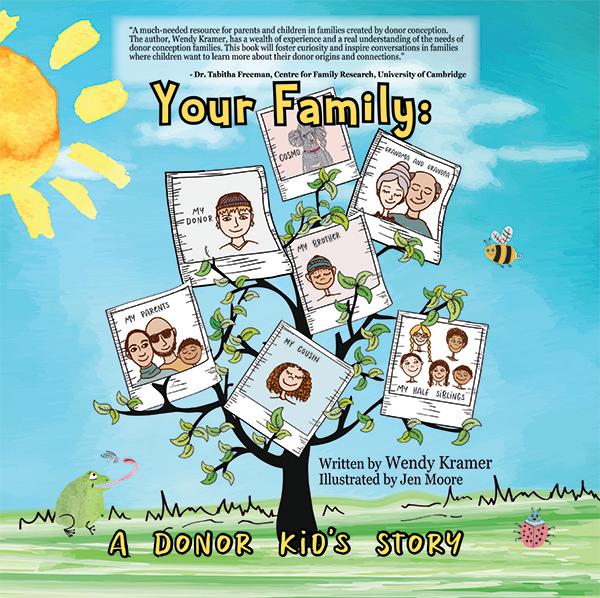
Your Family: A Donor Kid’s Story is a sweet and light-hearted picture book that answers the question "Where did I come from?” and then gently introduces the concepts of half-siblings and donors openly and honestly. The book starts with the parents’ desire to have a baby and the use of a donor, and then broaches the topic of half-siblings and biological parents/donors. A perfect book for donor-conceived children and their parents in all family types to learn about how they were conceived and to understand that being curious about their unknown genetic origins and relatives is natural.
Just as there are many family types, there are also many ways to define a child’s family and their donor relatives. Reading this book with your young donor-conceived child can initiate or supplement important and ongoing dialogue about these genetic connections. These early conversations are integral for creating a happy and healthy donor child and family.
"A lovely book for children who were conceived with donor sperm or egg. Parents in all kinds of families will find it very helpful in explaining their child’s conception story in a gentle, simple, and positive way."
—Jane Mattes, L.C.S.W., psychotherapist and Founder/Director of Single Mothers by Choice
"Having worked with Wendy Kramer for many years, I know her organization, the Donor Sibling Registry, is valuable to the LGBTQ parenting community. We’ve published family stories that talk about how DSR has brought joy to not just the half-siblings discovering each other but to their gay parents as well. Kramer’s children’s book, Your Family: A Donor Kid’s Story, is an important contribution to the LGBTQ community and a great addition to the homes of all parents with donor-conceived children." —Angeline Acain, publisher and editor, Gay Parent Magazine
| | | |
| |
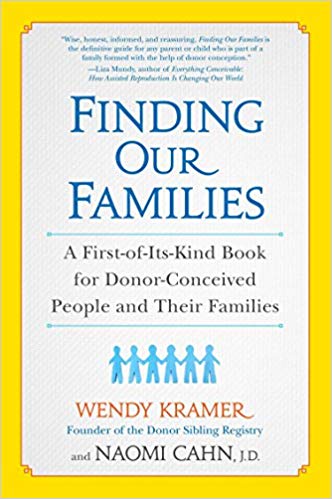
Finding Our Families: A First-of-Its-Kind Book for Donor-Conceived People and their Families
Millions of people have been born with the help of donor sperm or eggs, including Wendy Kramer’s son. Realizing the unique concerns of being or parenting a donor-conceived child, Kramer launched what would become the world’s largest database for connecting donor-conceived people, the Donor Sibling Registry (DSR).
Finding Our Families provides additional support for this growing community. With compassion and insight, the authors draw on extensive research to address situations families face throughout a donor-conceived child’s development, including the search for a biological parent or half-sibling and how to forge a healthy self-image.
"The book successfully honors its promise to deliver the tools necessary to help donor-conceived children discover and explore their genetic legacies.” —Publishers Weekly
| | | | | |
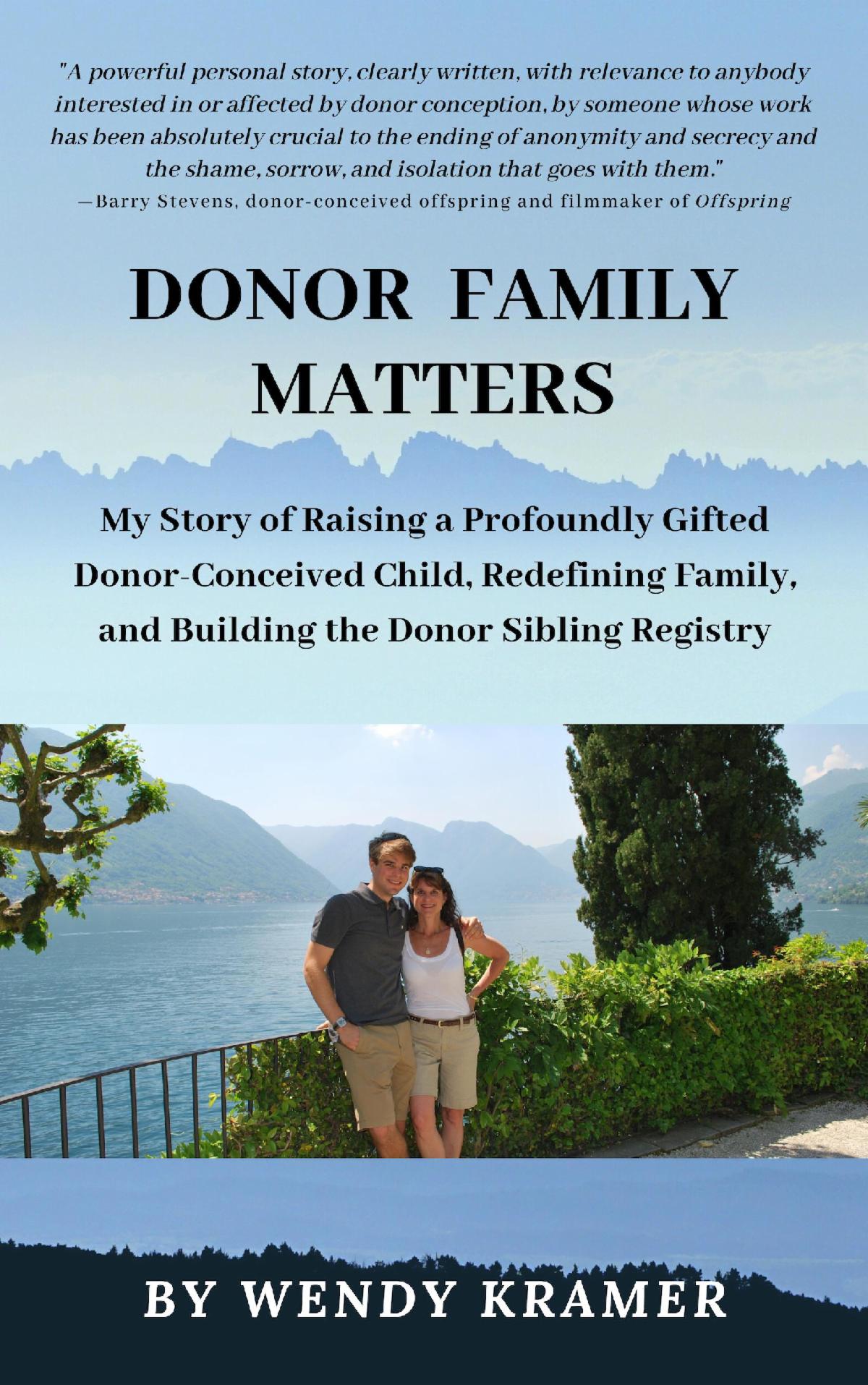
Donor Family Matters
The story of Wendy Kramer and her donor-conceived child, Ryan, who eventually found his biological father and [now 30] half-siblings. Wendy and Ryan created the Donor Sibling Registry, the world’s largest platform for mutual-consent contact of sperm, egg, and embryo donors, donor-conceived children and adults, and their parents.
Educate the child. Raise him or her without biases of any kind. Teach him or her to trust in others but to rely on self. Instill in him or her a sense of humor and the ability to enjoy life.”
Penned on a sperm bank intake form, these words of advice from Donor 1058 to the future recipients of his donations became a parental motto for one particular recipient, Wendy Kramer, who would go on to found the Donor Sibling Registry (DSR). With more than [97,300] members in 100+ countries, the DSR is the world’s largest platform for sperm, egg, and embryo donors, donor-conceived children and adults, and their parents to connect and share information through mutual consent contact. In her role with the DSR, Wendy has become a leading advocate for donor families and for reformation of the modern profit-driven donor conception industry.
| | | | | |