Newsletter | January 2026 | | | Latest Updates on Children's Care | | | Resources on Ukraine Response | | | This section includes resources, news and other key documents related to children's care in the context of the current humanitarian crisis affecting Ukraine. For more resources, visit the growing collection of documents in the BCN Ukraine Response Repository. | | | | |
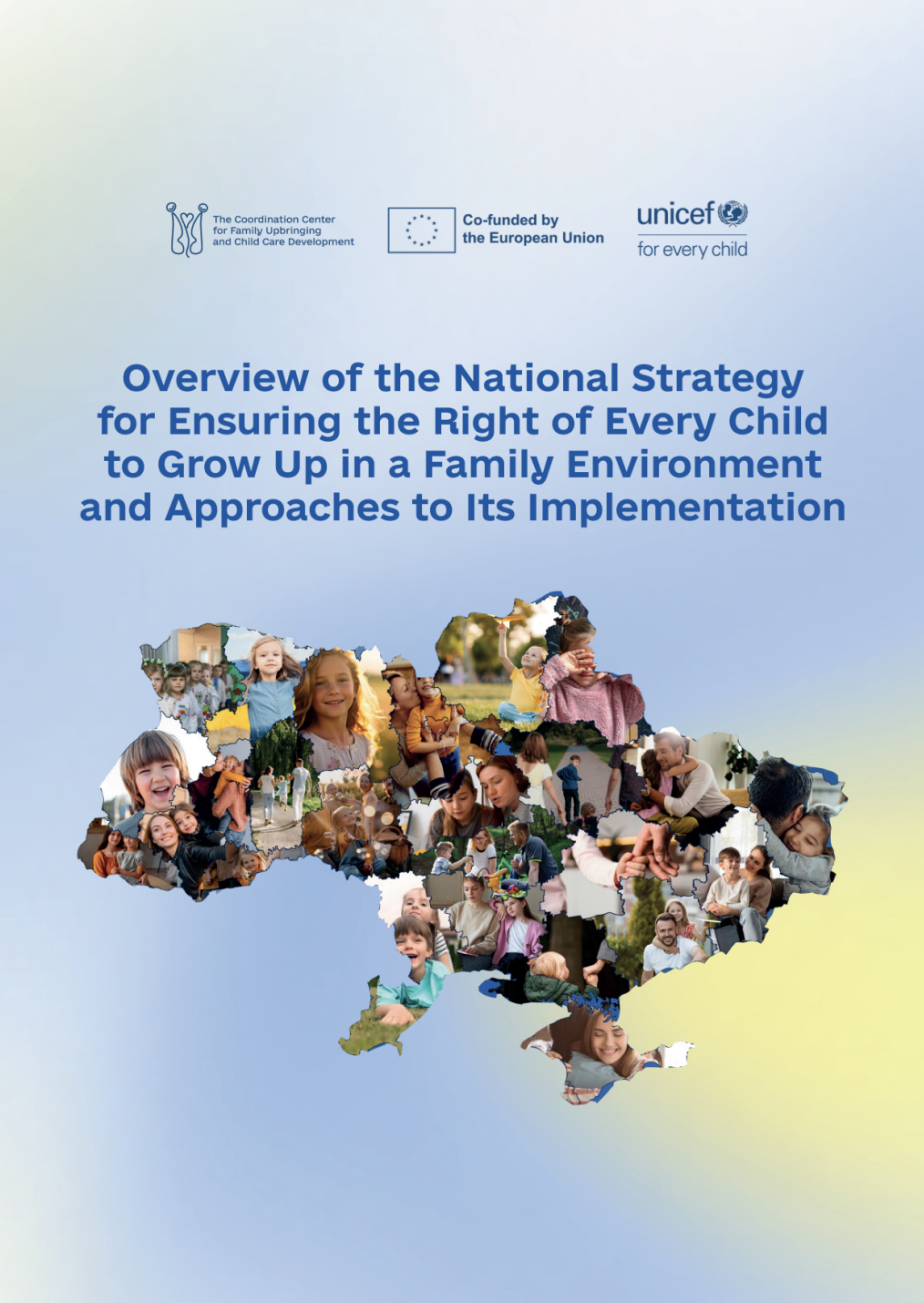
Series of Resources Aligned with National Strategy for Ensuring the Right of Every Child to Grow Up in a Family Environment
This series of resources has been developed as part of the Government of Ukraine's care reform efforts, including the implementation of the new National Strategy for Ensuring the Right of Every Child in Ukraine to Grow Up in a Family Environment.
See:
| | | | |
Children in War: Attachment, Trauma, Support and Recovery
War negatively affects adults’ mental and physical health, which in turn impacts their parenting, exposing children to both direct and indirect stressors. This book examines these consequences, using evidence-based research and case studies from the Russian-Ukrainian war to highlight the importance of attachment, trauma-informed support, and interventions for families during and after conflict.
| | Understanding the Situation | | | | |
Young People’s Experiences of Support, Belonging, and Freedom Before and After Leaving Residential Care Institutions in Kenya
The Government of Kenya has undertaken reform efforts and aims to reunify children in residential care with families where possible. This study aimed to explore how young people in Kenya who have lived in residential care describe and conceptualize their experiences of life in residential care and life after leaving residential care.
| | | | |
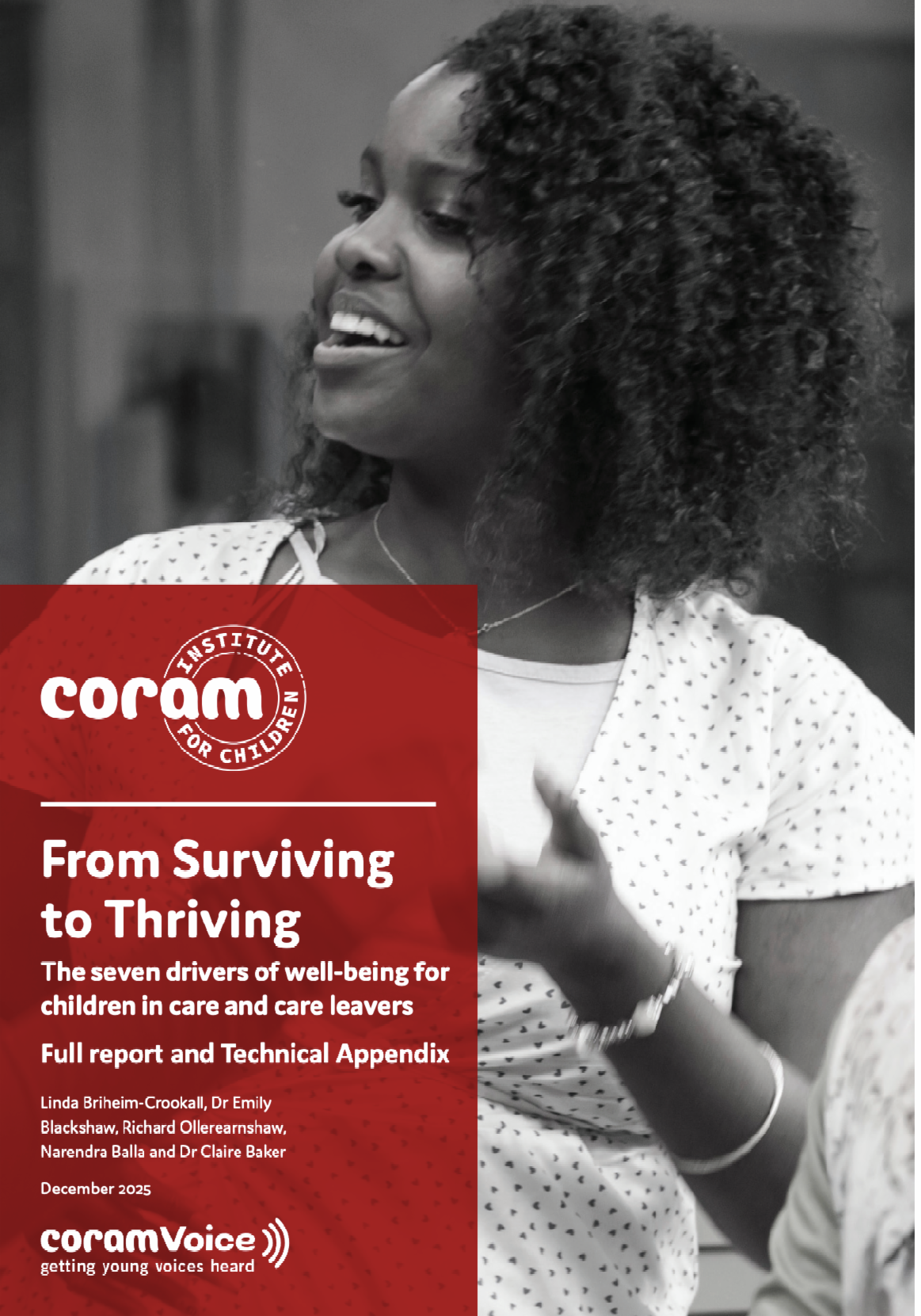
From Surviving to Thriving: The Seven Drivers of Well-being for Children in Care and Care Leavers
This report from the Coram Institute for Children marks the 50th anniversary of Coram Voice and highlights the Bright Spots programme, which captures the perspectives of children and young people in care and care leavers to inform local and national policy in the UK. Drawing on 27,000 responses collected between 2015 and 2024, the study focuses on what matters most to children and young people in their lives, emphasizing their voices rather than care system outcomes or reasons for entering care.
| | | | |
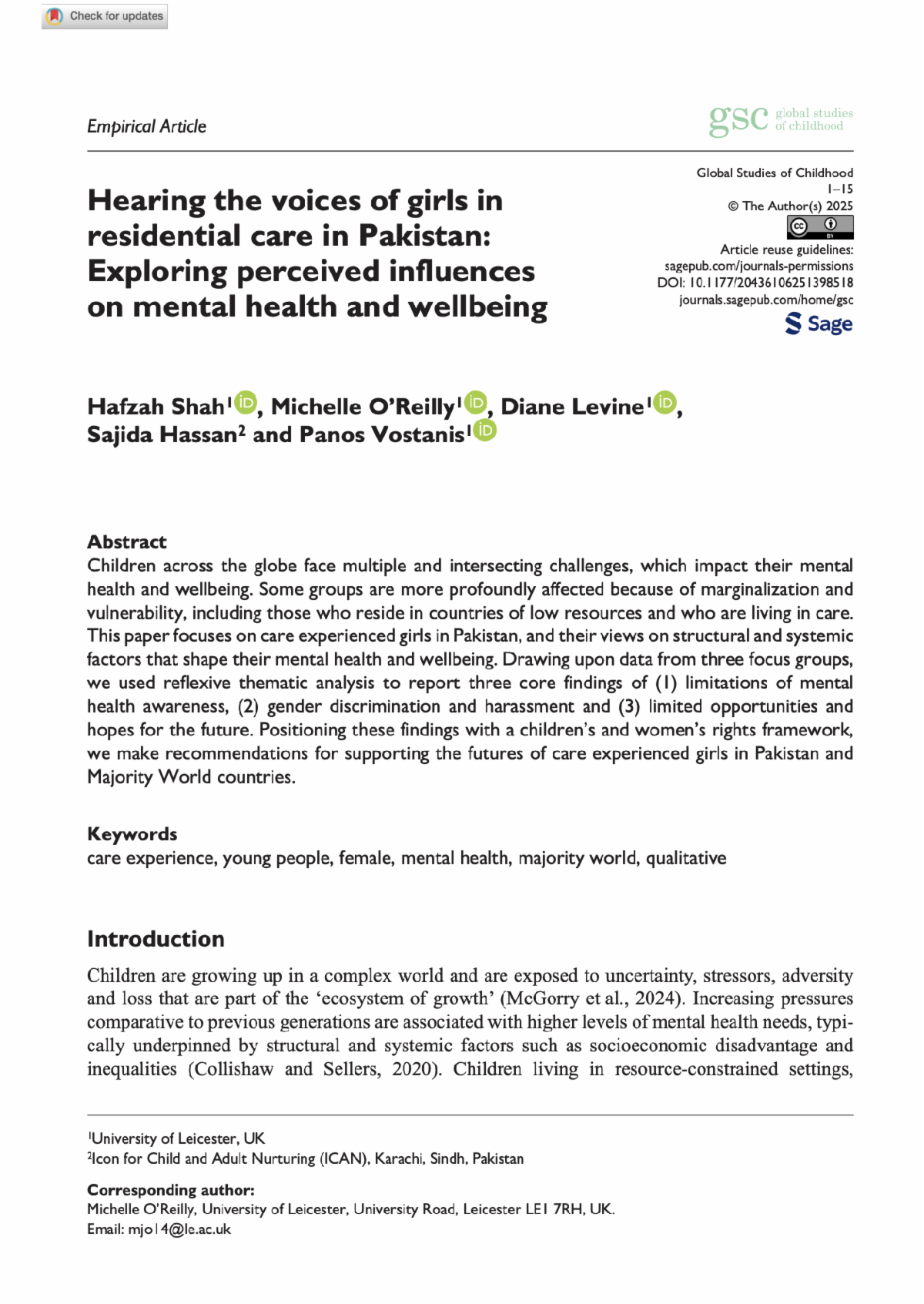
Hearing the Voices of Girls in Residential Care in Pakistan: Exploring Perceived Influences on Mental Health and Wellbeing
This paper explores the mental health and well-being of care-experienced girls in Pakistan, highlighting how structural and systemic factors shape their experiences. Findings reveal limited mental health awareness, pervasive gender discrimination and harassment, and restricted opportunities, leading to recommendations for rights-based interventions to better support girls in care in Pakistan and other contexts.
See also:
| | | | |
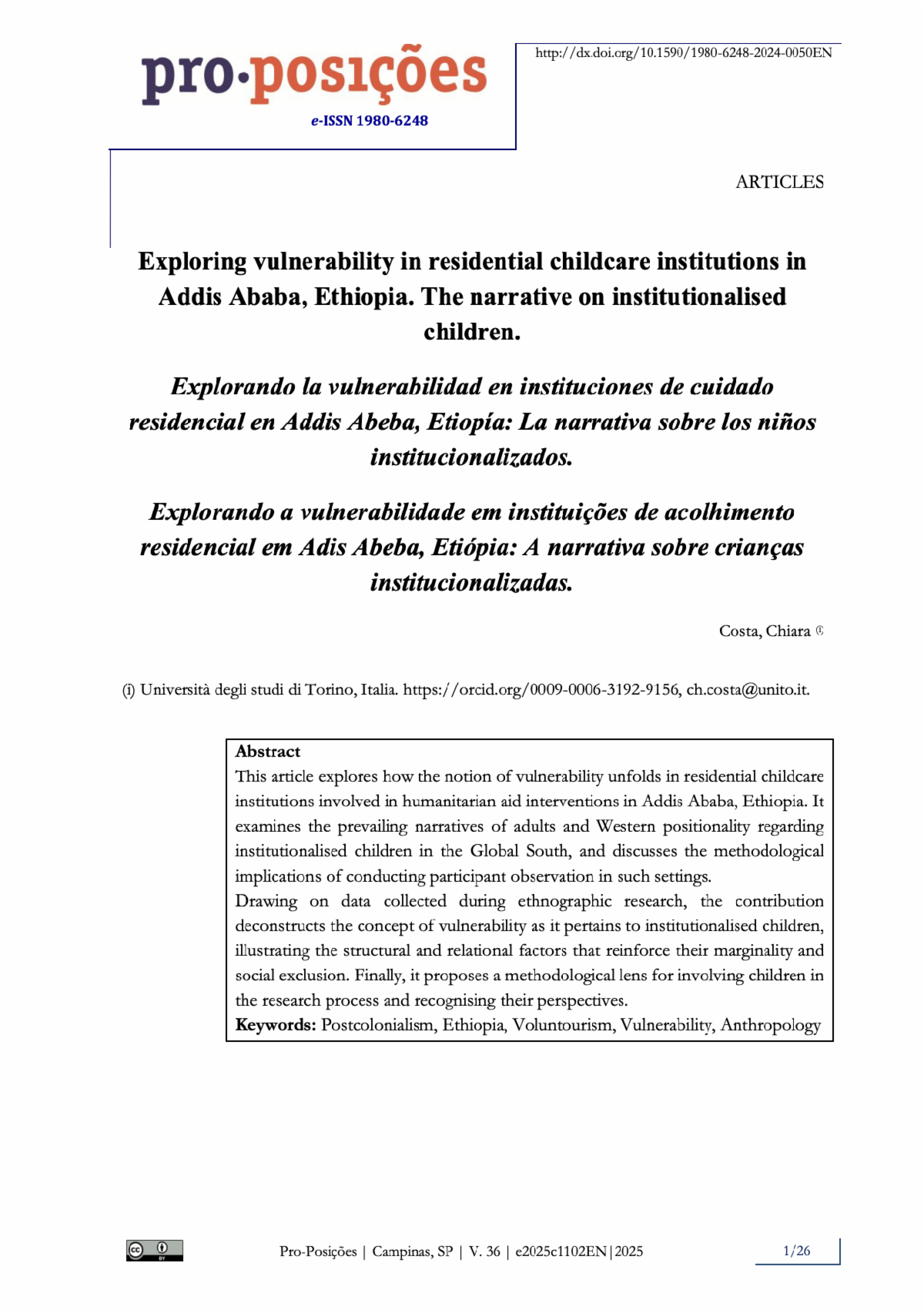
Exploring Vulnerability in Residential Childcare Institutions in Addis Ababa, Ethiopia. The Narrative on Institutionalised Children
This article examines how vulnerability is constructed and experienced within residential childcare institutions involved in humanitarian interventions in Addis Ababa, Ethiopia, with particular attention to adult narratives and Western positionality. Drawing on ethnographic research, it deconstructs structural and relational factors shaping children’s marginalisation and proposes methodological approaches that centre children’s perspectives in research.
| | | | |
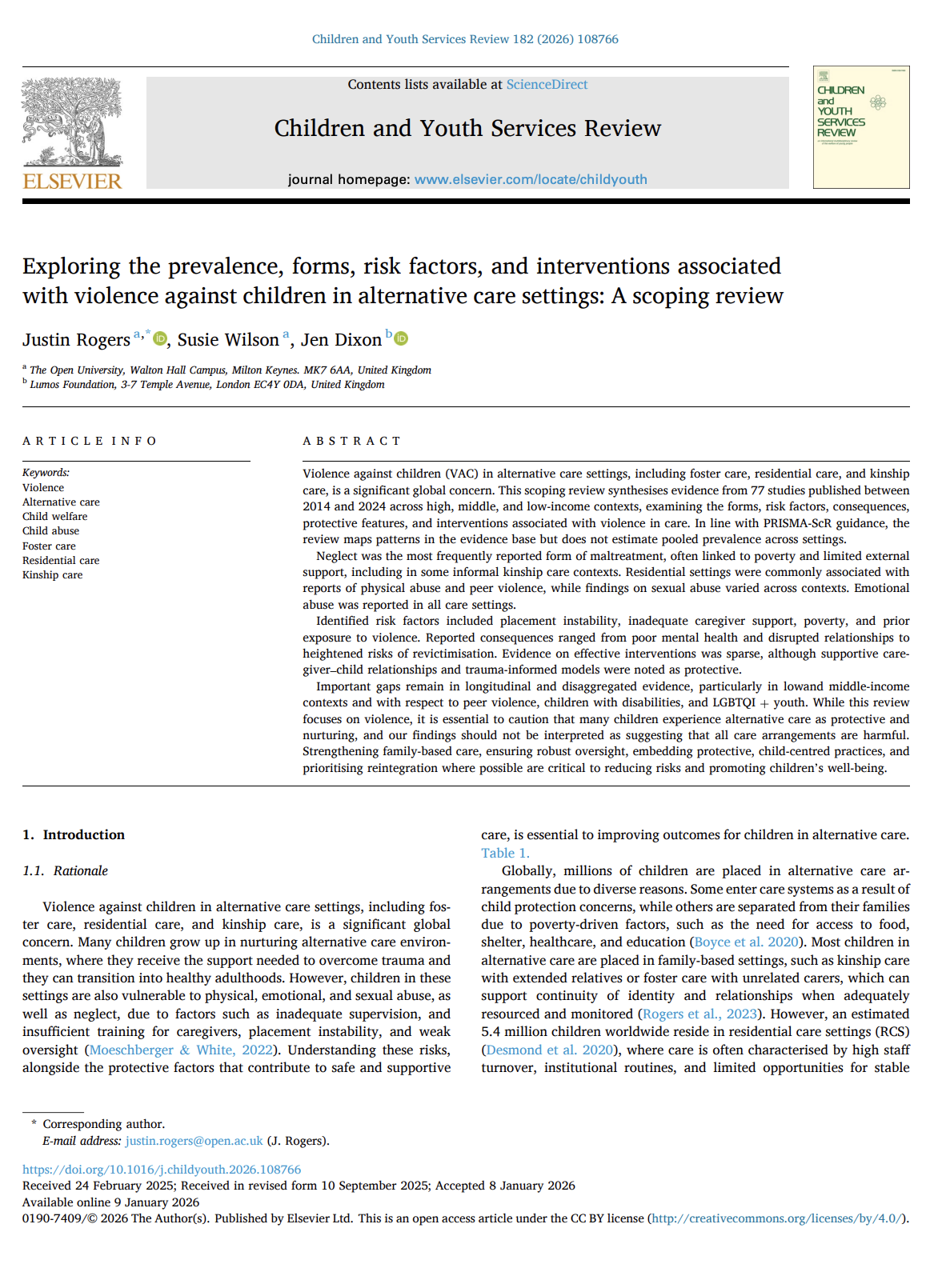
Exploring the Prevalence, Forms, Risk Factors, and Interventions Associated with Violence Against Children in Alternative Care Settings: A scoping review
This scoping review synthesises evidence from 77 studies (2014–2024) on violence against children in foster, residential, and kinship care, finding neglect to be the most common form of maltreatment, alongside physical, emotional, sexual, and peer violence across settings. While evidence on effective interventions is limited, the review highlights key risk factors and consequences, underscores the protective role of supportive relationships and trauma-informed care, and calls for stronger family-based care, oversight, and child-centred practices to reduce harm and promote well-being.
| | | | |
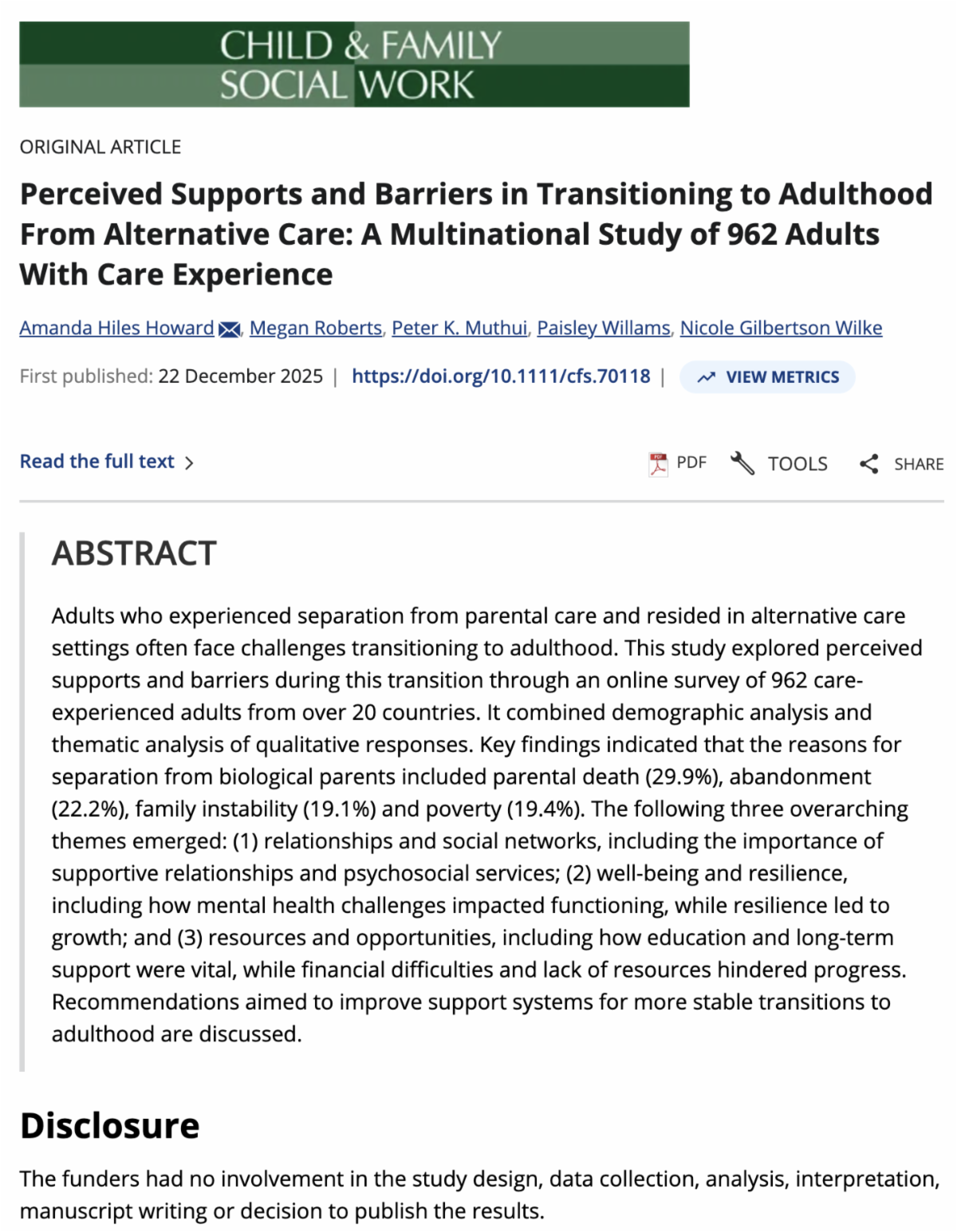
Perceived Supports and Barriers in Transitioning to Adulthood From Alternative Care: A Multinational Study of 962 Adults With Care Experience
This study examines the experiences of 962 care-experienced adults from over 20 countries, focusing on the supports and barriers they encountered transitioning to adulthood after separation from parental care. Findings highlight the critical roles of supportive relationships, mental health and resilience, and access to education and resources, while also noting how financial hardship and limited services hinder successful transitions, informing recommendations for strengthened support systems.
| | | | |
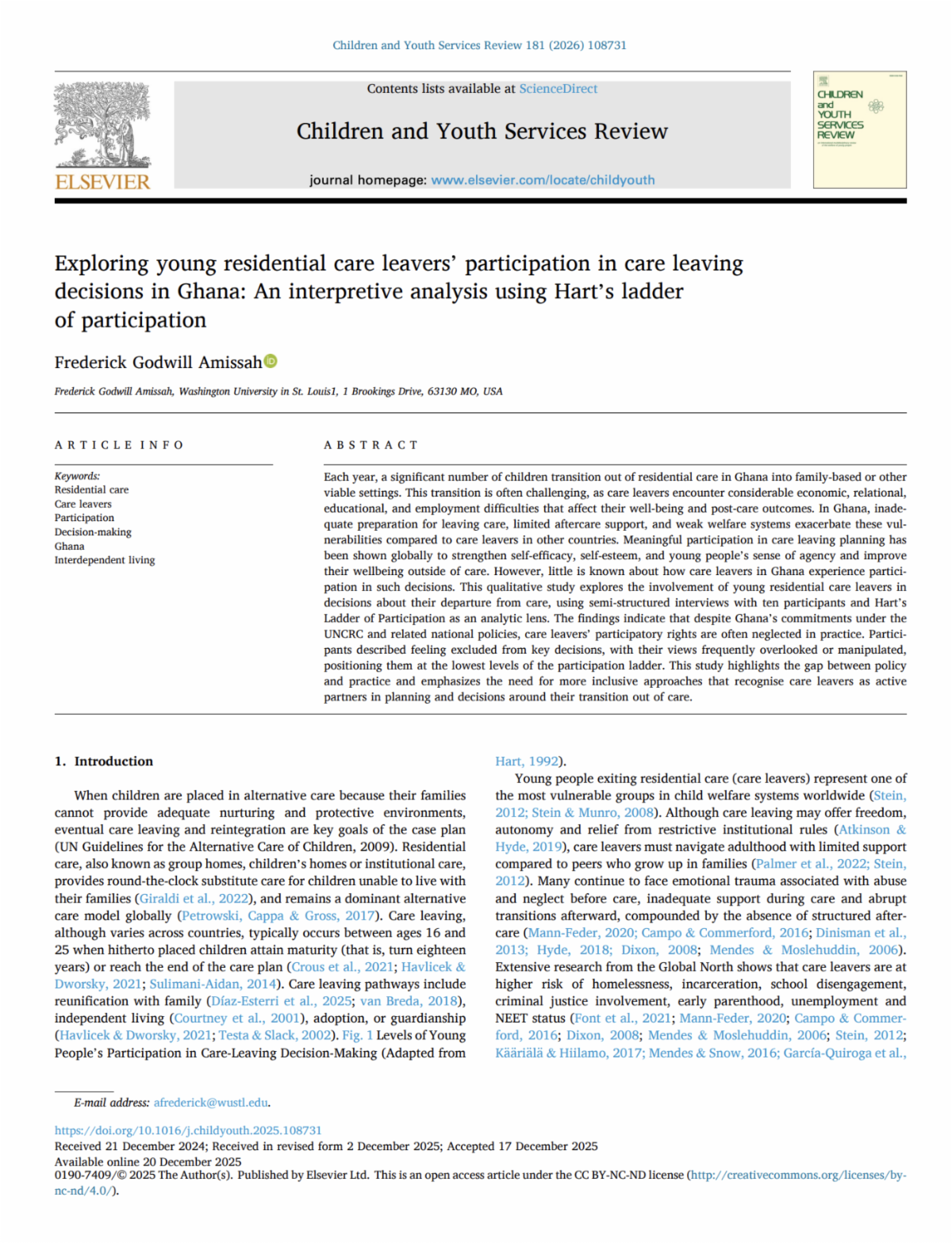
Exploring Young Residential Care Leavers’ Participation in Care Leaving Decisions in Ghana: An Interpretive Analysis Using Hart’s Ladder of Participation
This qualitative study examines how young care leavers in Ghana are involved in decisions about their transition from residential care, revealing that despite national and international policy commitments, their participatory rights are often neglected. Findings show that care leavers frequently feel excluded or manipulated in key decisions, highlighting the need for more inclusive, rights-based approaches that recognize them as active partners in planning their post-care futures.
| | | | |
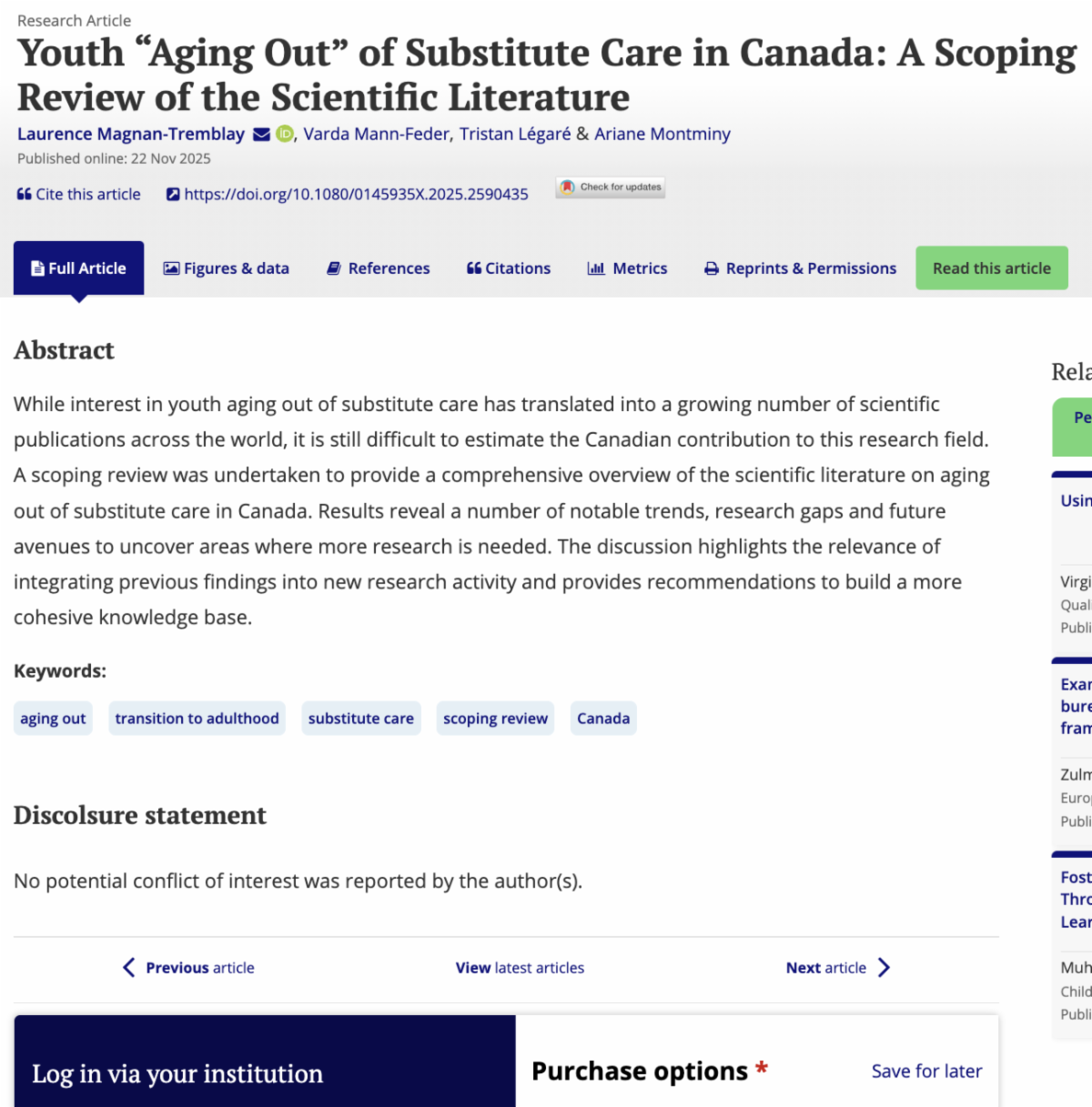
Youth “Aging Out” of Substitute Care in Canada: A Scoping Review of the Scientific Literature
This scoping review examined the scientific literature on youth aging out of substitute care in Canada to address challenges in estimating the country’s contribution to this growing global research field. The review identified key trends, research gaps, and future directions, emphasizing the need to better integrate existing findings to build a more cohesive Canadian evidence base.
| | | | |
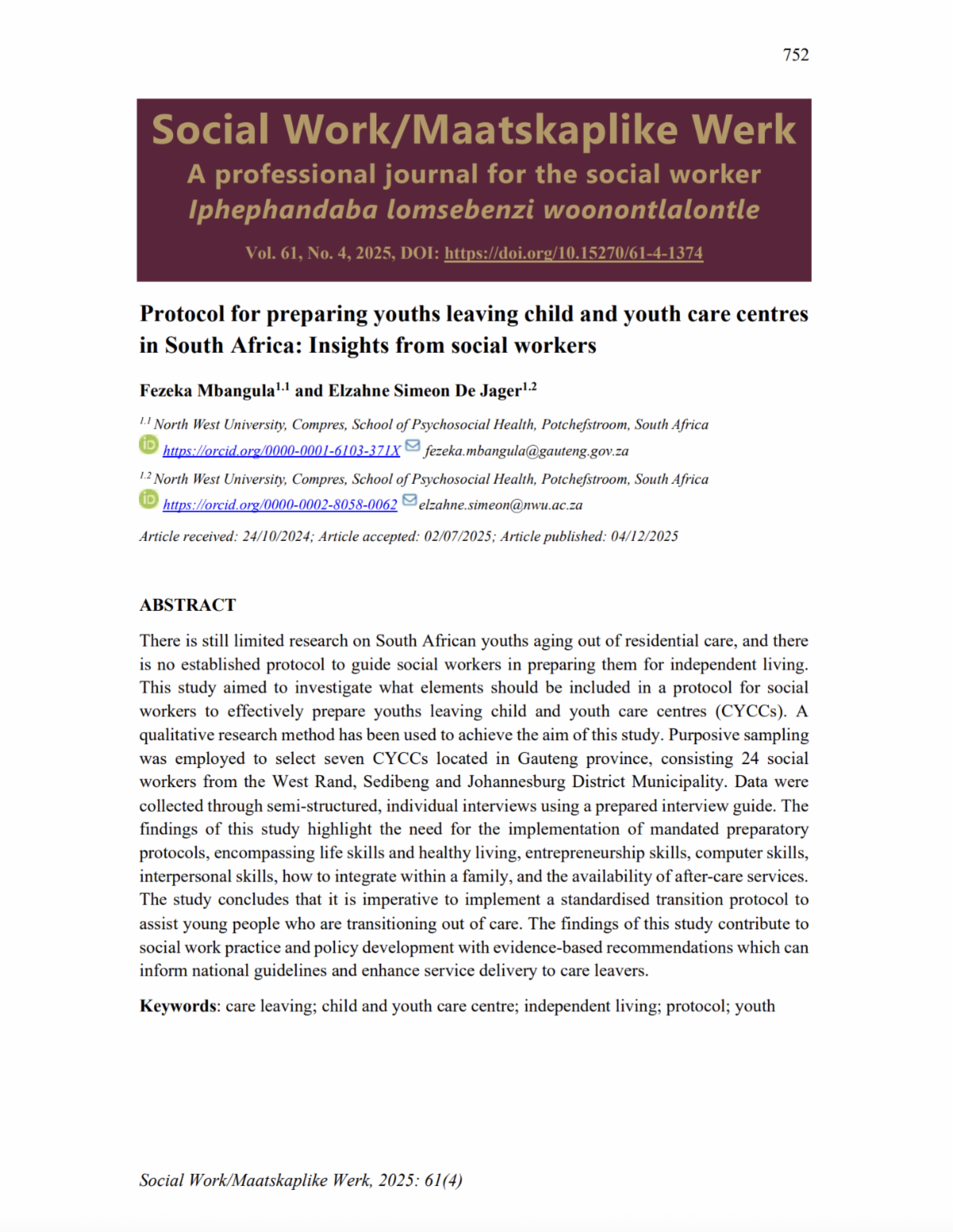
Protocol for Preparing Youths Leaving Child and Youth Care Centres in South Africa: Insights from Social Workers
There is still limited research on South African youths aging out of residential care, and there is no established protocol to guide social workers in preparing them for independent living. This study aimed to investigate what elements should be included in a protocol for social workers to effectively prepare youths leaving child and youth care centres (CYCCs).
| | | | |
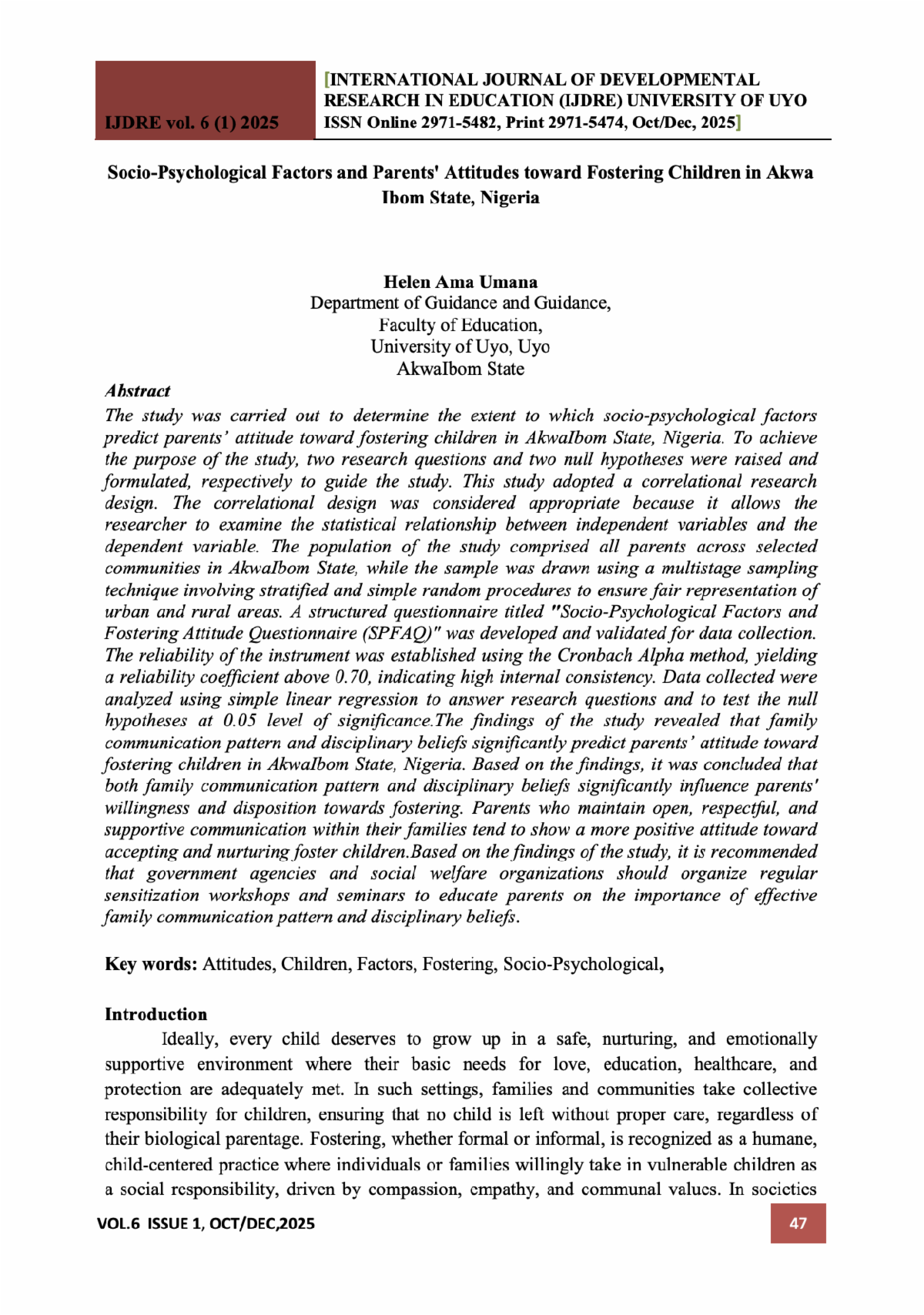
Socio-Psychological Factors and Parents' Attitudes toward Fostering Children in Akwa Ibom State, Nigeria
This study examines how socio-psychological factors influence parents’ attitudes toward fostering children in Akwa Ibom State, Nigeria, using a correlational design and survey data from parents in urban and rural communities. Findings show that family communication patterns and disciplinary beliefs significantly predict positive attitudes toward fostering, highlighting the need for sensitization and education initiatives led by government and social welfare organizations.
| | | | |
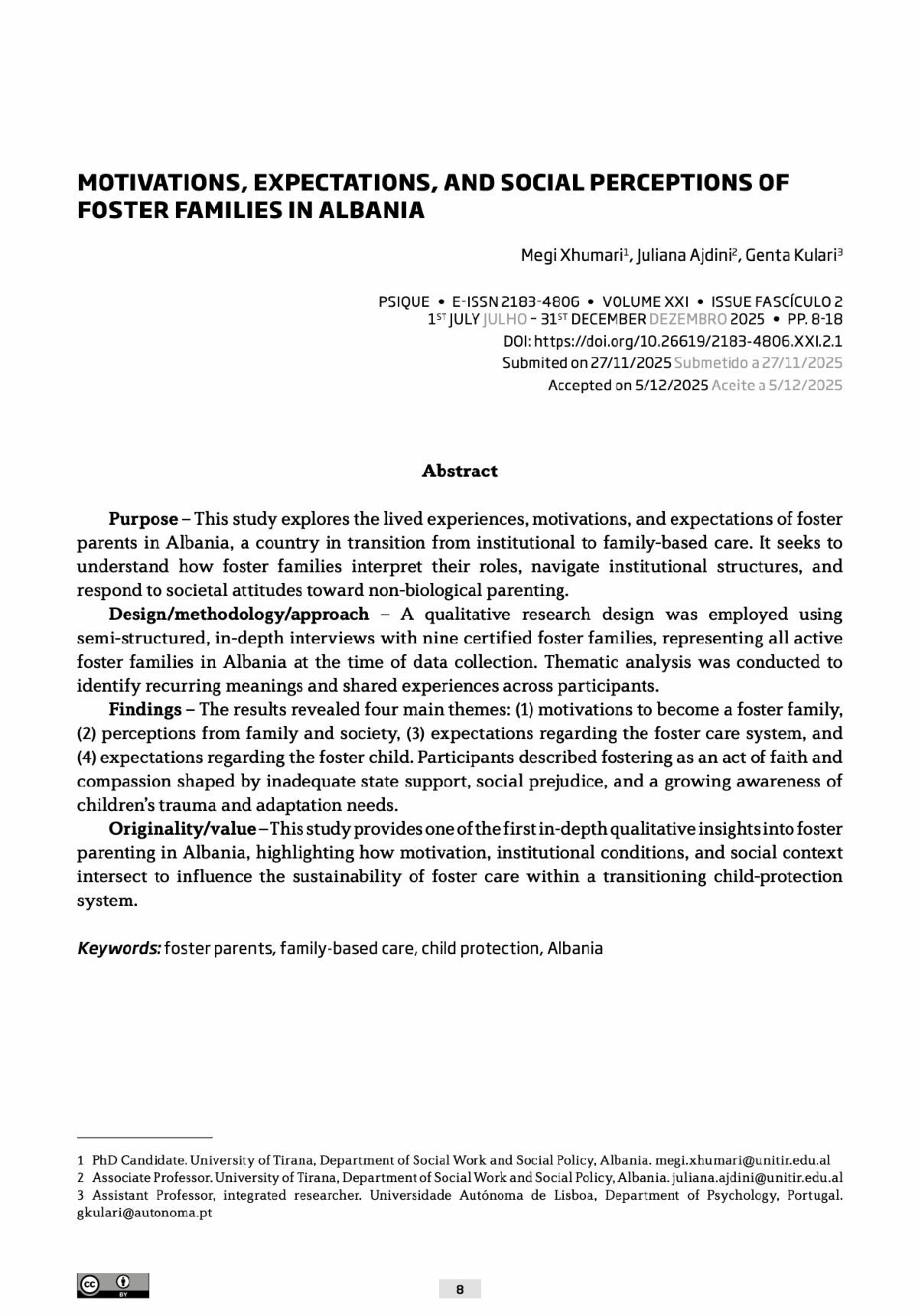
Motivations, Expectations, and Social Perceptions of Foster Families in Albania
This study explores the lived experiences, motivations, and expectations of foster parents in Albania, a country in transition from institutional to family-based care. It seeks to understand how foster families interpret their roles, navigate institutional structures, and respond to societal attitudes toward non-biological parenting.
| | | | |
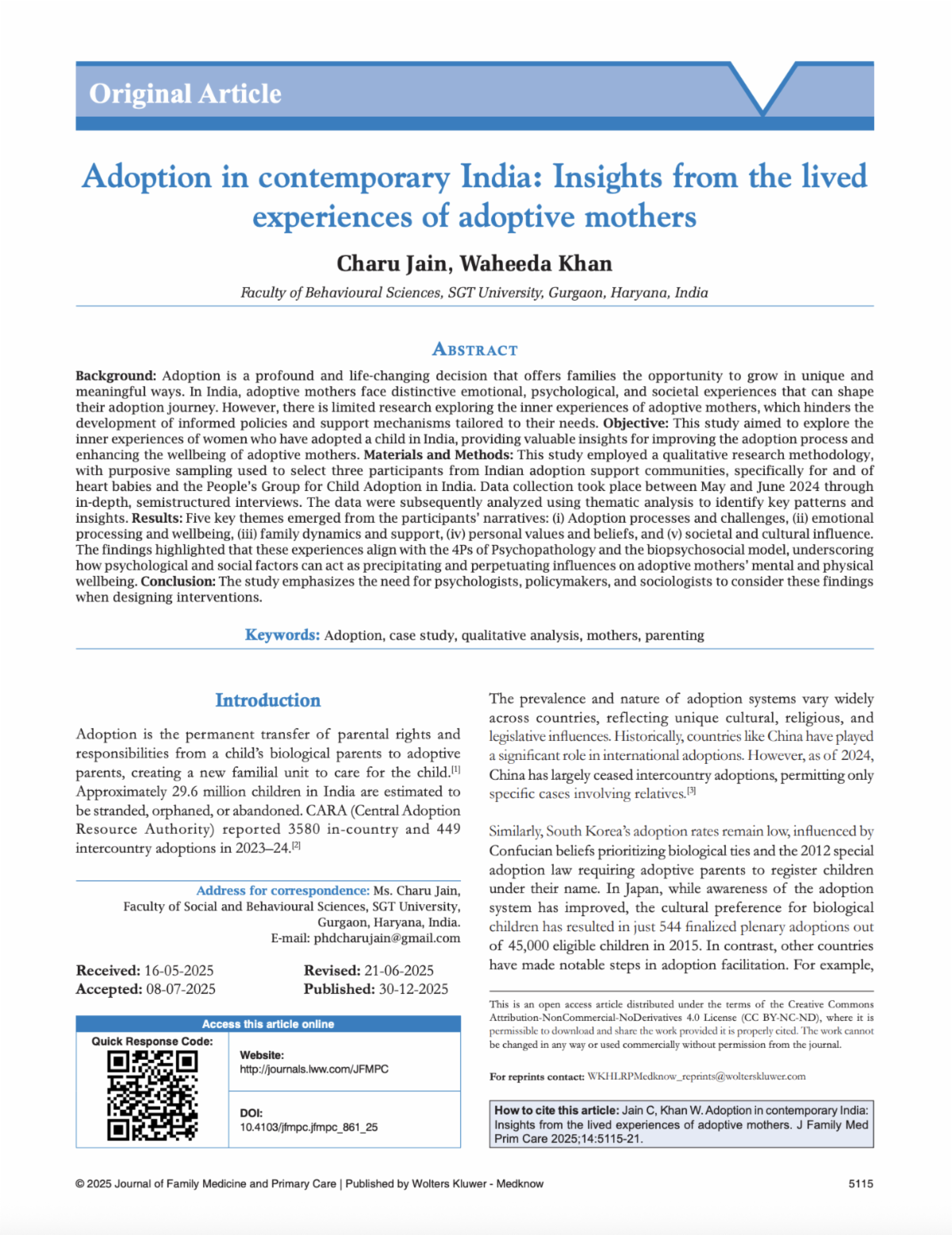
Adoption in Contemporary India: Insights from the Lived Experiences of Adoptive Mothers
This qualitative study explores the emotional, psychological, and social experiences of adoptive mothers in India through in-depth interviews, identifying key themes related to adoption processes, well-being, family dynamics, personal values, and societal influences. The findings highlight how these experiences interact with biopsychosocial factors, underscoring the need for more informed, mother-centred policies and support mechanisms in the adoption system.
| | | | |
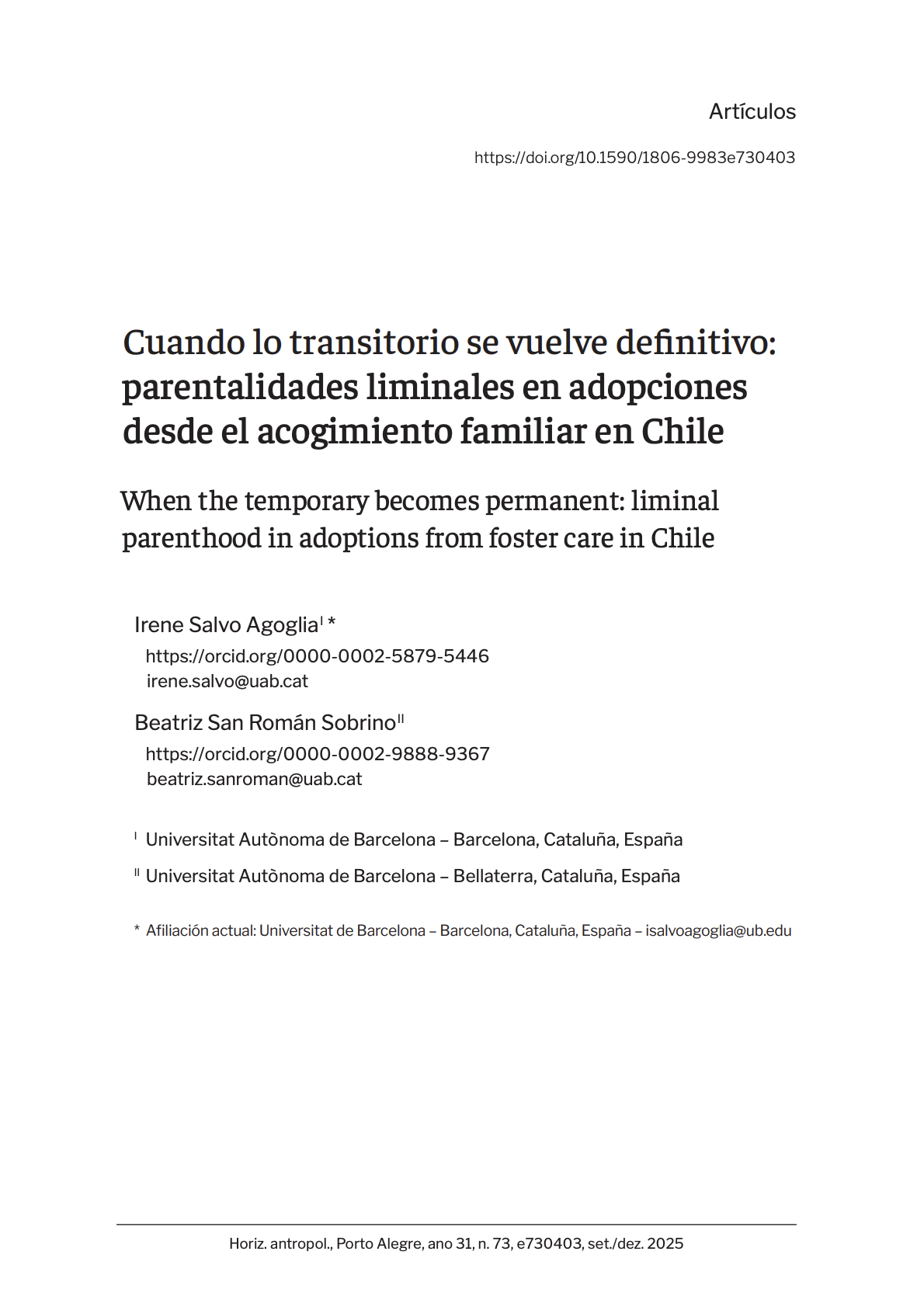
When the Temporary Becomes Permanent: Liminal Parenthood in Adoptions from Foster Care in Chile
This article, available in Spanish, critically analyzes the complex journey undertaken by foster families who decide to adopt the children or adolescents they initially cared for on a temporary basis. Through the study of four cases, it examines the experiences and perspectives of Chilean families who chose to transform their role from foster care to adoption, presenting narratives that highlight the controversies, inconsistencies, and tensions between the logics of temporary and permanent care within the Chilean child protection system.
| | | | |
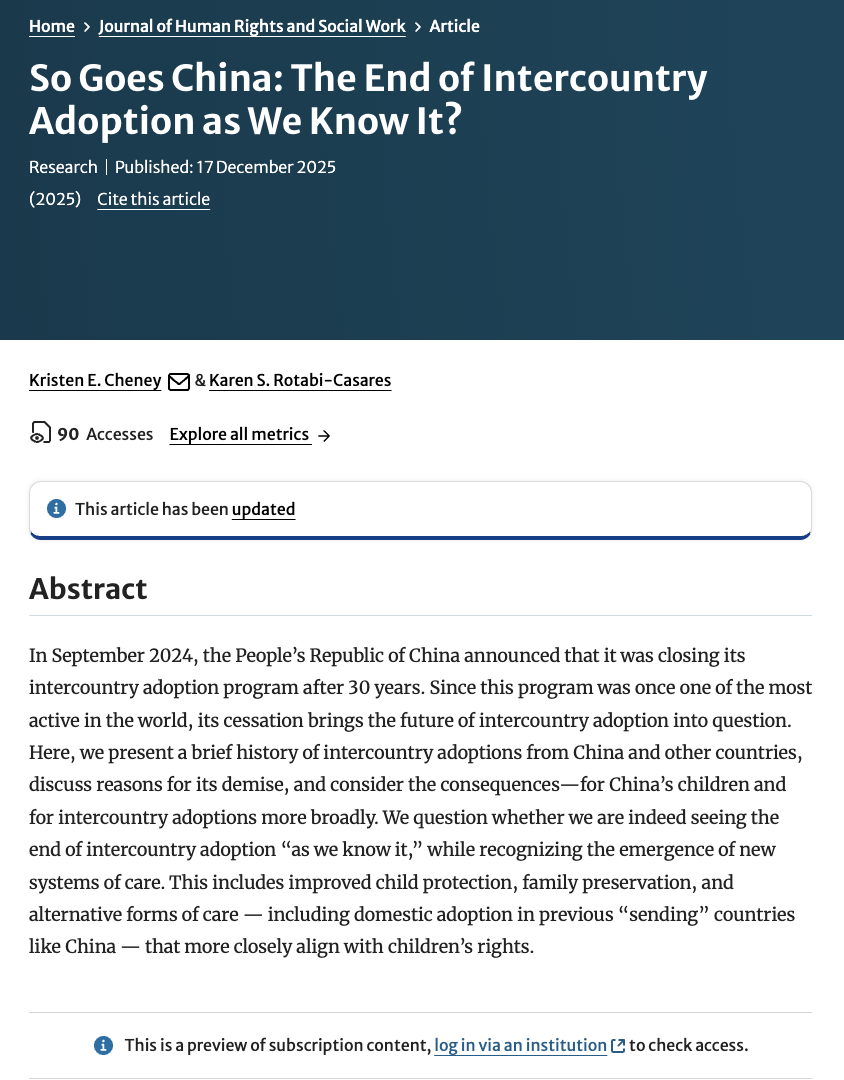
So Goes China: The End of Intercountry Adoption as We Know It?
This article presents a brief history of intercountry adoptions from China and other countries, discusses reasons for its demise, and considers the consequences—for China’s children and for intercountry adoptions more broadly. It questions whether we are indeed seeing the end of intercountry adoption “as we know it,” while recognizing the emergence of new systems of care.
| | | | |
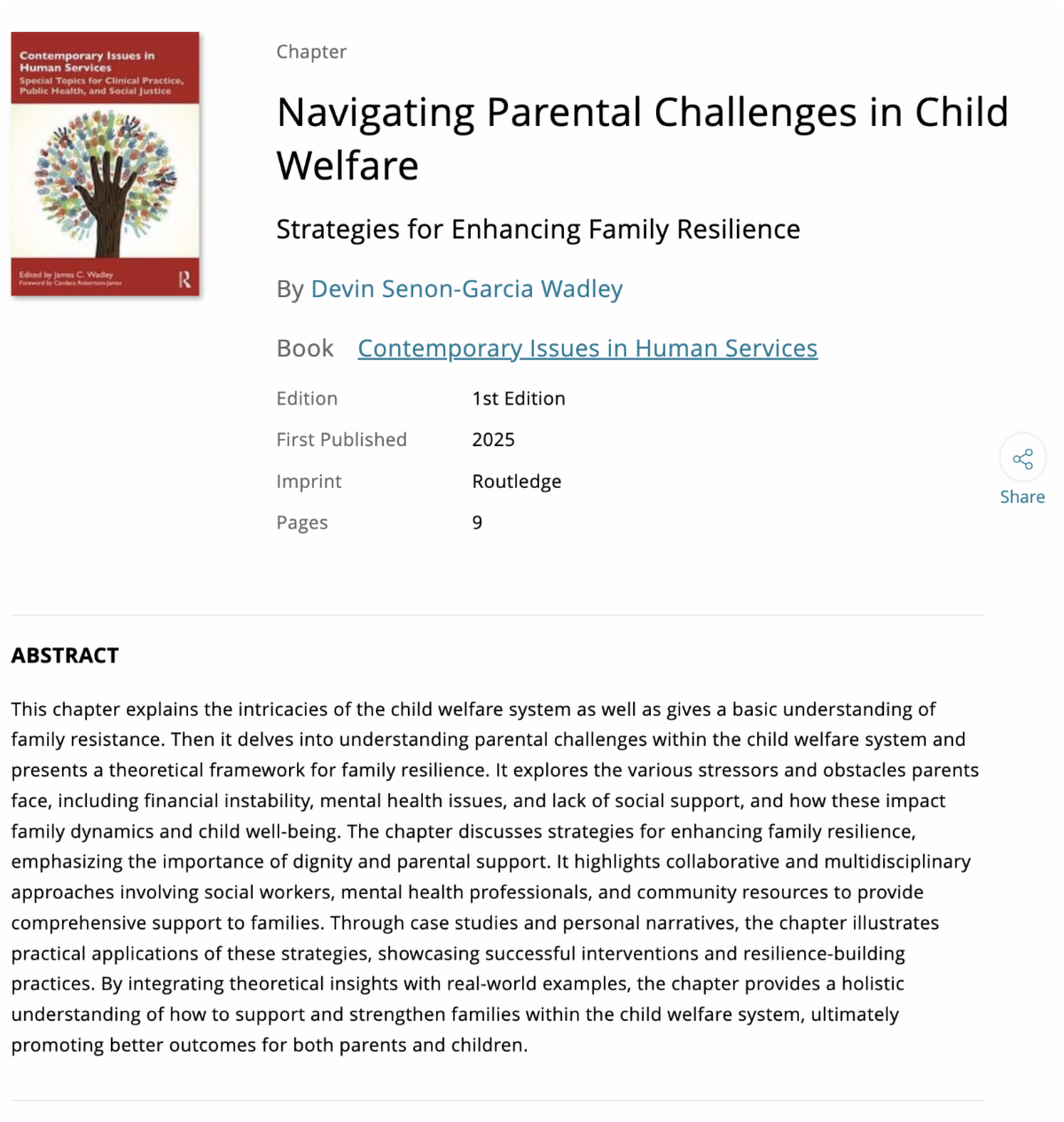
Navigating Parental Challenges in Child Welfare
This book chapter examines the child welfare system, parental challenges, and family resistance, presenting a theoretical framework for building family resilience. It highlights stressors such as financial instability and mental health issues, and emphasizes collaborative, dignity-centered strategies that combine social work, mental health, and community support to improve outcomes for parents and children.
| | | | |
Beyond the Walls: Systemic Barriers to Education in Institutional Care and the Role of Social Work
This study examines the educational barriers faced by children in institutional care in India, identifying how structural rigidity, limited resources, stigma, and emotional neglect undermine equitable access to meaningful learning. Drawing on qualitative insights from care and education professionals, it highlights the critical role of social work in advancing child-centred, rights-based approaches to transform institutional care into an environment that supports inclusion, well-being, and educational equity.
| | | | |
Challenges Facing Orphans and Vulnerable Children in Zimbabwe
This book explores the challenges facing orphans and vulnerable children (OVC) in Zimbabwe within the broader context of the Global South, highlighting how poverty, inequality, HIV/AIDS, and economic instability deepen children’s vulnerability. Drawing on Ubuntu philosophy, neoliberalism, and African Renaissance perspectives, it underscores the importance of community-led, culturally sensitive, and African-driven approaches to inform policy and practice supporting OVCs.
| | | | |
Promoting the Rights of Infants in Care: Advocating Advocacy
This article explores how infants’ rights in alternative care are understood and advocated for by practitioners in Finland, drawing on interviews with foster carers, social workers, and other professionals. The findings show that advocacy is driven by recognition of gaps in standardised practice and is enacted through embodied, institutional, and structural approaches, highlighting the need for age-aware expertise to fully recognise infants as rights holders in care.
| | | | |
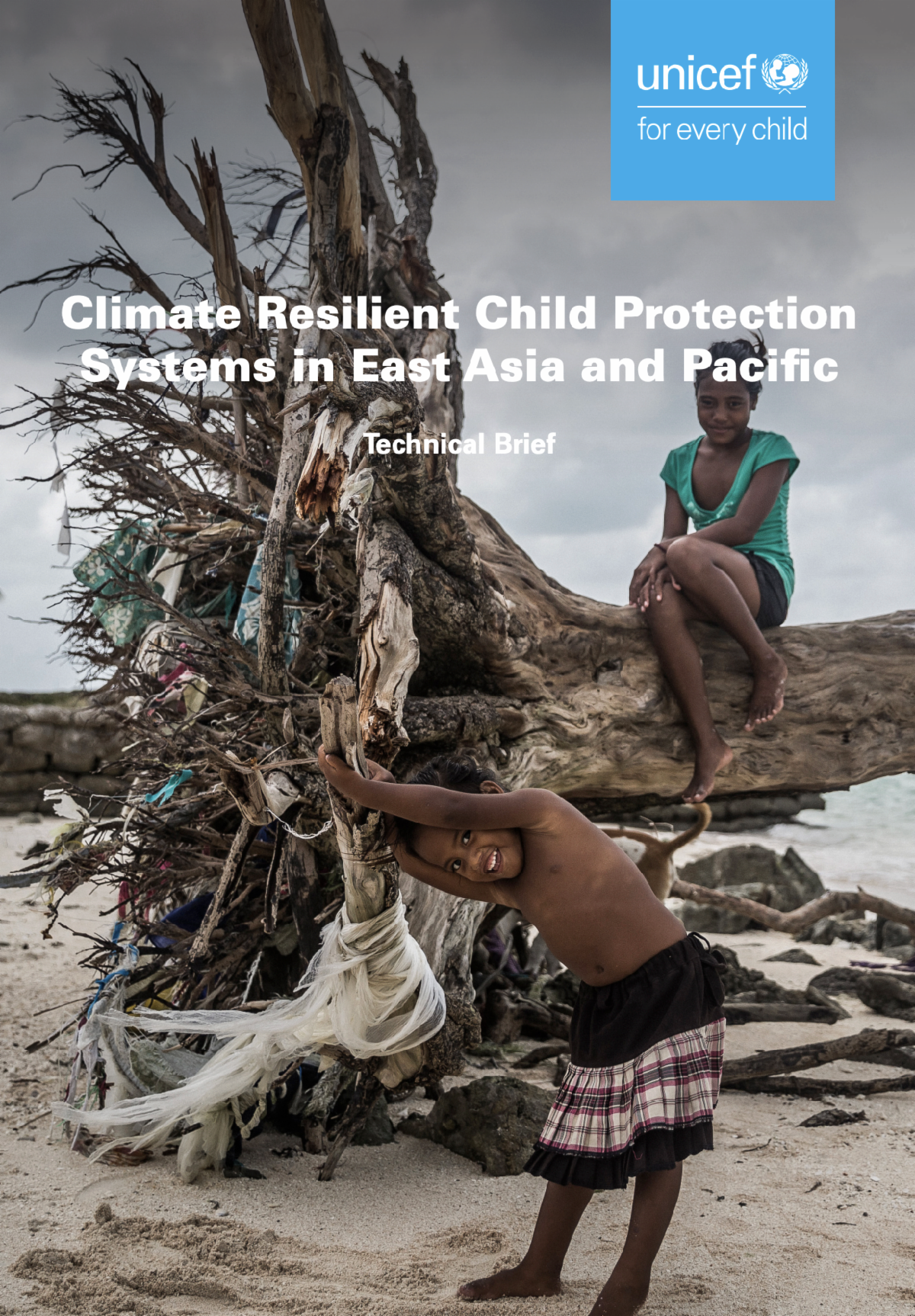
Climate Resilient Child Protection Systems in East Asia and Pacific
This technical brief describes how climate change is a child protection crisis that disproportionately affects children in East Asia and the Pacific, driving displacement, family separation, violence, and overwhelming already-strained protection services. Investing in climate-resilient child protection systems strengthens families and communities to prevent and respond to climate-related risks, while ensuring climate adaptation efforts are more effective, inclusive, and sustainable.
| | | | |
Alone, On the Move and Unseen: Spotlighting the urgent needs of unaccompanied and separated children
This brief by the International Data Alliance for Children on the Move (IDAC) calls for urgent global action to close these data gaps and strengthen evidence-based policies that uphold the rights of unaccompanied and separated children. Based on a 2025 literature review of more than 200 sources, it identifies key trends by age, gender, migration status and route, and other variables.
| | | | |
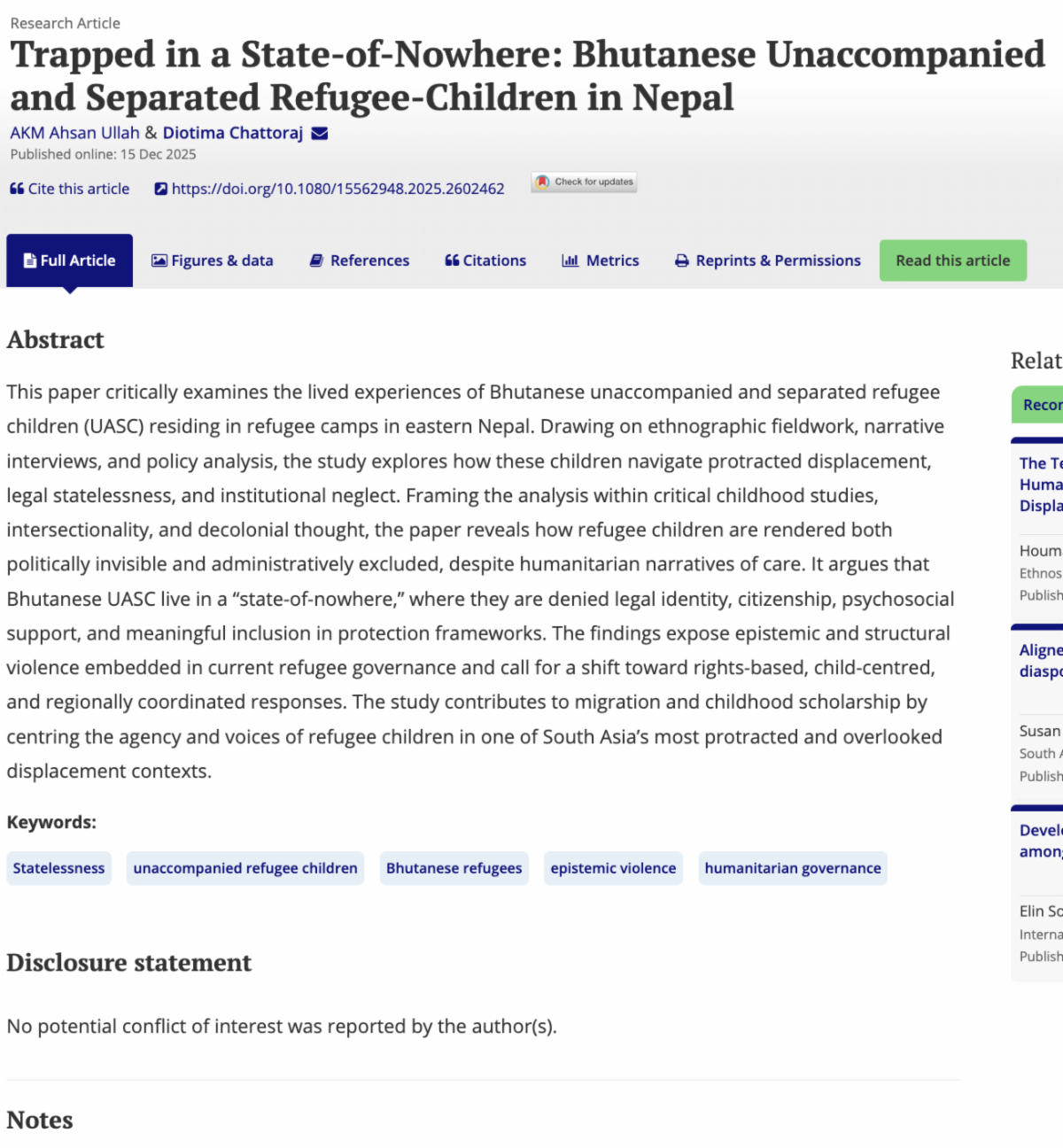
Trapped in a State-of-Nowhere: Bhutanese Unaccompanied and Separated Refugee-Children in Nepal
This paper explores the lived experiences of Bhutanese unaccompanied and separated refugee children living in camps in eastern Nepal, examining how they navigate prolonged displacement, statelessness, and institutional neglect through ethnographic and narrative methods. It argues that these children exist in a “state-of-nowhere,” rendered politically and administratively invisible within refugee governance systems, and calls for rights-based, child-centred responses that address the structural and epistemic violence shaping their exclusion.
| | | | |
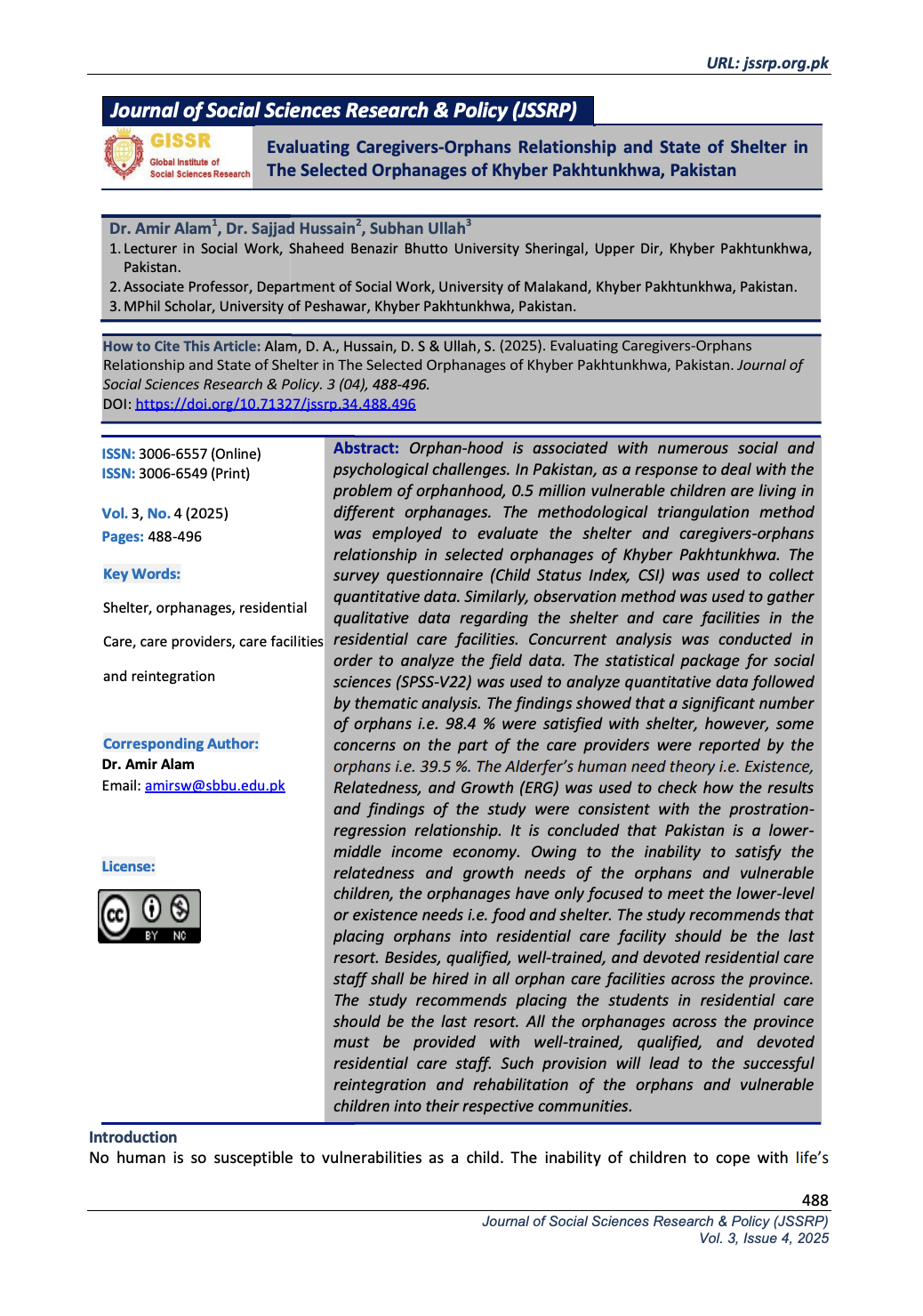
Evaluating Caregivers-Orphans Relationship and State of Shelter in The Selected Orphanages of Khyber Pakhtunkhwa, Pakistan
This study evaluates the shelter conditions and caregiver–orphan relationships in orphanages in Khyber Pakhtunkhwa, Pakistan, using both quantitative and qualitative methods. Findings indicate that while most orphans are satisfied with basic shelter, their relational and developmental needs are often unmet, highlighting the need for well-trained residential care staff and the recommendation that institutional care be used only as a last resort to support successful reintegration into communities.
| | | | |
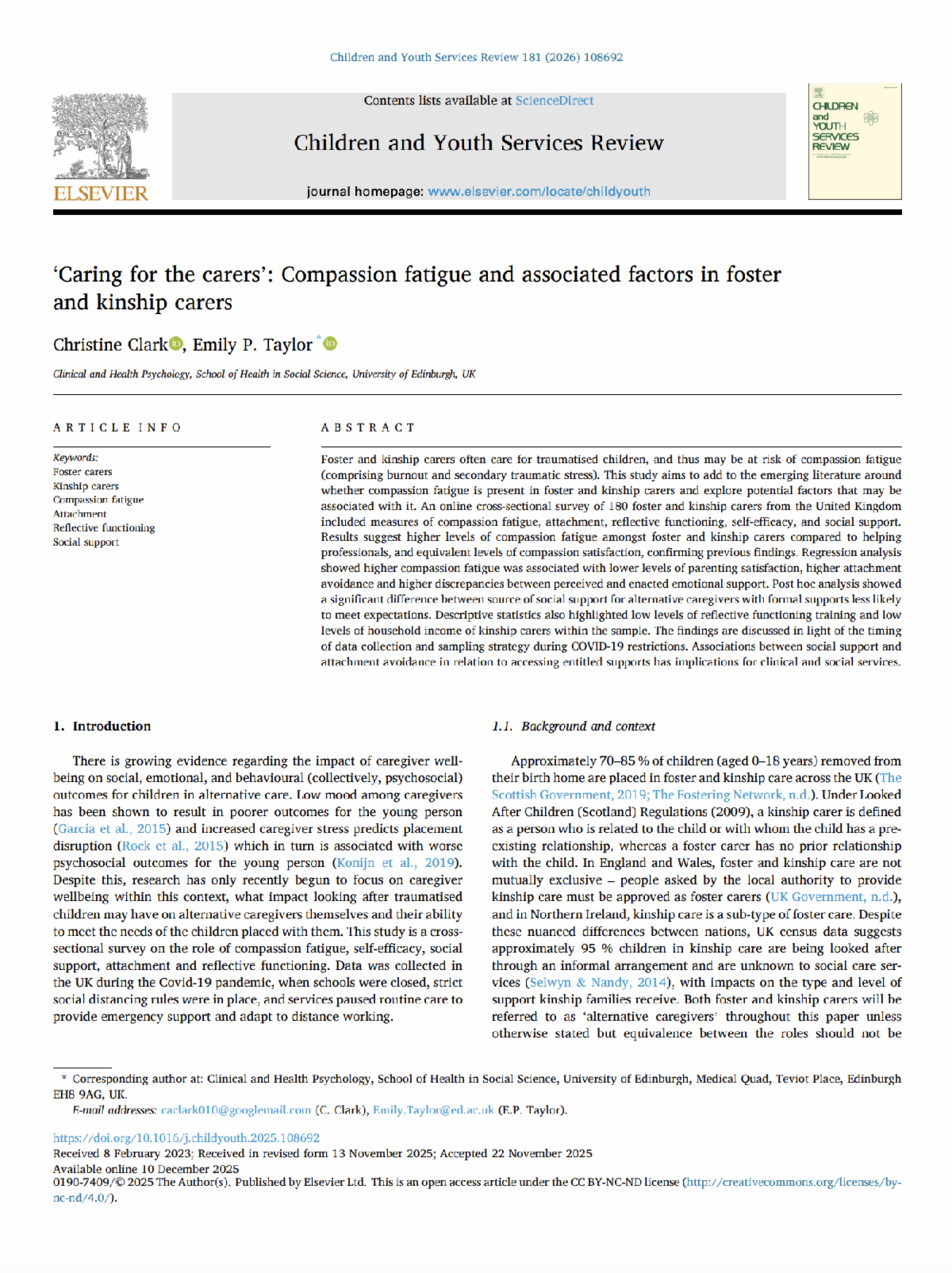
‘Caring for the Carers’: Compassion Fatigue and Associated Factors in Foster and Kinship Carers
This study examines the presence of compassion fatigue among foster and kinship carers in the United Kingdom and explores factors associated with it using survey data from 180 caregivers. Findings indicate that carers experience higher levels of compassion fatigue than helping professionals, with greater fatigue linked to lower parenting satisfaction, attachment avoidance, and unmet expectations of social support, highlighting important implications for social and clinical support systems.
| | | | |
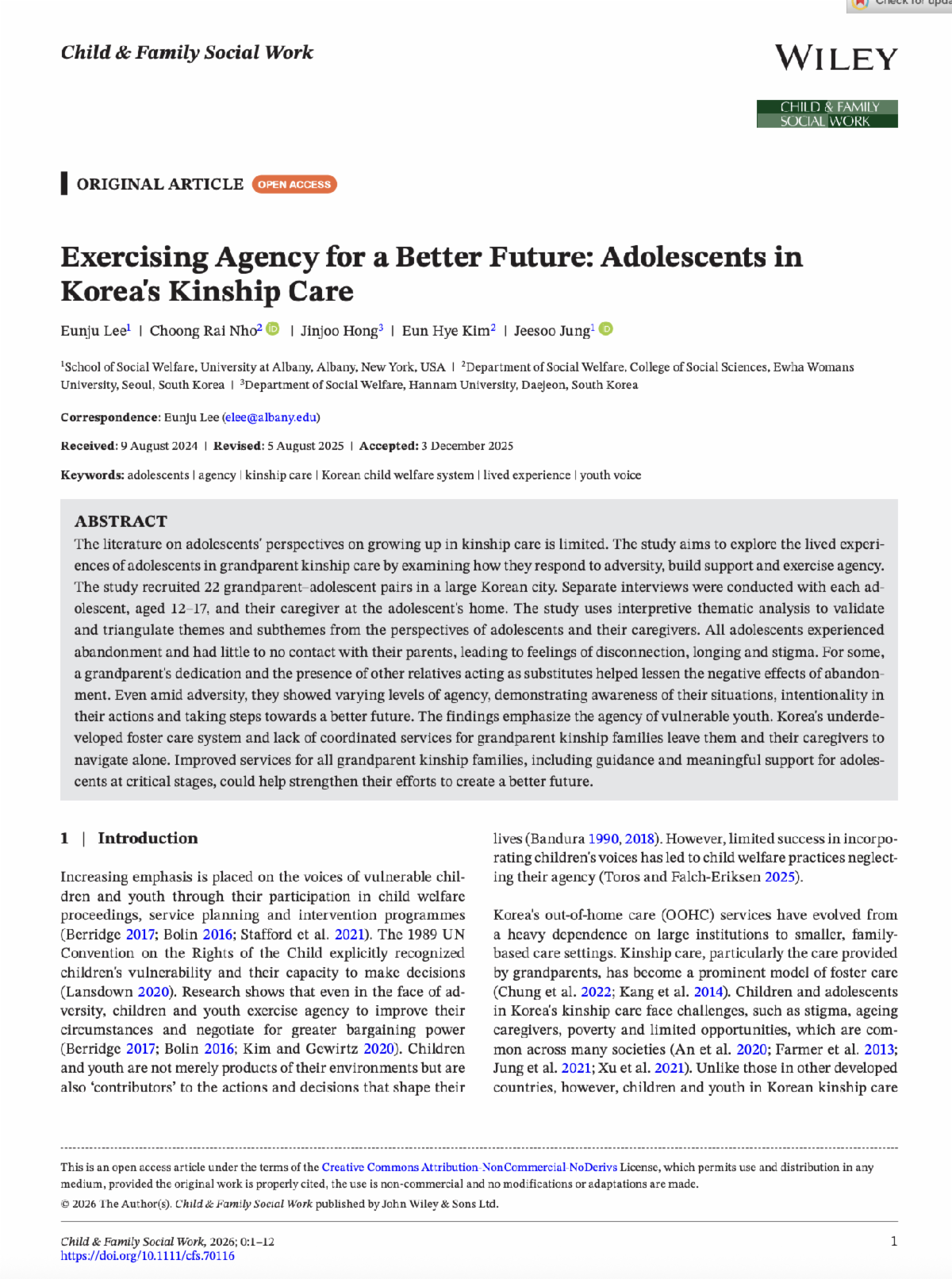
Exercising Agency for a Better Future: Adolescents in Korea's Kinship Care
This study explores the lived experiences of adolescents in grandparent kinship care in South Korea, drawing on interviews with 22 grandparent–adolescent pairs to examine how young people respond to adversity, build support, and exercise agency. Despite widespread experiences of parental abandonment and stigma, adolescents demonstrated resilience and intentionality, highlighting the need for stronger, coordinated services to support grandparent kinship families within Korea’s underdeveloped foster care system.
| | | | |
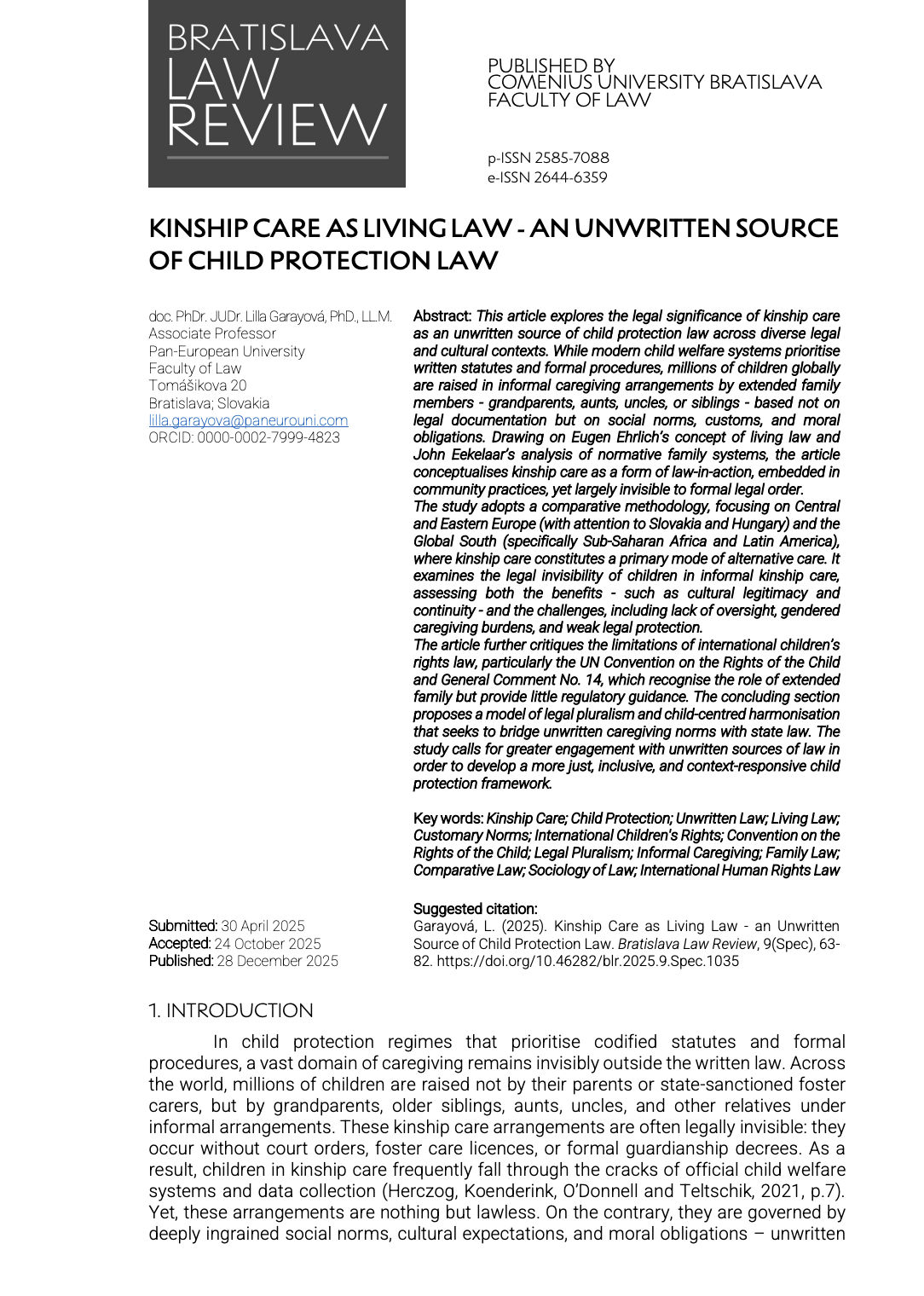
Kinship Care as Living Law – An Unwritten Source of Child Protection Law
This article examines kinship care as an unwritten but legally significant source of child protection law, drawing on concepts of living law to show how informal caregiving practices operate across diverse legal and cultural contexts yet remain largely invisible within formal legal systems. Using comparative analysis from Europe and the Global South, it highlights both the strengths and risks of informal kinship care and calls for a child-centred, legally pluralistic approach to better align community norms with state and international law.
| | | | |
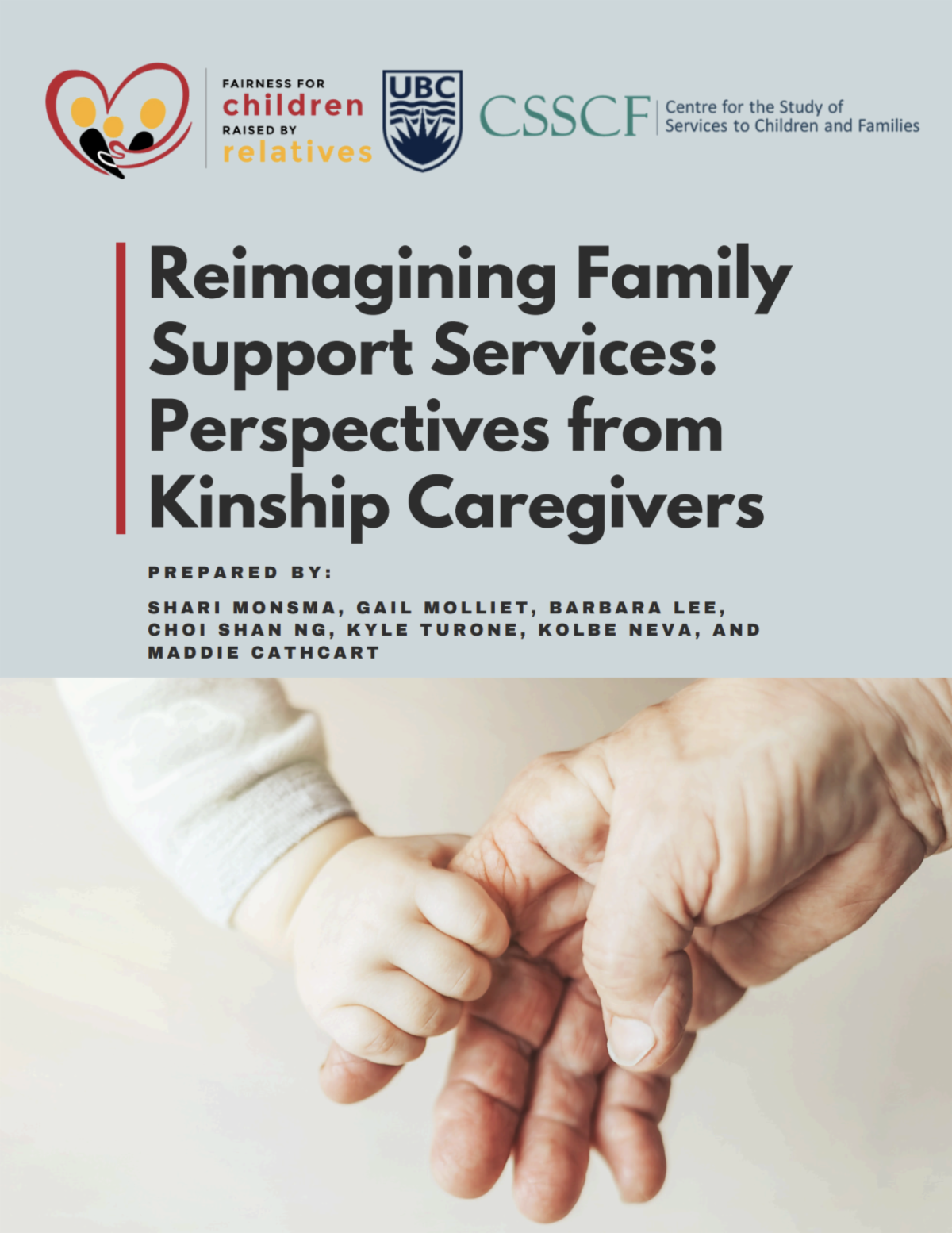
Reimagining Family Support Services: Perspectives from Kinship Caregivers
This report presents findings from a 2022 consultation with kinship caregivers across British Columbia, highlighting their experiences navigating children and family services. Analysis revealed the need for recognition and respect for kinship families, improved access to consistent and equitable supports, trauma-informed and culturally grounded practices, and stronger collaboration with service providers, with caregivers’ calls for action emphasizing system improvements to sustain caregiving and promote children’s well-being.
| | | | |
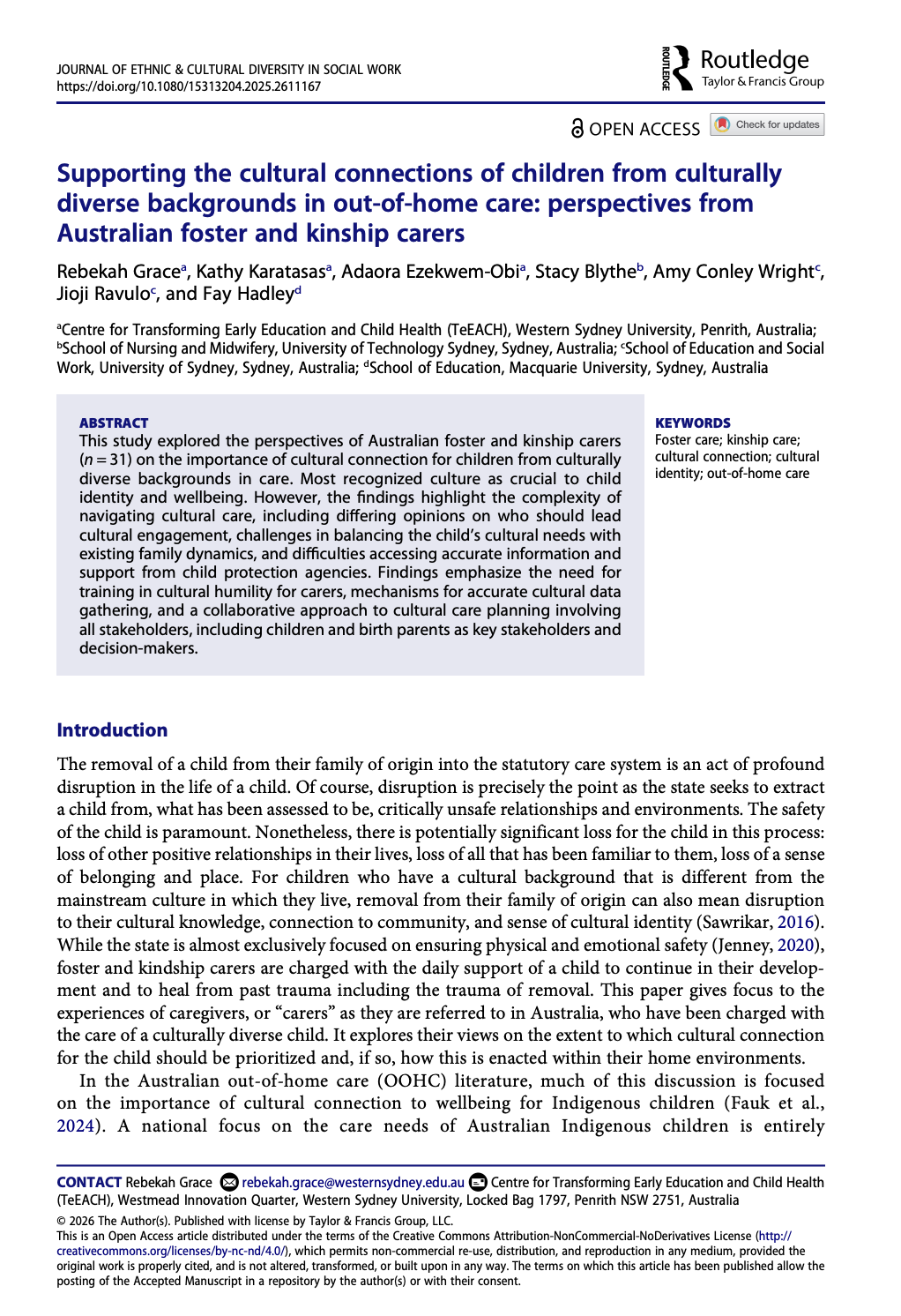
Supporting the Cultural Connections of Children from Culturally Diverse Backgrounds in Out-of-Home Care: Perspectives from Australian Foster and Kinship Carers
This study examines the views of Australian foster and kinship carers on the importance of cultural connection for children from culturally diverse backgrounds, finding broad agreement that culture is central to identity and wellbeing. The findings highlight challenges in delivering cultural care and underscore the need for training in cultural humility, improved cultural data collection, and collaborative cultural care planning that includes children and birth parents as key decision-makers.
| | | | |
Transformation of Care Regimes in Central Eastern Europe: The Case of Croatia and the Czech Republic
The multiple and extensive transformations that have occurred in Eastern Europe since the 1990s did not bypass care, bringing diverse care regimes. This chapter, in the Research Handbook on Social Care Policy, aims to explore the main trends in the development of care policies in Croatia (a post-Yugoslav country) and the Czech Republic (a Visegrád country).
| | Policies, Standards, and Guidance | | | | |
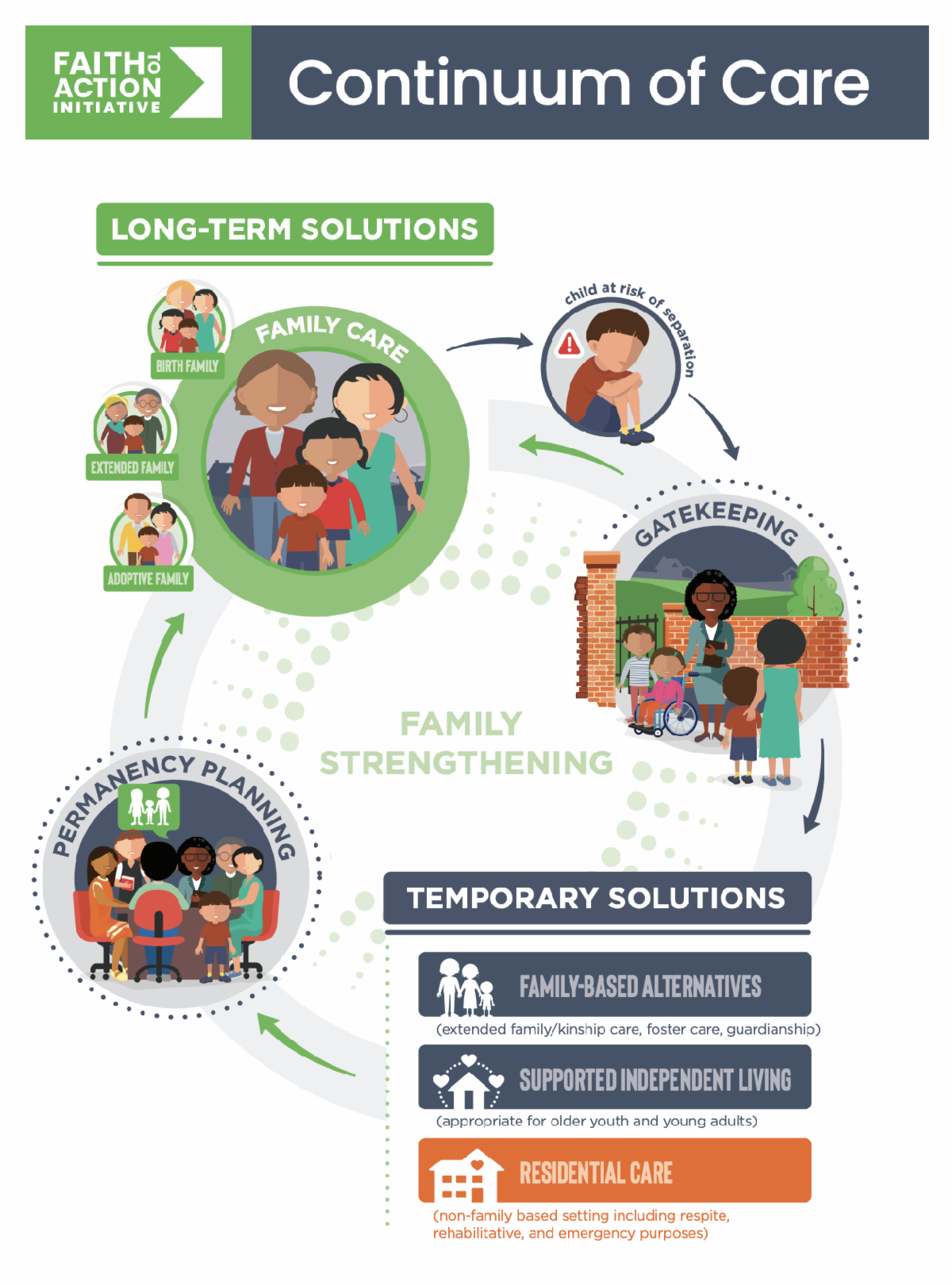
Continuum of Care Interactive Graphic
This interactive graphic from Faith to Action, depicts the vital processes, mechanisms, and care options necessary for supporting children at risk of being or already separated from their parents. It illustrates how best practices work together to prioritize family care, reduce unnecessary separation, and support children in safe, nurturing families.
| | | | |
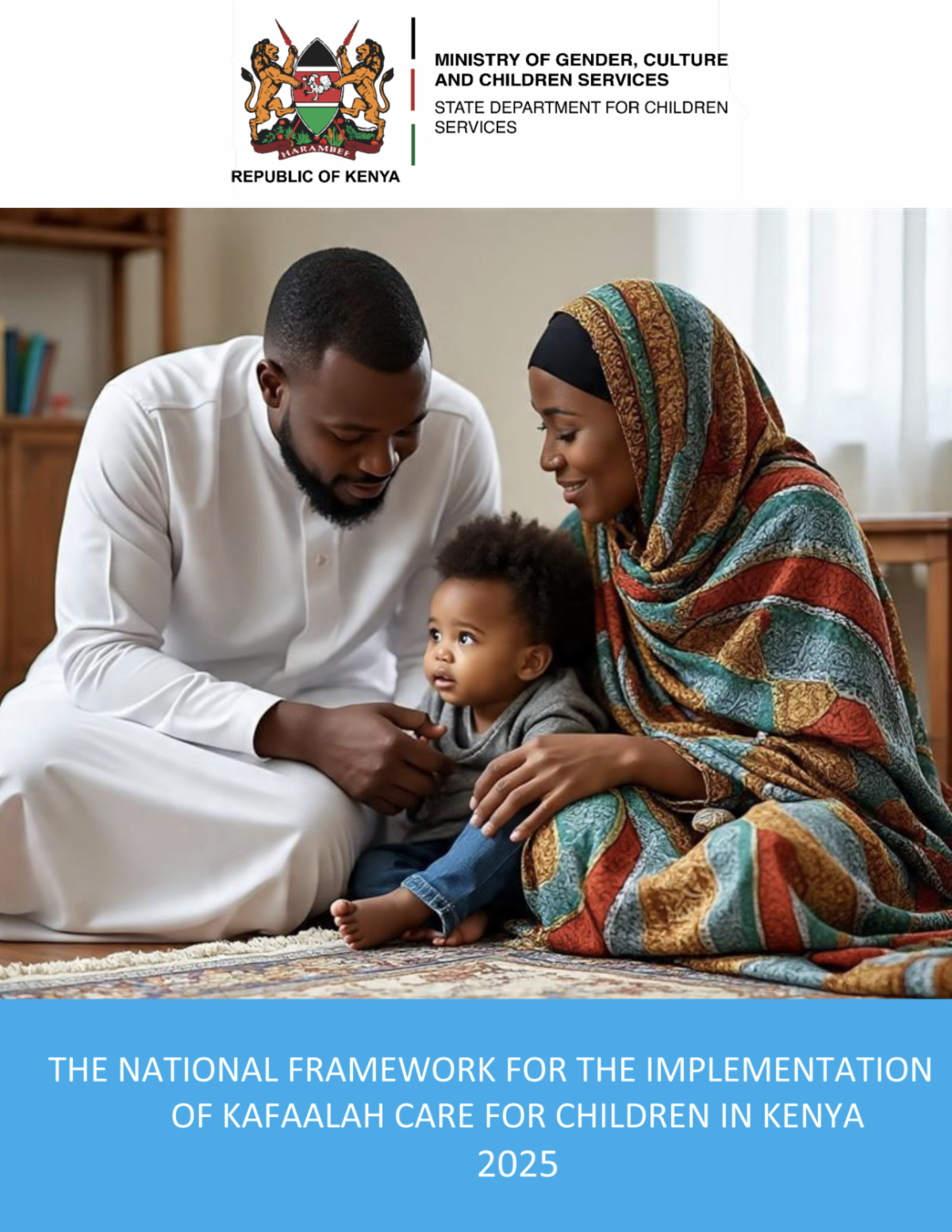
The National Framework for the Implementation of Kafaalah Care for Children in Kenya
This framework provides structured guidance for practitioners, aiming to promote childcare to family-based settings. It outlines roles, coordination mechanisms, and monitoring strategies to ensure safe, standardized care for vulnerable children, and is intended for use by both state and non-state child protection practitioners.
| | | | |
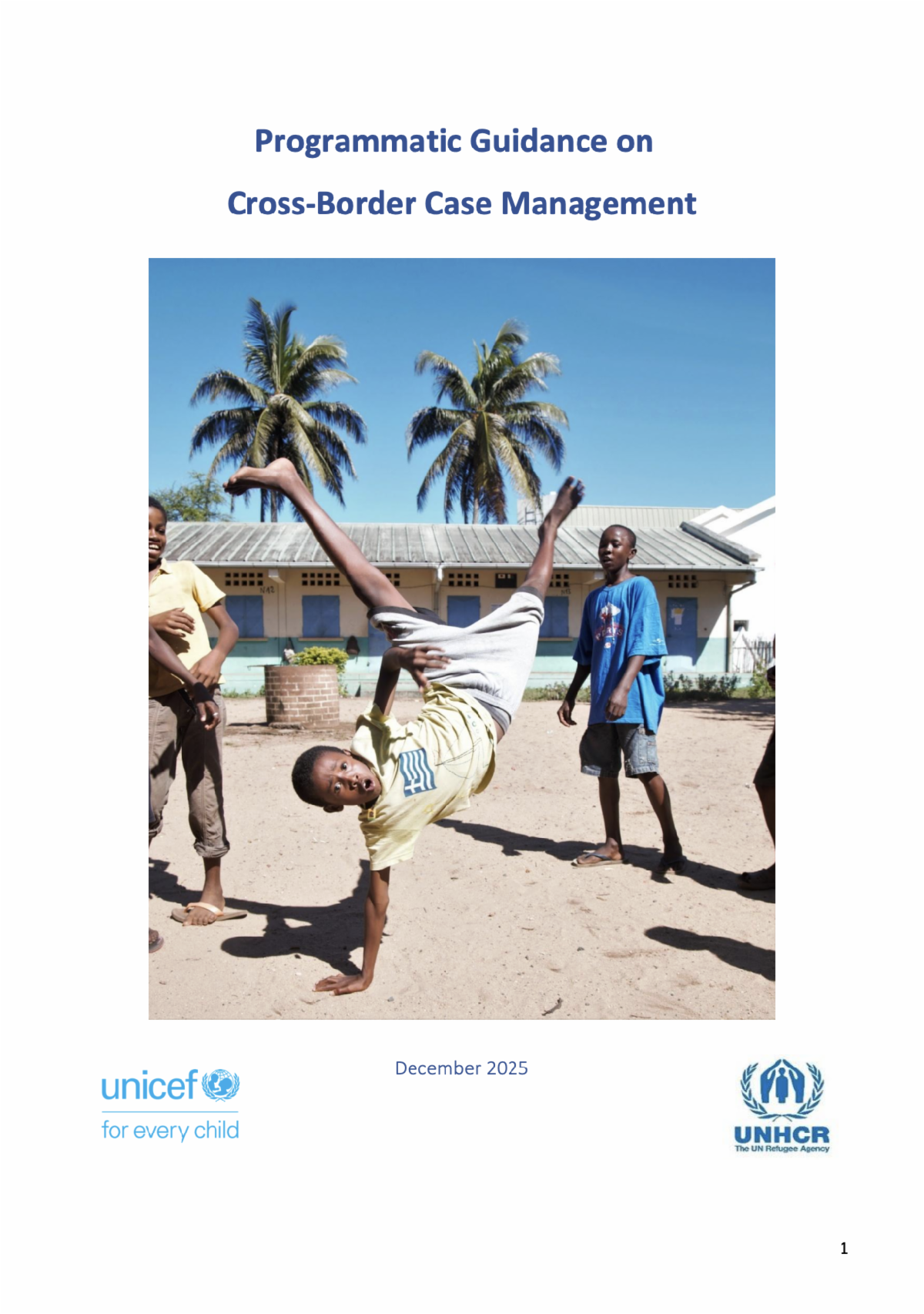
Programmatic Guidance on Cross-Border Case Management
Cross-border case management (CBCM) is a component of child protection case management that supports children on the move and their families who cross international borders, requiring identification and registration, safe cross-border information sharing, and coordinated action among authorities across jurisdictions. This programmatic guidance provides practitioners with recommendations to implement CBCM in line with international refugee protection standards and the best interests of the child, emphasizing engagement with national authorities, continuity of protection, durable solutions, and the upholding of children’s rights within broader child protection systems.
| | | | |
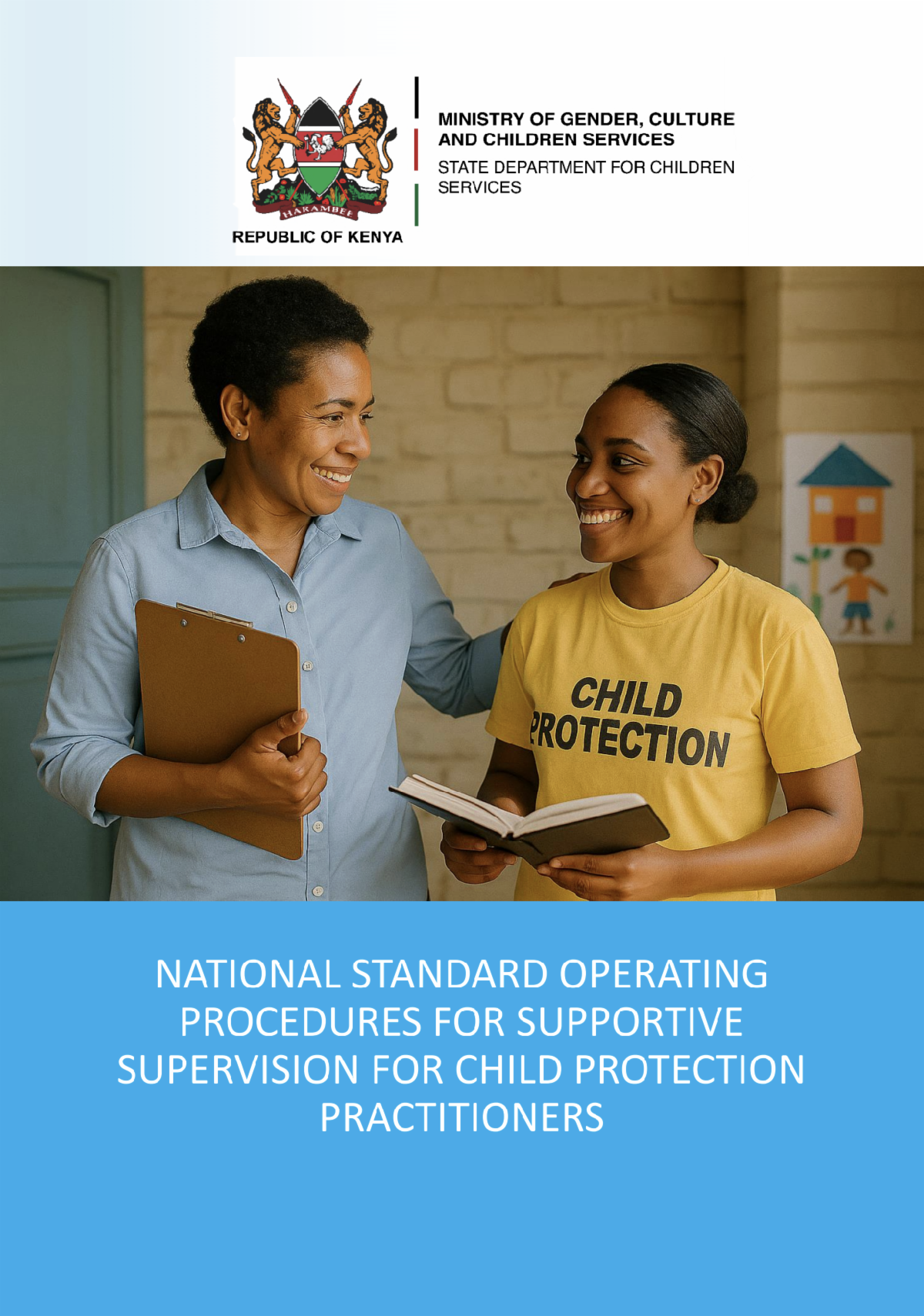
National Standard Operating Procedures for Supportive Supervision for Child Protection Practitioners
These SOPs aim to strengthen the effectiveness and well-being of Kenya’s child protection practitioners by promoting accountability, continuous learning, and reflective practice. By prioritizing practitioners’ psychosocial health and standardizing supportive supervision across the State Department for Children Services, the guidance seeks to improve service quality, reduce burnout, and enhance outcomes for vulnerable children.
| | | | |
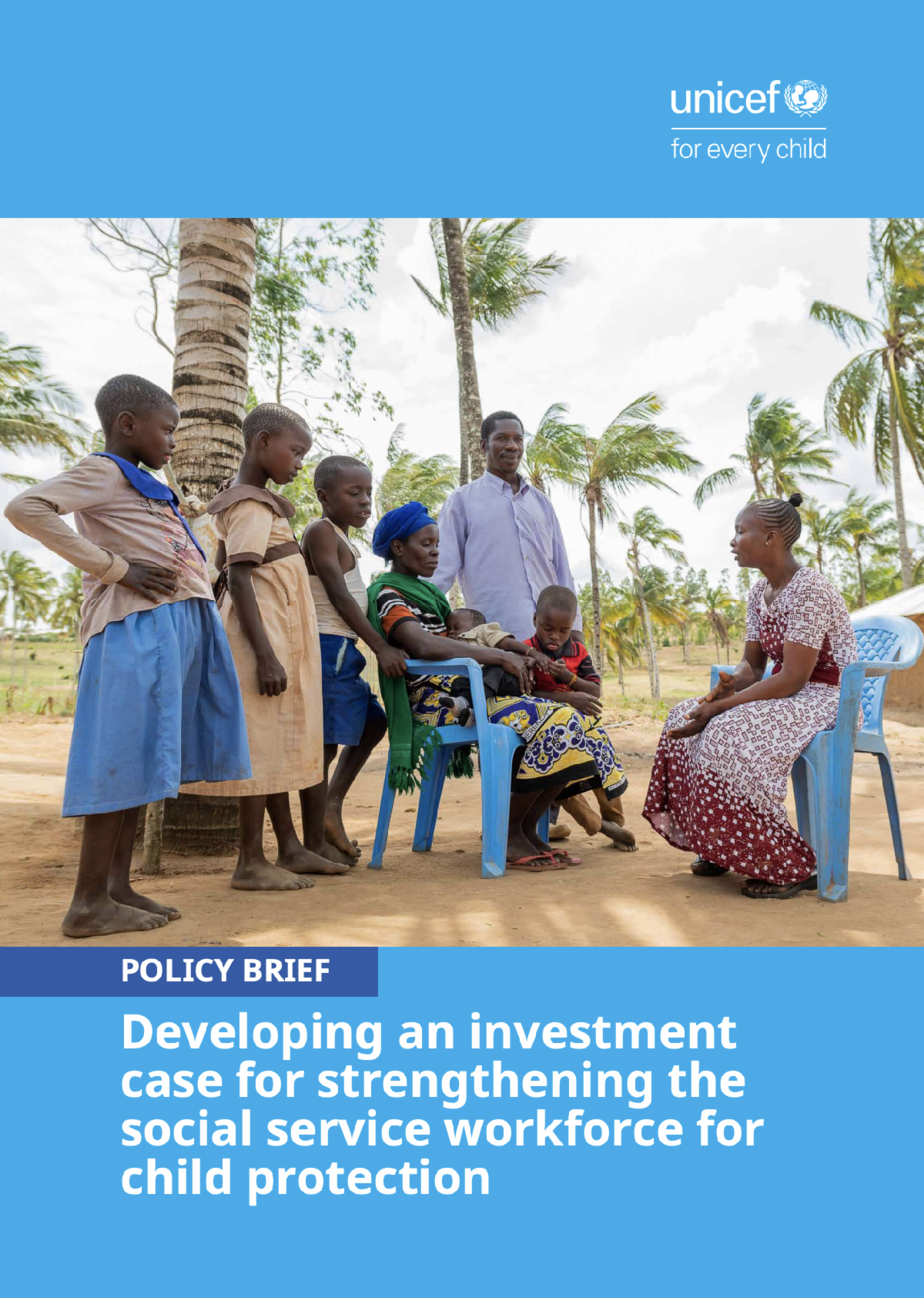
Developing an Investment Case for Strengthening the Social Service Workforce for Child Protection
Across Eastern and Southern Africa, social service workers are essential to protecting children from violence, abuse, neglect, and exploitation, yet chronic underfunding and understaffing limit their impact. To help address this, UNICEF ESARO has produced:
-
a Policy Brief outlining the rationale for investing in the social service workforce, and
-
a Synthesis Report offering practical guidance on building an investment case, informed by experiences in Kenya and Zambia, to support advocacy for increased investment.
| | | | |
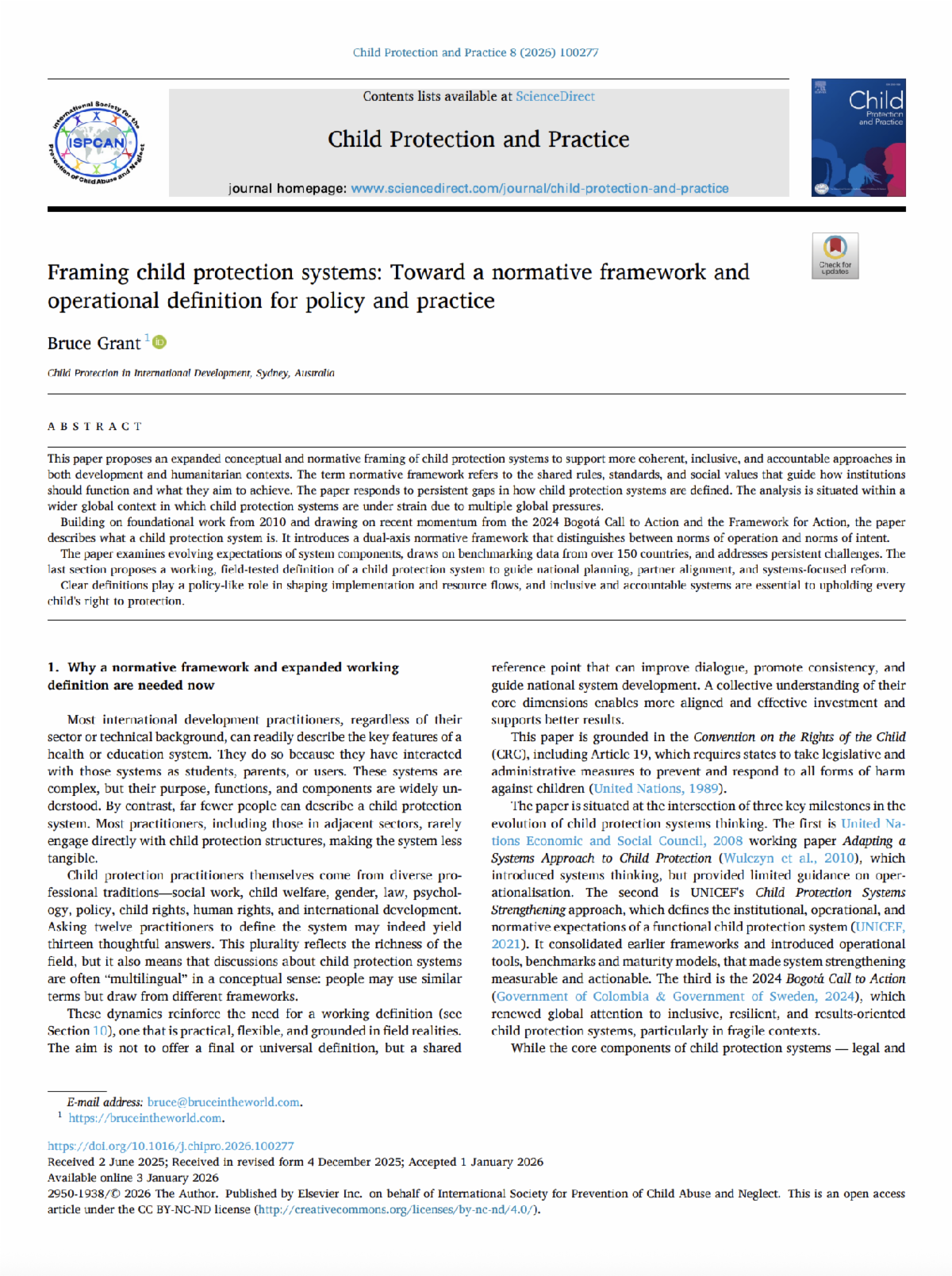
Framing Child Protection Systems: Toward a Normative Framework and Operational Definition for Policy and Practice
This paper proposes an expanded conceptual and normative framework for child protection systems to promote coherence, inclusivity, and accountability in both development and humanitarian contexts. Drawing on global data, recent initiatives, and a dual-axis framework distinguishing norms of operation and intent, it offers a field-tested definition to guide national planning, partner alignment, and systems-focused reform that upholds every child’s right to protection.
| | | | |
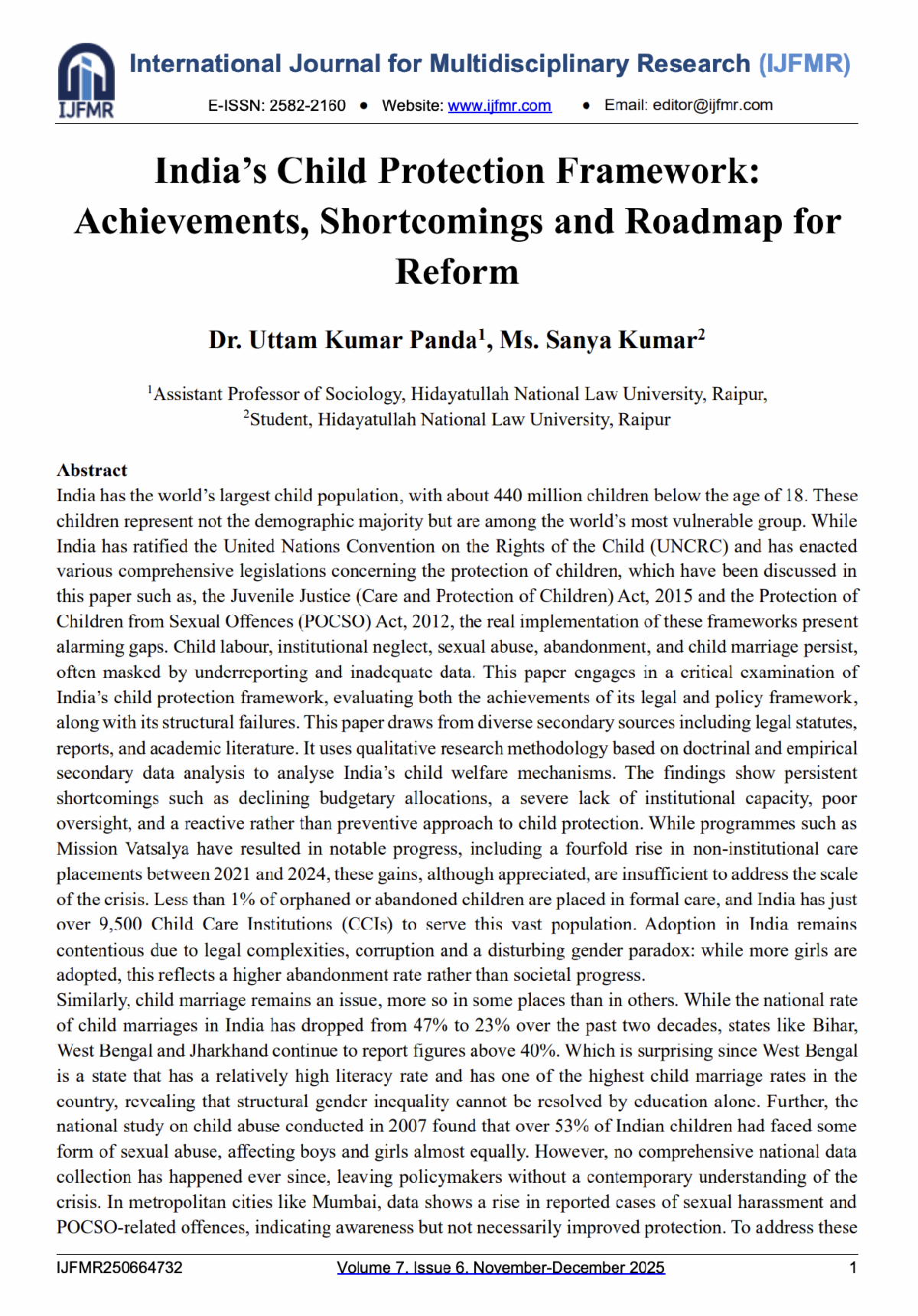
India’s Child Protection Framework: Achievements, Shortcomings and Roadmap for Reform
This paper critically examines India’s child protection framework, highlighting that despite comprehensive legislation like the JJ Act, POCSO, and programs such as Mission Vatsalya, systemic gaps in implementation, funding, institutional capacity, and data collection leave millions of children, particularly those in Child Care Institutions, vulnerable to abuse, neglect, and child marriage.
See also:
| | | | |
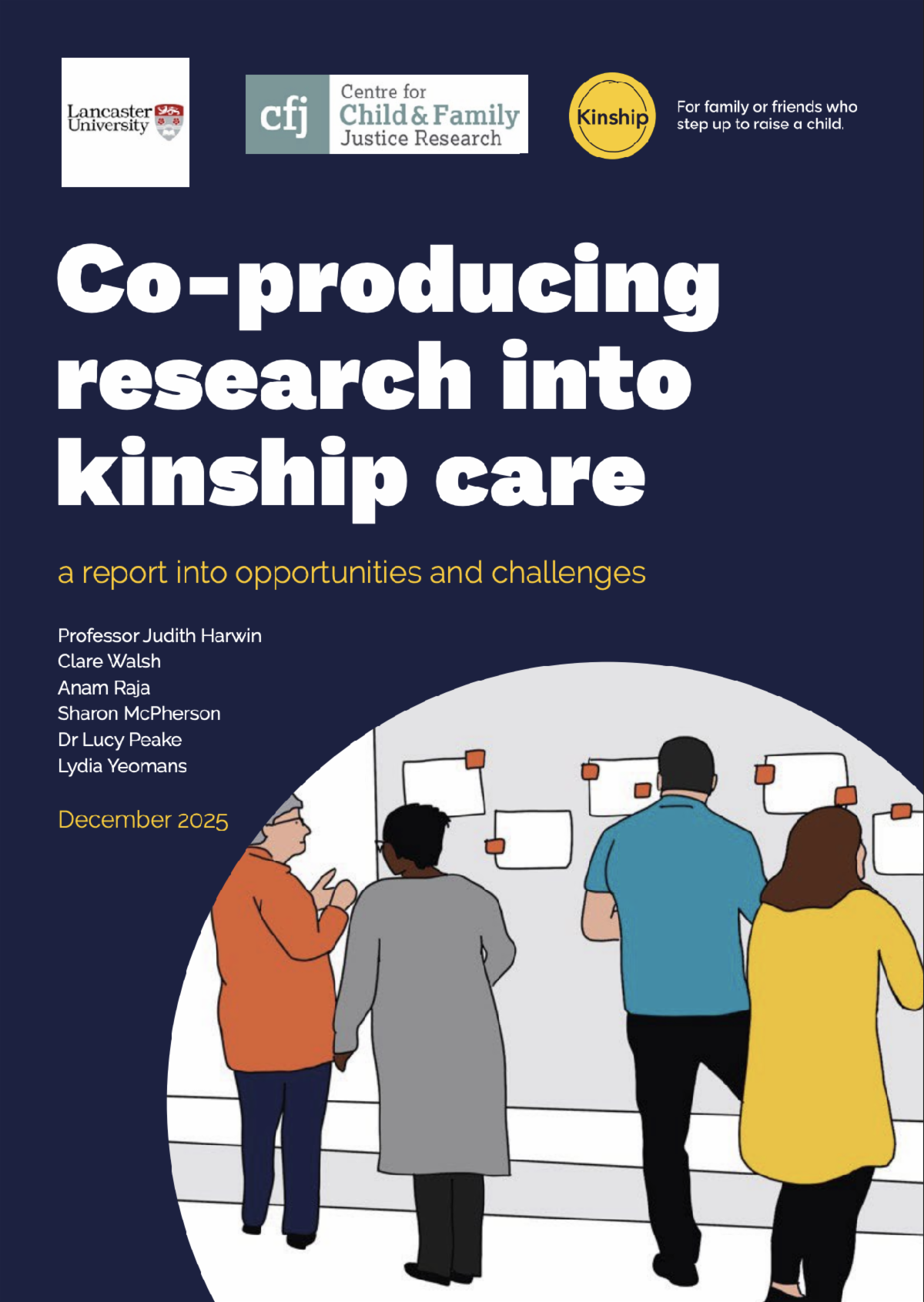
Co-producing Research into Kinship Care: A Report into Opportunities and Challenges
This report examines opportunities and challenges in co-producing research on kinship care, highlighting the need to involve carers as equal partners rather than treating them solely as research subjects. Drawing on a study conducted between 2022 and 2025 and accompanied by a practical toolkit, it emphasizes inclusive approaches that leverage kinship carers’ lived experiences to produce research relevant to policy and practice across all types of kinship care.
See also:
| | | | |
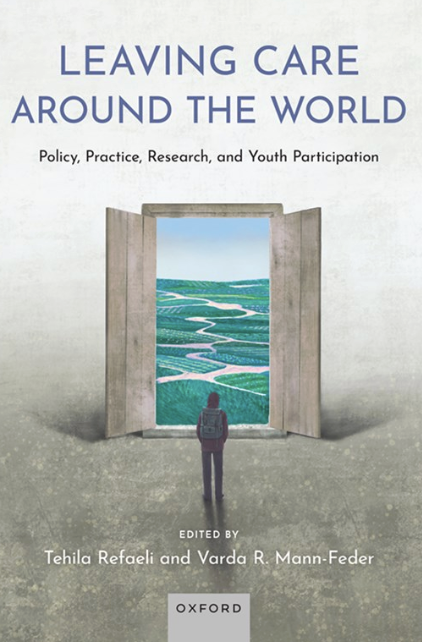
Leaving Care around the World: Policy, Practice, Research, and Youth Participation
This book reflects two decades of work by the International Network on Transitions to Adulthood from Care (INTRAC) to advance academic research and policy reform on leaving care globally. It includes thirty-two country chapters, each providing background information and key statistics on children in care and care leavers based on available national data.
| | | | |
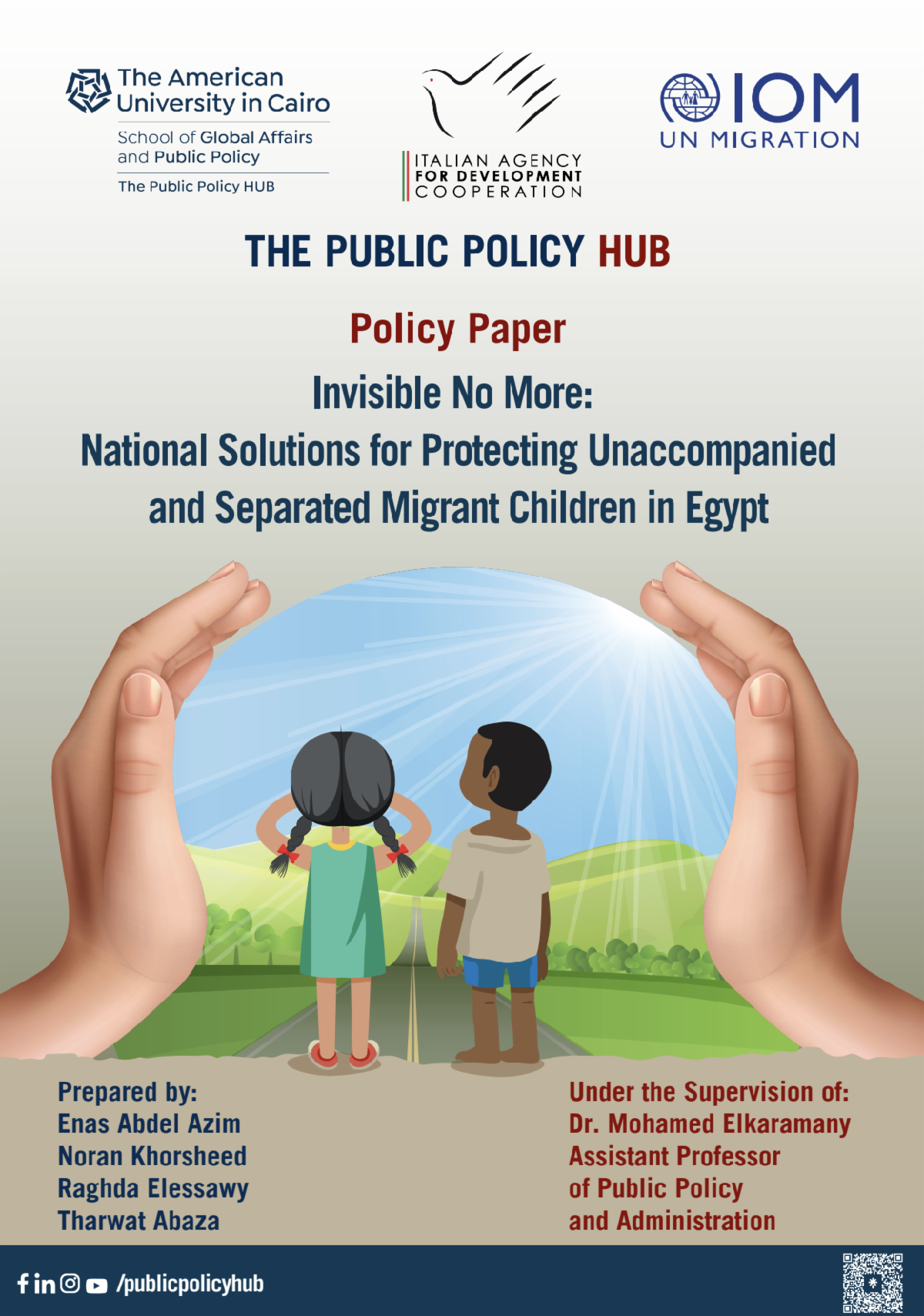
Invisible No More: National Solutions for Protecting Unaccompanied and Separated Migrant Children in Egypt
This policy paper examines Egypt’s protection framework for unaccompanied and separated migrant children, highlighting both significant recent advances, such a new asylum law and expanded residence permits, and persistent challenges related to legal visibility, registration delays, and service access. It proposes actionable reforms to strengthen legal, administrative, and service systems, including expanding family-based alternative care to migrant and refugee children, developing child-friendly asylum procedures, and better integrating NGO, refugee-led, and community-based support into state structures.
| | | | |
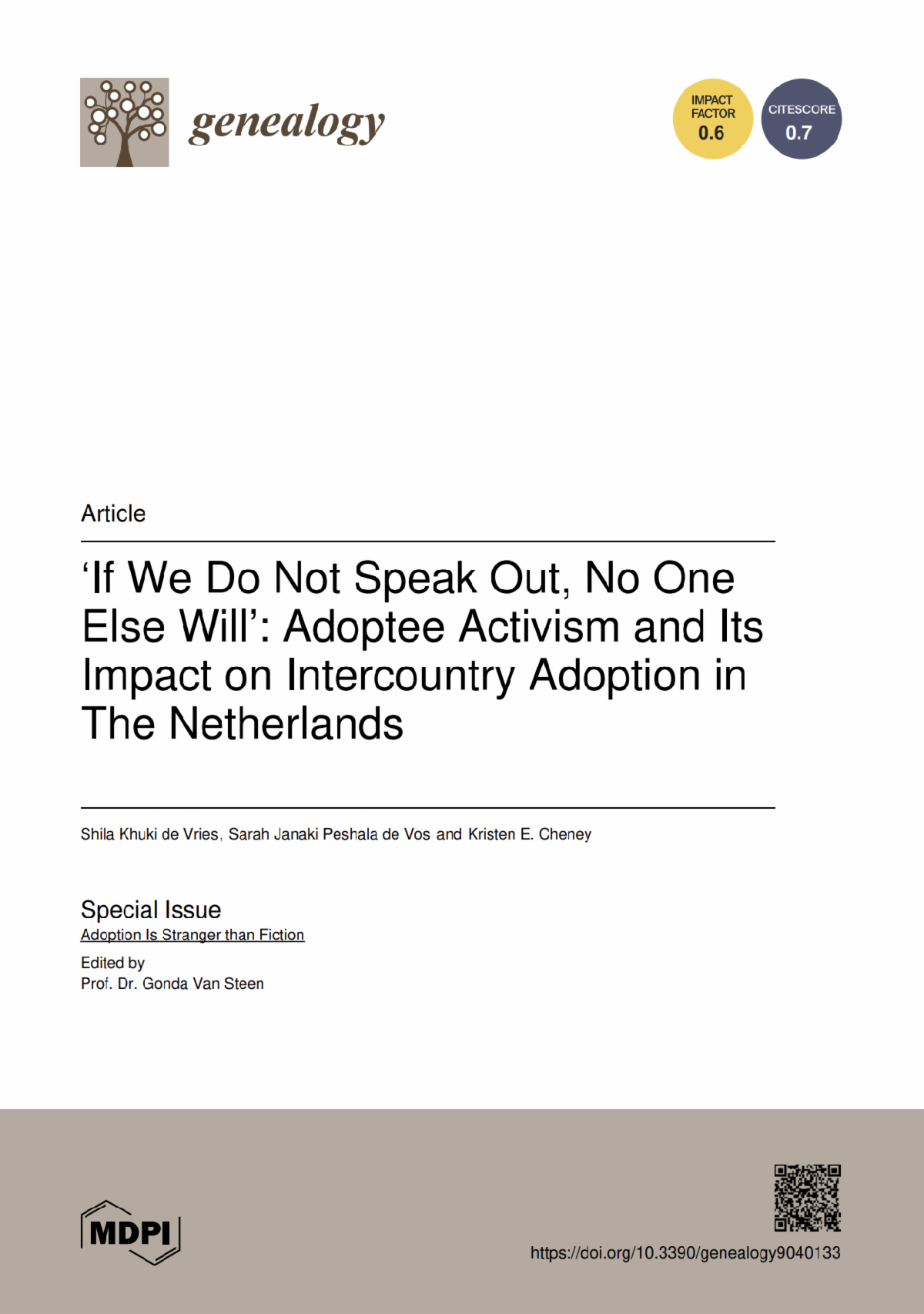
‘If We Do Not Speak Out, No One Else Will’: Adoptee Activism and Its Impact on Intercountry Adoption in The Netherlands
This article highlights the role of adoptee activism in raising awareness and changing policy regarding Intercountry Adoption (ICA) in The Netherlands. Through interviews with a selection of adoptees engaged in activism, this study shows that adoptees became engaged in activism as a result of growing adoptee consciousness in combination with encountering irreconciliation and their activism had significant impact on general awareness and government policy.
| | | | |
We would love to learn more about your work as a practitioner so that your local, national and/or regional lessons and experiences in the field can be shared with other practitioners.
| | | | |
[Webinar Recording] Child Protection in the Era of Localization: Context, Voice, and Ownership
This webinar, co-hosted by the Columbia University Seminar on Global Mental Health, examined how the shift toward localization is reshaping community-based child protection. The session explored both the challenges and opportunities of localizing child protection and well-being initiatives, emphasizing the need to transfer power to communities and support genuine local ownership for sustainable impact.
| | | | |
Working Together: The Story of the Orphan Care Movement in Ethiopia
This video highlights the rise of a locally led movement in Ethiopia, where Christian leaders and organizations are transforming child welfare practices following the end of intercountry adoption. It showcases the impact of the CAFO-supported DEBO Alliance as churches and advocates embrace domestic adoption and best practices to bring hope and lasting care to vulnerable children and families.
| | |
Newsletter participants, currently 3,375 in total, work on issues related to the care and support of vulnerable children across Europe, Africa, the Middle East, Asia and the Americas. The purpose of the newsletter is to enable members to exchange information on matters of mutual concern. If you would like to share a document, raise a specific issue, request a newsletter subscription, or reach out in any other way to the Network, please send the information to us at contact@bettercarenetwork.org or visit our website at www.bettercarenetwork.org.
Thank you!
| | | | |