|
The beginning of each year marks the start of what we at the MHC call “HTA Season.” This refers to January, February, and March, when our Humanities Teacher Award winners receive their recognition and give their public lectures.
The Humanities Teacher Award program is one of the Council’s longest-running initiatives. I inherited it when I joined the MHC in 2013, and I’m somewhat embarrassed to admit it took me several years to recognize its genius. On the surface, the program seems fairly simple: each year, the MHC invites administrators at our state’s universities, colleges, and community colleges to select a humanities professor at their institution to honor for their teaching. The winners then give a public lecture on the humanities topic of their choice and receive a cash award from the MHC. All HTA winners are then recognized at our Public Humanities Awards ceremony in late March.
| | "At a time when the humanities in higher education are accused of being unnecessary or even a waste of money, the HTA program gives us an opportunity to highlight outstanding humanities teachers who are changing the lives of students on all of Mississippi’s college campuses." | | |
What makes the HTA program so important to the MHC is that it has fostered long-term working relationships with every higher education institution in the state. These partnerships benefit us in numerous ways. They have led to grant applications, sites for our traveling Smithsonian exhibits, and new presenters on our Speakers Bureau. When we sought to expand higher education programs in Mississippi prisons, we used the relationships we’ve had with community colleges across the state to bring new institutional partners into the project. Just last week, we were meeting with Mississippi Public Broadcasting about helping them organize a series of programs around the state in conjunction with their documentary “Everlasting” about Medgar and Myrlie Evers. When they expressed interest in hosting a screening in Medgar’s hometown of Decatur, we knew that East Central Mississippi Community College could be a partner. We reached out to our HTA contacts there, and we are already working together on the program. I often say the MHC is a catalyst and convener in our state, and the HTA program has helped build our capacity to play that role.
When our federal funding was terminated last year, we had to make hard decisions about which programs we could continue and which we needed to pause. Thankfully, we had just finished HTA season, so we had some time before we had to decide. When our federal funding was restored, but at only 40% of what Congress appropriated, we decided the HTA program must continue. While we had to reduce the size of the cash prize, the overall program was just too important to shutter. At a time when the humanities in higher education are accused of being unnecessary or even a waste of money, the HTA program gives us an opportunity to highlight outstanding humanities teachers who are changing the lives of students on all of Mississippi’s college campuses.
On our website’s event calendar, you will notice a long list of HTA lectures over the next few months. The MHC staff and board will be traveling the state to attend these programs. If you see one in your area, please join us. And I invite everyone to come together on March 20th at the Two Mississippi Museums in Jackson to recognize all of these deserving winners.
| |
Dr. Stuart Rockoff
MHC Executive Director
| | |
Each year, the MHC honors scholars, educators, and organizations who have made significant contributions to the public humanities in Mississippi. The 2026 Public Humanities Awards will be held on March 20th at the Two Mississippi Museums in Jackson.
MHC also recognizes recipients of the Humanities Teacher Awards, which pay tribute to outstanding faculty in traditional humanities fields at each of our state’s institutions of higher learning.
Four sponsorship levels are available for the Mississippi Humanities Council Public Humanities Awards ceremony and reception. Individual and additional tickets are $50 each. Purchases can be made through the MHC website or by sending a check to the Mississippi Humanities Council, 3825 Ridgewood Road, Room 317, Jackson, MS 39211.
| | Witness: The Freedom Memory Project Now Accepting Applications | | |
MHC's newest program, Witness: The Freedom Memory Project, is now accepting applications for our 2026 cohort. This statewide initiative builds on the Council’s longstanding work preserving Mississippi’s history and working closely with community partners, artists, and historians. Witness will give communities the chance to create new sites of memory that preserve and share the local history of the Civil Rights Movement and the broader struggle for freedom in Mississippi.
Over the next three years, the MHC will partner with four communities per year to design and establish commemorative sites, both physical and virtual, that reflect the stories of local people and places too often left out of the national narrative. Selected communities will host public engagement meetings led by a skilled facilitator to elicit and develop local ideas and community support. Each selected community will receive direct project support to carry out their vision. They will also be encouraged to apply to the MHC for grant support for public programs related to their project.
Don't just witness history. Be a part of it!
The application deadline for the 2026 cohort is March 1. Visit our website for grant guidelines, workshop videos, and other resources to help you apply.
| |
|
Storytelling Takes Center Stage at
HOMEGROWN: A Celebration of Southern Voices
| |
The Mississippi Humanities Council is proud to once again support HOMEGROWN, a literary festival that brings the power of Southern storytelling to the Mississippi Gulf Coast. Hosted on the University of Southern Mississippi’s Gulf Park Campus, the festival has grown to a four-day event, running January 29–February 1, offering a noteworthy lineup of author talks, panels, and performances—all free and open to the public.
The four-day celebration kicks off Thursday at historic 100 Men Hall in Bay St. Louis with a live taping of Thacker Mountain Radio Hour, featuring author W. Ralph Eubanks, blues harmonica legend Corky Siegel, and gospel favorites The Veal Brothers. From there, HOMEGROWN unfolds into a full day of programming that welcomes readers, writers, and curious minds alike.
Festival-goers can enjoy panels such as Stories Through Food, Southern Noir, Poetry in Motion, and Memoirs, alongside hands-on writing workshops and film screenings. The Mississippi Humanities Council’s own Dr. Stuart Rockoff will moderate the Memoirs panel. Featured authors include Marcelle Bienvenu, Michael Farris Smith, Jesmyn Ward, and Jason Reynolds, who headline a special student session presented by USM’s Live Oak Writing Project.
| |
Rounding out the weekend, visitors can pitch their own work to publishers, meet acclaimed authors, or swap stories at the festival’s closing Story Slam, presented by The Arts Hancock County and 100 Men Hall.
For schedule details, visit homegrownms.com or contact Rebecca Powell at rebecca.a.powell@usm.edu.
| | MHC Receives 2026 For My People Award from JSU | |
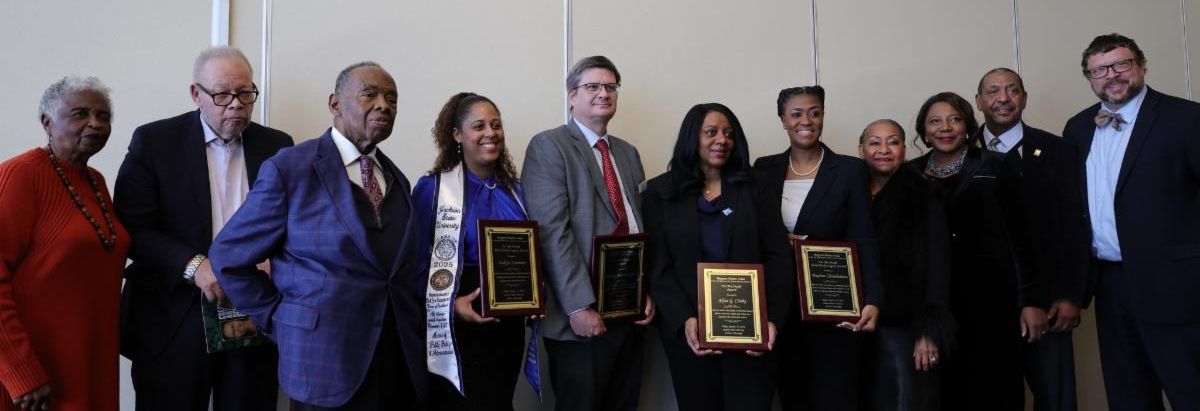
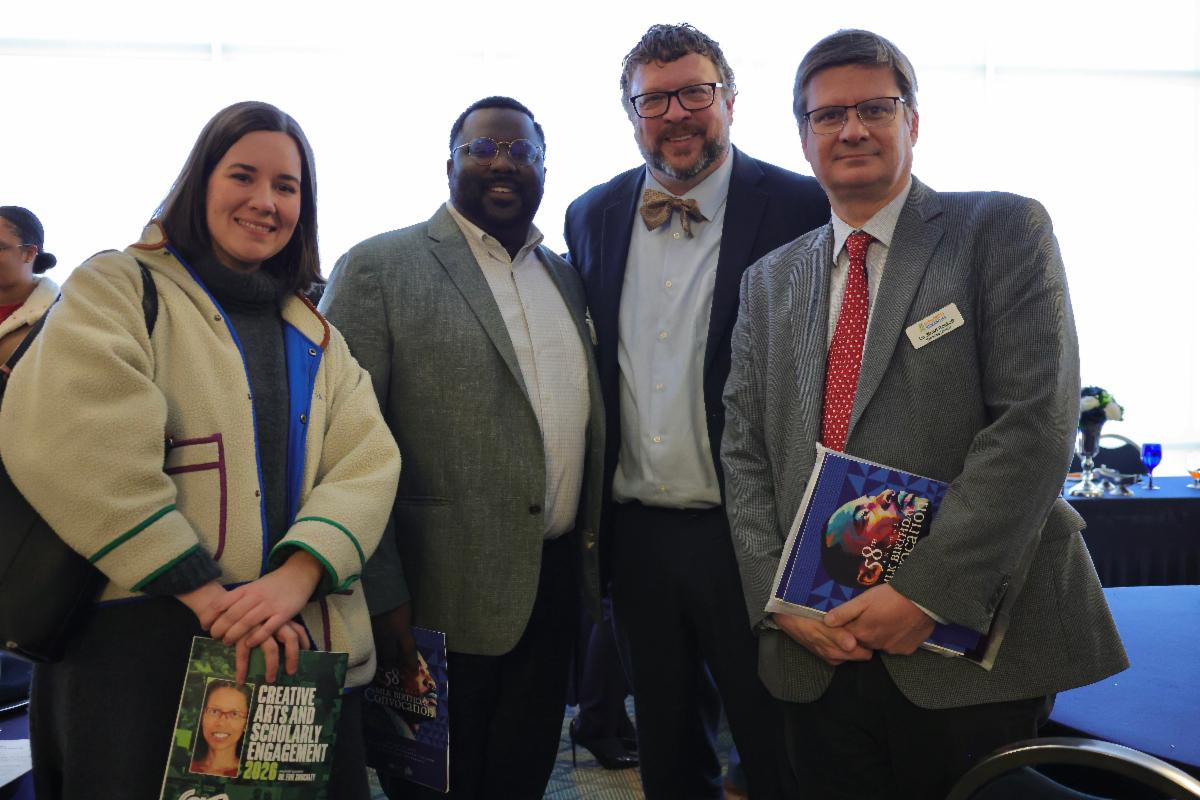
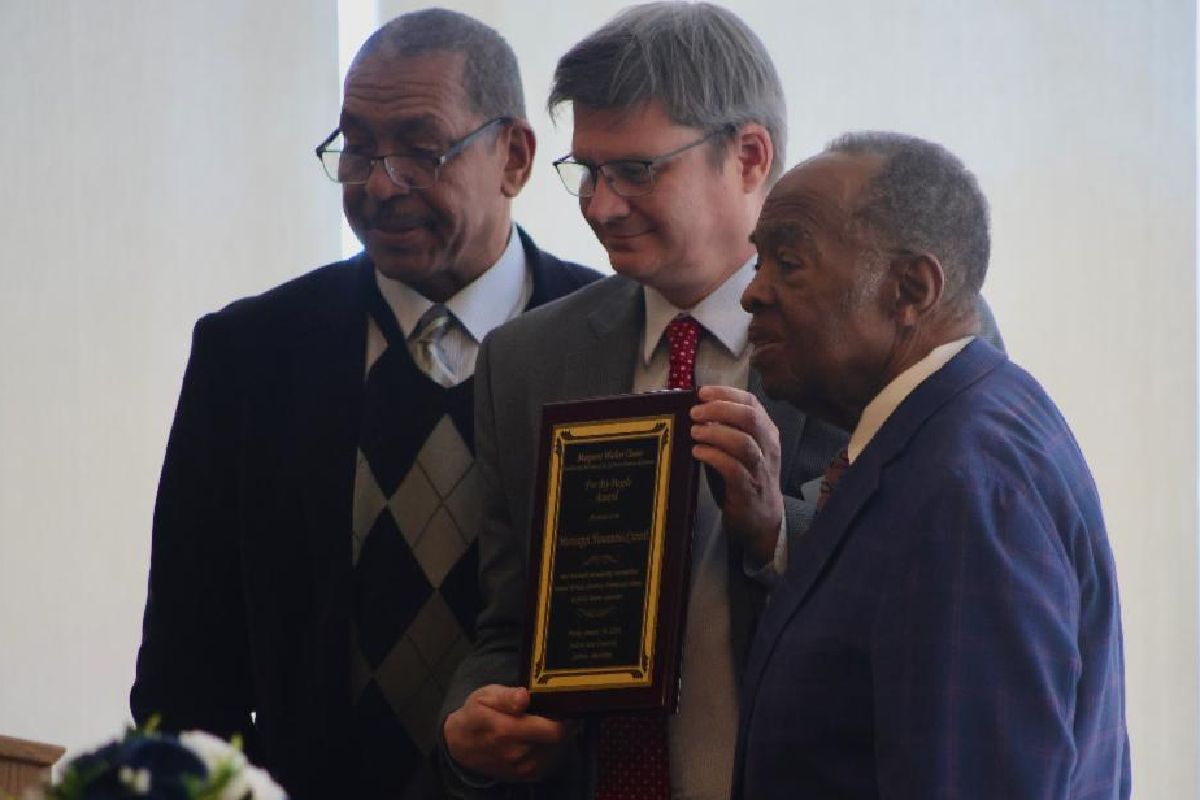
On January 16, the Mississippi Humanities Council was honored with the For My People Award from the Margaret Walker Center at Jackson State University. This award highlights a commitment to the interpretation, dissemination, and preservation of African American history and culture.
The For My People Awards are presented in conjunction with JSU’s annual Martin Luther King Jr. convocation, a tradition established by poet and scholar Margaret Walker in 1969 to commemorate the life and legacy of Dr. King. The awards celebrate individuals and organizations whose work reflects his ideals of service, justice, and cultural stewardship.
| | Other honorees were Rep. Alyce Clarke, Rep. Zakiya Summers, and Dr. Daphne Chamberlain, who also presented a powerful and inspiring keynote. The MHC was recognized for a range of programs and initiatives, including prison education, book clubs, and community-based projects that spotlight Mississippi’s civil rights history. | | |
Cadence Bank/Huntington Bank to Serve as
State Sponsor for Smithsonian Exhibit Tour
| | |
The Mississippi Humanities Council is pleased to announce that Cadence Bank/Huntington Bank will serve as the state sponsor for the 2026-2027 Spark!: Places of Innovation Mississippi Tour.
Spark!, a traveling exhibition from the Smithsonian’s Museum on Main Street program, details the exciting ways that communities are creating lasting change across rural America through technology, art, culture, and more. Featuring stories from over 30 communities nationwide, the exhibit looks at the unique combination of history, resources, and collaboration that have resulted in innovation and invention.
“Innovation is critical in helping our State and local communities thrive. Cadence is pleased to partner with the Mississippi Humanities Council as the statewide sponsor for Spark!,” says Brad Maley, president of Cadence Bank’s Mid-Mississippi Division. “We thank the Council for their hard work and commitment to creating opportunities for all Mississippians to learn and grow, and Cadence Bank appreciates the opportunity to come alongside MHC to be a part of this outstanding program in 2026-2027.”
| |
Spark!: Places of Innovation’s Mississippi tour will kick off in Utica, at the Utica Institute Museum on May 16th, before traveling to Meridian, Greenville, Oxford, Hattiesburg, and Gulfport. Throughout the exhibit’s 9-month stay, our host organizations will welcome visitors, provide public programs exploring Mississippi’s innovative contributions, and create an exhibit of their own by sharing their community’s Spark! story.
To stay up to date on when Spark! will arrive in a community near you, visit our website.
| | |
MHC’s ‘Words on Water’ Secures $5,000 Grant for
2026 Being Human Festival Program
| | |
The Mississippi Humanities Council has been awarded a $5,000 grant from the National Humanities Center to present its immersive river-and-reading program, “Words on Water,” as part of the 2026 international Being Human Festival. The 2026 festival’s theme, “Between the Lines,” calls on organizers to explore hidden histories, shifting borders, and unspoken meanings—questions that lie at the heart of Mississippi’s relationship with the river that has shaped its culture, economy, and imagination.
“Words on Water: Reading, Reflection and Journeying on the Mississippi” will bring together up to 25 participants—readers, students, educators, and community leaders—for a two-week exploration of a new work of Mississippi nonfiction alongside a guided canoe trip on the Mississippi River near Clarksdale. Participants will first gather for land-based discussions of W. Ralph Eubanks’s When It’s Darkness on the Delta: How America’s Richest Soil Became Its Poorest Land, then carry those conversations onto the water with Quapaw Canoe Company guides, joining the author himself for a culminating dialogue around a riverside fire.
| |
Anchored at Clarksdale’s historic Cutrer Mansion, “Words on Water” invites Mississippians to think together about environment, race, memory, and belonging in one of the nation’s most storied landscapes. In keeping with the “Between the Lines” Being Human festival theme, the program asks participants to consider how the river has been both a channel of freedom and a route of constraint, a site of erasure and a source of resilience—and how reading in place can surface stories that might otherwise remain unseen.
Community partners including Quapaw Canoe Company, the Coahoma County Higher Education Center at Cutrer Mansion, Griot Arts, Spring Initiative, the Lower Mississippi River Foundation, and the Crossroads Cultural Arts Center will help recruit a diverse group of participants from across the Delta. Through shared paddling, conversation, and reflection, canoe crews will become “micro-communities,” modeling inclusive humanities practice that stretches beyond formal classrooms into the living classroom of the river itself.
Support from the National Humanities Center’s Being Human Festival will underwrite scholar honoraria, canoe services and safety equipment, travel, books and journals, and documentation, allowing the Mississippi Humanities Council to share participant reflections and stories with a broader public. As a model for future place-based humanities offerings, “Words on Water” will help demonstrate how, in Mississippi and beyond, the humanities continue to help people read not only texts, but also the landscapes and histories in which they are written.
| | |
America250 Mississippi Announces
New Round of Grant Program Awardees
| | |
America250 Mississippi and the Mississippi Humanities Council are pleased to announce the first round of 2026 Legacy Grants awarded through the America250 Mississippi Grants Program.
America250 Mississippi grants are available to Mississippi-based nonprofits, educational, and local governmental organizations in support of educational and commemorative programming focused on the 250th birthday of the founding of the United States of America—projects that highlight Mississippi’s history, its innumerous contributions to the United States, and foster exploration of America’s founding ideals.
Legacy Grants provide up to $20,000 for large-scale projects that enhance a community’s capacity to explore and promote local history, leaving a lasting legacy for future generations. The final deadline for Legacy Grants is February 1, and the Program Grant deadline is March 15.
To learn more about the awardees and their project descriptions, visit the America250 Mississippi website.
| | |
3825 Ridgewood Road
Room 317
Jackson, MS 39211
| | | | | |