View as Webpage

A Roundup of Recent Ulster County Business-Related News, Views, and More


January 28th, 2026


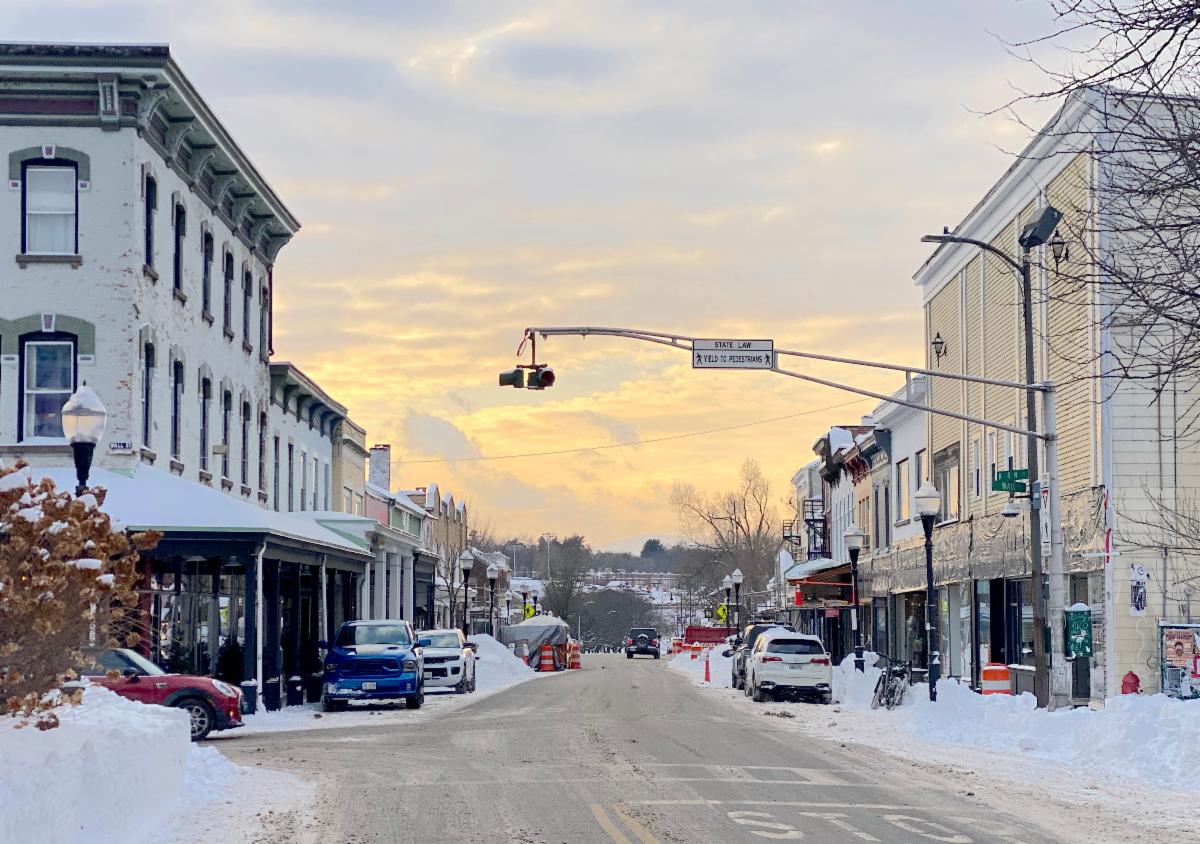
(Pictured - Uptown Kingston Pike Plan's Removal)


With winter's unending snowfall this year, if your a skier, you're in heaven. For the rest of us - not so much. But one of the joys of living in the Hudson Valley is our glorious four-season weather. Yet as exciting as snow days may be for children and a few adults, business still needs to be taken care of around the county.


This edition of the Ulster Strong Business Bulletin is packed with local housing news. With new construction stories, a deep interview with Kingston's housing director, latest battles over rent control, and the recent annual housing survey by Pattern for Progress, there's much about the subject in this edition. In addition, there are some concerning signs of a softening local economy. There is also news on the rail vs trail front, another battery storage proposal, and a critique of SUNY Ulster from the county executive. There's quite a bit of development and business news this month, so let's get to it. Enjoy!


This newsletter includes the following:


Kingston selects partners for development of affordable housing at 25 Field Court


Kingston Common Council overrides mayor’s veto of rent stabilization extension


Blueprint for growth: Kingston’s housing director ushers in a new era of development using a diverse playbook


Governor Hochul’s Agenda


DATA BITES


The Catskill Mountain Rail Road - Opinion


Hudson Valley Jobs in 2025


Battery storage project proposed in Saugerties


QUICK BUSINESS NEWS UPDATES


Letter by Ulster County Executive Says SUNY Ulster Campus Underutilized


Kingston selects partners for development of affordable housing at 25 Field Court

(City of Kingston)


Mayor Noble is pleased to announce that affordable housing partners for the redevelopment of the City-owned property at 25 Field Court have been selected.


Affordable Housing Conservancy, Fulcra Development, and Sisters of Charity Housing Development Corporation is an experienced team with a track record of delivering design-forward, affordable and mixed-income housing projects in urban areas and was judged by an evaluation committee as best meeting the objective to create a community-oriented development that aligns with the goals of the Midtown Thriving planning process, adds much needed affordable and deeply affordable housing, and remediates pollutants on the site to the satisfaction of the New York DEC.


Mayor Noble said, “We were pleased with the proposals we received and the exciting ideas for 25 Field Court. The selected project team proposed a high-density, affordable residential rental project with both retail and community-serving spaces on the ground floor and will make a meaningful connection to the Midtown Linear Park and surrounding neighborhood. The project team’s proposal really understood the character and personality of Midtown and proposed partnering with local non-profits for new commercial spaces. We are thrilled to work with the project team to bring this Midtown development to fruition.”

Parkline is anticipated to include approximately 100 new rental units, offering a mix of unit sizes, along with new ground-floor commercial space. Pending finalization of the financing structure, a significant portion of the new units will be designated as affordable and deeply affordable.


The City of Kingston acquired the site in April 2024, an approximately 0.85-acre site in a mixed commercial and residential area in Midtown, directly adjacent to the Midtown Linear Park and near the Broadway business corridor. The property has frontage on two roads, 125 feet of frontage along Field Court, and approximately 120 feet of frontage along O’Neil Street. The property currently contains an unoccupied single-story 12,000 square foot brick building constructed in 1966, and has a parking lot fronting Field Court and another parking lot facing O’Neil Street.


The City is currently working to designate the area of Midtown that includes 25 Field Court as a Brownfield Opportunity Area (BOA) as part of the Midtown Thriving project, and as part of that work, has received public input on priorities for redevelopment for vacant and underutilized sites in the BOA area. Once the area is designated as a BOA, the site would be eligible to receive additional tax credits and state grants.


Under the City’s recently adopted form-based zoning code, the site is zoned as T5 Flex, which allows for a wide variety of uses and building types. Any site sales are dependent upon the approval of the City of Kingston Common Council.


Kingston Common Council overrides mayor’s veto of rent stabilization extension

(Mid Hudson News)

The Kingston Common Council Tuesday night voted unanimously to override Mayor Steven Noble’s veto of a resolution to re-issue the city’s housing declaration and continue rent stabilization in the city.


The council reaffirmed last month’s decision to maintain tenant protections for all units covered by the Emergency Tenant Protection Act, despite the mayor’s recommendation to rescind coverage for hundreds of units.


In announcing his veto, the mayor expressed concern that the council’s resolution could invite “legal challenges” from landlords antagonistic to rent stabilization, underscoring the “chilling effect property owners’ lawfare has had on the expansion of tenant protections.”

A group of landlords has already threatened to sue the city following the veto override.


Blueprint for growth

Kingston’s housing director ushers in a new era of development using a diverse playbook


by Zac Shaw for Ulster Strong


(Pictured - Bartek Starodaj, Director of Housing Initiatives for the City of Kingston)


When Bartek Starodaj took the job as Director of Housing Initiatives for the City of Kingston, he was looking for a place where housing policy could move from theory to dramatic change.


“I'm a graduate of Bard, from the undergraduate and graduate program,” Starodaj said. “My graduate degree was in policy. After graduating, I went to Washington, DC to work at a large NGO on urban policy. But I had always wanted to have a more local impact and work within a smaller municipality.”


He landed in a city wherein housing development was an urgent priority. In response, Kingston’s “Kingston Forward” form-based zoning code was adopted in August 2023, with the goal of making it easier to get shovels in the ground while balancing the needs of the community.


“At least since the time that I've been here with the city, we’ve really changed a lot of our policies and zoning to reflect that desire,” he said. “The largest change was the 2023 zoning rewrite, which really made it much easier to build new housing, and really facilitates quicker approvals of the housing that we need.”


What followed was the development and planning of hundreds of units across multiple buildings towards Mayor Steve Noble’s goal of creating 1,000 new domiciles in five years.


“We have easily the most housing under construction and planned in the city of Kingston, the most we've had since the 1980s,” he said. “It’s definitely an exciting time. We’re very clear that we’re pro-development and pro-housing. We believe that growing our housing supply is essential to increasing affordability and increasing opportunities within the city of Kingston.”


In addition to zoning changes, Kingston has leaned on process improvements intended to reduce uncertainty during environmental review, and policy tools meant to attract mixed-income projects. Starodaj cited a citywide “generic environmental impact statement” approach as one way Kingston tries to streamline the State Environmental Quality Review process. He also pointed to tax exemptions that Kingston has adopted to support new multifamily and accessory dwelling unit development.


And the city is looking inward at what it already owns.


“We’ve also walked the walk in the sense that we are taking a hard look at all of the city-owned property and seeing if we can make use of that for new housing development,” he said.


Midtown Thriving is the city’s biggest effort in the quest to construct more living spaces, especially affordable ones. The plan focuses on a large Midtown corridor and the city’s supply of abandoned and blighted parcels, particularly along Broadway.


“Midtown has the largest concentration of vacant and underutilized sites within the entire county,” Starodaj said. “Owing to the presence of the railroad there and the historic industrial uses there, there’s a lot of vacant sites that tend to be on the larger side compared to other lots within the city of Kingston.”


He described the logic behind a coordinated plan.


“The thinking behind Midtown Thriving is, why don’t we make an effort in particular within Midtown to redevelop those sites, given the opportunity that’s there,” he said, “and also given the number of community needs within Midtown, not only for more housing, but we’re talking about grocery stores or other community spaces that could also be co-located with new housing on these large lots.”


For Starodaj, the point is not housing alone.


“It’s meant to be a holistic approach,” he said. “There are sections that focus on the physical environment and infrastructure, but it also focuses on the other needs of the community… and how do we make it so that the diverse communities within Midtown all feel welcome, that there are third spaces for all these groups to mix.”


Much of the housing currently being built or planned is market-rate or above, but Starodaj said the assumption that affordable housing is harder to build is not quite accurate.

“I would take issue with that,” he said. “There’s actually difficulty with building market-rate housing and difficulty with building affordable housing.”


He framed the difference as where the money comes from.


“Often market-rate housing won’t have any real public subsidy tied to it,” he said. “In that case, those developers have to raise enough money to cover their large costs without the public subsidy.”


Affordable projects, by contrast, can be built around major subsidy programs, but that creates its own constraints.


“With affordable housing, oftentimes there can be large public subsidies, especially if we’re talking about the low-income housing tax credit,” he said. “Those subsidies can cover the large construction costs that a project will face.”


The bottleneck is competition.


“There are state subsidies out there for affordable housing, but there’s not enough of it,” he said. “It’s also quite limited and highly competitive. We’re competing with all the other communities in New York state.”


Starodaj credits nonprofit and mission-driven builders with keeping affordable production alive in leaner years.


“We wouldn’t be anywhere right now without RUPCO,” he said. “Prior to some of the newer housing projects that we have now being built, like Golden Hill, RUPCO was really the only one building affordable housing at any scale with Landmark Place and Energy Square. These partnerships are incredibly important.”


He also described housing work that looks less like new construction, and more like preserving what exists.


“We have many partnerships specifically with RUPCO right now, with home repairs, and accessory dwelling units throughout the city,” he said. “We are going to need to rely on our nonprofits to get all this work done, and that includes building new housing.”

Kingston has also been developing a financing tool aimed at a common pain point: early-stage capital.


“I did propose last year to create a new nonprofit, which would have its own revolving loan fund that projects would benefit from,” Starodaj said. “I have continued the development of the nonprofit, and it will be launched soon this year. We’ll be announcing more on that quite soon. We really do need new tools to help foster the kind of housing development that we all recognize we need.”


Many of the major projects announced or underway pair housing with ground-floor commercial space. Starodaj says there’s careful calculation regarding where to site these mixed-use buildings.


“I certainly don’t want to be in a position where we’re forcing commercial onto ground floors where there’s no real economic justification for that,” he said. “But historically Kingston is a mixed-use, walkable community. You had storefronts all over the city, and our new zoning code in 2023 really makes it more possible to have commercial in more parts of the city.”


He sees the strongest case along established corridors.

“We are really leaning into that mixed-use component of new projects, especially when a project is located along one of our commercial corridors like Broadway,” he said. “It adds to the walkability of the entire city.”


He also hears demand from entrepreneurs.


“Many people have expressed to me that there is a shortage of commercial space that kind of fits whatever they’re looking for,” he said. “I do think there is an economic case to be made that these spaces should be included in new developments, especially if they are located along the Broadway corridor, uptown or downtown.”


As Midtown grows, residents ask the obvious question: where do the cars go, and how do the pipes keep up?


“We did a full analysis of this as part of our zoning code, analyzing traffic impacts, parking impacts, infrastructure,” Starodaj said. “Generally speaking, we are very confident that the city has plenty of water for new residents to use. We have capacity in our sewer plant.”

“We have been making major roadway improvements throughout the entire city, such as Broadway, most famously,” he said. “That really sets the stage for more housing to be added along Broadway.”


Parking, he said, needs active management.


“There will soon be a parking study focusing on the utilization of parking lots throughout the city that looks at the stage for any new investments in municipal parking lots, or what we are doing with our existing municipal parking lots,” he said.


When all this growth is put into historical context, Starodaj says the coming population boom is something the city has plenty of capacity to handle.


“Keep in mind, the population of Kingston right now is well below the peak that we hit, I think in 1900,” Starodaj said. “We’re far from full. We have plenty of space to accommodate new development, particularly because, in contrast to 1900, our household sizes are much smaller, so we need a lot more housing units to accommodate the same population figure we had back then.”


The scope of Kingston’s housing agenda can sound like a large staff effort. Surprisingly, it’s a solo operation, albeit one that interfaces with many other roles in city government.

“The housing department is a relatively new department, and it is only a department of one,” he said. “I truly do rely on the rest of City Hall for supporting some of these initiatives. The mayor, corporation counsel, planning. I work really with every department in City Hall.”


Outside government, he leans on networks and working groups.


“Making partnerships with nonprofits, speaking to the county,” he said. “I do also manage a few groups, one of them being the Housing Task Force, and also the zoning working group that was appointed by the Common Council.”


He likes the pace.


“I’d much rather be busy, taking risks, and trying new things, rather than relying on previous models of how things were done,” he said.


One new effort is an eminent domain claim tied to a long-vacant parcel located downtown.


“We did start an eminent domain case downtown on a former urban renewal property, three and a half acres, that is still ongoing,” Starodaj said. “At this point we are waiting on a ruling from the appellate court up in Albany for whether that can proceed, which we’re optimistic the city will be successful in that.”


One recent flashpoint has been rent stabilization under New York’s Emergency Tenant Protection Act (ETPA), which Kingston has repeatedly revisited amid political and legal pressure.


“The law is quite clear that it does not impact new development,” Starodaj said. “It only controls buildings built before 1974 with six or more units.”


But he acknowledged optics matter.


“Sometimes just the fact that we have it can be enough to scare some folks away, even though it would not impact their development,” he said. “They do feel that it increases their risk calculation.”


He described the city’s stance as dual-track.


“We’ve been very clear, we’re all in for new housing, but we do also believe in protecting tenants,” he said. “We are trying to achieve that balance.”


For city-owned sites, Kingston uses a formal request for proposals process, with evaluation criteria and a committee selecting a development team.


“We just had that happen with 25 Field Court,” Starodaj said. “Multiple teams submitted, and we chose the one that we felt best met the evaluation criteria.”


Once selected, he said, the city typically enters a preliminary agreement.


“That gives that party basically exclusive rights for pre-development activities and grants them access to the site,” he said. “When pre-development activities are over, they typically go ahead with planning board approval, and at some point we will transfer the site over to them following Common Council approval.”


For private property, it is more straightforward.


“With any other private party just looking to develop any site, they would go directly to the planning department for site plan approval,” he said.


He also pushes opportunities directly to builders.


“I have tried to build a network of developers that I know personally that I know are interested in Kingston,” Starodaj said. “I do personally disseminate, to the extent possible, to my network for any opportunities, which has proved to be successful.”


He thinks Kingston’s reputation helps, especially for affordable developers used to long fights elsewhere.


“We have made it very clear that if you're trying to build affordable housing, you will be welcomed,” he said. “You won’t be banished.”


And for developers trying to get oriented, he keeps the door open.


“For someone looking to get the lay of the land and general resources, how to go about things, I’m always happy to speak to anyone,” Starodaj said.


Governor Hochul’s Agenda Addresses Impediments That Have Made New York Slower, More Expensive, And Less Predictable Than Peer States


(By Paul Adler - Rockland County Business Journal)

Governor Kathy Hochul’s 2026 State of the State address, delivered on January 13 at the Capitol, sent a clear and long-overdue message to the business community: New York State must become a more business-friendly place to invest, build, and grow—without abandoning its core commitments to environmental stewardship, equity, and quality of life. From the vantage point of commercial real estate, economic development, and capital deployment, the Governor’s proposals are both pragmatic and consequential.


For those of us who work daily at the intersection of land use, infrastructure, housing, and job creation, this State of the State reflects something we have been urging for years: New York cannot regulate its way into prosperity. It must build its way there.


Why the 2026 State of the State Matters to Commercial Real Estate

Governor Hochul’s agenda directly addresses structural impediments that have made New York slower, more expensive, and less predictable than peer states when it comes to development and investment.


Key takeaways for commercial real estate, infrastructure, and housing stakeholders include:

  • A clear acknowledgment that New York takes too long—and costs too much—to build.
  • A data-driven case for reform, grounded in findings by Empire State Development.
  • Targeted amendments to SEQRA that preserve environmental protections while eliminating duplicative and unnecessary delays.
  • An understanding that housing, workforce participation, and economic growth are inseparable.


Universal Child Care: An Economic Development Policy Disguised as Social Policy

The Governor’s commitment to expanding Pre-K, 3K, and child care subsidies to achieve universal, affordable care for children under five is not just a family policy—it is a workforce policy.

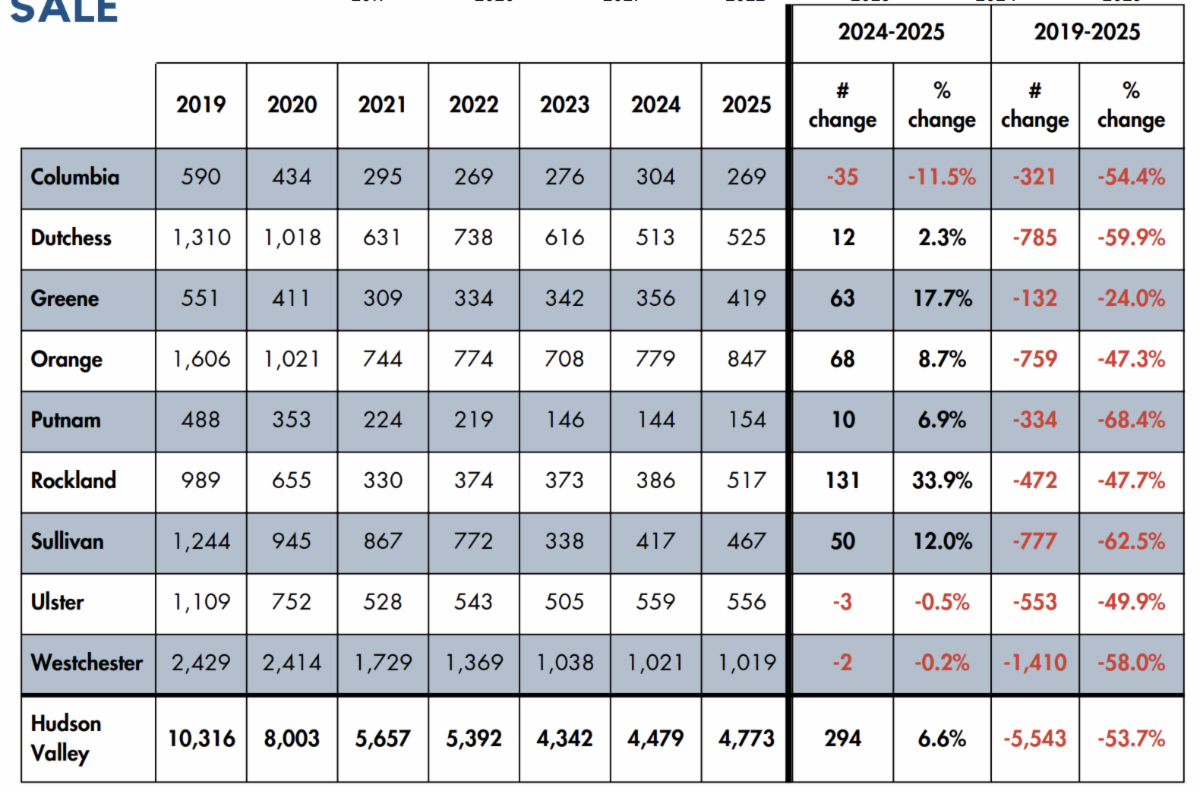
DATA BITES


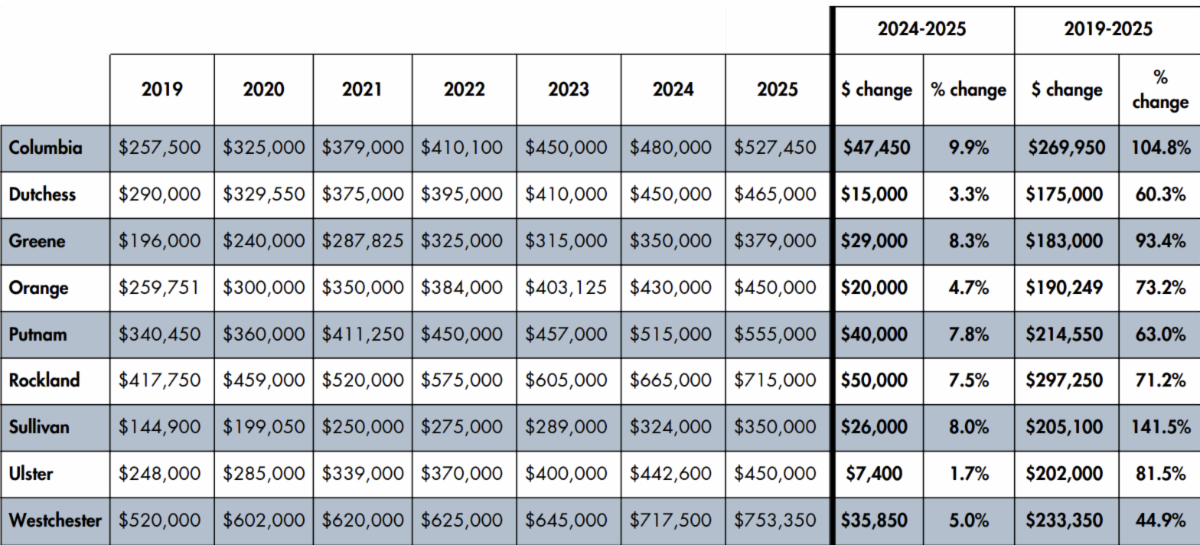
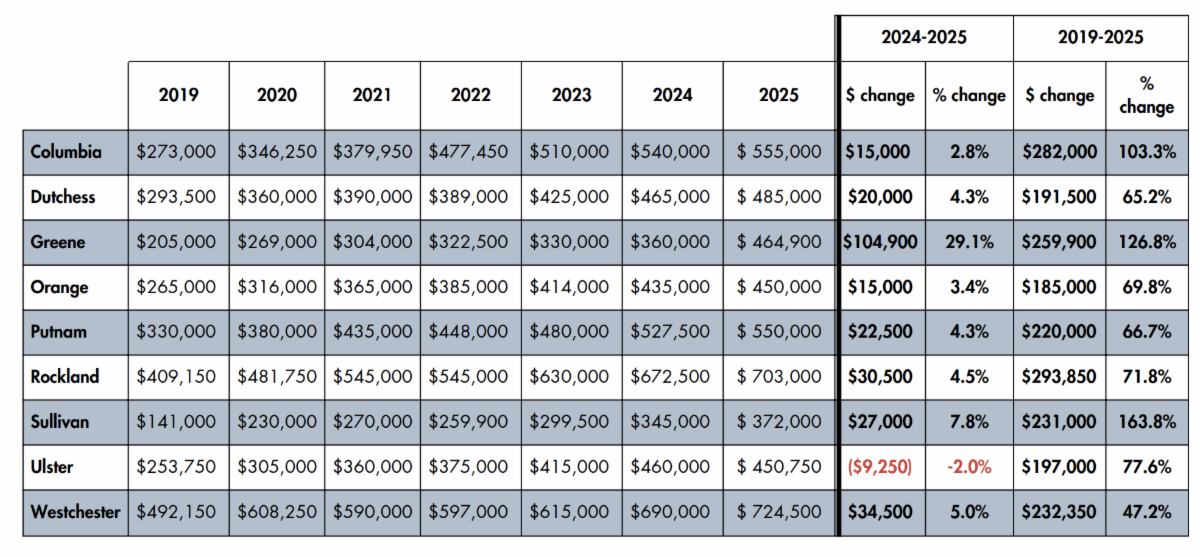
Hudson Valley Regional Housing Market Report Annual & Q4 Data Hudson Valley Regional Housing Market Report Annual Report

(By Hudson Valley Pattern for Progress)

Hudson Valley Counties

2025 ANNUAL MEDIAN SALE PRICE FOR HOMES

Hudson Valley Counties

4TH QUARTER 2025 MEDIAN SALE PRICE

Hudson Valley Counties

2025 MEDIAN INVENTORY OF HOMES FOR SALE

The Catskill Mountain Rail Road Cannot Continue Business As Usual in Ulster County

Opinion by the Catskill Mountain Rail Road


The Catskill Mountain Railroad “CMRR” contributes significantly to the Ulster County economy.  However, is has done so despite a complete lack of support and outright hostility from its Landlord, Ulster County.


In 2013 County Executive Hein decided that the CMRR should leave Kingston permanently and stay in Phoenicia. Hein used litigation to force the issue, but after spending $700, 000 of County money trying to oust the CMRR from Kingston (and the CMRR spending an equal amount in legal fees to defend itself), failed when the County legislature allowed the CMRR to maintain a bare minimal presence in Kingston in 2015.  


Despite being cut off from its long-time destination of the Ashokan Reservoir, having its secure yard taken away, and its connection to the mainline railroads removed, the CMRR has flourished reaching 61,677 riders in 2025.  The CMRR’s Polar Express fills Kingston restaurants and hotels from mid-November to the end of December with families clad in pajamas with 36,196 passengers in 2025, and does the same with another 25,481 passengers from Easter to October.  In 2025 84.4% of its passengers were from outside of Ulster County.  With expenditures of (per Ulster County Tourism) $59 per person for day trippers and $125 for overnights, this adds up to $6.2 million in spending for Ulster County. 


The CMRR’s own local expenditures are at least $1.1 million per year.  Its annual payroll is over $800,000 with 3 full time employees, 35 part time, and 90 seasonal employees equating to 18 full time equivalent positions for the 38, 580 hours it paid staff in 2025.  This adds another $2.2 in economic value to Ulster County and Kingston, a total of $8.4 million per year.


The CMRR’s current plans include expansion to the current Ashokan Rail Trail “ART”. Plans include a new terminal that will serve both rail and trail customers, located near the Basin Road bridge.  A rail shuttle service will take passengers from Kingston to the ART so they can enjoy the trail and spend all day there returning in the evening.  The terminal will have concessions for bike rental, food, and most important indoor restrooms and event space.  The indoor restrooms will qualify the CMRR and the ART for Thruway “attractions” signs bringing in even more visitors.  The CMRR will add a trolley service to Woodstock similar to the Kaaterskill Trolley in Greene County, taking rail passengers to the village of Woodstock, eliminating parking and traffic problems. The extension of the CMRR will double its ridership, and its economic impact.  


None of this will cost the County anything. Indeed, the CMRR pays Ulster County $60,000 in annual rent, and has spent over $1 million upgrade the existing tracks since 2016. The CMRR has obtained $677,000 from NYSDOT to support its expansion plans, and an additional $3.818 million to support its existing operations. 


The trail-only lobby has vowed never to work with the CMRR, presumably because they’ve been angry the CMRR was allowed to stay in Kingston in 2015.  They still favor the CMRR vacating Kingston and returning to Phoenicia. The CMRR has made “rail-with-trail” its policy position since 2014, but trail-only leaders refuse to budge in sharing the line.


They have lobbied County Executives – Hein, Ryan and Metzger - to push the CMRR out of Kingston, and even made sure the CMRR never secured NYSDOT grants to enhance their Kingston operations.  That is why the County has blocked every grant the CMRR has applied for since 2014, and even opposed the $4.5 million the CMRR obtained in 2024 to support its Kingston operations – because of trail lobby opposition.


In 2024 the Trail Lobby published its “State of the Trails” report – stating that the 80 miles of rail trails in Ulster County produced $17 million of economic spending (with no data to back it up). They state that 70% of Ulster County trails users are local. A nice amenity for Ulster County residents, but trails have marginal economic impact.  And importantly, the cost of maintaining the trails was not included.


The 4.75 miles that the CMRR operates on produces $1.8 million per mile in economic spending for Ulster County.  Using the trail lobby’s own numbers, the 80-mile trail system produces only $212,500 per mile – a fraction of the economic value of the railroad.


Apparently economic value means nothing to the trail-only lobby, led by the Woodstock Land Conservancy and the Open Space Institute. They contend that any rail-with-trail solution is “infeasible”, but what they really mean is they don’t want a train track beside a trail – presumably because it doesn’t fit their ‘vision’.  The head of the WLC has stated this position many times, and why they lobby so hard against “rail-with-trail”.


WLC and OSI not only oppose the railroad, but have gone on record opposing nearly all significant development in Ulster County.  And they can do this because they report or answer to no one.  The WLC doesn’t report its donors, so who do they represent? And why do they have so much power over elected officials?  


Frustratingly Ulster County is becoming known as anti-business, and fewer private businesses are willing to relocate to a County that treats businesses, like the CMRR, as they do so.  And because of this, other counties have noticed and approached the CMRR to relocate to their areas.  


County Executive Jen Metzger appears to be willing to allow this to happen, let another business turns it back on the county, along with its jobs, tax revenues and economic impact. And in return, Ulster will have even more trails as well as more costs to build and maintain, paid for mostly with taxpayer money.  We encourage other business leaders and the business community to hold the county to account before more businesses are forced to leave the County.


Hudson Valley Jobs Increased in 2025 (But Ulster County Lost)


(by Mid Hudson News)

Ulster County LOST jobs in 2025, whereas almost all other Hudson Valley counties gained jobs. Is Ulster County's de-growth strategy working?


"State Labor Department Analyst Johny Nelson said regionally the largest gains were in private education and health services (+6,600), professional and business services (+1,900) and financial activities (+500). Job losses were centered in mining, logging and construction (-2,300), trade, transportation and utilities (-1,800), other services (-1,200), leisure and hospitality (-1,000), information (-500) and manufacturing (-300).

Sullivan County’s strongest gain in jobs was followed by Rockland County and Westchester while Ulster County area along with Dutchess-Orange area lost jobs during 2025."


[In December, Ulster County was the only region that posted job losses – down 0.2 percent over the period.]


Battery storage project proposed in Saugerties

(HV1)

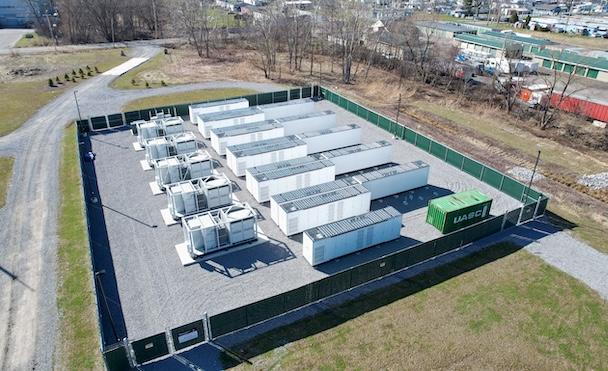
(Pictured: Key Capture Energy operates New York’s largest battery energy storage project today, KCE NY 6 located outside of Buffalo.)

It might not have been on the agenda, but a proposed 100-megawatt lithium-ion battery storage facility was on the minds of attendees at last week’s Saugerties Town Board meeting. 


Proposed by Key Capture Energy, the plans indicate that the facility would include 110 containers on 11 acres of a 59.8-acre plot off Tomsons Road owned by KMP Holdings. The property is adjacent to a Central Hudson substation, with proximity critical to similar projects proposed elsewhere, including in the Town of Ulster. The site off of Tomsons Road has a corner that abuts the village line on the west side of the railroad tracks and would be about 0.3 miles from Cantine Field.


More information about the project is expected to be revealed during a developer-led presentation at the Saugerties United Methodist Church at 67 Washington Avenue at 5:30 p.m. on Thursday, February 5. Town officials have said further presentations are also in the works, particularly after the New York State Energy Research and Development Authority (NYSERDA), which will have the final say on approving the project, chimes in.....


Costello (Town Supervisor) said he looked forward to the February 5 presentation by Key Capture Energy, but understood that as the developer, their position might be different than that of the town and NYSERDA, and that wherever town officials ultimately land on the proposal, it’s unlikely to happen until a thorough review process is undertaken. He added that the Town of Saugerties website will add any information provided by NYSERDA as it becomes available. 


For more information on Key Capture Energy’s plan, visit: https://keycaptureenergy.com/kceny34/


Support local independent journalism by subscribing


Local news is a business - it not only creates jobs and supports families, it's also an essential lever to a healthy democracy.


Please consider subscribing to a local paper/news source so Ulster doesn't become a 'local news desert'.

QUICK BUSINESS NEWS UPDATES


New Permits Rules Would Make Building in Kingston Easier

(Kingston Wire)


The Kingston Common Council’s Laws and Rules Committee has approved a measure that would extend the duration of building permits for larger projects and give permit holders of all projects the option to seek a six-month extension.


Currently, those seeking a building permit must submit plans, proof of insurance and other documents and pay a fee of $100 plus 50 cents per square foot for residential construction or 70 cents for commercial buildings. Once the permit is approved, the holder has 12 months to begin conduction. If the timeline is not met, the permit holder must go through the process, and pay the fee, again.


Terra-Gen describes battery storage fire protocols for planned Coleman site

(Daily Freeman)


Terra-Gen officials said that, while extremely rare, a fire at its proposed battery storage facility would likely be contained to a single unit, which would be left burning to exhaustion, while firefighters would be limited to an assessment and containment role.

Terra-Gen has proposed a 250-megawatt lithium-ion battery energy storage facility on 12 of the 15 acres at the 430 Hurley Ave. site of the former John A. Coleman Catholic High School, which is across the road from the recently updated Central Hudson substation, and 337 feet from the Kingston city line and 0.32 miles from the town of Hurley.


Turner described fire protection plans in documents submitted to the town of Ulster as a “fire protection approach.”


Turner anticipates having a system of 300 battery containers with “layers of safety and defense … that in the event one of these were to catch fire, if there were a failure that caused a fire, that they fail safely and that fire essentially is limited to one enclosure, where it is essentially an equipment fire, that represents no credible risk to the neighbors, the public, or the environment.”


Emerson Hospitality plans a 70-room luxury resort in Esopus

(HV1)


Emerson Hospitality has acquired the Black Creek Barns property in Esopus and plans to redevelop the 153-acre site into a 70-room luxury resort slated to open in late 2027. The company said the project will combine restored historic buildings with newly built cabins and suites.


Plans call for restoring six historic structures and adding a mix of new accommodations across the campus. Resort amenities are expected to include a 7,000-square-foot indoor event hall, a 9,000-square-foot craft and design center, two dining venues, a greenhouse-style wellness center with saunas and plunge pools, and an outdoor pool.


Woodstock residents raise safety, transparency concerns over Zena Homes subdivision

(HV1)


NIMBY meets Environmentalists, brought to you by the chairman of the Woodstock Land Conservancy. The developers have repeatedly offered to sit down and discuss concerns with the WLC and its chair, yet they have preferred to 'take it to the people'. Why?


"“Our job as citizens right now is to make sure that we’re engaging the town of Ulster Planning Board, that we’re using our power as citizens to engage the town of Woodstock Planning Board,” [WLC chairman Kevin] Smith said.


“And identify, not just say it’s a terrible idea because it’s in the middle of a beautiful course—which it is, by the way—but that’s not what’s going to make a difference,” he said.


Letter by Ulster County Executive Jen Metzger Says SUNY Ulster Campus Underutilized

January 15, 2026


By Jen Metzger, Ulster County Executive


In my 2026 budget address last fall, I announced an initiative to form a “Reimaging SUNY Ulster” Committee with the college. We’re now moving this initiative forward: Last week I invited SUNY Ulster to designate representatives for the committee, which will consider actual space needs at the Stone Ridge campus, together with possible uses and improvements that will bring the most value to students, taxpayers, and the community.

SUNY Ulster is a critical part of our community, and serves a vital role in providing educational and economic opportunities. Shuttering the Stone Ridge campus is not the goal of this committee. Rather, the goal is to make the best use of SUNY Ulster facilities, for the benefit of all.


The starting point for the committee’s work is the wealth of data contained in the Facilities Master Plan documents prepared by the college’s consultant, together with the college’s strategic plan, “SUNY Ulster in 2030.” The data shows stark changes over time in the campus’ use, with a 60% decline in on-campus instruction since 2009. As a result, according to the consultant’s analysis, more than half of the available square footage of campus buildings and facilities is underutilized. This reality cannot be ignored: We have to work together to identify how to make the best use of limited taxpayer resources and align campus investments with documented needs now and for the years ahead.


The Reimagining SUNY Ulster Committee has these goals:

• Making the most productive use of space;

• Ensuring responsible stewardship of taxpayer dollars;

• Expanding and enriching educational and workforce development opportunities;

• Considering alternative uses for some unneeded campus space to serve broader public interests and needs; and

• Taking full advantage of the Kingston Center, which also remains underutilized by the college despite its close proximity to underserved populations and major employers like the hospital (think of the great synergies with the nursing program!)


It is my hope that through honest and open dialogue, we can chart a course for the campus that provides real direction for capital planning. This exercise is as much one of opportunity as it is necessity, recognizing changes in our county’s demographics and student needs, and thinking creatively about the future.


Our community college has a vital role to play in ensuring that all residents, regardless of economic circumstance, have the opportunity to realize their full potential and to contribute to a thriving local economy. Our shared responsibility calls for thoughtful, timely action grounded in partnership and shared purpose.


Jen Metzger is Ulster County Executive.


Ulster Strong is a non-profit advocating a pro-growth agenda that balances good jobs and investment opportunities with the environment and sustainability.


ULSTER STRONG SUPPORTS


Adding good-paying jobs;

Diversifying the local economy so it’s more resilient;

Encouraging new investment;

Balancing the environment with local economic needs;

Growing local tax base to support community services including schools, infrastructure and emergency services;

Updating planning and development procedures to be more

transparent and timely.


MEMBERSHIP INQUIRIES


Facebook  Twitter  Instagram  LinkedIn
X Share This Email
LinkedIn Share This Email