The Landscape Conservation Bulletin | |
A bi-monthly service of the Network for
Landscape Conservation
| | | |
Dear Network Friends,
With the annual turn of the calendar, by force of habit we often find ourselves reaching for that platitude, “Happy new year!” Only this year, that reflex has felt forced, especially dissonant: The early days of 2026 have proven to be anything but happy.
In a conversation with Catalyst Fund colleagues earlier this month, I admitted to feeling—rather than a sense of possibility and new beginnings with the new year—a sense of overwhelm, completely distracted and weighted by all of the horrific dynamics unfolding within our country, and at the hands of our country. The best I can seem to muster is a ‘fake it ‘til you make it’ approach, in terms of motivation and energy to dig into the work that I do. And in reflecting on those emotions, what I realized and what I shared with those colleagues is that if you are feeling similarly, that is okay: Feeling that way only shows that you are human, and that you care, deeply, about the world, and about building a better, more just future.
Indeed, in these moments of darkness, I am reminded of the words of David Graeber, who wrote, “The ultimate hidden truth of the world is that it is something that we make, and could just as easily make differently.”
This is the inspiration that I draw from you all in our shared community of practice: Each of you, in your own way, is working hard to bring people together who believe in making the world differently. You are pushing us to tap into something bigger and more profound than our individual selves, and working to breathe life into shared visions for the places and communities that you care about. And though I continue to feel that foreboding overwhelm, I am finding my way forward in the belief of the power of this community to make the world differently.
| | Additional Landscape Conservation News | Landscape Conservation Job Board | Webinars & Additional Resources | | |
Jonathan S. Peterson
Director, Network for Landscape Conservation
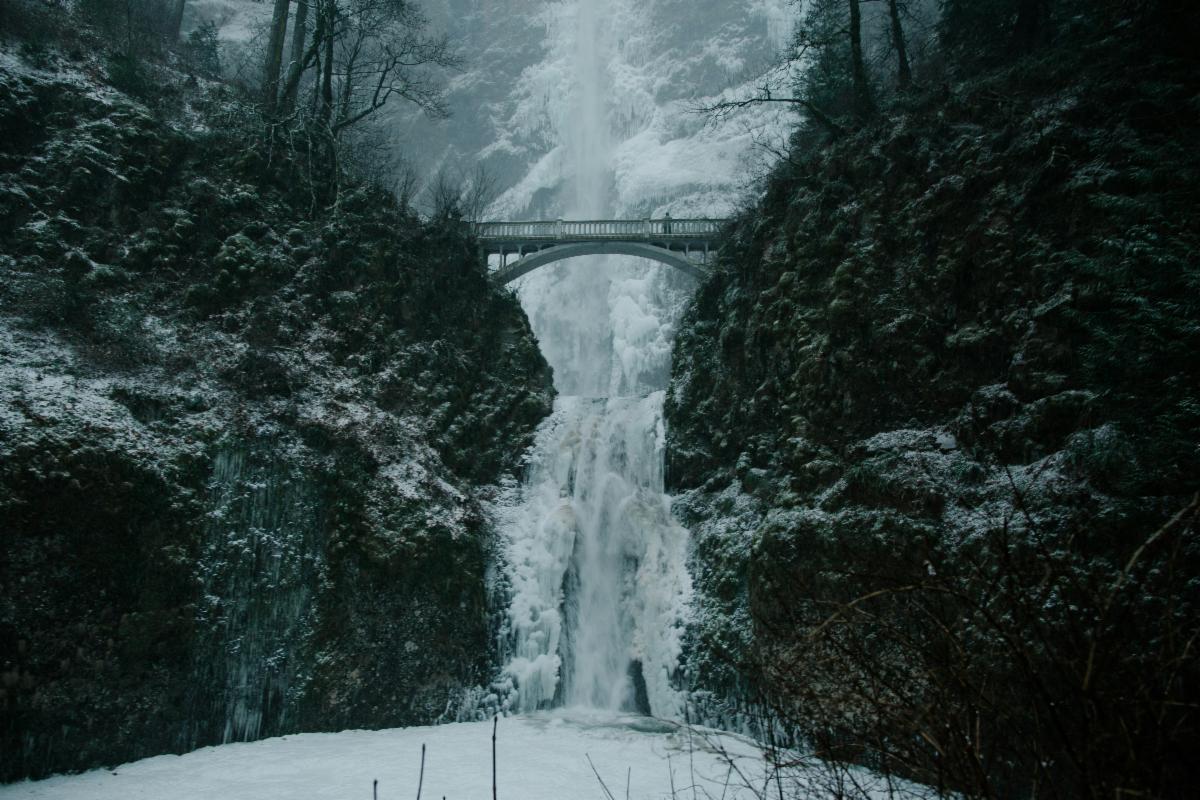
| | Cover photo: Multnomah Falls, Oregon. Photo by Hunter Reilly on Unsplash. | | |
Featured News
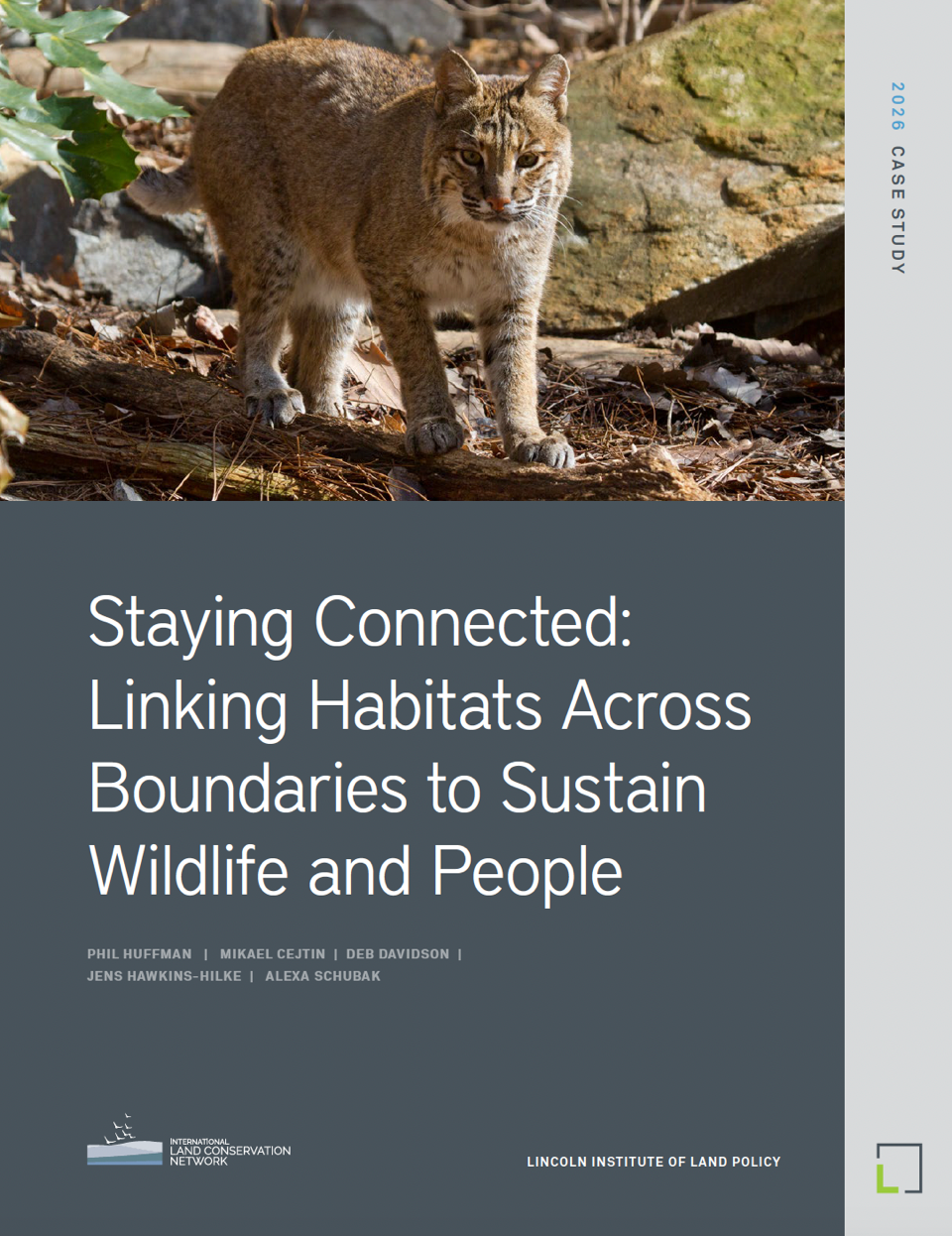
New case study spotlights the Staying Connected Initiative’s transboundary collaboration to enhance ecological connectivity for wildlife and people
| | Building enduring collaboration at the landscape scale is complex, challenging work and practitioners often feel as if they need to figure it all out on their own—which is why case studies and shared learnings can be so valuable. In that vein, a new case study from the International Land Conservation Network highlights the Staying Connected Initiative, providing a deep dive into this innovative partnership’s evolution, accomplishments, strengths, and challenges, along with a helpful set of lessons learned and recommendations for practitioners in the field. | | | |
For more than 15 years, the Staying Connected Initiative (SCI) has been working to protect and restore a well-connected cross-border landscape for all life in the northeastern U.S. and eastern Canada. The initiative brings together a network of more than 80 partners, including federal, state, provincial, and regional governmental agencies, nonprofit organizations, and academic institutions—along with Indigenous nations and organizations, community groups, citizen scientists, landowners, and many others who share an interest in ecological connectivity in the region. The case study highlights how SCI works at multiple scales through an integrated multi-pronged approach that includes conservation science and planning, land protection and stewardship, land use planning, road barrier mitigation, and policy initiatives.
In addition to sharing SCI’s model for collaborative landscape-scale conservation, the case study includes important reflections that have broader relevance for those in this field, regardless of geography. Examples include:
- The vital need to sustain effective coordination at multiple scales as the special sauce for optimizing collective impact;
- The power of a big vision and unifying theme to galvanize diverse interests and foster pride and inspiration in people primarily focused at smaller scales; and
- The value of a multi-pronged approach that draws on the capabilities of a wide range of partners to make meaningful change on a number of fronts simultaneously.
Contact SCI Coordinator Mikael Cejtin with The Nature Conservancy with questions or for more information the Staying Connected Initiative.
| | |
Featured News
Trust for Public Land releases a new storymap showcasing successful locally-led conservation projects funded by the Land and Water Conservation Fund
| | |
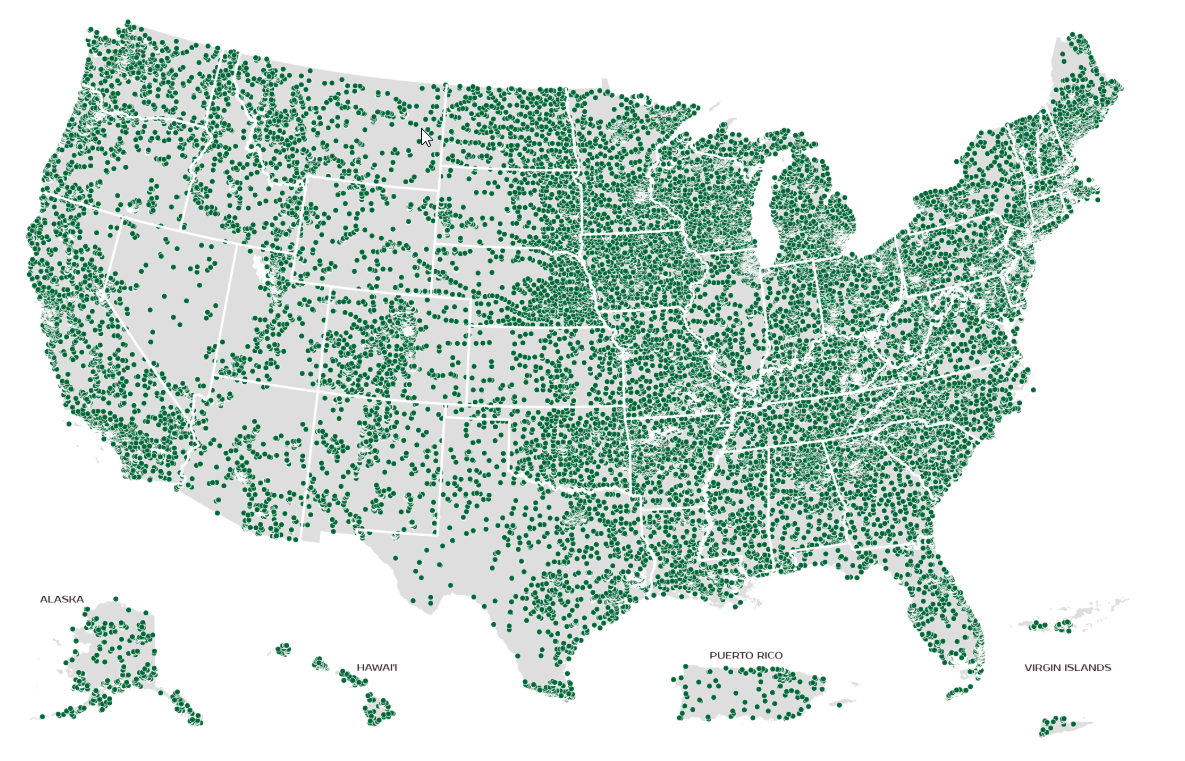
Last month Trust for Public Land launched a new storymap celebrating the 60-year legacy of the Land and Water Conservation Fund (LWCF)—spotlighting successful conservation projects made possible through LWCF and featuring projects in progress that are facing new bureaucratic hurdles. The storymap reveals LWCF's extensive nationwide impact, documenting nearly 150,000 projects across virtually every county in the U.S. A remarkably versatile stream of public funding for conservation, outdoor recreation, and cultural preservation, LWCF investments have advanced protection around iconic destinations like Yellowstone National Park and the Appalachian Trail, while also supporting local ballfields and neighborhood parks. The storymap serves as a call to action to support full implementation of the LWCF, ensuring its full $900 million of non-taxpayer dollars is permanently available every year to support projects in all 50 states.
| | Additional Landscape Conservation & Stewardship News | | |
“A moment of alignment:” Article in the Wildlife Management Institute's Outdoor News Bulletin highlights how the National Fish and Wildlife Foundation's retooled 30-year “NextGen” business plans can align with State Wildlife Action Plans to create a moment of strategic alignment, emphasizing habitat connectivity, ecological function, and state-led priorities.
Read more
In the latest issue of Landlines from the Lincoln Institute of Land Policy, an article highlights the evolution of the field of conservation finance over the last twenty years–and underscores, given the uncertainty around public funding at the federal level, the importance of advancing innovation around conservation financing.
Read the article
America the Beautiful for All Coalition releases new resource synthesizing messages that win when making the case for responsibly stewarding our shared lands, waters, and public health.
Explore the messaging guide
"Kinship can save us:" Essay in The Ecologist argues that the future conservation is not protection-focused models but instead in restoring our reciprocal relationships with the living world to heal both people and our planet.
Read the essay
Partnerscapes showcases profiles of locally-led, community-based landscape conservation and stewardship collaboration efforts—highlighting stories that are rooted in trust, shared vision, and deep connections to place.
Explore the stories
Blogpost from the Interaction Institute for Social Change highlights how, in times of turbulence and uncertainty, networks can serve as sources of resilience, resource-sharing, extended capacity, creativity, and mutual support—and offers steps leaders can take to nurture connections and tap into the benefit of collective power.
Read the post
In an opinion piece in The Chronicle of Philanthropy, Eva Hernandez, executive director of Mosaic, argues that building pluralistic "big tent" coalitions around shared vision rooted in a set of core values is essential for shifting power and realizing climate and conservation goals—and calls for philanthropy to invest in this often invisible and ignored work.
Read the essay
New report from the Western Landowners Alliance highlights the massive scale of conservation investments by private landowners in the American West—an oft-overlooked driver of conservation that is comparable to or exceeds many of the public funding sources.
Explore the report
Inside Climate News article highlights concerns that a proposed change to the Clean Water Act—aimed at streamlining permitting for oil and gas infrastructure—would significantly curtailing states' and Tribes' authority to exercise rights in protecting rivers and freshwater ecosystems from pollution.
Read the article
Article in the latest issue of From the Ground Up argues for an integrated approach to managing biodiversity and climate mitigation that looks to history for guidance.
Read the article
KUNC story highlights the Colorado River Indian Tribes' historic vote to designate the Colorado River as a "living being" with legal personhood status, using their senior-most water rights and sovereignty to codify millennia of cultural and spiritual values while empowering the tribe to include ecosystem restoration requirements in any water leasing transactions.
Read the story
Part of an on-going series, “Waterline: The Mississippi River Basin,” an article in Reasons to be Cheerful highlights Tennessee's Middle Fork Bottoms State Park as a demonstration project showcasing how collaborative floodplain restoration can produce thriving wetland habitat while providing natural flood mitigation.
Read the article
Circle of Blue article highlights how FEMA's 50-year-old "no-rise" rule is blocking watershed restoration projects nationwide and inadvertently exacerbating the threat of serious damage from flooding events.
Read the article
The Southeast Conservation Adaptation Strategy unveils its latest update to the Southeast Conservation Blueprint, a data-driven regional tool identifying priority areas for a connected network of lands and waters across the Southeast and U.S. Caribbean.
Explore the updated blueprint
Colorado celebrates completion of North America's largest wildlife crossing, an overpass over I-25 that connects 39,000 acres of habitat and is expected to reduce wildlife-vehicle collisions by 90 percent.
Read more
Blue Avocado compiles responses from nonprofit leaders identifying the most important qualities and traits for effective leadership that drive mission impact and success.
Learn more
| | |
Upcoming Conferences & Events
* * * *
March 4-6, 2026 — Shaping the Future of Fire in the Northwest
Stevenson, WA
March 19-20, 2026 — America’s Public Lands: At a Crossroads? The Wallace Stegner Center’s 31st Annual Symposium
Virtual
April 13-14, 2026 — Rural Voices for Conservation Coalition Annual Meeting
Bend, OR
April 13-16, 2026 — National Conference on Ecosystem Restoration
Omaha, NE
April 13-17, 2026 — Buffalo Beyond Borders
San Antonio, TX
April 14-16, 2026 — Collective Impact Action Summit
Virtual
May 4-7, 2026 — Native American Fish and Wildlife Society 2026 Annual National Conference
Verona, NY
May 4-7, 2026 — Gulf Conference 2026: The Annual Meeting of the Gulf of America Alliance
Mobile, AL
May 19-21, 2026 — WCCN Confluence 2026—The Future of Collaboration: The Power of Working Across Divides
Fort Collins, CO
May 2026 — National Executive Forum on Health and Outdoor Recreation
Washington, D.C.
June 2-5, 2026 — Conservation Finance Bootcamp
New Haven, CT
June 30 - July 2, 2026 — Western Governors' Association 2026 Annual Meeting
Deer Valley, UT
October 21-22, 2026 — California Landscape Stewardship Network @ 10: Celebrating Progress, Inspiring Action, Shaping What's Next
Tahoe City, CA
| | |
Landscape Conservation Job Board
* * * *
Programs Manager, Alliance or the Mystic River Watershed
Learn More
North Carolina Mountains Forestry Recovery Director, The Nature Conservancy
Learn More
Land and Water Restoration Director, National Forest Foundation
Learn More
New England Policy Manager, Appalachian Mountain Club
Learn More
Donor Relation/Communications, Yellowstone to Yukon Conservation Initiative
Learn More
Major Gifts Officer, Yellowstone to Yukon Conservation Initiative
Learn More
Conservation Connect Fellowship, National Forest Foundation
Learn More
This section of the Landscape Conservation Bulletin is intended to be a space to share job postings that will be specifically relevant to landscape conservation practitioners. We welcome submissions: if your organization would like to widely distribute a posting please be in touch.
| | |
Webinars & Additional Resources
In 2026, the Cornell Lab’s Land Trust Bird Conservation Initiative small grant program will award a total of $260,000 to land trusts and their partners to support 14 projects across the U.S. The RFP opened the first week of January, with applications due March 1 and funds distributed in May. To learn more and apply for a grant, see the Request for Proposals.
The biennial, nomination-based open call for the World Monuments Watch from World Monuments Fund is now live. The program spotlights places were heritage action can spark meaningful change. The nomination deadline is March 20, 2026.
The Living Landscape Observer is convening a Public Lands Book Club, bringing together current and former public lands professionals and scholars to read and discuss works that inform our current moment
* * * *
2026 Policy Outlook
A panel discussion from the America the Beautiful for All Coalition
January 30, 2026
America at 250 Forum: A conversation with Governors Spencer Cox, Wes Moore, and Kevin Stitt
A webcast hosted by the Pew Charitable Trusts and Disagree Better
February 18, 2026
The Pursuit of Systems Change: Balancing Today's Needs and Long-Term Impact
A virtual workshop hosted by the Collective Impact Forum
February 19, 2026
Facilitating Engaging Meetings
A three-part training hosted by the Institute for Conservation Leadership
Starting on February 19, 2026
Renewable Energy Ecology in the Northeast
A webinar from the Northeast Bird Habitat Conservation Initiative
February 26, 2026
Backbone Leaders Learning Lab
A four-session virtual cohort program by the Collective Impact Forum
Starting on February 27, 2026
Facilitating Collaborative Meetings
A two-day workshop by the Collective Impact Forum
March 18 & 20, 2026
Energize Your Partnerships and Networks
A three-part training hosted by the Institute for Conservation Leadership
Starting on March 19, 2026
Streamlined Strategic Planning
A leadership webinar from the Chronicle of Philanthropy
March 26, 2026
Seeds of Radical Renewal Fellowship
A week-long leadership training course from Emergence Magazine
June 16-20, 2026
Steps to Resilience
Self-guided course of climate adaptation
Building Blocks of Trust Training Series
A self-directed training series from the River Network and Water Now Alliance
NatureConnect
NatureConnect is a diverse suite of services, tools, and workshops offered by the Center for Large Landscape Conservation to help partners achieve connectivity and landscape conservation goals.
Connectivity 101
A free, online course developed by the Center for Large Landscape Conservation and partners in the Wildlife Connect Initiative with technical support from UNDP Learning for Nature. Conservation professionals and other interested parties can now register for the course to learn about conserving and restoring ecological connectivity to support a healthy planet.
Conservation Finance Boot Camp Short Course
Following cancellation of the 2020 Conservation Finance Boot Camp, the Conservation Finance Network compiled a 4-part video short course, which is available via the above link.
America Adapts: The Climate Change Podcast
A weekly podcast that explores the challenges presented by adapting to climate change and the approaches the field's best minds believe are already working.
The Green Mind
A podcast that explores the intersection of social and environmental advocacy, and seeks to uncover the actions people are taking around the world to showcase the symbiotic, yet sometimes tumultuous, relationship between people and nature.
Recordings of past webinars of the Connected Conservation webinar series are available on the National Park Service Connected Conservation website.
Recordings of past NLC Landscape Conservation in Action webinars are available on the Network's Landscape Conservation in Action Webinar Series page.
| | |
The Network for Landscape Conservation is the community of practice for practitioners advancing collaborative, cross-boundary conservation as an essential approach to protect nature, culture, and community in the 21st Century.
www.landscapeconservation.org
Contact Jonathan Peterson, Network Director, for more information.
Contributions of news, upcoming events, resources, and job postings for future Bulletins are welcomed. We also welcome inquires for potential future "Perspectives: Landscapes Conservation in Action" stories; please be in touch if you are interested in sharing stories and insights from your work.
| |
The Network for Landscape Conservation is a fiscally sponsored project of the Center for Large Landscape Conservation, P.O. Box 1587, Bozeman, MT 59771
| | | | |