Program Fund
Please consider contributing to the Iron and Steel Preservation Program Fund. This fund was established to support projects, research, conferences and scholarships related to the repair, rehabilitation, and restoration of metals. The Lansing Community College Foundation is a nonprofit 501(c)(3) corporation.
Donate Here
|
|
|
|
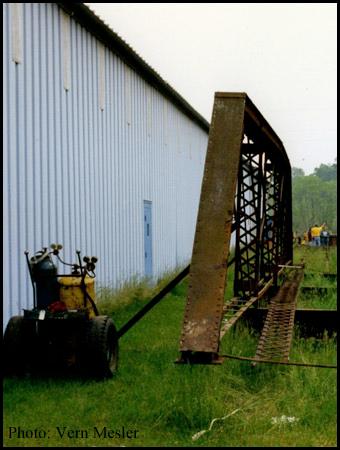
Dismantling the 133rd Ave Bridge
|
|
|
|
|
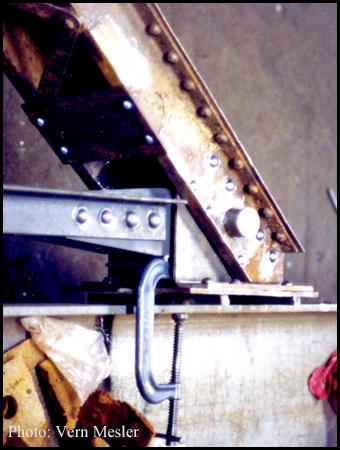
Dismantling the top chord
|
|
|
|
|
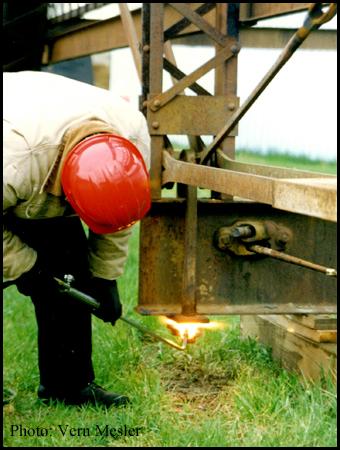
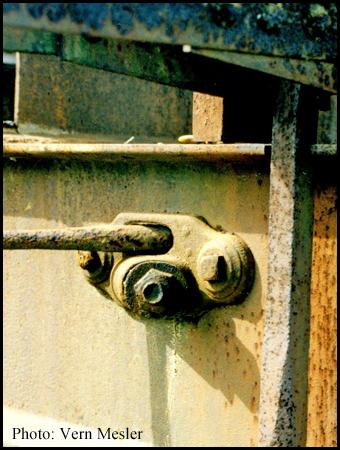
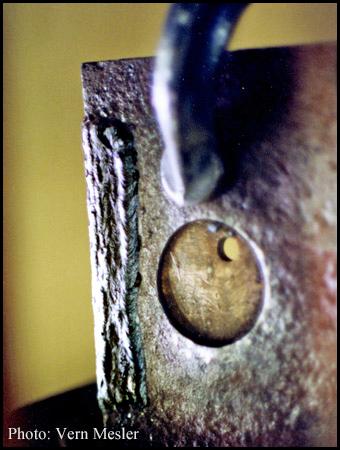
Heating to remove U-Bolt nut
|
|
|
|
|
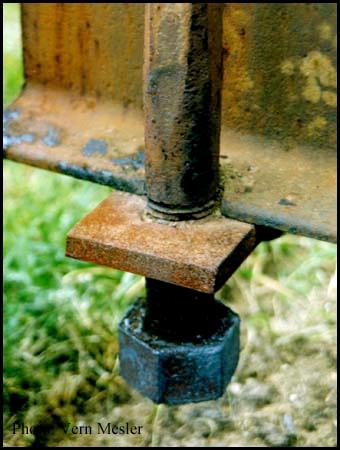
U-Bolt nut loosened after 100 years of use
|
|
|
|
|
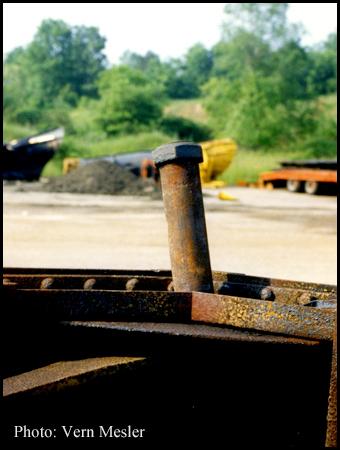
Bridge pin removed, eye-bars separated
|
|
|
|
|
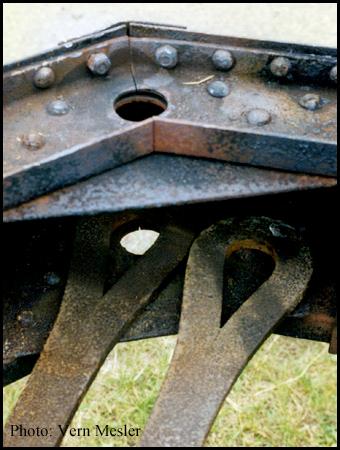
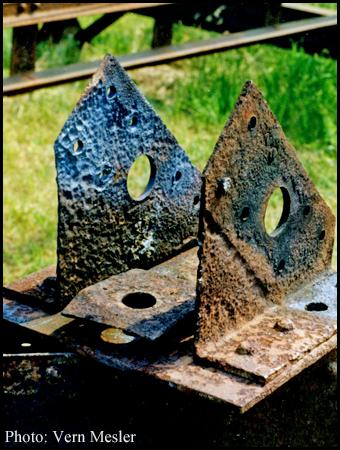
Hub guard beside the truss
|
|
|
|
|
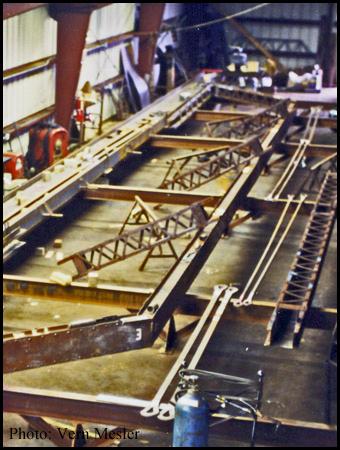
Assembling restored members
|
|
|
|
|
Assembling replicated bearing end pad and bottom chord
|
|
|
|
|
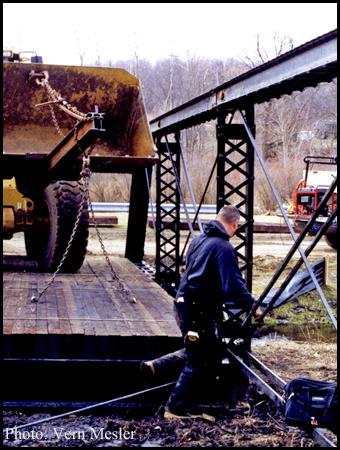
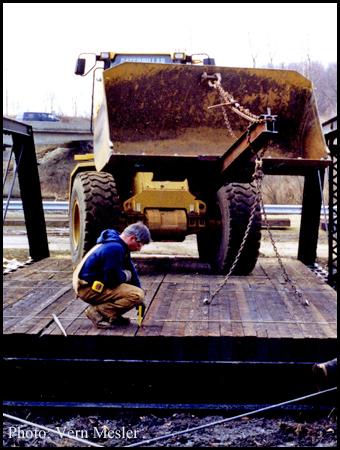
Setting the wood deck of the 133rd Ave Bridge
|
|
|
|
|
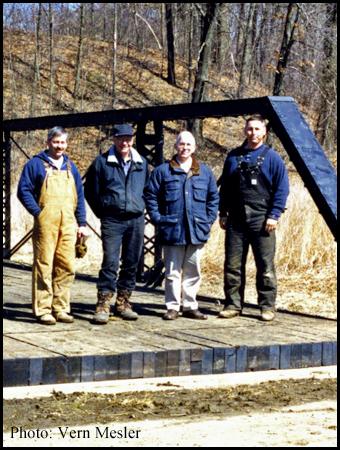
From left, Doug Shilling, Vern Mesler, Dennis Randolph, Mike Hackworth
|
|
|
|

|
Greetings,
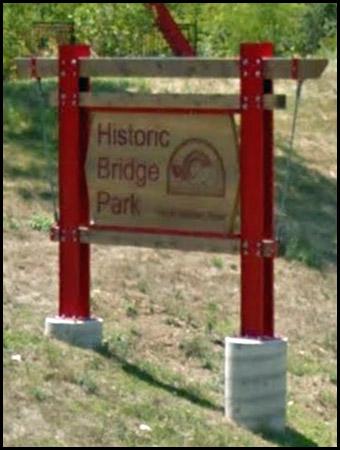
"Old County Park" is how I often heard it referred to from visitors as my crew and I were erecting historic bridges in the park now named the Historic Bridge Park. "Over there were picnic tables," they told me as they pointed to an overgrown, swampy area. "It was always mowed, you know, a popular park back then." If you walk along the park boundaries even now you can see remnants of the Old County Park, concrete slabs, an artesian well surrounded by a stone wall that has over time fallen into the surrounding mud. Water still flows from the well, and drains into the Dickerson Creek. I've always wanted to know more about the history of the Old County Park and someday I may write about it, but my story today is about the history of the Historic Bridge Park and its five bridges. I've been asked by members of the Calhoun County Parks and Recreation Commission to write the history of the five historic bridges and the restoration work done on the bridges. This Newsletter has the first installment.
|
|
|
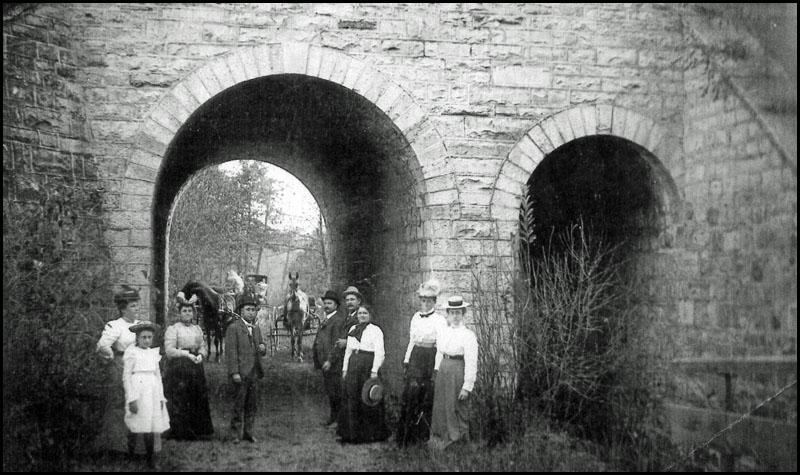
Old County Park entrance circa 1897
|
Vern Mesler
Iron & Steel Preservation Coordinator
Lansing Community College
|
Transfer of Heritage or Knowledge
|
"It is not enough to simply drive over a restored bridge at 55 miles per hour. There is no transfer of heritage or knowledge at that speed. Ideally, people should be able to touch, look at and walk over and around a bridge so that they can gain knowledge, by firsthand experience, of the craftsmanship and skills that went into its creation."
Dennis Randolph, Managing Director of the Calhoun County Road Commission, 1992 - 2008, described in these words an important aspect of his concept for the Calhoun County Historic Bridge Park (HBP). To carry out his bridge park concept, Randolph hired Vern Mesler as an independent contractor to work as Project Manager for Historic Bridge Restoration. Mesler is a retired steel fabricator who worked as a foreman involved in the fabrication of bridges for Michigan's state highways and other steel structures; he also works as an adjunct welding instructor at Lansing Community College. Other people who worked to make Randolph's concept a reality include Annette Chapman, former Calhoun County Parks Director, grant writer, and Park Manager for the development of the HBP; Wayne Conklin and Rob Denniston, craftsmen hired during the restoration of the 20 Mile Road Bridge and who worked on the all five of the HBP historic bridges; Dr. Frank Hatfield, Professor Emeritus, Michigan State University, Civil and Environmental Engineering, who provided engineering evaluations for the 133 Avenue Bridge and designed gin poles for erecting the Gale Road and Charlotte Highway Bridges; and Professor Nan Jackson, Applied Mathematics at Lansing Community College.
|
A historic bridge is more than its design. The steel and wrought iron members that make up the bridge form an unwritten record (sometimes the only record) of the history of the wrought iron and steel making processes and the fabrication methods used in the construction of the bridge.
Restoration of the historic bridges at the HBP goes beyond saving a bridge design by giving special attention to the restoration of the original structural members. Whenever possible, the same kind of equipment and fabrication techniques used during the original manufacture of the bridge, such as riveting and forge welding, were used during the restoration, repairing rather than replacing original bridge members. Other bridge restorations have often resulted in the replacing of original members with "new steel," destroying the original and its irreplaceable manufacturing record.
Books abound from both the nineteenth and twentieth centuries that document the bridge engineer's perspective on truss bridges and the development of their designs. During this same period, advances in wrought iron and steel making processes, metal fabrication methods, and machinery were also made but the written record for these advances is less evident. The words of the people who built these bridges are rarely recorded, and only a few of their tools remain to tell their story.
|
Historic American Engineering Record (HAER) No. MI-107 has this description of the 133rd Avenue Bridge:
"The 133rd Avenue Bridge is typical of most bridges built in southern Michigan around the late 19th century and early 20th century. Because of the relatively lightweight truss superstructure, the bridge was fabricated at a steel fabrication plant and shipped by rail near to the job site. The contractor constructed the substructure units, then assembled and erected the steel truss on-site." As with many historic metal truss bridges fabricated during the late nineteenth and early twentieth centuries, few records exist of their fabricator or the history of their materials. One historic feature many of these metal truss bridges had that is overlooked is the metal used in their fabrication: wrought iron. For centuries wrought iron was the principal material used in the fabrication of ships, buildings, steam engines and bridges. Production of wrought iron was discontinued in the mid-twentieth century. Four of the historic bridges in the HBP were originally fabricated with wrought iron, not with steel (as recorded in the above HAER document), and rolled at several rolling mills, two of the most famous being Carnegie and Cambria.
In 1897 the Michigan Bridge Company of Portland, Michigan, was contracted to have the 133rd Avenue Bridge fabricated at one of the many bridge fabricators in the Eastern section of the United States (no records exist on where the bridge was built). A four-panel half-hip pin-connected Pratt pony truss, sixty four feet long, fourteen feet wide, the bridge spanned the Rabbit River in Hopkins Township, Allegan County, Michigan, until 1997. It was erected in the Historic Bridge Park on March 03, 1999. During an annual Living History Demonstration on June 12, 1999, the 133rd Avenue Bridge was dedicated, an event attended by Michigan Department of Transportation and Calhoun County representatives.
It was during the restoration of the 133rd Avenue Bridge that many of the restoration procedures were developed that would later be used for the restoration of all the HBP bridges. When wrought iron required repairs, the electric arc welding process was used and, when appropriate, heat straightening. These are industrial processes used today in the steel fabrication industry that we adapted for use in historic restoration. Riveting, a historic process used in the original fabrication of the HBP bridges, was also used in the restoration when riveted structural members needed to be repaired or replicated.
Restoration of the 133rd Avenue Bridge began in 1998 at the Calhoun County maintenance garage in Battle Creek. There, students from Kellogg Community College dismantled the bridge, and later the structural members were shipped to a shop located at the Calhoun County Road Commission Garage in Marshall for the repair and restoration. Working with Mesler on the restoration of the 133rd Avenue Bridge was Roger (Rick) Deans, joined later by John Lewis, the first temporary full-time employees trained for preservation work. The structural analysis of this bridge was completed by three engineering students under the direction of Professor Frank Hatfield of the Department of Civil and Environmental Engineering at Michigan State University. Their report,
Recommendations for Reconstruction of the 133rd Street Bridge, contains their analysis.
|
|
|
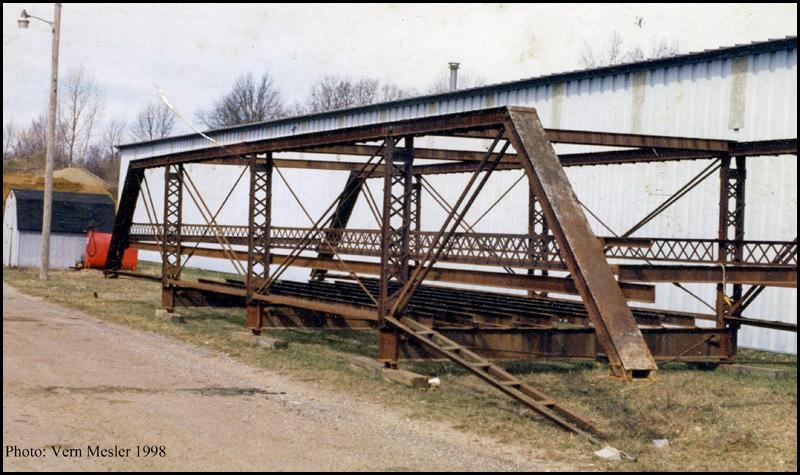
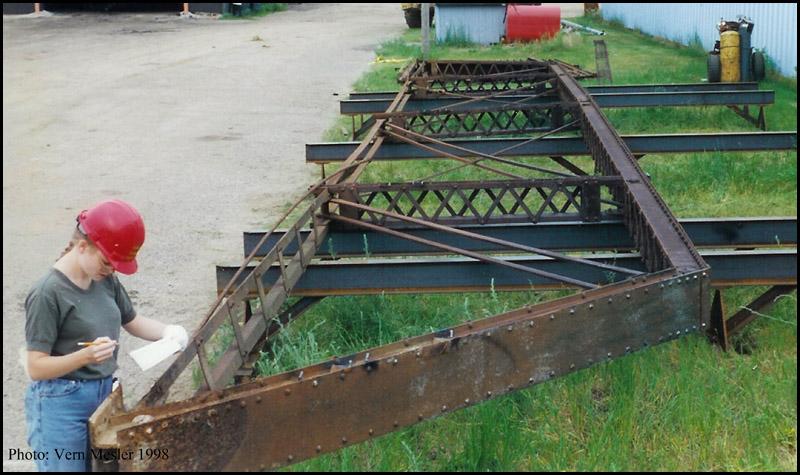
133rd Ave Bridge in storage at the Calhoun County Road Commission garage in Battle Creek, Michigan, 1998.
|
*
|
|
|
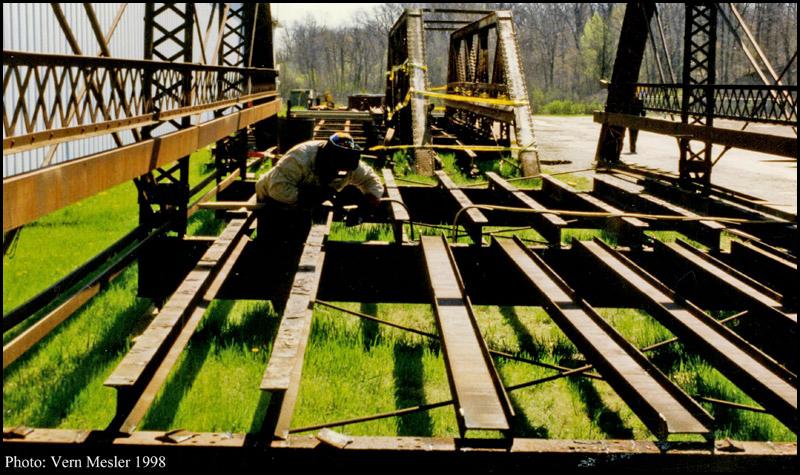
Dismantling of the 133
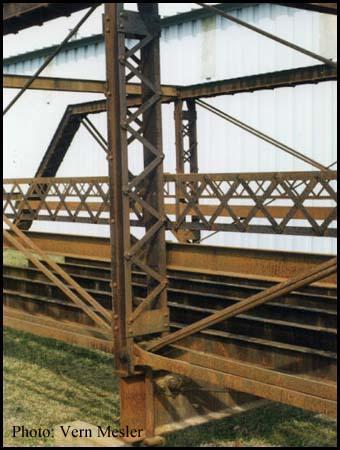
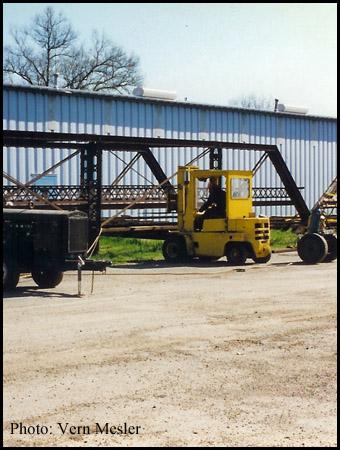
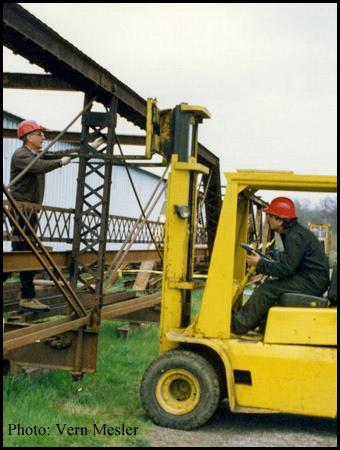
rd Ave Bridge (foreground) began with the removal of the floor beams with the help of students from Kellogg Community College, 1998. The bridge in the background is the 20 Mile Road Bridge, which became the second bridge to be restored for the Historic Bridge Park.
|
*
|
|
|
Sabrina Lewis, a student at Kellogg Community College, records dimensions to develop Auto-CAD drawings for the 133rd Ave Bridge, 1998.
|
*
|
|
|
Reassembling restored members of the 133
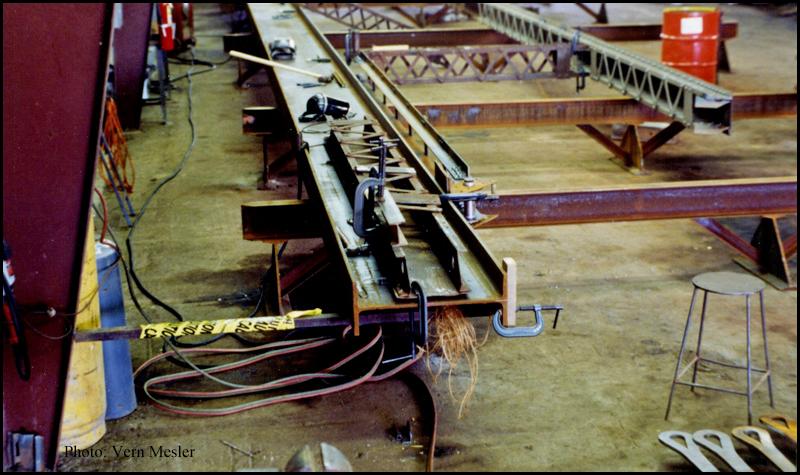
rd Ave Bridge at the Calhoun County Historic Bridge restoration shop at the Calhoun County Road Commission garage in Marshall, Michigan, 1998.
|
*
|
|
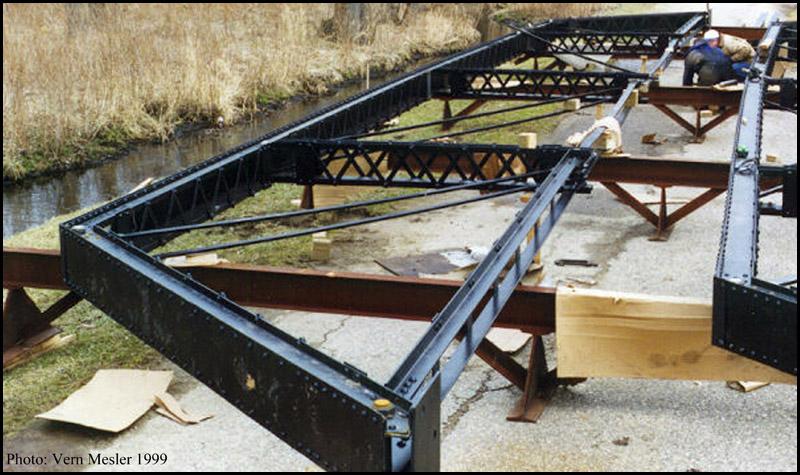
133rd Ave Bridge trusses being assembled at the Historic Bridge Park in preparation for the erection of the restored bridge across Dickerson Creek.
|
*
|
|
|
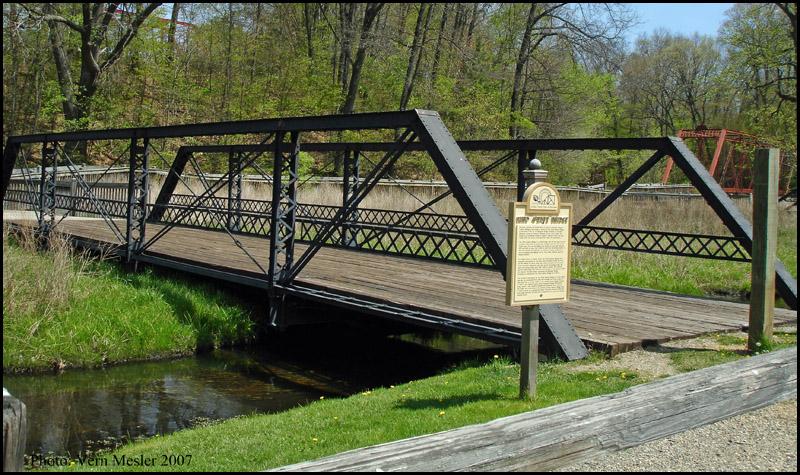
The 133
rd Avenue Bridge, the first of five historic bridges to be restored for the park, was dedicated on June 12, 1999, during an annual Living History Demonstration.
|
*
|
Arc Welding Courses for Road Maintenance
|
Customized arc welding courses are being offered at Lansing Community College, West Campus, Lansing, Michigan. These courses can be designed for individuals or groups for either introductory or advanced training in the Flux Cored Arc Welding (FCAW), Metal Cored Arc Welding (MCAW), and Shielded Metal Arc Welding (SMAW) processes.
Depending on the client's needs, customized courses can include lectures, demonstrations, and hands-on activities with instructions on the essential variables (voltage, amperage, and other operating parameters) of the arc welding processes.
Contact Vern Mesler at
meslerv@lcc.edu for more information
|
Customized Arc Welding Courses
|
- Safety procedures used in the Flux Cored Arc Welding (FCAW), Metal Cored Arc Welding (MCAW) and Shielded Metal Arc Welding processes.
- Equipment used in the FCAW, MCAW and SMAW processes, including power sources, flow meters, guns and wire feeders. The selection of gases and wire combinations for different metals.
- Electrode and wire AWS classification system for the FCAW, MCAW and SMAW processes.
- Proper set-up procedures for amperage (wire feed speed); effects of voltage and gas flow for FCAW and MCAW processes; effect of amperage for SMAW.
- Weld gauges for measuring fillet welds (in the flat and horizontal positions) and groove welds.
- Weld defects and discontinuities, their causes and repair procedures, and methods for reducing distortion.
|
American Welding Society Certification Tests
|
|
Lansing Community College has on staff American Welding Society certified welding inspectors (CWI) who can conduct Standard AWS certification tests for the FCAW, MCAW, and SMAW processes. The costs for certification testing are available upon inquiry, with arrangements made directly with the CWIs. Contact Vern Mesler.
|
|
Past Iron & Steel Preservation Newsletters
|
|
|