January 31, 2024 | News & Events

Facebook      Instagram      X      YouTube

View As Webpage


Headlines


Spring Webinar Series Kicks Off on February 14th @ 4:00 PM

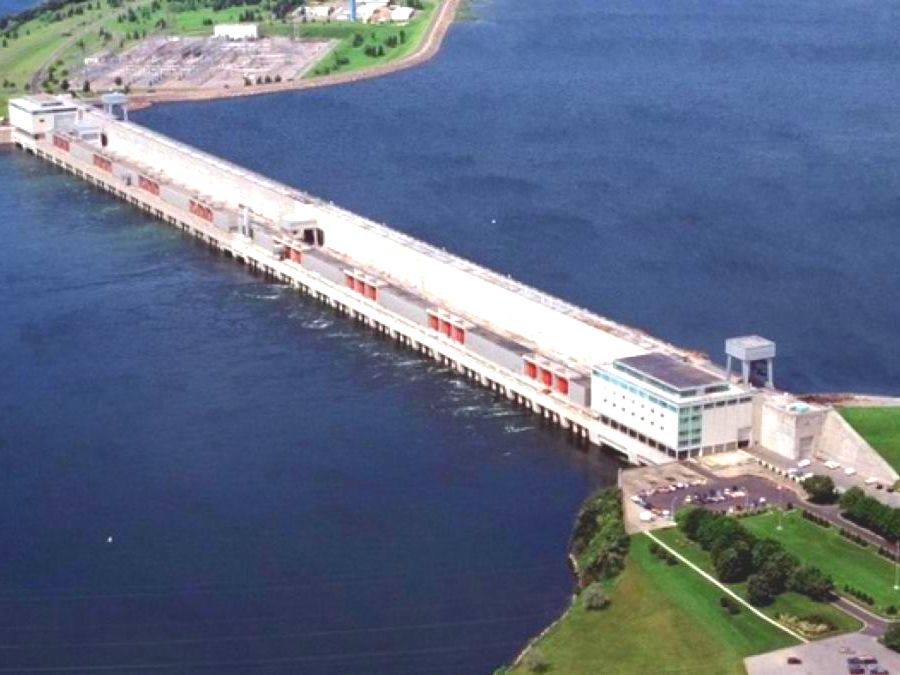
NE CASC is delighted to share the lineup for our Spring 2024 Webinar Series! Our schedule will kick off on February 14th at 4:00 PM with a talk by Scott Steinschneider (Cornell Univeristy), who will present on "The Value of Forecasts for Robust, Dynamic Management of the Lake Ontario - St. Lawrence River System under Climate Variability and Change". Steinschneider's talk will be followed by presentations on wildlife responses to climate change in the Northeast (March 20th), integrating climate change into state wildlife action plans (April 10th), and human modifications to salt marshes (May 8th). Make plans now to catch all of these great talks! Read More >>


NE CASC Awards $3.1 Million to Launch Seven New Projects

The Northeast Climate Adaptation Science Center has awarded $3,100,000 to NE CASC university consortium institutions, USGS Science Centers, and other partners to embark on seven new research efforts that will inform natural and cultural resource climate adaptation initiatives in the Northeast region. In addition to supporting a new partnership that advances Tribal climate adaptation goals, these projects will address partner-identified information needs in the areas of invasive species, climate-smart ecological restoration, aquatic species of greatest regional conservation need, coldwater refugia locations, and high-elevation red spruce forest restoration.  Read More >>


Emily Fusco Appointed NE CASC Deputy University Director

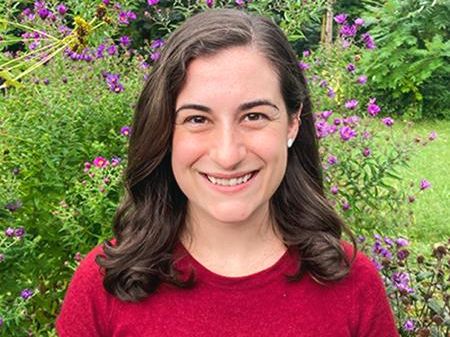
NE CASC is excited to announce that Emily Fusco recently joined our team as the center’s new Deputy University Director. In this role, Fusco will help develop our strategic plan, engage our network of partners, oversee our daily operations, and foster collaboration among our researchers and staff. An expert in global change science and adaptation, Fusco was most recently a research scientist with the University of Washington Climate Impacts Group. There she partnered with the Northwest CASC to lead a “State of the Climate Science Assessment for Species and Ecosystems in the Northwest". A former NE CASC fellow, she earned her PhD from UMass Amherst. Read More >>


New Publication: High-Impact Invasive Plants Expanding into

Mid-Atlantic States

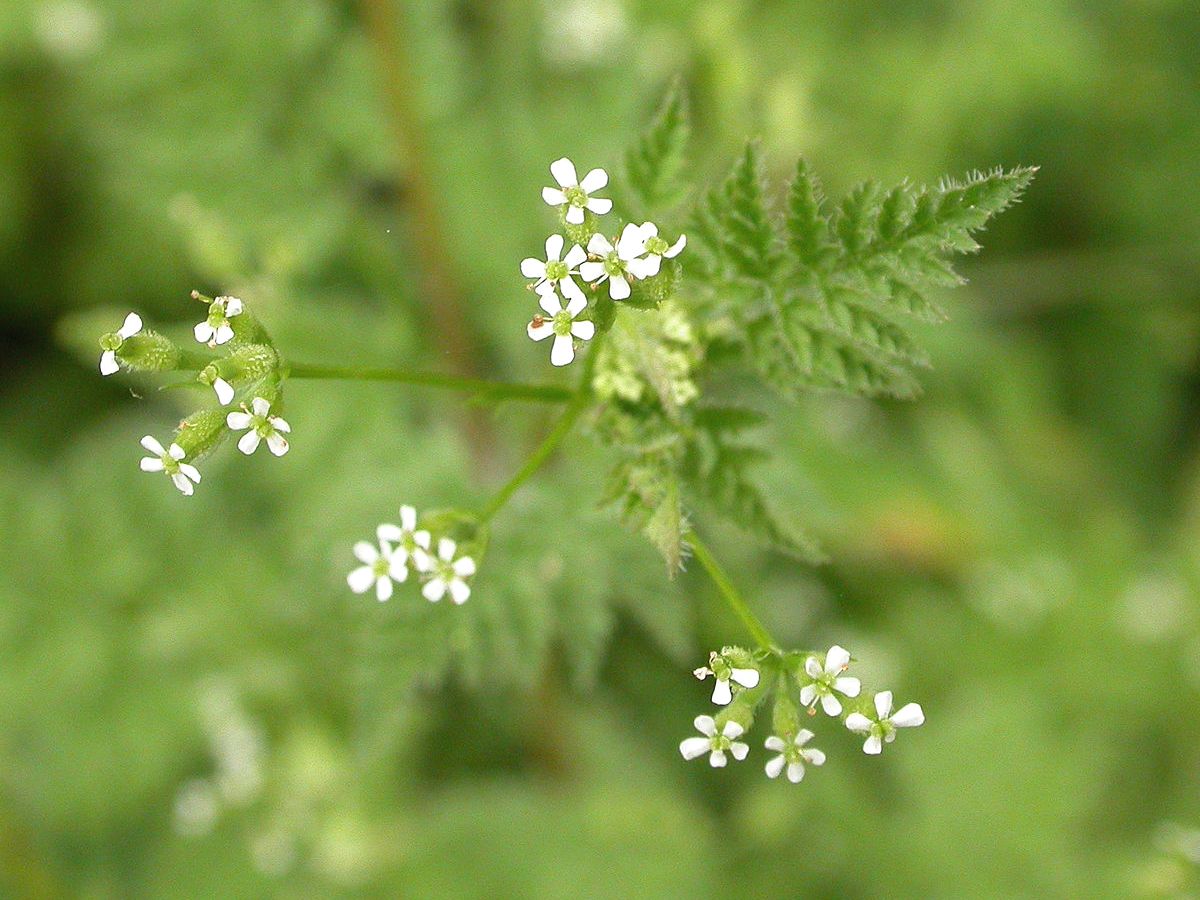
With climate change, many invasive plants are projected to shift their ranges, creating hotspots of future invasions across the U.S. Knowing the identities of new invasive plants headed to a nearby state creates an opportunity for proactive prevention and management. Unfortunately, monitoring for and managing all range-shifting invasive plants is untenable. To help prioritize range-shifting species, NE CASC Codirector Bethany Bradley and her collaborator, Justin Salva, performed impact assessments on 104 plants projected to expand into one or more mid-Atlantic states by 2040 with climate change. Their study was recently published in Invasive Plant Science and Management. Read More >>

NE CASC Fellows Feature: Annette Evans

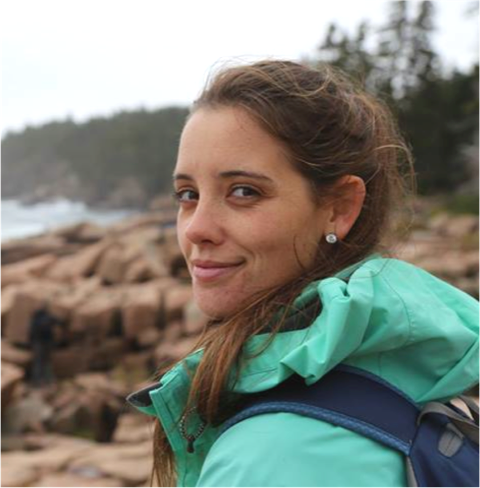
For the past two years, NE CASC Postdoctoral Fellow Annette Evans has worked with NE CASC researcher Bethany Bradley, expanding on the Bradley group's innovative efforts to understand how and when invasive species will shift their ranges in response to climate change. Evans’ research advances this work by determining where range-shifting invasive species will emerge in high abundance and thereby have the greatest impact. Her project has yielded impressive results, leading to the development of several interactive maps that allow users to investigate the predicted range shifts of plant species over time in addition to publications in BioScience and Diversity and Distributions.


Evans attributes these positive outcomes in part to the ethos of coproduction that informs NE CASC’s mission to develop actionable science. “One thing that was really exciting about my lab group and working in this position as a part of NE CASC is that I gained new experience interacting with stakeholders and other non-scientist parties,” she says. “It’s been thrilling to have the opportunity to meet people who aren’t necessarily within the ‘traditional’ academic bubble--o hear what they’re working on and what they need. That collaboration has really helped drive the outputs of my project.” 


Evans recently sat down for a Q & A with the NE CASC communications team just before departing the center for a new position as a faculty member at St. Joseph’s University in Connecticut. Read this terrific Q&A to learn more about her research on invasive species and climate change, how collaborating with a variety of stakeholders changed the trajectory of her work, and what she’s learned by participating in the NE CASC community. 

Read the Q & A

NE CASC Webinars & Other Events

Wednesday, February 14th @ 4:00 PM ET

NE CASC Webinar Series

The Value of Forecasts for Robust, Dynamic Management of the Lake Ontario - St. Lawrence River System under Climate Variability and Change

Scott Steinschneider, Cornell University

More Information >>


Tuesday, February 27th & Wednesday, February 28th

Northeast Regional Invasive Species & Climate Change (RISCC) Management Network

Annual Symposium

More Information >>


Wednesday, March 20th @ 4:00 PM ET

NE CASC Webinar Series

How Wildlife Is Responding to Climate Change in the Northeast

Toni Lyn Morelli, NE CASC & Alexej Siren, UMass Amherst

More Information >>


Wednesday, April 10th @ 4:00 PM ET

NE CASC Webinar Series

Integrating Climate Change into State Wildlife Action Plans

Ambarish Karmalkar, University of Rhode Island & Alice Lubeck, NE CASC

More Information >>


Wednesday, May 8th @ 4:00 PM ET

NE CASC Webinar Series

Human Modifications to Salt Marshes in the Northeast

Erin Peck, NE CASC & Julie Walker, NE CASC

More Information >>

Other Events

Thursdays from February 2nd through April 25th @ 12:00 PM ET

Yale Forest Forum

Webinar Series on Tribal Forestry: Understanding Current Issues & Challenges in Contemporary & Traditional Management of Forested Landscapes

More Information >>


Thursday, February 15th @ 1:00 PM ET

Southeast CASC

Webinar Series

A Vivid CAnVAS: Visualizing Climate Projections for Status Species Assessments

Kathie Dello & Corey Davis, North Carolina State Climatologists

Haven Cashwell, Department of Geography, Auburn University

More Information >>


Thursday, February 15th @ 2:00 PM ET

U.S Global Change Research Program

Webinar Series

5th National Climate Assessment Webinar: Adaptation

This webinar will address key points in NCA5's chapter on climate adaptation, with remarks by its authors.

More Information >>


Tuesday February 20th @ 1:00 PM ET

USDA Northern Forests Climate Hub

Ecological Forestry in the Context of Climate Change Webinar Series

Climate Adaptation Strategies for Longleaf Pine Ecosystems

Steve Jack, T.L.L. Temple Foundation

More Information >>


Tuesday, May 14th-Thursday, May 16th

In-Person Event Location: St. Paul, Minnesota

EcoAdapt & American Society of Adaptation Professionals

2024 National Adaptation Forum

More Information >>

Opportunities

Training Opportunity: The Northern Institute of Applied Climate Science (NIACS) and USDA Northern Forests Climate Hub’s Adaptation Planning and Practices Training Course

This interactive online training is intended for forest and natural resource managers, land owners, and stewards to learn about climate change impacts and identify adaptation actions for a range of natural and urban ecosystems, resource areas, and cultural perspectives. Participants will develop project-specific climate adaptation plans using the Adaptation Workbook. As part of this eight-week training, all participants will receive coaching and feedback from NIACS staff in structured weekly web-based group discussion meetings. There are no registration fees and the training is scheduled to run weekly from February 13th to April 9th, 2024. Learn More >> 


Funding Opportunity: The Nature Conservancy Resilient and Connected Appalachians Grant Program

The Resilient and Connected Appalachians Grant Program (RCA) offers grants of up to $50,000 to support projects that result in the permanent protection of Resilient and Connected lands in focal landscapes. For the 2023-24 grant cycle, funding is available in New Jersey, Connecticut, Massachusetts, Vermont, New Hampshire and Maine. Apply by February 24, 2024. Lean More >>


Position Opening: Conservation Science Program Manager, Massachusetts Natural Heritage and Endangered Species Program

Oversee the work of the Natural Heritage & Endangered Species Program (NHESP) scientists, habitat managers, and data management staff. Aid in administering and guiding policy for the Program, including its regulatory review work under the MA Endangered Species Act. Oversee species recovery, conservation planning and prioritization, inventory, research, habitat restoration and management projects to conserve the Commonwealth’s endangered, threatened, and special concern species and exemplary natural communities. Develop and implement conservation initiatives, seek and obtain funding, and coordinate NHESP’s conservation efforts. Apply by March 28, 2024. Learn More >>


Position Opening: ORISE USGS Participatory Science Research Opportunity

As scientists respond to society’s greatest challenges with 21st century science, they are increasingly recognizing the need to engage with the decision makers, individuals, and communities their science aims to serve. USGS projects and programs have generated and utilized a variety of different models, frameworks, processes, and approaches for enabling participatory science (stakeholder and user engagement, actionable science, participatory action research, co-production of knowledge, citizen science, community science, open science, etc.). However, these efforts remain disparate, siloed, and ad hoc within project teams, mission areas, regions, or programs, resulting in a lack of access to or awareness of best practices. The objective of this project is to synthesize USGS scientific insights and leverage existing participatory science efforts to generate a practical set of bureau-wide resources. Learn More >>


Position Opening: Water Quality and Ecological Restoration Associate, Nashua River Watershed Association

The Nashua River Watershed Association actively seeks a passionate and skilled Water

Quality and Ecological Restoration Associate to join its team on a full-time basis (40 hours/week).

The ideal candidate will hold a master’s degree in Environmental Science, Ecology, Water Resources

Management, or a related field and will play a crucial role in supporting the ongoing water resources

and ecological restoration activities of the NRWA. Learn More >>


Position Opening: Environmental Resource Specialist, U.S. Army Corps of Engineers

Prepare/manage the preparation of Water Quality Certification applications, Coastal Zone Management (CZM) consistency determinations, and similar documents for Army Corps of Engineers and other agency projects, including related coordination.As senior technical specialist, provide authoritative information on matters pertaining to ecology, biology, and other environmental sciences, and environmental laws, regulations, and policies.Represent the New England District (NAE) in meetings with citizen groups, technical experts, and agency representatives to resolve environmental/biological issues.Prepare/ manage the preparation of ecological and water quality assessments, National Environmental Policy Act (NEPA) documents, Clean Water Act evaluations. Learn More >>


Northeast Climate Adaptation Science Center

necasc.umass.edu

627 North Pleasant Street

Amherst, MA 01003