|
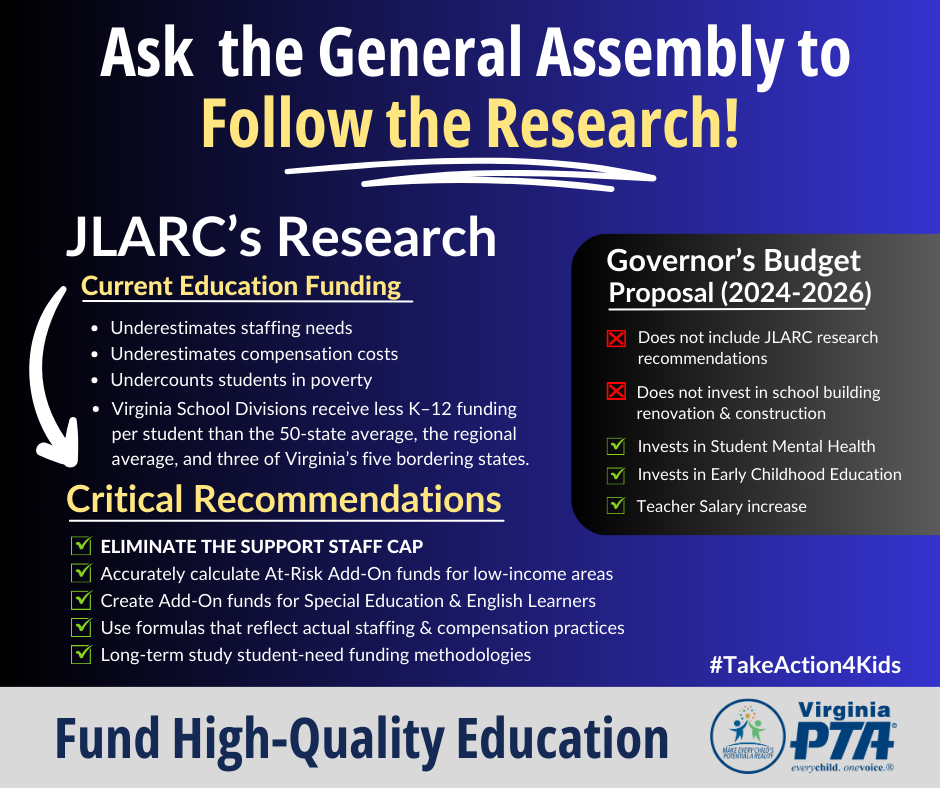
Virginia school divisions receive less K–12 funding per student than the 50-state average, the regional average, and three of Virginia’s five bordering states (WV, MD, KY). The difference is roughly $1,900 per student.
School Funding has three basic steps.
First, the Board of Education (VBOE) recommends minimum staff-to-student ratios that local school divisions must meet OR exceed. These are called the Standards of Quality or SOQ's. The public has an opportunity to comment on the VBOE's recommendation.
Last year, all of Virginia's 134 school divisions exceeded the SOQs. Historically, the VBOE recommended SOQ's that reflected actual school division staffing practices, but this year they did not. They also did not include any recommendations from the JLARC Report on K-12 Funding that came out this summer.
Second, the General Assembly sets the final Standards of Quality when they adopt the state budget. The public can comment on bills, and the final standard is reflected in the adopted budget and the Code of Virginia. This is going on right now.
Third, State funding for your school division is determined based on your locality's ability to pay. This is referred to as the Local Composite Index (LCI).
Roughly two-thirds of Virginia school divisions rely on the state for the majority of its funding, with several divisions funded 70% by state funds.
JLARC Research shows current state funding:
- Under-estimates staffing needs
- Under-estimates staff salaries
- Under-counts students in poverty
- Does not reflect increased services for Special Education & English Learner Students
CALL TO ACTION!
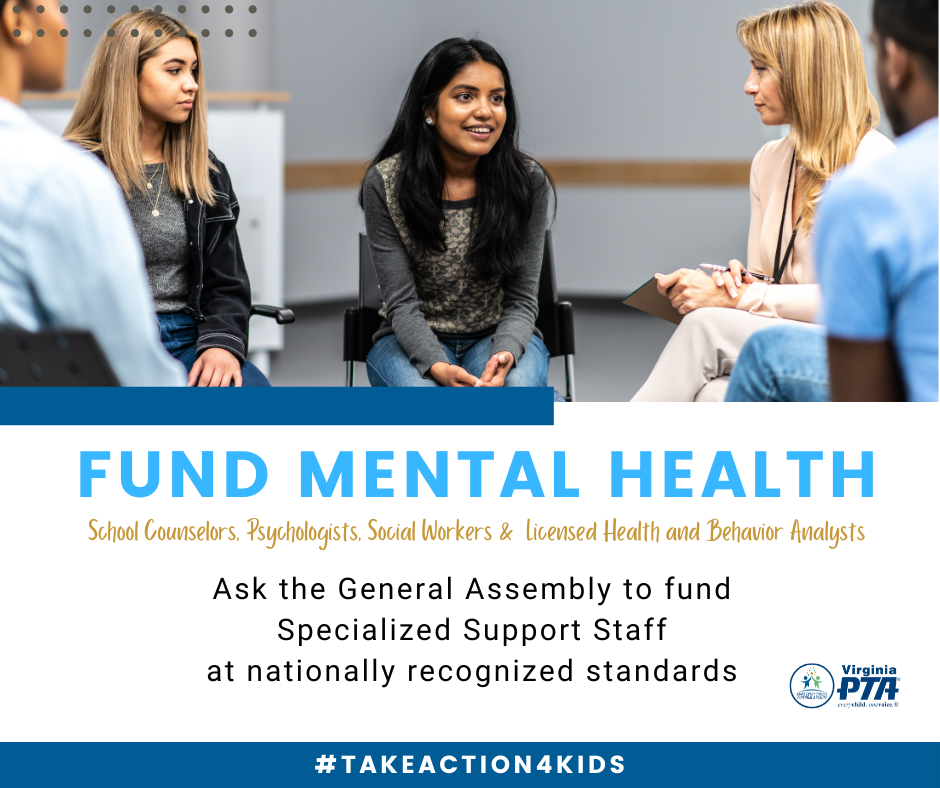
Fund the JLARC High Priority Recommendations
- Correct faulty assumptions in funding formula
- Remove arbitrary caps
- Provide supplemental (At-Risk Add-On) funding for low-income, special education, and english language learner students.
|