|
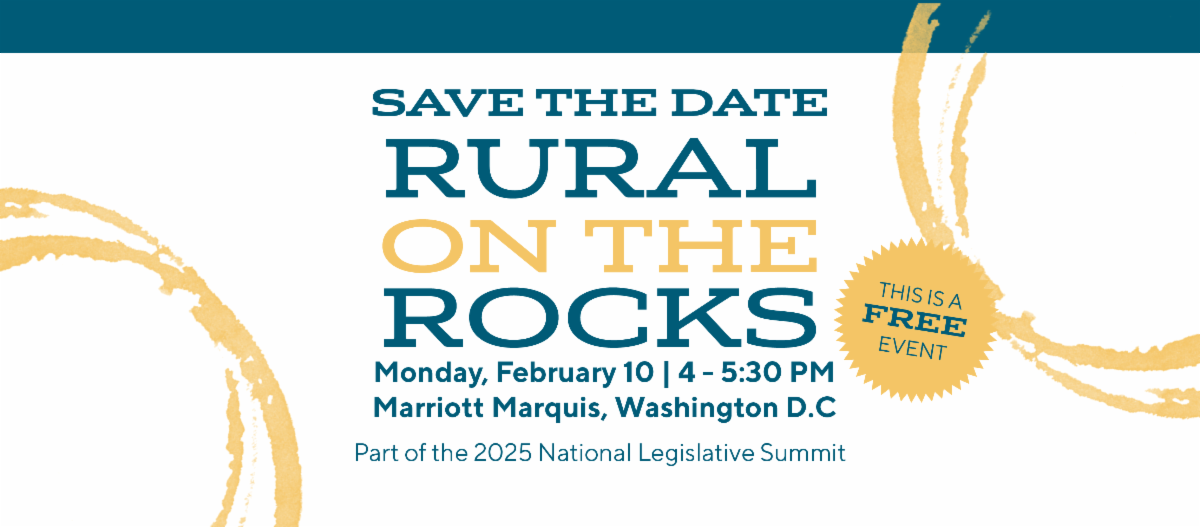
Rural on the Rocks Event to be Held During ACCT's National Legislative Summit
February 10, 2025 @ 4:00 pm - 5:30 pm
In concert with ACCT, RCCA invites community college leaders to a dynamic event that combines networking and policy discussions with government officials and rural-serving programs. Think of it as a college fair meets networking reception—attendees will have the chance to connect with federal program officials, legislators, rural-focused organizations, and fellow college leaders, all while enjoying drinks and appetizers.
Learn more about Rural on the Rocks by visiting the RCCA events page.
| | | |
|
Insights from the Alliance: Distance to Opportunity
A recent study published by the National Bureau of Economic Research, Distance to Degrees: How College Proximity Shapes Students’ Enrollment Choices and Attainment Across Race-Ethnicity and Socioeconomic Status (Acton, Cortes, Miller, & Morales, 2025), highlights the critical role geographic proximity to colleges plays in shaping students' educational pathways. This research has particular significance for rural community colleges and their students, offering valuable insights into how distance impacts enrollment, credit accumulation, and degree attainment across racial and socioeconomic groups.
Key findings reveal that students living in "community college deserts"—areas more than 30 minutes away from a community college—are significantly less likely to enroll in and complete associate degrees. This impact is particularly pronounced for underrepresented minority (URM) and economically disadvantaged students, who often lack alternative educational options. In contrast, higher-income and non-URM students tend to substitute community college enrollment with four-year institutions, resulting in different long-term outcomes.
The study emphasizes the value of community colleges as essential pathways to higher education and economic mobility, particularly for students who might not otherwise pursue a degree. The researchers suggest that addressing geographic barriers through strategies such as satellite campuses, transportation support, and online education expansion could help reduce these disparities and improve access for underserved populations.
This work underscores the critical role rural community colleges play in providing equitable educational opportunities and supporting economic mobility in their communities. By addressing the challenges outlined in this study, rural community colleges continue to prove how vital their mission is in ensuring that all students, regardless of location or background, have access to the life-changing opportunities education can provide.
| |
|
Middle Schoolers Participate in Future City STEM Competition
[SYLVA] - At 7 a.m. on Friday, Nov. 22, Jackson County Public Schools called for closure due to inclement weather. A day earlier, Smokey Mountain Elementary School (SMES) student Mackenzie Spell told her teacher, “For the first time in my life I am praying for school to not be canceled.” Southwestern Community College’s Starr Hogan offered a rescheduled date and Scott Miller, CTE teacher at SMES, sent out an email. Future City was back on.
A total of 18 teams from Fairview Elementary School and SMES met at 8 a.m. on Nov. 25 in the Burrell building at Southwestern Community College (Jackson) to present their projects to a panel of judges from the Department of Transportation, Western Carolina University, Southwestern Community College and City Planning.
Future City is a STEM competition that challenges middle school students to explore the Engineering Design Process and project management to conceptualize solutions for city sustainability. Alongside creating a scale model of their city and presenting them, teams are also required to write an academic research paper.
Both schools’ winning teams, Jaloria for Fairview and Floatopia for SMES, will compete in the North Carolina State Competition on January 25 at North Carolina State University. SMES’ Isle of Atoll was also voted People’s Choice among their peers.
“I think it was an incredibly valuable experience for our students…[t]he greatest success of this year was having the partnership between local engineering and planning professionals and middle school students,” said Miller.
“I would like to add a special thanks to some donors who helped make the awards possible: Bernie Gilchist and RN&M Engineers,” said Fairview’s STEM teacher Nancy Crawford.
For more information about Future City or to sponsor a team, please contact Scott Miller at smiller@jcpsmail.org.
| |
|
🚨 Next up in the #AllianceLearningSeries!
Join us as Jessica Newhall from Clatsop Community College shares strategies for "Building a Thriving Rural Economy."
📅 Wednesday, Feb. 19 | ⏰ 1-2pm EST
Jessica will share proven strategies and real-world examples of how Clatsop SBDC is transforming rural economic development through innovative programs, strategic partnerships, and a robust entrepreneurial ecosystem. Learn how to:
- Cultivate a thriving entrepreneurial culture in your community
- Tackle unique challenges faced by rural small businesses
- Build powerful support networks that fuel local business growth
We can't wait to see you there!
| | | |
|
Stay Connected with RCCA on Facebook!
Join the conversation and stay up-to-date on everything happening in the Rural Community College Alliance community by following us on Facebook! From exciting conference updates and educational webinars to success stories and resources tailored for rural colleges, our page is your go-to place for staying informed and engaged.
Follow us at @RuralCommunityCollegeAlliance and be part of our growing network of educators, leaders, and advocates committed to rural student success!
| | | |
New York Governor Proposes Free Community College
Governor Kathy Hochul announced plans to make community college tuition-free for New Yorkers aged 25 to 55 pursuing degrees in high-demand fields like nursing, teaching, technology, and engineering. The program could start this fall and would cover tuition, fees, and textbooks at SUNY and CUNY community colleges. Hochul also proposed new apprenticeship programs for these fields, building on similar initiatives in states like Massachusetts and Michigan.
| | |
Resources and Opportunities | | |
|
USDA Offers Grants to Expand High-Speed Internet in Rural Areas
The U.S. Department of Agriculture (USDA) Rural Development has announced the availability of $26 million in grants under the Community Connect Program to establish community-oriented, high-speed internet networks in rural areas.
This funding aims to drive economic growth, improve education and healthcare, and enhance public safety. As part of the program, grant recipients must provide free high-speed internet access to community-serving institutions—such as schools, libraries, and fire stations—for up to two years.
Who Can Apply?
Eligible applicants include:
- State and local governments
- Federally recognized Tribes
- Nonprofits
- For-profit corporations
- Limited liability companies
Priority Areas
The USDA is prioritizing projects that:
- Support economic recovery and infrastructure improvements in rural communities.
- Expand equitable access to USDA Rural Development (RD) programs.
- Reduce climate pollution and help rural communities adapt to climate challenges.
Key Dates
The application window opens on February 20, 2025.
This grant program represents a vital opportunity to connect underserved rural areas and support community growth.
| | | |
|
Rural Education Resource Center
The Rural Education Resource Center empowers rural communities by providing funding opportunities, technical assistance, and tailored resources to support thriving students, educators, schools, and communities.
With nearly 10 million students attending rural schools—often the heart of their communities—this initiative addresses unique challenges and celebrates the strengths that drive academic and community success.
Learn more about how we support rural education by visiting the Rural Education Resource Centers webpage.
| |
Follow the RCCA Facebook Page | | | | |