Letter from the Executive Director |
|
2022's swan song was a parting gift of temperatures in the teens for five days or so. The jury's still out on the amount of damage the Garden sustained as a result but the consensus among our peers is that the effects of the recent freeze may be worse than the one two years ago, likely because some plants were finally just recovering, and also because the freezing temperatures arrived so suddenly after very warm weather. We’ve seen some plants at the Garden that definitely look like they suffered more this year. In fact, we’ve got plants that have survived winters for years that took a big hit in this last storm (a thirty-two-year-old Clethra pringlei in the North Dry Garden being one of them). It appears the combination of the two scenarios created a perfect storm of exceptional damage (at least we hope it's exceptional).
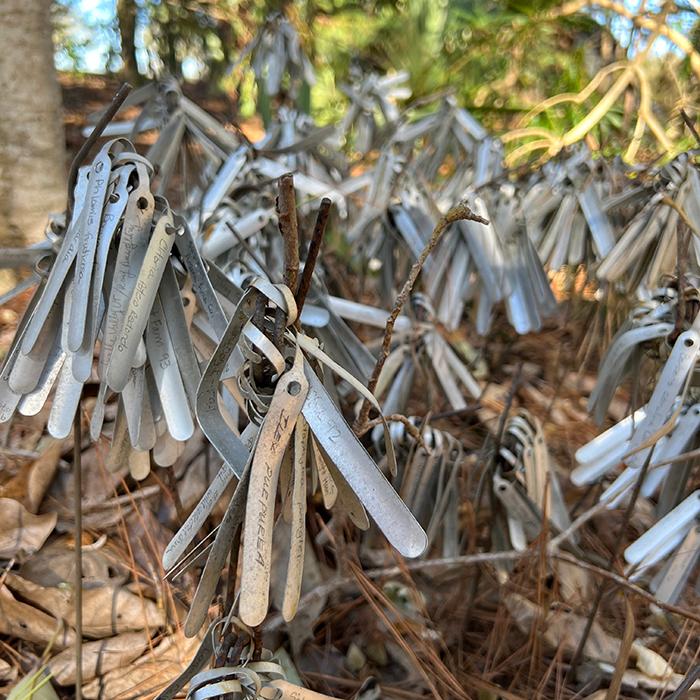
The bigger unanswered question is, “What do we do about it?” The John Fairey Garden has always been a trial garden, with John introducing plants from other climates and pushing the limits of what would grow here (as the plant tag graveyard shown above attests to). This means that we’ve traditionally protected very few plants in advance of a freeze. There are exceptions – Kalanchoe luciae subsp. luciae (clam plant), small Neobuxbaumia polylopha (cone cactus), Echinocactus grusonii (golden barrel cactus), and two rare sapling Quercus insignis to name a few – but for the most part, plants in The John Fairey Garden are on their own in terms of freeze protection. Losing a one gallon specimen that was planted last fall has different consequences and implications, though, than losing a Clethra pringlei, a lovely tree that John wild collected from seed in Mexico in 1992. That one really hurts.
That particular unanswered question spawns scores of related questions. Do we continue our policy of minimal freeze protection in the future even if these extreme low temperature events persist? How many winters like the last two out of three do we have to experience before we change our minds? If we change our minds, what does that look like in terms of plant materials? Plant collection policy? Prioritization of aesthetics over horticultural data? The list of questions is endless, and that's just for one consideration. When you add the impact of drought, record high temperatures, and a global pandemic to the equation, creating a forward looking strategy for a beautiful, resilient, sustainable Garden is challenging, to say the least.
We're working on it though, and while the Garden goes through ups and downs just like every other entity in the real world, it is still a beautiful and resilient cultural landscape, evolving through the uncertainty as best it can with the help of all of us who treasure it as a special place worthy of all the consideration and support we can give it.
Warm regards,
|
|
Year-End Appeal Goal met! |
|
Thanks to the heartwarming generosity of our community of supporters, we reached our year-end appeal goal of $20,000. We so appreciate this extra shot in the arm at the end of the year and we will put it to good use. Thank you to all who contributed.
|
|
Improvements at the Garden
New paths and edging
|
|
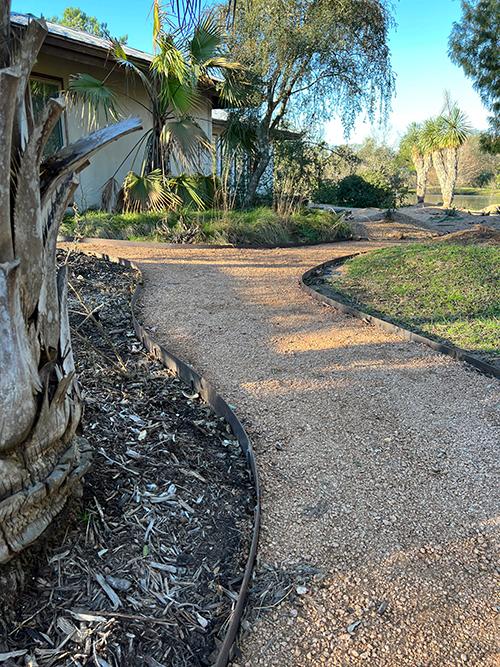
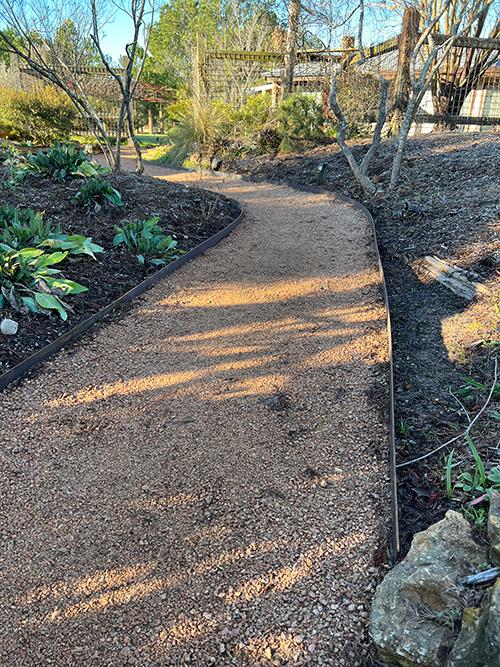
Thanks in part to a grant from the Garden Club of Houston, we've reached another milestone on the road to making the nursery/office area a Garden destination in its own right. We've added decomposed granite and steel edging to paths around the various planting beds around the office and guest cottage. Removing pea gravel, not the most friendly surface on which to walk, and standardizing the pathways should make for a much more pleasant experience for our guests.
|
|
New planting plan for beds around the office |
|
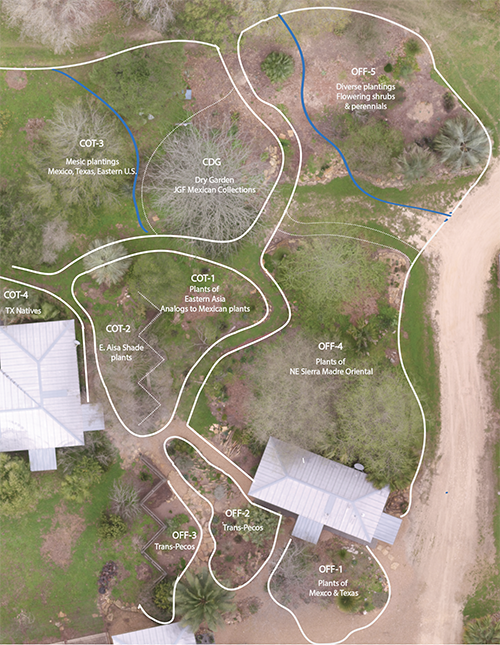
We have a draft plan for improving all the beds around the office and guest cottage. As you can see by the map above, we're planning to organize the beds thematically, focusing on creating beds that contain plants found in John's Garden. This will include
- our growing collection of plants collected in the Trans-Pecos region
- plants of Mexico and Texas
- shade plants from Eastern Asia
- plants of Eastern Asia analogous to Mexican plants
- plants of the NE Sierra Madre Oriental
- flowering shrubs and perennials
- JFG Mexican collections dry garden
- mesic plants from Mexico, Texas, Eastern U.S.
- Texas natives
Eventually we'll have a map highlighting these beds so our guests can better identify distinctive plants.
|
|
Notes from John Fairey's Mexico Plant Collecting Journals |
|
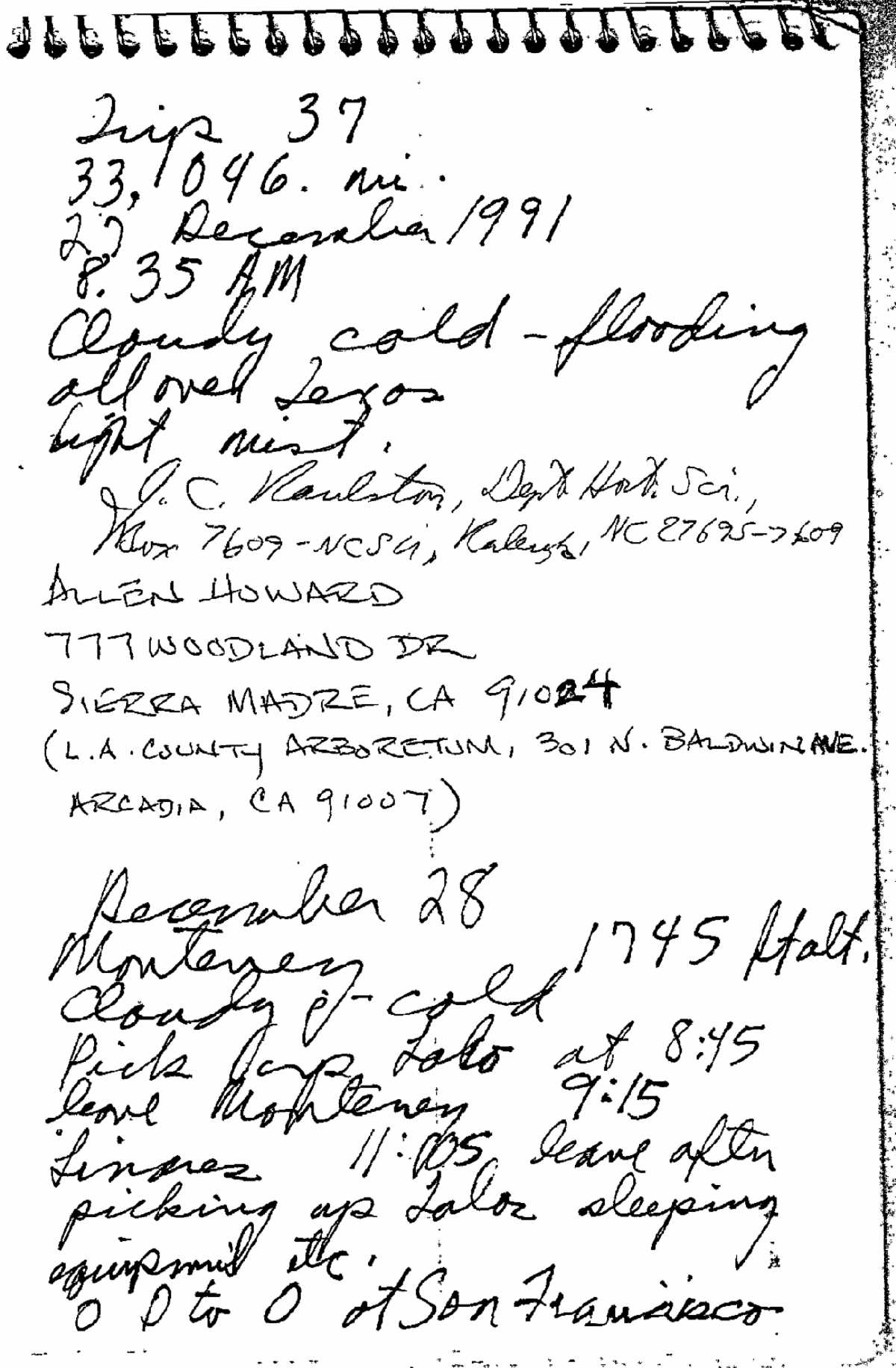
Trip #37 - Friday, December 27, 1991 - January 1, 1994
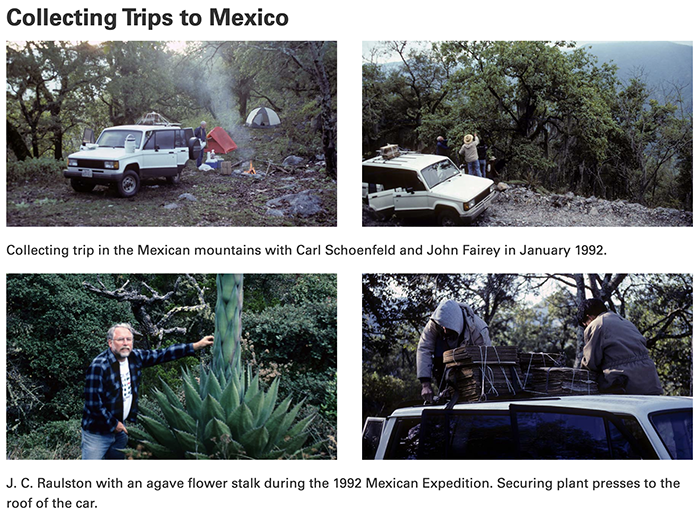
On trip #37, John and Carl were accompanied by colleagues from Texas and both the east and west coast, David Hosage, from Texas, Allen Howard from the Los Angeles County Arboretum, Rogers McVaugh, curator of Mexican plants at the University of North Carolina, and finally, J. C. Raulston who founded and ran the Arboretum at North Carolina State University, later to be named for him.
|
|
|
|
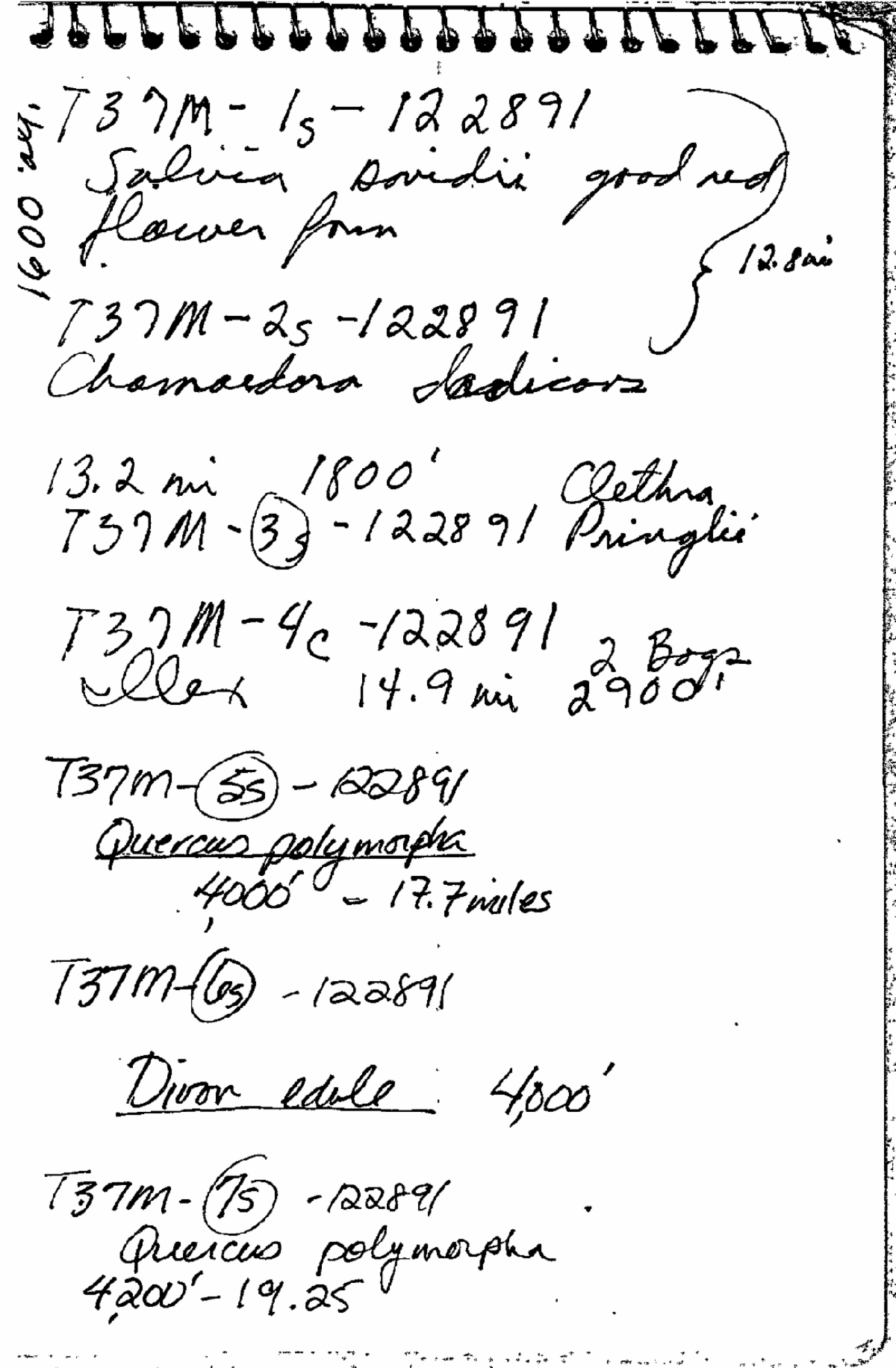
On this trip to Mexico, one of two where J.C. joined John and Carl, they spent five days collecting in the northern Sierra Madre Oriental Mountains. The first page of the trip's journal lists the collection of five species that are in the Garden today - Chamaedorea radicalis, Dioon edule, Quercus polymorpha, Ilex sp, and Clethra pringlei.
J.C. Raulston figures prominently in the history of our Garden and was responsible for making available to the nursery trade many of the plants that John and Carl collected in Mexico.
|
|
Raulston bioghrapher Bobby J. Ward writes, "By the time he arrived at NC State, J. C. had concluded that in any given region of the United States, a traditional palette of only 40 shrubs and trees comprised more than 90 percent of landscape plantings. He also noticed that Americans tend to focus on springtime gardening, overlooking the other seasons. J. C. "pushed" plants for winter such as winter-flowering apricot, magnolia, and witch hazel. And he promoted plants that expand the possibilities of gardening into autumn with beautyberry, autumn witch hazel, and the tea olive (Osmanthus fragrans). J.C. developed the Arboretum's mission as the promotion of a greater diversity of plants better adapted for urban and residential landscapes."
|
|
|
|
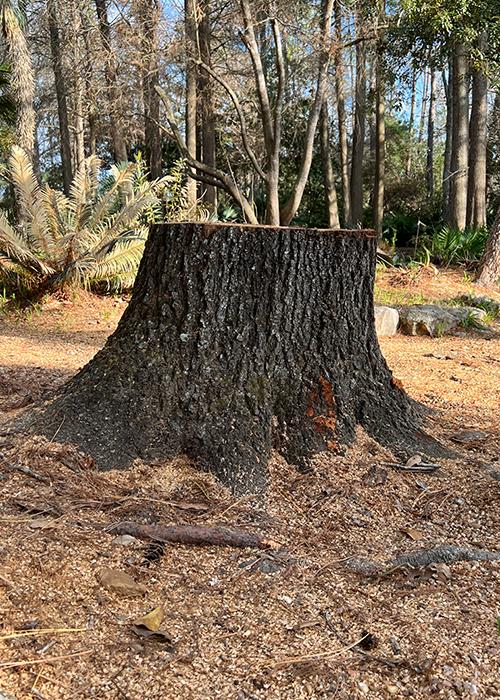
Our beloved Quercus rysophylla, in the North Dry Garden, which John got from Mike Shoup at the Antique Rose Emporium, had to come down due to poor health. We believe occasional flooding, opportunistic fungal pathogens, and beetle damage ultimately took their toll on this North American Champion rysophylla. We've left the stump to commemorate this tree's significance to the Garden. |
|
Don't Forget Budding Out Plant Sale & Festival
March 18th, 2023 at the Garden!
|
|
|
|
|
|
|