|
Monthly newsletter from the City of Chula Vista
Office of Sustainability
| |
|
A New Year’s Resolution for Sustainable Living
As we step into a new year, setting resolutions that align with sustainability can be a meaningful way to create positive change for the world around us. Resolutions aren’t just about personal improvement, they can also focus on adopting habits that benefit the environment and future generations. Sustainable New Year’s resolutions are commitments to adopt habits that reduce environmental impact, conserve resources, and promote a healthier, more equitable world. These resolutions emphasize small, meaningful changes that align personal goals with global sustainability. One powerful and accessible sustainable resolution is embracing mindful consumption and minimalism. By focusing on intentional purchasing, reducing waste, and prioritizing quality over quantity, individuals can not only improve their own lives but also contribute to a more sustainable future.
Modern consumer culture has created a cycle of overproduction and waste. Industries such as fashion, electronics, and packaged goods encourage frequent purchasing, often prioritizing convenience and novelty over sustainability. This has led to significant environmental consequences: fast fashion alone contributes 10% of global carbon emissions, and electronic waste is growing at alarming rates, with less than 20% being properly recycled. Mindful consumption and minimalism provide a meaningful response to these challenges by encouraging individuals to focus on what they truly need and value.
Minimalism involves shifting priorities from material possessions to purposeful living. It promotes owning fewer but higher-quality items, reducing clutter, and fostering a deeper connection to the things we own. Adopting mindful consumption habits is about more than just owning less- it’s about making intentional choices that align with personal values and sustainability goals. Simple steps, such as pausing before purchasing to evaluate necessity, investing in durable goods, or supporting ethical brands, can make a significant difference.
Decluttering is another essential part of mindful consumption. By responsibly donating, selling, or recycling items that no longer serve a purpose, individuals can extend the lifespan of products and reduce the waste sent to landfills. Shifting focus from material goods to experiences is another powerful step. Experiences often create lasting memories and meaningful connections without generating the waste associated with physical items.
The impact of mindful consumption extends beyond the individual. When people choose to buy less, waste less, and prioritize quality, they send a message to industries to adopt more sustainable practices. Over time, these collective choices can drive systemic change, reduce resource depletion, and lower greenhouse gas emissions. Additionally, adopting a minimalist lifestyle can lead to reduced stress, financial savings, and a stronger sense of purpose.
Incorporating mindful consumption and minimalism into your New Year’s resolutions is a small but impactful way to support global sustainability. By making deliberate choices to reduce waste and prioritize meaningful experiences over material possessions, individuals can help address the environmental challenges caused by overproduction and overconsumption. These efforts not only contribute to a healthier planet but also foster personal growth and clarity. As more people embrace these habits, the collective shift can drive industries to adopt sustainable practices, ensuring a brighter, more equitable future for generations to come.
| |
|
South Bay Earth Day April 12
Please save the date for the seventh annual South Bay Earth Day happening on Saturday April 12 from 11 a.m. to 3 p.m. at Chula Vista Bayfront Park. The event offers opportunities for education and engagement. Whether you’re looking to upcycle your clothes at the tie-dye workshop or get a broken device or furnishing repaired for free at the Fix-It Clinic, South Bay Earth Day vendors and exhibitors will help participants become more earth-friendly. Also, bring your dancing shoes and get ready to get down to the awesome musical acts that will entertain all in attendance.
More than 50 green booths will display and sell sustainable and eco-conscious items alongside live entertainment. Families can learn about what that food waste turns into—compost that is so helpful to gardens and greenspace. You can even take home a small sample of the compost! An Artist Alley will include live artists presenting their earth-friendly art. Those riding their bicycles will receive royal treatment with a free bike valet. Let's not forget the delicious food - there will be a great variety of food and drink vendors available. True to our calling, the event will run on clean energy and off the grid. The stage, food trucks and other event electrical needs will be powered by battery systems rather than exhaust-producing diesel generators.
We look forward to seeing you at South Bay Earth Day!
Please e-mail all event inquiries to environmentalservices@chulavistaca.gov.
| |
|
Winter Energy Saving Tips
Heating is the biggest energy user in your home during the winter months and can cause energy bills to substantially rise. Fortunately, there are a few simple ways to reduce your heating costs and save money on your utility bills in the winter.
- Let the sun in during the day and close the curtains at night
- Weatherstrip your doors and windows
- Close doors and vents in unused rooms
- Reset your water heater thermostat a few degrees cooler
- Use space heaters
- After using the oven, leave the door ajar
- Get a smart thermostat
- Give your heating system a yearly checkup
- Ensure air vents are not blocked
- Check the insulation in your house
- Insulate your pipes
- Bundle up and get cozy with layers
| |
|
Ask The Expert Event - February 8
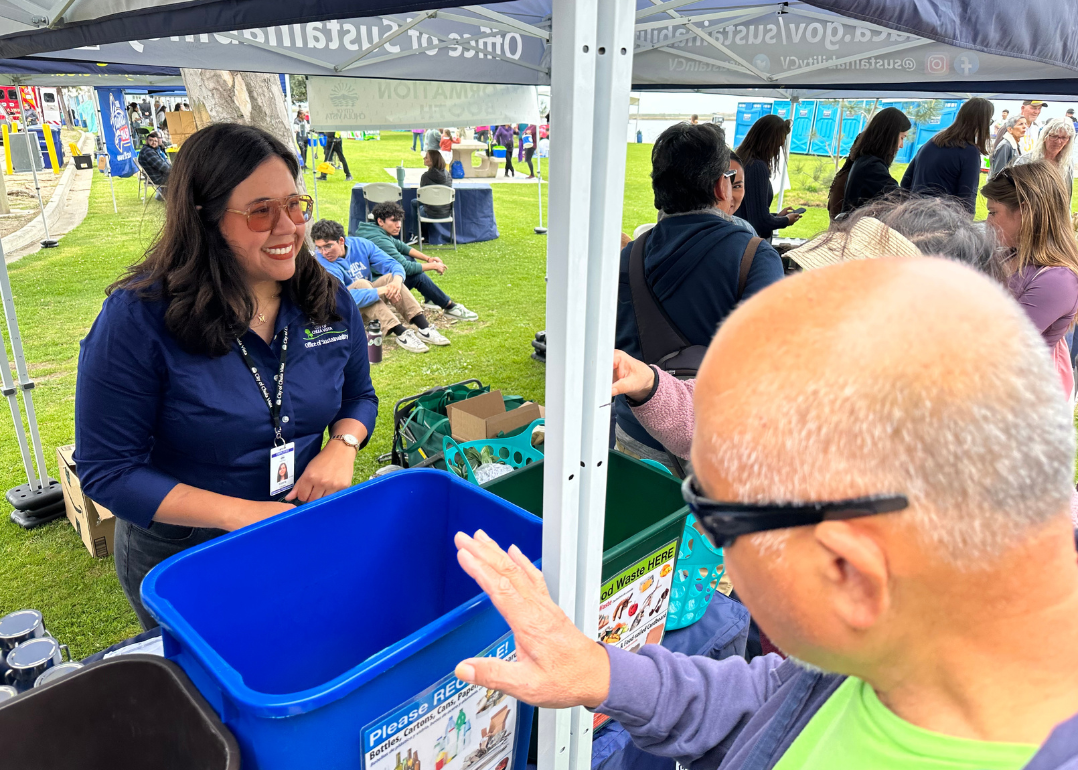
The City of Chula Vista’s Office of Sustainability will be hosting its first ever “Ask the Expert” event along with a caddy giveaway. We will be giving away kitchen caddies to Chula Vista residents, while providing educational materials and hosting interactive activities. In addition to the caddy giveaway, we will be answering all your sustainability questions. The event will take place on Saturday, February 8 at the Civic Center Library from 10:00 am to 1:00 pm.
- Date: February 8, 2025
- Time: 10:00 am – 1:00 pm
- Location: 375 F Street, Chula Vista, CA 91910
| |
|
$3,100 Rebates for Heat Pump Water Heaters
TECH Clean California relaunched remaining statewide incentives for single-family heat pump water heater projects. Residents can work with a TECH Clean California-certified contractor to receive the $3,100 rebate. TECH Clean California contractors can help identify other available rebates to help reduce the cost of the heat pump water heater project. You can view a TECH Clean California certified contractors on The Switch Is On’s website at: www.switchison.org.
| |
|
Free Energy Efficiency Courses
Check out The LEARN Program’s website for FREE interactive courses and live webinars designed to expand your knowledge. Plus, a limited number of free certifications are available for select communities in San Diego. Don’t miss out - visit sandiegolearn.com today to get started!
| |
|
Are You Putting Food Waste in the Correct Container? Hint: it’s the Green Can!
Food waste collection for businesses and residents has been up and running since 2022. All food waste including fruit, vegetables, spoiled food, meats, bones, and dairy products, as well as food-soiled paper napkins and paper to-go containers, must be separated from the regular trash.
| |
|
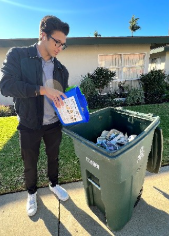
Residents in single-family homes can combine their food waste with their yard waste in the green recycling cart. Up to two green food and yard waste recycling carts can be requested with no additional charge. Personal containers will no longer be serviced. Keep all glass, metal, and plastics out of your green recycling cart, even if the plastic is labeled compostable.
Residents in apartments and condominiums must put their food waste and food-soiled paper in the green recycling cart or bin. Only apartment and condominium residents can place food waste in a clear plastic bag prior to putting it in the green recycling bin. These residents are also reminded to keep all other plastics (yes, even compostable plastic), glass and metal out of the food waste carts and bins.
All the collected food waste is taken to the compost facility at the Otay Landfill where it is composted into a stable product that will be used to improve the health of our soil. Plastics, glass, and metal contaminate the compost and reduce its value. Please do your part to keep these contaminants out of your green recycling cart.
| |
|
Home Composting
If you have been composting at home, you already appreciate its benefits of reducing erosion and increasing the soil’s water holding capacity. You may understand that compost provides nutrients to plants as well as the community of organisms that support the soil’s health.
So now that you can place food waste in your green cart along with your yard waste, is home composting still allowed?
YES! Composting at home is still allowed and encouraged as one of the best ways to provide a dependable source of compost for your garden. Please continue to compost your inedible fruits, vegetables, grains, eggshells, coffee grounds, and tea bags in your backyard bin. Meat, chicken, fish, bones, cheese and other animal-based food waste unfortunately are difficult to breakdown and are not ideal for home composting bins. We recommend that you place that type of food waste in your green cart wrapped in paper to avoid odors, pests or attracting urban (furry) scavengers. Home composting enables you to create a soil amendment that is less dependent on the use of pesticides or synthetic fertilizers in addition to the nutrient and water holding benefits.
If you are unable to use a compost or worm bin at home, look for a community garden, organization, or neighbor with a compost bin. They can provide opportunities for composting and getting compost, in addition to all the benefits of friendship and human interaction.
If you would like to learn how to compost or just need a refresher, the City of Chula Vista has Sunday workshops from 11:30-12:30 p.m. at the Living Coast Discovery Center. Chula Vista residents can receive free admission to the Living Coast Discovery Center by attending a workshop. Learn how!
| |
|
Free Compost for Chula Vista Residents
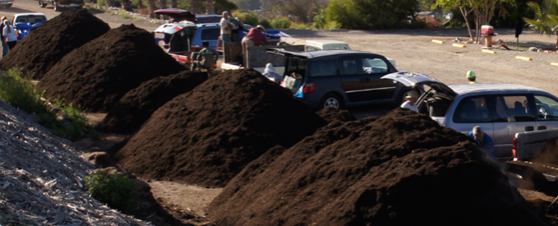
January is a good time to prepare your gardens for the upcoming spring season. Replenish the organic content of your soil by adding compost to it. The City’s free compost events are a great place to get a large (or small) amount of compost.
This year, we have increased the number of free compost events from four to six. If you missed January’s event (it was Saturday, January 11), you won’t have to wait long for the next event on Saturday, March 8. As with every free compost event, the hours are 8:00-12:00 at the Otay Landfill (1700 Maxwell Road).
Remember to bring your shovels for loading, containers to fill, and the tarps to cover your compost. Don’t forget to wear closed-toe shoes and sun protection. The event is for Chula Vista residents only.
You can find all six free compost events for 2025 on the City’s calendar (www.chulavistaca.gov), as well as the Office of Sustainability’s events calendar (https://www.chulavistaca.gov/departments/clean).
| |
|
Master Composter
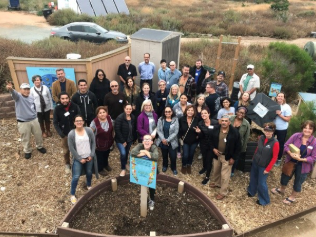
Make this the year to attend the City’s Master Composter Training course! The spring 2025 course is scheduled for April 16 through May 28 with courses taking place Wednesdays from 6:00 PM – 8:30 PM at the Living Coast Discovery Center.
There is no cost and no experience required to attend the seven-week course which provides an awesome hands-on experience while teaching you how to build healthy soils with multiple composting methods.
For more information or to register for the course, email Katharine@thelivingcoast.org or call 619-409-5900.
| |
|
Could Plastic Waste Be Recycled into a Product We Use in Our Everyday Lives?
A chemistry professor at Virginia Tech has discovered a way to use recycled plastic to produce an ingredient that could be used to make soap.
Chemist Guoliang “Greg” Liu, Ph.D. explains that there are a lot of useful “things” plastic could be converted into. This is inspiring, as everyday, more scientists like Dr. Liu are working to develop recycled plastics into key ingredients or whole products that can affordably replace ones that use non-recycled content. This will help because there is currently little to no economic incentive for industry to use recycled content in products.
Dr. Liu and his students have been occupied with a new technique to break down plastic molecules from polyethylene and polypropylene using heat and isolate an oil. Liu says this oil is nearly identical to an ingredient used in most types of soap.
“We would like to scale this up in the future,” Dr. Liu said. “There’s a huge potential out there.” Liu is part of a team that published their study in the Journal of Science and are working to partner with the detergent industry to explore how profitable his method of recycling might be.
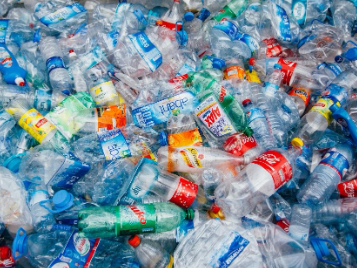
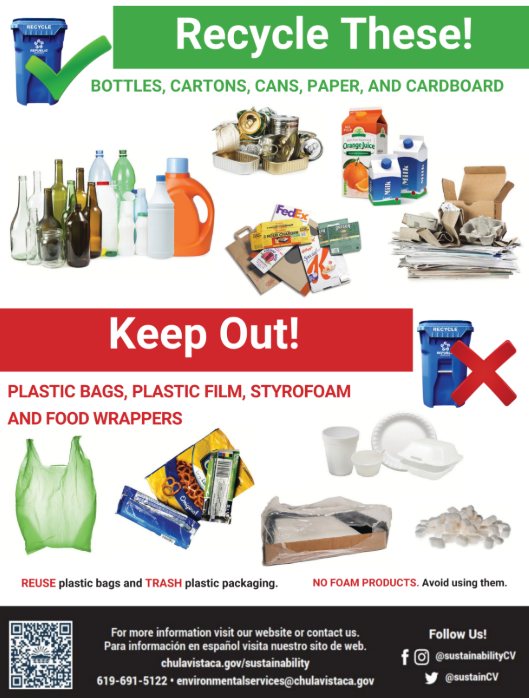
You can help Dr. Lui, his students, and all scientists researching ways to improve recycling efforts by “recycling right”. Make sure to keep items that don’t belong out of your recycling container like plastic bags, plastic packaging, wrap, and other flexible plastics which, unfortunately, are not recyclable. Other items like rope, garden hoses, or cable must also be kept out of your recycling container because they are extremely damaging to equipment that sorts and separates recyclables. See below for the best ways to recycle and remember, just because something is made of plastic it doesn’t mean it is recyclable.
| |
|
Nature Spotlight: Gila Monster, the Lizard That Could Help Alleviate Obesity
The Gila Monster (Heloderma suspectum, /ˈhiːlə/ HEE-lə) is a species of venomous lizard native to the Southwestern United States and the northwestern Mexico. It is a heavy, slow-moving reptile, and it is the only venomous lizard native to the United States. The Gila Monster is sluggish in nature, so it is not generally dangerous and very rarely poses a real threat to humans. However, it has a fearsome reputation and is sometimes killed despite the species being protected by state law in Arizona.
The name "Gila" refers to the Gila River Basin in the states of Arizona and New Mexico, where the Gila monster was once plentiful.
The Gila Monster is the largest extant lizard species native to North America north of the Mexican border. The tail is about 20% of the body size and the largest specimens may reach 20 to 22 inches in total length. They appear strong in their body structure with a stout snout, massive head and small eyes, which can be protected by a blinking membrane.
This lizard’s venom inspired a promising weight loss drug that doctors call a start of a new chapter in obesity treatments. The venom of a Gila Monster lizard contains hormones that can regulate blood sugar and is now being used to develop medication to treat diabetes.
Dr. Daniel Drucker, a scientist and endocrinologist at the University of Toronto, has dedicated his career to understanding the universe of hormones in the body. His curiosity about the Gila monster led to the development of a synthetic version of a hormone from the venom that became the first medicine of its kind approved to treat type 2 diabetes. Known as a GLP-1 (for glucagon-like peptide-1) receptor agonist, the medicine set off a cascade of additional venom-inspired discoveries.
The new treatment developed is a once-weekly injectable from a Danish pharmaceutical company that could safely help many people with health-threatening obesity. It may even illuminate some of the mysteries around how appetite works in the first place.
Gila Monster conservation efforts – Help monitor the monsters
The Gila Monster Project at Saguaro National Park was started by Dr. Kevin Bonine of the University of Arizona to learn more about this elusive lizard. University students track Gila Monsters using radio telemetry and (carefully and safely) to collect data on genetics, behavior, and habitat features.
The project is continuing as a long-term citizen science program that includes collecting images of individual Gila Monsters living in (or within a half-mile of) Saguaro National Park. Like fingerprints, a Gila Monster's pattern is unique to each lizard. Therefore, it is possible to identify individuals by the pattern on their bodies seen in photos.
The data from this project will help answer many questions about Gila monsters, including how long they live in the wild, their population size, when they are most active, and how they use their habitat in the park.
| | | | |