|
His younger brother found him unresponsive, slumped over on the bedroom floor of our home. He called 9-1-1, attempted CPR, and opened the door for the paramedics just minutes later. Our family home by the beach—a place of retreat after long days of work—was suddenly transformed into chaos.
The paramedic team rushed in, took over CPR, and administered the first dose of naloxone. IV lines were placed. An endotracheal tube. More naloxone. Epinephrine.
Our younger son, after handing over his CPR efforts, texted us:
“Nyeland overdosed. The paramedics are here.”
I froze—shocked and helpless. I was three hours from home, preparing to give the keynote address at a conference the following morning.
My wife, who worked nearby, rushed home from her medical office to find our normally quiet street lit with flashing lights from a fire truck, sheriff’s car, and ambulance. She ran inside and took in the scene—a parent’s worst nightmare. Still in her scrubs, hospital badge in place—Kelli Beingesser, MD, Obstetrics and Gynecology—she moved toward the chaos.
One of the paramedics looked up, recognized her, and said, “Hi Dr. B, I’m so sorry this is happening,” before turning back to Nyeland.
After five doses of naloxone and multiple rounds of advanced cardiopulmonary resuscitation, a heartbeat returned—a glimmer of hope. The paramedics loaded him into the ambulance and raced to the nearest emergency department.
Despite every effort, my firstborn son, Nyeland, was declared dead shortly after arrival—another opioid overdose in a hospital growing accustomed to such tragedies.
This is why Janus’ work is so important, and why I have chosen to be part of the Janus of Santa Cruz Recovery and Wellness Collective. We are losing far too many precious lives—lives with decades of potential still ahead, lives that could contribute, connect, and thrive within our communities.
Opioid overdose deaths have now surpassed COVID-19 deaths as one of the deadliest public health crises in U.S. history—exceeding the toll of the HIV epidemic, the Civil War, and the 1918 influenza pandemic.
Amid this tragedy, Janus offers hope.
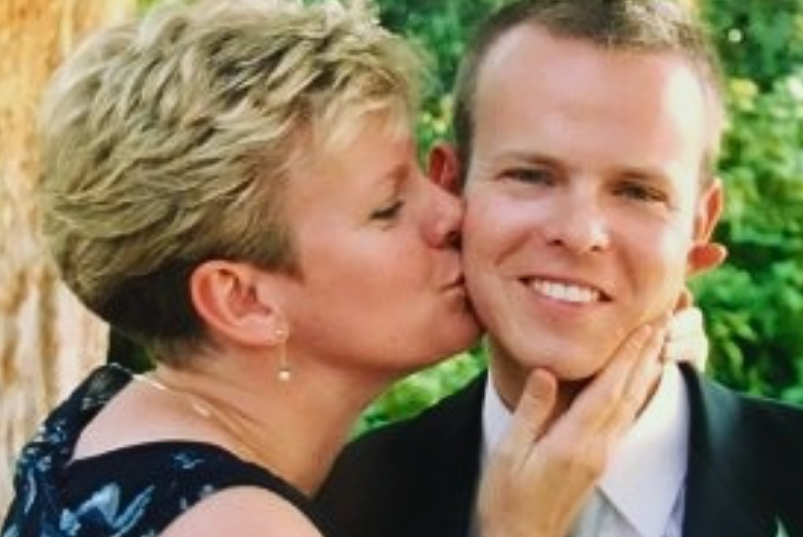
Nyeland Janzen Newel died on September 29, 2016, just days after his 38th birthday.
We had celebrated together as a family the week before on Maui, where Kelli and I were attending a medical conference. Our two sons, Nyeland and his younger brother Conlin, joined us—snorkeling, swimming, and reconnecting after time apart. Conlin had just graduated from college with a business degree and was back home working to launch his own venture. Nyeland, a dentist, had taken time off from his work at our local nonprofit dental clinic, Dientes.
He loved serving our community’s most vulnerable—those experiencing homelessness, undocumented workers, and uninsured families. The children were his favorite. He had a gift for making them laugh with silly faces and jokes, and he created custom stickers to share with patients and staff. His Spanish was excellent, and he took pride in using it at work. His colleagues loved him.
But beneath his outward happiness and success, he was struggling.
Nyeland had moved back home a few months before his death. After his divorce, he had been living far from family, working for a corporate dental chain. We were overjoyed to have him close again.
Our home in Aptos, near the beach, was full—both sons, the two of us, two dogs, and a cat. We shared meals, took walks on the beach, and spent evenings together. It felt like a gift.
Nyeland had been in recovery from drugs and alcohol for many years and, like so many, experienced relapses along the way. We knew enough about addiction to understand the risks, particularly with opioids, and we watched for signs.
He reassured us that he was sober. He was meditating, reading NA and AA materials, journaling—seemingly doing everything right.
As physicians, Kelli and I had both professional training and personal experience with addiction.
In a household of two physicians, how could this happen?
My understanding of addiction has come through painful, personal experience. Alcoholism, addiction, and other diseases of despair are still only superficially addressed in traditional healthcare education, despite their enormous impact on our nation’s health and wellbeing.
Stigma has kept these diseases in the shadows, even as we confront their consequences every day.
While I received more training than most in medical school, it was not until I experienced addiction personally that I began to grasp its full impact.
My transition from clinical medicine to public health reinforced this truth:
- I was not the only parent to lose a child to addiction.
- I was not the only physician to face this personal tragedy.
- We were not the only family forever changed.
This is—and continues to be—an epidemic.
As a Health Officer during the COVID-19 pandemic, I watched opioid deaths in my community rise alongside COVID fatalities. At times, in nearby San Francisco, overdose deaths exceeded those from COVID.
Although opioid overdose death rates are now trending slightly downward, they still result in more years of life lost than any other cause of death.
This crisis affects our children, our families, and our communities.
We must act.
There is no single solution. Addressing addiction will require collaboration across healthcare, behavioral health, law enforcement, criminal justice, social services, and public policy. Our schools, workplaces, faith communities, and local organizations must all play a role.
We must invest in prevention, early intervention, and treatment—and remain committed for the long term.
Janus offers a shelter in the storm, and for that, I am deeply grateful.
I hope you will join this effort to save lives and ease the suffering of those impacted by addiction.
|