|
Parading ancient doctors, Knights and Lords, telling junior doctors how naughty they are to go on strike, isn’t going to cut any ice.
In 2021 younger doctors felt that the BMA was useless and a grassroots group began to organise under the banner 'Doctors’ Vote'.
By 2022 they’d won a majority on the Junior Doctors' Council, giving them huge influence over the BMA’s stance on pay and strike action. This was the turning point. A generational handover of power…
… you know the rest.
What to do? If we haven’t learned by now these doctors are impervious to public opinion and insults then we’ve learned nothing. They are well aware of the risks they are taking and the impact they will have.
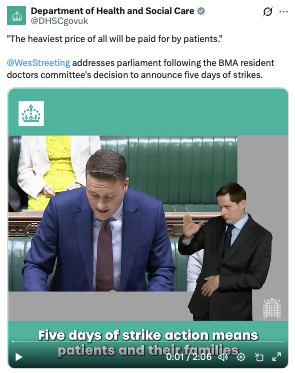
Streeting is sounding ever more like Steve Barclay, his Tory predecessor.
Soooo tufffff. It didn't work for Barclay and it wont work for Streeting.
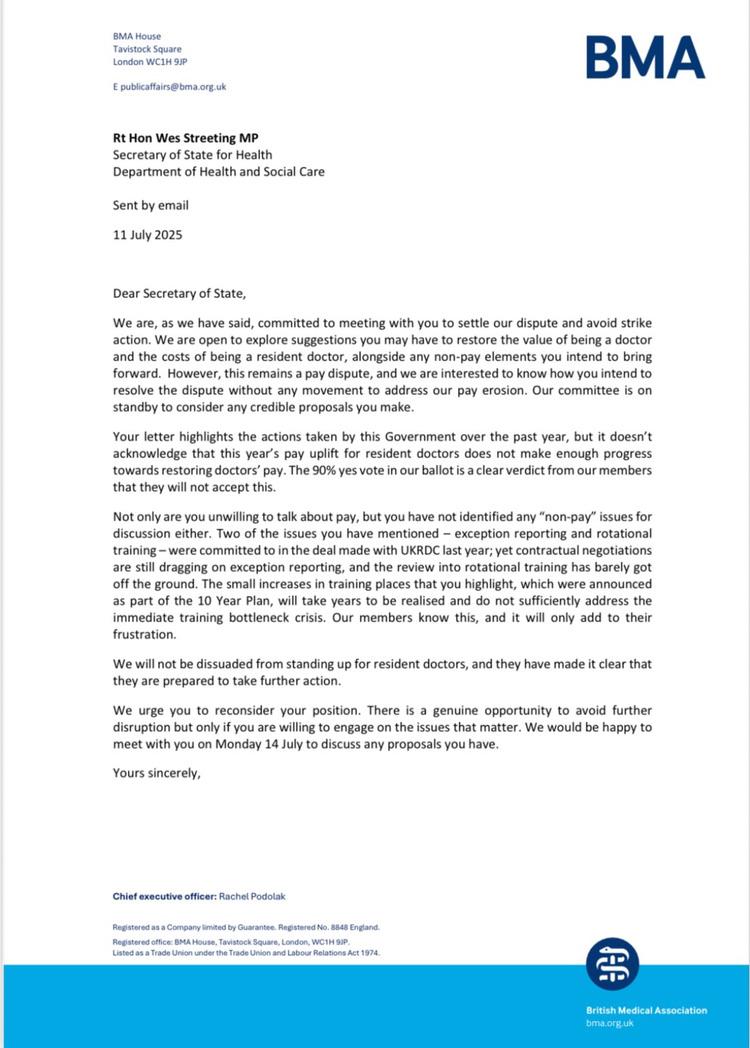
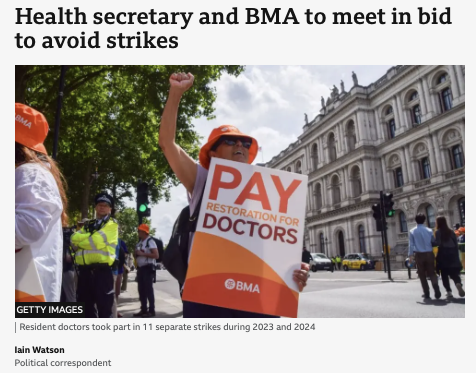
The good news is there is a chance of talks next week. How to handle them?
We all know this has to end in talks and the quicker we do it the better.
The mindset and how talks are started, is important. Streeting must change his 'tuff' approach.
How we define the problem in the first place is vital. Change the frame and the solution becomes obvious.
Current frame… doctors striking equals conflict and selfishness. Most people will see it that way and so do the papers. It'll make no difference to these doctors and won't bring a solution closer.
If we shift the frame… we could say… this is a corrective action restoring salaries that time and events have eroded. It’s not a fight for more; it’s about reclaiming fair pay and improving lives. Unfinished business from last year... how do we get there.
Repositioning the narrative focusing on restoring profession value.
The current associations are: Strikes equal disruption, cancelled appointments, chaos.
We could look at this another way.
Strikes highlight systemic weaknesses in the NHS and underscore that truly fixing staff shortages and morale is essential to long-term resilience.
Which means starting a broader policy conversation about funding, retention and future-proofing… not just pay.
The consequences of strikes are economic inefficiency, not simply moral failure.
Strikes cost millions in locum and cancelled work to say nothing of the impact on the public.
Once you reframe the problem, you change who supports you and how decision-makers react. Addressing strikes not as moral failure or disruption but as a vehicle for resolving systemic problems, shifts the conversation.
The message is; 'we don’t welcome the strikes but we recognise there is unfinished business, so let’s fix it’.
The strategic trick is to stop treating this as a cost and start treating it as an investment.
The government talks endlessly about productivity so let’s talk about productivity; rota gaps, chronic understaffing and the exodus of UK-trained doctors.
Doctors leaving to work overseas require a ‘certificate in good-standing’, the numbers applying for the certificates are worrying...
... in 2023 there was a surge of applications to 8,661, the highest in at least 10 years.
The BMA estimates that between 15,000 and 23,000 doctors leave the NHS prematurely each year. They put the cost at around £2bn.
Fixing pay helps retain doctors. Retention beats recruitment on cost every time. The current approach, undervalued doctors, burnout, and endless locums is a very efficient way to waste taxpayer money.
I know this is tricky and feels like a political hill too steep to climb…
… but we could be clever.
Stretch the deal. Spread restoration over the years to the end of this parliament.
And...
Tie it to reform;
- A new RD contract.
- Terms and conditions,
- food,
- parking,
- rest-rooms,
- flexibility in rota,
- examination costs,
- special mortgages,
- moving around the country,
- student debt relief.
- Pension contribution trade off with salary.
- Golden handcuffs?
... there's plenty to fix, so make it happen.
In short: make pay reform what we pay for. Streeting missed this last time around with an expensive two year deal with nothing much in return. Now he's paying the price.
Go for a three year deal, a settlement the public can understand and the Treasury can defend.
The politics? The public trusts doctors. They’re tired of disruption but they’ll know who to blame if HMG walks away from negotiations.
Labour must tread carefully. If they frame this as an act of fiscal irresponsibility, they’re falling into last year’s trap.
Doctors aren’t a problem to be contained. Retention is the silent engine room of any workforce plan. You can double medical school places all you like, but if they leave, you’ve doubled your training bill, not your workforce.
All disputes end in discussion. Reframing gives us a blueprint to start them and a road map through them.
This strike doesn’t have to end in defeat for anyone, nor in fiscal chaos. But, it will need grown ups to see things differently.
Behavioural economists call it 'reframing the proposition.’
Common sense would call it getting the job done.
|