Pacific Northwest DEWS

NOAA and NIDIS logos

National Integrated Drought Information System

Drought.gov


Pacific Northwest Drought Early Warning System February Drought & Climate Outlook Webinar


Monday, February 23 at 11 a.m. PT 

This webinar will provide more information on the current regional conditions and outlooks. Additionally, the webinar will feature an in depth look at snow drought conditions, water availability, and what normal snowpack means across the region.


These webinars provide the region's stakeholders and interested parties with timely information on current and developing drought conditions, as well as climatic events like El Niño and La Niña. Speakers will also discuss the impacts of these conditions on things such as wildfires, floods, disruption to water supply and ecosystems, and impacts to affected industries such as agriculture, tourism, and public health.

Featured Presentations


Climate Recap & Current Conditions 

Larry O’Neill | Oregon Climate Service, Oregon State University  


 Seasonal Conditions/Climate Outlook 

Arin Peters | NOAA’s National Weather Service Western Region


2026 Snow Drought, Water Availability,

and Multi-Year “Normal” Perspective

Matt Warbritton | USDA Natural Resources Conservation Service

Snow Survey–Oregon

For additional information, contact Jason Gerlich, CIRES/NOAA/NIDIS

Other News & Upcoming Events

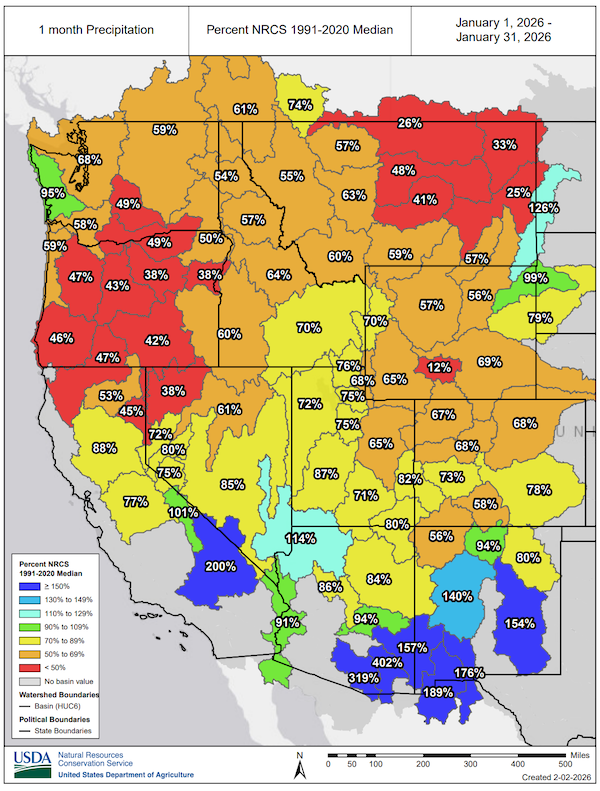
A Dry, Warm January Leaves the West With the Worst Snowpack in Decades

The start of the water year (October–December 2025) saw normal to above-normal precipitation, but due to record-breaking warm temperatures, most of this precipitation fell as rain instead of snow. This wet, rainy start to the water year transitioned to much drier conditions over the past three to four weeks across the Western United States.


Many SNOTEL (Snow Telemetry) stations in Montana, Wyoming, Idaho, Colorado, and Oregon reported their lowest or second-lowest January precipitation for their respective periods of record. January precipitation was well below normal across most of the West, with the exception of southern Arizona and New Mexico. Learn more >

Join the Native Drought Resilience Webinar Series: Preparing for Snow and Water Stress in Tribal Agriculture

Snow‑drought occurs when the winter snowpack is significantly below normal or melts earlier than expected, reducing natural water storage. Learn about the impacts of snow drought for Tribal agriculture and what can be done to prepare for water stress at a webinar on Tuesday, February 17, 2026 at 11 a.m. This is the first webinar in a free webinar series from the Native Resilience Working Group. This webinar will cover snow drought outlooks and what they mean for your operation.

Learn more >

Get Water Supply Updates at National Weather Service Water Supply Monthly Briefings

623353499_1334267272066442_795726916402291837_n image

The Northwest River Forecast Center (NWRFC) is conducting monthly water supply briefings about current hydrologic and climatic conditions and water supply forecasts for the Columbia Basin and coastal rivers of Oregon and Washington during this water year. The briefings will present current basin precipitation, snow and runoff conditions, as well as the latest climatological outlooks and water supply forecasts. There will be time available for questions following the presentation. To view the web-based presentations, you will need to register prior to each briefing. The briefing slides will be available from the NWRFC presentations page soon after the briefing. Learn more >

Understand Modeling Extreme Heat in Upcoming Heat Research Webinar Series

The National Integrated Heat Health Information System (NIHHIS) is hosting a webinar series to showcase heat research projects funded and supported by teams across NOAA. This series will bring improving awareness of the breadth of NOAA heat work and its impact on science and services across the U.S. The first webinar will be Thursday, February 19, 2026 at 11 a.m. MT/10 a.m. PT on Assessing Extreme Heat: Physical Mechanisms and Advances in Earth System Modeling, taking a closer look at the drivers and outcomes of extreme heat events. This webinar will showcase three research projects supported by the NOAA Climate Program Office (CPO), each using advanced modeling and analysis to better understand the drivers and outcomes of extreme heat events. Learn more >

Forwarded This Email? Subscribe for Updates

Subscribe to the National Integrated Drought Information System's Pacific Northwest DEWS list to receive webinars updates and other drought news for the Pacific Northwest DEWS. Or, subscribe to NIDIS's bi-weekly newsletter, Dry Times, to receive national news, drought research, and events.


NIDIS is an interagenacy program within the Climate Program Office, which is part of NOAA's Office of Oceanic and Atmospheric Research.

View as Webpage

Facebook  Instagram  X  LinkedIn  YouTube