Advance Access Highlights
January 16, 2018
|

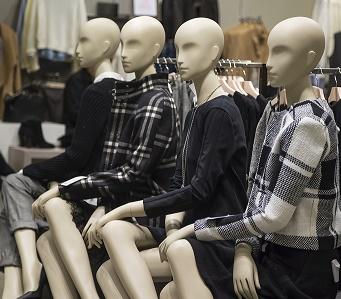
A female mannequin has negative implications for both male and female consumers low in appearance self-esteem. In particular, consumers who are lower in appearance self-esteem evaluate a product displayed by a mannequin more negatively as compared with consumers higher in appearance self-esteem. As mannequins signal the normative standard of beauty and consumers with low self-esteem in regard to their appearance believe they fail to meet this standard, these consumers become threatened by the beauty standard when exposed to a mannequin and in response denigrate the product the mannequin is displaying. Evidence for the underlying process is provided in three ways: 1) through the finding that the effect for male and female consumers with low appearance self-esteem arises only when the mannequin is displaying an appearance-related product, 2) through mediation analysis demonstrating that the mannequin conveys society's standard of beauty and that this negatively impacts product evaluations, and 3) through mitigation of the effect by removing the presence of threat via a self-affirmation task or decreasing the mannequin's beauty (e.g., marking its face, removing its hair, or removing its head).
|

The Impact of Crowding on Calorie Consumption
Stefan J. Hock
Rajesh Bagchi
Consumer behavior is often influenced by subtle environmental cues, such as temperature, color, lighting, scent, or sound. The authors explored the effects of a not-so-subtle cue -- human crowding -- on calorie consumption, and found that this omnipresent factor increases calorie consumption. These effects occur because crowding increases distraction, which hampers cognitive thinking and evokes more affective processing. When consumers process information affectively, they consume more calories. When given a choice between several different options, people select and eat higher-calorie items, but when presented with only one option, people eat more of the same food item.
DOI: 10.1093/jcr/
ucx088
|
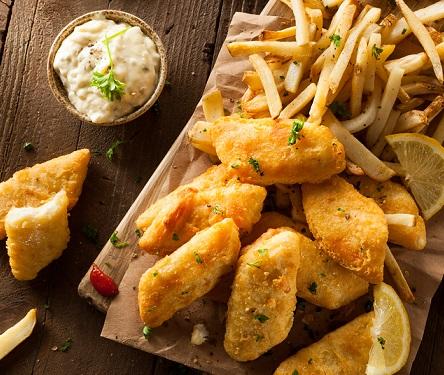
"I Want to Know the Answer! Give Me Fish 'n' Chips!": The Impact of Curiosity on Indulgent Choice
The authors examine how incidentally induced consumer curiosity influences subsequent indulgent decisions. They propose that the curiosity effect can spill over to prompt consumers to prefer indulgent options in other, unrelated domains (such as food and money). This situation is likely to occur because curiosity motivates individuals to seek the missing information as the specific information reward in the current domain. Such desire to obtain the information reward primes a reward-seeking goal, which, in turn, leads to increased preferences for indulgent options in subsequent, unrelated domains. Furthermore, the impact of curiosity on indulgent options possesses goal-priming properties. That is, the effect should (1) persist after a time delay, and (2) diminish when the reward-seeking goal is satiated by the obtainment of a reward before the indulgent task.
DOI: 10.1093/jcr/
ucx086
|

Feeling Economically Stuck: The Effect of Perceived Economic Mobility and Socioeconomic Status on Variety Seeking
Sunyee Yoon
Hyeongmin Christian Kim
The authors provide converging evidence for the joint effect of perceived economic mobility and socioeconomic status (SES) on compensatory behavior, such that low-SES consumers who perceive low economic mobility (economically stuck consumers) seek more variety than other consumers. This effect is traced to these consumers' desire to compensate for their low sense of personal control. Furthermore, these consumers' variety-seeking tendency disappears when their sense of control is boosted by other means or when the more varied option is not associated with a sense of control. Alternative explanations based on instrumental benefits, reactance, and affect were tested and did not account for the effect.
DOI: 10.1093/jcr/
ucx091
|

|

Curator: Lisa E. Bolton
|
|
|
The Journal of Consumer Research is sponsored by:
|
|
|
|
|