Current Issue Highlights
July 18, 2017
|

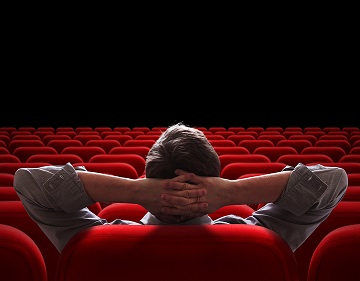
A Ticket for Your Thoughts: Method for Predicting Content Recall and Sales Using Neural Similarity of Moviegoers
Skilled advertisers often cause a diverse set of consumers to feel similarly about their product. The authors present a method for measuring neural data to assess the degree of similarity between multiple brains experiencing the same advertisements, and they demonstrate that this similarity can predict important marketing outcomes. Since neural data can be sampled continuously throughout an experience and without effort and conscious reporting biases, their method offers a useful complement to measures requiring active evaluations, such as subjective ratings and willingness-to-pay (WTP) scores. The authors used portable electroencephalography (EEG) systems to record the brain activity of 58 moviegoers in a commercial theater and then calculated the relative levels of neural similarity, cross-brain correlation (CBC), throughout 13 movie trailers. Their initial evidence suggests that CBC predicts future free recall of the movie trailers and population-level sales of the corresponding movies. In addition, because there are potentially other (i.e., non-neural) sources of physiological similarity (basic arousal), the authors illustrate how to use other passive measures, such as cardiac, respiratory, and electrodermal activity levels, to reject alternative hypotheses. Moreover, they show how CBC can be used in conjunction with empirical content analysis (levels of visual and semantic complexity).
Volume 44, Number 1, June 2017
DOI: 10.1093/jcr/ucw083
|

The authors examine the relation between power distance belief (PDB), the tendency to accept and expect inequalities in society; power, the control one has over valued resources; and charitable giving. Results suggest that the effect of PDB depends on the power held by the donor. In low-PDB contexts, people high (vs. low) in psychological power tend to be more self-focused (vs. other-focused), and this leads them to be less charitable. In high-PDB contexts, however, people high (vs. low) in psychological power tend to be more other-focused (vs. self-focused), and this leads them to be more charitable. The authors also explore several boundary conditions for these relationships and conclude with the implications of these findings.
|

Can exposure to body shapes affect spending preferences? Because Western society associates thinness with economic value, the authors argue that a shape resembling thin human body types activates concepts related to positive financial outcomes, such as responsibility and hard work. Exposure to thin, human-like shapes influences consumer self-efficacy judgments and spending outcomes, depending on the perceiver's weight. In line with social comparison, seeing a thin (vs. wide) human-like shape leads consumers with a high body mass index to make more indulgent decisions. Financial self-efficacy is highlighted as the underlying mechanism, and high resemblance to the human form is identified as a critical moderator. The findings of this research acknowledge visual similarity's role in stereotype knowledge activation and weight stereotypes' broad scope of influence.
|
Joseph K. Goodman, Gabriele Paolacci
|

Curator: Deborah MacInnis
|

Curator: Jennifer J. Argo
|
|

|

New York
|
|
|