Advance Access Highlights
November 7, 2017
|

Consumers often pursue goals that lack specific end states, such as goals to lose as much weight as possible or to pay off as much debt as possible. Yet despite considerable interest in the consequences of setting nonspecific (vs. specific) goals, how goal specificity affects motivation throughout goal pursuit is less well understood. The authors explore the role of reference points in shaping goal specificity's effects, finding that goal specificity alters what reference point consumers spontaneously adopt during goal pursuit: for specific goals, the end state tends to be more salient, but for nonspecific goals, the initial state should be more salient.
|

Made by Mistake: When Mistakes Increase Product Preference
Taly Reich
Daniella M. Kupor
Mistakes are often undesirable and frequently result in negative inferences about the person or company that made the mistake. Consequently, research suggests that information about mistakes is rarely shared with consumers. However, the authors find that consumers actually prefer products that were made by mistake to otherwise identical products that were made intentionally. This preference arises because consumers perceive that a product made by mistake is more improbable relative to a product made intentionally, and thus, view the product as more unique. This preference holds regardless of whether the mistake enhances or detracts from the product. However, in domains where consumers do not value uniqueness (e.g., utilitarian goods), the preference is eliminated.
DOI: 10.1093/jcr/
ucx089
|
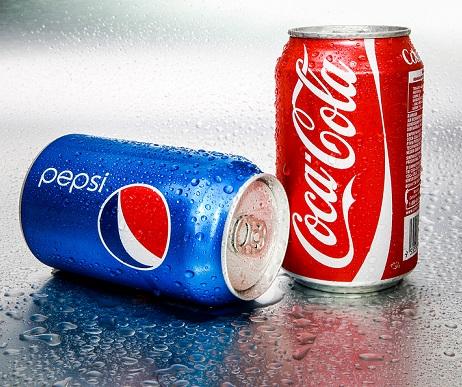
Coke vs. Pepsi: Brand Compatibility, Relationship Power, and Life Satisfaction
Individuals often evaluate, purchase, and consume brands in the presence of others, including close others. The authors explore how the novel concept of brand compatibility, defined as the extent to which individuals have similar brand preferences (both partners prefer the same brand of soda), influences life satisfaction. They find that when brand compatibility is high, life satisfaction will also be high. Conversely, because low brand compatibility may be a source of conflict for the relationship, it is associated with reduced life satisfaction. The effects of brand compatibility on conflict and life satisfaction depend on relationship power.
DOI: 10.1093/jcr/
ucx079
|


Facing Dominance: Anthropomorphism and the Effect of Product Face Ratio on Consumer Preference
Ahreum Maeng
Pankaj Aggarwal
A product's front face (a watch face or car front) is typically the first point of contact and a key determinant of a consumer's initial impression about the product. Drawing on evolutionary accounts of human face perception suggesting that the face width-to-height ratio (fWHR: bizygomatic width divided by upper-face height) can signal dominance and affect its overall evaluation, the authors based their work on the premise that product faces are perceived in much the same way as human faces. Like human faces, product faces with high (versus low) fWHR are perceived as more dominant. However, while human faces with high fWHR are liked less, product faces with high fWHR are liked more as revealed by consumer preference and willingness to pay scores. The greater preference for the high fWHR product faces is motivated by the consumers' desire to enhance and signal their own dominant status as evidenced by the moderating effects of type of goal and of usage context.
DOI: 10.1093/jcr/
ucx090
|

Context-Dependent Drivers of Discretionary Debt Decisions: Explaining Willingness to Borrow for Experiential Purchases
Stephanie M. Tully
Eesha Sharma
Mental accounting research suggests that consumers prefer borrowing for longer-lasting purchases to receive benefits from the purchases as they pay for them. In contrast, the authors show that consumers are more willing to borrow for experiential versus material purchases, even though experiential purchases tend to have a shorter physical duration. Further, framing the same purchase as more experiential than material increases willingness to borrow. This effect occurs because purchase timing is more important for experiential purchases -- a function of consumers' aversion to missing out on planned consumption.
DOI: 10.1093/jcr/
ucx078
|
Joseph K. Goodman, Gabriele Paolacci
|

|

Curator: Deborah MacInnis
|
|

Business Insider
|

|
|
|