Current Issue Highlights
October 10, 2017
|

Consumers are increasingly sharing product experiences with strangers and friends online. Despite the prevalence of word of mouth (WOM), little is known about how and why WOM differs based on whether people are talking to strangers or friends. The author theorized that one important motivation for WOM is social acceptance. To fulfill this motivation, people form and maintain existing relationships with others. When communicating with strangers, people attempt to self-enhance to attract strangers into forming relationships with the self; when sharing with friends, on the other hand, people attempt to connect emotionally in order to maintain existing ties. The author provides insights into the motivations behind WOM, synthesizes prior findings, and shows that people systematically share different content with strangers versus friends.
|

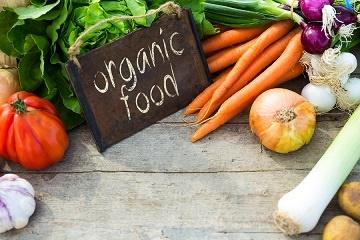
Will the Consistent Organic Food Consumer Step Forward? An Empirical Analysis
The organic food market has reached a significant value in developed countries, but market shares vary substantively between product categories. The authors investigated general patterns in the sequence of adoption of organic products based on a major Danish retailer's panel scanner data. All registered transactions over a 20-month period from 8,704 randomly selected customers with a loyalty card were analyzed using a hidden Markov model, capturing the dynamics in consumers' purchases. The model identifies latent states representing identifiable, accessible, and actionable dynamic customer segments, and captures the movements between states or segments. A pattern emerges that is consistent with the theory of behavioral spillover and inconsistent with the theory of moral licensing, including a tendency to buy organic products in an increasing number of product categories over time. The order in which organic products are adopted is inversely related to the behavioral costs of adopting them.
Volume 44, Number 3, October 2017
DOI: 10.1093/jcr/ucx052
|

The authors introduce a new dimension of consumption as liquid or solid. Liquid consumption is defined as ephemeral, access based, and dematerialized, while solid consumption is defined as enduring, ownership based, and material. Liquid and solid consumption are conceptualized as existing on a spectrum, with four conditions leading to consumption being liquid, solid, or a combination of the two: relevance to the self, the nature of social relationships, accessibility to mobility networks, and type of precarity experienced. Liquid consumption is needed to explain behavior within digital contexts, in access-based consumption, and in conditions of global mobility. It highlights a consumption orientation around values of flexibility, adaptability, fluidity, lightness, detachment, and speed.
|
Joseph K. Goodman, Gabriele Paolacci
|

|

Curator: Deborah MacInnis
|
|

|

Outside Magazine
|
|
|