Relational
Leading

|
|
Masters program in
Relational Leading
and
|
By focusing on the positive aspects of aging, and the availability of resources, skills, and resiliencies, research not only brings useful insights into the realm of practice but creates hope and empowers action among older people. By moving beyond practices of repair and prevention, to emphasize growth-enhancing activities, practitioners also contribute more effectively to the societal reconstruction of aging.
|
www.positiveaging.net
|
Sign up for this free newsletter in the following languages:
- English
- Spanish
- Danish
- German
- French
- Chinese
- Portuguese
|
|
|
Ideas, News and Resources
July 2015
|
|
We hope you enjoy receiving our newsletter which includes constructionist ideas and practices as well as news and resources from the Taos Institute.
|
|
|
Brief Encounters from the Taos Institute
This month we welcome Jenny Helin as she shares thoughts on Relational Leading...
Relational Leading through Embodied Listening by Jenny Helin 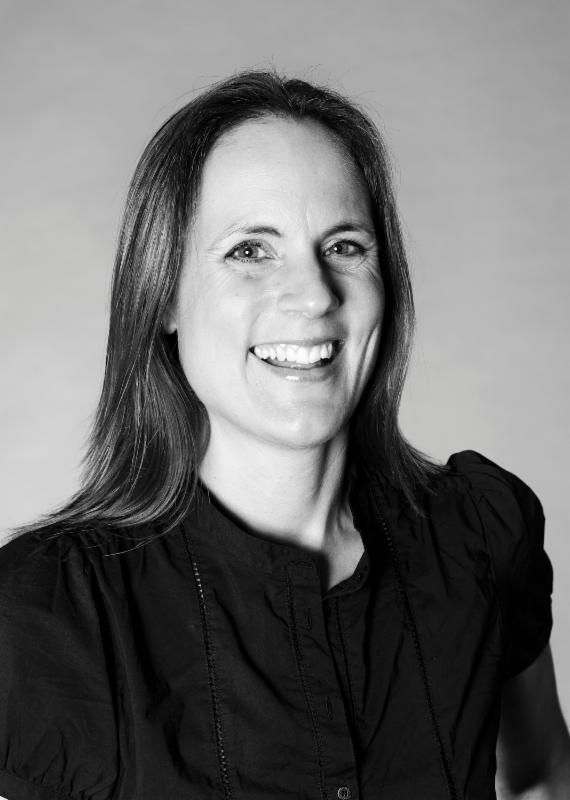
Relational leadership implies connectivity, movement and flux. What might such leadership practices look like? Leading through "listening" is but one thing that I will suggest here. For that, I will offer some practices of listening - what I will call embodied listening - inspired by the work of Evelyn Glennie.
I have been interested in listening for quite some time and when I first heard an interview with Evelyn Glennie a couple of years ago I was amazed at how she was continuously striving to develop her listening skills. Evelyn Glennie is a Scottish virtuoso percussionist. She is the first person in history to successfully create and sustain a full-time career as a solo percussionist, performing worldwide with the greatest conductors, orchestras, and artists. With over 80 international awards to date, including the Polar Music Prize, Evelyn is a source of inspiration for many. On every occasion, in every performance, her success is dependent on how she works with the others in the ensemble. The way to do this, according to her, is by listening.
Wow, listening, you may think, what's new about that? Of course musicians have to listen to each other. What's noteworthy is that Evelyn became
profoundly
deaf at the age of 12. Being asked about this, she says:
"My career and my life have been about listening in the deepest possible sense. Losing my hearing meant learning how to listen differently, to discover features of sound I hadn't realized existed. Losing my hearing made me a better listener." Not being able to listen only with her ears, Evelyn draws attention to our body as a resonance chamber and listening as an embodied process. She tunes into the music by feeling the vibrations in her body. To do so, she regularly plays barefoot during both live performances and studio recordings to feel the vibrations as they are played out on the floor. This is a fully embodied experience where she feels the higher tones foremost with her jawbone, teeth and scalp and the lower tunes with her breast and thigh. Furthermore, she emphasizes how seeing is a way of listening; seeing what touches people as they listen to her music and seeing how items move and vibrate: "Whatever the eye sees, there is always sound happening", Evelyn says. Thus, our bodily activities are on-going and intertwined in a way that they cannot be separated. Evelyn's work has inspired me deeply in ways that I have used in my collaborative research projects with family business owners during leadership succession. I have started to have listening meetings. These are meetings where the prime aim is to listen to each other. During one such meeting with five cousins that had a history of troublesome relations they started to talk about what it would potentially mean to them to become owners of the family business. One of them suggested it depends on where you are in relation to the business:
- Rod: I think that depends on where you are in the business. Are you above, below, do you carry it on your shoulders, behind your back or in front of you?
- Stefan: Dad had it, he lived like in a ball you can say, and he had it all over himself. In all ways. It was in front of him, behind him and below him. I don't want to have it like that. He was like the restless soul, couldn't escape the business.
- Charlotte: Yes, he always had to push it up a steep hill.
- Josefine: Oh, that is not good. I felt that too. We have to do it differently.
After the meeting, one of them said, "We listened to each other as if it was for the first time." Another said that as they listened to each other their relationship changed. According to her, it was not so much what they had said, but how it had felt during the meeting.
What's important for enabling embodied listening to emerge? Even though many things can be said about that, and have already been said, it is not possible to give a straightforward answer. Importantly, I think, it is a philosophical question: we have to re-think our orientation to language and interaction where we don't depart from talk, but rather the embodied and intertwined nature of relating to each other through listening. I hope to see more initiatives along those lines as we continue to develop our capacity for Relational Leading in the future.
********************************
Sources: www.evelyn.co.uk
Jenny Helin, Ph.D. - Department of Business Studies, Uppsala University, Visby, Sweden
Email: jenny.helin@fek.uu.se
See more at: http://www.taosinstitute.net/jenny-helin-phd
**********************
For information on the Taos Institute MSc and Certificate program in Relational Leading,
click here.
|
- Social Construction: Premises and Practices, an Online Workshop | Oct. 26 - Nov. 22, with Celiane Camargo-Borges and Dawn Dole. Participants can join in from anywhere in the world.
For information visit:
http://www.taosinstitute.net/upcoming-workshops
More workshops will be listed soon.
|
|
********************************
|
New Book 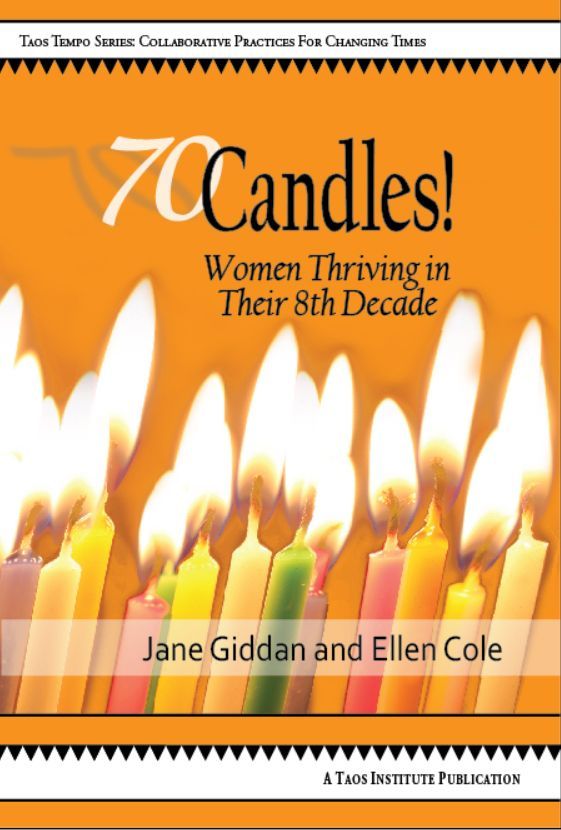
by Jane Giddan and Ellen Cole
Taos Institute Publications, 2015
Price: $19.00 US plus shipping and handling (Pre-orders being taken now, book will be shipped by August)
ISBN: 13-digit: 978-1-938552-35-9
See more at:
http://www.taosinstitute.net/70candles
|
WorldShare Books

Free Download Books - Check it out - More free books are available all the time!
www.taosinstitute.net/worldshare-books
Sharing Ideas and Practices From Around the World
The Taos Institute offers free-of-charge books for downloading to your computer or favorite reader. Our ultimate aim is to offer books in all languages. Like all the Taos Institute Publications, WorldShare Books represent significant contributions relevant to social constructionist theory and practice. More books are being added all the time.
Check them all out!
All books are available in PDF format. Visit WorldShare Books
|
 International Certificate Collaborative Practices is an international learning community and network. Sponsored by Taos Institute and Houston Galveston Institute To find a program in your part of the world, take a look at: Collaborativepractices.ning.com |
|
|
The Taos Institute's mission is to bring together scholars and practitioners concerned with the social processes essential for the construction of reason, knowledge, and human value.
We are committed to exploring, developing and disseminating ideas and practices that promote creative, appreciative and collaborative processes in families, communities and organizations around the world through a social constructionist lens.
We look forward to your participation in the dialogue.
Dawn Dole, Executive Director
The Taos Institute
info@taosinstitute.net
Keep Up with Our Updates!



|
|
|