State Budget Nearly Finalized;
Private School Vouchers Blocked … for Now
|
|
Five turbulent days after the old budget expired, the Pennsylvania House and Senate have finally both approved a new state budget for 2023-24, and education advocates have successfully fought off a dangerous attack on public education. But Harrisburg has been roiled by sharp conflicts over school funding between the Democratic-led House and the Republican-led Senate that are likely to continue.
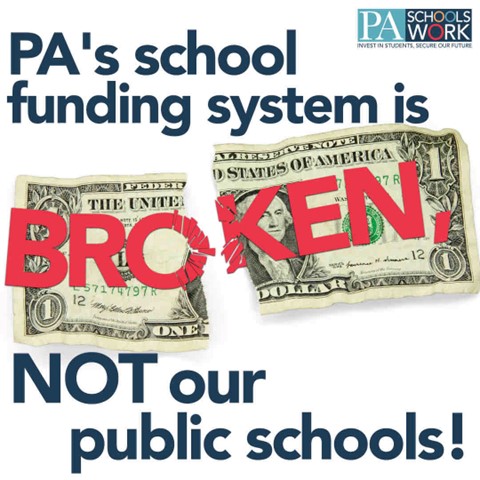
The main stumbling block was the sudden emergence of a controversial new Republican program, approved by the Senate with support from Gov. Josh Shapiro, that would divert state dollars to fund vouchers for tuition at private and religious schools. That unacceptable plan was blocked by the House on June 30, with vigorous advocacy by the PA Schools Work campaign playing a vital role.
Meeting ongoing resistance, Gov. Shapiro wisely pulled the plug on this plan and agreed to line-item-veto the voucher program if the House would approve the Senate’s budget.
House Democrats were alarmed by the voucher plan, which would open the door for permanent and growing state support for an additional private school funding scheme. The vouchers would compete for funding with public schools and undermine efforts to respond to the Commonwealth Court’s decision that the current funding system is discriminatory and unconstitutional. But facing a protracted budget stalemate over vouchers, the House agreed to a no-vouchers budget with more modest increases in funding than they had sought for basic education, special education, and the Level Up program for severely underfunded schools. The House passed the budget 117-86, with unanimous support from Democrats late Wednesday.
We see the forthcoming signing of a budget and defeat of vouchers as clearing the way for a real and necessary discussion of a new funding system that provides a constitutionally sound education for every student in Pennsylvania.
|
|
Education spending is a focus in the $45.5 billion dollar budget. Pre-K to 12 education spending is up by almost 5%. But the increases in this year’s budget do not fundamentally change the unconstitutional status quo. That work is still ahead.
New investments include:
- A $567 million increase (7.8%) in basic education funding,
- A $50 million increase (3.7%) in special education funding.
- $100 million for Level Up, targeted to 100 of the most underfunded districts.
- A $14 million increase (13%) in career and technical education, plus a $9.5 million increase in CTE equipment grants.
- A $10.4 million increase (3%) for early intervention for children three to five, and an early intervention increase of $15.4 million (9%) for children birth to three.
No new funding was included for pre-K, school facilities, or environmental repairs.
|
|
Vouchers Won’t Move Us Towards
a System of High-Quality Public Education
|
|
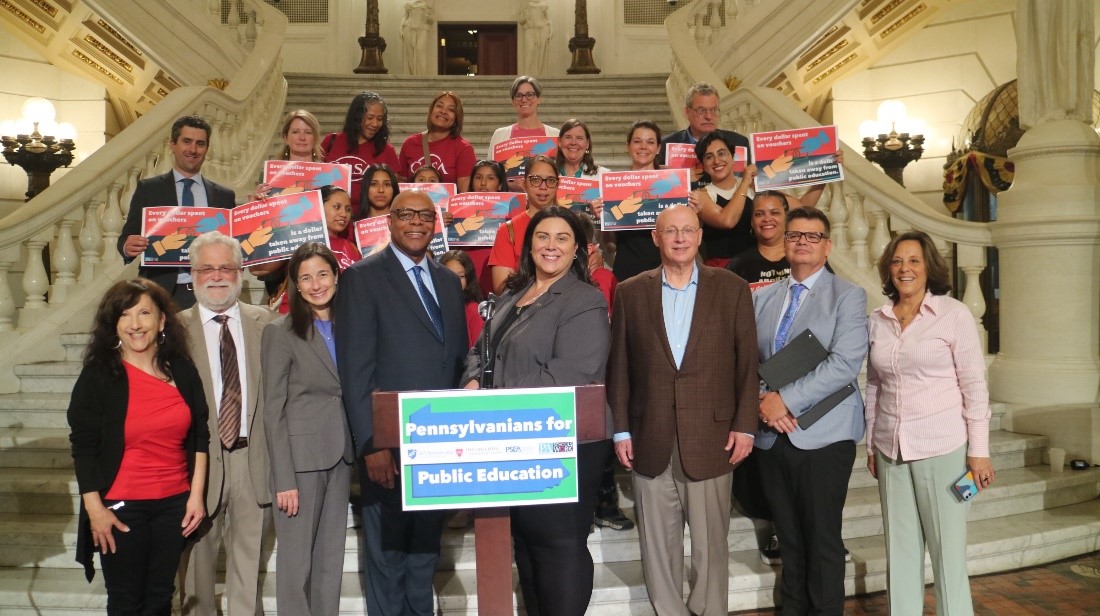
Education advocates, including ELC’s executive director, gathered in Harrisburg last week to
oppose private school vouchers and support increased state funding for public education.
|
|
The school voucher bill that was at the center of the conflict in Harrisburg and ultimately was removed from the budget was deeply problematic in many ways. The most glaring issue is that it would send state dollars to private schools — dollars that are urgently needed in the state’s public education system, where schools in low-wealth districts are unconstitutionally underfunded. This bill would hurt the very schools that our school funding system already discriminates against by pulling a select group of their students into private and religious schools, leaving the vast majority of students remaining in the underfunded schools with even fewer resources.
In a letter ELC sent to the Senate last month, we detailed many of those problems: “We have learned from two decades of experience from other states that these programs fail to offer a lifeline to many students, are unaccountable to the public, subsidize discrimination, and do not improve student success. … ELC is particularly concerned that the proposed … voucher program authorizes public dollars to support private schools that can and do discriminate against students based on disability, race, national origin, religion, ethnicity, gender, gender identity, and sexual orientation.”
Thanks to all of you who helped send a clear message to Harrisburg elected officials to reject vouchers and focus on their constitutional responsibility to ensure that our public schools have the resources they need to provide a comprehensive, effective, and contemporary public education.
|
|
Victory! Court Denies Legislative Leaders’ Motion in School Funding Case |
|
In June we received welcome news from Commonwealth Court. On June 21, President Judge Renée Cohn Jubelirer once again ruled decisively in favor of petitioners in Pennsylvania’s school funding lawsuit.
She denied a motion for post-trial relief filed by Senate President Kim Ward and House Minority Leader Bryan Cutler, who challenged the court’s landmark February ruling that the state’s system for funding public education is unconstitutional.
In rejecting their claim of error, the judge’s message to the parties was clear: “This Court now tasks Respondents with the challenge of delivering a system of public education that the Pennsylvania Constitution requires."
In a joint statement with our co-counsel, our message was equally clear: “Our schoolchildren cannot wait any longer. The work must start now.”
|
|
Banned Book Giveaway Highlights
Harm Done by Extremist Groups
|
|
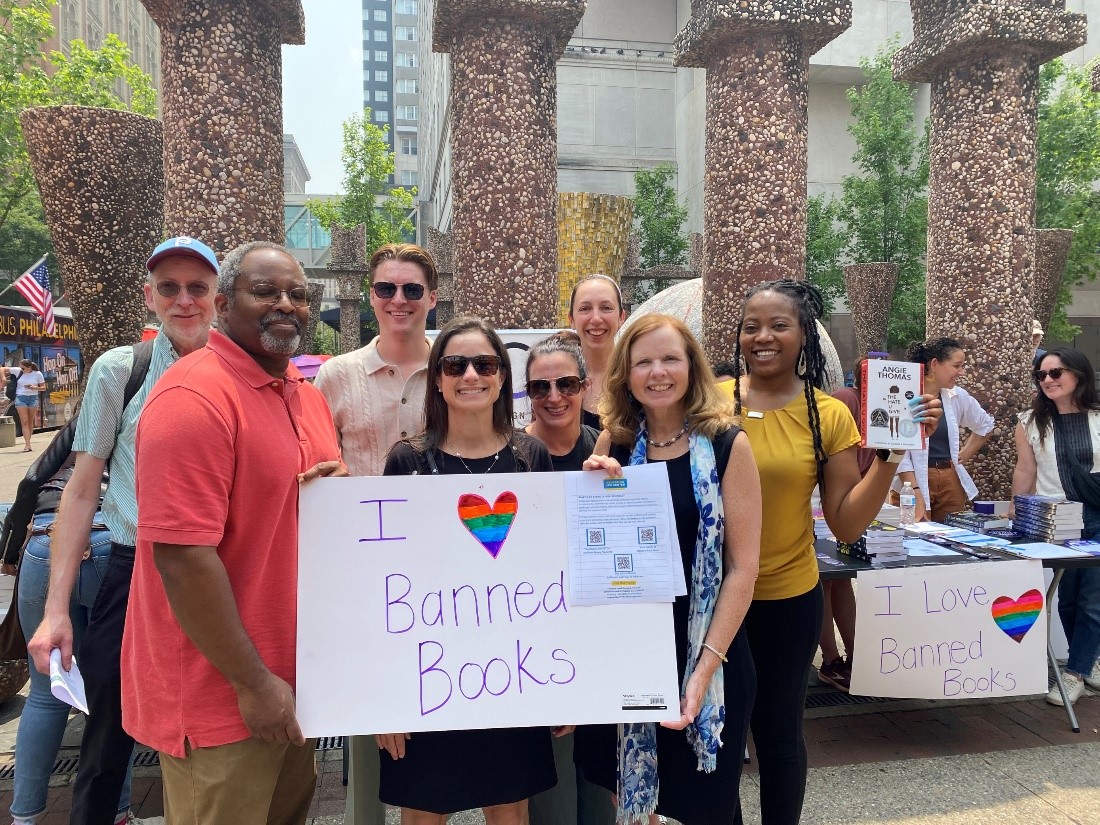
ELC staff join the Philadelphia Banned Book Giveaway hosted by Campaign for Our Shared Future. |
|
ELC joined groups such as the Campaign for Our Shared Future at a June 29 rally and “banned book giveaway” in Philadelphia—aimed at highlighting the growing threat of book-banning across the state and country. Books that have been banned are mostly written by LGBTQ+, Black, Brown, and Indigenous authors, including titles like The Hate U Give, Abuela, The Poet X, and And Tango Makes Three. They are often books that discuss students’ lived experiences of their own identities like race, gender, and sexual orientation. These books are critical to students’ learning and to creating welcoming and inclusive school environments. Books discussing these important topics have been subject to attacks by extremist groups like “Moms for Liberty,” who gathered in Philadelphia for their national conference.
ELC denounces the rise in hateful attacks against children, which has taken many forms: not just book bans, but new school policies against inclusive and honest curriculum, against use of correct pronouns, and attacking bathroom and athletic access for trans students. Worse is the impact on queer students and students of color, who have both historically and increasingly been targeted and unsupported in schools.
ELC issued a press release about the event and our growing work on these issues and calls on school leaders to make our schools safe and welcoming! Learn more about ELC’s Inclusive Schools and Honest Education initiative here.
|
|
In Harrisburg, a Juvenile Justice Lobby Day |
|
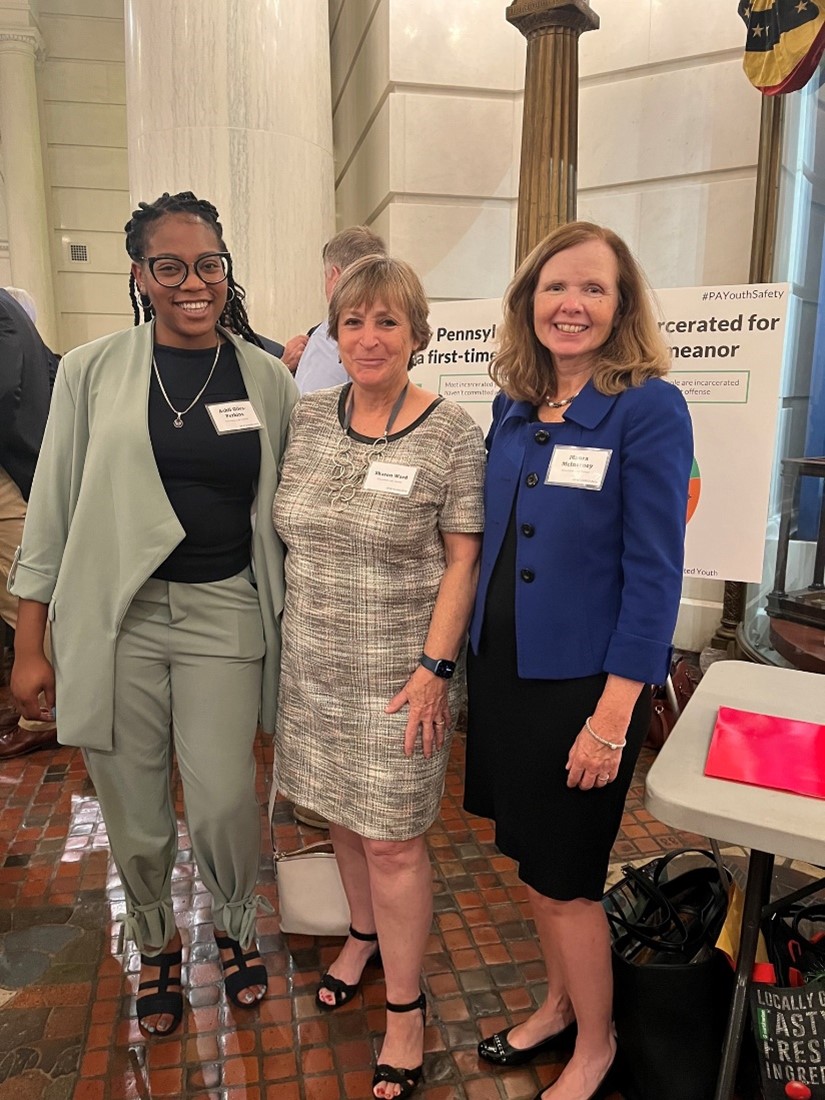
ELC’s Ashli Giles-Perkins, Sharon Ward, and Maura McInerney at the state Capitol for Juvenile Justice Lobby Day. |
|
ELC joined fellow members of the Youth Safety Caucus for a Juvenile Justice Lobby Day on June 21 at the state Capitol. ELC staff met with both Democratic and Republican members of the House and Senate Education Committees, attended the House Education committee meeting, tabled in the Capitol rotunda with materials and fact sheets, and connected with dozens of legislators, staffers, caucus organizations and families.
H.B. 1555, which ELC worked on with many partners, was introduced on June 30 and referred to the Judiciary Committee. This bill addresses several issues stemming from the legislature’s bipartisan Juvenile Justice Task Force, including: addressing systemic racial disparities (Black students receive the most punitive responses, even for similar behavior); limiting school-based arrests and expanding and mandating school-based diversion programs; increasing oversight of education programs in juvenile justice placements; improving educational access, quality, and school stability; and provision of necessary tools to help schools and judges keep children in school, with community supports, and out of placements.
Time is of the essence: youth are being removed from school and from their homes, and placed into facilities where they don’t have access to effective education — pushing them into the adult criminal system with no way out.
|
|
New Issues Emerge as Clock Tower Plans Reopening at Campus of Glen Mills Schools |
|
In February 2023, when the state’s Department of Human Services granted a provisional license to open Clock Tower Schools as a youth residential facility, ELC raised concerns with the Pennsylvania Department of Education about how students would be educated at newly formed Clock Tower — which is reopening on the grounds of the former Glen Mills Schools. Our concerns about education only escalated last month in light of new revelations that there is no viable plan to educate students there.
West Chester Area School District (WCASD), the public school entity that will be responsible for education at Clock Tower (as the facility is located in that district) recently notified DHS and PDE that it will not be able to ensure that students receive a legally complaint, standards-based education, due to barriers created by Clock Tower. In its communication, WCASD said it needed a year to create a program and hire staff.
We urge DHS and PDE to heed WCASD’s concerns and halt the opening of Clock Tower. ELC has warned about the absence of a legally compliant education program, saying that students who are placed at Clock Tower will be irreparably harmed — their education disrupted and their ability to graduate undermined.
|
|
From an Unjust Virtual Program to Graduation: A Client Story |
|
ELC represented “Gerald,” a 20-year-old student with a disability who is in foster care, to ensure that he was on-track to graduate after an improper, unilateral removal by his school to a virtual program that could not meet his needs, in clear violation of his rights. As a fifth-year senior, Gerald was excited to be completing the last two credits that he needed to graduate in June. After an incident where the school alleged that Gerald had broken school rules, they removed Gerald from school, placing him in a virtual program without holding the legally required meeting to determine whether his disability significantly impacted his behavior.
Gerald’s foster parent was concerned about his removal to a virtual program because of previous difficulties during the pandemic shutdown. Indeed, Gerald was not able to access the virtual setting, and his grades in his last two required courses started to fall.
With his graduation at risk, ELC negotiated with the school district to remedy this clear violation of his rights and successfully arranged for him to return in-person to school. We are happy to report that Gerald completed his coursework and graduated in June. Congratulations!
|
|
Celebrate Disability Pride Month! |
|
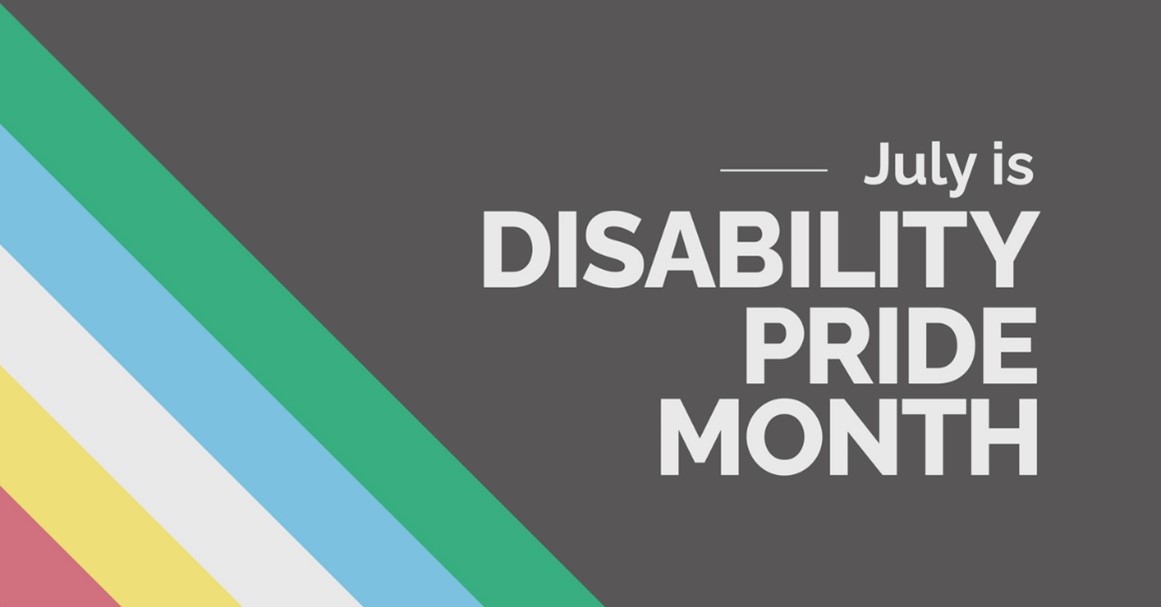
This is Disability Pride Month, held in July to commemorate the passing of the historic Americans With Disabilities Act in July 1990. It is a time to celebrate the history and contributions of the movement for rights and for justice for people with disabilities and a time to renew our commitment to the ongoing fight against ableism, the deep-seated prejudice and discrimination towards people with disabilities. At the Education Law Center, we work to ensure students with disabilities have access to quality public education. See our rights-based information here.
It is our shared responsibility to celebrate, learn, and work for disability justice.
|
|
Welcome to Our New Intern! |
|
The latest addition to our talented team of summer interns is Marit Vike, a rising second-year student at Stanford Law School. She previously was a paralegal at a plaintiff-side law firm for three years in Washington, DC, working on toxic tort and antitrust cases. Welcome Marit! |
|
Congratulations, Deborah! |
|
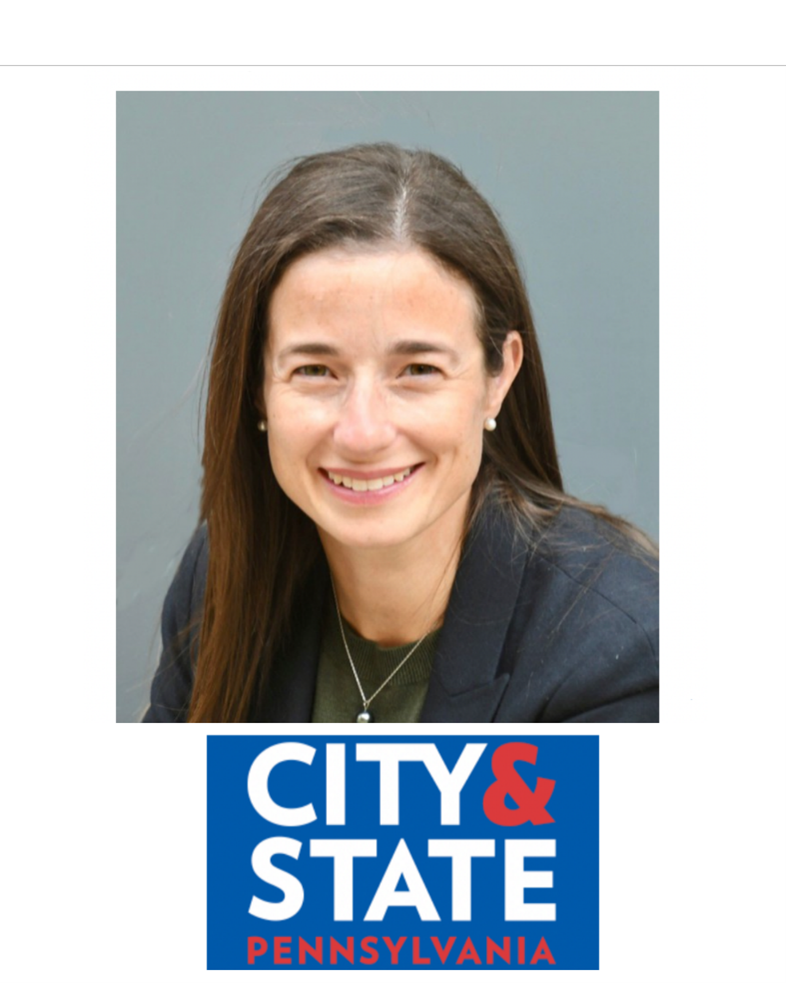
Congratulations to our executive director, Deborah Gordon Klehr, who has been named one of City & State PA’s 2023 Law Power 100! She has a tireless commitment to public education for all children. Well deserved!
|
|
Join Our Team: We’re Hiring! |
|
See our website for a description of internship opportunities at ELC.
|
|
Education Law Center | 215-238-6970 (Philadelphia)| 412-258-2120 (Pittsburgh)| |
|
A copy of the official registration and financial information of the Education Law Center may be obtained from the Department of State by calling toll-free, within Pennsylvania, 1-880-732-0999. Registration does not imply endorsement. |
|
|
|
|
|
|