|
IN THIS ISSUE:
Moʻolelo: Ku'ulei Galago
High canoe-paddling rates among Native Hawaiians, Pacific Islanders could help health outcomes
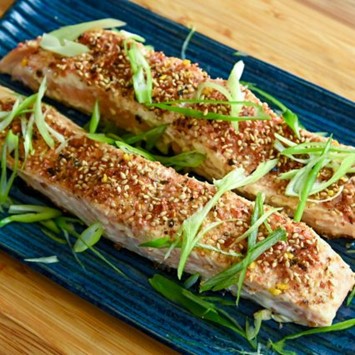
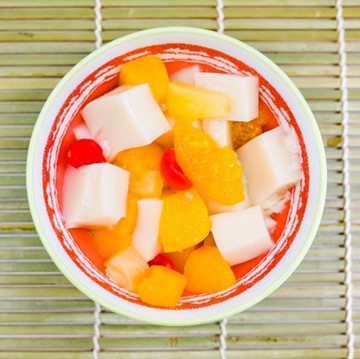
Recipes: Furikake Salmon & Almond Floats
Upcoming Events
| | | |
We're still recruiting! Follow us!
Click on the images below to visit our social media pages or send us an email.
| | |
|
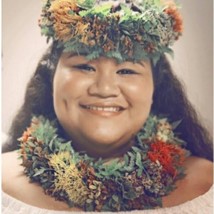
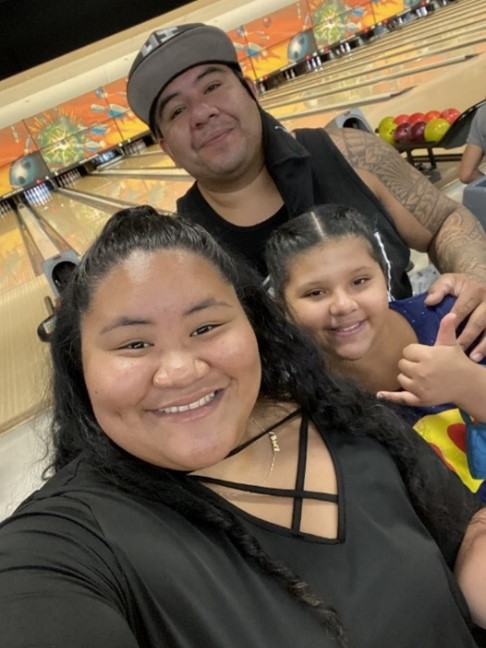
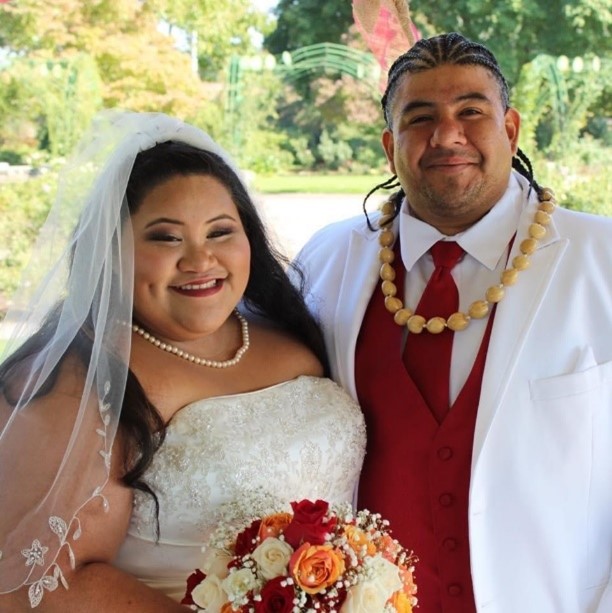
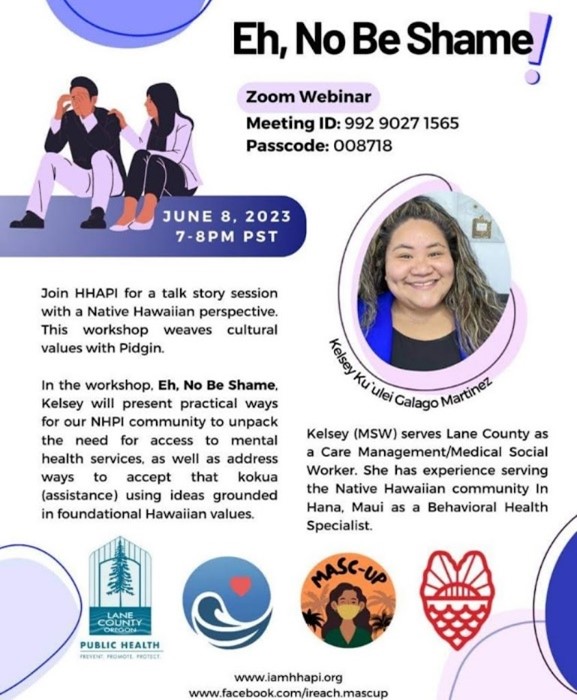
Kuʻulei has partnered with HHAPI on several events and we are grateful for the manaʻo she shares with our people. We are honored to highlight her this month, as a Kanaka Maoli, making a difference in our community.
“I attended Pacific University in Forest Grove Oregon and obtained my Bachelors of Social work in 2014. I took one year off of school to compete in Merrie Monarch as a Miss Aloha Hula soloist. In August of 2015, I began an accelerated graduate program through Pacific University and in May of 2016 graduated with my Master’s in Social Work.
Soon after graduating, I was offered a behavioral counselor position at Hāna High School back home in Maui. I worked there and served my community for two years. I then moved back to Eugene, OR in hopes to further my education and obtain my PhD in Educational Administration.
I began working for CASA of Lane County as their Program Director-overseeing recruitment, family finding and diversity, equity and inclusion. My husband and I decided to move to California and support my in-laws and so I worked as an Activities Director for an assisted living facility in Stockton, CA for about two years. My family and I recently moved back to Eugene, and I accepted a new job working as a social work Care Manager for PeaceHealth Pediatrics.
I believe that what led me to social work is my love for people and being benevolent to others, a value that was ingrained within me from my kūpuna and mākua. I also realize that the work that I do positively impacts people’s lives and that to me, is powerful. I like to model or lead by example in the values that I hold myself to. I view my career as an opportunity for me to continue the work of our Hawaiian people by spreading aloha.
| |
|
Share your name, your ʻohana/family names and your favorite ʻāina or wai...what land/water source are you most connected to and why.
My name is Kelsey Marie Kuʻulei Miliama Haina Galago Martinez. I am from the island of Maui and most intimately tied to Hāna, Maui. The majority of my family live in Maui, but my Samoan side resides in Pearl City, Oahu. I also have family members scattered throughout California, New York and Alaska.
| |
|
|
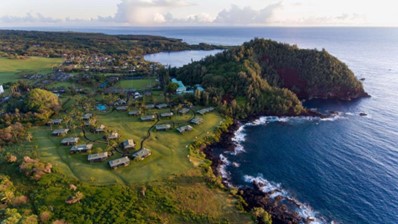
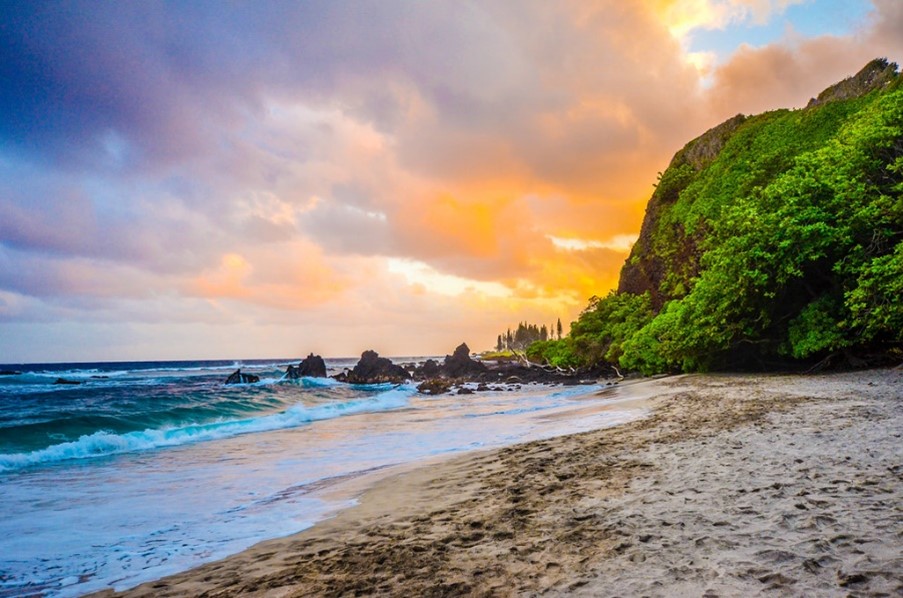
My favorite ʻāina is Puʻuiki hill in Hāna, Maui. This place is the home of our Puʻuiki Catholic church and burial ground of my kupuna. I go to Puʻuiki to clean the graves of my kūpuna. While I am doing that, I talk with them, sing to them and dance hula for them. I also recite oli or really whatever comes to me in the moment. I feel at peace when I am up there. There is a beautiful view of the ocean, the sky is always blue and clear, the birds are singing and the makani is blowing ever so gently. I feel accepted and at home with my kūpuna. I have had the best therapy sessions up there with just myself and my kūpuna.
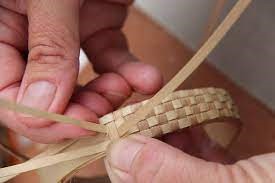
My favorite wai is Hāmoa in Hāna, Maui. When I was a little girl, I would spend every summer with my tūtū Kuʻulei in Hāna. My tūtū worked for the Hotel Hāna Maui teaching lauhala weaving classes because she was a master lauhala weaver. I would play in water while watching my tūtū teach groups of tourist how to make lauhala bracelets. In 2009, my tūtū Kuʻulei passed away six months before my soloist Hula competition
in Lahaina. My ʻauana performance was dedicated to my tūtū Kuʻulei. The song was entitled, Hāmoa. My Kumu picked this song for me without even fully understanding its significance. Nā Kumu told me they just prayed about it and this song came to my Kumu ‘Iliahi. Lastly, Hāmoa is another word for Samoa, which pays homage to my Samoan culture.
| | |
|
|
What are you grateful for and why?
I am grateful for ola (life), ʻohana (family) and kuleana (responsibility). I am grateful for life because I know that I was given a purpose in this life. I strongly believe that purpose is to serve my Hawaiian people just as our Hawaiian monarchy did all those years ago. I am grateful for ʻohana because they are my lawakua (backbone).
| |
|
My ʻohana has shaped and molded me with rich life experiences and access to higher education while instilling deep cultural values and traditions throughout my upbringing. I am grateful for the kuleana to raise the next generation of warriors and leaders for our Lāhui (people) to continue to thrive. I am grateful to be Hawaiian in today’s world. Being from a marginalized group of people, I am often hesitant to know how I will be accepted in spaces due to my age, gender and ethnicity.
When I step into a room I am initially categorized as a brown person, which comes with certain apprehensions. When I share that
I am Hawaiian, excitement and curiosity heightens, which shifts the conversation to discussing tourist attractions and their fond memories of Hawaiʻi.
It is in that moment that I am respected as a human and invited to share space with the larger ethnic group. I feel that as Hawaiians, we set a precedent for the world to follow. Hawaiians have led by example for many years in navigation (Hōkūleʻa), fitness (traditional Hula, Poly-Fit Zumba classes, Hot Hula Fitness), peaceful activism (Kapu Aloha), conflict resolution (Hoʻoponopono) etc.
| |
|
What brings you joy?
Serving others is what brings me the most joy. I specifically love volunteering and working with kūpuna.
| |
|
|
I was raised by both of my grandmothers because my parents were very young, and both worked two jobs to make ends meet. This left me to be raised by my grandmothers for the first 10 years of my life.
Through this I learned the ways of the old, how my tūtū loved to have things particularly clean, prepared, and organized. I learned how I should always look presentable, and how to conduct myself at all times. I was around a lot of adult conversation but realize that it exposed me to a mature way of thinking and navigating the world. Now as a stepmom, I am realizing the little life hacks that my tūtū have instilled in me, which now makes me a particular person as well.
Another thing that brings me joy is being a wife. I feel that my kūpuna and Ke Akua has blessed me with a husband that understands me in every way possible. Spending time grocery shopping, running errands or going on sporadic date nights is what brings my heart the most joy. If you ever have the chance to find your person, recognize that and hold onto it.
| |
Living in Oregon, I don’t have access to wai, but if I was at home I would heal by going into the ocean and doing a physical and spiritual cleanse. In Hawaiian, that process is called kapu kai. The purpose of this cleanse is to recenter, reassess, reenergize and get oneself in a positive frame of mind. It is a time for deep reflection. As the waves wash over your body, you visualize the negative toxins being released, replaced and rejuvenated by positivity and mental clarity. | |
|
How do you share your manaʻo and mana with your keiki?
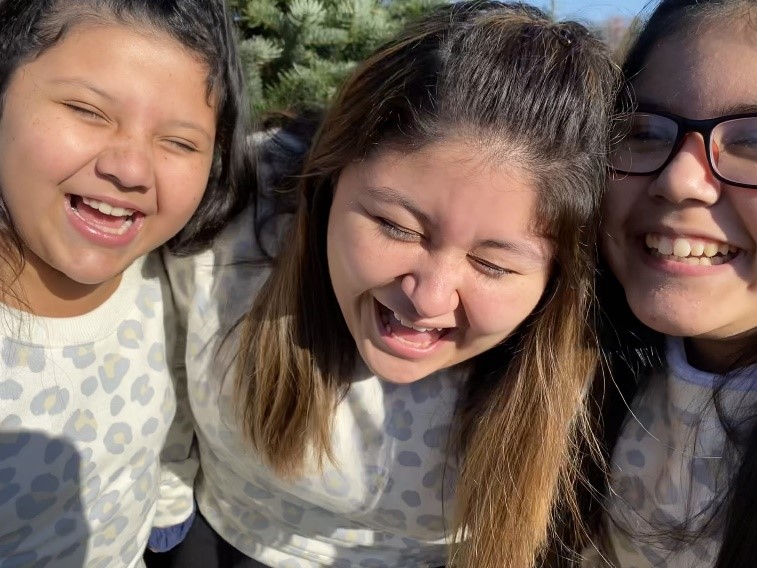
I have been a stepmom for the past six years and sharing my manaʻo has been something interesting to navigate. My stepdaughter is not of Native Hawaiian ancestry and at times there is a cultural barrier. I do my best to share my manaʻo through constant communication and conversation. I also like to lead by example in the way I conduct myself and interact with others in various settings and in different capacities. I also like to provide space and opportunity for my stepdaughter to practice the skills being modeled to her.
| |
What is your favorite way to move your kino (body)? | |
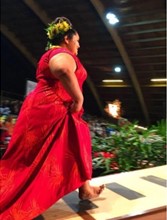
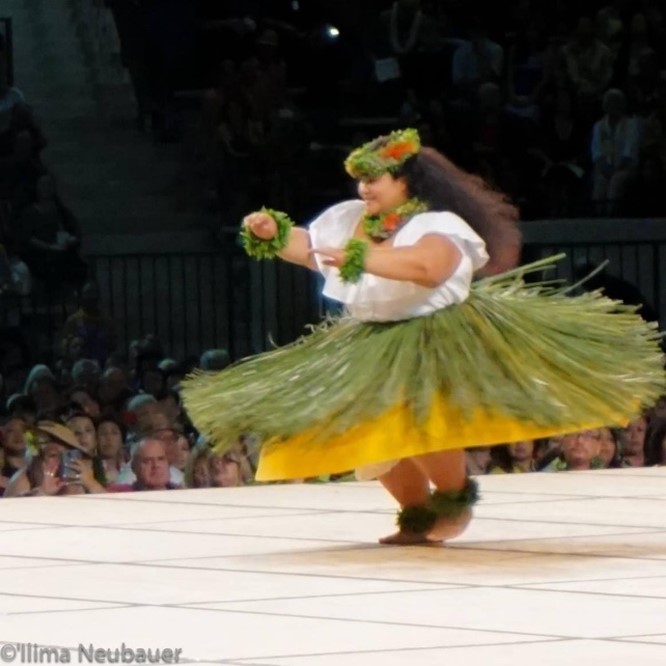
My favorite way to move my kino is by dancing hula. I have been dancing hula since I was three years old. I started dancing for Hālau Nā ʻŌpio O Koʻolau with Nā Kumu Michael and James Dela Cruz for 3 years. I then danced for a short time with Hālau Kawailiʻula under the tutelage of Kumu Hula Chinky Mahoe. A large part of my hula career was spent with Hālau Kekuaokalāʻauʻalaʻiliahi under the direction of Nā Kumu Hula ‘Iliahi and Haunani Paredes. | |
I began dancing for the hālau when they first opened their doors in 2004. It was very fitting that at 12 years old, I began dancing with the kīpuna class. In 2009 I entered and won the title of Miss Hula O Nā Keiki 2009. It is a soloist competition located at Kāʻanapali Beach Hotel in Lahaina, Maui. In 2015 I had the honor of representing my hālau at the Merrie Monarch Festival as their Miss Aloha Hula soloist. | |
|
What is a quote that empowers you?
“Be the aloha you wish to see in the world.”
This quote (small kind adjusted) empowers me because at the base of everything I do is human interaction. I have learned that navigating this world with Aloha allows for doors and opportunities to open. Any interaction that I have whether it be at the bank, at work, in an appointment or while driving, I know that when I operate out of Aloha, 99% of the time that aloha is reciprocated. This makes my life flow more easily.
| |
Would you share an easy, healthy-heart recipe that your ʻohana enjoys? | |
High canoe-paddling rates among
Native Hawaiians, Pacific Islanders
could help health outcomes
| 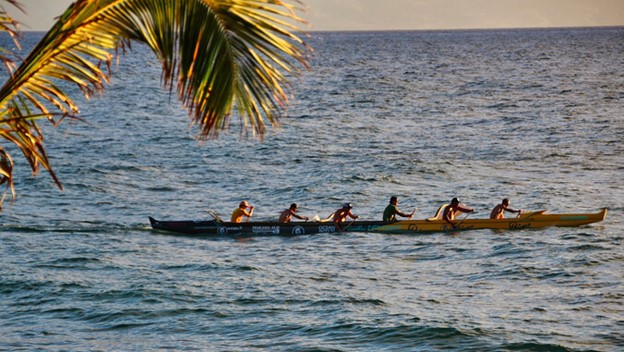 | |
A new study by researchers at the University of Hawaiʻi at Mānoa found that 1 out of 5 (20%) Hawaiʻi residents have participated in the uniquely Hawaiian sport of outrigger paddling. Paddling has particularly high popularity among Native Hawaiians; 42% have joined in this activity. The study also found the next ethnic group with the greatest participation was Pacific Islanders; 31% have paddled in their lifetime. These findings have been recently published by the Centers for Disease Control and Prevention.
These findings suggest that promoting paddling and other activities that are physically demanding as well as culturally relevant, could be a meaningful way to improve physical activity rates in Hawaiʻi, according to the researchers from the UH Office of Public Health Studies, the Hawaiʻi Department of Health (DOH), and the John A. Burns School of Medicine. The researchers also noted that paddling appealed to a wide range of ages, income groups, and geographic locations.
Hula, paddling provides cultural ties, health benefits
| 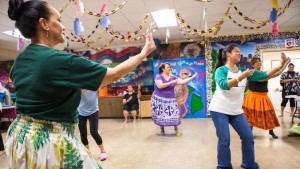 | |
Additionally, the study determined the extent of popularity of hula, which is an iconic part of Hawaiʻi’s culture with a quarter of all Hawaiʻi residents reporting having danced hula in their lifetime. Almost half of Native Hawaiians and 42% of Pacific Islanders have danced hula. Impressively, two-thirds of Hawaiian women dance hula sometimes or frequently. In other studies by UH researchers, it was found that the graceful dance of hula is also physically rigorous with energy expenditure levels that can be comparable to a basketball game or tennis match.
“Public health surveys do not typically measure culturally relevant physical activity,” said Tetine Sentell, Interim Dean of the Thompson School of Social Work & Public Health, who led the study. “Because of our diverse population, it is vital that we promote culturally relevant activities like outrigger canoe paddling in public health programming, research, and surveillance.” Sentell also noted that policy makers could support these activities and promote both healthy behaviors and celebrate things that are unique to Hawaiʻi and make it a special place.
Landon ʻŌpunui, physician and Hawaiian health leader, who is interim executive and medical director of Nā Puʻuwai, a Native Hawaiian health system on Molokaʻi was particularly impressed by the study results. ʻŌpunui, an elite paddler, recently completed a 300-mile journey around the Pacific with an international group of paddlers who knows that the physical benefits of paddling is only the beginning of ways the sport creates good health.
ʻŌpunui explained, “Everyone has different reasons for paddling, for some it is the friendships created, others enjoy being a part of the paddling community, for some it may be health benefits, others it may be the competition. For me, it connects me to my ancestors.” He believes that all these motivations contribute to the mana, the intrinsic power, of paddling. As a Native Hawaiian physician, ʻŌpunui knows the physical benefit is just one way paddling improves health. He noted that paddling can improve mental health by being part of a supportive community, and the calming and meditative aspect of being on the ocean.
The new findings came from the Behavioral Risk Factor Surveillance System, a yearly health survey conducted by DOH. In 2018, for the first time, questions about outrigger canoe paddling and hula were included in the survey. Data for the study was collected over a three-year period. “Unless we include culturally important activities in our surveys, their importance to the health of our population remains invisible in these influential measurement systems that are used to inform policies and funding,” Sentell said.
The survey included about 13,500 respondents. Across all racial/ethnic groups, 20% had engaged in paddling sometime in their life.
Participation in paddling was higher for Native Hawaiians and other Pacific Islanders than for all other racial and ethnic groups
Although men were more likely to have participated in paddling than women, there were high levels of engagement in the activity for both genders. According to the results, experience in paddling was seen across race and ethnicity, gender, age, education and income level, and health status. These findings indicate that paddling is widely enjoyed, making it a promising area for widespread community health promotion.
The researchers are now conducting additional surveys with more detailed questions about paddling and hula to further understand the implications for community health in Hawaiʻi and beyond.
| | | |
|
Preparation:
- Preheat oven to 425 degrees F.
- Lay salmon skin side down on aluminum foil lined baking sheet.
- Baste salmon with mayonnaise. Sprinkle furikake on top of mayonnaise.
- Bake salmon for 10 minutes or until done and enjoy! Serve with rice.
| | |
|
A refreshing, creamy and lightly sweet dessert.
Tastes great served with fresh fruit.
| |
|
Preparation:
- Heat gelatin in water until gelatin is dissolved.
- Stir in sugar.
- Add milk and almond extract, stir well.
- Pour into 8" pan, chill overnight.
- Cut into cubes, serve with fruits.
| | |
Upcoming Community Events | |
|
HHAPI will have a table at Reggae on the Way in Tacoma.
Stop by!
|
|
Native Hawaiian and Pacific Islander Health Studies | | | | |