|
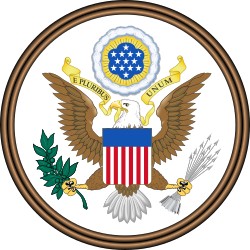
Let’s not mince words: America is alarmingly polarized and divided. Unfortunately, this goes beyond parties, candidates and viewpoints. It has escalated to the point of disliking, mistrusting and being unwilling to work with or even listen to those who share different ideas. Sadly, the situation is getting worse. This is not the nation of our parents and grandparents. They would be disappointed in us. For 249 years we have had a proud tradition of being able to put aside whatever differences we had in the interest of a stronger America. Love of country topped all other affiliations, ideologies and interests. Our country’s greatness has never strayed from our inspiring motto: E pluribus unum, a Latin phrase meaning "Out of many, one." It is based on a cohesive single nation formed by 13 smaller colonies joining together. The U.S. Mint decided to use the phrase on many silver and gold coins.
That’s why it’s so important to pause and reflect on those in our community who share the gifts of time, talent and treasure in the form of philanthropy, which has the uplifting power to unite the American people. Non-profit organizations provide a beautiful model for bringing together people from diverse backgrounds and with different viewpoints for the common good. See our EIN Presswire news release for more on this compelling subject.
| | |
The State of the Nonprofit Sector Survey — Nonprofit Finance Fund’s 10th — collects data about US non-profits’ health, including their collective challenges, successes, and the required investments to continue enriching millions of lives, and transforms this data into an accessible, evidence-based illustration of the sector’s current landscape and needs.
In the 2025 survey, 2,206 organizations shared what 2024 looked like, and what they’re bracing for in the future. Some of the findings echo long-standing challenges, like rising demand and the toll of doing underfunded work year after year. But also new and urgent concerns are shared: costs are climbing faster than funding, and many are worried about what happens if government support continues to decline. Highlights include:
- 85% of respondents expect service demand to increase in 2025.
- 36% ended 2024 with an operating deficit, the highest in 10 years of NFF’s survey data.
- 86% said high costs due to inflation have impacted their organizations and clients.
- Over half (52%) have 3 months or less cash on hand, and 18% have one month or less cash on hand.
- 84% of respondents with government funding expect cuts to that funding.
| | Non-Profits Don't Just Mirror But Lead Society | | |
Eskin Fundraising Training proudly preaches that doing the right thing is always doing the smart thing, too. The non-profit sector is the most equal of equal opportunity champions: Our workforce of 13 million paid employees and nearly 80 million unpaid employees (indispensable volunteers) contribute passionately to noble missions, with non-profits not caring about their race, gender, generation, religion, sexual orientation, pronoun, physical capability or other socio-economic factors. In short, the philanthropic ecosystem understands that we don’t have an American to waste. And despite the political winds, we recognize that we can and need to do better. The report, Blocking the Backlash: The Positive Impact of DEI in Non-Profit Organizations highlights four main findings:
-
DEI efforts increased between 2019 and 2022. A larger share of respondents (83%) reported that their organizations engaged in DEI initiatives in 2022, compared to the 2019 survey (74%). White-run organizations had the largest increase in DEI engagement. Respondents reported training as the most common DEI strategy organizations used in both 2019 and 2022, and it had the largest growth between the two survey periods.
- BIPOC respondents give DEI strategies higher ratings of effectiveness more often than white respondents. A new question asked respondents to rate the effectiveness of each of the DEI strategies in their non-profit workplaces. Of the 10 possible DEI strategies organizations employed, significantly higher percentages of BIPOC respondents than white survey takers rated half of those strategies as extremely or very effective. There was only one DEI strategy — pursue pay equity in compensation — that a considerably higher percentage of whites rated as extremely or very effective.
- Respondents are most positive about the workplace when their organizations employed five or more DEI strategies. Both BIPOC and white respondents rated their work experience highest on several key measures (for example retention and voice) when their organizations had implemented five or more DEI strategies. In organizations that had no DEI activities, white respondents rated the workplace considerably higher than respondents of color and even higher than white respondents in organizations that employed one to four DEI strategies.
- DEI initiatives don’t equal racial equity. Despite many positive indications, the effects of DEI were ambiguous when examining structural issues in the non-profit sector. Respondents of color reported that their race had negatively impacted their career advancement at similar rates regardless of the DEI efforts of their non-profit workplaces. At the same time, white respondents working at organizations that implemented more DEI strategies demonstrated more awareness of white racial privilege.
| | Keep Fundraisers Fundraising | | |
Unfortunately, it wasn’t surprising to discover in the Center for Effective Philanthropy 2025 report, non-profit leaders spotlighted among the top three challenges they are facing is staff burnout, especially among resource development professionals. Nearly 90% of leaders report some level of concern about their own burnout. This percentage remains essentially unchanged from 2024. A similar percentage note that burnout is affecting their staff. Replacing high performing fundraisers is not only costly and time consuming but it drains non-profits of precious “trust capital” in which development officers have learned the stories, personalities, motivations and priorities of donors, especially major gift donors. Read our article featured in Boomerang titled, "10 Things Nonprofit Leaders Can Do To Retain Fundraisers."
| | |
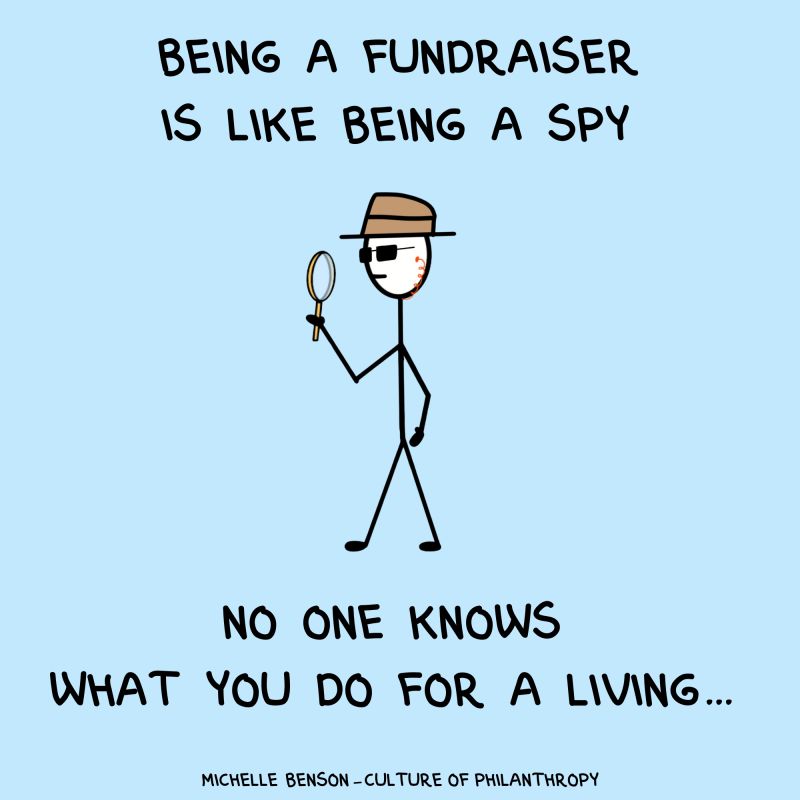
When people ask you what you do, and you respond that you’re a fundraiser, you’ll typically hear responses like: “That sounds like a tough job, I could never ask people for money,” to the other extreme, “I bet it’s fun taking people out to lunch all the time.” The reality is that it is one of the most misunderstood professions in the world. Our wise London friend Michelle Benson, Founder, Culture of Philanthropy, presents this interesting perspective: You know you’re a fundraiser when …
- Your family have no clue what you do.
- Your friends keep asking — what do you do again?
- Your (non-fundraising) colleagues are... full of suggestions on how you can do it better.
Here's our take: A fundraiser, especially a major gift officer, is a concierge for donor prospects. To the ethical extent possible, you resolve issues and concerns relating to your non-profit. You don’t say that’s not my job. Instead, when they raise a concern, you reassure them that if they have a problem, you have a problem until it is worked out. The formula really isn’t that complicated: If you want the donor to love your organization, you love them first. You play the essential facilitator in getting donor prospects to know, like and trust your organization. Do that effectively and consistently and when their values align with the mission of your organization, you are rewarded with gifts of time, talent and treasure.
| | |
What do you find the most challenging element of the resource development continuum that starts with “nice to meet you” and concludes with “thank you for your gift”?
According to those surveyed in the first Langley Innovations and Donor Participation Project State of the Development Profession Survey — it is "getting the first meeting." No other challenge comes close to it. The finding is all the more mysterious because the majority of those surveyed expressed confidence in their ability and overall level of training, felt as if their fundraising materials were effective, and thought their performance metrics were fair. That’s why we always emphasize that all staff, board members, volunteers and other members of the non-profit family can contribute hugely to resource development success without ever having to ask for gifts themselves. This starts with introducing contacts within their professional, personal and civic networks to the mission of the non-profit. Staff and board members can take it from there in the discovery cultivation, solicitation and stewardship phases. But it all depends on initiating a warm introduction. Diving deeper into survey findings reveals:
(1) Realistic Goals, Unclear Expectations: While 60% of respondents feel their fundraising goals are realistic, a quarter report unclear performance expectations. This disconnect suggests a need for better communication and alignment between leadership and fundraising teams.
(2) Metrics Misalignment: There's a strong sentiment (52% of respondents) that total dollars raised is overemphasized as a performance metric. This indicates a desire for more nuanced evaluation that considers qualitative aspects of donor relationships.
(3) Short-term vs. Long-term Balance: 44% of respondents feel their organizations don't balance short-term fundraising needs with long-term relationship building well. This highlights a critical tension in the industry between immediate results and sustainable growth.
(4) Communication Challenges: While 56% believe their fundraising materials effectively communicate mission and impact, the top area identified for improvement is demonstrating impact (56% of respondents). This paradox suggests a gap between perceived and actual effectiveness of communications.
(5) Prospect Engagement Hurdles: Getting the first meeting is the biggest challenge for 53% of fundraisers. Coupled with low response rates to initial outreach (41% report 0-20% positive response), this indicates a need for innovative engagement strategies.
(6) Skills Development: Relationship building emerged as both the strongest skill (32% of respondents) and the most crucial skill for fundraisers (37%). However, data analysis was identified as the area needing most improvement (21%), highlighting a growing recognition of data's importance in modern fundraising.
(7) Personal Giving Insights: For fundraisers' own giving experiences, personal connection to the cause was overwhelmingly the most memorable factor (39%). This underscores the importance of emotional engagement in fundraising strategies.
| | Government Grants Are Available | |
 | | There’s been an abundance of attention given recently about government funding drying up for non-profits and their admirable good works. For sure, prospects to obtain government funding have become more challenging. But make no mistake, by working hard and working smart, even government funding is very attainable. We recently sat down with our go-to expert on grantsmanship — Mary Yearwood, CFRE, Founder, Benevolence Tribe Consulting — for a fascinating question and answer conversation on challenges and opportunities securing both government and private grants. We admire Mary’s work because she consistently delivers high-impact positive results, and her impeccable track record includes successfully securing over $125 million in grant funding and over $300 million in government contracts. The success rate of submissions to funding is a resounding 47%. Available on a hybrid basis, she delivers value, truth telling and results to non-profits of all different sizes, missions and parts of the country. Our sincere gratitude to Inside Charity for featuring an article titled, Winning Grants in 2025, on our conversation.
| |
| | | We enjoy highlighting the inspiring story of American philanthropy — a vast annual $557 billion (soon to be updated) enterprise or more than $1.5 billion per day. But philanthropy is a robust movement embraced around the world. The 2025 Global Philanthropy Environment Index (GPEI), a new research study assessing the enabling environment for philanthropy in 95 countries and economies, released by the Indiana University Lilly Family School of Philanthropy. As the leading tool for understanding global philanthropic conditions, the GPEI provides crucial insights into the incentives and barriers faced by philanthropic organizations and donors worldwide. Overall, the GPEI report underscores the complex interplay of factors shaping the philanthropic environment globally. While favorable conditions exist in many regions, challenges remain, requiring flexibility and collaboration so that philanthropy can effectively address global priorities. The insights and recommendations provided aim to inform and assist policymakers, philanthropic leaders, and practitioners in fostering a more supportive environment for philanthropy worldwide. Key findings:
-
Generosity Remains Universal: Despite global challenges, the sociocultural factor of giving remains strong, highlighting that generosity is a shared human trait across cultures, societies, and countries. About 60% of assessed countries have favorable philanthropic environments.
- Regional Variations and Emerging Trends: Western Europe leads with favorable conditions driven by economic growth and digital innovation, while regions like the Caribbean face challenges. The pandemic has catalyzed digital adaptations and climate philanthropy, backed by increased government support for private sector involvement.
- Resource for Policy- and Decision-Makers: The findings provide a robust framework for policymakers and leaders in philanthropy, the private sector and beyond around the world, offering opportunities for strategic improvements that tie into the broader geopolitical context.
| | The Frugal Philanthropist | |
| | | A dollar saved is a dollar earned and is another dollar that can be shared for philanthropic purposes. Mitzi Perdue is a prolific author, writer, speaker, journalist (often addressing leadership issues) and most importantly, philanthropist. If we can keep pace, she has authored 27 books and written more than 277 articles. Her current top priority is the Healing Hidden Wounds initiative dedicated to imparting strategies that have proven effective for those who have previously confronted traumas, focusing on estimated 15 million Ukrainians who are grappling with mental health challenges resulting from the ongoing war. As an indefatigable war correspondent, Mitzi has visited Ukraine four times as the guest of the Kyiv Region Police. Many of her interviews were conducted in bomb shelters while the cities she was visiting were under active attack. In December 2022, she auctioned her Atocha emerald engagement ring for $1.2 million, with all the proceeds going to benefit Ukraine. She’s returning to the Ukraine this summer. We had the joy of meeting several decades ago when our respective hair colors were different and the greater joy of reconnecting in the last year. I never knew how wealthy she was. She is the double-heiress of Sheraton hotels and Perdue Farms, but she is more than content leading a modest lifestyle. She grew up wearing hand-me-downs and getting a public education. She’s quick to draw her purse strings by flying economy, riding the subway, and living in a modest apartment — despite sitting on a fortune in the billions the 84-year-old journalist and philanthropist says it helps her understand “the real world.” And as a self-proclaimed “low-maintenance badass” frequently visiting New York City, she rides the subway instead of booking Ubers. Perdue also gets her shoes reupholstered, rather than buying new pairs; and designer outfits are shrugged off, as she doesn’t like flashing her wealth.
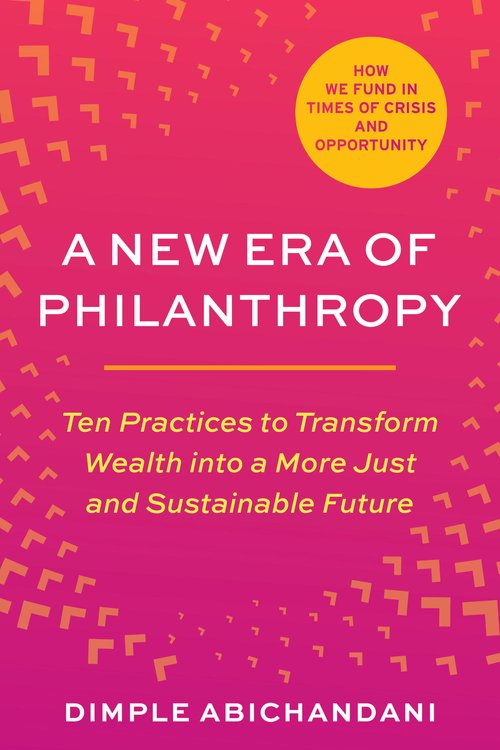
| | On Bookshelf: A New Era of Philanthropy | |
| | | A blueprint for how wealth can be transformed into a more just and sustainable future in times of rapid change and crisis. On the cusp of the greatest wealth transfer in history — with $84 trillion dollars moving between generations in the next 20 years — this book explores how philanthropy can be transformative and transformed. Can philanthropy be an anti-racist, feminist, relational, and joyful expression of solidarity? This book argues that it not only can be—for the future we seek, and for philanthropy to achieve its greatest impact, it must be. Nationally recognized philanthropic leader Dimple Abichandani revolutionizes the precepts of modern philanthropy. Offering 10 provocative practice shifts, A New Era of Philanthropy engages readers with fresh answers to the question of how philanthropy can meet this high-stakes moment—from reimagining governance to aligning investments to crisis funding and beyond. Abichandani highlights paradigm shifts that model the way forward, moving beyond critique into real transformation, with relatable stories about funders who are forging a new era of philanthropy. A New Era of Philanthropy picks up where key books like Decolonizing Wealth and Winners Take All leave off, offering a guide for donors, foundations, and non-profit leaders navigating philanthropy in urgent times. Clear-eyed, hopeful, and responsive to the moment, this book helps us reimagine the purpose and norms of modern philanthropy. It is an invitation to all of us who believe these resources can contribute to a more just future.
| |
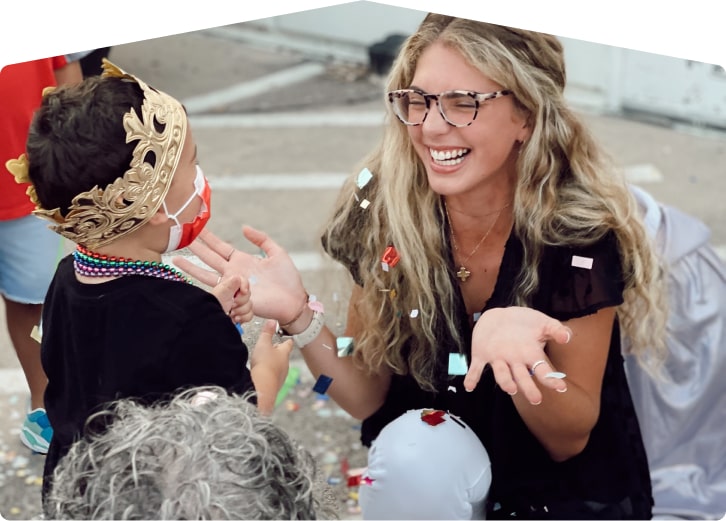
| | | The non-profit sector is full of unsung heroes who in their own amazing ways make the impossible possible. When it comes to courage, fortitude and gumption, Leia T. Hunt from McKinney, Texas leaves us speechless. As a two-time childhood cancer survivor, after six rounds of chemo and 26 surgeries and loss of her left eye she discovered her life’s calling and founded Leia’s Kids at age 18 to walk with families through one of life’s most difficult journeys — providing emergency financial relief, advocacy, mental health, retreats, Christmas dinners, and unforgettable family celebrations. Her relentless leadership to the mission provides direct, compassionate support to children and families battling pediatric cancer in all 50 states. At Leia’s Kids, every child deserves to be seen, celebrated, and supported — not just during treatment, but through every stage of their journey. She likes to describe their hands-on deeply personal approach as boots on the ground. Watch her inspirational TEDx Talk from 2022 (by the way her already marvelous presentation skills are improving all the time).
| | Quiz: Corporate Reputation Rankings | | |
Since 2019, Axios and Harris Poll have partnered on a survey to gauge the reputation of the most visible brands in America, based on 20 years of research. Value is the story this year: Nearly half (46%) of all corporate reputations declined than improved (37%), as consumers criticized businesses for passing along higher costs, delivering poorer perceived quality for their stretched dollars, and even capitalizing on tariffs to pad profit margins. Themes of value, quality and allyship emerge across the best ranked companies. Match the following top finishers with their respective scores to answer this question. Answers are shown at the bottom of the page.
1. Costco a. 79.6
2. John Deere b. 80
3. Microsoft c. 80.6
4. Trader Joe's d. 80.7
5. UPS e. 82.1
| | |
|
Jim Eskin
Founder
Cell: 210-415-3748
jeskin@aol.com
| | |
Stratagems is published monthly by Jim Eskin, Founder of Eskin Fundraising Training, LLC. We offer workshops, webinars and customized training sessions for board members, staff and volunteers of non-profit organizations of all kinds and sizes. For details about our services and information, or to find out how to schedule a training session for your organization, visit our website. Follow our events on Facebook, and read more articles about philanthropy on our LinkedIn page.
TO ORDER A COPY OF JIM ESKIN'S NEW BOOK, HOW TO SCORE YOUR FIRST OR NEXT MILLION-DOLLAR BOOK CLICK HERE.
| | ANSWERS TO THIS MONTH'S QUIZ: 1=c 2=a, 3=d, 4=e, 5=b | | | | |