- Growing Resilience: Hedgerows Take Root on Local Working Lands
- Staff Participates in National Bike Month Challenge
- Beneath the Surface: A Well Facilitation Snapshot
- North Bay Forest Improvement Program: Supporting Healthier, More Resilient Forests
- Invasive Species Workshop: A Recap
- Learning from Local Partners: A Visit to Warm Springs Hatchery
- Local Working Group, Rangeland Soil Health Workshop, and a new resource on Soil Testing
| | | | |
Growing Resilience: Hedgerows Take Root on Local Working Lands
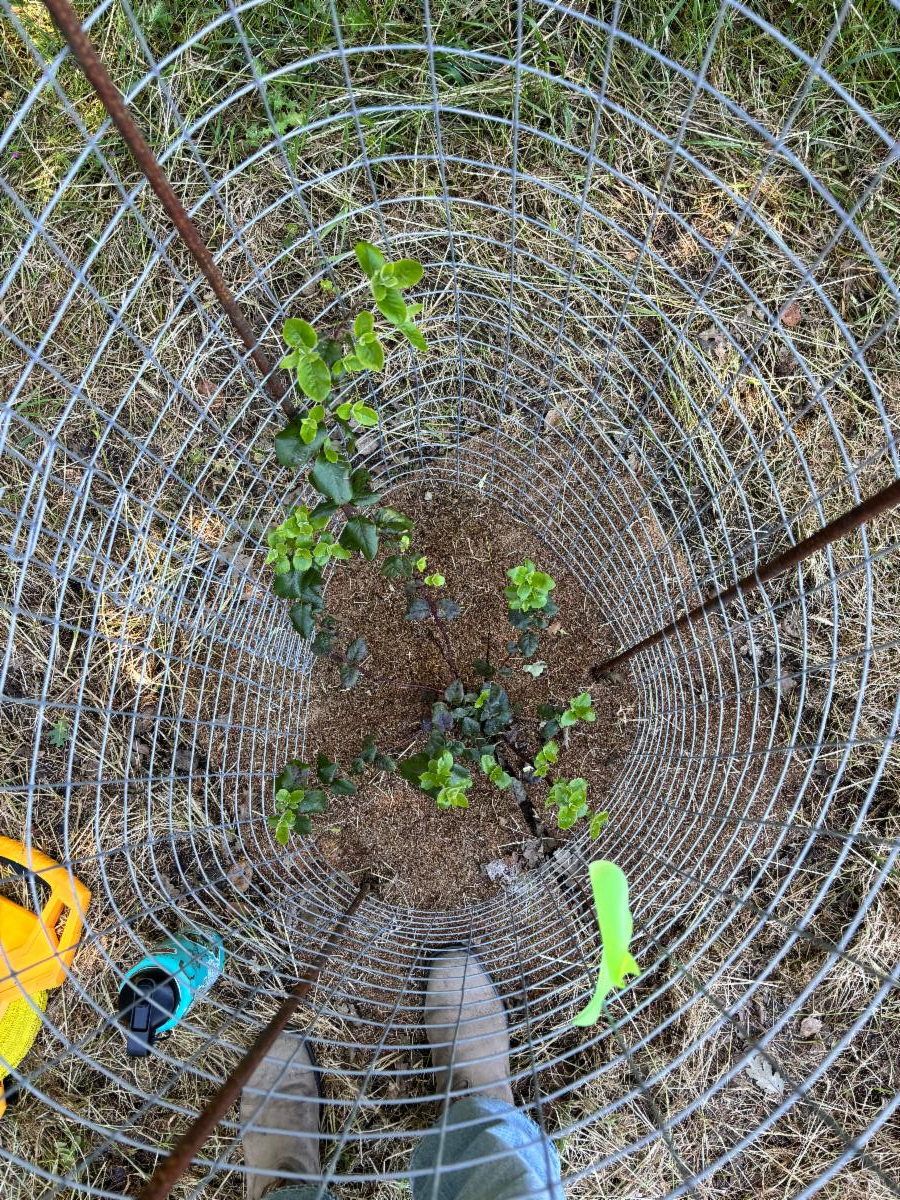
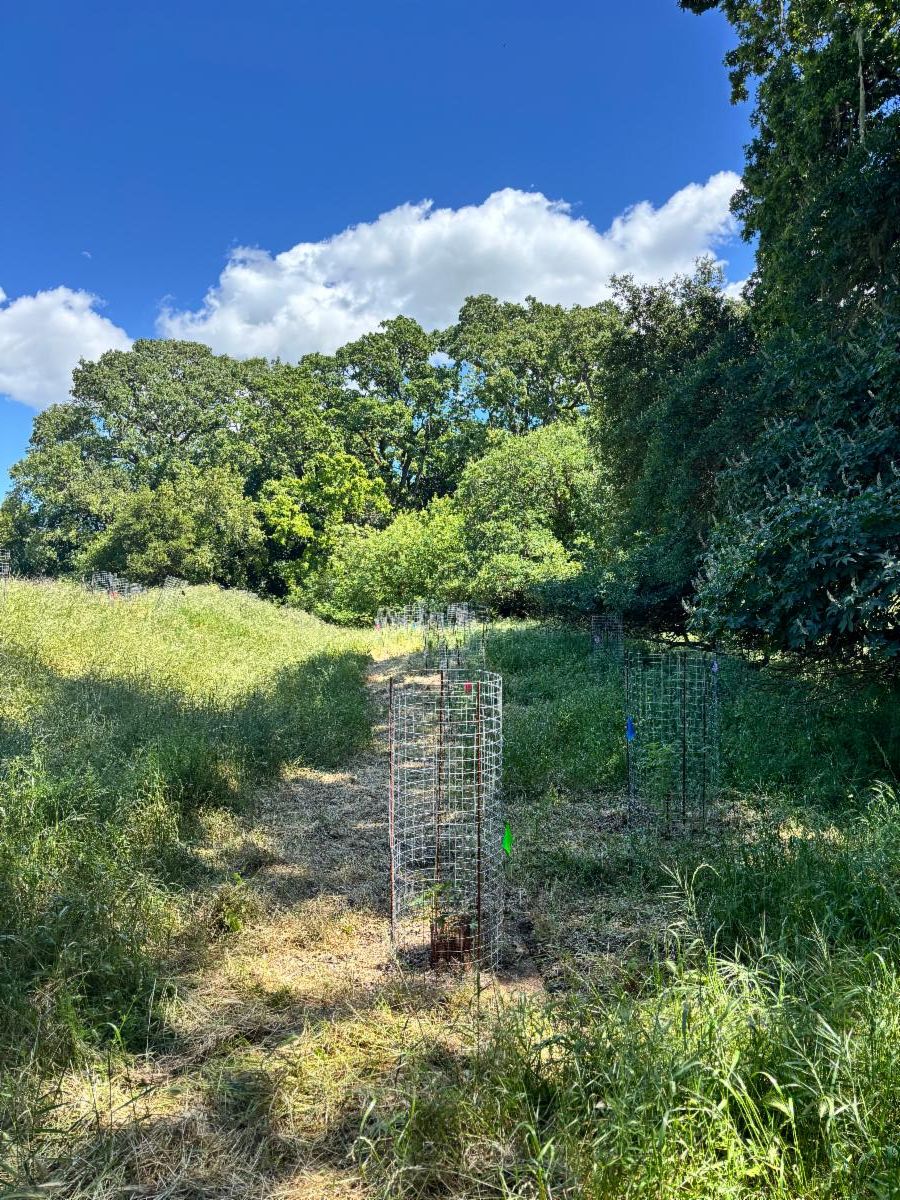
Our Agriculture Team focuses on supporting the businesses of local farmers and ranchers while strengthening the resilience of our natural resources. One way they have been doing this over the past three years is through the creation of hedgerows on local working lands. A hedgerow is a collection of plants, often planted in a line, that typically consists of small- to full-size native shrubs with other smaller plants and groundcover in between. Some even include native trees. They provide habitat for native species, improve groundwater infiltration, reduce erosion, and act as a natural windbreak.
Our Ag Team has led the planning, design, and implementation of these hedgerows, including completing much of the planting themselves. However, at the Eames Ranch in Petaluma, they received some significant help from local grade school students through Point Blue’s STRAW Program. In total, 170 students from four schools planted over 110 plants!
Our work doesn’t stop once the plants are in the ground. After installation, our team photomonitors the hedgerows for the next few years to track their growth and establishment. Photomonitoring is the practice of taking specific photographs at the same location over time to document conditions and changes. This process helps identify which species are thriving and which may need additional extra care and support. Over time, this visual data will help track progress and demonstrate how small actions can create meaningful, long-term growth!
| | | | |
Staff Participates in National Bike Month Challenge
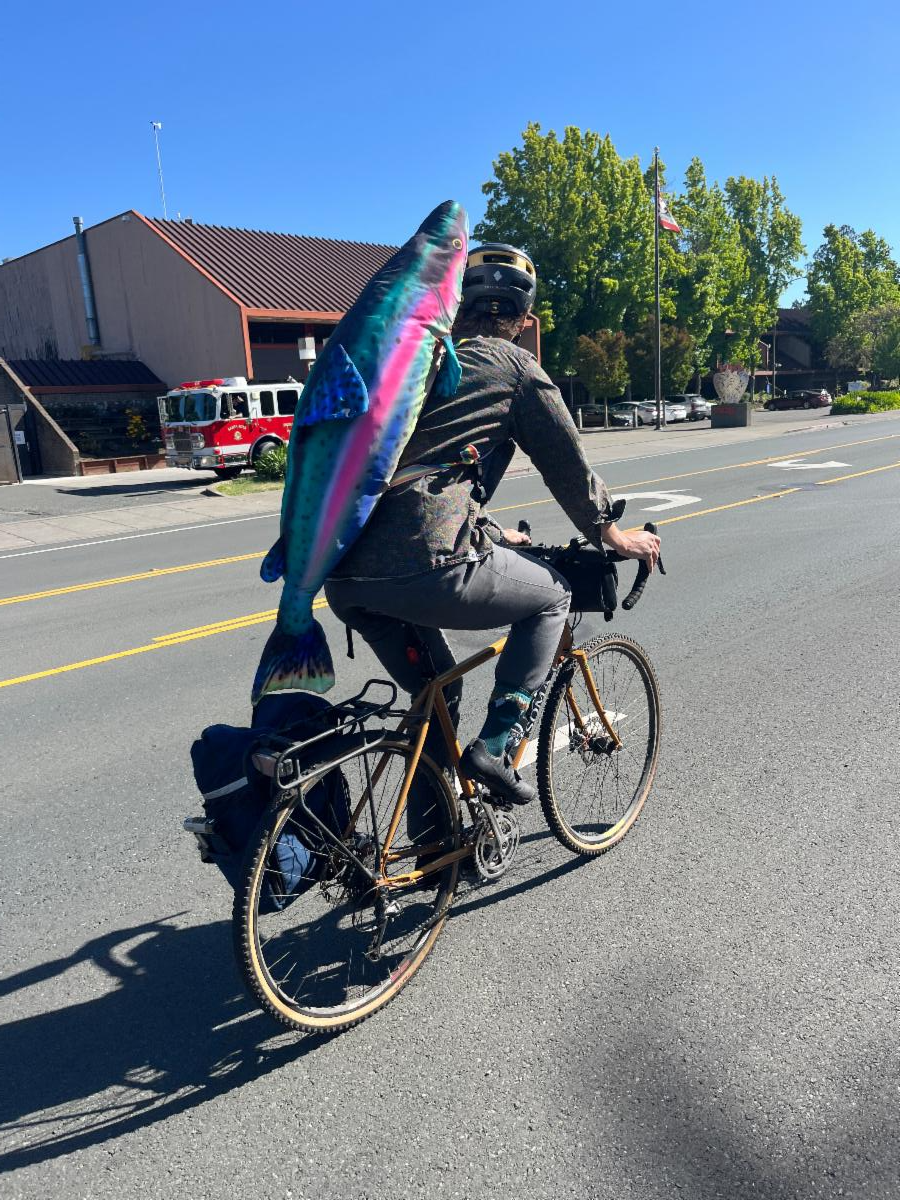
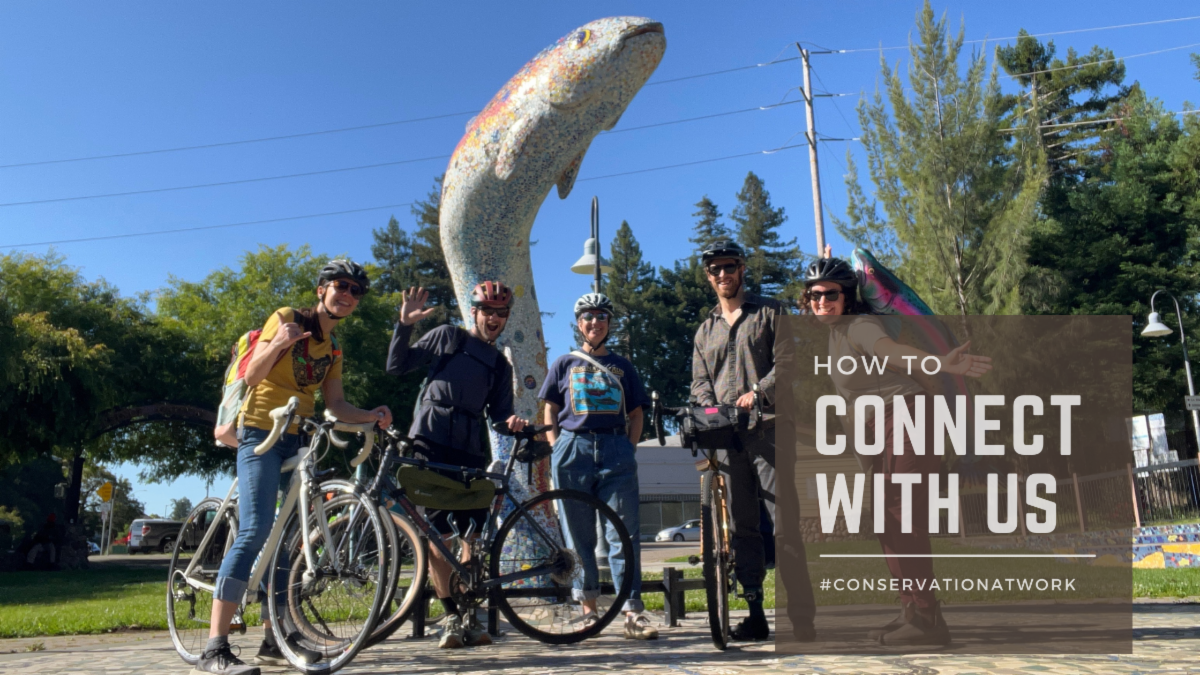
May was National Bike Month, as celebrated by the League of American Bicyclists, and Sonoma RCD staff were excited to participate once again. One of the highlights was National Bike to Work Day, when staff joined fellow cyclists in downtown Santa Rosa for a team ride to the office.
Now becoming an annual tradition, Sonoma RCD also challenged Gold Ridge RCD to a friendly competition throughout May, with bragging rights awarded in several biking categories. Seven Sonoma RCD staff and three Gold Ridge RCD staff participated, with team awards calculated on a per-person basis. Sonoma RCD took home the award for Most Trips per Person, averaging 20 trips per participant, while Gold Ridge RCD earned Most Miles per Person, averaging 133 miles per participant!
| | | | |
Beneath the Surface: A Well Facilitation Snapshot
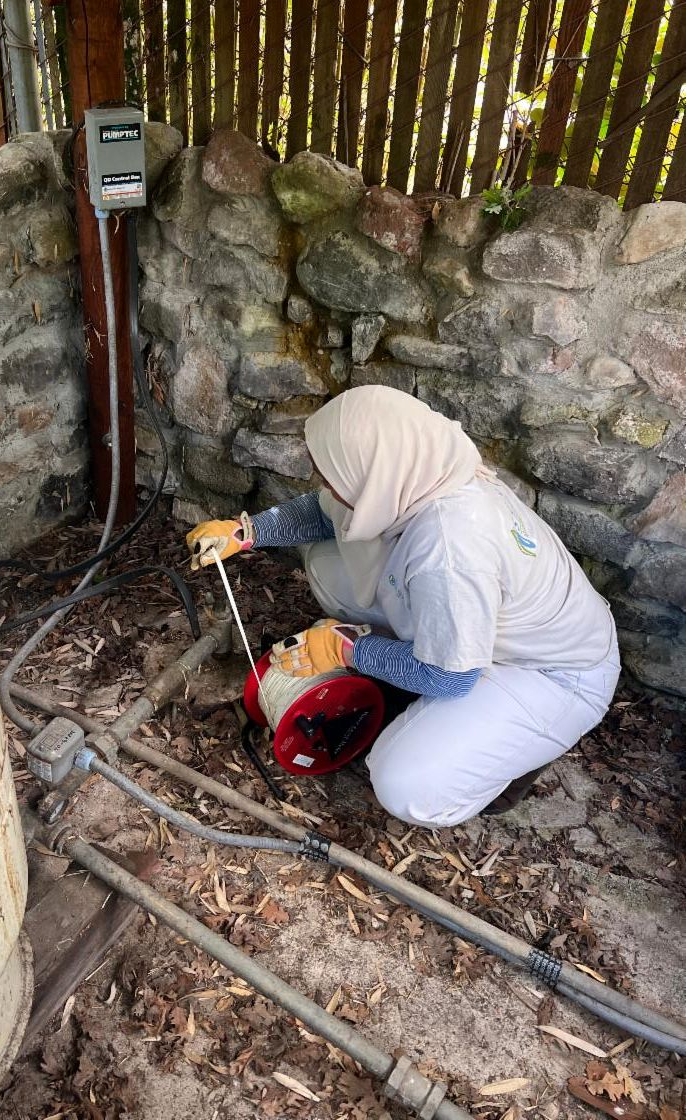
Over the past two and a half years, Project Manager Fatima Burhan has been diligently working beneath the surface, ensuring the prioritization of tracking Sonoma County’s varying basin levels for overall understanding of our water levels. Each April, following the rainy season, and each October, following the dry season, Fatima conducts groundwater level measurements in rural and residential areas. Under four ongoing contracts, Sonoma RCD seasonally monitors a total of 60 wells to help fill groundwater data gaps, improve understanding of basin conditions, and analyze seasonal and climate-driven fluctuations in groundwater levels.
Fatima’s favorite part of conducting well measurements is building relationships with landowners, some of whom have participated in these monitoring programs for more than 15 years. “It’s rewarding to better understand how people value this unseen resource. Landowners are always excited to see the work happening firsthand, and it helps build strong relationships between technical assistance providers and the communities we serve.”
| | | | |
North Bay Forest Improvement Program: Supporting Healthier, More Resilient Forests
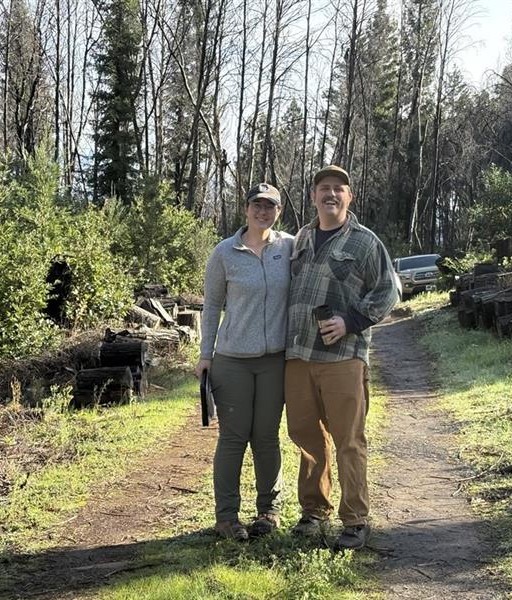
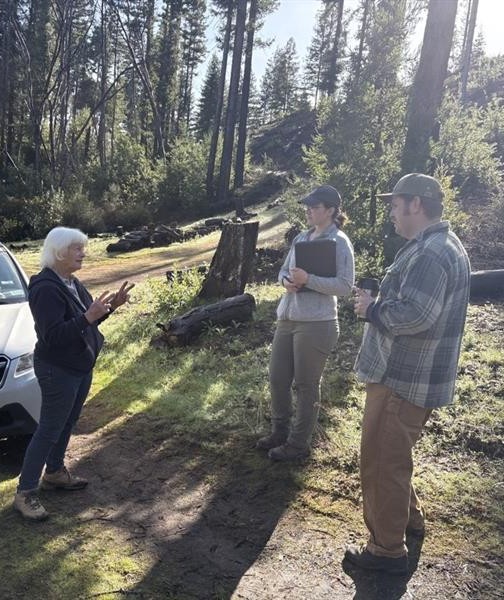
The North Bay Forest Improvement Program (NBFIP) continues to be in high demand for landowners in the county and our region. The program helps landowners in Lake, Sonoma, Mendocino, and Napa Counties fund forest stewardship projects that improve forest health, enhance wildlife habitat, and increase resilience to challenges such as wildfire, drought, and pests. Sonoma RCD’s Forestry Team often supports landowners in creating Forest Management Plans (FMP), a long-term planning document prepared by a Registered Professional Forester (RPF) to guide the stewardship and management of forested properties. Each plan is tailored to the landowner's goals, which may include reducing wildfire risk, improving forest health and resilience, enhancing wildlife habitat, supporting reforestation, expanding recreational opportunities, or achieving other natural resource objectives.
FMPs provide a comprehensive assessment of existing property conditions and include management recommendations based on field evaluations, resource inventories, and current forestry science. Plans typically document soils, geology, roads, hydrologic resources, vegetation communities, wildlife habitat, forest conditions, and property history, with recommended treatments designed to meet the landowner's specific objectives.
Most FMPs guide management activities over approximately 10 years, although the planning horizon varies by property and management goals. Beyond serving as valuable planning tools, FMPs can also help landowners access grant and cost-share funding opportunities. While a Forest Management Plan is not required to participate in the North Bay Forest Improvement Program (NBFIP), it can strengthen an application by demonstrating that the property has been thoroughly evaluated and that a long-term management strategy supports proposed treatments. Stay tuned for next month’s eNews, where we will highlight implementation projects under the North Bay Forest Improvement Program!
| | | | |
Invasive Species Workshop: A Recap
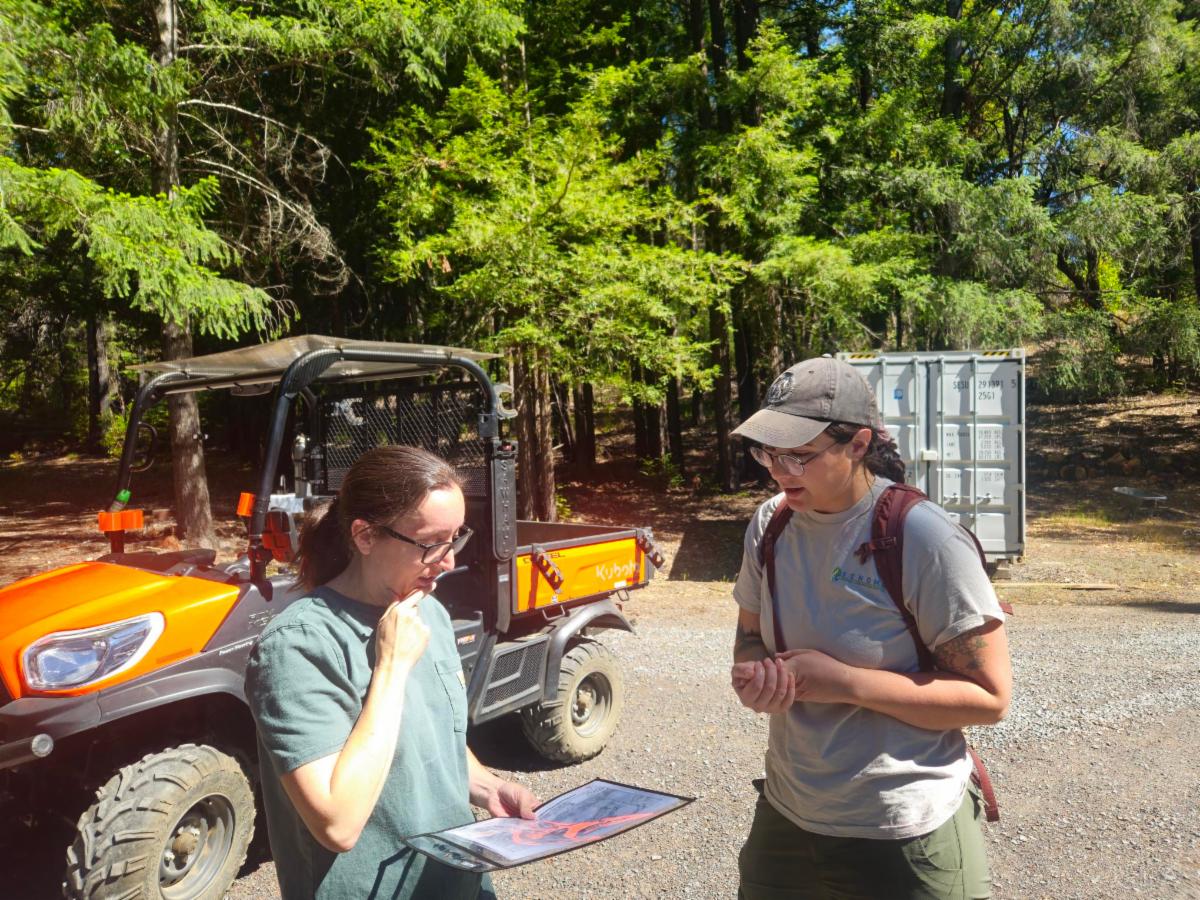
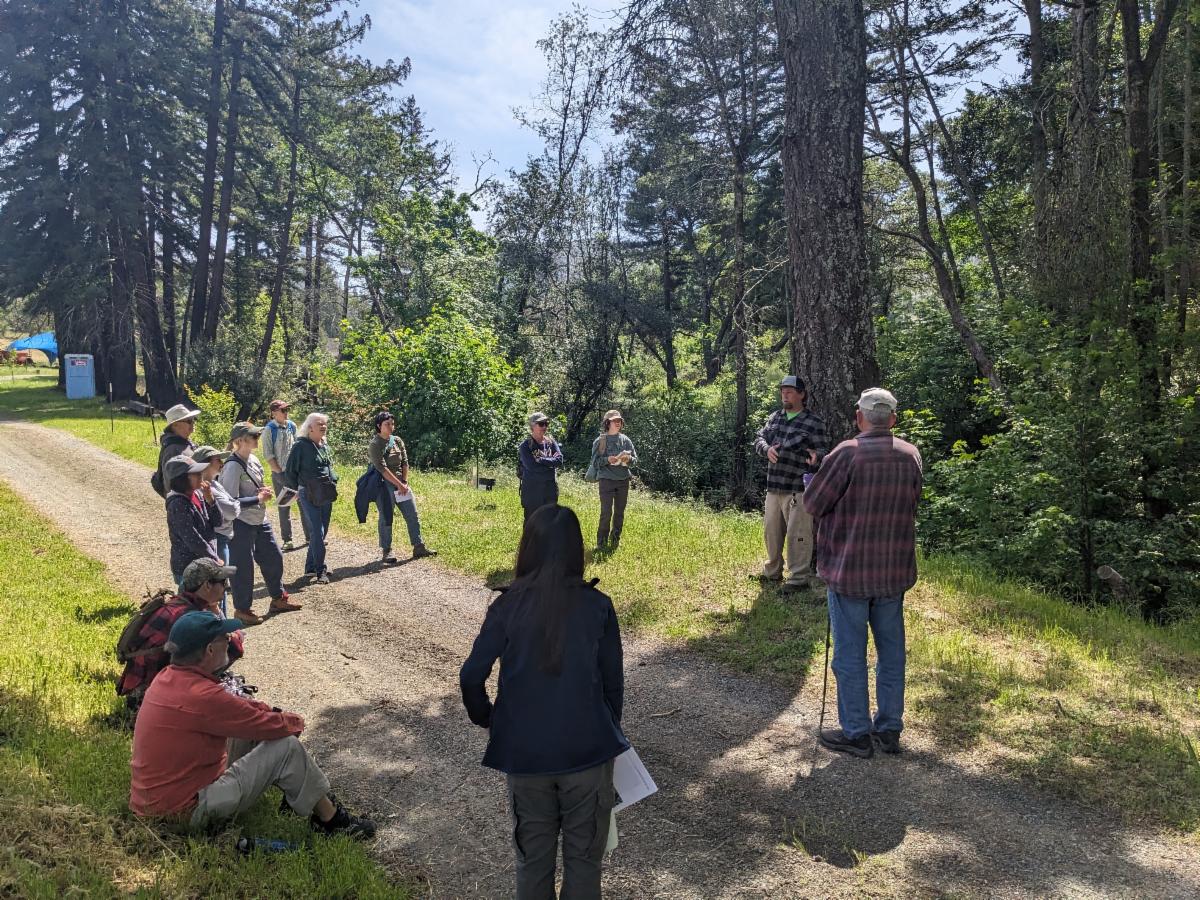
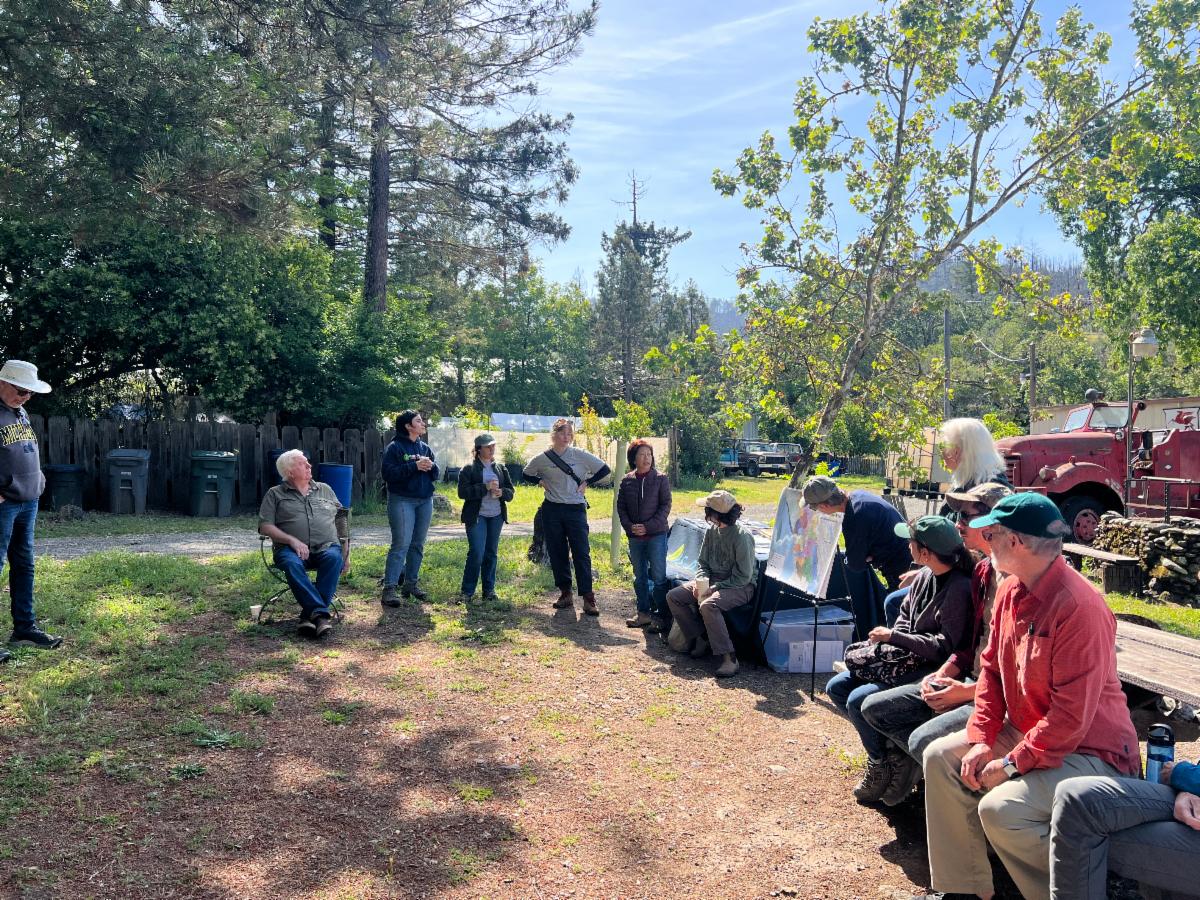
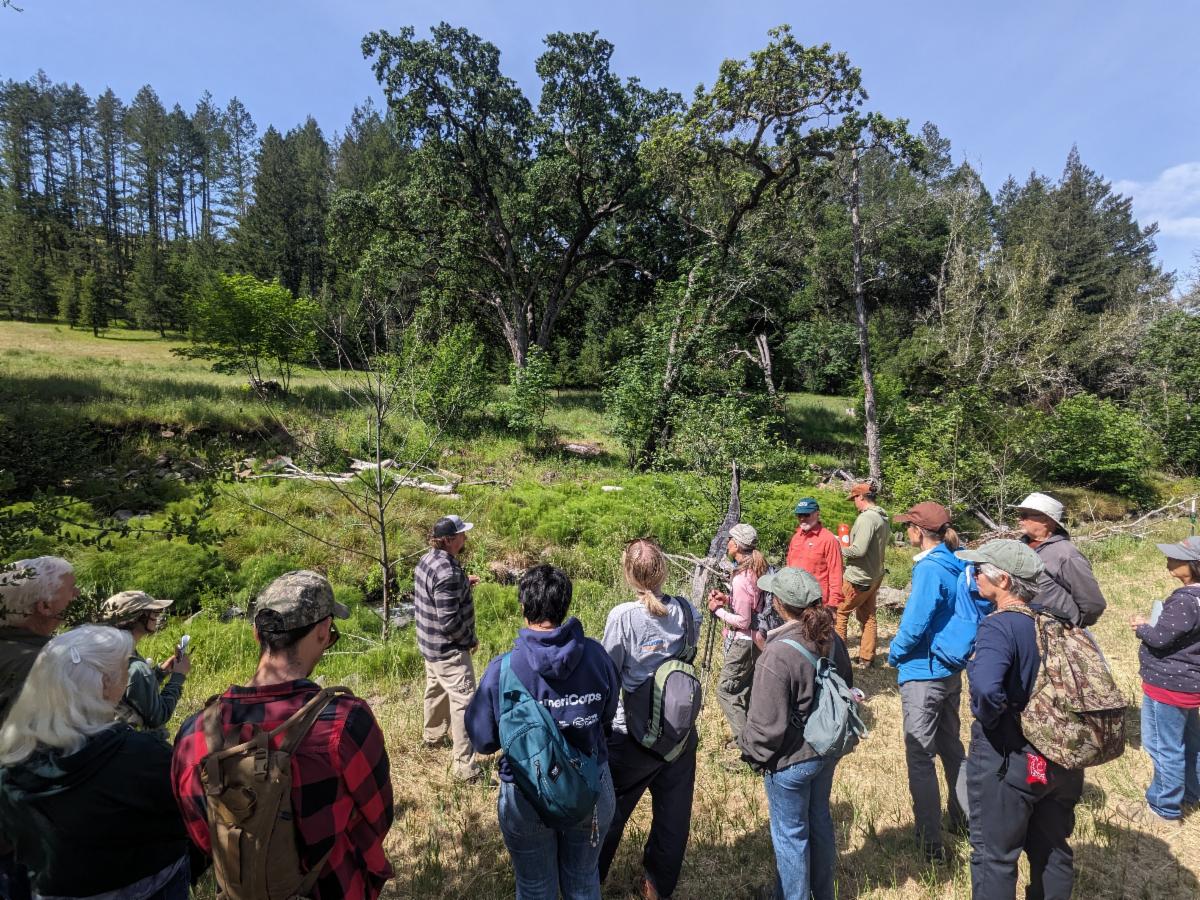
At the end of May, we hosted an Invasive Species Workshop at Rancho Mark West in Santa Rosa in partnership with Jason Mills of EcoLogiCal Solutions and with support from the National Fish and Wildlife Foundation. While the morning started crisp, the group of 20 attendees quickly warmed up as Jason led the participants around the property to explore examples of active invasive species management.
Many attendees were Mark West Creek watershed residents and neighbors of the property. Following a series of severe wildfire events, the watershed has experienced an increase in invasive plant species, prompting the community to work together to support ecosystem recovery and protect the area's biodiversity. Removing invasive plants is especially important in this watershed because of the creek's role in spreading seeds downstream. Preventing invasive species from entering the waterway helps reduce their spread to other landscapes and supports the long-term health of the watershed.
By providing hands-on opportunities like this, we hope to support landowners and community members in feeling more confident managing invasive species on their own properties and throughout the watershed. We are planning on hosting a similar workshop again in 2027. In the meantime, please know that we are happy to provide technical assistance and answer any questions on how to manage invasive species. Reach out to Info@sonomarcd.org to learn more and be connected with one of our team members.
| | | | |
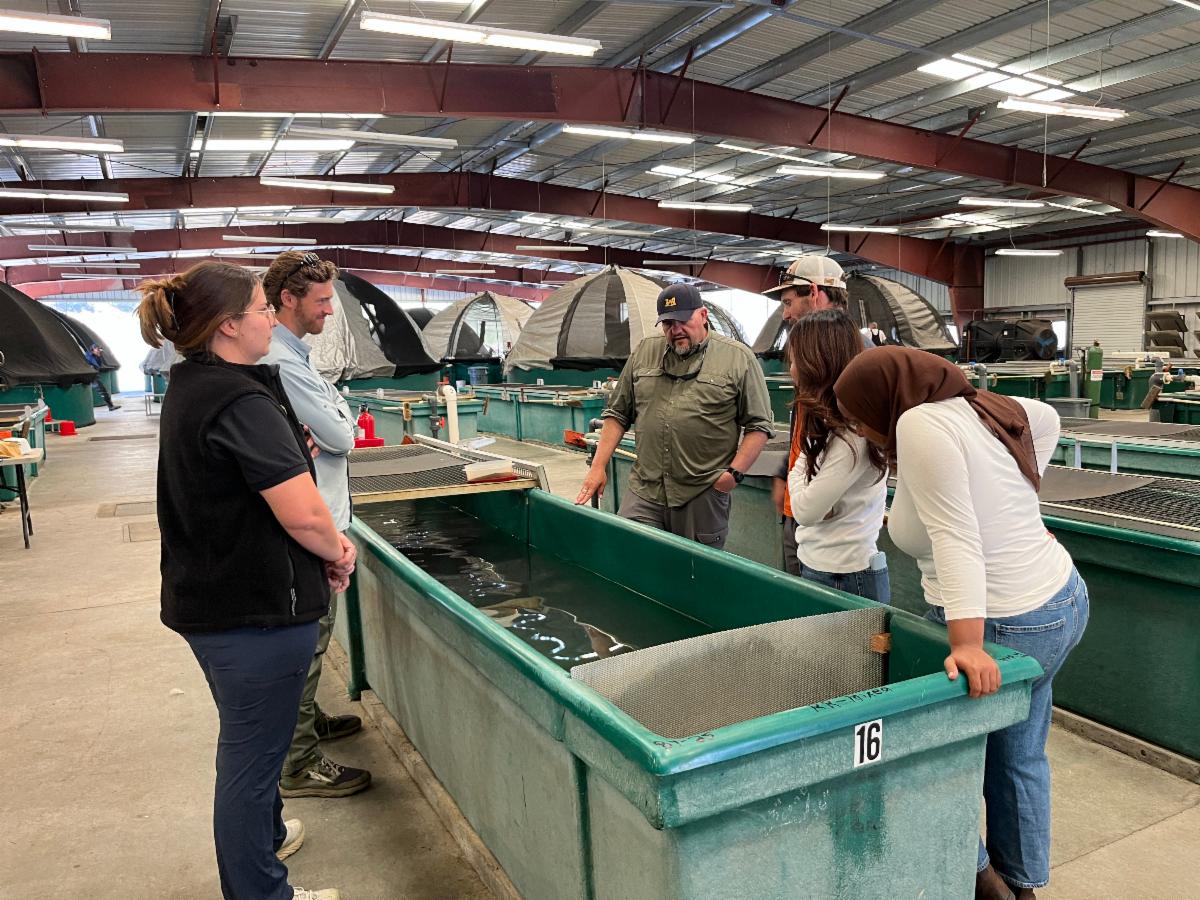
Learning from Local Partners: A Visit to Warm Springs Hatchery
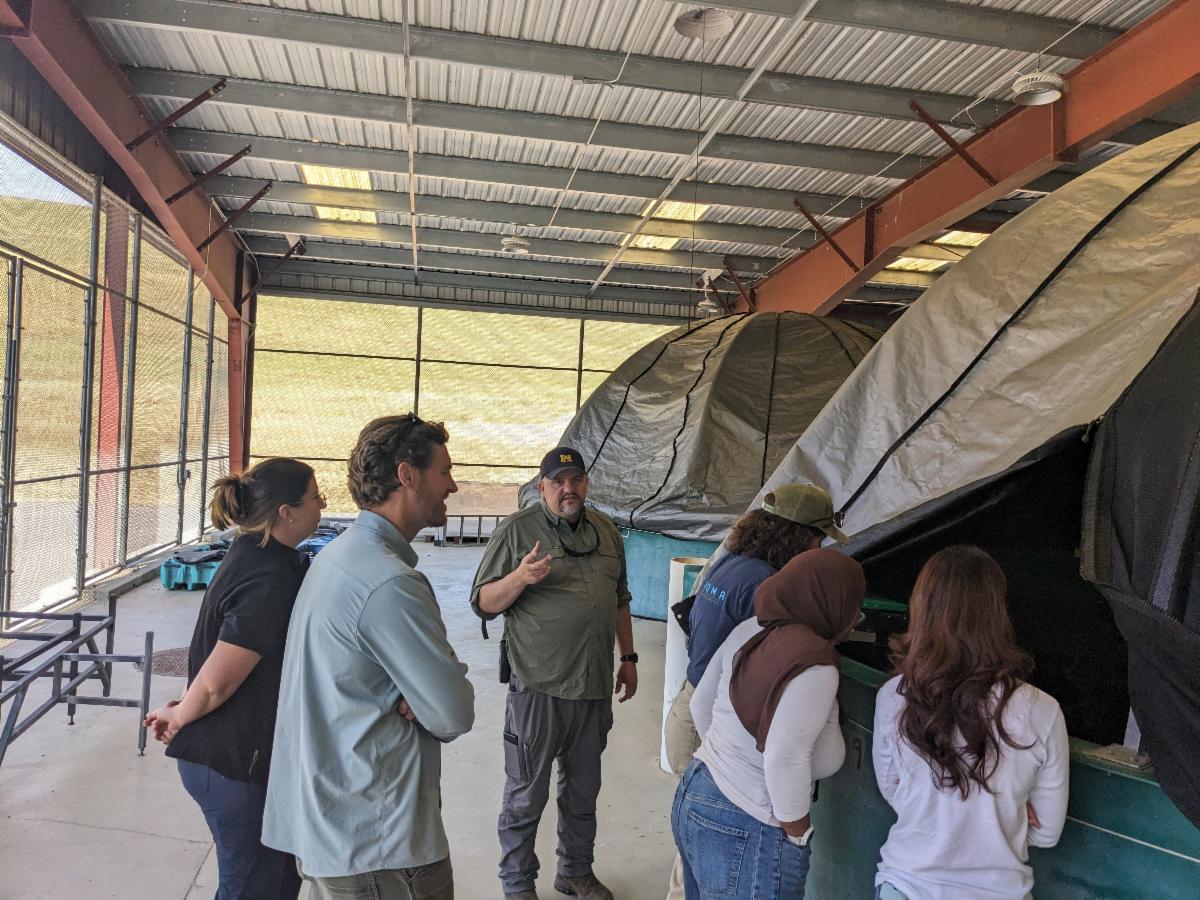
While our staff spends much of their time providing technical assistance to community members across Sonoma County, they also value opportunities to continue learning from local partners and experts. Recently, members of our Water Resources Team went on a behind-the-scenes tour of the Warm Springs Hatchery, managed by the Army Corps of Engineers. With much of our team’s work focusing on restoring and enhancing habitat for native steelhead trout and coho salmon, the visit provided valuable insight into another piece of the recovery effort for the Central California Coast coho salmon, which were listed as endangered in 2005.
During the tour, staff learned how coho salmon are raised at the hatchery and released into the wild, discussed the science behind rearing and release strategies, and gained a deeper understanding of how the hatchery operations complement the habitat restoration efforts across the region – including many of the projects our team leads. Steven Fry, our Watershed Restoration Project Manager, reflected on the visit, sharing that he was inspired by “the incredible and impactful work they are doing for our fisheries and watershed.” He was especially impressed by the hatchery’s commitment to maintaining genetic diversity and its ongoing efforts to support a healthy broodstock population.
| | | | |
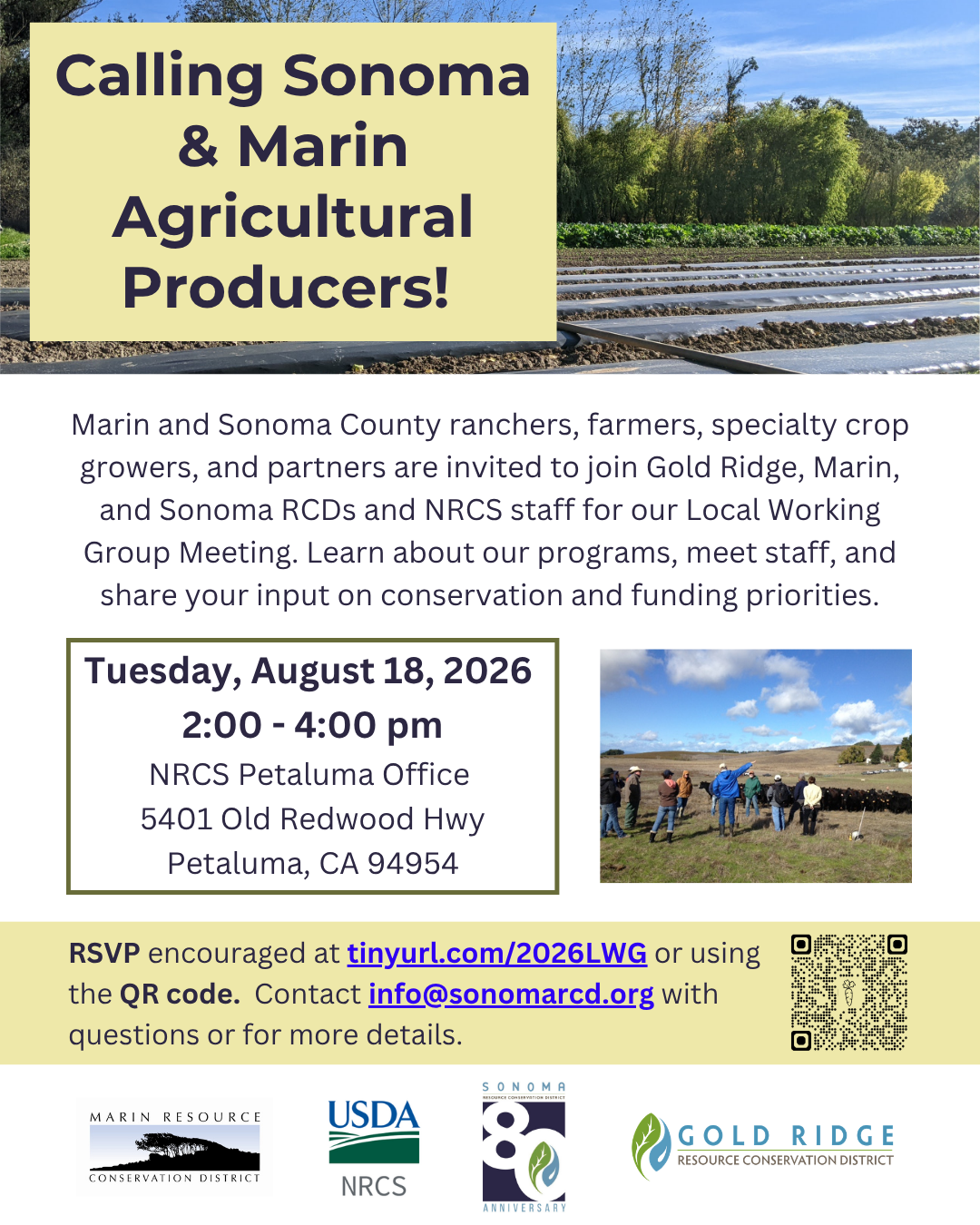
Local Working Group
Tuesday, August 18th
2:00 - 4:00 pm
FREE
NRCS Petaluma Office
Gold Ridge, Marin, and Sonoma RCDs & NRCS
Marin and Sonoma County ranchers, farmers, specialty crop growers, and partners are invited to join Gold Ridge, Marin, and Sonoma RCDs and NRCS staff for our Local Working Group Meeting. Learn about our programs, meet staff, and share your input on conservation and funding priorities.
Contact info@sonomarcd.org with questions or for more details.
| | | | |
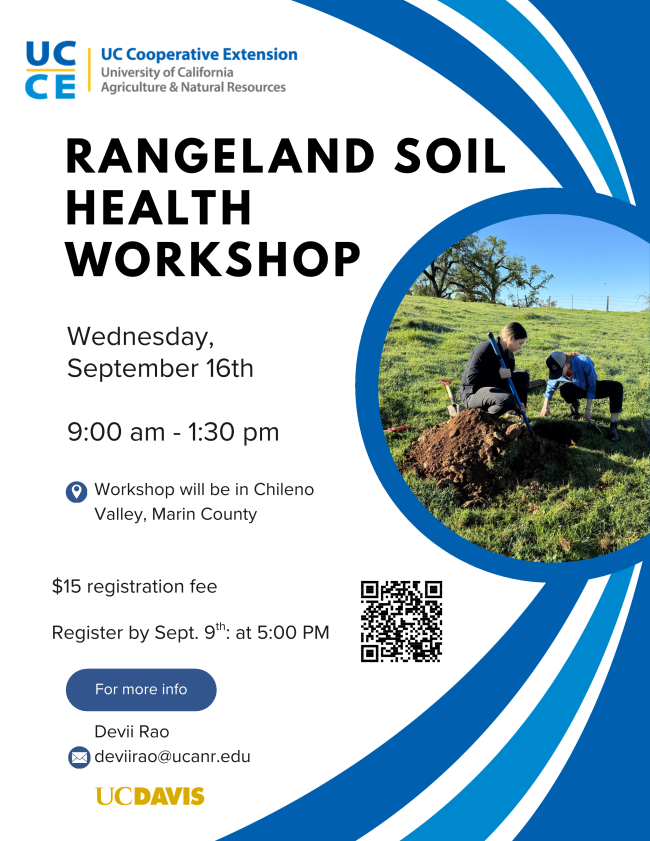
Rangeland Soil Health Workshop
Wednesday, September 16th
9:00 am - 1:30 pm
$15
Chileno Valley, Marin County
UCCE,
Join UC Cooperative Extension for a workshop on rangeland soil health. Attendees will increase their knowledge about the latest science related to rangeland soil health, with a focus on how that science applies to management. Participants will expand their understanding about the effectiveness and value of riparian restoration. Audience members will also increase their knowledge of and ability to access technical service providers who can help them implement soil health practices.
| | | | |
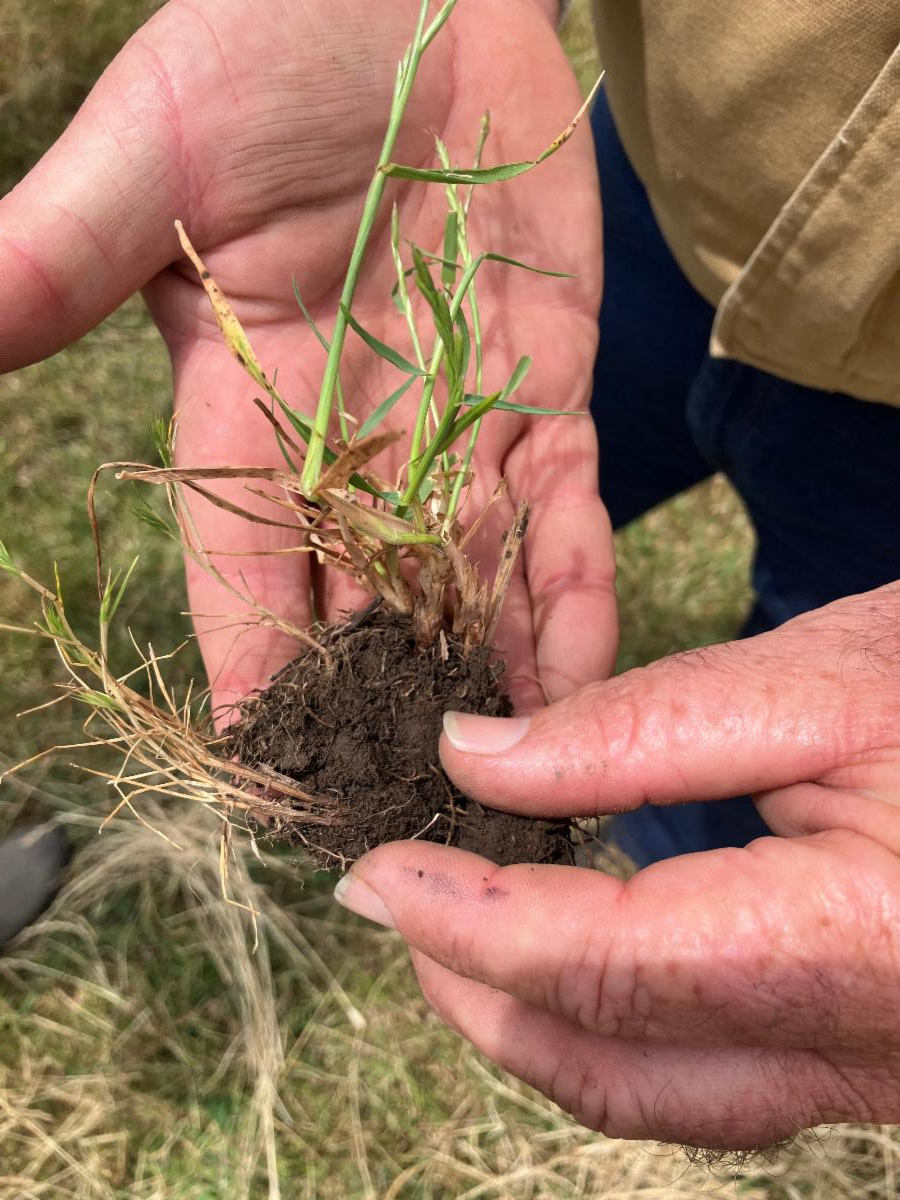
CEMA 216: How to Perform Soil Sampling
The North Coast Soil Hub recently partnered with the Sac Valley Soil Hub to create two short videos on how to perform the CEMA 216 soil sampling for the NRCS Regenerative Agriculture Pilot Program. If you are an awardee of this program or are interested in learning how to perform soil testing, please check out these recordings.
Contact our Brett LeDuc, our Agriculture Project Manager, at bleduc@sonomarcd.org, for any fee-for-service inquiries regarding soil sampling.
| |
Conservation at Work with LandSmart®
| | | | |