Minnesota Composting Council Newsletter - July 2026


Summer Virtual Networking Event Recap


Thank you to all who attended MNCC's Summer Virtual Networking Event on Tuesday, July 21st. Dori Decker presented about Resource Renew's successful multifamily organics recycling program. Meeting attendees shared updates and news from their respective organizations.


The Fall Virtual Networking event will take place in September. Creekside Soil outreach and education coordinator Cassandra Meuffels will speak about the Hutchinson area's recent organics campaign.


Register at this link.

Register as a golfer or sponsor for this year's Kevin Tritz Memorial Fund Golf Tournament.

Not a golfer? You can still donate to the Kevin Tritz Memorial Fund and join MNCC and other composting industry representatives at the Club House for networking.


KTMF donations are dedicated to research that brings sound science ot the composting industry and education that furthers the public's understanding of the positive impacts of using compost.

July MNCC Member Spotlight - City of Hopkins

What does MNCC membership bring to your organization?

MNCC provides support to our small city to expand organics and composting programming and education. Membership has helped us get connected to more organizations and partners and learn from other cities about their programs.


How is your organization connected to the MNCC's mission?

The City of Hopkins established goals through its Hopkins Climate Solutions Plan to mitigate climate change and build community resilience. Our goal to reduce emissions 50% by 2030 is supported by a target to recycle or compost 75% of waste by 2030. Encouraging community participation in organics programs, sharing education, and participating in the MNCC is helping us towards our goals.

What's something exciting or new happening within your organization?

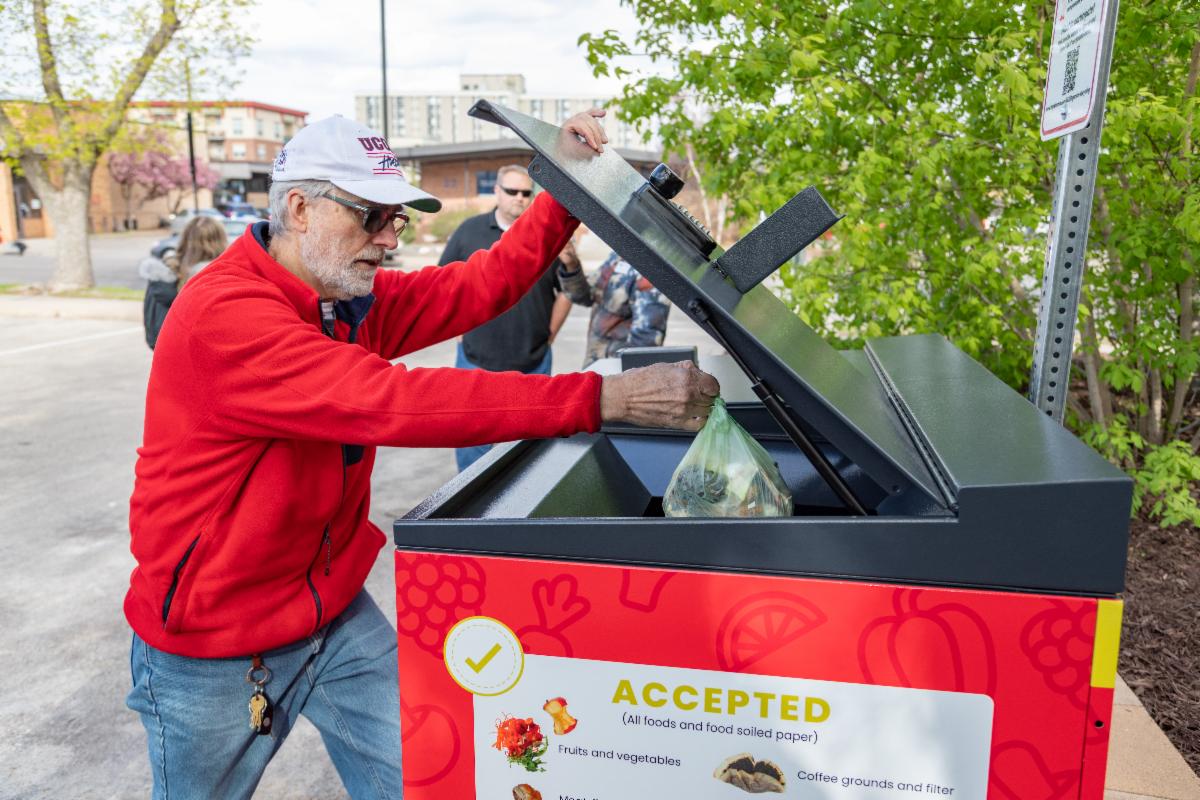
The City of Hopkins opened its first organics drop-off site in May 2026. The site is open to multifamily residents and is made possible with funding from Hennepin County. There are over 100 residents signed up to use the site, and the site has been utilized every week with no contamination spotted. The program has been very successful in its first month with great feedback from the community and elected officials, and has bridged a gap in multifamily residents having access to organics recycling.


A City of Hopkins staff member was able to attend the COMPOST2026 United States Composting Council conference on a USCC scholarship, which made attendance possible for our staff. Being part of the MNCC chapter helped us get connected to others at the conference. Lots of ideas were brought back, including many that helped the new organics drop-off site get established and be as successful as it has been.

MNCC Members, would you like to be featured in an upcoming newsletter?

BPI resources

What's in a Mark? Understanding the Meaning and Importance Behind the BPI Certification Mark 


Asset Type: Blog

Platform: BPI Website


How to Use: Use this blog as a helpful tool to explain the importance of the BPI Certification Mark and the role it plays in building trust across the compostable products ecosystem. It can be shared with internal teams, customers, policymakers, and other stakeholders to help clarify the difference between certification and marketing claims, explain what the mark represents, and reinforce the importance of clear, accurate communication around compostability.

The Role of Certification Marks in Bringing Identity with Integrity


Asset Type: Video

Platform: YouTube


How to Use: Share this video with both internal teams and external stakeholders to help gain a better understanding of the role of certification marks in bringing identity to a movement with integrity. Featuring Todd Wingfield from Georgia-Pacific, this video goes into detail about how displaying the BPI certification mark on Dixie® plates and bowls has brought confidence to people's perspectives on compostability.


Upcoming webinars and events


July 30: USCC - PFAS & Compost: Navigating Testing & Customer Engagement


Compost manufacturers are passive receivers of PFAS (per- and polyfluoroalkyl substances), and the responsibility of these “forever chemicals” must be addressed upstream. However, as awareness of PFAS continues to grow, compost manufacturers are increasingly being asked whether they test their products for PFAS, what the potential risks are, and how PFAS-related information is communicated to customers.


August 13: Composting Association of Vermont - Highest & best use: rethinking food recovery and community resilience


Chris Beling of the Vermont Agency of Natural Resources will join us for a practical and thoughtful conversation about Vermont’s Food Recovery Hierarchy and how communities, businesses, institutions, farms, and residents can work toward the shared goal of “highest and best use” for food and food residuals. 


August 13: The Urban Garden Project - Building Scalable Community Composting Systems


Dive into how community composting can be a cornerstone of local food systems, soil health education, and grassroots environmental stewardship. Drawing on the Alpharetta Community Agriculture Program’s community composting pilot, this workshop will explore replicable strategies for cities of all sizes to integrate composting into community agriculture, gardening networks, and local food resilience planning.


August 25: BioCycle Investigates: Is Regulation Keeping Up with Depackaging?


Food waste depackaging is scaling fast and regulation is scrambling to catch up. BioCycle’s Nora Goldstein and Paula Luu are hosting an hour-long webinar — BioCycle Investigates: Is Regulation Keeping Up with Depackaging? — on August 25th at 12pm (EST) to walk through new nationwide research on how states are (and aren’t) overseeing depackaging facilities, contamination limits, and the microplastics data gap. 


August 31 - September 4, 2026: CREF - Compost Operations Training Course - Raleigh, NC


Build practical composting knowledge through in-depth instruction, hands-on activities, a team pile build, monitoring exercises, and local facility tours designed for both new and experienced professionals.


October 19 - 23, 2026: CREF - Compost Operations Training Course - Denver, Colorado


Jumpstart or expand your career in composting with CREF’s renowned 5-day training course. Gain a real-world understanding of the art and science of commercial-scale compost production, uses, and marketing.

In the news

Jumping worms found at county yard waste sites

Ramsey County

Published July 9, 2026


Jumping worms have been found at Arden Hills and White Bear Township yard waste sites. As a precaution, all yard waste sites have paused distribution of mulch and compost while the county and the Minnesota Department of Natural Resources assess the situation to determine what more can be done to contain the spread of this invasive species.


Workers saw what they suspected to be jumping worms at the Arden Hills yard waste site on June 28 and immediately paused mulch distribution at that site. County staff collected samples and photographs and contacted the DNR, which confirmed the presence of jumping worms at the site on July 7. That same day compost service was also halted at the Arden Hills site. The wood mulch was hauled away to be ground and burned at high temperatures to produce energy. High temperatures can help kill jumping worms at all stages of life.  


Staff found suspected jumping worms at the White Bear Township site on July 8. The public was informed that wood mulch and compost would no longer be available for pickup at this site until further notice. Wood mulch is being removed from the site. DNR staff confirmed the presence of jumping worms on Monday July 13. 


Out of an abundance of caution, wood mulch and compost have been removed from all county yard waste sites and will not be available until further notice. 


Read the rest of the article here


Compost Research Foundation awarded ReFED grant

Posted by Tess Kazdin, Digital Editor

Published July 20, 2026


The foundation will use grant funding to strengthen testing methods for compost contaminants, including PFAS and plastics.


The Compost Research Foundation (CREF), Raleigh, North Carolina, has been selected as a grant awardee through Chicago-based food waste nonprofit ReFED’s Minimizing Methane Through Food Waste Solutions initiative.


CREF says the grant will support its ongoing effort to modernize the Test Methods for the Examination of Composting and Compost (TMECC), the industry’s compost testing manual. By strengthening testing methods for contaminants of increasing concern, including per- and polyfluoroalkyl substances (PFAS), plastics and pathogens, the foundation says this work intends to help improve consistency, transparency and confidence in compost products across the industry.


Text Link


USCC Resources: Persistent Herbicides


Persistent herbicides remain an important issue for compost manufacturers and the communities they serve.


These herbicides, commonly used to control broadleaf weeds, can persist through the composting process and damage sensitive plants when compost containing persistent herbicides is applied. While incidents may be infrequent, their impacts can be challenging for compost producers, customers, and public confidence.


To help facilities proactively detect and respond to persistent herbicide contamination, the US Composting Council has assembled a collection of educational materials:

  • An overview of persistent herbicides and how they enter compost feedstocks
  • Guidance on identifying plant injury symptoms
  • Best practices for reducing contamination risks
  • Additional educational resources and references

Job opportunities

Sustainability Intern - City of Golden Valley


This internship presents a unique opportunity for aspiring sustainability professionals to gain hands-on experience in a city with a commitment to resilience and sustainability. The Community Development Department plays a crucial role in shaping the city's growth with environmental stewardship, social equity, and economic vitality. The Sustainability Intern will work closely with a variety of city staff and community partners to engage in a wide range of projects and initiatives to advance the City’s goals.


Application deadline: 7/28/2026


Support Composting in Minnesota

If you'd like an invoice for membership, please email us at compostmn@gmail.com


Follow MNCC on Social Media

See the latest news and events on Facebook:

Minnesota Composting Council

Follow MNCC on Instagram:

@mncompostingcouncil

Subscribe to our YouTube Channel

Minnesota Composting Council on YouTube

Request for Submissions

If you have an article, event, idea, or event you'd like to share, please send your submissions to: Addie Morrisette at amorrisette@carvercountymn.gov.

The Minnesota Composting Council is dedicated to the development, expansion,

and promotion of the composting industry based upon sound science,

principles of sustainability, and economic viability.


The Minnesota Composting Council is the MN State Chapter of the United States Composting Council. The Minnesota Composting Council received its non-profit status from the State of Minnesota in January 2013. It officially became the State Chapter of the United States Composting Council (USCC) in December 2013.