July 2026 || Newsletter Edition 190 | |
In this issue:
CSU Food Systems Spotlight
Mark Your Calendar
Funding Opportunities
News, Resources, and Reading
From Our Communities
About Us
Stay Connected
| | CSU Food Systems Spotlight | | |
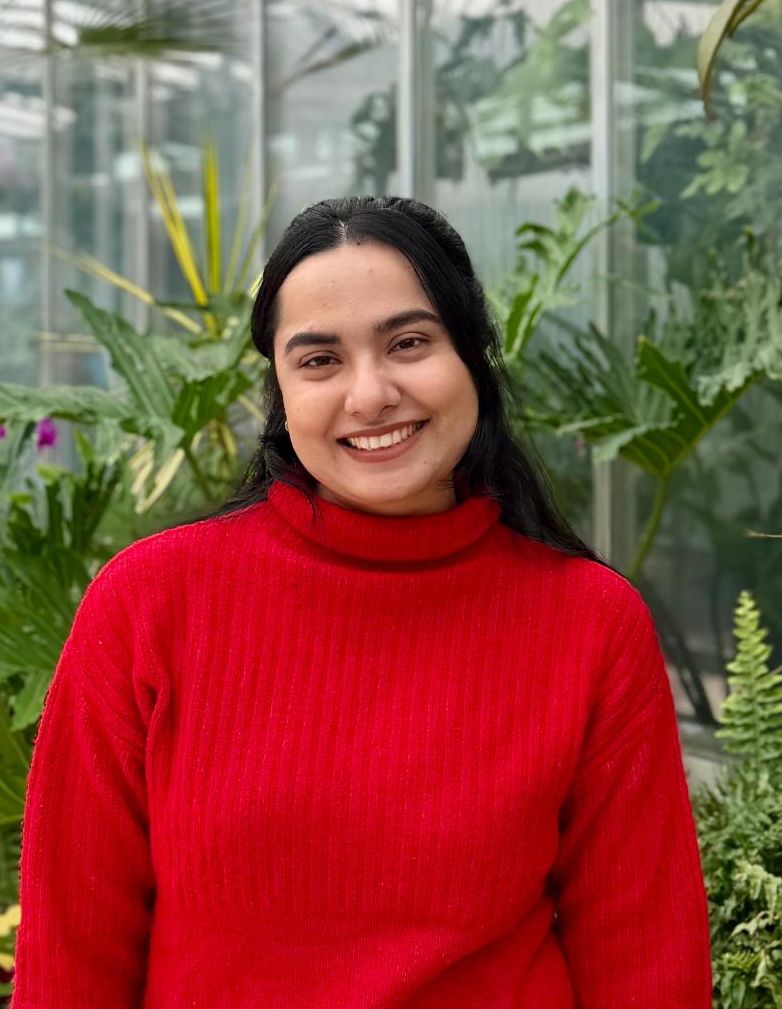
Nafisa Nawar Aava
Graduate Student, Department of Political Science
Nafisa Nawar Aava is a CSU Extension Intern and PhD student in the Department of Political Science within the College of Liberal Arts at Colorado State University. Her research focuses on governance, stakeholder collaboration, and sustainable development, with particular interests in circular economy approaches and regional economic development. Through her internship, she is supporting a greenhouse redevelopment feasibility study in Chaffee County which involves exploring pathways to transform a former cannabis production facility into a sustainable asset for agriculture and regional growth.
| | |
Farming Courses at the Old Fort in Hesperus (July 8-August 12)
Seed to Seed: Plant Basics for Farmers
- This course covers everything from plant propagation to seed saving and introduces the basics of botany and seed saving from multiple perspectives.
- Wednesdays, 8:00 a.m. - 10:00 a.m (July 8 - August 12)
- $400; scholarships and sliding scale available
- Taught by Gretchen Groenke of Fourth World Farm
Growing Specialty Crops at High Elevations
- This course offers an overview of the basics of crop culture in small scale diversified vegetable production, focusing on everything from seed and site section to harvest and post-harvest handling and marketing.
- Wednesdays, 10:30 a.m. - 12:30 p.m (July 8 - August 12)
- $400: scholarships and sliding scale available
- Taught by Colleen White of Empress Thymes Produce
- Spanish interpretation available.
Learn more and register here: https://www.fortlewis.edu/the-old-fort/learn/farming-courses
| | |
Free Market Channel Assessments
Growers, are you thinking about which market channels are the best use of your labor? CO Fruit & Vegetable Growers Association and CSU Extension have 4 farm stipends available to carry out farm-specific market channel assessments this season!
CSU Extension will help you by looking at sales volume, labor costs, and an array of market-based factors during one peak week of the market season. They provide a stipend for your time to collect that information, and you receive a report and discuss recommendations for enhancing profitability.
If you are interested, please complete this form https://col.st/GgmSF or email Nicole.Didero@colostate.edu.
| | |
Advancing Regional Organic Markets: A Farmer's Toolkit
Calling all farmers and stakeholders who live in the Plains region! Join Rodale Institute on August 19, 2026 from 11:00 a.m.-12:00 p.m. for an in-depth discussion of an updated “Advancing Regional Organic Markets: A Farmer’s Toolkit”, a resource designed to strengthen regional organic economies. This toolkit provides farmers and stakeholders with data, insights, and opportunity analysis to help expand regional production of high-demand organic crops, reduce reliance on imports, and increase economic opportunities for U.S. farmers.
During this Advisor Call, we’ll discuss the Toolkit’s improvements since it was first launched in December 2025 and explore how to use the toolkit to identify key market opportunities in the Plains region, support resilient supply chains rooted in local identity, and foster stronger connections between producers, processors, and buyers.
If you’re looking to grow your organic markets, plan for the future, or better understand where new opportunities are emerging, this virtual advisor call is for you. Register here: https://rodaleinstitute.org/events/advisor-call-advancing-regional-organic-markets-a-farmers-toolkit-plains/
| | |
Summer Tours at the Old Fort in Hesperus
Join us for a tour of the Old Fort this summer to learn about high-elevation growing practices with the Farmer Training Program staff and participants. Participants will walk about a half mile over dirt roads and farm paths, so bring comfortable shoes and dress for the weather.
Dates
- July 16th, 10:30 a.m. to 12:00 p.m
- August 20th, 10:30 a.m. to 12:00 p.m
- September 17th, 9:00 a.m. to 10:30 a.m
Sign up for a free tour here: https://www.fortlewis.edu/the-old-fort/visit/tours
| | |
High Country Rancher Days
High Country Rancher Days will offer space for socializing and networking for ranchers as well as informative and relevant talks from experts and host ranchers. The event is hosted by CSU Extension in Park County & Chaffee County.
When: August 28th - 29th
Where:
- Day 1 will take place at Badger Creek Ranch (an hour northwest of Canon City, CO)
- Day 2 will be held at La Dolce Vita Ranch near Guffey, CO.
Thanks to assistance from funding partners (Western SARE and the Rangeland Living Laboratory), registration for this event is $50 for both days or $30 for one day. Learn more and register here:
https://forms.gle/s4aVc5kw26s3abHP7
For questions, contact Monica Pless at monica.pless@colostate.edu.
| | |
Farmer Training Convergence at the Old Fort
The Old Fort is working on some exciting hands-on workshops and compelling speakers for our fifth annual Farmer Training Convergence. Stay tuned for more details and email us with proposal ideas!
When: August 28 - 29th
Visit the website: https://www.fortlewis.edu/the-old-fort/visit/events
| | |
Annie's Project Facilitator Trainings
Annie's Project is hosting facilitator training sessions. Registration is limited to the first 20 participants. All sessions are virtual, and there is no charge for the training.
Virtual National Annie’s Project Facilitator Training (8 hours)
All 8 hours must be completed to be certified as an Annie’s Project facilitator. If you are interested in hosting Annie's Project in your county, the first step is to become a trained facilitator by taking this course.
-
September 15-16 (9am – 11am and 1pm – 3pm MST). Times repeated on both days.
-
November 9-10 (9am – 11am and 1pm – 3pm MST). Times repeated on both days.
Contact Jenny Beiermann (jenny.beiermann@colostate.edu) or Karisha Devlin (karisha@anniesproject.org) with questions or for more information.
| | |
Consultant Training Program at the Food Finance Institute
The University of Wisconsin's Food Finance Institute (FFI) is offering an upcoming Consultant Training (begins October 1st) which will enable you to learn market trends and business models; master financials, performance, and funding strategies.
Learn more and sign up here.
| | |
Online Course for Aspiring Farmers, Ranchers, and Food System Workers: Exploring Your Farm Dream
Exploring Your Farm Dream is an online course offered by CSU and the Colorado Building Farmers and Ranchers Program for people looking to equip themselves with the knowledge, skills, and business strategies for a future in agricultural production. This self-paced course is designed for learners who have limited experience in agriculture. Visit the course website here for more information.
Participants can expect to:
- Learn from CSU Extension faculty instructors with expertise in agricultural business management
- Get access to strategic personal and business planning insights, tools, and resources
- Assess preparedness for starting a farm-based business aligned with your resources, skills, and goals
- Explore a variety of different pathways and business models in ranching, agriculture, and food systems
The course consists of 10 modules, which learners will have access to for a full year. Registration costs $150. Register for the course here.
| | |
Food Safety Training for Colorado Cottage Foods Producers
Learn how to safely produce food from home as a cottage food business. This course covers a variety of topics, including: basic food safety, foods that are permissible under the updated Colorado Cottage Foods Act, ingredient labeling, special considerations for food preparation at high altitudes, and safe food sampling best practices. Registration is $55.
For dates of online and in-person classes and to learn more, check the website here.
| | |
Farm Resilience Online Course
Learn practical strategies and tools to boost your farm’s resilience amidst the challenges of climate change. This self-paced, online course is designed specifically for farmers and ranchers in the West, focusing on real-world solutions and hands-on techniques.
Join a community of like-minded individuals and gain the knowledge you need to secure your farm's future. CSU was fortunate to partner with this program to develop some of the content and decision tools.
Enroll today and deepen your journey towards climate resilience and sustainability.
| | |
USDA Community Food Projects Competitive Grants Program (CFPCGP)
USDA National Institute of Food and Agriculture (NIFA) is accepting applications for the Community Food Projects Competitive Grants Program. Applicants' projects must address two or more of the CFPCGP goals to ensure a comprehensive and sustainable approach to resolving food and nutrition security and hunger.
The deadline for applications is July 16th at 3:00 p.m. MST. Learn more and apply here.
As the Technical Assistance Provider for this grant, The Institute for Social and Economic Development Solutions is also hosting office hours for potential applicants to ask questions in preparation for submitting their applications. The office hours are on July 1st from 11am-12pm MST. Access the office hours here.
| | |
The Livestock Conservancy Microgrants
For producers raising heritage and rare livestock breeds, The Livestock Conservancy offers annual microgrants that can help fund breeding stock purchases, infrastructure, marketing, and conservation efforts. The program includes three categories: National, Youth, and Breed Associations. The National and Youth awards can be used to fund things such as basic infrastructure improvements, provide new genetics for an existing breeding program, marketing tools, and more. The Breed Associations grant can be used for a wide array of things such as website improvements, studbook work, computer purchase, germplasm preservation and other needs that help move groups forward in the conservation efforts.
Applications are due August 15th, 2026.
Learn more here: https://livestockconservancy.org/resources/micro-grant-program/
| | |
Growing GRASS Program
The Growing GRASS program, led by the American Sustainable Business Institute / Network and Other Half Processing, provides funding opportunities to beef and bison producers looking to build their byproduct supply chains. Whether you are a producer looking to expand existing direct-to-consumer markets or are just starting your journey selling directly to consumers, this is something to put on your radar!
Visit ggrass.org to learn more about the program, or scan the code to access the enrollment guide and see if you're eligible.
Eligible producers receive $3,000 JUST for completing the survey - if you decide it's not for you at the end, you keep it, no strings attached!
Check out this program today!
| | |
USDA Protection and Recovery Resources
USDA provides a suite of disaster assistance programs to help offset losses as well as crop insurance and other coverage options to help manage risk and provide a safety net. USDA’s Farm Service Agency, Natural Resources Conservation Service, and Risk Management Agency offers a number of options.
Learn more about USDA's disaster assistance programs here, and the Noninsured Crop Disaster Assistance Program here. The Risk Management Agency of USDA has crop insurance resources here.
| | |
FACT Fund-a-Farmer Grants
Funding from Food Animal Concerns Trust can support fencing, watering systems, pasture improvements, handling facilities, animal welfare certification, and other projects that improve pasture-based livestock operations. Grants typically range from a few thousand dollars up to $10,000
.
Applications Open: November 2026
Expected Deadline: Early January 2027
Learn more here: https://www.foodanimalconcernstrust.org/grants
| | News, Resources & Reading | | |
Colorado Tourism Office (CTO) Learning Labs
CTO Learning Labs is a free educational platform created to help tourism and hospitality professionals grow their expertise and deliver welcoming, memorable experiences for every visitor. This tool can help tourism operators
stay current with industry trends and expand their knowledge of Colorado's tourism ecosystem. Also, it can provide the tools and information needed to deliver high-quality experiences that benefit both visitors and residents.
Visit the CTO Learning Labs: https://ctolearninglabs.com/
| | |
Check Out Choices Magazine's Federal Policy Initiative Theme
Theme Overview: New Federal Policy Initiatives Are Driving Changes in the Food System
Mary K. Muth and Michele Ver Ploeg
Extensive food policy changes under the second Trump administration are affecting food insecurity, food access, food prices, and food attributes and, thus, directly impacting US consumers. This theme explores changes in SNAP, tariffs, food regulation, and dietary guidelines and their effects on program participants, food producers, and food consumers. Click here to read.
What Do Americans Believe About Food Tariffs?
K. Aleks Schaefer and Kelly A. Davidson
Public attitudes toward tariffs are shaped less by price expectations and more by symbolic narratives about fairness, strength, and national identity. Political affiliation is the dominant predictor of these beliefs, which at least partially explains why tariffs remain politically resilient despite higher consumer prices.
Click here to read.
New Federal Food Policies Will Affect Food Labeling, Reformulation, and Healthfulness
Mary K. Muth
Recent dramatic changes in food policy and federal agency priorities will affect food production and marketing in the United States. This article assesses how these changes could affect product reformulation, costs of production and thus food prices, and the healthfulness of food offerings across the supply chain. Click here to read.
Recent SNAP Policy Changes Could Have Significant Effects on Food Security, Poverty, and Rural America
Michele Ver Ploeg
The One Big Beautiful Bill of 2025 shifted a greater share of costs for the Supplemental Nutrition Assistance Program to states and tightened work requirements for some participants, among other changes. These changes could have substantial effects on participation in the program, on food security, and for agriculture and rural America. Click here to read.
| | |
Food Hub Operator's Toolkit
USDA AMS, in partnership with the University of Vermont and Michigan State University, investigated the main roles of food hub operators and the progression of their work from start up, to expansion, to innovation.
Many Hats – A Food Hub Operator’s Toolkit is a central depot of resources that will support food hub operators in the roles they may play at each phase of a food hub’s lifespan. It provides peer-generated knowledge, industry context, and direct links to existing and relevant resources across organizational, value chain, operations, and partnership development. This project is accompanied by a four-episode podcast series available through The Food Hub Podcast.
| | |
Characteristics of Regional Food Policy Councils
Interest in regional approaches to food system planning, development, and governance has grown dramatically in the last decade, including that of food policy councils (FPCs). Due to limited information on regional FPCs, AMS and researchers and practitioners from Ohio State University, Colorado State University, and Johns Hopkins Center for a Livable Future partnered with 11 regional FPCs through an 18-month community of practice. They explored the unique opportunities, challenges, and needs of regional FPCs and developed resources to inform and support regional work.
These resources offer insight from the community of practice to support FPCs and other groups taking a regional approach. Visit the project website to view the resources and to learn more about the project background and takeaways.
| | |
Cultivation Station: A Colorado Proud Podcast
Cultivation Station is a business development podcast from the CO Department of Agriculture's Colorado Proud program. The podcast dives into the rich and diverse world of food and agricultural businesses. Whether you are just beginning to think about starting a food or ag business in Colorado, or your operation is up and running, there are many expert insights and insider tips to help you be successful.
Find the full list of podcast episodes here.
| | |
Poudre Valley Community Farms Land Access Bulletin
Poudre Valley Community Farms has launched a bulletin designed to connect producers with land and water access opportunities across the Front Range. Each issue will feature current listings and announcements that support long-term access and stewardship, intended for producers seeking land and landowners looking to connect with growers.
Sign up for the bulletin here.
| |
List Your Business in USDA AMS Local Foods Directories
The USDA Local Foods Directories allow you to market your local food business to a wider nationwide audience. AMS directories include:
To create a new listing, answer quick and easy questions about the status of your business so consumers can learn more about you.
Click here to sign up for the directory.
| | |
USDA Local Food Survey
USDA’s National Agricultural Statistics Service (NASS) is conducting the Local Food Marketing Practices Survey to gather data on the production and local marketing of foods. Information includes the value of food sales by marketing channel, value of crop and livestock sales, marketing practices, expenses, federal farm program participation, and more. As consumer interest has grown and programs and policies for local foods have developed, the Local Food Marketing Practices Survey is critical to showing where the sector is today and helping to identify future needs.
The survey was mailed out January 6, 2026 to almost 64,500 producers nationwide. Producers who receive the survey are strongly encouraged to respond online at agcounts.usda.gov. Learn more about the local food survey by visiting nass.usda.gov/go/local-food.
| |
ABOUT FOOD SYSTEMS
at Colorado State University
| | Food systems are the connections between natural resources, the agricultural and food industries, and the buyers, consumers, and communities to which they contribute. Research, extension and education identify and inform opportunities to bridge how production, supply chains, and eaters respond to changing markets, policy, and the environment. At CSU, we focus on these key areas to train, influence, and communicate ways to connect food-related roles and foster healthy communities, economies, and individuals. | | | Find us on social media, get farm or food systems related questions answered via email, forward to a friend, or submit your contributions to our newsletter! | | | | |