July 2026
NBGA Newsletter Vol. 5, #7
| | |
Greetings, and welcome to NBGA's July 2026 newsletter!
Summer is a busy season for the dry bean industry! Growers are hard at work in the field and researchers are actively conducting their field studies. Northarvest staff, other industry professionals, and bean supporters alike are advocating for the industry and the important role of beans in both agricultural systems and delicious, healthy diets.
In this newsletter, you will find a link to the 2026 BeanGrower Research Issue, details about the 2026 NDSU Dry Bean Field Days (in Forest River, ND & Hatton, ND), an AgWeek TV news segment with NBGA President Richards, photos and info about the recent chili contest sponsored by Northarvest, ideas of bean dishes to help beat the summer heat, a summary of the recent Bean There, Cooked That webinar, important announcements, and much more.
If you can, please consider sharing this newsletter with someone else to help us spread the word. Anyone can subscribe to our monthly e-newsletter here.
Happy reading, and happy summer!
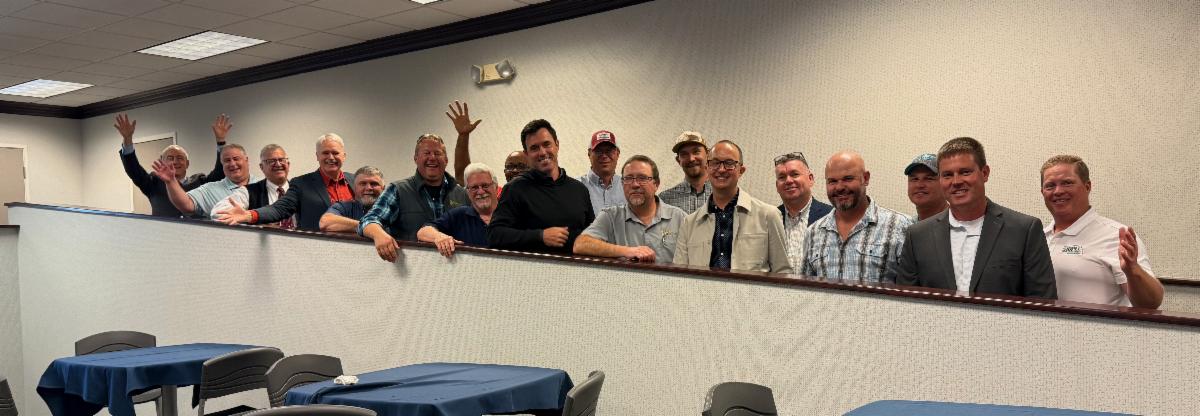
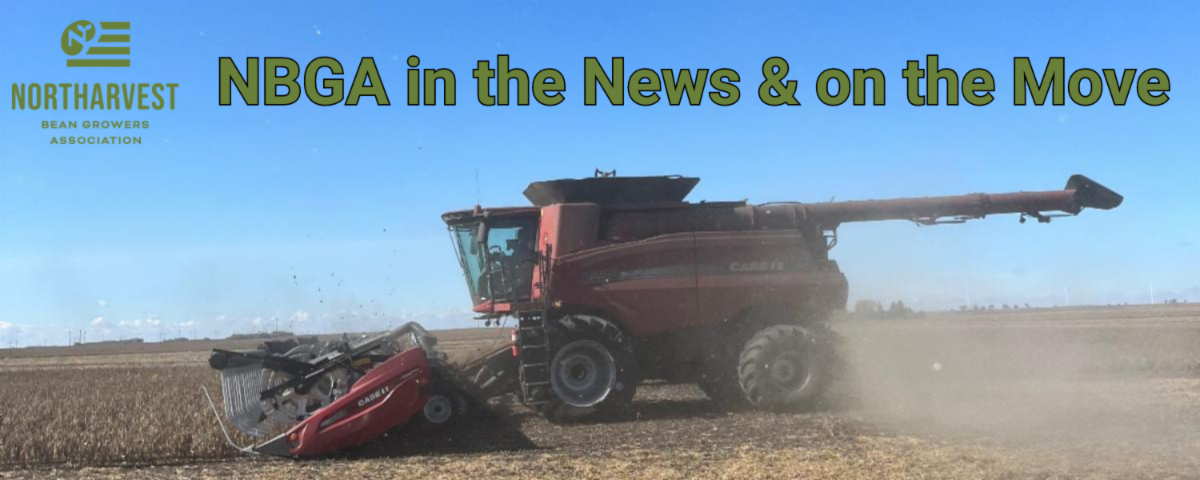
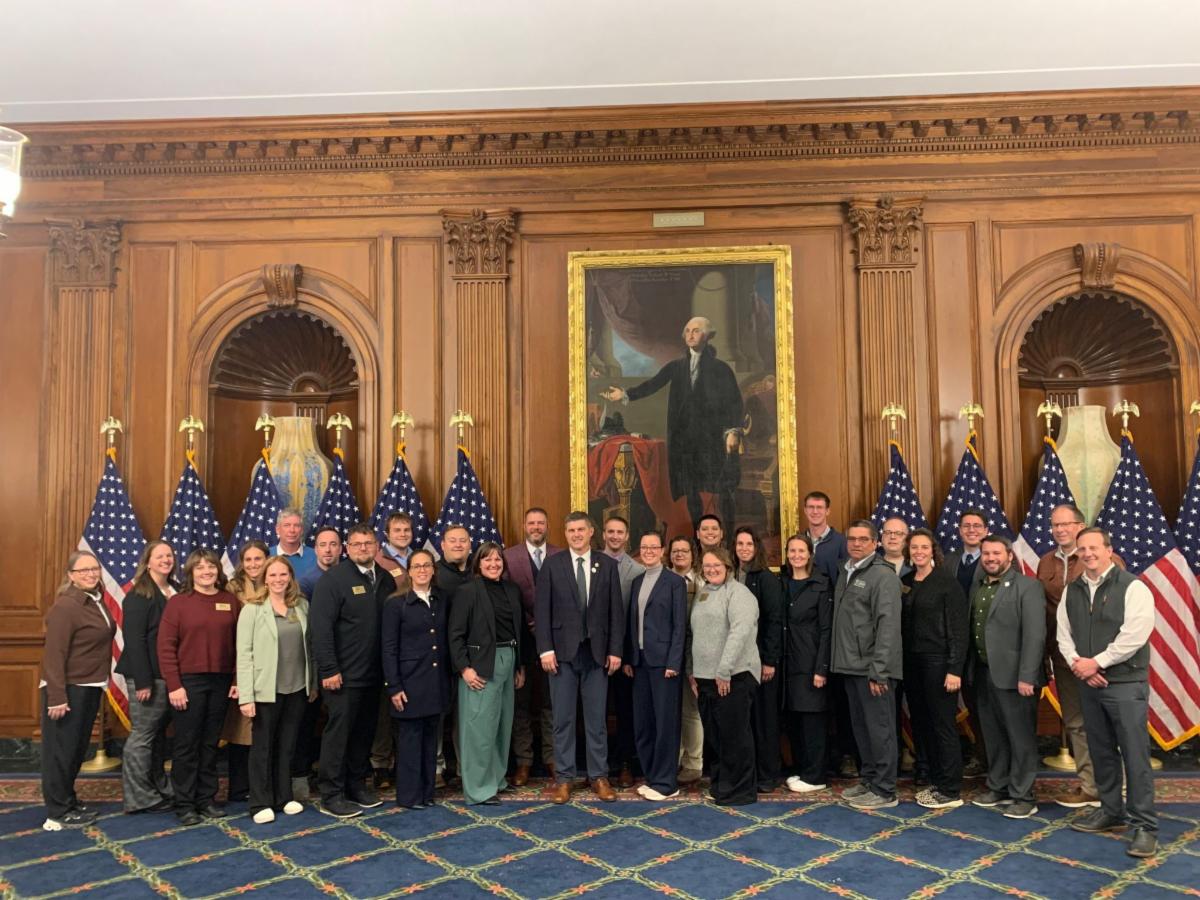
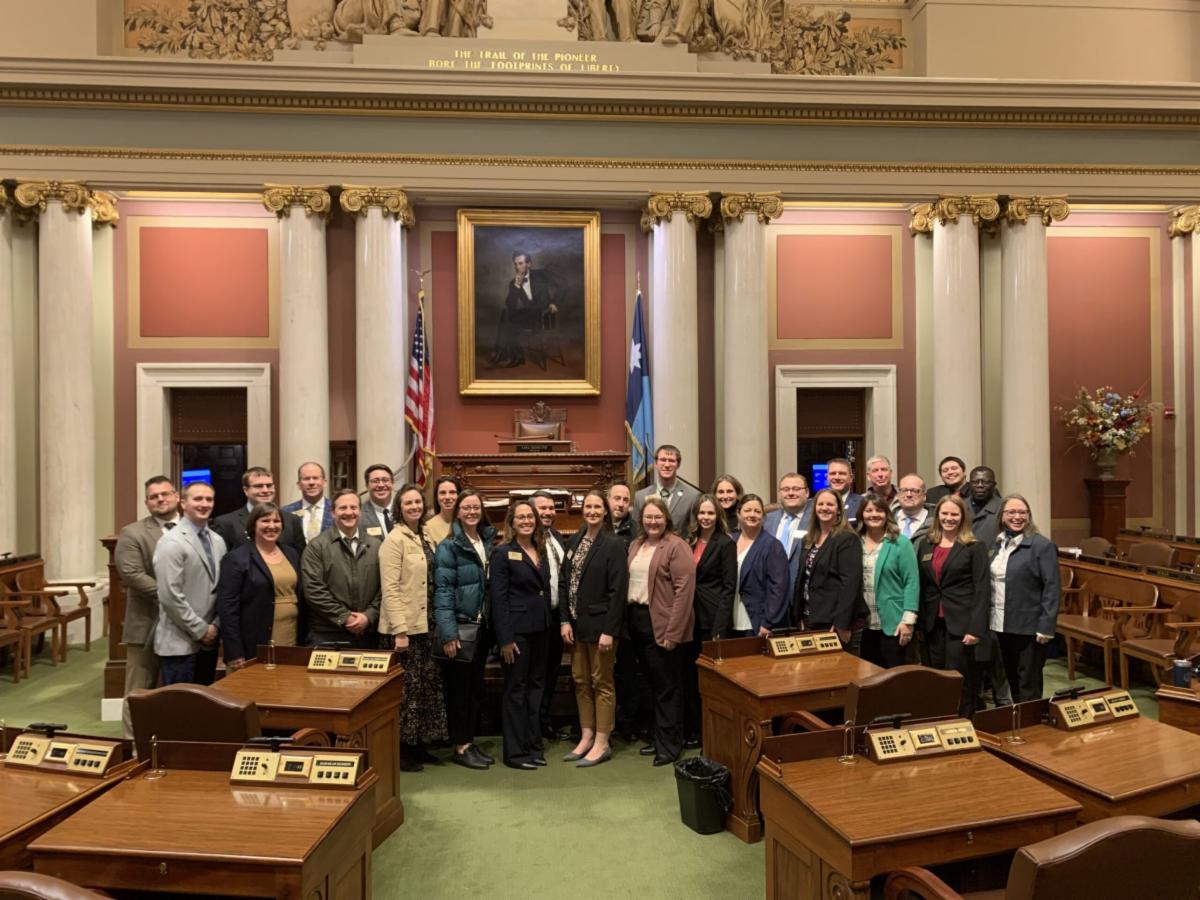
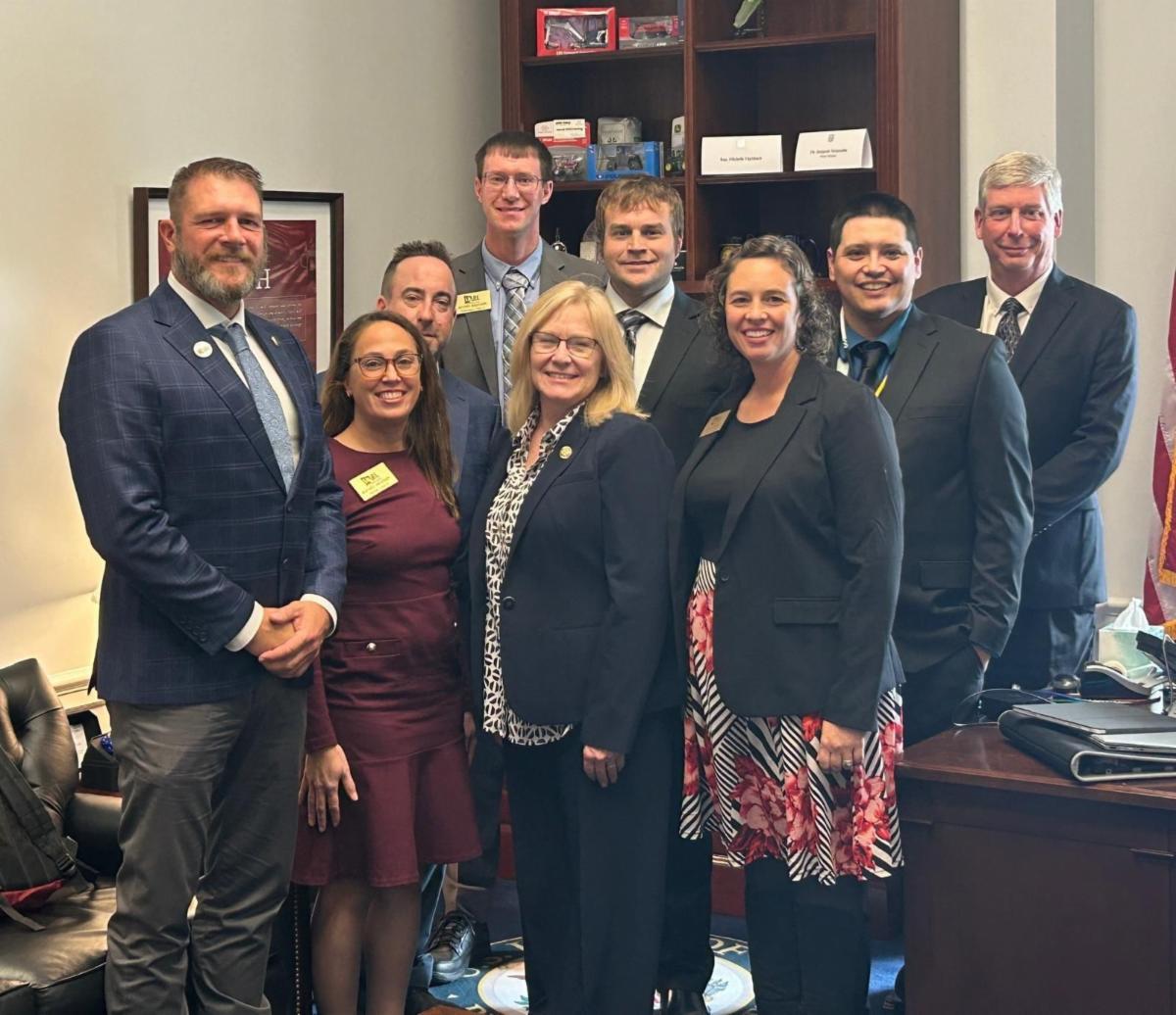
| | Northarvest joins USA Pulses and USA Pulses Trade Association summer board meetings in Nebraska for important industry discussions. Read more in the 'Northarvest in the News and on the Move' section of this newsletter. | | |
July 2026 Newsletter Table of Contents:
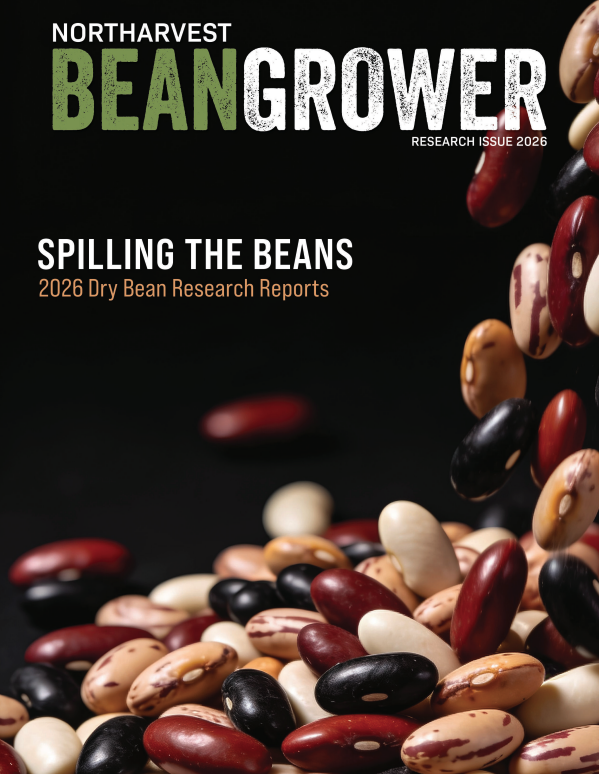
- Northarvest BeanGrower: Research Issue 2026
- NDSU Dry Bean Field Days
- USDA Weekly Dry Bean Market Review
- Bean Institute: Refreshing Bean Dishes for Summer
- Bean Nutrition Corner: Key Takeaways from the Bean There, Cooked That Webinar
- Northarvest in the News and on the Move
- The Dry Bean Scene
- Announcements
| |
Northarvest BeanGrower:
Research Issue 2026
The digital edition of Northarvest's annual research issue magazine is now available - and 2026 is our largest issue yet! As always, our magazines continue to be made available to our members and friends in the edible dry bean industry free of charge.
Some of the many topics covered include:
- Dry bean breeding program update
- The Plant Protein Innovation Center's evaluation of dry beans as high quality protein ingredients
- The 2025 dry edible bean disease research report
- Details about white mold management in dry beans
- And much more!
| | |
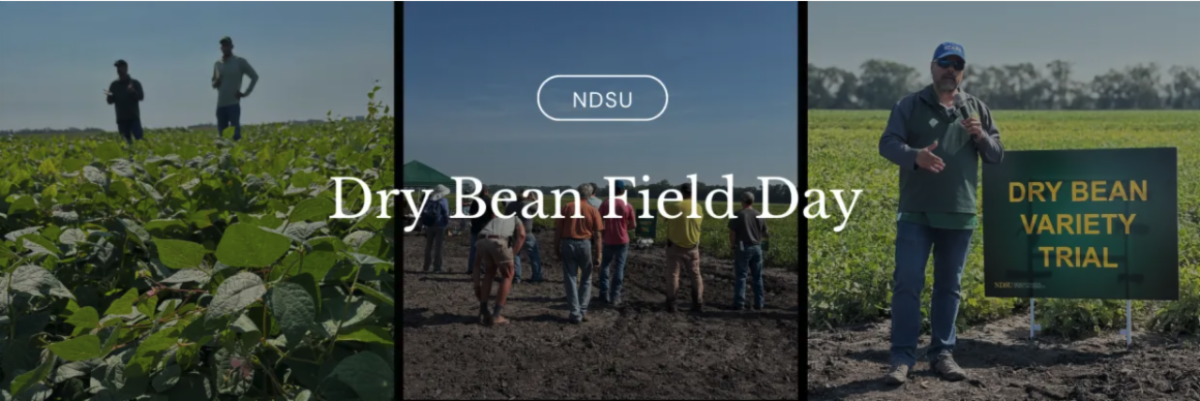
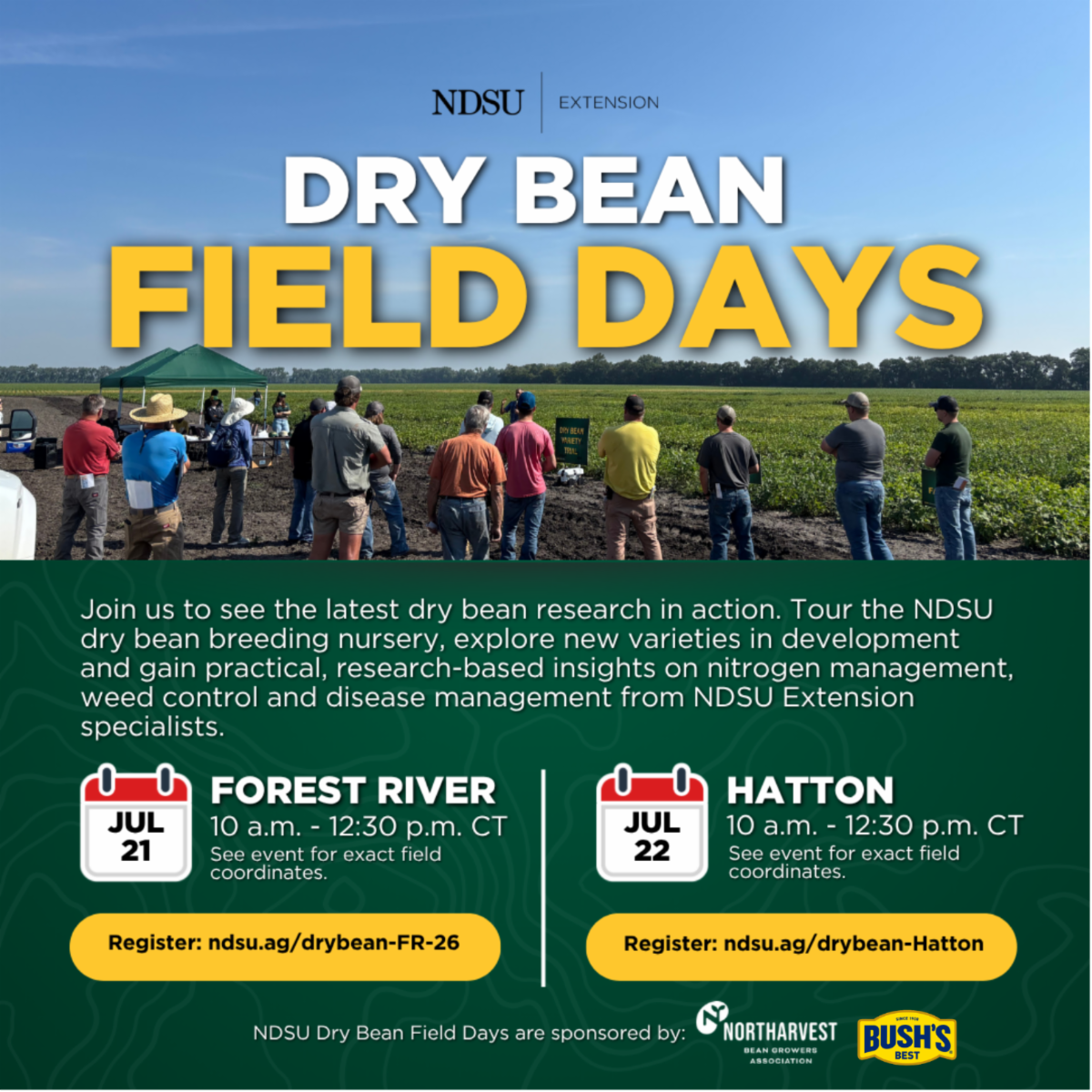
Join Us at NDSU Dry Bean Field Days: July 21 & 22
NDSU Extension, in partnership with the Northarvest Bean Growers Association, will host two Dry Bean Field Days. You are invited to join us at these NDSU Dry Bean Field Days!
The field days will provide growers, crop advisers, industry professionals, and researchers with the opportunity to learn about the latest advances in dry bean production through field demonstrations and discussions led by NDSU specialists.
The program led by NDSU specialists will include:
-
A guided tour of the NDSU dry bean breeding nursery with Dr. Juan Osorno
-
Nitrogen management recommendations with Dr. Ana Carcedo
-
Weed management updates with Dr. Joe Ikley
-
Disease management strategies with Dr. Sam Markell
Field Day Dates & Locations
Participation is free, and lunch will be provided. Please register in advance to help us plan for the meal. You can register for one or both days here.
For more information, visit the Forest River Dry Bean Field Day and/or Hatton Dry Bean Field Day websites or contact NDSU Extension at 701-831-5796.
| | | | |
Below, you can find links to the most recent USDA Weekly Dry Bean Market Reviews. Click on the date to see the report.
-
The next USDA Weekly Dry Bean Market report will be released soon. You will be able to find that report here.
-
July 13, 2026: "Compared to last week: Trade remained light. According to the NASS Acreage report June 30, 2026, dry edible bean 1,161,000 2026 planted vs 1,366,000 2025 planted and chickpea 482,000 2026 planted vs 536,000 2025 planted and lentils 747,000 2026 planted vs 1,072,000 2025 planted and dry edible pea 1,047,000 2026 planted vs 1,173,000 2025 planted."
-
July 6, 2026: "Compared to last week: Trade remained light. According to the NASS Crop Progress report June 28, 2026, Colorado had 82%, Nebraska had 96%, and Michigan had 95% dry edible beans planted."
-
June 22, 2026: "Compared to last week: Trade remained light. According to the NASS Crop Progress report June 14, 2026, North Dakota had 97%, Montana had 98%, Minnesota had 96%, Colorado had 55%, Nebraska had 73%, and Michigan had 78% dry edible beans planted."
-
June 15, 2026: "Compared to last week: Trade remained light. According to the NASS Crop Progress report June 7, 2026, North Dakota had 84%, Montana had 84%, Minnesota had 88%, Colorado had 30%, Nebraska had 66%, and Michigan had 40% dry edible beans planted."
| | Refreshing Bean Dishes for Summer | | |
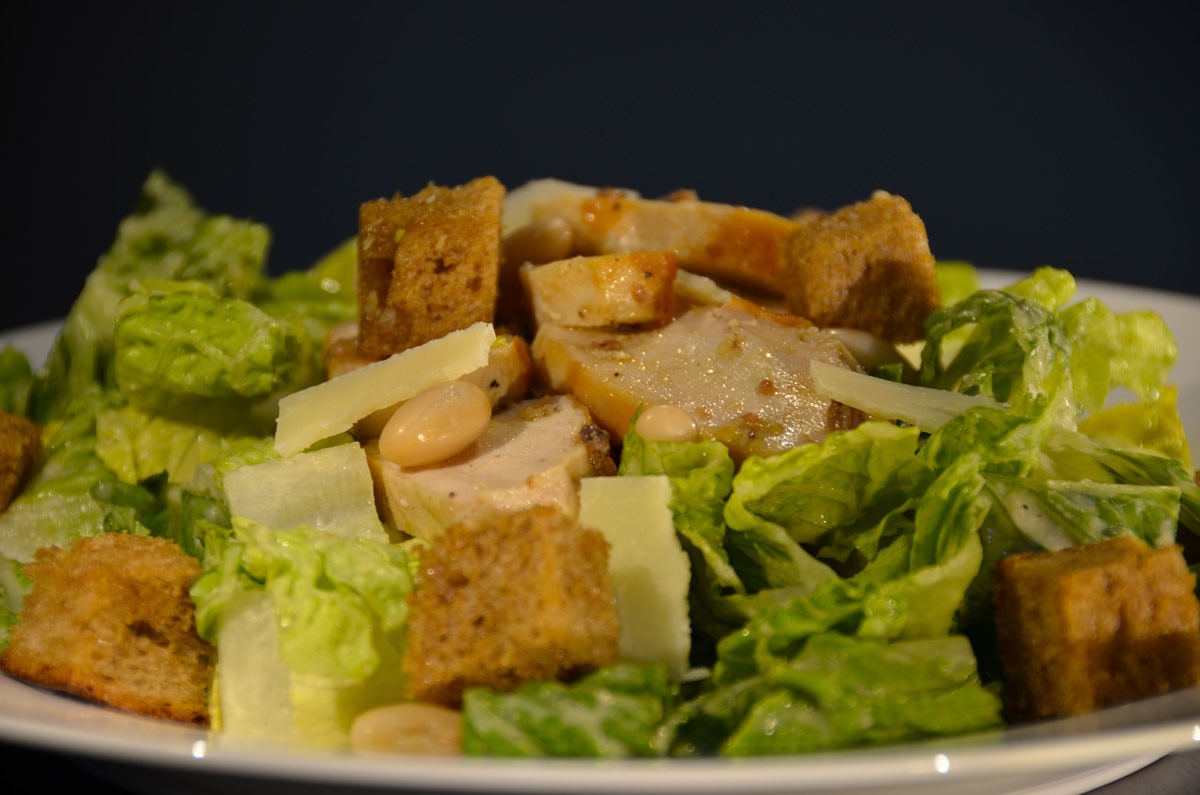
As summer heats up, refreshing bean dishes can be one delicious and nutritious way to beat the heat! Beans can be used in an impressive variety of recipes, ranging from smoothies, to salads, to salad dressings, and more.
Check out the recipes and photos below, all from the Bean Institute website.
| | |
White Bean Dressing
You have probably had bean salads before, but have you tried bean-based salad dressings yet? This tasty dressing calls for cannellini beans.
➡️ Find the recipe here.
| | |
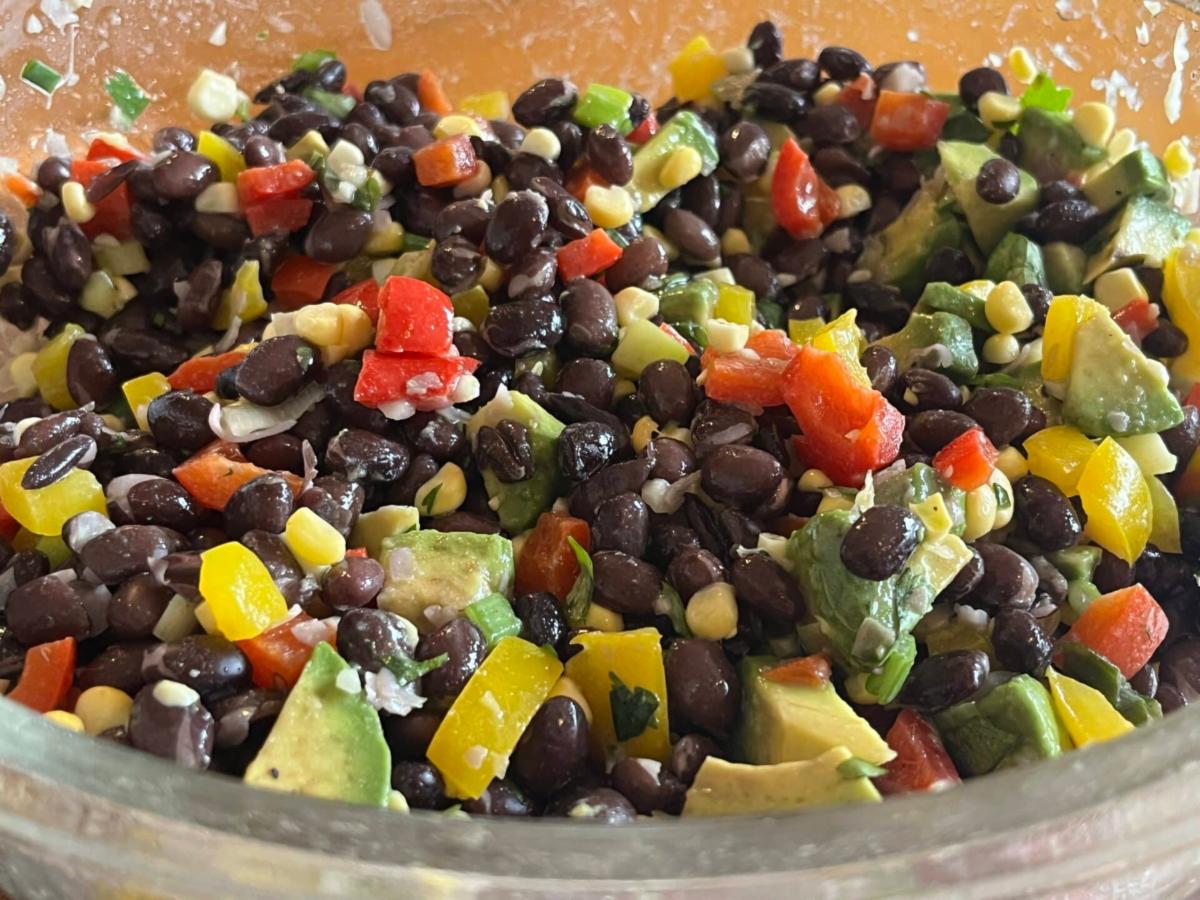
Black Bean Salad
This black bean salad features lots of fresh, summery ingredients, making it sure to hit the spot this season.
➡️ Find the recipe here.
| | |
Berry Bean Smoothie
Great northern beans are the secret ingredient in this refreshing, creamy smoothie! If you are looking for a smoothie that will keep you full and satisfied, give this a try.
➡️ Find the recipe here.
| |
|
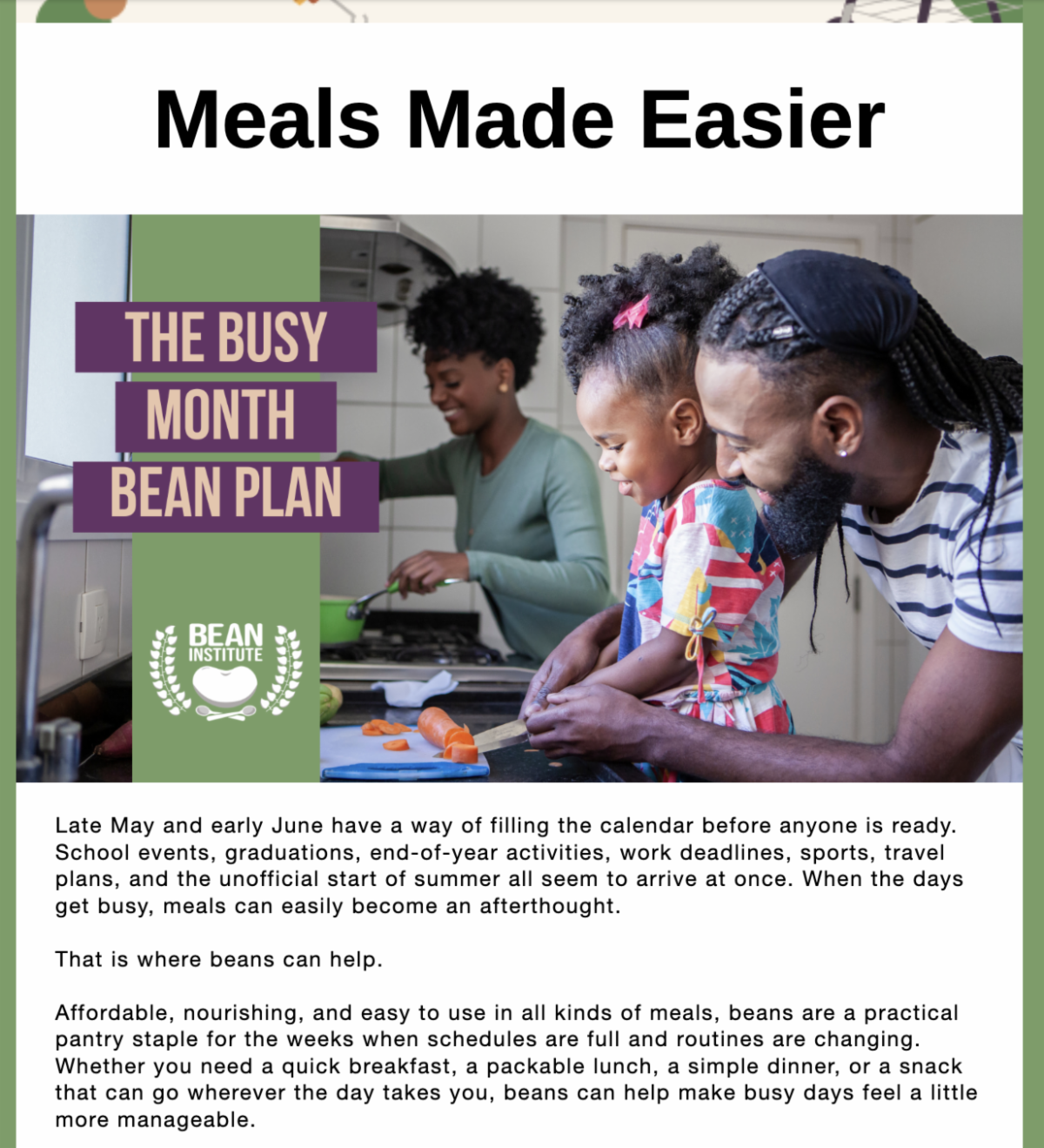
In their June 2026 newsletter, the Bean Institute highlighted how beans are an essential part of grilling season and summer cookouts. "From smoky baked beans to fresh summer salads and hearty veggie burgers, beans can bring more flavor, color, and variety to the cookout table."
➡️ Read the full post - Fire Up the Grill, Pass the Beans! - here. It includes lots of tasty recipe ideas, too!
| | | |
More from the Bean Institute
Are you looking for more helpful and fun bean information and some bean recipe inspiration? Subscribe to the Bean Institute's newsletter: The Bean Bulletin.
➡️ Sign up by clicking here!
| | | |
Did you know you can follow the Bean Institute on Facebook, Instagram, Pinterest, TikTok, and YouTube?
Click the icons below to follow on your favorite platform!
| |
Key Takeaways from the
Bean There, Cooked That Webinar
| | |
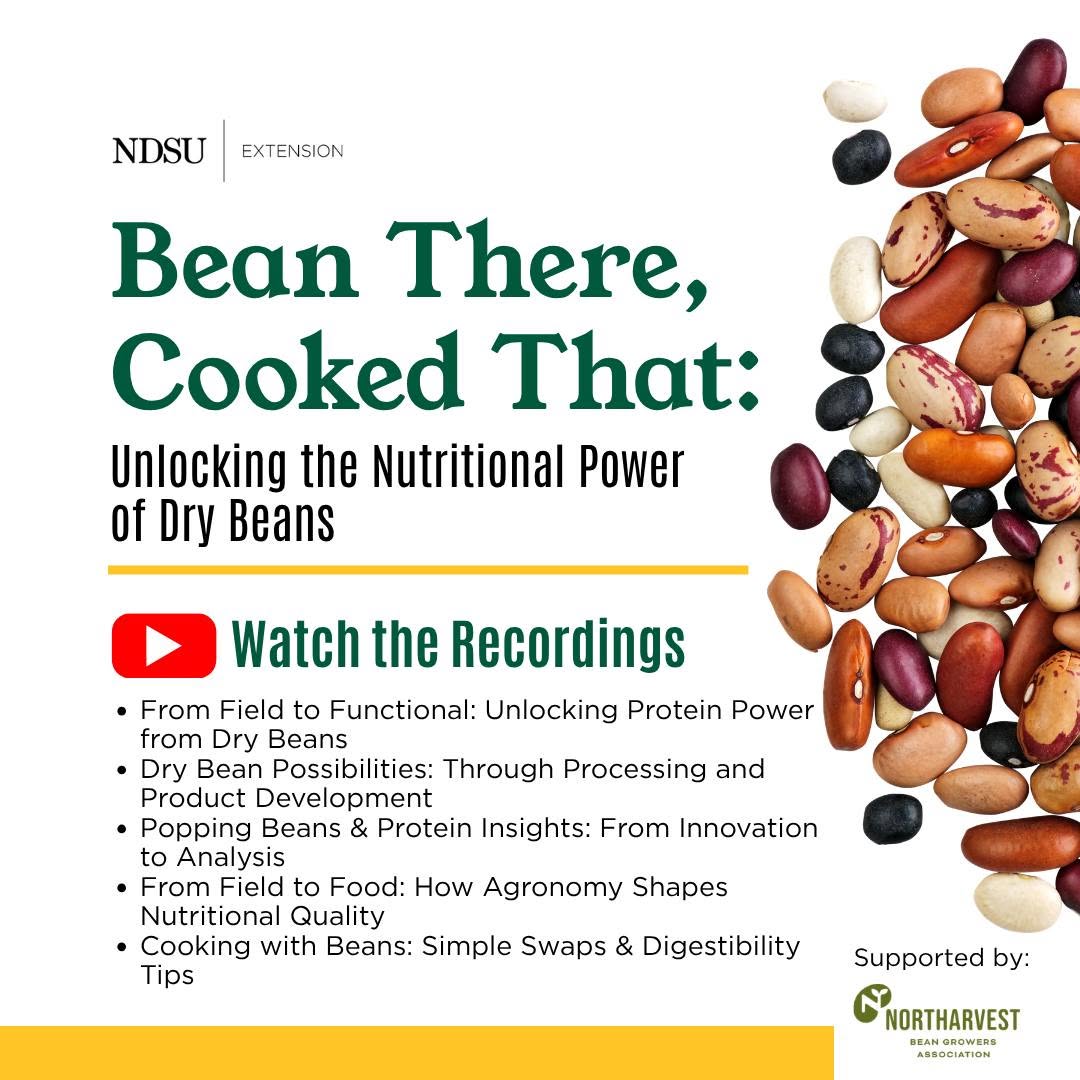
Northarvest was the proud sponsor of the recent Bean There, Cooked That: Unpacking the Nutritional Power of Dry Beans webinar, organized by North Dakota State University.
Below, you will find a summary of the diverse topics covered, plus a link to all the session recordings. Thank you to all the presenters for sharing their expertise, and a special thanks to Dr. Ana Carcedo for organizing the webinar!
| |
The webinar included the following five sessions:
-
Cooking with Beans: Simple Swaps & Digestibility Tips. Presented by Dr. Julie Garden-Robinson, NDSU Professor and Food and Nutrition Specialist
-
Popping Beans & Protein Insights: From Innovation to Analysis. Co-presented by Dr. Juan Osorno, NDSU Professor and Dry Bean Breeder, and Carly George, his graduating Master's student
-
From Field to Functional: Unlocking Protein Power from Dry Beans. Presented by Dr. B Pam Ismail, UMN Professor and Founder and Director of the Plant Protein Innovation Center
-
From Field to Food: How Agronomy Shapes Nutritional Quality. Presented by Dr. Ana Carcedo, NDSU Extension Agronomist for Broadleaf Crops
-
Dry Bean Possibilities: Through Processing and Product Development. Presented by Edil Vidal Torres, Food Technologist, Northern Crops Institute
The images below are screenshots from the webinar sessions.
| | |
Cooking with Beans: Simple Swaps & Digestibility Tips
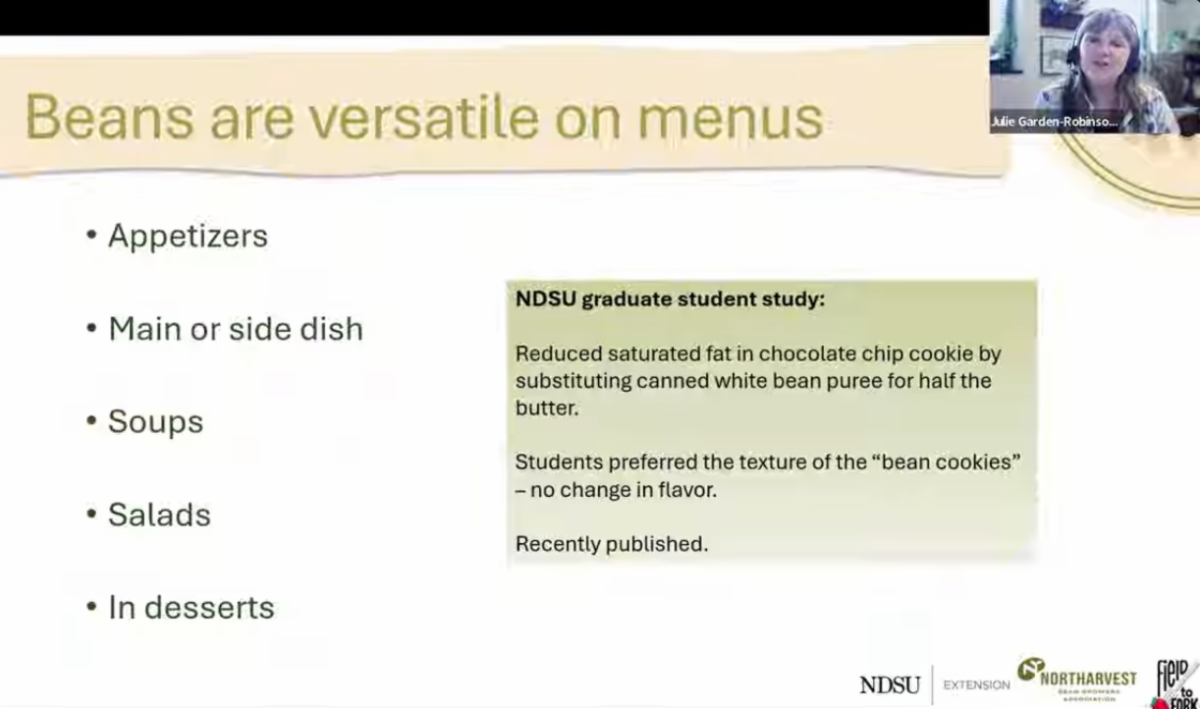
Dr. Julie Garden-Robinson emphasized that there is tremendous variety in dry beans and the ways you can use them in the kitchen, and that beans offer an impressive host of health benefits.
Thanks to the versatility of beans and the fact that they do an excellent job absorbing flavor, they can be used in dishes ranging from appetizers, to mains, to desserts. For instance, Garden-Robinson shared about a recent NDSU graduate student study. The student wanted to make healthier cookies, so she replaced half of the butter in a chocolate chip cookie recipe for pureed white beans. Students who tried the cookies actually preferred the texture of the bean cookies, and they reported no change in flavor!
| |
Several of the nutritional and health benefits of beans covered in the presentation included:
- Beans are very high in dietary fiber. In fact, beans contain about 2 to 3 times more fiber than cereal grains. Fiber is good for many aspects of our health, such as gut health.
- Beans can contribute to reduced blood cholesterol and blood pressure.
- Beans may help mitigate heart disease and stroke, type 2 diabetes, and cancer.
- Beans help create a feeling of satiety and promote healthy weight management.
- Beans have no cholesterol and almost no fat.
If you scroll to the 'Beans (Dry) and Other Pulse Foods' section on the NDSU Field to Fork website, you will find additional helpful resources.
| |
Popping Beans & Protein Insights: From Innovation to Analysis
Dr. Juan Osorno shared about how, as a breeder, he has to consider the whole value chain, from farmers to processors, to companies and consumers. His breeding program focuses on seed quality, processing quality, and nutritional quality.
Some of the challenges that he sees for higher bean consumption in the United States are long cooking times and unfamiliarity with how to cook and prepare beans. However, he is also thrilled about the many opportunities for beans, such as consumer interest in eating healthy foods.
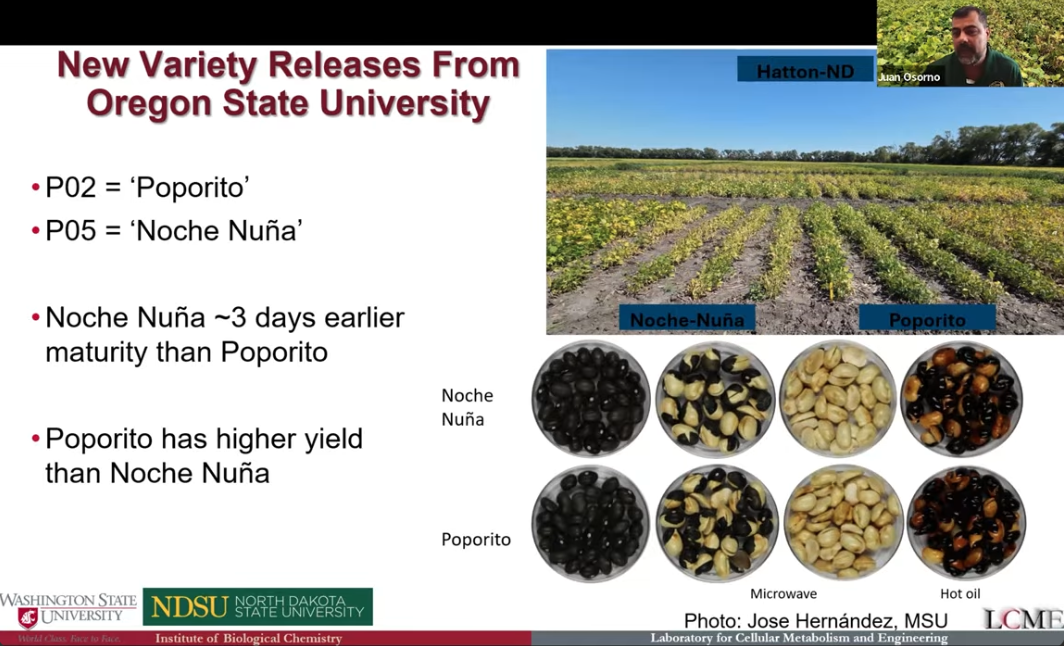
In the webinar, he was excited to present a project that he and his team, along with other collaborators around the United States, are working on: popping beans. Popping beans are a special type of bean, resulting from crosses with Peruvian Nuña beans. Unlike beans we are used to in the United States, these beans pop after being microwaved, making for a healthy and tasty snack.
He and his team are planting popping beans in variety trials this year, and popping bean product development is also underway. So far, research is showing that the environment where the popping beans is grown matters, and that seed moisture at the time of popping is key. Osorno looks forward to sharing more updates soon!
| |
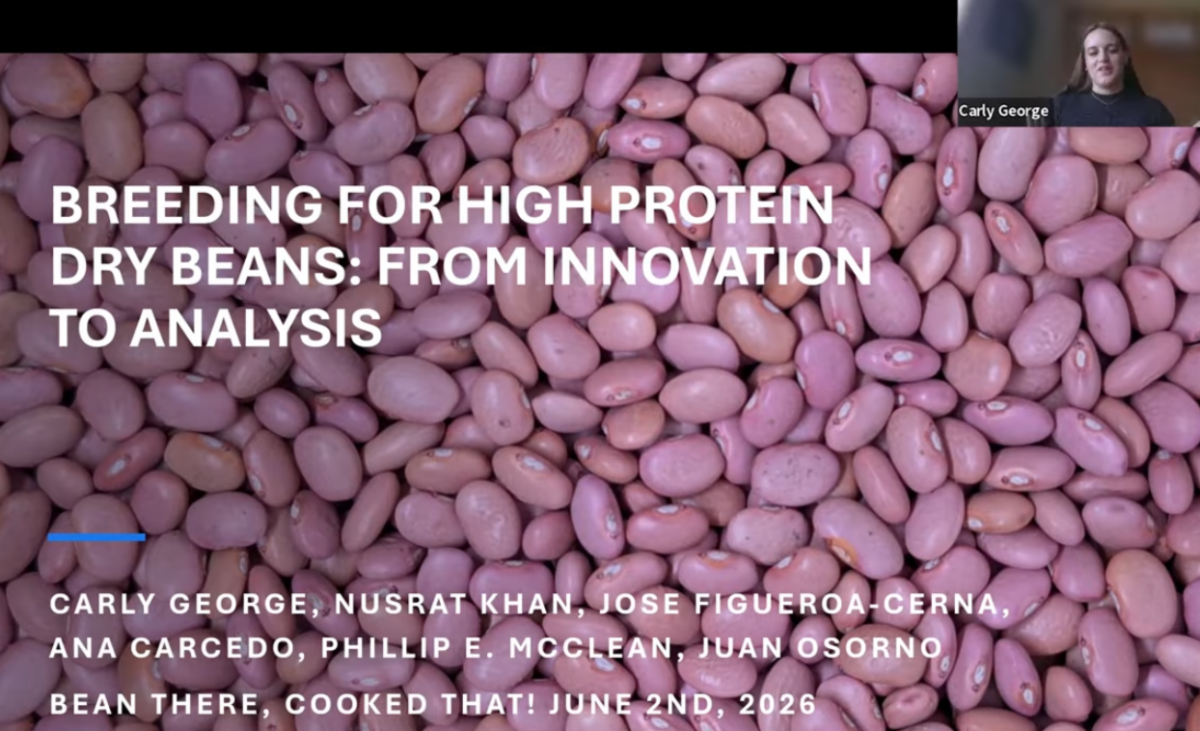
Carly George is a graduating Master's student in Osorno's lab. She shared the results of her Master's research, which focused on breeding for high protein dry beans. Dry beans have a high protein content (~22%) compared to cereals, which aligns perfectly with consumer demand for protein.
Her work focused on using genomic prediction to help breeders screen their varieties, to help focus on the most promising plants. The traditional breeding process takes years, so this could help breeders decide which varieties have strong potential for higher protein.
| |
From Field to Functional: Unlocking Protein Power from Dry Beans
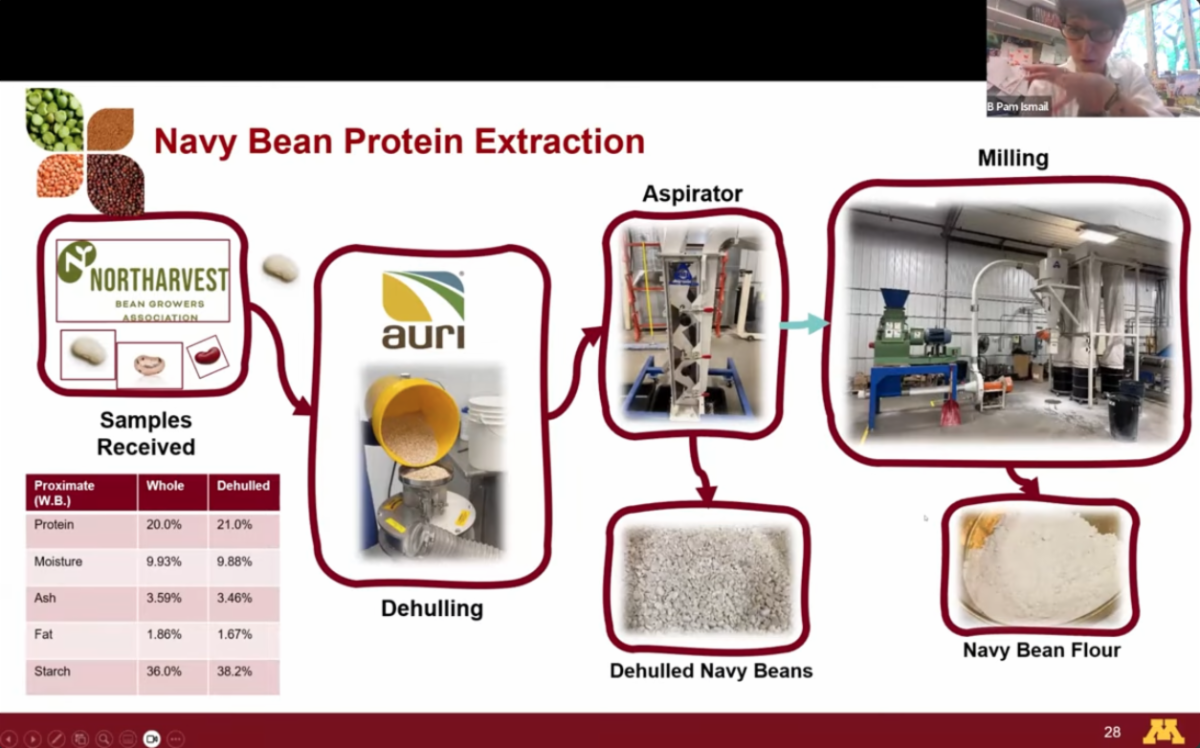
Dr. B Pam Ismail provided a summary of the work conducted by the Plant Protein Innovation Center (PPIC), which works across the value chain to research and develop plant protein ingredients. The global market for plant protein is about $22 billion in 2026, and Ismail said it is projected to reach approximately $40 billion by 2035. She explained that this represents an exciting opportunity for dry beans, especially with allergy concerns for soy and gluten.
| |
PPIC - supported by Northarvest - has been investigating how to utilize dry beans for their protein. They have succeeded in dehulling navy beans (which allows the protein to be extracted), and in attaining bean protein concentrate. They are encouraged to see that bean protein ingredients have good functionality and the potential to be used in many plant-based foods. PPIC is continuing its investigation of other dry bean market classes as well.
Northarvest looks forward to sharing more updates about PPIC's dry bean research in the future!
| |
From Field to Food: How Agronomy Shapes Nutritional Quality
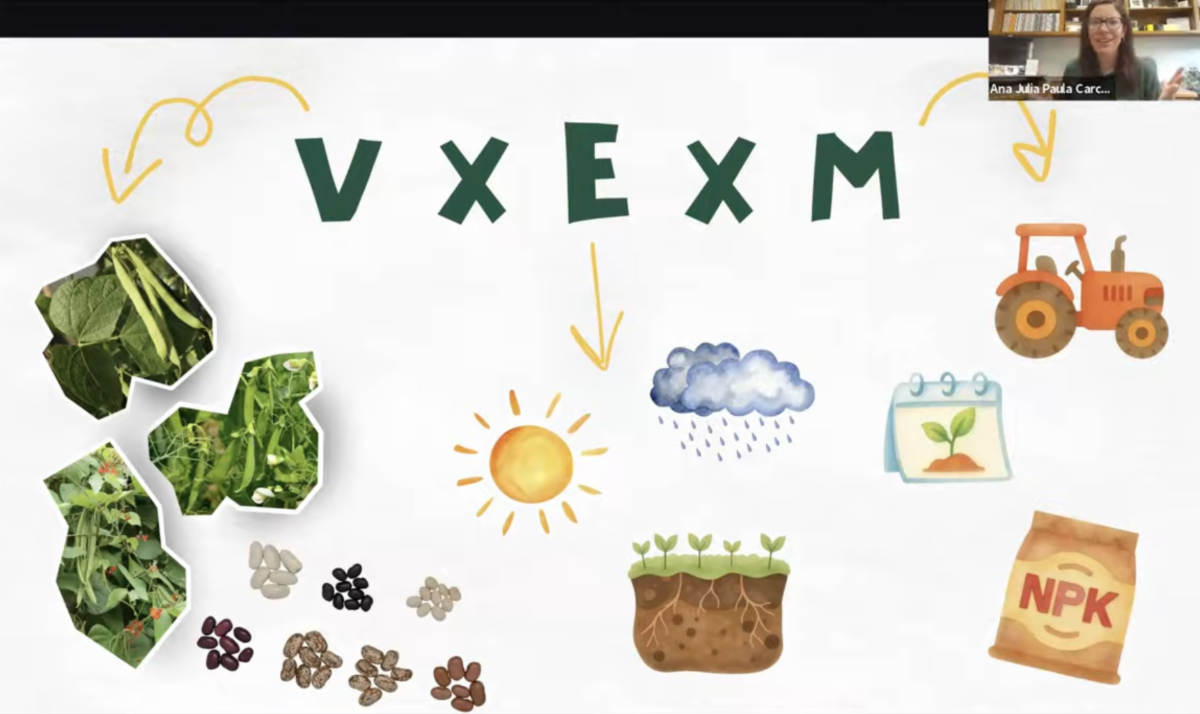
Dr. Ana Carcedo provided excellent insight into how agronomy shapes nutritional quality. Variety (V), environment (E), and management (M) all interact to impact final quality.
| |
For example, different varieties - even within the same market class (e.g., different varieties of pinto beans) - can have different nutrition. You may find differences in protein, iron, zinc, and more. In grocery stores though, only the market class is listed, e.g., "pinto bean", but not the variety of pinto bean.
Environment also plays an important role. Protein content can vary by year, for instance. This is because even in the same location, factors vary by year, such as rainfall, season length, and more.
Management also impacts final nutritional quality. One key consideration Carcedo discussed was planting date, and how when a crop was planted resulted in nutritional differences.
It is important to remember: Although variety, environment, and management certainly may result in nutritional differences, all dry beans are very healthy!
| |
Dry Bean Possibilities: Through Processing and Product Development
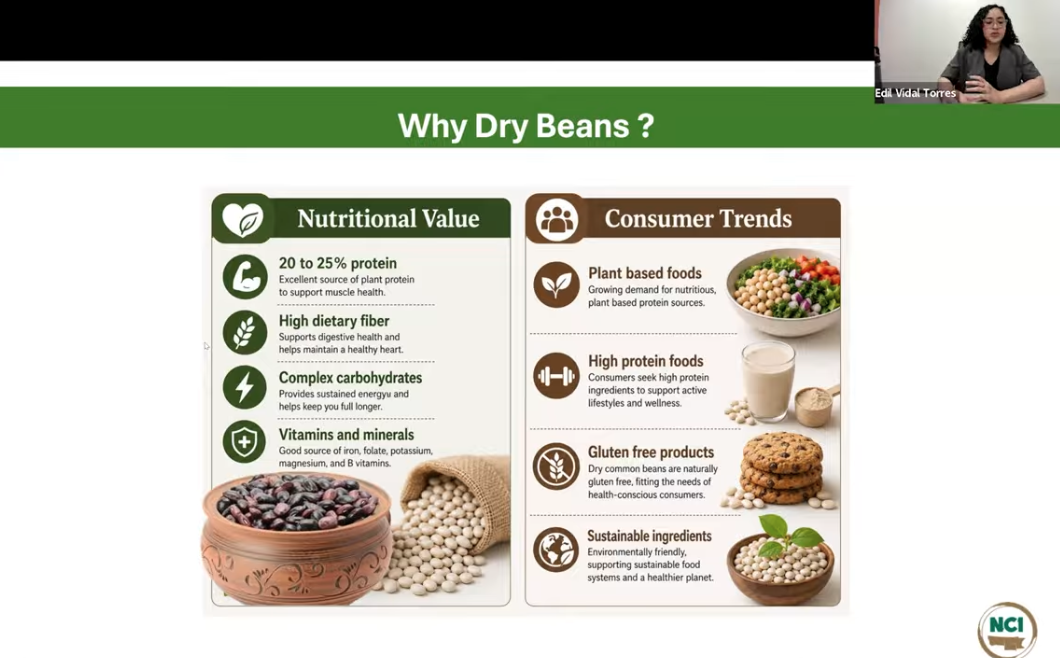
Edil Vidal Torres presented about dry bean applications in products. Due to the excellent nutritional value of dry beans and how well they align with numerous consumer trends, as shown in the slide below, there are many opportunities for dry beans.
| |
Some innovative products that could use dry beans include:
- Pasta
- Snacks
- Bakery products
- Plant-based beverages
- Meat alternatives
- And many more
With current and predicted trends like interest in foods high in both fiber and protein, gluten-free innovation, and fermented foods, the opportunities for dry beans abound!
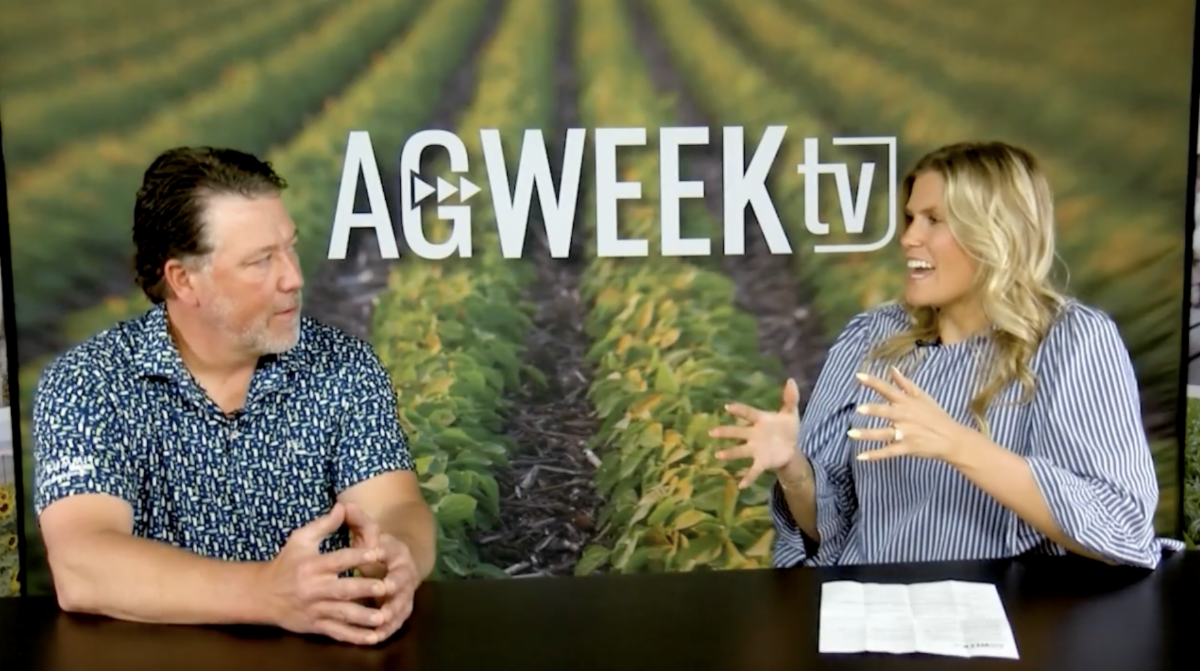
| | Thank you again to our presenters, and to all of the viewers! We hope you enjoyed the Bean There, Cooked That webinar. | | NBGA President Talks Beans on AgWeek TV | |
Northarvest Bean Growers Association President Tony Richards joined Emily Beal of AgWeek to talk about how Northarvest is working to support dry bean growers, and the future of dry beans.
Thank you to Tony for representing the dry bean industry, and to AgWeek for helping share how important beans are to our region!
|
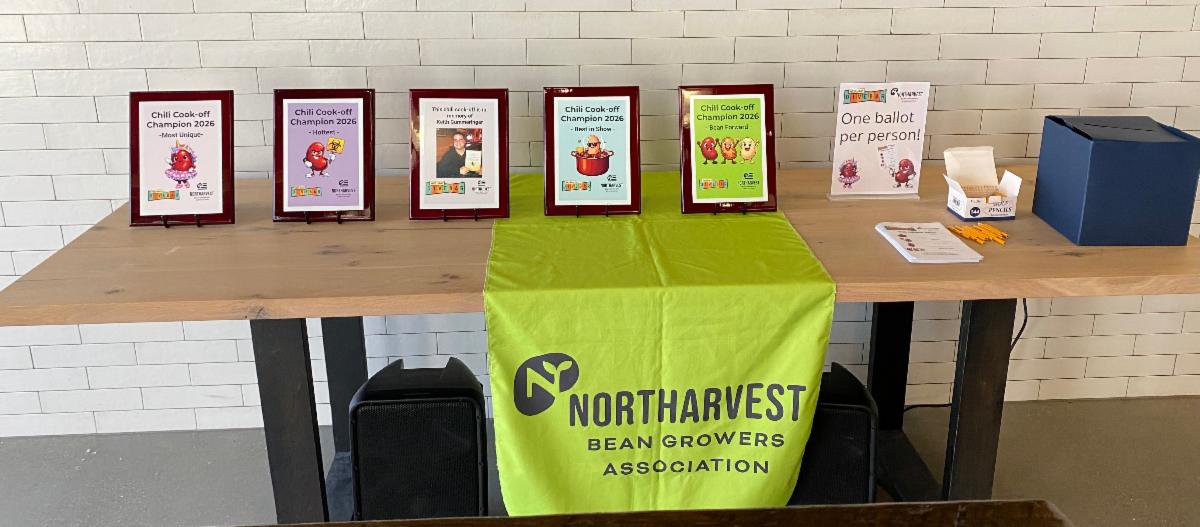
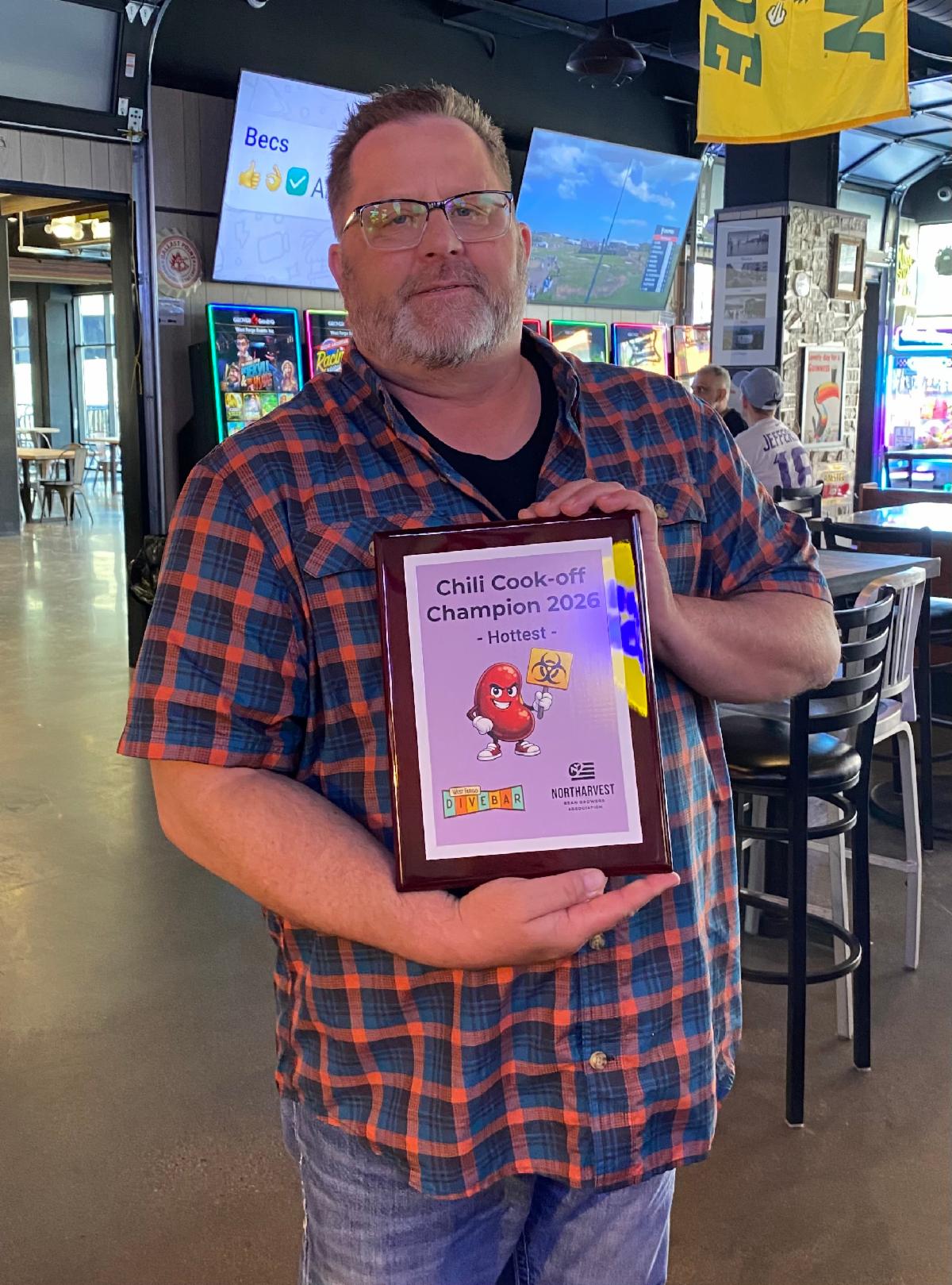
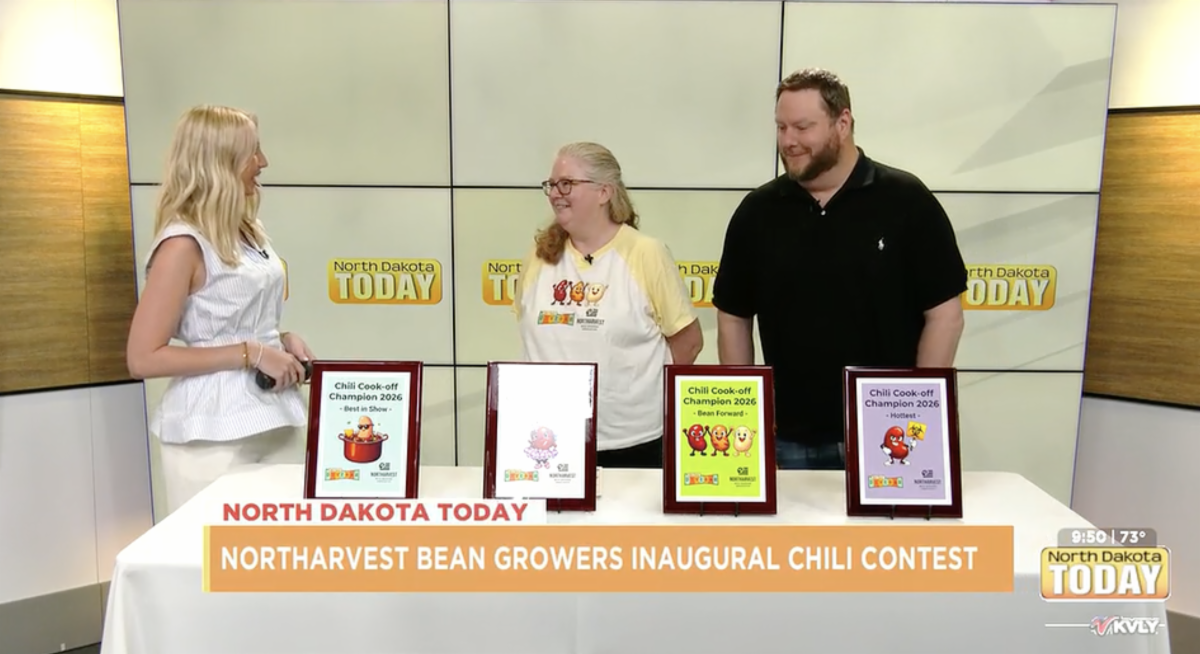
| Chili Contest Stars Beans | | The Northarvest Bean Growers Association was the proud sponsor of the first annual Chili Contest at the West Fargo Dive Bar. There were four delicious categories, which of course all featured beans: best in show, most unique, hottest, and bean forward. Each category winner received a prize, and there were other giveaways, along with beer, wine, and bourbon tastings. | Jennifer Hansen, NBGA Finance Director and Education & Sponsorship Committee Staff Lead, represented Northarvest at the event: "We had 5 chili entries and a small but enthusiastic group of taste testers. We are not letting the size of this first attempt to deter us. Everyone agreed that holding the event in the winter will bring a much larger crowd, so we are planning a Bean Soup Contest in October and another Chili Contest in January. My favorite chili had a slightly sweet profile and nice chunks of sausage, in addition to beans of course!" | Congratulations to the winner of the "hottest dish" category! | | Thank you to North Dakota Today for helping us spread the word about this chili contest! ND Today Host Tatum Miller was joined by NBGA Finance Director and Education & Sponsorship Committee Staff Lead Jennifer Hansen and West Fargo Dive Bar's Manager Derek Sattre. They discuss how this event came about, the four chili categories, and more. | | |
Northarvest Joins Pulse Industry
Discussions in Nebraska
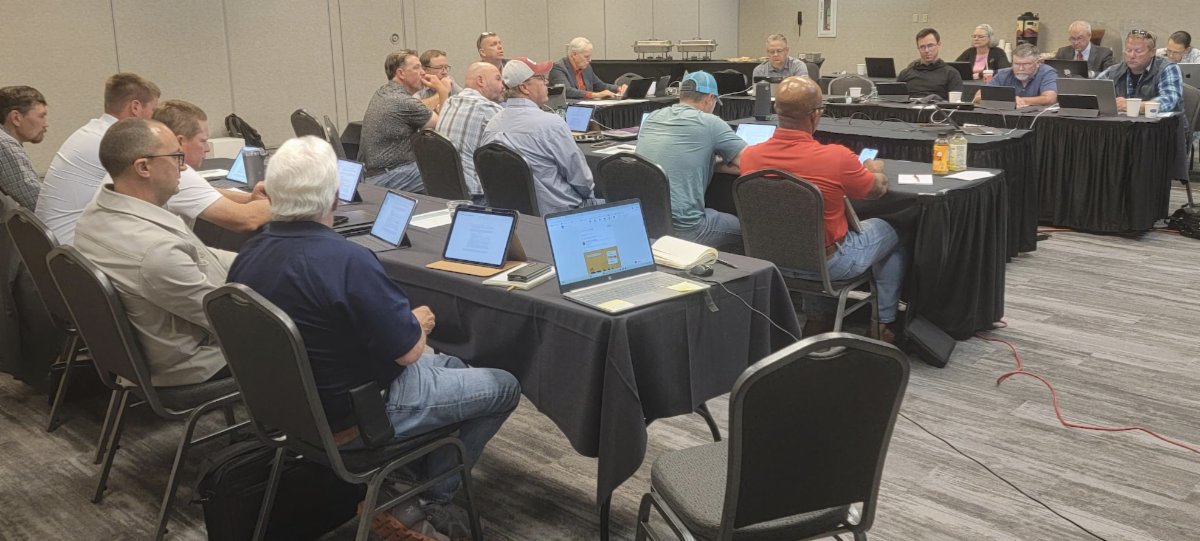
Northarvest President Tony Richards, Executive Committee Chair Eric Jorgenson, and Midwest Dry Bean Coalition Vice President Dylan Karley joined colleagues from the pulse industry in Scottsbluff, Nebraska on June 24-25 for a joint board meeting of USA Pulses and the USA Pulses Trade Association summer board meeting. This annual meeting focused on continuing to build a new strategic planning framework for short- and long-term goals.
The pulse coalition outlined plans for growing domestic and international strategies for education, promotion, research, market development, and policy. New fiscal year budgets were set and programming was approved. Eric Jorgenson was nominated and selected to join the USA Pulses Board of Directors! Congratulations, Eric!
NBGA Executive Director Mitch Coulter is proud of the hard work that our bean grower and bean dealer leadership brings to this new growing coalition effort. The investment our region has made in building out a domestic and international unified voice will support our dry bean, pea, lentil, and chickpea crops into the future. There is a lot of opportunity and reason to be excited for our membership!
| |
Northarvest at the Red River Valley Fair
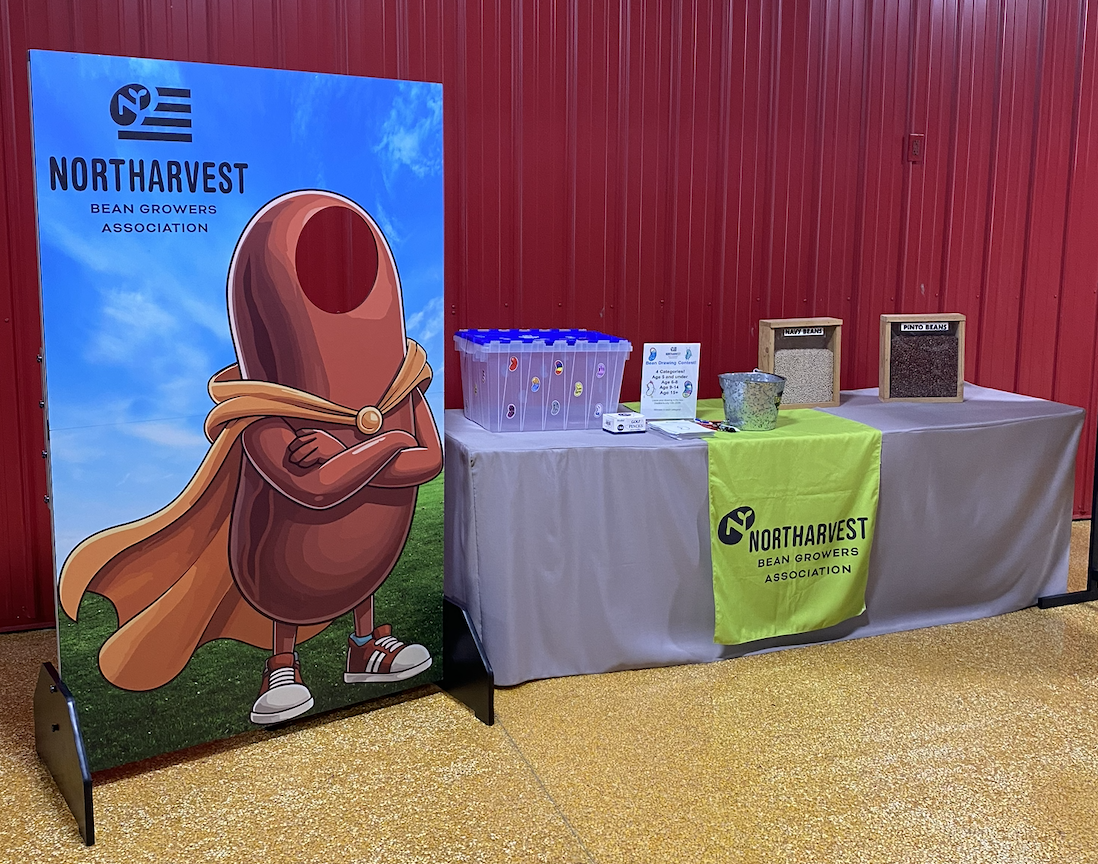
The Northarvest Bean Growers Association had a booth at this year's Red River Valley Fair, a popular summer festival in Fargo.
| |
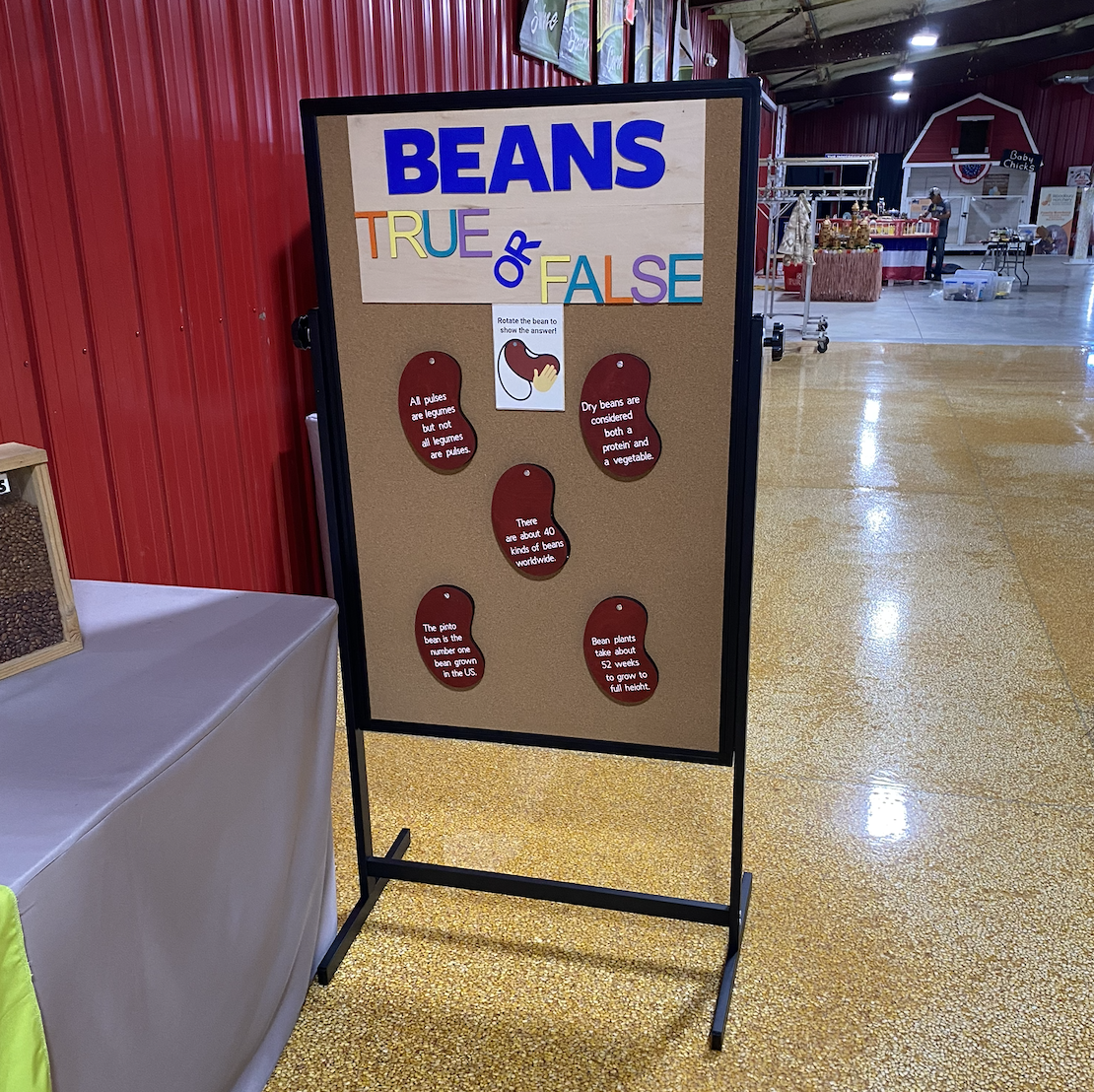
NBGA Finance Director and Education & Sponsorship Committee Staff Lead Jennifer Hansen represented NBGA at the fair. Hansen enjoys the opportunity to engage attendees with interactive bean games: "For the second year Northarvest has an exhibit at the Red River Valley Fair in the Ag Education Building. We are challenging fair goers to test their bean knowledge with an interactive True/False exhibit. The exhibit will stay in the Ag Education Building where local students come on field trips to learn about North Dakota commodities. We are also, again, running the popular Bean Drawing Contest with prizes offered in four age groups."
| | |
Past President Samuelson Graduates from MARL Program
The Northarvest Bean Growers Association Board of Directors wishes to congratulate Past President Eric Samuelson on his graduation from Class 13 of the Minnesota Agriculture and Rural Leadership (MARL) program! This is a two-year professional development program to maximize leadership effectiveness across local, state, national and international arenas.
| | |
NBGA is grateful to MARL Executive Director Brad Schloesser and Program Leader Toby Spanier for developing such a prestigious and honorable leadership program. MARL makes our Board of Directors stronger.
Thank you to Eric Samuelson for your dedication and leadership to improve and advocate for NBGA every day!
| | |
The Dry Bean Scene is sponsored, in part, by NBGA. Click on the links below to listen to the most recent episodes.
-
➡️ July 13, 2026: NDSU Plant Pathologist Dr. Michael Wunsch offers insight into edible bean fungicide decisions. Timing remains the key to protecting yield.
-
➡️ July 4, 2026: Northavest Bean Growers Association Executive Director Mitch Coulter recaps the edible bean acreage as reported by the USDA this past week.
-
➡️ June 29, 2026: The USA Pulses Annual Meeting was held in late June in Scottsbluff, Nebraska. Dylan Karley of Johnstown Bean Company participated in the meeting and said that getting a farm bill completed was discussed. “We want to get further inclusion of pulses; we want to get dry beans combined in with them,” said Karley. Karley also offers a crop update.
-
➡️ June 20, 2026: Recent rains have boosted soil moisture, but they have also increased the disease threat. NDSU Plant Pathologist Sam Markell asks growers to be alert to bacterial diseases in dry edible beans.
-
➡️ June 13, 2026: The nutritional benefits of dry edible beans are evaluated by Pam Ismail, Director of the Plant Protein Innovation Center. With the current focus on protein, there are huge opportunities for dry beans.
|
| Nominations Now Open for Farmers and Ranchers to Serve on USDA Farm Service Agency County Committees | | |
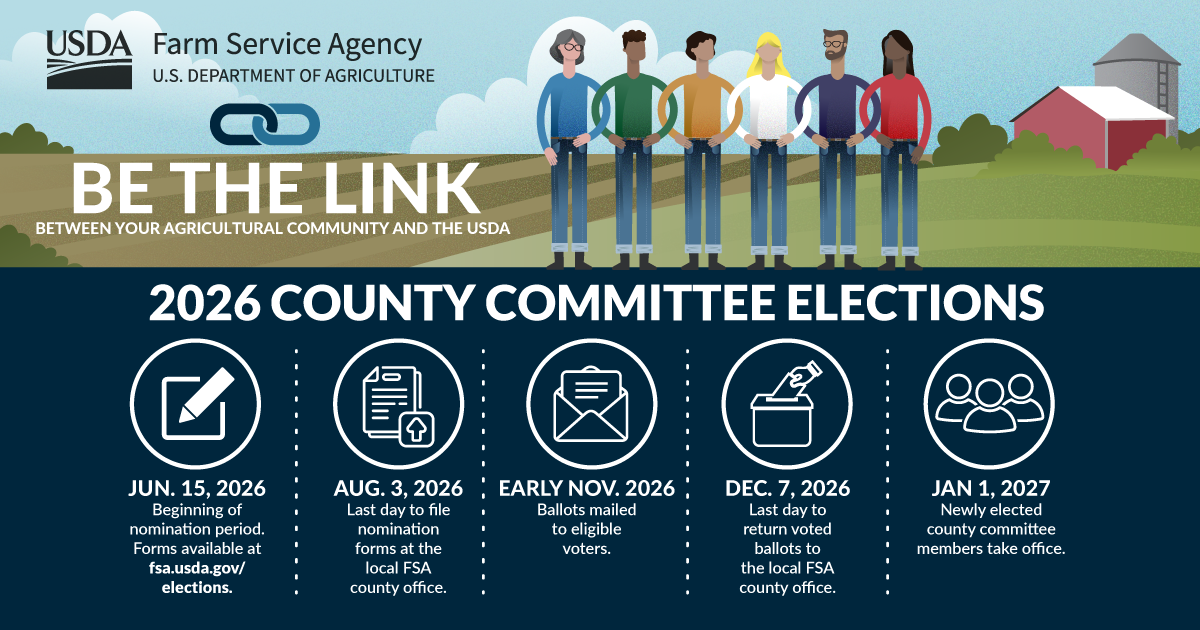
Nominations are now being accepted for farmers and ranchers to serve on local U.S. Department of Agriculture (USDA) Farm Service Agency (FSA) county committees. These committees make important decisions about how federal farm programs are administered locally. All nomination forms for the 2026 election must be postmarked or received in the local FSA office by Aug. 3, 2026.
Elections for committee members occur in certain Local Administrative Areas (LAA). LAAs are FSA committee elective areas in a single county or multi-county jurisdiction and can include LAAs that are focused on an urban or suburban area.
Producers interested in serving on the FSA county committee can locate their LAA at fsa.usda.gov/coc and determine if their LAA is up for election by contacting their local FSA office.
Agricultural producers can be nominated for candidacy for the county committee if they:
- Participate or cooperate in a USDA program.
- Reside in the LAA that is up for election this year.
A cooperating producer is someone who has provided information about their farming or ranching operation to FSA, even if they have not applied or received program benefits.
Individuals can nominate themselves or others and qualifying organizations can also nominate candidates. USDA encourages all eligible producers to nominate, vote and hold office.
Nationwide, more than 7,700 dedicated members of the agriculture community serve on FSA county committees. The committees are made up of three to 11 members who serve three-year terms. Committee members play a key role in how FSA delivers disaster recovery, conservation, commodity and price support programs, as well as making decisions on county office employment and other agricultural issues.
More Information
Producers should contact their local FSA office today to learn more about their county’s election. To be considered, a producer must sign an FSA-669A nomination form. This form and other information about FSA county committee elections are available at fsa.usda.gov/coc.
All nomination forms for the 2026 election must be postmarked or received in the local USDA Service Center by the Aug. 3, 2026, deadline. Election ballots will be mailed to eligible voters in November 2026.
| | |
USDA Announces Enrollment Period and Payment
Rates for Specialty Crop Farmers
Pre-filled Applications Available Online to
Producers with a Login.gov Account
(Washington, D.C., May 29, 2026) – U.S. Secretary of Agriculture Brooke L. Rollins today announced payment rates and the enrollment period for the Assistance for Specialty Crops Farmers (ASCF) program. The U.S. Department of Agriculture (USDA) will issue $1.625 billion in payments to eligible specialty crop producers in response to elevated input costs and market disruptions resulting from foreign competitors engaging in unfair trade practices that impeded specialty crop exports. Producers who have a Login.gov account can access and submit their pre-filled application starting June 1, 2026. Producers who do not have a Login.gov account or prefer to enroll in person at their local Farm Service Agency (FSA) office can request their prefilled application beginning June 8, 2026.
The ASCF enrollment period closes on Aug. 7, 2026.
| |
You can find more information about ASCF at the following links:
| | Below are excerpts from a July 1, 2026 news release from the USDA Farm Service Agency (FSA). Please click the link below to view the full news release, which includes important details about how to file a report and more. | |
USDA Reminds Minnesota Producers to File Crop Acreage Reports, Announces Modernized Pilot Acreage Reporting Process
(St. Paul, Minn., July 1, 2026) – The U.S. Department of Agriculture’s Farm Service Agency (FSA) today announced an acreage reporting modernization pilot program that is a foundational part of the administration’s One Farmer, One File effort. FSA is focused on creating a more efficient, consistent, and customer-focused acreage reporting experience for producers and FSA employees. In Minnesota, Lac qui Parle County is part of the pilot project and producers in the county will use the streamlined acreage reporting process for spring-planted crops. Agricultural producers should make an appointment with their FSA county office to complete crop acreage reports before the applicable deadline.
“As we move away from paper maps to an electronic interface for acreage reporting, I’m excited that producers in Lac qui Parle County have the opportunity to participate in this modernization effort,” said Kurt Blomgren, State Executive Director in Minnesota. “Please be patient with your local FSA office as we all learn the new system together. Producers with acreage in counties outside of the pilot area will complete their crop acreage reports as usual.”
How to File a Report
A crop acreage report documents a crop grown on a farm or ranch, its intended use and location. Producers should file an accurate crop acreage report for all crops and land uses, including failed acreage and prevented planted acreage before the applicable deadline.
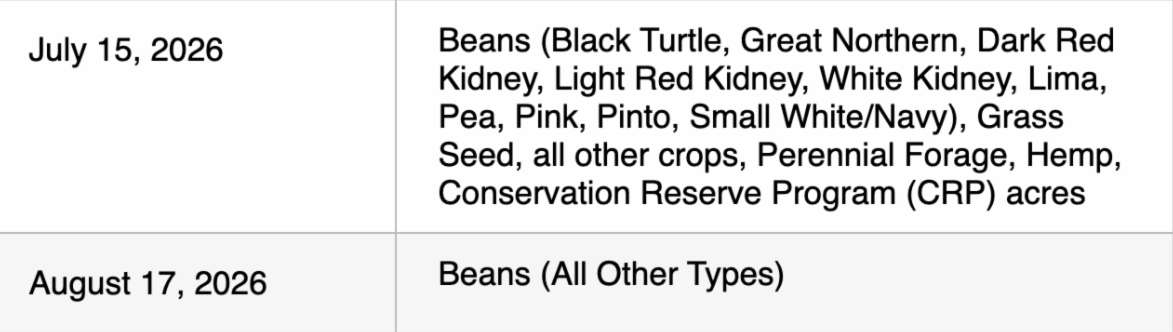
The following acreage reporting dates are applicable for the 2026 crop year in Minnesota:
| | |
Acreage reporting dates vary by crop and by county. Contact your local FSA office for a list of acreage reporting deadlines by crop.
To file a crop acreage report, producers need to provide:
- Crop and crop type or variety
- Intended crop use
- Number of crop acres
- Map with approximate crop boundaries
- Planting date(s)
- Planting pattern, when applicable
- Producer share(s)
- Irrigation practice(s)
- Acreage prevented from planting, when applicable
- Failed acres, if applicable
- Other required information
| | |
2026 NDSU Field Days
The North Dakota State University (NDSU) Research Extension Centers’ annual field days are set. The events take place at the Research Extension Center sites across the state and feature speakers, presentations and tours covering a diverse array of topics. The field days are open to the public. Some have already taken place, but there are still several upcoming field days.
| | |
Richard ‘65 and Linda Offerdahl have committed $3 million to advance groundbreaking research led by NDSU scientist Barney Geddes, accelerating a transformative innovation in agriculture.
The new funding will accelerate research focused on biological nitrogen fixation in cereal crops, a development with the potential to redefine modern agriculture. This work positions NDSU at the forefront of efforts to reduce global dependence on synthetic fertilizers while supporting farmers’ economic sustainability.
| | |
Help with Bean Research
NDSU is conducting a research project to determine preferences related to dry edible beans. The research team will use the results of this survey to develop new educational materials, including videos and webinars.
The survey takes about 5-10 minutes to complete, and participants may win a prize through a drawing.
| | |
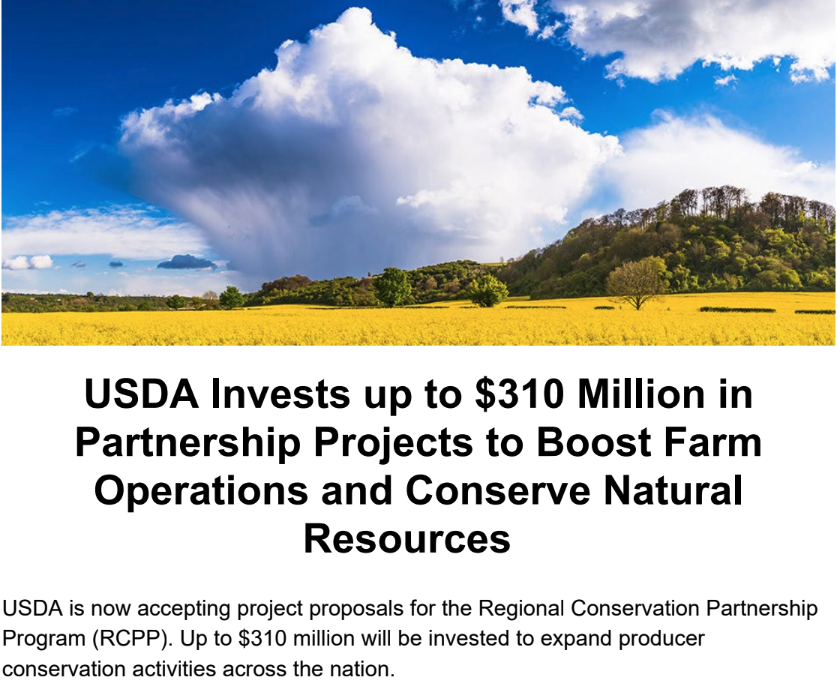
USDA is investing up to $310 Million through the Regional Conservation Partnership Program to boost farm operations and conserve natural resources.
(WASHINGTON, June 23, 2026) – The U.S. Department of Agriculture (USDA) is putting Farmers First by investing up to $310 million to expand producer conservation activities across the nation through the Regional Conservation Partnership Program (RCPP). USDA’s Natural Resources Conservation Service (NRCS) is accepting RCPP project proposals now through August 24, 2026, to help farmers, ranchers, and forest landowners boost their operations and conserve natural resources.
“This significant investment through the Regional Conservation Partnership Program will further enable us to leverage our partnerships as force multipliers in supporting America’s farmers,” said NRCS Chief Colton L. Buckley. “We’re looking forward to seeing the results on the ground while we also work to keep working lands in working hands.”
About the Program
There are two separate funding opportunities:
- RCPP Classic: Projects are implemented using NRCS contracts and easements with producers, landowners and communities in collaboration with project partners.
- RCPP Alternative Funding Arrangements (AFA): The lead partner works directly with agricultural producers to support the development of innovative conservation approaches that would not otherwise be available under RCPP Classic.
Details about RCPP Classic and RCPP AFAs are available on Grants.gov. Project proposals for RCPP are being accepted through August 24, 2026, on the RCPP portal. For more information about RCPP, visit the RCPP website.
| | |
|
On Thursday, July 23rd, the Soil, Water and Nutrient Stewardship Field Day is happening at Farmamerica in Waseca, MN. This is the 10th Annual 4R Field Day.
They have a great schedule planned, and lunch is included. Click on the link below to view the full schedule, which includes talks on economics and fertilizer management practices, discussions of what they have learned at Farmamerica, equipment demonstrations, and more.
|
| |
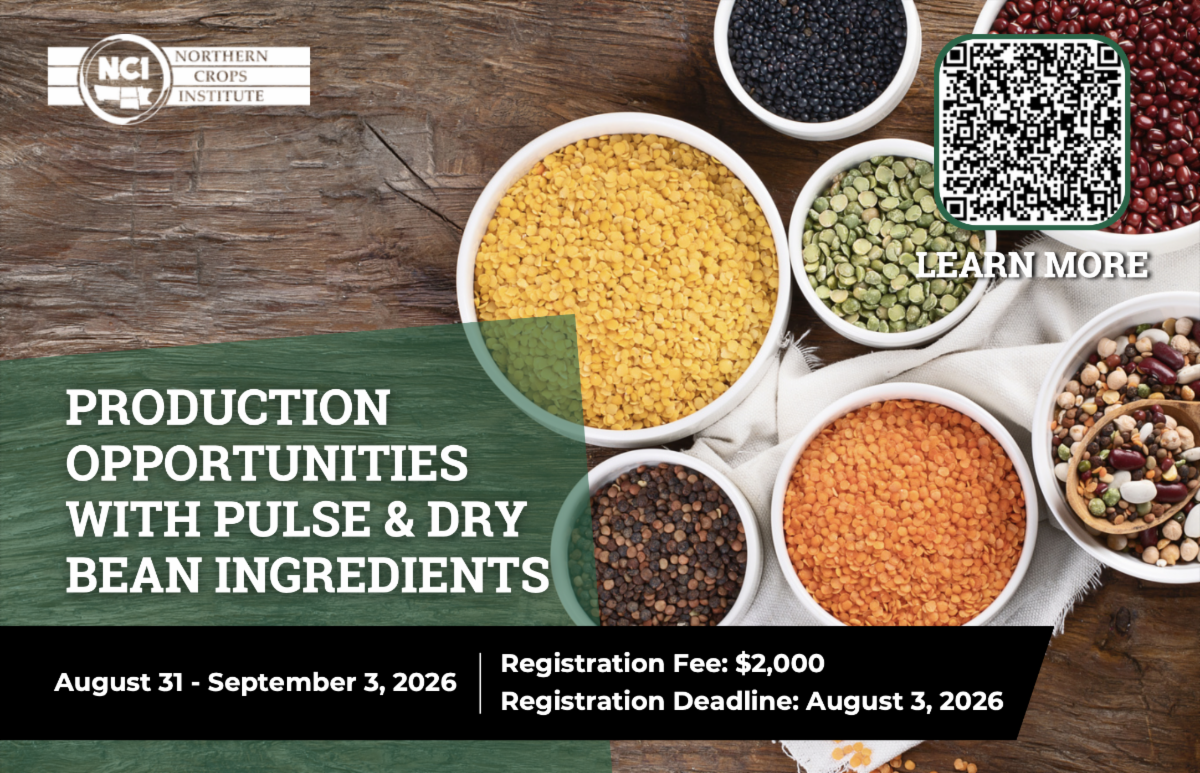
New Course by the Northern Crops Institute on Opportunities for Dry Bean Ingredients
This year, the Northern Crops Institute (NCI) is offering an exciting new course. This course - Production Opportunities with Pulse & Dry Bean Ingredients - will take place on August 31 - September 3, 2026.
For more information, click here or on the image below.
| NCI Program Manager Krista Jansen shares why she is looking forward to the course: “This hands-on course offers a unique opportunity to explore the full value chain of pulse and dry bean ingredients. From milling and functionality to product development and market applications through expert-led sessions and live demonstrations. Participants will leave with practical insights, real-world experience, and new ideas for creating innovative, high-value food products in rapidly growing plant-based markets.” | |
Do you know someone who would enjoy Northarvest News? Forward to a fellow bean grower, family, and friends so they can sign up and be in the NBGA know, too! | |
Thank you for reading. NBGA wishes you a good rest of July, and we look forward to sharing more news and updates in August! | | |
|
4844 Rocking Horse Circle S, Suite 2
Fargo, ND 58104 • info@northarvestbean.org
www.northarvestbean.org
| | | | | |