|
Dear Community:
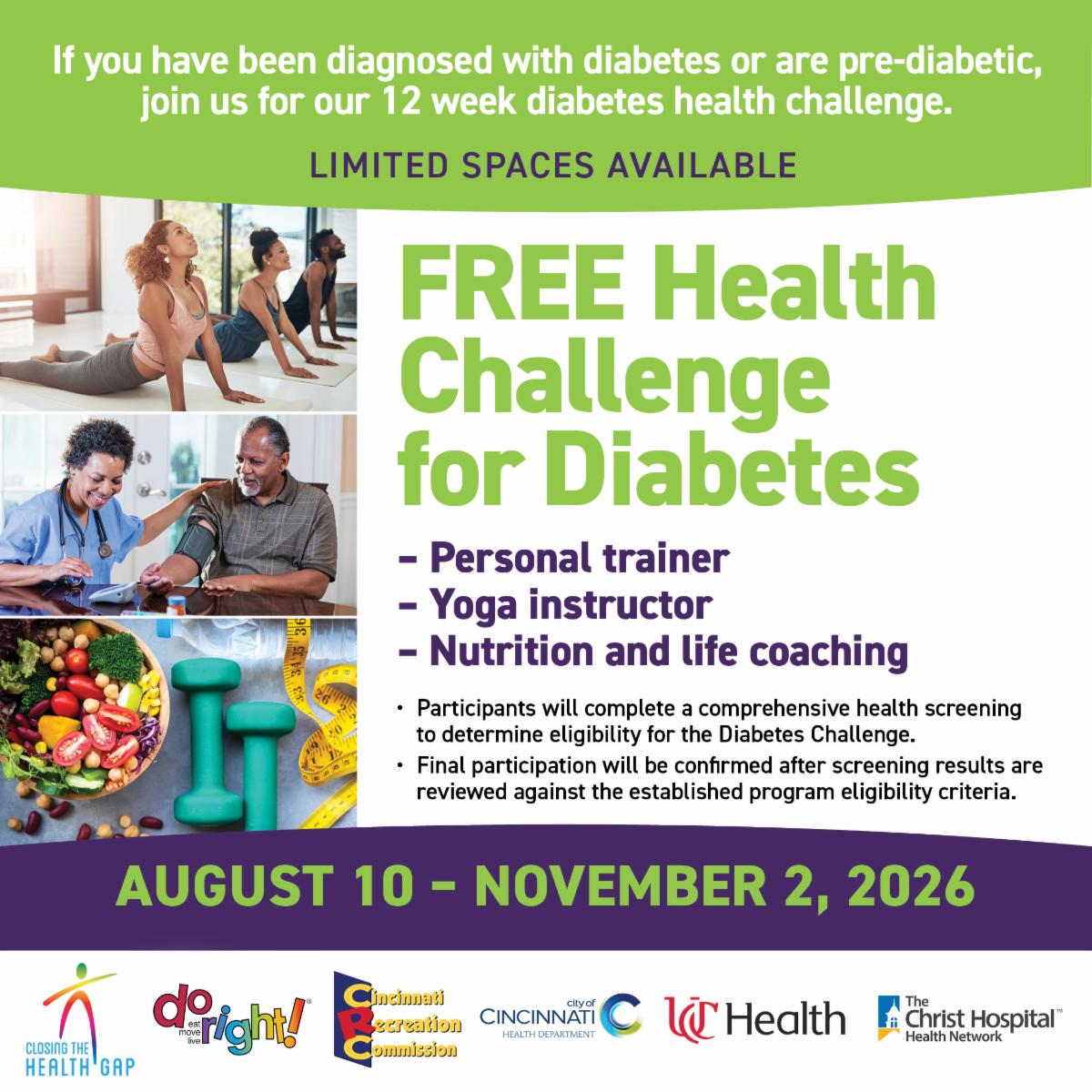
Welcome to this week's Weekly Update! First, a quick correction: In our excitement to launch our new 12-week Diabetes Health Challenge last week, we shared an incorrect sign-up link. The issue has been resolved, and you can now register using the corrected link on the flyer below! If you are pre-diabetic or living with diabetes, I urge you to join this free program offering personal training, yoga, and nutrition coaching.
July is National Black Family Month, a perfect time to celebrate our collective strength, heritage, and the bonds that uplift our neighborhoods. This weekend, July 24-26, we have a wonderful opportunity to do just that at the annual Cincinnati Music Festival, where tens-of-thousands of jazz, R&B, and hip-hop enthusiasts will celebrate in the Queen City. The festival features performances from artists such as Mary J. Blige, Charlie Wilson, Trey Songz, Talib Kweli, Doug E. Fresh, and more.
I hope you will take time this weekend to gather, support local businesses, and celebrate our community. We Must Save Us. Blessings to all of you for a safe and healthy week ahead.
Renee Mahaffey Harris
President & CEO
| |
An Agency That Supports Health-Care Improvement Cuts Off Grant Funding
The Agency for Healthcare Research and Quality told multiple grant recipients last week they won’t receive continuing funding for previously awarded projects, cutting off dollars for ongoing efforts to improve America’s health-care system through research and training for new scientists and clinicians.
Spokespeople for the Health and Human Services Department, which includes AHRQ, didn’t provide interviews or answer multiple written questions Friday from Inside Higher Ed, including how much funding the agency has denied, beyond giving a statement. As of early Sunday afternoon, AcademyHealth, which represents health services and health policy researchers, said it had gathered information on 73 cut-off grants, which lost more than $102 million in “estimated remaining committed funding,” as the group put it.
“Everything Americans hate about health care is what this research focuses on,” said Aaron Carroll, AcademyHealth’s president and chief executive officer. “You think health care costs too much in the United States? Really makes you angry? That’s AHRQ. You think it’s too hard to get in to see a doctor? Wait times are too long? That’s AHRQ.”
| |
Close the Clinical Handoff Gap. Improve Post-Acute Outcomes.
Care transitions are a problem everyone agrees is critical — and few believe they’ve mastered. Discharge processes are tighter, documentation is thicker and Medicare Advantage (MA) organizations have added post-discharge outreach. Still, the same scenario repeats: a member leaves the hospital, responsibility shifts, the next team starts with partial context and preventable complications emerge quickly. The biggest vulnerability isn’t the readmission metric, it’s the clinical handoff — the moment accountability changes hands while risk is still rising.
Post-acute care makes that vulnerability costly. Roughly 15% of MA beneficiaries are rehospitalized within 30 days, and rehospitalizations from skilled nursing facilities (SNFs) account for billions in spend. The estimate that 78% of SNF rehospitalizations are avoidable reframes the issue from “unlucky outcomes” to “fixable failure.”
|
Booker Leads Renewed Push to Combat Maternal Health Crisis with Mamas First Act
U.S. Senators Cory Booker (D-NJ) and Elizabeth Warren (D-MA) led colleagues in reintroducing the Mamas First Act, legislation that would address the maternal mortality crisis by expanding Medicaid coverage to include prenatal, delivery, and postpartum care provided by doulas, midwives, tribal midwives, and lactation support providers. These services have been proven to reduce C-sections, decrease maternal anxiety, and improve communication between pregnant women and their health care providers.
“The Mamas First Act meets a crisis that is costing mothers their lives—especially Black and Indigenous women who walk into delivery rooms carrying risks no family should bear,” said Senator Booker. “By ensuring Medicaid reimburses doulas, midwives, tribal midwives, and lactation support professionals, this bill delivers the trusted care that keeps mothers safe and babies alive. Congress must act now.”
|
Artificial intelligence needs better health systems to reduce inequalities
Artificial Intelligence (AI) technologies are increasingly prevalent in healthcare, yet without adaptive governance, even well-designed systems risk exacerbating health inequalities. This perspective examines five interconnected governance domains: legal frameworks, evidence generation, regulation and market access, workforce readiness, and public trust. We argue these form a cyclical governance chain in which weaknesses cascade across domains, and identify critical gaps and system-level reforms to ensure AI reduces rather than amplifies disparities.
|
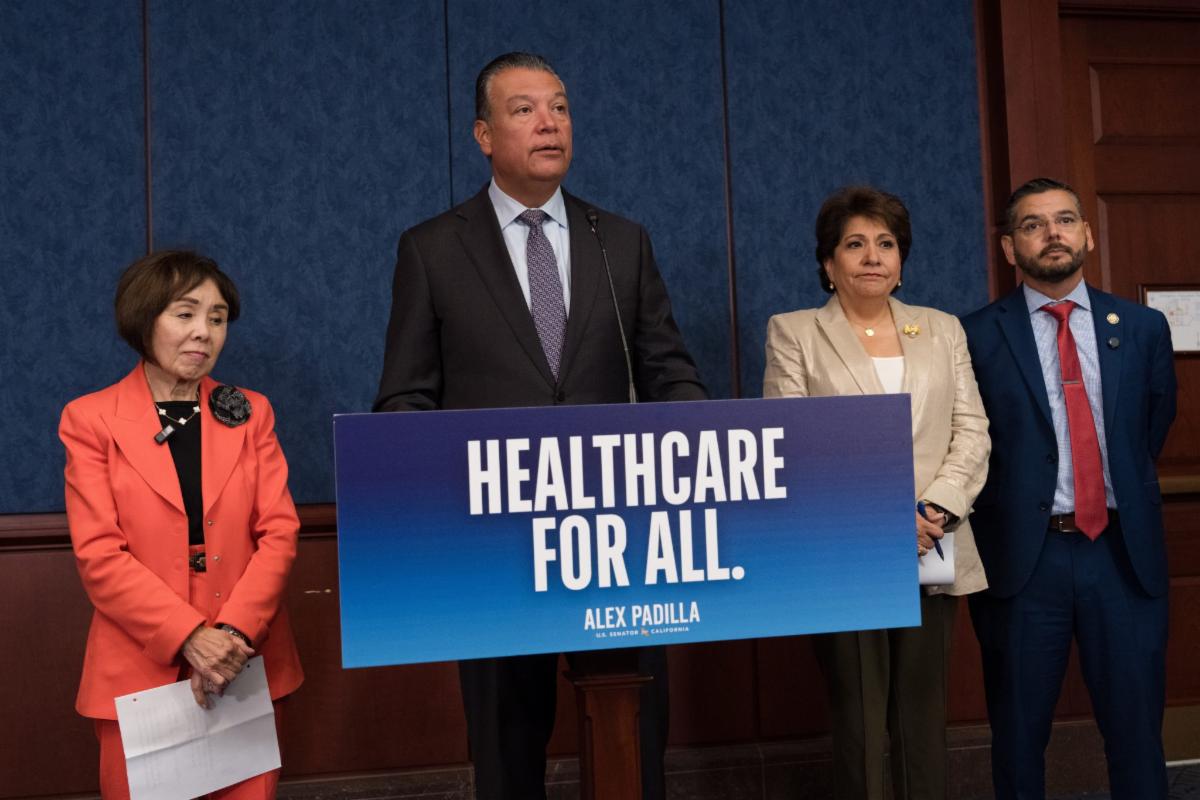
Padilla Leads Tri-Caucus in Introducing Sweeping Health Equity Bill
This week, U.S. Senator Alex Padilla (D-Calif.), along with Senators Mazie Hirono (D-Hawaii) and Cory Booker (D-N.J.) and Representatives Raul Ruiz (D-Calif.-25), Robin Kelly (D-Ill.-02), and Grace Meng (D-N.Y.-06) announced the reintroduction of the Health Equity and Accountability Act (HEAA) of 2026, bicameral legislation that would address health disparities among racial and ethnic minorities as well as women, the LGBTQ+ community, rural populations, and socioeconomically disadvantaged communities across the United States.
“Affordable, culturally competent healthcare is a right all Americans deserve,” said Senator Padilla. “Systemic inequities coupled with the Trump Administration’s attacks on Medicaid and cuts to hospitals have led to historically marginalized groups without access to essential care. Our bill will help dismantle barriers to care by expanding access to mental health and reproductive care, addressing diseases that disproportionately impact underserved communities, and improving the data we need to better identify and reduce health disparities.”
| |
Better Access to Local Pharmacies Lowers Racial Disparities in Medication Use
A new study led by scholars at the University of Washington has found that better access to community pharmacies leads to higher and more equitable use of prescription drugs across racial and ethnic groups.
For their study, the authors examined U.S. counties’ share of community residents living within a 10-minute walk or drive of a pharmacy between 2010 and 2023 and linked that data to medication use among residents of different ages and racial backgrounds. According to their analysis, the authors found a 1 percent increase in people living within 10 minutes of a pharmacy was associated with a 0.7 percent higher use of medications. This association was strongest among Black residents, as well as Asian/Pacific Islander and Hispanic populations. Additionally, a 1 percent increase in 10-minute community pharmacy access was associated with a 0.52 percent decrease in racial and ethnic disparities in medication use.
| | | | |