The Landscape Conservation Bulletin

A bi-monthly service of the 
Network for Landscape Conservation

July 2026

Dear Network Friends,


The Network for Landscape Conservation was launched in 2011, and in the last decade and a half the field of collaborative landscape conservation and stewardship has continued to grow and evolve in compelling ways.


In marking NLC’s fifteenth year, we are midstream in a series of reflections. We have been looking back: Where has NLC had success and impact over the years? How has the collaborative landscape field of practice evolved since 2011? In what ways has the external context within the broader conservation and stewardship movement shifted? And we have been looking forward: What are the needs or opportunities within the collaborative landscape field now and in the coming years? How do those needs and opportunities show up—where are there local needs and where are there cross-cutting, national needs? What does all of this suggest about NLC’s role in continuing to scale the field’s impact in the coming years?


These reflections continue to affirm the core value of NLC’s as rooted in field-building: How can we collectively support, strengthen, and advance this field of practice that we all share?


As we sharpen NLC’s strategic direction for the coming years, we continue to be guided by the belief that the Network is most directly a community—a community made up of all those invested in and engaged in advancing collaborative landscape conservation and stewardship activities. In other words, you are NLC, and have an important perspective in shaping our shared trajectory: What you are sensing in the work that you are doing in your landscapes, where you are seeing needs or opportunities, and how you think that NLC can add value to the collective effort of advancing this field? Reach out and let us know.


In the meantime, we hope you enjoy this month’s Bulletin. And hoping too that you are finding moments to escape out into the places that you love with people you cherish as we move through the second half of the summer!


In This Issue

Progress on Wildlife Crossings

Salazar's "Pulse of the Community" Survey

Additional Landscape Conservation News
Upcoming Events
Landscape Conservation Job Board
Webinars & Additional Resources

Jonathan S. Peterson

Director, Network for Landscape Conservation


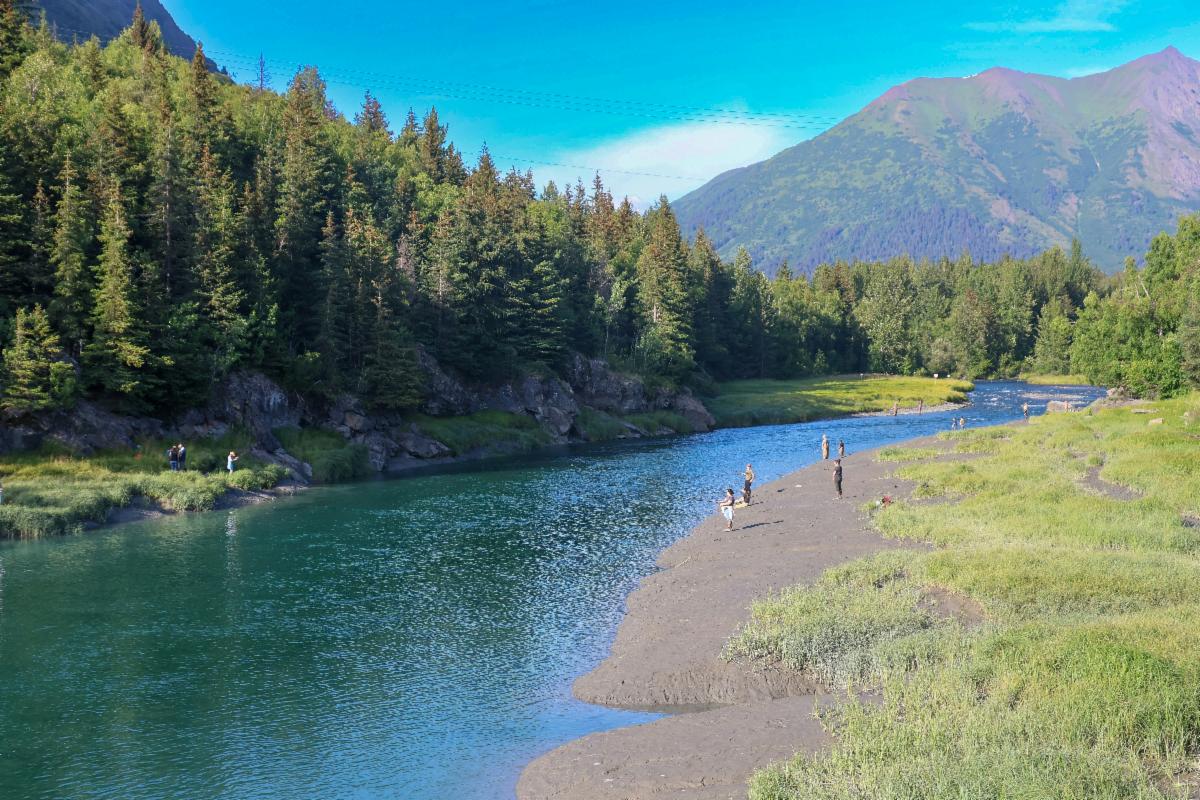
Cover photo: Fishing in Anchorage, AK. Photo by Megan von Haartman on Unsplash.


Featured News

States advance dedicated funding, innovative partnerships, and landmark policies for wildlife crossings and landscape connectivity

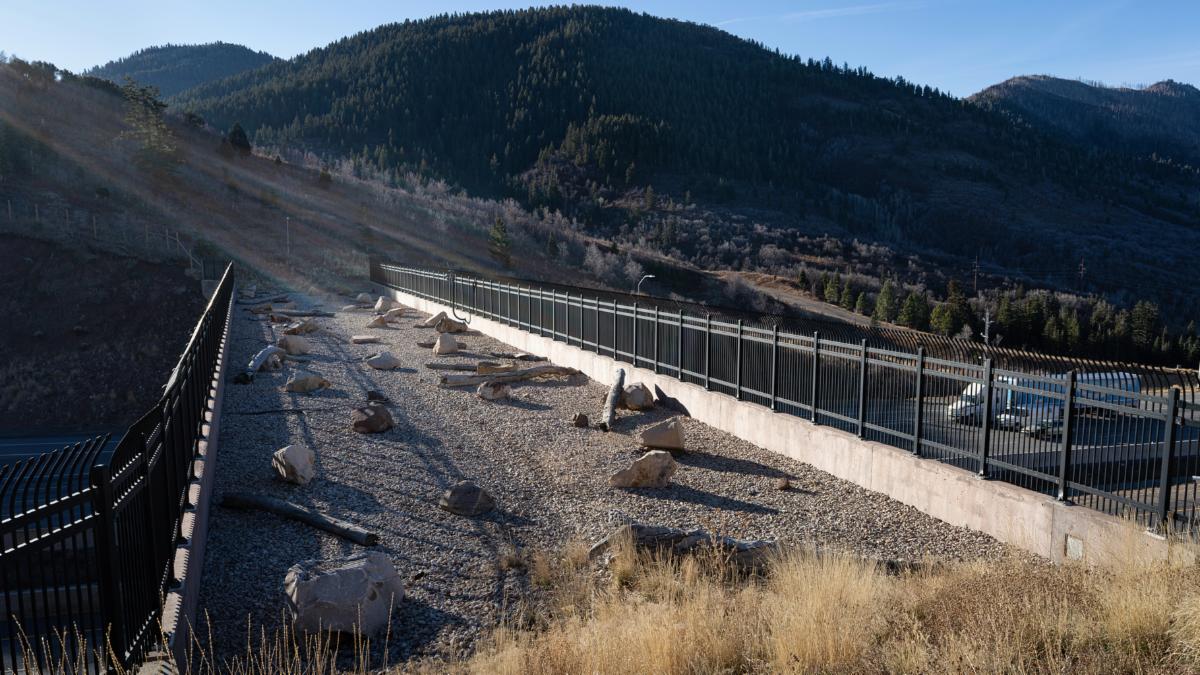
Considering conservation and stewardship from a landscape perspective encourages us to think about the functional rather than bureaucratic context of land, and brings into focus the importance of ecological connectivity—which only becomes increasingly relevant in the face of the accelerating stressors of climate change on our landscapes. Wildlife crossings that allow animals to safely traverse human-built transportation infrastructure is one specific tool for addressing connectivity concerns. At a federal level, a pilot Wildlife Road Crossings Program was launched in 2021, and current efforts are underway to make the program permanent. States, however, are not awaiting federal leadership on this issue, and an article in the current edition of Trust traces the burst of activity in 2026 alone as states advance dedicated funding, innovative partnerships, and landmark policies for wildlife crossings and landscape connectivity—highlighting how Utah, Virginia, Idaho, and Oregon have all made significant legislative progress so far this year. Although not featured in the article, an important milestone was reached in North Carolina earlier this month too, where lawmakers established a permanent multi-million dollar funding source for wildlife crossings. And elsewhere, in Pennsylvania, a new multi-agency work group—co-lead by the Department of Conservation and Natural Resources and the Department of Transportation—has been tasked with developing the Commonwealth’s first statewide wildlife connectivity strategy.


The combination of federal and state progress here continues to touch down on the ground: a proposed wildlife crossing over Interstate 5 in southern Oregon—to be the first wildlife overpass on I-5 from Mexico to Canada—has received $33 million in federal appropriations. With construction set to begin in 2028, the crossing will reconnect habitat within the Cascade-Siskiyou National Monument and make one of the West Coast's most critical migration corridors safer for wildlife and drivers alike. All of this underscores that landscape connectivity is moving from niche to mainstream priority, with leadership across the political map committing real dollars and new institutional structures to keeping wildlife connected to habitat and roads safer.


How have the conservation and stewardship community's concerns, optimism, and strategies shifted over the past year?


Complete the survey


A little over a year ago, the Salazar Center conducted a survey during its International Symposium on Conservation Impact, asking folks to reflect on the challenges of advancing biodiversity conservation and stewardship during a time of rapid political change, with findings captured here. As the Center looks ahead to its 2027 Symposium, scheduled for February in Mérida, Mexico, it is again conducting a "pulse of the community" survey, seeking to understand how the conservation community's perspective is changing and evolving as the dynamics continue to unfold.


Please consider taking five minutes to complete the survey, as findings will help shape the agenda for the 2027 International Symposium on Conservation Impact. Complete the survey by the end of July for a chance to win a 50% discount on Symposium registration.


Additional Landscape Conservation & Stewardship News

Last month, federal partners announced the designation of two new landscapes—the East Mississippi and Pikes Peak—as Sentinel Landscapes, bringing the total number of Sentinel Landscapes to twenty-one.

See the announcement


Also in June, the Sentinel Landscapes Partnership released its 2025 Accomplishments Report, highlighting how the program has continued to grow and expand to safeguard military installations from encroachment, strengthen resource-sharing across partners, and advance landscape-scale conservation on working and natural lands.

Read the report


New report from 1000 Landscapes for 1 Billion People outlines a policy vision for how national and sub-national governments can create the enabling conditions needed for integrated landscape management to thrive.

Explore the vision


In a powerful new contribution to Ground Shift’s on-going essay series, Amanda John Kimsey argues that the conservation movement has a relevancy and class problem—one that can only be addressed by connecting nature loss to kitchen table issues like insurance costs, grocery prices, and flood risk, and by genuinely sharing power with the frontline communities who are both most harmed by nature loss and most motivated to fight for change.

Read more


Elsewhere, in a separate contribution to Ground Shift's on-going essay series, Tim Purington outlines five strategies that land management agencies can adopt to accelerate and scale ecological restoration on public lands.

Read the essay


As a supplement to its essay series, Ground Shift launches The Forum, a new space where people can contribute quick-hit ideas, perspectives, and creative work to help shape the future of America's public lands and waters in 2050.

Explore The Forum


Article in the latest edition of Trust, the quarterly magazine of The Pew Charitable Trusts, highlights how states are increasingly considering how to build disaster resilience through green infrastructure solutions—while a related post examines how Massachusetts, Minnesota, and Rhode Island are working to develop adaptive management and long-term climate resilience investment frameworks.

See the article here and the related post here


The Mi'kmaq Nation has acquired nearly 3,400 acres of forest, wetland, and stream habitat in Aroostook County, Maine, more than doubling the Tribe's territory and access to ancestral lands for hunting, fishing, and the transmission of traditional knowledge to future generations—the sixth completed project of the Tributary Land Returns initiative, a collaboration between the five federally recognized Wabanaki Tribes and seven non-native organizations working to return tens of thousands of acres to Wabanaki communities. 

Learn more


Zero Consultation: Reporting underscores that two coalitions of Native American tribes were not consulted before the downsizing of Bears Ears and Grand Staircase-Escalante national monuments—reductions that also terminated the Bears Ears Commission, dismantling years of collaborative co-management between the federal government and five Tribal Nations.

Learn more


Spotlighting the power of collaboration, relationships, and trust, a post from LegacyWorks Group reflects on the Snake River Headwaters Symposium in Jackson, Wyoming, and how farmers, Tribal leaders, scientists, and agency staff from across the watershed came together in search of a foundation of collective resilience for when crisis arrives and the water runs low.

See the post


Article from Offrange profiles Montana ranchers and farmers who are adopting a new ethic of watershed stewardship—repairing riparian areas, converting irrigation to more sustainable systems, and working with conservation partners to keep water in streams—and finding that caring for the creek pays off both ecologically and economically in a state where water and agriculture are inseparable.

Read the findings


The Salazar Center for North American Conservation releases a report on its 2025 Peregrine Accelerator cohort in the North Atlantic Transboundary Landscape, showcasing eight project teams whose work on forest connectivity, Indigenous land stewardship, coastal governance, and aquatic restoration reflects what is possible when conservation leaders are given dedicated time, seed funding, and deep peer support to move ambitious ideas into action.

Read the report


New report from the U.S. Forest Service examines the role of watershed restoration in post-wildfire recovery, highlighting how strategic investments in soil, stream, and vegetation health reduce erosion, protect water quality, and build long-term landscape resilience in fire-affected forests.

Read the report


Regional landscape conservation planning: New book, edited by Reed Noss and Tom Hocker, uses 40 years of experience in Florida to explore the background, history, and application of landscape connectivity principles to conservation.

Learn more


Story from Reimagining the Civic Commons spotlights the growing research on joy as a driver of human health and social connection, making the case that designing public spaces to create conditions for genuine joy is one of the most powerful tools available for building equitable, resilient communities.

Explore the post


Reflection piece from the Northern Forest Center considers ecological forestry in practice, examining the hands-on, often counterintuitive work of active forest stewardship needed to restore health, structural complexity, and long-term resilience to forests that have been shaped by decades of management, disturbance, and industrial use.

Read more


Writing in From the Ground Up, Bob Perschel suggests a guiding question for considering forest management in New England: How do we embed a system of ecological reserves in a landscape-scale matrix of forests managed for timber and ecological values to achieve an optimum mix of species richness and abundance?

Read the article


America’s Public Lands at a Crossroads: The Wallace Stegner Center’s 31st Annual Symposium, hosted in March on the University of Utah campus, brought together legal scholars, policymakers, and land managers to examine the legal and political challenges facing federal public lands and to explore pathways for durable, science-based stewardship—presentations can now be viewed online.

Catch up on the discussion


Upcoming Conferences & Events


* * * *

August 19-20, 2026 Arizona Cross-Watershed Network Summit

Virtual


August 19, 2026 - Lake Tahoe Summit

Sand Harbor State Park, NV


August 19-21, 2026 — Emergence: The Annual Convening of the Indigenous Stewardship Network

Sacramento, CA


September 15-19, 2026 — Turtle Island Bioregional Congress 11

Vernonia, OR


September 22-24, 2026 Private Lands Partners Day

Alexandria, MN


September 22-25, 2026 — Restore America's Estuaries: Coastal & Estuarine Summit

San Francisco, CA


October 5-8, 2026 2026 Natural Areas Conference: Where Science Meets Stewardship

Asheville, NC


October 20-22, 2026 Resilient California Summit

Sacramento, CA


October 21-22, 2026 — California Landscape Stewardship Network @10: Celebrating Progress, Inspiring Action, Shaping What's Next

Tahoe City, CA


November 4-6, 2026 — Chihuahuan Desert Conference

El Paso, TX


November 5, 2026 — Regional Conservation Partnership Network Gathering: Cultivating a Shared Food Future Through Conservation, Community, and Collaboration

Amherst, MA


February 9-11, 2027 — Salazar Center's 2027 International Symposium on Conservation Impact

Mérida, Mexico


Landscape Conservation Job Board


* * * *


Executive Director, Conservation Finance Network

Learn more


Executive Director, Tillamook Bay Estuaries Partnership

Learn more


Chief Executive Officer, Wildpath

Learn more


Program Manager for Land Conservation, Native Americans in Philanthropy 

Learn more


Coordinator, Western Klamath Restoration Partnership

Learn more


Finance and Operations Manager, Potomac Conservancy

Learn more


Northwest Resource Coordinator, Western Landowners Alliance

Learn more


Grant Writer and Administrator, Indigenous Stewardship Network

Learn more


Senior Land Transaction Manager, Sempervirens Fund

Learn more


This section of the Landscape Conservation Bulletin is intended to be a space to share job postings that will be specifically relevant to landscape conservation practitioners. We welcome submissions: if your organization would like to widely distribute a posting please be in touch.


Webinars & Additional Resources


* * * *

Tribal Community Resilience Webinar Series

A monthly webinar series from the Climate Adaptation Science Centers

February - September 2026


Landscapes as Engines of Prosperity: A New Policy Vision for Integrated Landscape Management

Part of the From Polycrisis to Progress webinar series, from 1000 Landscapes for 1 Billion People

August 13, 2026


Federal Collaboration Certificate Course

A virtual training from the Wallace Stegner Center's Environmental Dispute Resolution Program

Registration closes September 1; course runs September - December 2026


Tools for Collaborative Engagement and Planning

A virtual workshop from the Collective Impact Forum

August 20, 2026


Local and State Outdoor Equity Policies

An America the Beautiful for All Coalition Urban Park & Green Space webinar

August 20, 2026


Built to Last: A Resilience Course for Western Conservationists

A three-day experiential learning journey from the Western Conservation Leadership Development Program

September 22-24, 2026


Backbone Leaders Learning Lab

A cohort-based learning program from the Collective Impact Forum

September - October 2026

Through the Looking Glass: Fundamentals of Western Conservation Leadership

An 8-month intensive leadership development experience with two in-person and on virtual session, plus monthly session.

Begins October 2026


Steps to Resilience

A self-guided workshop from the Climate Smart Communities Initiative


Building Blocks of Trust Training Series

A self-directed training series from the River Network and Water Now Alliance


NatureConnect 

NatureConnect is a diverse suite of services, tools, and workshops offered by the Center for Large Landscape Conservation to help partners achieve connectivity and landscape conservation goals. 


Connectivity 101

A free, online course developed by the Center for Large Landscape Conservation and partners in the Wildlife Connect Initiative with technical support from UNDP Learning for Nature. Conservation professionals and other interested parties can now register for the course to learn about conserving and restoring ecological connectivity to support a healthy planet. 


Conservation Finance Boot Camp Short Course

Following cancellation of the 2020 Conservation Finance Boot Camp, the Conservation Finance Network compiled a 4-part video short course, which is available via the above link.


America Adapts: The Climate Change Podcast

A weekly podcast that explores the challenges presented by adapting to climate change and the approaches the field's best minds believe are already working.


Recordings of past webinars of the Connected Conservation webinar series are available on the National Park Service Connected Conservation website.


Recordings of past NLC Landscape Conservation in Action webinars are available on the Network's Landscape Conservation in Action Webinar Series page.


STAY CONNECTED
Facebook  Linkedin  Youtube  

The Network for Landscape Conservation is the community of practice for practitioners advancing collaborative, cross-boundary conservation as an essential approach to protect nature, culture, and community in the 21st Century.


www.landscapeconservation.org


Contact Jonathan Peterson, Network Director, for more information. 


Contributions of news, upcoming events, resources, and job postings for future Bulletins are welcomed. We also welcome inquires for potential future "Perspectives: Landscapes Conservation in Action" stories; please be in touch if you are interested in sharing stories and insights from your work.


The Network for Landscape Conservation is a fiscally sponsored project of the Center for Large Landscape Conservation, P.O. Box 1587, Bozeman, MT 59771