Your monthly news & updates from AHN! |
|
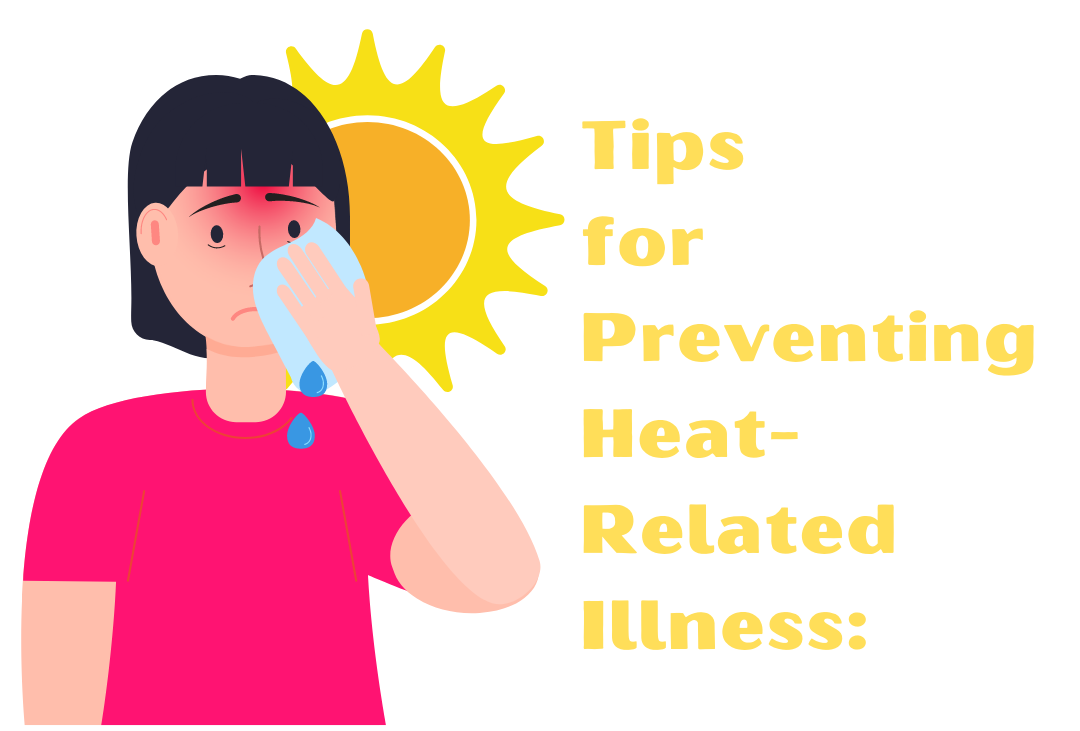
Heat-related illnesses, like heat exhaustion or heat stroke, happen when the body is not able to properly cool itself. While the body normally cools itself by sweating, during extreme heat, this might not be enough. In these cases, a person’s body temperature rises faster than it can cool itself down. This can cause damage to the brain and other vital organs. Click HERE, to learn about Warning Signs and Symptoms of Heat-Related Illness
|
|
Stay Cool
Stay in an air-conditioned place as much as possible. If your home does not have air conditioning, go to the shopping mall or public library—even a few hours spent in air conditioning can help your body stay cooler when you go back into the heat. Call your local health department to see if there are any heat-relief shelters in your area.
- Schedule Outdoor Activities Carefully: Try to limit your outdoor activity to when it’s coolest, like morning and evening hours. Rest often in shady areas so that your body has a chance to recover.
- Pace Yourself: Cut down on exercise during the heat. If you’re not accustomed to working or exercising in a hot environment, start slowly and pick up the pace gradually. If exertion in the heat makes your heart pound and leaves you gasping for breath, STOP all activity. Get into a cool area or into the shade, and rest, especially if you become lightheaded, confused, weak, or faint.
Do Not Leave Children in Cars: Cars can quickly heat up to dangerous temperatures, even with a window cracked open. While anyone left in a parked car is at risk, children are especially at risk of getting a heat stroke or dying.
Stay Hydrated
Drink Plenty of Fluids: Drink more fluids, regardless of how active you are. Don’t wait until you’re thirsty to drink.
Heavy sweating removes salt and minerals from the body that need to be replaced. A sports drink can replace the salt and minerals you lose in sweat.
Stay Informed
Check for Updates: Check your local news for extreme heat alerts and safety tips and to learn about any cooling shelters in your area.
|
|
Spending time outside is a great way to be physically active, reduce stress, and get vitamin D.
You can work and play outside without raising your skin cancer risk by protecting your skin from the sun. Most skin cancers are caused by too much exposure to ultraviolet (UV) light. UV rays are an invisible kind of radiation that comes from the sun, tanning beds, and sunlamps.
UV rays can damage skin cells.
Shade
You can reduce your risk of sun damage and skin cancer by staying in the shade under an umbrella, tree, or other shelters. Your best bet to protect your skin is to use sunscreen or wear protective clothing when you’re outside—even when you’re in the shade.
Clothing
When possible, wear long-sleeved shirts and long pants and skirts, which can provide protection from UV rays. If wearing this type of clothing isn’t practical, try to wear a t-shirt or a beach cover-up. Clothes made from tightly woven fabric offer the best protection. A wet t-shirt offers much less UV protection than a dry one, and darker colors may offer more protection than lighter colors. Some clothing is certified under international standards as offering UV protection.
Hat
For the most protection, wear a hat that has a brim all the way around that shades your face, ears, and the back of your neck. A tightly woven fabric, such as canvas, works best to protect your skin from UV rays. Avoid straw hats with holes that let sunlight through. A darker hat may offer more UV protection. If you wear a baseball cap, you should also protect your ears and the back of your neck by wearing clothing that covers those areas, using sunscreen, or staying in the shade.
Sunglasses
Sunglasses protect your eyes from UV rays and reduce the risk of cataracts. They also protect the tender skin around your eyes from sun exposure. Sunglasses that block both UVA and UVB rays offer the best protection. Most sunglasses sold in the United States, regardless of cost, meet this standard. Wrap-around sunglasses work best because they block UV rays from sneaking in from the side.
Sunscreen
Put on broad-spectrum sunscreen that blocks both UVA and UVB rays and has an SPF of 15 or higher before you go outside. Don’t forget to put a thick layer on all exposed skin. Get help for hard-to-reach places like your back.
|
|
If You Are Uninsured Call Us,
We Can Help!
Access Medical Program
If you are uninsured and can’t afford to obtain healthcare for yourself or your family, we can help. We treat each of our members like they are our own family and we will be there every step of the way to make sure you get what you need. It’s what we’ve always done and will continue to do. We are here to serve you.
|
|
Did you know, you can start your
Access Medical application online?
|
|
We require all visitors to wear a mask and use hand sanitizer before entering the office.
The safety of our staff and visitors is our number one priority.
We are open Mon-Fri from 8am-5pm.
You can visit accesstohealthcare.org for a list of all our services and assistance.
Our community needs Access to Healthcare now more than ever.
|
|
|
Follow us to stay connected! |
|
Be the first to know AHN's news, promotions, events, and much more!
|
|
Cold weather virus in summer baffles docs, worries parents |
The recent emergence of a virus that typically sickens children in colder months has baffled U.S. pediatricians and put many infants in the hospital with troublesome coughs and breathing trouble.
RSV, or respiratory syncytial virus, is a common cause of cold-like symptoms but can be serious for infants and the elderly. Cases dropped dramatically last year, with people staying home and social distancing, but began cropping up as pandemic restrictions eased.
|
|
Telehealth use drops for 3rd straight month
as patients return to in-person appointments
|
Americans are slowly returning to medical facilities to receive care and are using fewer telehealth services after last year's pandemic high, according to new data.
Telehealth claim lines dropped 12.5% nationally as a percentage of medical claim lines, decreasing from 5.6% of claim lines in March 2021 to 4.9% in April, the data shows.
|
|
Learn more about our programs: |
|
SPREAD THE WORD!
Please forward this email to a friend!
|
|
|
|
|
|
|