|
Who is a Person with a Disability?
Happy July! I hope that you are all having a great summer!
July is Disability Pride Month. It commemorates the signing of the Americans with Disabilities Act (ADA) on July 26, 1990. The ADA is a "civil rights law that prohibits discrimination against people with disabilities in everyday activities...“ The ADA guarantees that people with disabilities have the same opportunities as everyone else to enjoy employment opportunities, purchase goods and services, and participate in state and local government programs. In this month's newsletter, I want to briefly discuss how the ADA may affect some of us in ways that we may not realize.
Many people may not be aware that some serious mental health conditions can be a disability as well. Most people are either able to perform at work even with their condition, or are able to take advantage of flexibilities provided by their employer (example, sick days). Some seek other work opportunities where they are able to perform. Yet others are more severely affected such that they cannot work at all. In these situations, you may be eligible for social security disability insurance or supplemental security income.
How do I know if I am legally considered disabled to the point I cannot work? We sometimes get this question, so I want to spend a little time here shedding some light on this complex question. There is no simple answer to this question since, in addition to a clinical or technical definition, it may be a deeply personal issue.
It should be noted that it is usually preferred to say "person with disability" or "differently-abled", instead of "disabled person" (Tip, use "person-first" language.) However, since we are dealing with bureaucratic definitions, we will use the terminology used by the government in the laws. According to the ADA: "an individual with a disability is... a person who has a physical or mental impairment that substantially limits one or more major life activities, a person who has a history or record of such an impairment, or a person who is perceived by others as having such an impairment." According to the Social Security Administration: "the law defines disability as the inability to engage in any substantial gainful activity ... by reason of any medically determinable physical or mental impairment(s) which can be expected to result in death or which has lasted or can be expected to last for a continuous period of not less than 12 months." However, the laws and regulations do not list all of the impairments that are included in this definition. That's one of the reasons why it can be a complicated process to be declared "disabled." If you believe that you meet these definitions, while we cannot guarantee eligibility, we at Lakes Center are able help with the supporting documentation while continuing to provide ongoing treatment. It can take a very long time to process any "disability" application, so we would encourage you to look into it sooner, and don't be ashamed to ask for help.
This month, we honor all of you, who struggle every day to live life, be productive, and thrive. Some of you have mental impairments that are more serious. We continue to raise awareness about disability rights and promote inclusion and accessibility for all. Here at LC, we are against any form of hate and discrimination. If you believe that your mental health issues could jeopardize your protections under the law, we are here to provide assistance.
| | |
Lynne Lyons, MD
Medical Director and Psychiatrist
Lakes Center Mental Health Network
| | Your Well-being Deserves Attention – Especially Now | |
Summer brings long days, social invitations, and shifting routines. While that can be refreshing, it can also be overwhelming. July is an ideal time to refocus on self-care that supports your mental and emotional health.
Here are 3 ways to stay grounded this month:
• Protect your boundaries – It’s okay to say no. Carve out space for rest and reflection.
• Enjoy nature mindfully – Tech-free walks or quiet garden moments can help regulate mood.
• Tune into your feelings – Notice what you’re truly feeling. Journaling or chatting with a trusted professional can offer clarity and support.
Read More...
| | |
New Grief Therapy Offered at Lakes Center
Lakes Center is pleased to introduce IADC (Induced After Death Communication) Therapy, a specialized and innovative approach designed to help individuals process profound grief and loss. Derived from EMDR therapy, IADC focuses on alleviating the deep sadness associated with the death of a loved one, often leading to a sense of reconnection with the deceased, and ultimately fostering significant healing and peace. This psychotherapeutic intervention aims to help clients find resolution and move forward in their healing journey after as little as two 90-minute sessions.
Important Note: Lakes Center does not accept insurance for IADC. It is strictly self-pay.
If you are interested in finding out more, contact Linda Fershtman at (248) 671-3030 or LFershtman@lakescenter.com.
| | |
Mental Health Tip:
Write it Out, Let it Go – then Breathe in Peace
Spend 10 minutes journaling freely about your stress, anger, or worries – no filter, no rules. Then, close your eyes and take 5 deep breaths. Visualize letting go of tension and breathing in peace, love, and calm.
This simple combo of writing + breathing has been shown to reduce anxiety and improve mental clarity.
| | |
Mental Health Tip:
Small Daily Actions Can Reshape Your Mood and Mindset
Here are 4 habits to start this month:
• Take a 20-minute walk daily
• Read or learn something new for 30 min.
• Connect with someone you care about
• Write down 3 things you’re grateful for
These actions help your brain release feel-good chemicals, build resilience, and stay positive.
| | | |
We provide comprehensive psychiatric and psychotherapy services for a vast array of mental health issues, including depression, anxiety, bipolar disorder, psychotic illness, borderline personality disorder, substance abuse/addiction, trauma related issues, relationship difficulties, life transitions, and behavior problems. Call (248) 859-2457 to set up an appointment.
| | |
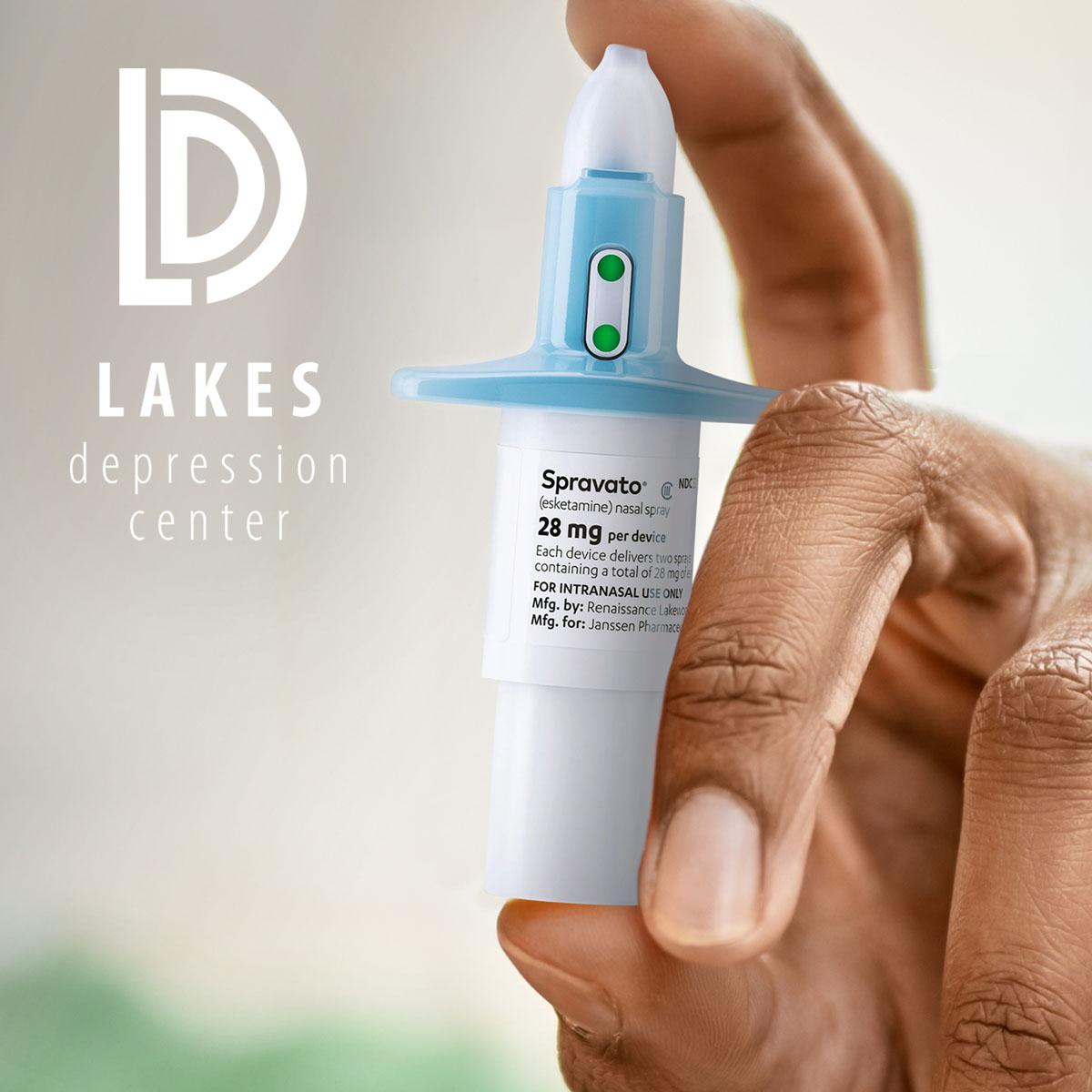
Did you know? SPRAVATO® can have a rapid antidepressant response and is added on to an antidepressant and the rest of your regimen. It is the first new mechanism of action to treat depression that has come out in over 30 years.
There is hope for treatment-resistant depression. Call (248) 859-2457 to set up an appointment.
| | | | |
We provide comprehensive DBT services to provide effective treatment of Borderline Personality Disorder (BPD) and other disorders involving emotion dysregulation, including co-occurring substance use disorders, major depressive disorder, and individuals with history of trauma. At Lakes DBT Center, we believe that with effective evidence-based treatment and a caring and coordinated treatment team, clients can create a life they love.
| | |
Discovering Wellness:
A Therapy Group for Depression and Anxiety
New group beginning September 9, 2025
Tuesdays, 10:30 am - 12:00 pm
Lakes Center, 2300 Haggerty Road, Suite 1170, West Bloomfield, MI 48323
Contact Josephine Salem at JSalem@lakescenter.com or Catherine DuFresne at CDuFresne@lakescenter.com for the starting date of the next group.
This is an adult outpatient therapy group treating Depression and Anxiety related mental health disorders. Click here for more information!
| | |
OCD/ERP Online Support Groups:
Networking for Change and Growth
Tuesdays 12:30 - 1:30 pm and Thursdays 3:00 - 4:00 pm
(Both are Online only)
Contact Terrie Browning at TBrowning@lakescenter.com or (248) 342-9254.
To Sign Up: Call (248) 859-2457 or click here to fill out our Contact Form.
This group is open to people who have OCD, PTSD, Hoarding, Trichotillomania, Excoriation, and Tics. We discuss how ERP works to treat these as well as Generalized Anxiety and Panic Disorders. Since ERP can be difficult to maintain, sharing similar experiences with each other, as well as learning from the leaders will help you stay on the course.
| | |
Anne Campbell, PhD
Psychologist
Anne is a fully licensed clinical psychologist specializing in the treatment of children, teens and families. She received her doctorate in clinical psychology with a specialty in Child and Family Treatment in 1985 from Oklahoma State University. Her undergraduate studies were at Kalamazoo College with work at Johns Hopkins in the Kennedy Child Development center.
She is licensed in both Michigan and New York. Further, she is trained in Play therapy and Family Systems Therapy. She has worked for over 35 years in private practice, community mental health, hospitals, courts, and school settings; evaluating and treating children with a variety of challenges. Anne is a member of the American Psychological Association and Michigan Association of School Psychologists.
Read more...
| |  |
Linda Fershtman, LLP
Limited-License Psychologist
Linda Fershtman, (she/her/hers) has been practicing psychology for 26 years. She is dually certified in both clinical and school psychology. Before joining Lakes Center Mental Health Network, Linda was the Managing Director and clinician for 11 years at Lakes Area Psychological Services.
Linda also has extensive experience in the school setting working with individuals from ages 5-26. Having worked as a school psychologist for 25 years, her rich experience allows her to witness and support the unique difficulties, challenges and problem-solving complexities of children, tweens, and teens. She also has a tailored skill set with school collaboration, helping to guide parents and schools with IEP and accommodation planning.
Read more...
| | | | | |