|
"Another world is necessary. Another world is possible. Another world has already begun."
—Activist Grace Lee Boggs
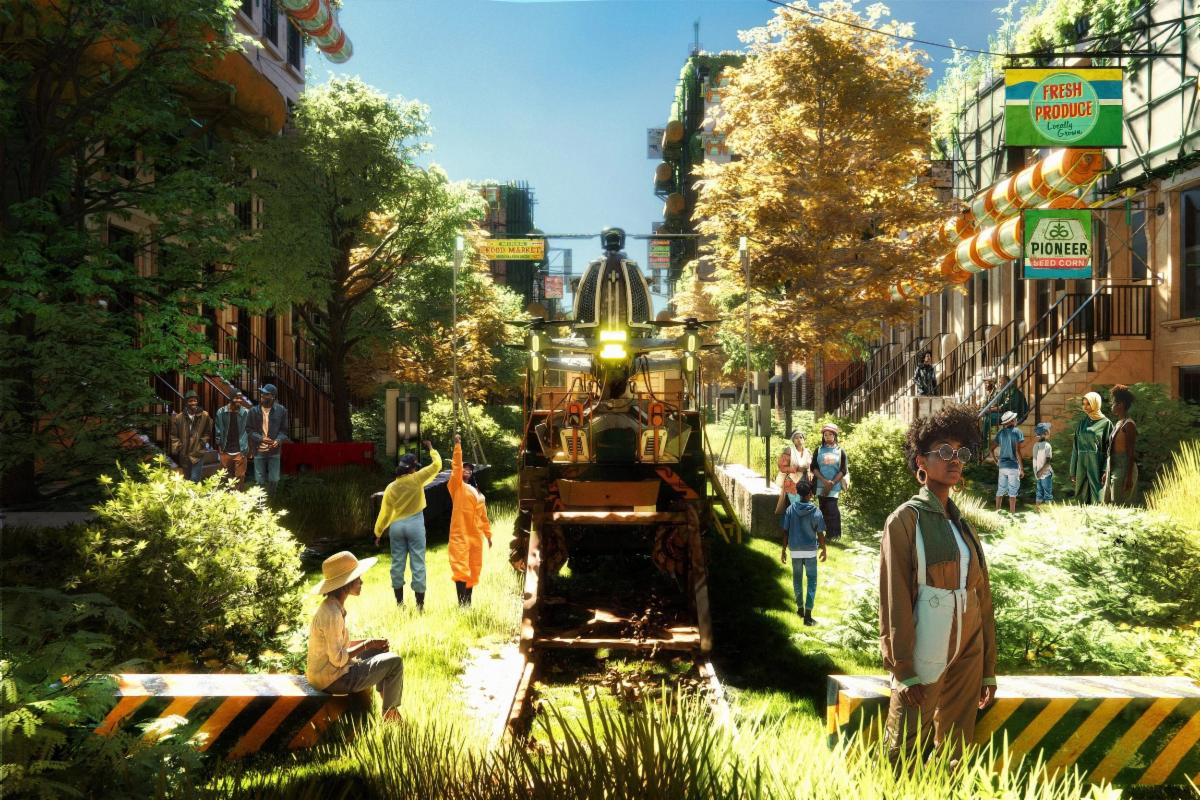
| A photomontage re-imagining Brooklyn "if, back in the 1980s, when climate science started offering warnings of where we were headed, we had begun to put far-reaching policies in place" by Olalekan Jeyifous via What If We Get It Right? | |
Dear Collaborative community,
For years, we have been sounding the climate alarm, and for good reason. But many youth (and adults!) are tired of the alarm and are burying their heads under the pillow or pressing snooze. What’s going to make our learners want to hop out of bed and take on the challenges of the day?
That's what we want to focus on in this issue. All the exciting climate resiliency happenings that we don't discuss enough. All of the things we can learn from and get ourselves and our learners jazzed about. Humans are restoring ecosystems, redesigning cities, growing food differently, and creating solutions that are beautiful, improve health, and strengthen communities. This makes the invitation to engage broader and more appealing. And more joyful. (Less burnout, anyone?) How can we help learners understand the urgency of the crisis and the awesomeness we could create together?
In place of our usual interview, this month we are sharing promising community-based climate innovations already underway. Some grew from environmental concern, yet many are spreading because they offer other attractive benefits, such as saving money. These kinds of practices are changing our relationships with one another and with the Land, and, according to the research cited below, inspire more climate action.
We can't wait to gather with many of you at our Collaborative Summit this September! If you haven't registered yet, see below for details.
Joan Haley, Ed.D., Climate Education Specialist, Shelburne Farms
|
|
| |
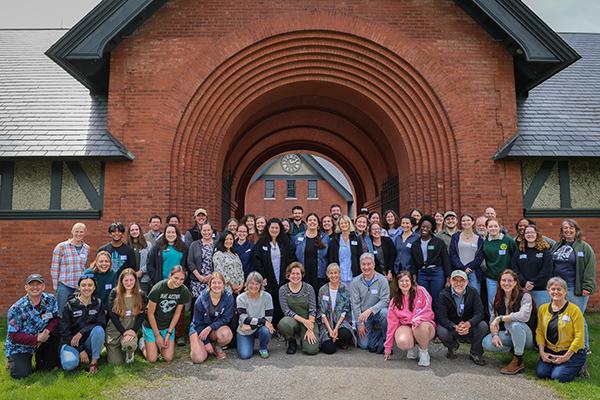
Collaborative Summit, Sept. 24–25 at Shelburne Farms
We hope you'll join us for the Summit as we ask: What kind of world do we want to create together? How can climate education help us bring it to life? Register soon!
| | | | |
What Possibility Looks Like |
| In a moment when it feels like we might be moving backwards, many climate solutions are so compelling that they continue to move forward, despite significant barriers. Below is a list of 10 inspiring efforts. And there are many more innovations happening across the world led by people, like you, who are working to make a difference. | |
-
New York City turns schoolyards into climate infrastructure (video above). 220+ public schools have replaced asphalt with trees, gardens, permeable surfaces, play areas, and outdoor classrooms. These schoolyards absorb stormwater, provide shade, support learning, and bring more nature into neighborhoods.
-
Across the U.S., schools transition to electric buses, which can yield health benefits. Many school districts are replacing diesel buses with electric ones. Each electric bus can generate an estimated $84,200 in health and climate benefits, providing students an everyday example of cleaner technology in action.
-
New Jersey built a playground that can hold two million gallons of water. Hoboken’s ResilienCity Park offers playgrounds, gardens, and athletic spaces above a system that captures up to two million gallons of stormwater. Children get a place to play while the surrounding neighborhood gains protection from flooding.
-
An Alaskan community keeps energy and money closer to home. In Galena, the Louden Tribe, city, and school district are working together to replace expensive imported diesel with locally produced energy. A new solar and battery project is expected to save approximately $450,000 and 95,000 gallons of diesel each year, while students learn about sustainable energy and related trades.
-
Maine farmers grow kelp alongside shellfish. Kelp provides an additional crop while helping coastal businesses respond to warming and acidifying waters. Healthier ecosystems and new income demonstrate to local youth that these outcomes are not mutually exclusive.
-
California Tribes bring “good fire” back to the land. Sometimes innovation begins by relearning what has been lost. The Karuk, Yurok, and other Indigenous peoples are renewing cultural burning practices that were restricted for generations. These carefully tended fires reduce hazardous fuels, renew important plants, improve habitat, and help landscapes withstand severe wildfires.
-
Montana works with beavers to hold water on the land. Along Montana’s Clark Fork River, landowners and conservationists are finding ways to learn from and live with beavers rather than automatically removing them. Beaver wetlands store water, reconnect floodplains, cool streams, improve wildlife habitat, and help landscapes withstand drought, floods, and fire. (And if we haven’t mentioned it before, the U.S. Climate Resilience Toolkit is an excellent resource!)
-
In Minnesota, Ojibwe community solar lowers bills and trains students. The Leech Lake Band of Ojibwe developed the nation’s first community solar garden designed specifically to benefit low-income residents. The Tribe’s solar projects save an estimated $276,000 annually, while Tribal college students gain solar-installation skills and credentials.
-
Across Appalachia and beyond, former mines reconsidered as clean energy sites. Reusing disturbed land, such as former mines, brownfields, and landfills for clean energy projects like solar, storage, and geothermal, can protect forests and farmland while bringing new investment to communities long dependent on fossil fuels.
-
Philadelphia puts climate resources in community hands. The Community Resilience and Environmental Justice Fund provides direct funding and organizational support to neighborhood-led groups. The innovation here is that the people who know their community best get to define the solution.
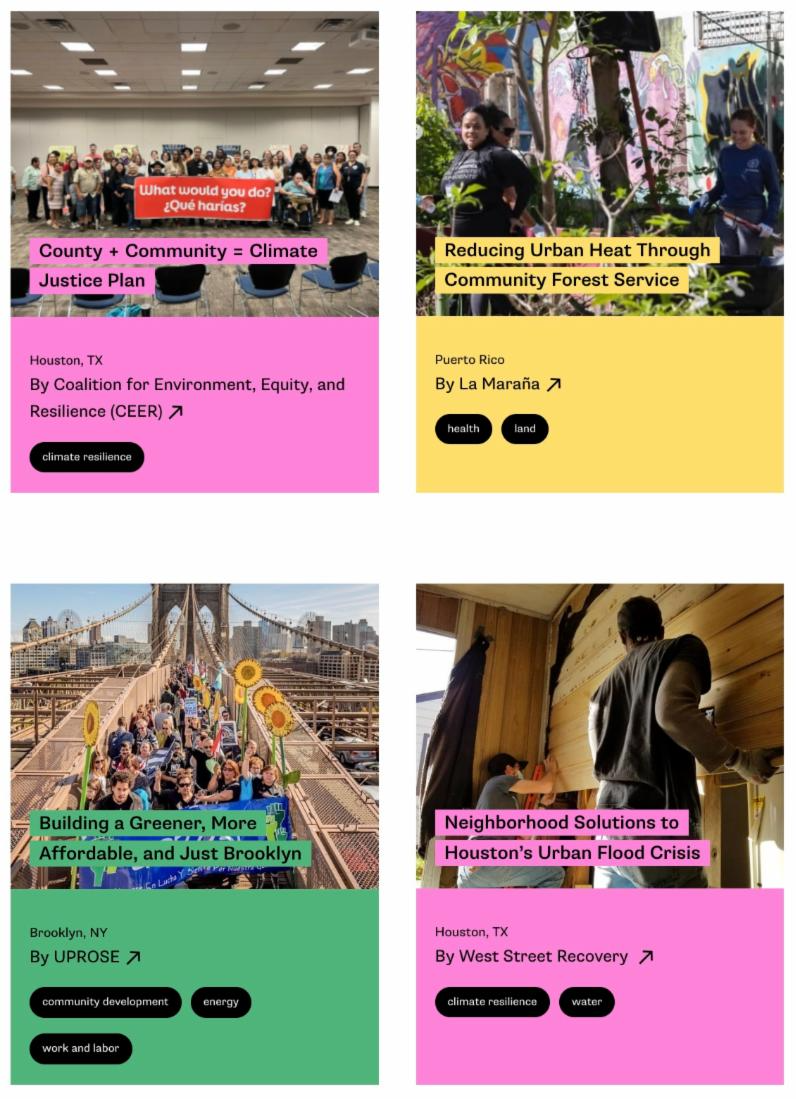
| | While facts help us understand our reality, stories help us envision the world we could create. The Solutions Project’s Climate Justice Solutions Storybank turns our attention toward communities making climate resilient visions possible in such diverse places as Puerto Rico, Hawai'i, Houston, Brooklyn, Pine Ridge, and beyond. Meet the "creatives" who are building local food systems, community-owned energy, resilience hubs, healthier housing, safer workplaces, and good green jobs. | | |
For every $1 invested in climate resilience, communities can receive anywhere from $2 to $30 in benefits through lower operating costs, avoided damage, healthier people, stronger ecosystems, and more resilient local economies. A few compelling examples:
Let's make sure our learners understand this math!
| | |
🎓 Unify for Climate: The Next Generation of Climate Action in Higher Education (Online) | August 25, 2026
A conversation about how colleges and universities can collaborate to accelerate climate action and strengthen their public impact.
💚 Green Schools: Connecticut Green Bank Workshop (Online) | September 10, 2026
An introduction to programs that help Connecticut schools and municipalities reduce energy use, improve resilience, and finance clean energy projects.
🌃 Climate Week NYC (New York City and Online) | September 20–27, 2026
Hundreds of gatherings—many free, public, or virtual—explore climate solutions, environmental justice, innovation, health, education, and community action. Check out one event: 2026 Street Works Earth, a joyful neighborhood festival bringing together art, storytelling, hands-on learning, and conversations about climate justice.
🍁 Climate Education Collaborative Summit (Shelburne, VT)
September 24–25, 2026
An opportunity to reconnect with purpose and one another, and to explore what collaborative climate education can become. Summit takes place on Sept. 25, with the option to attend a pre-summit workshop and dinner on Sept. 24.
| | |
Want to dig in further? This research illustrates how engagement grows when learners can envision a desirable future and see that they have a place in creating it.
| |
| What seems to generate the most hope for your learners? | | | | Last month's poll: We asked, "Are you sensing new growth in climate education?" Results were tied three ways, between "A little," "Not yet," and "No." We hope this newsletter sparked some inspiration for new growth. | | | | |