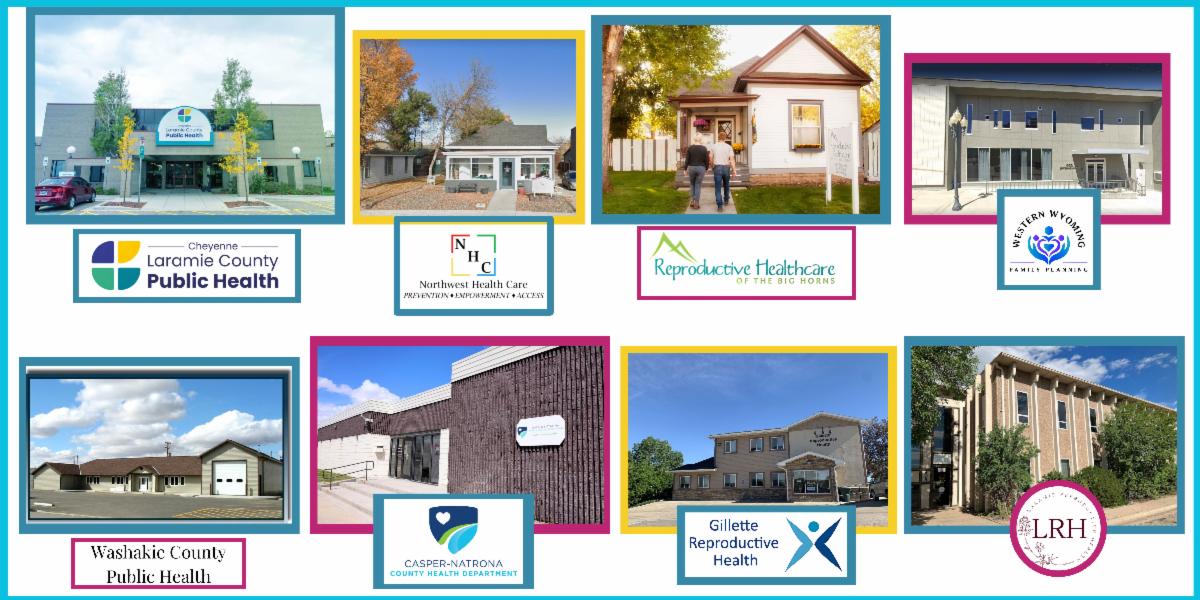
The Wyoming Health Council works to ensure that all people can access equitable, inclusive, high-quality, and affordable reproductive and sexual health care. | |
It’s Not Your Imagination — Summer Can Really Increase Your Sex Drive
Everyone feels it this time of year. The weather’s warmer, the sun’s brighter, and all of a sudden, you’re feeling… lusty.
Summertime is often associated with being the season of love — or at least a fling (“Summer lovin’ had me a blast,” anyone?) — and it turns out, science can actually explain why we feel all hot and bothered once the temperatures increase.
It’s in the air
For starters, there’s the link between warmth and intimacy. When we feel warm, we are more likely to feel connected with those around us.
“Research on embodied cognition shows that even holding warm beverages increases perceptions of social proximity,” Dr. Jess O’Reilly, sexologist and host of the Sex With Dr Jess podcast tells SheKnows. “And when we feel socially isolated, we perceive the temperature as colder. Because temperature and feelings of intimacy are psychologically related — studies show that altering one can affect the other — and because we tend to associate sex with intimacy, you may feel an increase in desire for sex during the summer months in response to feelings of intimacy and closeness.”
| |  | |
An STI Testing Guide For Your Summer of Hooking Up With Everyone
If I had to distill the vibe of this summer down into one sentence, it would be, “I want to kiss everyone.” The thrill of other people is higher than I could’ve imagined! We should all embrace, if we want to, the impulse to kiss and then some this summer (and fall, and every season after). But—and not to be a bummer—it would be even more amazing if we could do so safely.
But as the summer heats up in more ways than one, keep in mind that STI rates hit their sixth consecutive all-time high in 2019. That sounds ominous, until you remember that STIs are easily preventable with barrier methods and, most importantly, comprehensive, routine testing.
VICE spoke with Sandling and Rebecca Brightman, a gynecologist in New York, about all the nitty gritty details of STI testing: how often you should do it, what you should ask for, and whether there’s such a thing as “overkill.” Whether you’re newly single, newly monogamous, or somewhere in the big, fun middle, we’ve got you covered.
| | | |
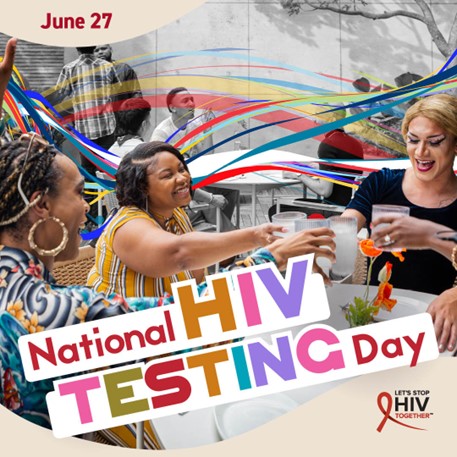
Should You Be Tested for HIV? Why June 27
Is A Good Day To Do It
June 27 is National HIV Testing Day. Have you been tested?
The Centers for Disease Control and Prevention report that of the estimated 1.1 million people in the United States who have the HIV infection, 1 in 7 don’t know their status.
That is especially true for youth ages 13 to 24 that make up 21% of the nearly 40,000 new HIV diagnoses made in 2017. More than 50% of youth who have HIV don’t know about their infection.
Only 9% of high school students report having been tested for HIV. Many people do not get tested because of lack of access to health care, fear and misperceptions about HIV risk and the testing process, and health care settings that lack HIV testing as a routine part of care.
As a nurse at a clinic that treats sexually transmitted infectious diseases, I frequently saw patients visit the clinic requesting HIV testing because their provider did not want to test them for HIV, or their provider said they did not offer HIV testing. We would also see young people at the clinic because they could not always be assured of confidentiality at their doctors’ offices.
Nurse practitioners play a valuable role in testing of HIV in youth.
| | |
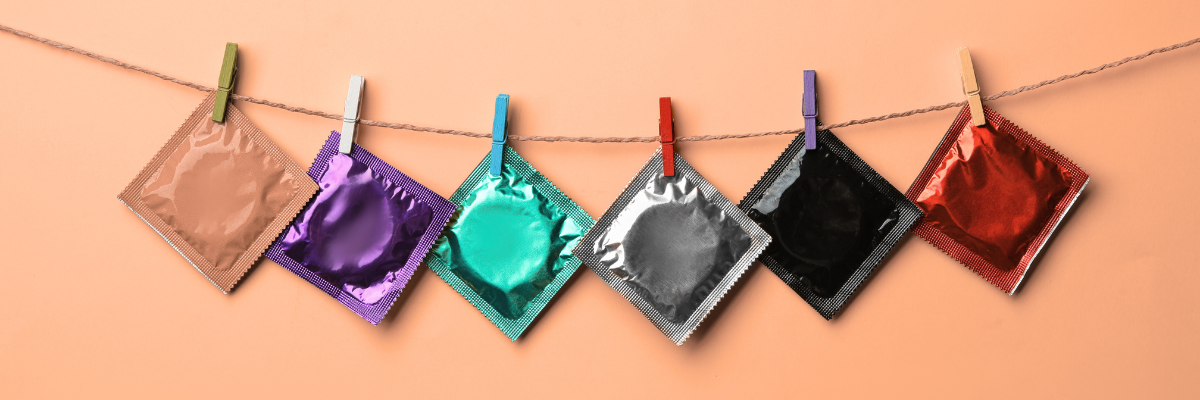
What are best condoms? Our sex writers weigh in
We’ve come a long way when it comes to sexual health. Gone are the days of having only two condom brands to choose from, with products locked in plastic boxes that you have to sheepishly bring up to the counter. Safe sex is now, well, sexy, and there are a ton of cool brands to choose from.
A quick return to sex ed 101: condoms are one of the only contraceptive methods that will protect you against sexually transmitted infections (STIs). While hormonal contraception can prevent pregnancy, only barrier methods — like the male condoms reviewed here — will limit the sharing of conditions like chlamydia, gonorrhea, and HPV.
They’re also great for protecting your delicate microbiome from bacterial imbalances. Both thrush and bacterial vaginosis (BV) can be caused by the mixing of your juices with someone else’s.
But despite the significant benefits of using a condom during sex, and the fact that this has been hammered home during sex ed for decades, their use is on the downward spiral — particularly among teenagers, prompting the World Health Organization to issue a warning that their sexual health was at risk as a result.
Luckily, there is plenty of choice when it comes to adult sleeping bags, and you can now buy condoms in pretty much every shop you go into — so there’s really no excuse for not wrapping up.
| | | Find the condom with the right fit and feel for you | | When it comes to condoms, you've got options—lots of them! When you're choosing a condom, check out the all the options available so you can find one that has just the right fit and feel for you. | |
Morehouse graduate Jason K. Panda is in the business of safe sex
Jason K. Panda, the owner of b condoms, saw a need to help people in his community improve their sexual health. So, after nine years of practicing law, the Morehouse College graduate decided to create b condoms, the only Black-owned condom company in the United States.
Panda, who is originally Brockton, Massachusetts, recently shared his thoughts about going into the business of safe sex.
| |
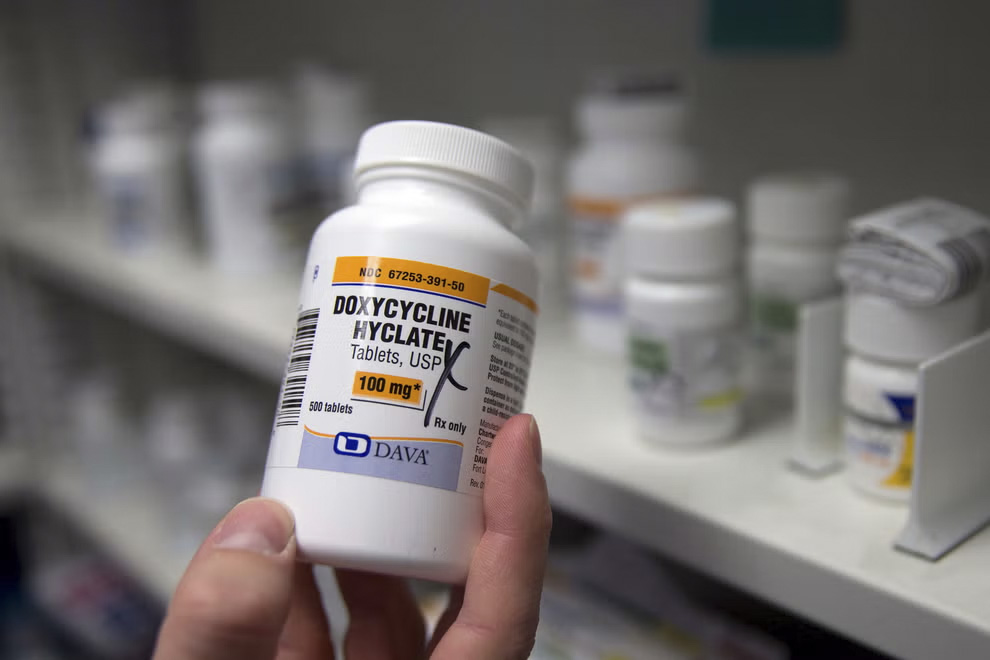
Preventive antibiotics may help curb the STI epidemic, experts say
New research finds that taking an antibiotic after sex, or even taking a smaller dose daily, substantially reduces the risk of sexually transmitted infections.
Instead of simply treating sexually transmitted infections with antibiotics, a new public-health movement seeks to use one such medication to prevent STIs in the first place. Promising research into variations on this method has raised hopes, but also concerns about whether this method might also contribute to another public health crisis: drug-resistant infections.
One thing is clear: The nation is in dire need of game changers to battle the STI epidemic, as gonorrhea, chlamydia and syphilis have largely soared during the past decade.
| | | On this episode of the Sex+Health podcast we talk with Jaylan Daniels, who tells us all about doxy PEP and why he chose to include it as part of his health care regimen. | |
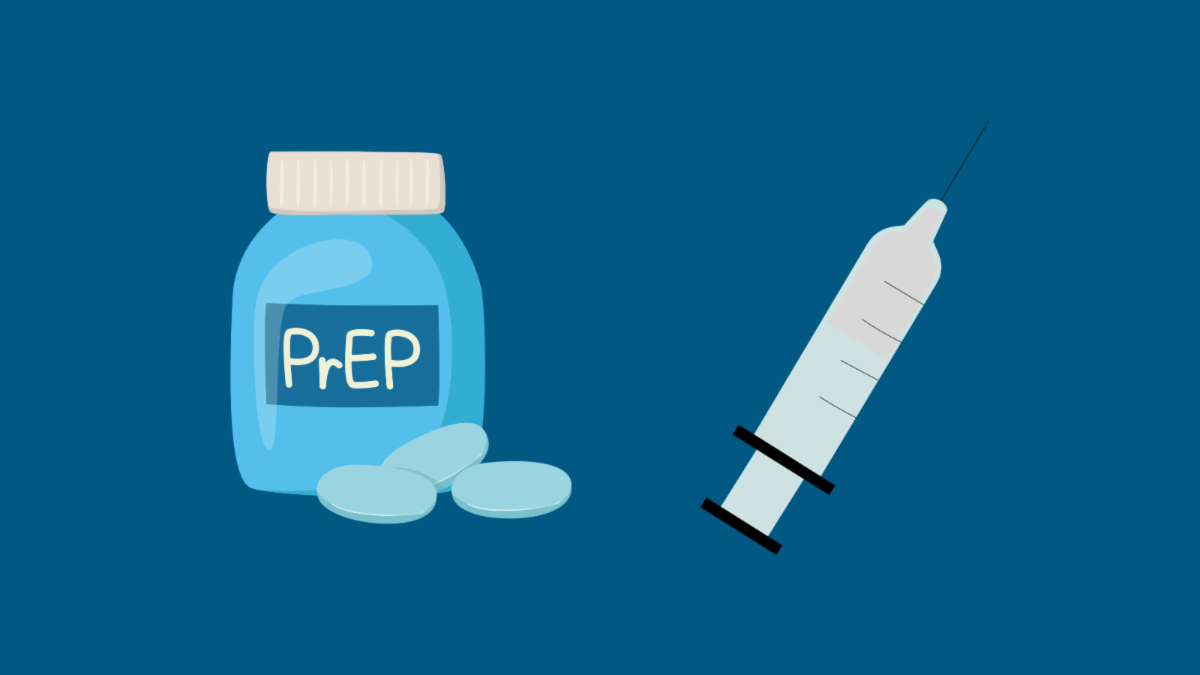
What Is Pre-Exposure Prophylaxis (PrEP) for HIV?
PrEP can help reduce your risk of contracting HIV through sexual contact or injection drug use. PrEP may be taken as a daily pill or administered as a bimonthly injection.
According to HIV.gov, approximately 1.2 million U.S. people ages 13 years and older have HIV. Of this group, about 13% are not aware that they have it.
PrEP can help reduce the risk of transmission between serodiscordant (mixed-status) partners. If you don’t have HIV but are at an increased risk of infection, talk with a healthcare professional about whether PrEP is right for you.
How does PrEP work?
Pills used for PrEP belong to a class of antiviral medications called nucleoside/nucleotide reverse transcriptase inhibitors (NRTIs).
NRTIs block the reverse transcriptase enzyme HIV uses to convert its RNA into DNA (reverse transcription). This stops the virus from multiplying in your body.
Injections for PrEP are an antiretroviral called integrase strand inhibitors (INSTIs).
INSTIs block the enzyme integrase, another protein HIV uses for reverse transcription. Like NRTIs, INSTIs prevent the virus from replicating in the body.
| | |
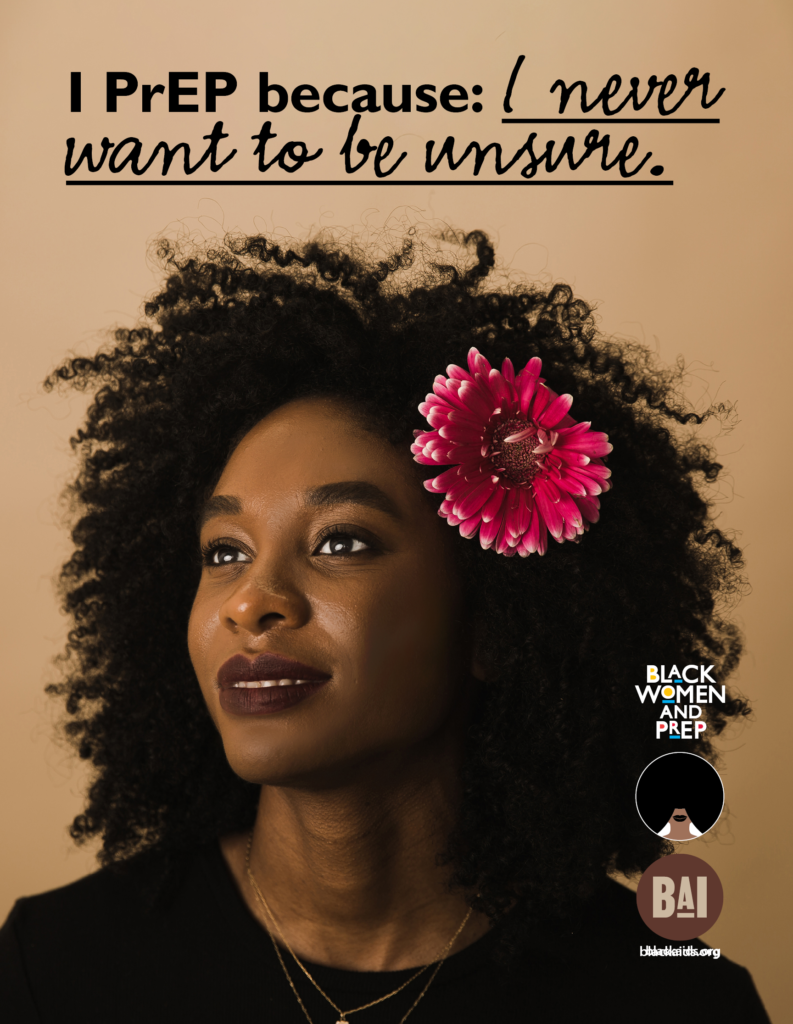
Advancing PrEP Access And Utilization For Black Women And Girls
Approximately 1.2 million people in the United States have HIV, with people of color, gay, bisexual, and other men who have sex with men (MSM) disproportionately impacted by this chronic public health challenge. Preexposure prophylaxis (PrEP) is an important tool in ending the HIV epidemic, reducing the risk of sexually acquired HIV by up to 99 percent.
However, people identifying as women, particularly Black women, experience significant barriers to accessing PrEP prescriptions. National Women and Girls HIV/AIDS Awareness Day, observed in March each year, makes this month an ideal time to examine the factors contributing to these disparities—especially timely amidst an increase in HIV diagnoses—and suggest ways to mitigate these health inequities.
| | | PrEP-an HIV prevention option | | |
Protect yourself, learn about PrEP (Pre-Exposure Prophylaxis), how it works, how to get it, and if it’s the right choice for you!
Talk to your provider today!
| | |
Sex Ed 2.0: What All Men Should Know About Anatomy, Sex and STIs
The extent of your sexual education at school (that’s if you were given one) likely involved a banana and a condom, focusing on puberty and avoiding pregnancy. While these are undoubtedly important topics for adolescents, it might be time adults got a refresher course.
Unfortunately, there’s still a significant amount of stigma associated with sex and sexual health in Australia. One of the issues sexual health nurse Luke Mitchell says he sees in his work is that men don’t know what is considered ‘normal’ to know when something might be wrong.
So, we’re taking it back to basics and raising the red flags that deserve a visit to the doc.
| | | |
Men's Lack of Respect For Women's Sexual Boundaries Is Informed By Our Lack of Care For Their Sexual Pleasure
Like many of my contemporaries, I never really gave much thought to the sexual desires of women. Much of my life, when I really sit and think of it, I was totally oblivious to the needs and desires of my sexual partners.
This was due in part to being raised in the puritanical south. Talk of sex was reserved to very limited situations. The only time I even heard adults talk about sex was at church when married couples would have a special night with the pastor and first lady to discuss the marital bed interaction. Some of the younger and more open minded couples would share the information from these discussions with me. One thing that was vehemently preached by the church was that sex in any position other than missionary was sinful. Married couples were told that humans didn’t have sex like animals, we weren’t dogs..
Sadly, I must admit, the epiphanies about learning to listen to the sexual desires of the women I slept with did not come until my mid to late twenties. Around that time, I was in a place where I didn’t have access to lots of different books, so I read what was available, and fantasy romance novels written by women happened to be among this small selection.
Reading literature from a woman’s perspective was an eye-opener.
| | | Boys, Let's Talk About Sex
For a recent talk to a group of students, I used a number of props: condoms, wooden penis models, lubricant, information on pre-exposure prophylaxis (PrEP)—the HIV-prevention pill, a birth control kit filled with samples of the pill, the patch, the ring, and different types of intrauterine devices (IUDs).
The audience? Teenage boys.
The American Academy of Pediatrics recommends that all young people should have access to comprehensive sexuality education, and even supplies a list of what should be covered:
• Consent
• Cyber solicitation/bullying
• Healthy sexual development
• Body image
• Sexual orientation
• Gender identity
• Pleasure from sex
• Sexual abuse
• Sexual behavior
• Sexual reproduction
• Sexually transmitted infections (STIs)
• Abstinence
• Contraception
• Interpersonal relationships
• Reproductive coercion
• Reproductive rights
• Reproductive responsibilities
But even in 2025, some states offer sex ed that focuses on abstinence.
I know from talking to boys that the discussions they have at home regarding sexuality and safety often aren’t very detailed or specific, if they happen at all. Some boys say the only sex talks they get from their families are the declarations shouted to them as they head out the door, things like “be safe” or “don’t get anybody pregnant.”
Boys need more support than that.
| | |
'Bigorexia' Is On The Rise
Here's What Parents Should Know
Although it can affect anyone, this lesser-known disorder commonly affects boys and young men.
Parents today are generally aware of mental health conditions that relate to body image, including common disorders like anorexia. But experts warn a lesser-known issue is on the rise, particularly among boys: muscle dysmorphia, aka “bigorexia.”
“Bigorexia is a psychological condition and type of body dysmorphic disorder which involves a distorted self-image that focuses specifically on muscle size and physical appearance,” Kara Becker, a certified eating disorder therapist and national director of eating disorder programs at Newport Healthcare, told HuffPost.
| | | |
What Parents Need to Know to Talk to Their Children About the Manosphere
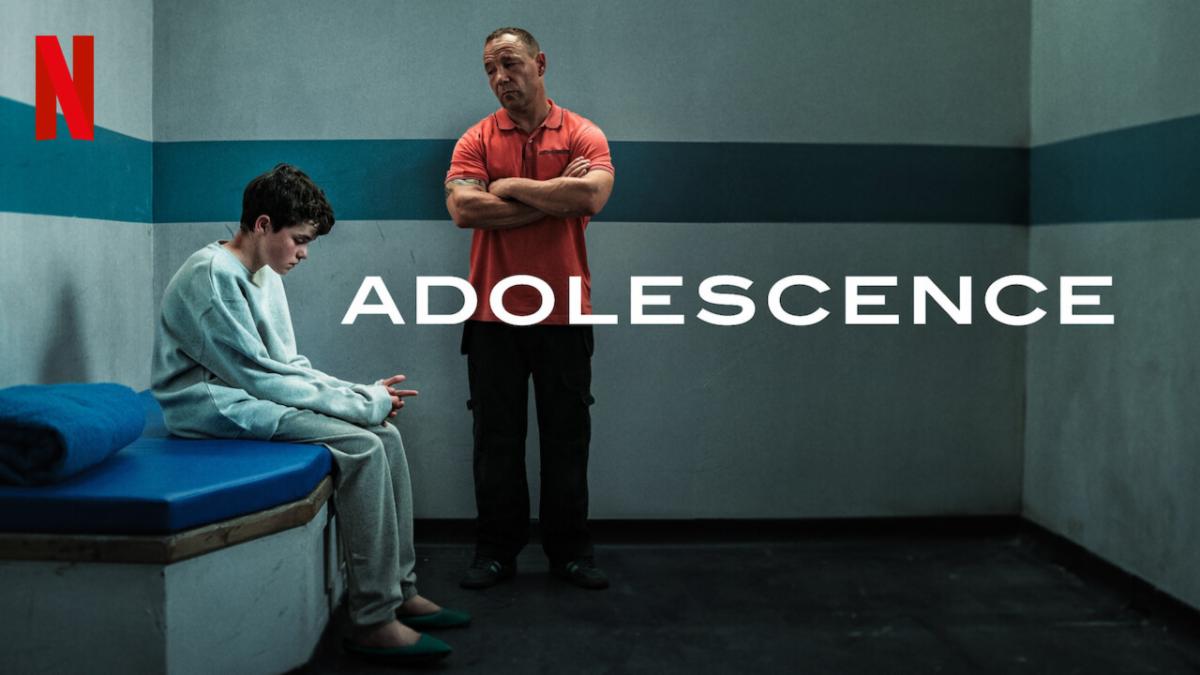
The success of Netflix drama Adolescence, along with concerns about misogynistic influencers such as Andrew Tate, has brought the “manosphere” into public discussion.
Many parents, particularly of young boys, may fear they don’t know enough about what their children are exposed to online. I research radical misogyny online, and the pathways by which young people encounter these spaces. Here is what parents should know about this content.
What is the manosphere?
The manosphere is a network of communities that create, consume and distribute content online aimed at men and boys. It includes multiple groups that differ in their aims and focus, but are all largely anti-feminist.
These groups discuss masculinity, but also topics such as health, gaming, politics and finance. They trivialize hateful rhetoric through memes, comedy and trolling (provocation or bullying for amusement) by framing it as self-help, entertainment and tools for financial success. This can make it difficult for parents to identify and for children to realize the extreme messages they are being exposed to.
| | | |
This newsletter was developed (in part) with federal funds from the Office of Population Affairs. For more information on the rules and regulations that apply to our programs, please visit
https://opa.hhs.gov/grant-programs/title-x-service-grants
This project is supported by the Office of Population Affairs (OPA) and the Office of the Assistant Secretary of Health (OASH) of the U.X. Department of Health and Human Services (HHS) as part of a financial assistance award 1 FPHPA 006541-0-00 totaling $978,380 with 100 percent funded by OPA/OASH/HHS. The contents are those of the author and do not necessarily represent the official views of, nor an endorsement, by OPA/OASH/HHS or the U.X. Government.
| |
WYOMING HEALTH COUNCIL
111 S. Durbin, Suite 200
Casper, WY 82601
Call Us: (307) 439-2033
| | | | | |