|
Dear Community:
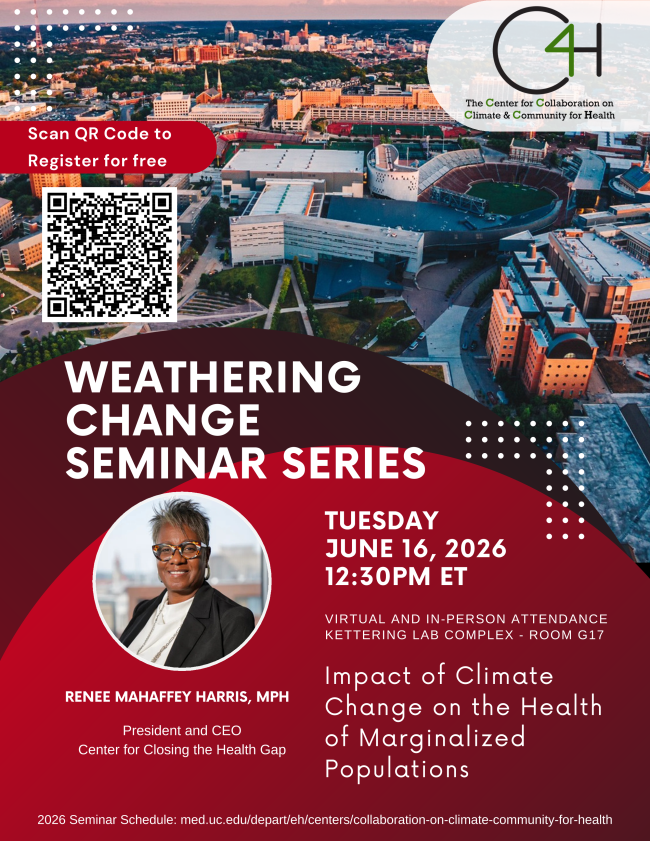
I invite you to join me next Tuesday, June 16, at 12:30pm for the C4H Weathering Change Seminar Series. I will be presenting on the "Impact of Climate Change on the Health of Marginalized Populations," exploring how environmental shifts disproportionately harm our vulnerable neighborhoods.
The week's Update also highlights critical new data regarding deep systemic bias. The latest Listening to Mothers survey reveals that far too many women of color, particularly Black and Indigenous mothers, face severe barriers and feel ignored or mistreated during care.
Separately, a new Harvard-led study suggests that artificial intelligence can outperform emergency room doctors in diagnostics. This raises a vital question for our community: could AI help bypass the implicit bias and structural racism that routinely delay care and worsen health outcomes for Black patients in the ER?
We cannot wait for a broken system to correct itself. As always, We Must Save Us. Blessings to all of you for a safe and healthy week ahead.
Renee Mahaffey Harris
President & CEO
| | |
National Survey Reveals Maternal Health Care Failures; Women of Color Hit Hardest
The National Partnership for Women & Families has released the fourth national Listening to Mothers survey, the most comprehensive of its kind in a decade. Based on responses from 3,857 mothers of infants and toddlers across the country, the report places the experiences of pregnant people and new mothers at the center of the maternal health conversation and policy debate.
The survey uncovered troubling patterns affecting mothers across the country. Far too many women reported not feeling heard, being treated disrespectfully and being ignored or neglected, with Black mothers, American Indian/Alaska Native mothers, and other women of color facing greater barriers and reporting worse outcomes in many areas. Here are some of the toplines from the survey:
- Lack of Respectful Care: Too many mothers feel unheard.
- Untreated Mental Health Conditions: Mental health treatment is out of reach for many.
- Midwives and Doulas Remain Out of Reach: Women aren’t getting high-quality care they want and need.
- Racial Inequity Persists. Women of color, those covered by Medicaid, young mothers, and women with disabilities reported facing greater barriers and worse outcomes and experiences across many measures.
| |
Can AI Reduce Emergency Room Disparities for Black Patients?
A recent Harvard-led study is fueling a conversation after researchers found that artificial intelligence (AI) outperformed doctors in some emergency room diagnostics. In one experiment, an AI system correctly identified exact or near-exact diagnoses 67 percent of the time, compared to 50 to 55 percent for doctors reviewing the same patient records.
The findings don’t point to doctors becoming obsolete. Instead, they make you wonder how AI can help. The study does raise an important question for Black Americans: Could AI eventually help reduce racial disparities in emergency healthcare?
Fixing a Major Disparity
For decades, Black patients have reported feeling ignored, undertreated, or misdiagnosed in hospitals and emergency rooms. Studies have shown that Black patients are more likely to experience delayed diagnoses, receive less pain medication, and face higher maternal mortality rates than white patients. Implicit bias and structural racism have long shaped outcomes for Black patients. That is where some experts believe AI could help.
Unlike humans, AI systems do not suffer from the physical and cognitive effects of working long shifts, as doctors and nurses do. On crowded ER visits, AI isn’t rushing through patient conversations or judging patients for what appears to be stereotypical behavior. In theory, a properly trained AI tool could evaluate symptoms, lab results, and medical histories using the same standard for every patient. In emergency medicine, that consistency could matter.
| |
Drivers of Cancer Disparities
“Cancer is a disease that affects everyone but not equally,” notes Lisa Lacasse, president of the American Cancer Society Cancer Action Network, about the release of its news report, Cancer Disparities, which examines gaps in prevention, treatment and survivorship. Notably, communities disproportionately affected by cancer include Black, Hispanic, LGBTQ, American Indian, Alaskan Native, Asian American, Native Hawaiian and Pacific Islander people, folks who live in rural areas and people with disabilities. Key findings of the report include:
- The tobacco industry’s “aggressive marketing” intentionally targets these groups and fuels related disparities.
- Among smokers, 82% of Black people (more than other races/ethnicities) smoke menthols, which are harder to quit.
- Individuals who live in rural areas and are diagnosed with cancer face challenges in accessing cancer care and experience worse outcomes than those living in metropolitan areas.
|
Better Data, Community Trust Necessary to Address CVD Disparities in Early-Onset CRC
In part 2 of her interview with The American Journal of Managed Care® (AJMC®), Meng-Han Tsai, PhD, assistant professor at Augusta University, explored the key findings of her study, “Sex, Race and Ethnicity, and Rurality Disparities in Cardiovascular Death Among Adults With Early-Onset Colorectal Cancer: A Retrospective Cohort Analysis.”
She found that among patients with early-onset colorectal cancer (CRC), defined as CRC diagnosed before age 50, men and racial and ethnic minority patients living in urban areas face a disproportionately elevated risk of cardiovascular disease (CVD) death. Tsai also called for further research combining comprehensive data from clinical and population-level sources, along with community-based efforts to build trust and improve survivorship care planning for these vulnerable groups.
|
Regional variability in the associations between social and health-related risk factors and memory across Europe
Interventions targeting social and health-related risk factors are thought to reduce the risk of cognitive decline and dementia in older age. Despite well-known social, economic, and cultural differences across European countries, little is known about how these factors influence associations with memory function in different geographical contexts. This study examined the relationship between five social and health-related risk factors, namely living alone, physical inactivity, obesity, depression, and cardiometabolic and cardiovascular conditions, and memory function across Europe.
Data came from the Survey of Health, Ageing, and Retirement in Europe (SHARE), a cross-national study of older adults. The sample included cross-sectional data for 102,851 adults aged 50–102 years from 20 European countries, grouped into four regions: Northern, Western, Eastern, and Southern Europe. Memory function was assessed using a sum score of immediate and delayed recall tests.
|
AI-Assisted Diagnostic Tool Shown to Reduce Eye Care Disparities for African American Adults With Diabetes
In a study exploring how an AI-assisted diagnostic tool shaped care for underserved populations at multiple community-based primary care sites, investigators at the Wilmer Eye Institute, Johns Hopkins Medicine found that African American patients with diabetes were more likely to receive a diabetic eye exam referral if screened by an AI tool.
The final, exploratory peer-reviewed findings were published April 13 in npj Digital Medicine. The researchers say their results potentially identify one way the integration of AI-assisted tools could address known healthcare disparities for people with diabetes.
|
New study raises questions about health risks near industrial waste facilities
A new study led by a University of Illinois Springfield researcher found that millions of Americans live near industrial waste disposal sites that handle cancer-causing chemicals, with many of those communities consisting of historically underserved populations.
Jessica Madrigal, an associate professor at the UIS College of Health, Science and Technology, discussed the findings during the WTAX Morning Newswatch. Madrigal said her interest in the topic stems from years of cancer research and a desire to better understand environmental factors that may contribute to health disparities.
“I’ve been doing work on what causes cancer for almost the last decade,” Madrigal said. “One of the things that we often say, but didn’t really have the actual evidence for, is that people in underserved and underrepresented communities are living in areas with higher exposure to different things that not only cause cancer, but other potential health concerns.”
Those health concerns can include diabetes, cardiovascular disease, kidney disease and birth defects, she said. The research examined data collected by the U.S. Environmental Protection Agency, focusing on industrial facilities that dispose of chemicals and metals on-site.
| | | | |