I-site newsletter is a global educational newsletter FOR HEALTH CARE PROVIDERS launched in 2009, that monthly provides independent updates from the international literature on specialty rigid contact lenses such as corneal, orthokeratology and scleral lenses and related topics. View as Webpage
|
|
We are only starting to understand myopia, let alone the mechanisms behind slowing down its progression. In communicating with parents and the kids, it is extremely important to stick to the facts and to use the right terminology. You don't want kids crying in your chair because they are so worried about becoming blind, which has happened. It’s a really fine line, and it really challenges those of us mastering myopia nomenclature. It also appears that there may be more potential than we currently realize to master myopia: lens designs so far (whether ortho-k or soft) have evolved from old-school ortho-k lenses intended to correct myopia (which were not designed to reduce its progression) or from multifocal soft lenses designed to correct presbyopia. Newer lens designs that are specifically designed for slowing down progression, which may require more customization to increase the efficacy, seem to be coming our way. A study that was just published analyses factors, including environmental factors, that affect myopia control using ortho-k. This will also help practitioners better target and understand the use of ortho-k in myopia clinic. See the next item for the results of that study. And stay tuned for new lens designs coming up that are specifically targeted toward slowing myopia progression.
Eef van der Worp
|
|
Factors Affecing Myopia Control |
|
In this two-year study that used a multi-level model, investigators from West China Hospital at Sichuan University looked at factors determining the myopia control effect of an ortho-k lens. Thirty-three participants (average age 9.73±1.55 years) were included in this study, and during the 2-year period of lens wear, binocular changes in axial length increased significantly from the ninth month and continued until the end of the follow-up period. Changes in axial length after 2 years were 0.44±0.30mm and 0.37±0.26mm in the right and left eyes, respectively. Based on the multi-level model, the results indicated that younger age, being female, having lower myopia at baseline, a steeper flattest keratometry meridian and no more than 5 hours of near work per day were associated with better myopia control effect with ortho-k lenses. |
|
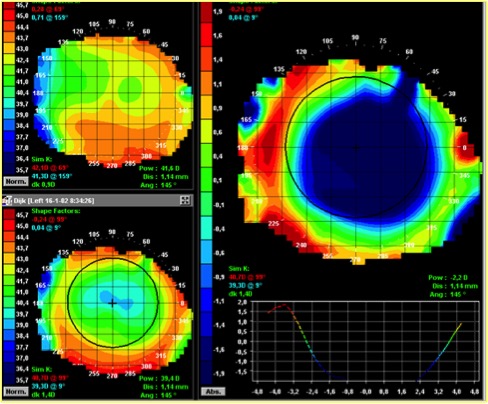
Thickness Change Astigmatism |
|
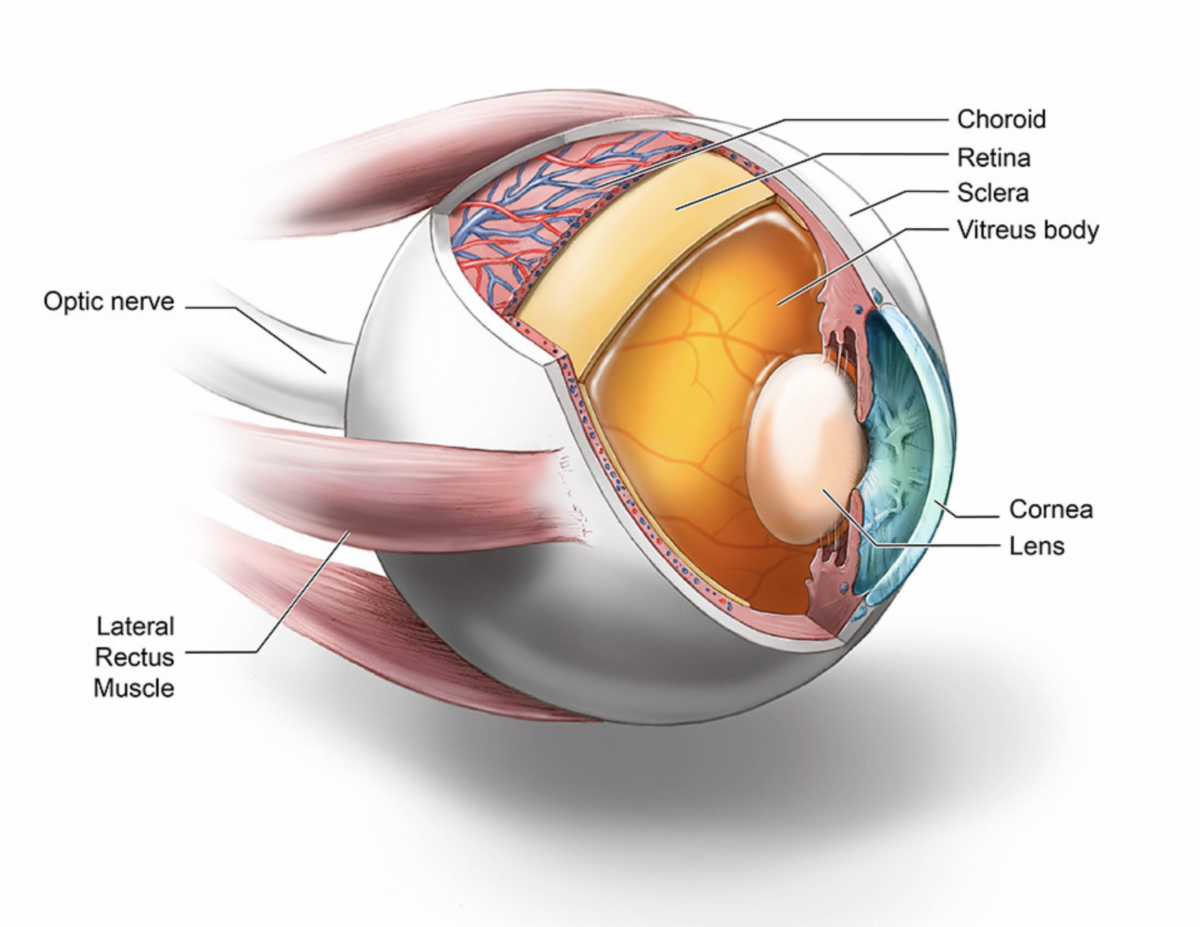
The choroid is the vascular layer of the eye that contains connective tissues and lies between the retina and the sclera. The human choroid is thickest (about 200 microns) at the far extreme rear of the eye, while it narrows to 100 microns in the outlying areas. Measuring choroidal thickness could be instrumental in understanding the effect of different optics applied to the visual system. In 2020, Hoseini-Yazdi from Queensland University of Technology published a study examining the choroidal thickness response to short-term with-the-rule and against-the-rule myopic astigmatic defocus. The study provided evidence of changes in human choroidal thickness with short-term exposure to defocus, after as little as 60 minutes of exposure to specific optics. Photo: NIH Image Gallery
|
|
Accomodation Differences in Myopes |
|
The same research group from Brisbane, Australia recently looked at axial elongation during short-term accommodation in myopic and non-myopic children. All axial biometric parameters, except for corneal thickness, changed significantly during accommodation, which confirms the results of previous studies examining non-myopic children. The finding that accommodation-induced axial elongation was greater in myopic children than in non-myopic children could support a potential mechanism linking near work, axial elongation and myopia development in children or may reflect greater susceptibility to accommodation-induced axial elongation in children with established myopia. |
|
Choroidal Response to Ortho-k |
|
A Pubmed search of 2021 and 2022 to date reveals seven papers on the topic of choroidal thickness in ortho-k. A paper from Lee et al from the Republic of Korea showed that choroidal thickness increased after three months of ortho-k treatment in each regional area on the retina. In young myopic adults, choroidal thickness in the nasal area was thinner than that in the foveal or temporal area before treatment. Choroidal thickness recovered to near baseline when it was observed for more than 6 months after ortho-k treatment. A study from China by Zhao et al found that the combination of ortho-k and atropine induced a greater increase in subfoveal choroidal thickness than did monotherapy with atropine. Another study from China by Hao et al found the control of axial length to be better in a group combining spectacles and 0.01% atropine versus an ortho-k group alone. The increase in subfoveal choroidal thickness was best in the group combining ortho-k and 0.01% atropine. However, repeatability of choroidal measurements is unreliable, as shown by studies from Hong Kong by Guo et al et al and a 2022 paper from Denmark by Asmussen et al that reports on the repeatability and inter-observer variation of choroidal thickness measurements in myopic Danish children aged 7-14 years. But overall, Chen and Shen report that changes in the anterior and posterior segments of the eye after ortho-k treatment suggest that the human eye has a powerful compensatory effect on the imposed defocus.
|
|
Management of Keratoconus
with Rigid Corneal Lenses
|
|
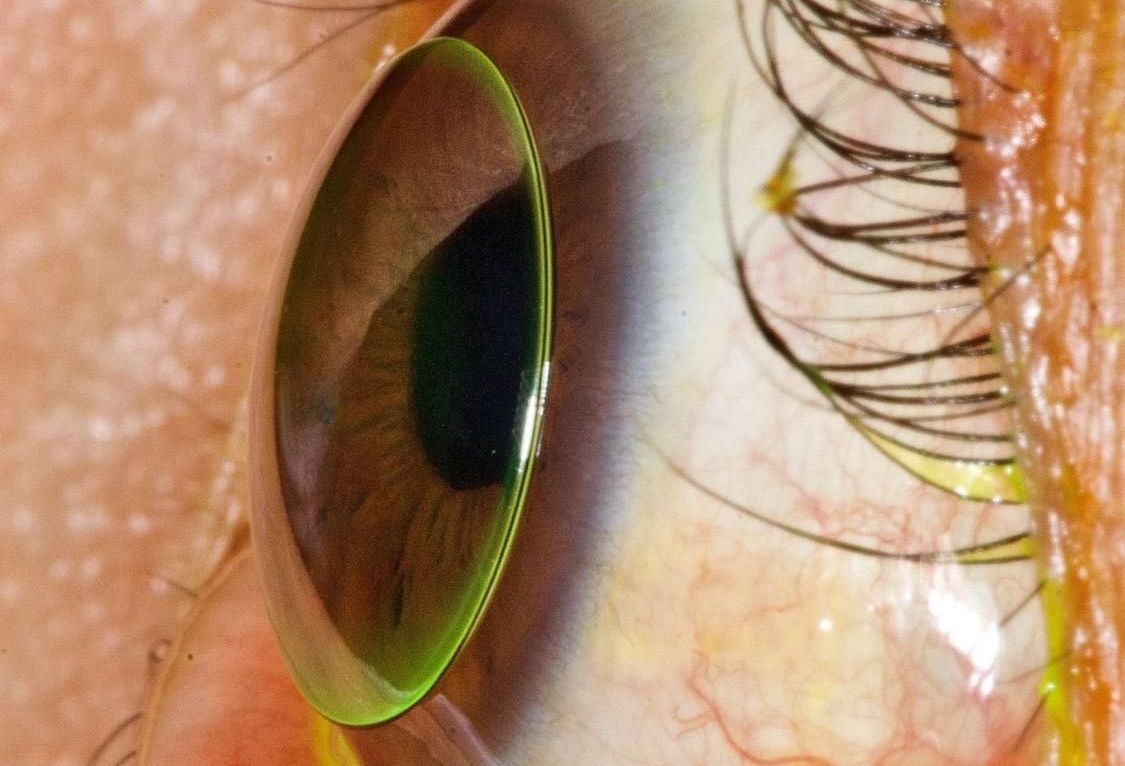
A review paper by Motozumi and Motohiro Itoi from Japan looked back on vision correction using rigid corneal lenses, a relatively safe, easy-to-replace, and economically viable option, according to the authors. For eyes with keratoconus, two fitting strategies have traditionally been used in Japan: apical touch fitting with spherical lenses and parallel fitting with multicurve lenses. These two techniques have different success rates depending on the type and severity of keratoconus. Therefore, it is important to classify eyes with keratoconus into four types based on the shape of the cornea and to select the prescription techniques according to this classification. If the corneal lenses prescribed by these fitting methods cannot be used because of mechanical irritation to the corneal epithelium, a piggyback lens system is an effective alternative, according to the authors. Furthermore, patients must be instructed on proper lens care to prevent contact lens-related complications and to maintain visual function. If these fittings and patient education can be performed properly, rigid corneal lenses can safely provide effective and comfortable vision for many patients with keratoconus, even those with severe keratoconus. Image: Irving Martínez Navé
|
|
Incorporating Technology in Practice |
|
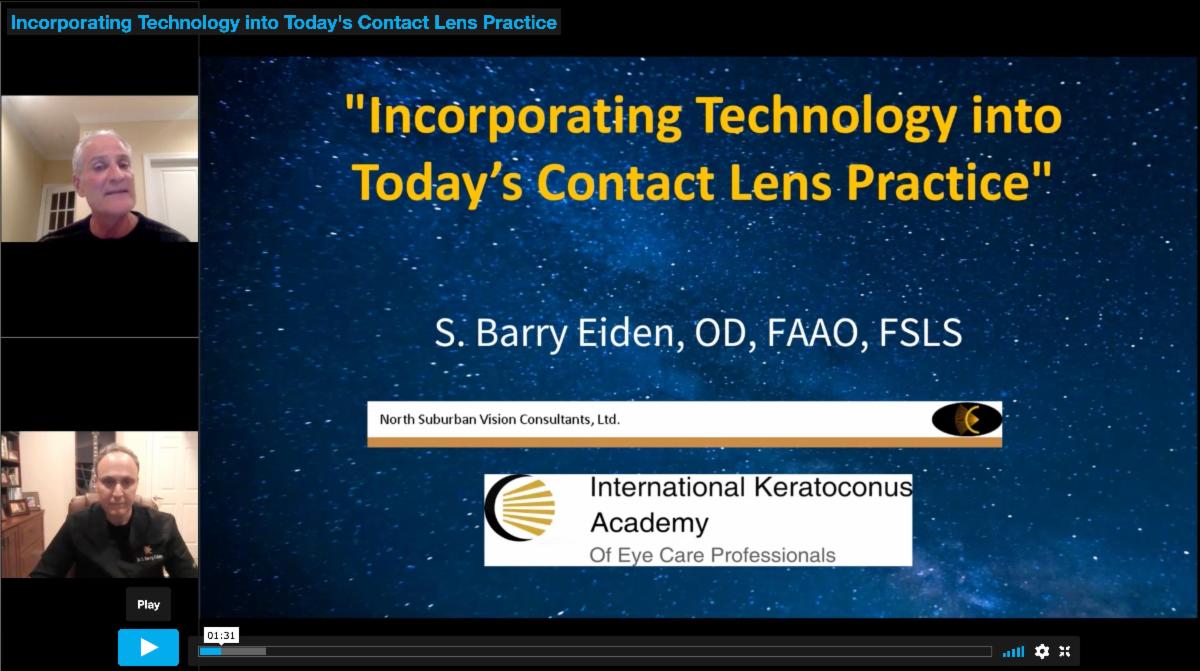
A new webinar presented in April 2022 by Barry Eiden focused on incorporating technology into today’s contact lens practice - including Placido-based corneal topography, anterior segment tomography, corneo-scleral profilometry, specular microscopy, aberrometry and ocular biometry for myopia management - and extending it out to ocular surface diagnostics and genetic testing of corneal disease. Barry reported from his practice in Chicago, Illinois (US), which has always been highly technology-based throughout his entire career. |
|
Amsterdam, Netherlands
Copyright © 2022. All Rights Reserved
This newsletter is kindly supported by:
|
|
|
I-site is an educational newsletter that is distributed on a monthly basis and provides an update on rigid gas permeable-related topics (scientific research, case reports and other publications worldwide). I-site is objective and non-political. Disclosure: I-site's editor Eef van der Worp, optometrist PhD FAAO FBCLA FIACLE FSLS, receives educational grants from a number of industry partners but is not related to any specific company. |
|
|
|
|
|
|