|
The AmeriCorps members serving with WisCorps at The Nature Place in La Crosse maintain a blog highlighting the environmental education they provide to the public. Check out excerpts of recent articles by their AmeriCorps members below and visit The Nature Place Blog to learn more about their service and environmental practices.
Digging In: From Weeds to Seeds, Prepping the Garden for Spring - Mace Thomson
Every year as the temperature begins to rise, so does the excitement of gardeners who have been patiently waiting to get their hands dirty again. We know that feeling well at The Nature Place. However, before planting begins, there’s plenty of prep work to do. Before we begin to look into the garden itself, we plan what produce we want to grow, and from that we decide what to start early from seed...
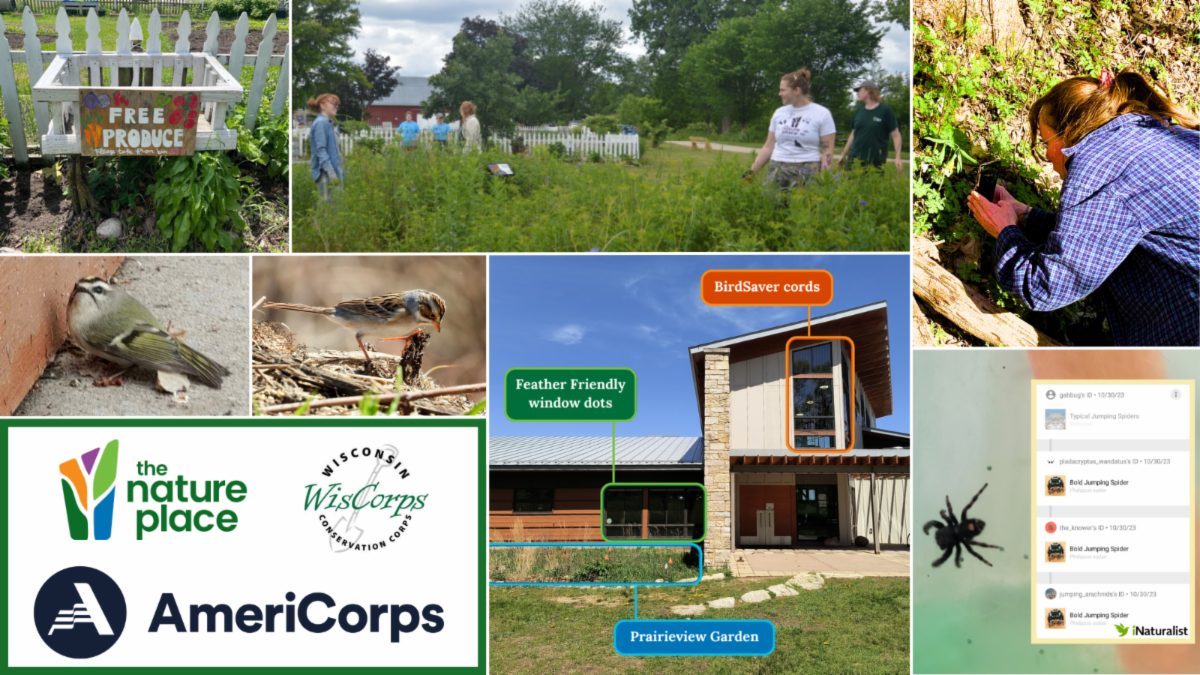
We offer garden volunteer hours every Thursday morning starting at 9am. This year, spring brought heavy rains which meant our gardens were full of grasses and weeds. We went to work pulling the large weeds we saw, but as every gardener knows, you’ll never get them all, especially with just a few people on the job. Thankfully, a UW-La Crosse recreational therapy class came and gave us a couple of hours of their time. We had people tilling the in-ground garden beds to get rid of weeds. redefine edges, and prepare the soil for planting. We had others trimming dead ends off of our raspberry bushes, making them look fresh and healthy again, and many others digging out weeds. Many hands truly make light work and our in-ground garden beds were ready for planting...
We are still in the planting stage, with many of our early planted veggies taking off and others still being actively planted. It’s truly heartwarming to see how generous our friends and the community have been in contributing to the garden and helping to maintain it. This community spirit is one reason we are so excited to put produce in our free produce bin on the north side of the garden fence. Anyone walking by can take home produce from the free bin. Seeing our garden grow and knowing it benefits others is what makes all the hard work worthwhile. (Read Full Article)
Community Science, a Catalyst to a Connected World - Gabrielle Arnold
The concept of delving into the scientific community with no prior experience is intimidating. Without a degree and years in a lab, what makes you qualified to make scientific observations? How could you, without any credibility, possibly contribute to a field filled with the minds and skill sets of experts? The good news is you are not alone. The desire to understand the world around you is a powerful tool that should not be underestimated. This tool can also be defined as community science...
The first step to get involved is to download iNaturalist. In my opinion, this app is the closest tangible thing to magic known to man. By simply snapping a photo of just about anything in nature, you can get closer to knowing exactly what it is. Mammals, birds, fish, insects, plants, fungi, and even bacteria – dead or alive – can be identified from your photo. However, it doesn’t stop there. You can also upload tracks, feathers, nests, and even droppings. Anything left behind can be a clue to what might be living close to your location...
The Nature Place hosts the Driftless Area BioBlitz. These events, known as BioBlitzes, are held by educated professionals from our community who volunteer their time and skills to teach people about specific groups of nature in monthly family-friendly events...
Knowledge from these events or your app spill into your everyday life. I have grown so much from participating in community science. Now, I can confidently point to and identify plants on my hikes, and my partner thinks I am a botanical mastermind. Although science requires experts to derive important contextual meaning from a scattered array of observations, the data collected by ordinary people with curiosity and a camera is invaluable. (Read Full Article)
Watching Out for Warblers…and Windows - Emma Lather
As an undergrad, I got hooked on Pokémon Go. In grad school, I got hooked on birding. The similarities are uncanny; I wander through the tall grass in search of new creatures to capture in my Pokéball (binoculars), record in my Pokédex (life list), and report to Professor Oak (eBird). From the moment I picked up binoculars (figuring someone getting a Master’s doing bird research should probably be able to identify some birds), I was doomed to fall in love. There’s something charming about birds, especially during their spring migration when the world is coming back to life. March brings early returners like ducks and robins, April has me examining every little brown bird to check for new sparrows, and May produces an explosion of warblers dancing in the leaves...
However, this fun season for birders represents a harrowing journey for the birds –migration is the most dangerous portion of birds’ annual cycle. All that flying makes birds hungry and tired, forcing them to explore unfamiliar environments in search of food and places to rest. Human-made environments like suburban neighborhoods and farms have replaced native habitats, making high-quality resources harder to find and bringing threats associated with people close to remaining wild spaces...
So what can we do? What can you do? While protecting wild stopover habitats (where migrating birds rest and refuel) is very important, there are plenty of actions you can take in your own home and yard to lend the birds a wing.
- Keep cats indoors or on a leash…
- Plant native and avoid using pesticides...
- Turn off unneeded exterior and interior lights between 11pm and 6am…
- Make your windows easier to see...
We at The Nature Place – both the people and the birds – appreciate you doing your part to make migration a little bit safer. And as you walk by this spring, keep an eye out for our feathered friends, the window dots, and me. I’ll be the one with the binoculars! (Read Full Article)
|