|
The Corresponder
The Newsletter of the Committees of Correspondence for Democracy and Socialism
| | |
The Crisis of Higher Education: Reactionary Assaults Today
June 23, 2025, 8 pm Eastern
The Commiittees of Correspondence for Democracy and Socialism CCDS
Socialist Education Project
4th Monday webinar series
Vice President Vance once referred to universities as “very hostile institutions…If any of us want to do things that we want to do for our country…we have to honestly and aggressively attack the universities…”
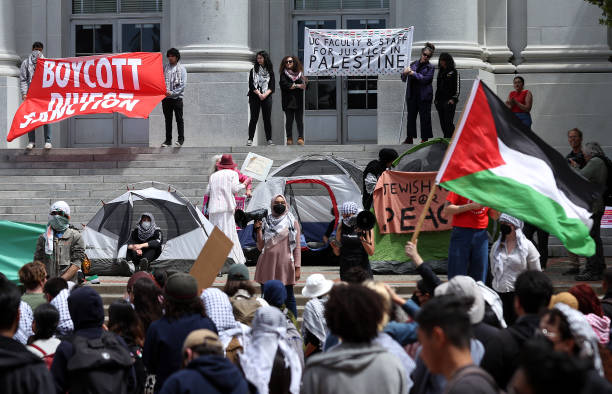
Political debates today increasingly involve the character of higher education. Current controversies have emerged over the teaching of critical aspects of American history, such as those dealing with race, class, gender, the environment, and the United States’ role in war and foreign intervention. These debates raise questions about higher education and the place of higher education in society, particularly the motivations behind attacks by the Trump regime and reactionary political forces of all kinds who wish to restructure the purposes served, role of faculty, students, and traditional curricula and research, in the 21st century.
Panelists, Carl Davidson, Jay Jurie, Harry Targ, and Meta Van Sickle, will comment on the theory and practice of higher education, drawing upon the current experiences from many states and on lessons from struggles in the past.
Register below and spread the word:
https://us02web.zoom.us/meeting/register/5GNrrWBAQlaeuTY6_zjr_Q
| |
“Worse Than McCarthyism”: Historian Ellen Schrecker on Trump’s War Against Universities & Students
| |
Saturday, May 3, 2025
Corporatizing and Militarizing a University Town
by Harry Targ
The Greater Lafayette area consists of two towns: Lafayette is a mixed community with some manufacturing and service as its economic base and West Lafayette, a smaller community, but a central location of Purdue University. Lafayette’s population as of 2020 was about 70, 000 and West Lafayette’s 44, 000. The metropolitan area, including several neighboring towns has a population of about 237,000, a growth of 16 percent since 2010. By far the major “industry” in the area, Purdue University, employs 17,000 workers of all kinds and the Purdue Research Park employs some 3,000 who work for 155 companies.
Although Purdue University always had strong programs and a research agenda involving engineering and agriculture, over the last thirty years the liberal arts, social sciences and humanities grew as well. Purdue employed poets and novelists of national reputation, as well as historians, political scientists and philosophers. Interdisciplinary studies programs were established in African American Studies, Women’s and Gender Studies, American Studies, and smaller programs for example concerning Human Rights, Peace Studies, Latin American Studies, Jewish Studies and others. The intellectual vitality of the university and the surrounding communities parallels such growth in many places around the country.
However, pressures from conservatives, advocates for “free enterprise,” and opponents of the flowering of higher education in all its diversity as a result of “the 60s,” grew as well. The politics of Indiana moved to the right with the electoral victories of Mitch Daniels and Mike Pence, due to the weakening of the Democratic Party and the sustained assault on organized labor. Indiana moved from a “purple” to a deep “red” state.
And thus, the pressures on higher education in keeping with the new rightwing agenda, which began before the prominence of Donald Trump, expanded. Nancy MacLean, in “Democracy in Chains,” documents the steady penetration of education, K through university, by the Koch Foundation and other conservative forces. Their programs have been recently illustrated in the document Project 2025 which recommends policies that will reverse the vitality and diversity of higher education. This historic project of dismantlement of education was accelerated by the long-term defunding of higher education by states and the national government and the covid epidemic.
These changes involved universities, like Purdue, increasingly currying financial connections with huge corporations and the military, downsizing and marginalizing the university work force, privatizing heretofore public services including food, residences, software services, transforming a public university into a series of private corporations. And these changes in the political economy of higher education have been paralleled by pressures to transform the curricula from rigorous discussion to celebration of American exceptionalism. And the transformation of higher education in the Greater Lafayette area has paralleled the transformations of the political economy of the twin cities, increasing privatization of public services, enticing outside corporate investors, increasing ties to the military and transforming communities and residences.as well.
Now, West Lafayette, in conjunction with the Purdue Research Foundation (which has been deemed “private”) is embarking on the construction of a huge South Korean chip manufacturing and packaging plant in West Lafayette. The West Lafayette City Council is scheduled on May 5 to debate changing ordinances to allow this massive factory to be housed in a residential community in the north end of West Lafayette. (The City Council has the last word even though the Area Planning Commission voted against the rezoning request.)
Indiana politicians and spokespersons have been fantasizing for many years about Central Indiana becoming “the Silicon Valley of the Midwest.” Now the pending agreement with the firm, SK hynix, it is claimed, will make Indiana a huge player in the new US/global political economy. However, those familiar with such dreams recall that SK hynix closed a large plant in another college town in Eugene, Oregon because product demand had declined. And those familiar with Wisconsin, are reminded of huge tax incentives given by the US government and the state to another high-tech company, Foxconn. In both cases, large numbers of new jobs were promised and, in both cases, smaller communities suffered critical residential dislocations. The jobs did not materialize. In the Oregon case the plant shut down. In Wisconsin the facility built turned out to be a fraction of the size of what was promised. Critics of the rezoning request that the West Lafayette City Council is being asked to grant make the following points.
The zoning request is for Sy Hynix to use 121 acres of land which is surrounded by residential communities. The plant to be constructed would be for packaging superchips, including manufacturing processes, and to develop a research and development center. The manufacturing of semiconductors is known to risk fire, explosions, and health risks to adjacent communities and workers. And the state of Indiana has already issued orders to reduce “regulatory safeguards.” Since semiconductor manufacturing causes health and safety hazards, experts urge that factories be placed far from residential areas. In this case, SK hynix will be adjacent to and surrounded by existing residential communities and near a school, a wellness center, and a park, as well as large areas of greenery to the north.
Along with the dangers of air pollution, the projected plant will increase traffic in a heretofore residential area, put demands on the county’s water supply, and in the main radically transform a residential, and rural environment to an industrial zone that may destroy the sense of community which residents have enjoyed.
In sum, for the last decade the Greater Lafayette community and its primary “industry,” Purdue University, have embraced a single-minded economic development model that pays little attention to the quality of life of the community, health and safety inside and outside facilities, while transforming the tradition of open and vibrant education at Purdue University to the celebration of a model of unbridled growth at all costs.
If the West Lafayette City Council approves the business/university push for moving closer to a midwest “Silicon Valley,” it will substantially reduce the quality of life as well as the educational vitality of this community.
| | |
Editorial: Bosses of Florida's Education System Disgrace the University of Florida
Florida’s university system has endured multiple injuries to its integrity over the past few years. But the Board of Governors outdid itself Tuesday in rejecting the distinguished scholar Santa Ono as the lone finalist for president of the University of Florida.
We can only think of one incident that comes close: Seven decades ago, acting Gov. Charley Johns blackballed a UF presidential candidate for having desegregated the University of Louisville.
After his return to the Legislature, in 1957, Johns and other racist lawmakers declared the Supreme Court’s school desegregation decisions null and void, which Gov. LeRoy Collins called an “evil thing.”
That Legislature spawned the notorious Johns Committee, named for its instigator, that tried to smear the fight for civil rights as a communist plot. Failing that, it spent years rampaging through universities to purge them of homosexuals. Racism. Homophobia. They never change no matter how much it may seem.
Public humiliation
Now, in thin disguise, they explain the Board of Governors’ reprehensible treatment of another worthy candidate and its humiliation of the UF trustees who chose Ono. The trustees’ error, it would seem, was to want an educator, not a politician.Ono’s past support of DEI programs as University of Michigan president were a dominant issue in the campaign to block him. DEI stands for diversity, equity and inclusion. That simply means welcoming everyone to a university or workplace and encouraging their success.
What’s wrong with that? It doesn’t discriminate against white men to promote fair treatment for Blacks, women, LGBTQ people, Asians and Hispanics. In 2010, as Board member Eric Silagy said in Ono’s defense, the Board adopted a resolution requiring DEI throughout the university system.
But to a sizable share of white U.S. voters, and to the politicians who cater to their fears and prejudices, “DEI” is as powerful a dog whistle as “race-mixing” was to those who elected Johns.
‘DEI’ as a dog whistle
It didn’t save Ono that he tried to walk back his past support for DEI programs at Michigan and his having signed a letter, with hundreds of other college presidents, objecting to the Trump administration’s war against higher education. The letter was right, but retracting his signature was wrong.
Ono’s futile capitulation will dog him as he seeks another presidency. He left Michigan in the misguided notion that Florida would approve the UF trustees’ unanimous recommendation.
It’s a familiar lesson: Kowtowing to bullies only encourages them.
In its 22-year history, the Board has never rejected any president. But until recently, Florida never had such an array of right-wing opportunists as it does now. It was the political equivalent of a lynching by Donald Trump Jr., Sen. Rick Scott and U.S. Reps. Byron Donalds, Greg Steube and Jimmy Patronis, among others.
Trump Jr. called Ono — whose Michigan students protested him as too harsh on pro-Palestinian protesters — a “woke psycho.” Patronis demanded that Florida should “Leave the Ann Arbor thinking in Ann Arbor,” as though Michigan, which voted for Trump in 2024, were some hotbed of socialism.
Donalds, who wants to be governor, gave voters a clue why he shouldn’t be with his actions. In other news reflective of this group’s intellectual dynamism, Steube has filed legislation to defund Washington’s Metro unless it renames its system “The Trump Train” and adopts the acronym “WMAGA.”
Dire consequences ahead
The consequences for higher education in Florida will be dire. UF will almost certainly become the seventh post-secondary institution in the state to have a politician or a politician’s friend as its president. What academician worth the job would want to apply now?
UF is also in danger of losing its prized national ranking, seventh among public schools in the 2024 U.S. News listing and fourth in Forbes “Top Public Colleges.”
Florida’s faculty and students deserve better than the “intellectual reign of terror” described in a 2023 report of the American Association of University Professors that Tallahassee has waged against higher education since DeSantis won re-election in 2022.
The Board’s debate, ending in a 10-6 vote against Ono, brought out that one of his Board antagonists, former House Speaker Paul Renner, had talked to UF Trustee Mori Hosseini about applying for the presidency himself.
Renner claimed he had only one such conversation, at someone else’s suggestion. He didn’t say whose, but an educated guess would be DeSantis, who had put up another politician, Randy Fine, for the presidency of Florida Atlantic University, which he didn’t get.Renner said he wouldn’t pursue the presidential vacancy while he’s on the board. He shouldn’t have it ever.
Politicians already occupy the presidencies of Florida Atlantic, West Florida, Florida International and New College. A well-connected lobbyist was chosen at Florida A&M. The University of South Florida is looking for a new president. Ex-legislator Fred Hawkins heads South Florida State College without the posted qualifications.
DeSantis’ abandonment of Ono was cowardly. His advice to the Board of Governors to “vote your conscience” pointedly left both Ono and Hosseini twisting in the wind.
Hosseini, who has been one of DeSantis’ strongest benefactors — he even gifted an expensive golf simulator to the Governor’s Mansion — should feel betrayed. He has been shown, as countless others have been, that to a political opportunist, no friend is indispensable and nothing is safe.
The Orlando Sentinel Editorial Board includes Executive Editor Roger Simmons, Opinion Editor Krys Fluker and Viewpoints Editor Jay Reddick. The Sun Sentinel Editorial Board consists of Executive Editor Gretchen Day-Bryant, Editorial Page Editor Steve Bousquet, Deputy Editorial Page Editor Dan Sweeney and editorial writers Pat Beall and Martin Dyckman. Send letters to insight@orlandosentinel.com.
| |
Join "No Kings Day" this Saturday, June 14th!
Check here for an action in your area.
| |
National Guard to be sent to L.A. amid clashes; Newsom calls Hegseth’s threat of Marines ‘deranged’
The Trump administration said it would send 2,000 National Guard troops into Los Angeles after a second day in which protesters confronted immigration agents during raids of local businesses.
By Los Angeles Times Staff
| | |
ICE arrested a California union leader. Does Trump understand what that means?
Immigrant rights activists protest multiple sweeps across Los Angeles by U.S. Immigration and Customs Enforcement agents.
(Genaro Molina/Los Angeles Times)
By Anita ChabriaColumnist
June 7, 2025 12:06 PM PT
- The arrest of union leaderr David Huerta is going to have a major impact on the coming months as deportations continue.
- Huerta was taken to the hospital for treatment, then into custody, where he remains until a Monday arraignment.
Unions in California are different from those in other places.
More than any state in our troubled country, their ranks are filled with people of color and immigrants. While unions have always been tied closely with the struggles of civil rights, that has become even more pronounced in the years since George Floyd was killed by a police officer in Minneapolis.
In the subsequent national soul-searching, unions were forced to do a bit of their own. But where that conversation has largely broken down for general society under the pressure of President Trump’s right-wing rage, it took hold inside of unions to a much greater degree — leading to more leadership from people of color, sometimes younger leadership and definitely an understanding from the rank and file that these are organizations that fight far beyond the workplace.
Which is why the arrest of David Huerta, president of SEIU-USWW and SEIU California, by U.S. Immigration and Customs Enforcement on Friday is going to have a major impact on the coming months as deportations continue.
“They have woke us up,” Tia Orr told me Saturday morning. She’s the executive director of the 700,000-strong Service Employees International Union California, of which Huerta is a part, and the first African American and Latina to lead the organization.
Advertisement
“And I think they’ve woke people up across the nation, certainly in California, and people are ready to get to action,” she added. “I haven’t seen that in a long time. I don’t know that I’ve seen something like that before, and so yes, it is going to result in action that I believe is going to be historical.”
While unions have voiced their disapproval of mass deportations since the MAGA threat first manifested, the unions’ might has not gone full force against them, taking instead a bit of a wait-and-see approach.
Well, folks, we’ve seen. We’ve seen the unidentified masked men rounding up immigrants across the country and shipping them into life sentences at torturous foreign prisons; we’ve watched a 9-year-old Southern California boy separated from his father and detained for deportation; and Friday, across Los Angeles, we saw an anonymous military-style force of federal agents sweep up our neighbors, family members and friends in what seemed to be a haphazard and deliberately cruel way.
And for those of you who have watched the video of Huerta’s arrest, we’ve seen a middle-aged Latino man in a plaid button-down be roughly pushed by authorities in riot gear until he falls backward, and seems to strike his head on the curb. Huerta was, according to a television interview with Mayor Karen Bass, pepper-sprayed as well. Then he was taken to the hospital for treatment, then into custody, where he remains until a Monday arraignment.
U.S. Atty. Bill Essayli wrote on social media that “Federal agents were executing a lawful judicial warrant at a LA worksite this morning when David Huerta deliberately obstructed their access by blocking their vehicle. He was arrested for interfering with federal officers ... Let me be clear: I don’t care who you are—if you impede federal agents, you will be arrested and prosecuted. No one has the right to assault, obstruct, or interfere with federal authorities carrying out their duties.”
I have covered protests, violent and nonviolent, for more than two decades. In one of the first such events I covered, I watched an iconic union leader, Bill Camp, sit down in the middle of the road in a Santa suit and refuse to move. Police arrested him. But they managed to do it without violence, and without Camp’s resistance. This is how unions do good trouble — without fear, without violence.
Huerta understands the rules and power of peaceful protest better than most. The union he is president of — SEIU United Service Workers West — started the Justice for Janitors campaign in 1990, a bottom-up movement that in Los Angeles was mostly powered by the immigrant Latina women who cleaned commercial office space for wages as low as $7 an hour.
After weeks of protests, police attacked those Latina workers in June of that year in what became known as the “Battle of Century City.” Two dozen workers were injured but the union did not back down. Eventually, it won the contracts it was seeking, and equally as important, it won public support.
Huerta joined USWW a few years after that incident, growing the Justice for Janitors campaign. The union was and has always been one powered by immigrant workers who saw that collective power was their best power, and Huerta has led decades of building that truth into a practical force. He is, says Orr, an organizer who knows how to bring people together.
To say he is a beloved and respected leader in both the union and California in general is an understatement. You can still find his bio on the White House website, since he was honored as a “Champion of Change,” by President Obama. Within hours of his arrest, political leaders across the state were voicing support.
“David Huerta is a respected leader, a patriot, and an advocate for working people. No one should ever be harmed for witnessing government action,” Gov. Gavin Newsom posted online.
Perhaps more importantly, AFL-CIO President Liz Shuler, speaking for her 15 million members, issued a statement.
Huerta “was doing what he has always done, and what we do in unions: putting solidarity into practice and defending our fellow workers,” she said. “The labor movement stands with David and we will continue to demand justice for our union brother until he is released.”
Similar statements came from the Teamsters and other unions. Solidarity isn’t a buzzword to unions. It’s the bedrock of their power. In arresting Huerta, that solidarity has been supercharged. Already, union members from across the state are making plans to gather Monday for Huerta’s arraignment in downtown Los Angeles.
Meanwhile, Stephen Miller, the Santa Monica native and architect of Trump’s deportation plans, has said the raids we are seeing now are just the beginning, and that he would like to see thousands of arrests every day, because our immigrant communities are filled with “every kind of criminal thug that you can imagine on planet earth.”
But in arresting Huerta, the battleground has been redrawn in ways we don’t fully yet appreciate. No doubt, Miller will have his way and the raids will not only continue, but increase.
But also, the unions are not going to back down.
“Right now, just in the last 14 hours, labor unions are joining together from far and wide, communities are reaching out in ways I’ve never seen,” Orr told me. “Something is different.”
Rosa Parks was just a woman on a bus, Orr pointed out, until she was something more. George Floyd was just another Black man stopped by police. Until he was something more.
Advertisement
Huerta is the something more of these immigration raids — not because he’s a union boss, but because he’s a union organizer with ties to both people in power and people in fear.
The coming months will show what happens when those two groups decide, together, that backing down is not an option.
| | |
Ongoing protests against ICE and deportations
Protests supporting the resistance to ICE activities in Los Angeles have spread to other cities across the United States.
Specifically:
- New York City: Anti-ICE protesters gathered outside the Jacobs Javits Federal Building in Lower Manhattan, attempting to block a van from leaving the facility. New York police also attempted to form a barrier between protesters and ICE agents to prevent similar scenes to those in Los Angeles.
- Chicago: Protesters attempted to block a van departing from a South Loop office associated with ICE's Intensive Supervision Appearance Program (ISAP).
It is important to note that these protests followed similar incidents in other cities like San Diego, Nashville, and Newark where ICE activities were met with resistance
| | |
By Carl Davidson
LeftLinks Weekly, June 6, 2025
It's Not just the Sparks, Look for What’s on Fire: This week’s headline feud—President Donald Trump’s very public break with Elon Musk, his one-time megadonor—is best viewed as a symptom, not the disease.
Similar quarrels are simmering among a dozen other power centers. Taken together, they signal a larger question first framed by Lenin a century ago to sum up all politics: “Who does what to whom?”
For starters, We Have A Democracy with Antique Plumbing. Our constitutional machinery, from lifetime-appointed judges to the Electoral College, was never built for broad participation. When genuine avenues for settling disputes are narrow, combatants look for shortcuts—sometimes violent ones. Our judges, lawmakers, and election officials are now reporting an unprecedented wave of threats, largely from the political right.
Fault Line One: Ideology: First, a Globalist-Neoliberal Wing: finance executives, coastal media, and portions of Big Tech who accept modest reform as the price of stability. Then, a Nationalist-Populist Wing: fossil-fuel barons, defense contractors, and culture-war entrepreneurs who champion protectionism and traditional hierarchies. The Musk-Trump slugfest widens this gap and encourages each side to wield government for private gain.
Fault Line Two: Old Money vs. New Money: The transition from industrial to information capitalism pits yesterday’s titans (merchant bankers, oil, autos, agribusiness) against Finance Capital, Platform and AI moguls. Wall Street itself is splintered: hedge-fund raiders, venture capital, and private-equity giants often lobby for mutually exclusive rules.
Fault Line Three: Media Echo Chambers: Our old Mainstream Media have “demassified” into a dozen digititized ‘news’ siloes. Legacy outlets compete with new influencer networks whose audiences rarely overlap. Instead of calming tensions, media increasingly monetizes them, leaving citizens—and even elites—in alternate realities.
Why We Care: Policy paralysis hurts: Gridlock on climate, healthcare, immigration, and defense occurs because rival interests pull policymakers in opposite directions. Public confidence in institutions declines as Americans watch billionaires engage in a macho-honcho brawl. Foreign-policy whiplash hurts: Regarding Ukraine, European allies can’t count on U.S. commitments; Putin’s Russia exploits the confusion.
Regarding Israel and Gaza, the current policy, built up by both Biden and Trump, has us a minority of one in a UN vote, while we constitute contributing to the Likud’s genocide against Palestinians. The combined effect increases the risks of authoritarian drift at home and miscalculations that could lead to wider wars abroad.
What Can Be Done from Below: Grass-roots coalitions are already testing a counter-strategy: The Bernie–AOC “anti-oligarchy” tour and the nationwide “50501” mobilizations are showing how progressives, labor unions, and minority-rights groups can set a common agenda and take it to the streets. Local Democratic organizations are joining these efforts, aiming their “main blow” at the Trump-led neoconfederate bloc while courting persuadable centrists and even a slice of the MAGA rank-and-file to a wide coalition. The broader goal echoes Rev. William Barber’s call for a “Third Reconstruction”: to build a new governing power from the bottom up, rather than merely restoring the pre-Trump status quo.
Advisory Take-Away: Share widely with friends.
- Stay Informed—but diversify your information sources to avoid falling into a single faction’s narrative.
- Engage Locally—city councils, school boards, and union drives are less influenced by billionaire feuds and offer concrete avenues for change.
- Support Institutional Reforms—ranked-choice voting, independent redistricting, defending DEI, and setting court-term limits can widen democratic participation and reduce the payoff from elite brinkmanship.
- Build Broad Coalitions—effective resistance to authoritarian currents will require cooperation among progressives, moderates, and disaffected conservatives who still value democratic norms.
Elite fractures are real and consequential, but they do not guarantee progressive outcomes. The future will be shaped by how decisively—and how wisely—ordinary people organize in the space those fractures open up.
| |
WE NEED TO SING AS WE GO MARCHING:”MUSIC
AND SOCIAL MOVEMENTS was a wonderful event on May 26th with Kristin Lems and Doug Morris
| |
To defeat the MAGA death cult, we need to fight for health care for al
By Peter Shapiro
June 3rd
The struggle over Medicaid represents an existential threat to an already overburdened system and the millions who depend on it. But the left must do more than defend Medicaid; we must use this crisis moment as an opportunity to call for a universal, publicly funded health care system.
The massive cuts to Medicaid passed by the House in mid-May promise devastation, not only to the 13 million people who will be stripped of eligibility, but to hospitals and clinics in rural and other underserved communities that rely on Medicaid funds to remain solvent. Many will close, or be taken over by private investors who specialize in buying public entities and "downsizing" them, maintaining only those services that turn a profit. Public hospitals everywhere will tighten their belts, laying off workers and stonewalling in contract talks. People who have been cut off Medicaid will have nowhere else to go for care but already overburdened emergency rooms.
Pledge your support
Sooner or later, most seniors and people with disabilities requiring long-term care wind up relying on Medicaid to pay for it, because it can wipe out your savings in a hurry. As of July 2024, Medicaid is the primary payer for 63% of nursing home residents; the cuts will put them in an impossible situation. In the Black community, maternal mortality rates are already shockingly high; the cuts will push them even higher.
House Republicans claim they are saving money by stripping away eligibility from illegal immigrants and the people who don't meet work requirements (what were known in Victorian England as "the undeserving poor"). But nearly two-thirds of those on Medicaid actually do hold jobs, and most of the rest are either ill, disabled, or serving as primary caregivers for someone else. As for the undocumented, federal spending on their health care is already against the law. In states where all residents are eligible, regardless of citizenship or immigration status, the state picks up the tab for their care.
Far more people will be affected by the cuts than the GOP is letting on. Rep. David Valadao represents Bakersfield, California, and the surrounding area. Nearly two-thirds of his constituents are on MediCal, California's version of Medicaid. Valadao promised to oppose any cuts to Medicaid, but when it came time to vote on the House budget bill, he caved and voted yes. There are others in Congress like him. If only one of them had voted no, the House budget would not have passed.
But the Republicans are right about one thing: soaring health care costs are making both Medicaid and Medicare unsustainable. There is an enormous amount of waste built into both programs, and continuing down the current path is fiscally irresponsible.
This isn't because the wrong people are getting coverage. It's because, over the years, every move by the federal government to extend health care access has been accomplished with massive subsidies of private capital. Many people were helped by the Affordable Care Act, but the private insurance industry benefited from it to the tune of $10 billion of our federal tax dollars. A majority of people on Medicare now get it from private Medicare Advantage plans, paid for out of the Medicare trust fund. These are a gold mine for corporations like United Health, bilking the system even further by claiming patients are sicker than they actually are, while denying costly claims for those who are truly sick.
In North Carolina, Republicans counter Democratic charges of throwing the poor under the bus by pointing out the Democratic Party’s ties with corporate hospital chains. And private for-profit hospitals do, in fact, make a killing off federal programs, often at the expense of patient care.
The threatened cuts to federal health care spending are symptoms of a crisis that neither party has shown a willingness to confront, despite efforts by a minority of Congressional Democrats to promote single payer. Each party uses the health care system's failures to attack the other, but only independent political organizing can defend the millions of people whose lives and well-being are at stake.
This applies not only to electoral politics but to unions. Maintaining health benefits in the face of steadily rising costs has long been a millstone around the neck of organized labor. Union negotiators are forced to sacrifice much of their leverage at the bargaining table not to win better coverage, but just to keep what they have. Any time contract talks break down, health coverage is usually the cause.
Organized labor is arguably the only institution with the resources and infrastructure to counter the influence of the health care industry. Union leaders who have had to bargain over health benefits know all too well the stiff price of a system of private, employer-based health coverage. Many will readily acknowledge that a universal, publicly funded health care system would be far better for workers. But union political behavior is notoriously risk-averse, and telling your members that they can no longer count on the union to win decent coverage is an admission of defeat that few union officials are willing to make. For them to do more than simply pass single payer resolutions at conventions, their members will have to demand it.
Perhaps necessarily, health care reform has been a lower priority in recent years for many in labor and the left. But the struggle over the federal budget has pushed it onto the front burner, whether we like it or not. It's time for us to take it up in earnest. It represents not only a threat, but an opportunity to raise the level of political discourse and strengthen the anti-MAGA front.
Peter Shapiro has been a health care activist since he represented his union at the founding conference of the Labor Campaign for Single Payer. He works with the Mexico Solidarity Project.
This newsletter publishes the work of Liberation Road members, fellow travelers and friends. You’ll find write ups here on culture and politics, current events and ephemera, class war and cooking.
| |
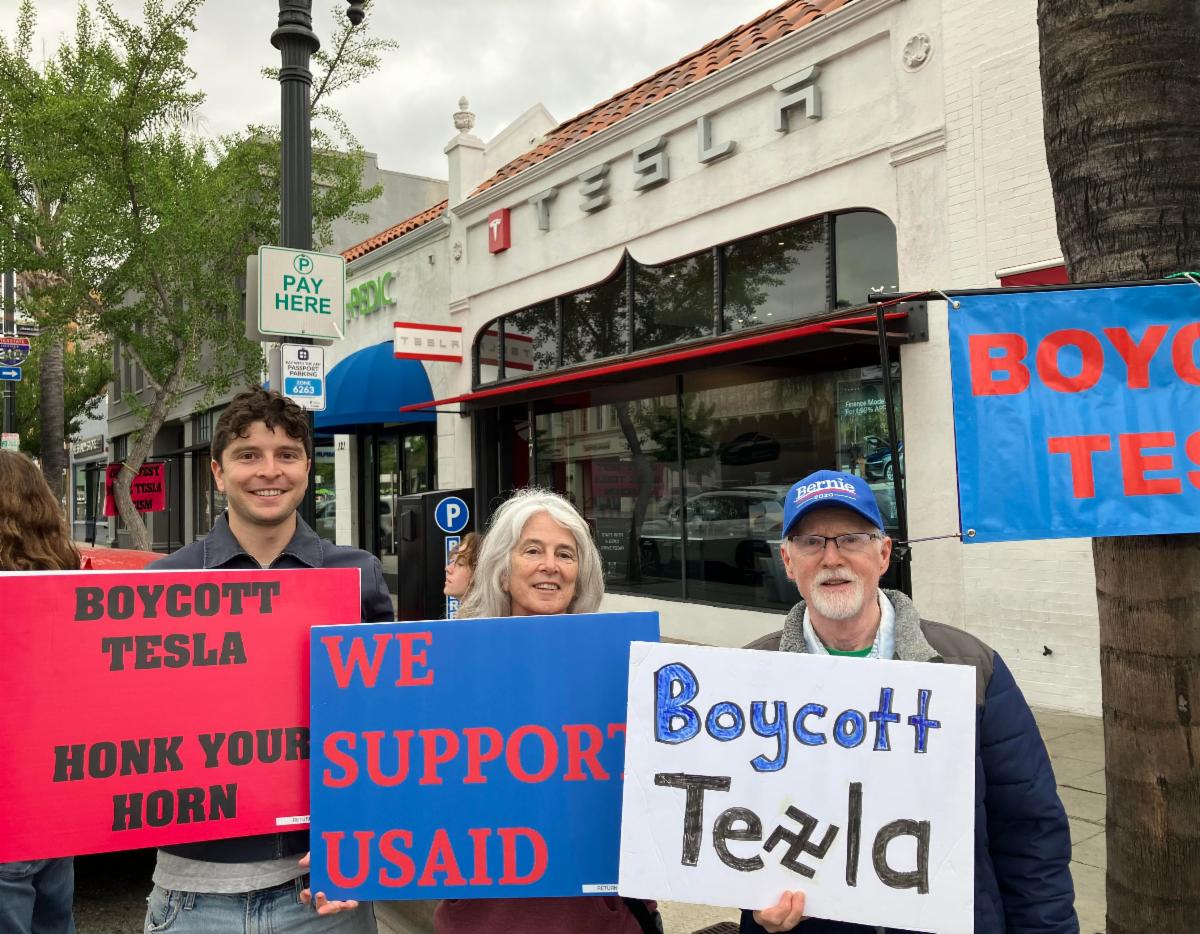
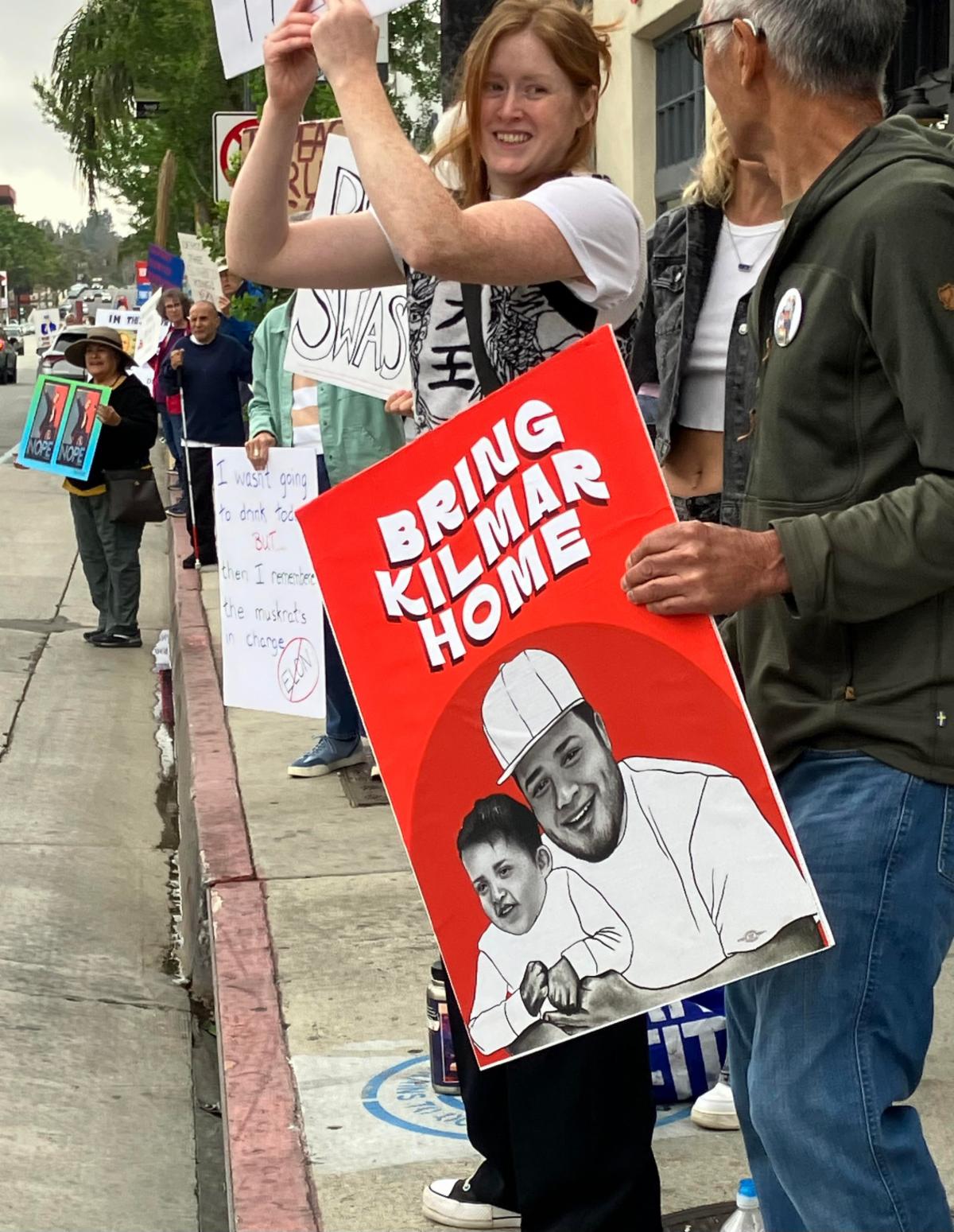
Tesla Takedown protest: Every Saturday
Tesla Showroom
117 W. Colorado Blvd.
Pasadena
11-2 pm
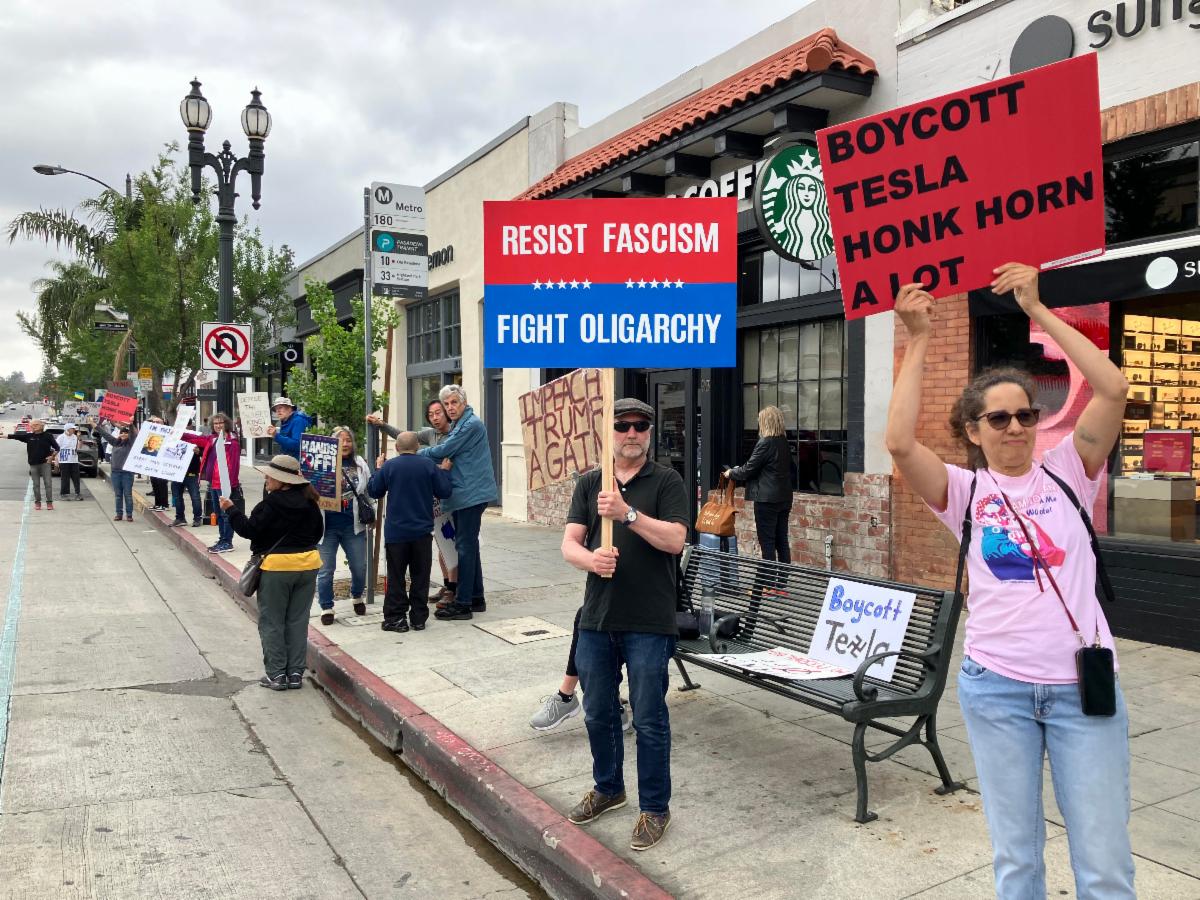
The Tesla Boycott is gaining ground across the country, and Tesla sales and stock is plummeting. Some cities across the country are having weekly protests outside Tesla showrooms. Here’s some photos from recent protests in Pasadena. There are others in LA County. I could write something short about them for our publications.
from Paul Krehbiel
| | |
"Organize, Organize, Organize"
By Kathy Sykes at the webinar on Women and Political Struggle on March 24th
This is an adaptation from a speech I gave at the 60th
Anniversary of the Selma March and I spoke at Women’s Round
Table Luncheon. I just want to begin by saying, Good evening
everyone. March is Women's History Month. With that in mind,
I'm reminded of Kwame Toure/ Stokely Carmichael , who said,
organize, organize, organize, join an organization or create one,
but, we must organize. This is so important because we are
fighting against spiritual wickedness in high places, not because
of what happened in the past with slavery and racial and gender
oppression and Jim Crow laws and death by lynching, but
because of what is happening right now, in real time.
For instance, some of our long time good corporate citizens and
community partners dumped us. We are the DEI they are talking
about, black, disabled veterans, women, people of color. They
dumped us so quick, it literally gave us whiplash. We thought
that these were deep alliances of mutual respect for us and our
dollars cultivated over many years, only to find out that they
were superficial and in some cases fake or phony. The scab is
off. Now we look at the dismantling of Section 5 of the Voting
Rights Act, and how quickly states and municipalities were to
roll back provisions for fair representation in our redistricting
processes. We were headed in the right direction, but now that
has changed.
Yeah, Mississippi has eight women in the Senate and 19 in the
Mississippi House of Representatives, for a total of 27 women
out of 174. We have 52 senators and 122 representatives. Yes,
women simply cannot compete with the big bucks that men have
access to. We are used to doing more with less, and miracles
sometimes do happen.
But as we look at what is going on in the Supreme Court races in
North Carolina and Wisconsin, massive attacks on voting rights
are taking place. We do need to limit money in government and
end Citizens United. We have to educate our people on the
importance of participation in the decennial census, don't throw
those forms in the trash. Let's get it right next time.
We must restore the right to vote to those who have served their
time. It is cruel and unusual punishment to relegate those who
have served their time and paid their debt to society, to a
permanent second class citizenship status.
Sister Fannie Lou Hamer asked the question, is this America,
land of the free and home of the brave? She said that this
country was built on the black backs of the slaves. Today it is
getting harder and harder to recognize our country. We are
fighting our friends with one hand and hugging our enemies
with the other. Dedicated civil servants and veterans are losing
their jobs and livelihood daily. They can't pay their mortgages.
With cuts to Medicaid and Social Security. It will not be long
before our mamas are getting kicked out of the nursing home.
We must defend Head Start and public education from attempts
to dismantle free public education. Our farmers that are barely
holding on by a thread are about to get that thread cut due to the
freezing of government contracts, holding up of subsidies and
the tariffs that are on their way.
However, in the face of many different challenges, we can look
back and draw inspiration from women who have historically
led the charge for justice, figures like Ellen Baker, Heather
Booth, Winifred Green, Anna Devine, Dorie Ladner, Euvester
Simpson, Joan Trumpeter Mouholland and Diane Nash. These
women were fearless in their organizing and were pivotal during
the Civil Rights Movement. Coretta Scott King, Myrlie Evers
and Betty Shabazz, women who picked up the torch, women
who tirelessly advocated for equality, reminding us of the power
of a woman, with a strong commitment to human rights.
I'm reminded of my grandmother, Ellen Peace McCray, who
always had a backyard garden. Sometimes we have Sankofa
moments where we move forward, while looking back. Never
forget where we have come from, but never go back.
Women are the conscience of this country. We are all called to
action. We must advocate for comprehensive voting rights
legislation, support initiatives like the John Lewis Voting Rights
Advancement Act, restore Section 5 of the Voting Rights Act,
and we must work together to defend reproductive rights by
standing against policies that seek to control women's bodies
and restrict access to Essential Health Care Services. We must
promote gender equality by demanding equal pay for equal work
and ratify the ERA Now, the path forward requires collective
action.
We must hold our representatives accountable and stand in
solidarity with others whose rights are under attack. It appears to
be a lot of buyers remorse right now. A woman president doesn't
sound so bad now, does it?
Let us pray for our immigrant brothers and sisters. People are
hurting, but we as a people, know that the Lord will never leave
us nor forsake us. Reverend James Orange and Doctor Joseph
Lowery told a parable about a lady that had fallen off a boat into
deep waters and she didn't know how to swim. She was flinging
her arms around and yelling to the top of her lungs, “Save me,
save me, save me!” So the best swimmer on the boat jumped
into the water and raced toward the lady to rescue her. He
reached her in record time. As the he grabbed her arm to pull her
into the boat, it fell off. He grabbed the other arm and pulled it
to put her into the boat. It fell off. He grabbed one of her legs, it
fell off. He grabbed the other leg and it fell off. She shouted at
the man, I thought that you were going to save me. And he
replied, I could if you would only just stick together. Family in
times like these, we must pray together and stick together.
So I'm going to stop right there. I just had to share that with a
wider audience. But thank you all so much for inviting me to
have a word tonight. I am among friends that I have been
associated with for many, many years, with CCDS and yeah, we
have a lot of work to do, but we must stick together, and if we
don't, is there's no telling where these next four years are going
to lead our country. And that's all I have to say right now. Thank you.
| | Kathy Sykes has been a long time Civil Rights and Community Activist and Advocate.Kathy Sykes was elected to the Mississippi House of Representatives in 2015 to 2019. Kathy is Co-Coordinator of Helping Hands Community Outreach, Inc. a non-profit that focuses on increasing voter participation and policies that affect working women and their families. | | |
Radical Media – Past, Present, and Future
A review of two books
by Jay D. Jurie
Graham, John, ed., “Yours for the Revolution,” The Appeal to Reason, 1895-1922.
Lincoln, Nebraska: University of Nebraska Press, 1990.
Dreyer, Thorne, Notes From the Underground, 77 Articles that Bring the Past to Life.
Austin, Texas: New Journalism Project, 2025.
Social change activists and organizers have long denounced the distortions and
deliberate omissions of the conventional, corporate-owned and dominated media
system in this country. Some have sought to provide alternatives. While the so-called
Founding Fathers advocated media free from governmental domination and oversight,
they did not mention media should be free from ownership and control by the economic
elite. It is axiomatic to say, while not often said enough, that the press in the United
States is only “free” to those like Rupert Murdoch, or Jeff Bezos, who happen to own
major media outlets.
There have been a number of outstanding studies and analyses of the major media in
this country. Originally published in 1983, when the Media Monopoly by Ben Bagdikian
was re-issued as the New Media Monopoly in 2004, it showed that ownership of the
media became even more concentrated in the intervening period. From the book’s
publisher: “Since then, the number of corporations controlling most of America’s daily
newspapers, magazines, radio and television stations, book publishers, and movie
companies has dwindled from fifty…to five.”
In 1988, Manufacturing Consent by Edward S. Herman and Noam Chomsky described
the functions of the media system in this country, the ways in which values are shaped
and reality is defined and framed. Similarly, various works of Robert S. McChesney,
such as The Problem of the Media in 2004, make substantial contributions to that
understanding. Regrettably, McChesney’s work has been cut short by his death earlier
this year.
Closely related to the media system is the public relations industry, a major function of
which is to mold perception on behalf of corporate priorities. Edward Bernays, a
nephew of Sigmund Freud, significantly advanced the craft of propaganda and
techniques for manipulating public opinion. Along with much else, two books by Stuart
Ewen, Captains of Consciousness and PR!, reveal the dividing line between this
industry and the news media is nowhere near as sharp as some perceive or would like
to believe. Other relevant analyses include the writings of John Stauber and Sheldon
Rampton, including Toxic Sludge is Good for You, which likewise make substantial
contributions to this understanding.
“Yours for the Revolution” and “Notes From the Underground” move beyond study and
analysis of the corporate media. They showcase engaged journalism, ways in which
citizens can involve themselves, ways in which their own frame of reference can be
defined and acted on apart from the media system. They advocate for a democratic
media driven by the popular engagement and will.
In his introduction to his anthology of articles from the Appeal to Reason, John Graham
alludes to a larger purpose than simply “to [bring] non-capitalist news and culture to
millions of Americans.” It was “to war against oppression and vast wrongs,” it sought “to
imbue Americans with actively egalitarian, nonexploitative values.” Further, “the Appeal
was a participatory counterinstitution that actively represented the socialist movement”
and was proactive in seeking to bring a socialist transformation to the US.
Graham, a professor of American Literature and American Studies, was affiliated with
the Students for a Democratic Society (SDS) chapter at the University of Colorado.
Graham thus shared the values reflected in the articles he assembled for this book. He
put extraordinary effort into compiling what is likely the best existing work on the Appeal
to Reason and its remarkable influence.
“Yours for the Revolution” stands out as one of the best historical accounts of the left in
US history during this period. The book consists of nine chapters along with notes and
an index. Graham’s initial chapter begins with the founding of the Appeal and an
overview. It then switches gears to several introductory articles, most by founding editor
J.A. Wayland. Every chapter follows this same format, with an introduction by Graham
followed by several articles illustrative of the themes.
Affiliated with Socialist Party of America chair and co-editor Eugene V. Debs, Wayland
remained a leading figure of the Appeal until his tragic death in 1912. It was the
following year that the Appeal reached its greatest circulation, over 750,000 subscribers
in a nation that had a considerably smaller population than today. Other chapters in
“Yours for the Revolution” include philosophy and politics, class war, material about the
Socialist Party, poetry, fiction, and World War I.
Near the end of his preface Graham quotes Walter Benjamin: “Every image of the past
that is not recognized by the present as one of its own concerns threatens to disappear
irretrievably.” Graham then argues past and present must be joined “into what is always
the current situation.”
Published earlier this year (2025), former Austin, Texas, Rag editor Thorne Dreyer
draws upon articles he’s written from 1966 to 2023. Dreyer remains quite active.
Continuing the tradition of the Rag, he now operates an online version, the Rag Blog,
and a weekly Rag Radio show.
His Notes from the Underground: 77 Articles That Bring the Past to Life, is organized
into seven sections, including “Years of Protest and Upheaval (or Taking to the Streets),”
“Nightriders and the New Politics,” and “Echoes of the Resistance.” In addition, there is
a preface by Dorothy Dickie, an introduction by Dreyer himself, and concluding
comments from others about the book. We may take it that the book title is a nod to
Fyodor Dostoevsky.
More than simple staying power, Dreyer and the Rag were an expression of the New
Left and among the earliest and most consistent of what came to be known in this
country during the 1960’s as the “underground press.” He was also an editor of
Liberation News Service (LNS) which sought, with some success, to replicate for
different purposes the ability of the corporate media to disseminate the flow of news
through multiple outlets. LNS, in a contemporary electronic format, remains something
that could be modeled.
Some of the articles have a whimsical flavor while others rather shockingly reveal where
we’ve been, and some perhaps, where we may unfortunately regress. In cultural terms,
life in Texas during the early to mid-1960s was much different than we know it today.
One 1967 article, entitled “facial discrimination at the Conoco Station,” concerns an
Austin gasoline station that refused to serve a customer with a beard. Not only is this
notable because of the discrimination, it’s also illustrative of the days before gas pumps
became self-service. Continuing an overall theme, the point of the article is the
rebellion to which this repression led.
For present purposes, one of the most relevant articles concerns LNS. Dreyer writes
about a documentary produced by Dickie that recounts the LNS experience. This
includes “…a discussion about differences and parallels between the ‘60s underground
press and today’s social media and progressive blogosphere.” Maya Schenwar, editor
of Truthout, is quoted as saying “We hope our work will both fuel movements and
document movements.” These remain worthy aspirations.
Part of what both books reveal is that much remains the same and needs to be
changed. Some has changed, for instance, the Appeal wrote of the need for women to
gain the vote. What else has changed is technology. No longer does it remain as
imperative for a print newspaper such as the Appeal, or even the Rag, to compete with
the major dailies.
At present the power of the media has increased while we have neither a single popular
organ like the Appeal to Reason nor a widespread underground press as in the 1960s.
Worse, we are now confronted with electronic dissemination not only of top-down
information but with all manner of conspiracy theory and “fake news.” More than ever a
fact-driven, reality-based alternative media is needed.
While there can and should be multiple outlets, an independent media LNS-style “wire
service” that shares reliable and reputable information is imperative. As both “Yours for
the Revolution” and Notes From the Underground show, this can and must be grounded
at the grass-roots level. Such an alternative media system would be integral to the
change that’s needed.
|
Strawberry Farmworkers Fight for a Living Wage
Picking strawberries is one of the lowest-paid, most brutal jobs in agriculture. A new report argues for a better path forward that benefits everyone, including the growers.
By David Bacon
April 24, 2024
Driving north from Santa Barbara on California’s Highway 101, you wind through miles of grapevines climbing gently rolling hills. It’s a bucolic vision of agriculture, with hardly a worker in sight.
As soon as you drop into the Santa Maria Valley, that vision changes. Here, from March through October, endless rows of strawberries fill the valley’s plain. Along the dirt access roads, cars sit parked in the dust, most of them older vans and sedans. Dozens of workers move down the rows.
Eduardo Retano plants root stock of strawberry plants.
You might notice tall plastic screens hiding some of the fields. Growers claim these screens keep animals out, but actually, they’re a legacy of the farmworker strikes of the 1970s, when growers sought to distance workers from strikers in the roadway calling out to them to stop picking and leave. The abusive and dangerous conditions of strawberry workers today, and their protests over them, make the screens more than just a symbol of past conflict.
Picking strawberries is one of the most brutal jobs in agriculture. A worker picking wine grapes can labor standing up. But the men and women in the strawberry rows have to bend double to reach the berries, in raised beds about a foot high, covered in plastic. The pain of this labor is a constant, and it’s worse at the beginning of the season. Workers will say you just have to get through the first week, when your back hurts so much you can’t sleep, until your body adjusts and the pain somehow gets less. In March, rain fills the rows with water and the cart must be dragged through the mud. When summer comes, the field turns into an oven by midday.
Through it all, workers have to pick as fast as possible, filling plastic clamshell containers—eight to a flat, the flat balanced on a cart they push between the rows. “It’s hard to pick even five boxes [flats] an hour, but if I can’t make that, or if I pick any green berries, it gets called to my attention,” said Matilde, a worker who didn’t want her last name used for fear of retaliation from her boss. She’d been picking for three weeks, her fifth year in the strawberry fields. “The foreman tells us we’re not trying hard enough, that they don’t have time to teach us, and if we can’t make it we won’t keep working. Some are even fired there in the field.”
“Not many people can do this job,” said Matilde’s coworker Juana, who also did not want her last name disclosed. Juana came to the Santa Maria Valley from the village of Santiago Tilantongo, in the Mexican state of Oaxaca. Like many strawberry pickers here, she speaks Mixtec—one of many Indigenous languages in southern Mexico—in addition to Spanish. She’s been a strawberry worker for 15 years. “I have permanent pain in my lower back,” she said, “and when it rains it gets very intense. Still, I get up every morning at 4, make lunch for my family, and go to work. It’s a sacrifice, but it’s the only job I can get.”
read more and see photos
| | |
Friday, May 30, 2025
THE PILLARS OF POWER AND “CO-REVOLUTIONARY THEORY”
by Harry Targ
The Crises of Capitalism Today
“…the most important contradiction of all [is] that between reality and appearance in the world in which we live”(David Harvey, Seventeen Contradictions and the End of Capitalism, Oxford University Press, 2014, 6).
In David Harvey’s opening chapter “On Contradiction,” the author refers to Karl Marx’s discussion of narratives about life that are distortions of reality. He quotes Marx: “If everything were as it appeared on the surface there would be no need for science.” He interprets Marx’s admonitions as requiring us to “get behind the surface appearances if we are to act coherently in the world.” (Harvey, 6).
David Harvey’s book identifies seventeen contradictions, seven “foundational” ones, seven “moving contradictions,” and three “dangerous” ones. The foundational ones address the fundamental economic underpinnings of a capitalist system; the moving ones represent those features of capitalism that change over time; and the dangerous ones represent the deepest changes that might cause chaos, pain, and suffering if not addressed by what he calls “anti-capitalist” movements.
Of course, most “foundational” to a capitalist system is the dynamic in which workers produce goods and services for a capitalist who sells them in the market. Some of the value of the goods and services, above the costs of hiring the worker, is appropriated by those who own or control capital. This is the substance of what is called profit. At root the workers do the work and those who own or control the productive process gain a disproportionate share of the value of it. Over time the value of the work done is accumulated and capitalist enterprises expand.
This process was richly described by Adam Smith and Karl Marx. Today economists tell us that profit comes from a variety of sources other than the amount of work time applied to produce goods and services: the skills of the entrepreneur, risk-taking, market forces, the supply of money in the economy, or technological advances. The problem with this analysis is not that these factors do not affect production, distribution, and profit but that the value of the amount of work that goes into the production of the product or service is not part of the narrative. In this view, workers, whether in the private or public sector, constitute a force that stifles the making of profit and the development of the society. Consequently today state governments are actively working to destroy the rights of workers--the producers of goods and services--to join together to secure a greater share of the value of what they produce.
Harvey elaborates on this fundamental feature of capitalism by describing the role of money, the glorification of commodities (or those goods and services produced by workers), the emphasis on the sale of products while deemphasizing the value of the work that produced them, the ways in which states support the accumulation of wealth, and how capitalism and the state expand the privatization of land, labor, and basic societal services.
In sum, Harvey argues that the definitions of the basic features of the economic system that dominate the globe are left out of public and academic discourse. Media and educational institutions reinforce a distorted view of how the basic conditions of life are produced and reproduced.
Harvey’s “moving contradictions” involve aspects of the evolution of capitalism: technology; transformations in the nature and meaning of work; monopolization; draconian shifts in the geographic distribution of economic development; environmental changes; and shifts in wealth and income.
The immediate and long-term “dangerous contradictions” involve the inexorable logic of capitalism requiring an unachievable continuation of compound growth; the privatization of nature; and the complete alienation of humans from themselves, society, and the environment.
Therefore, Harvey’s analysis is based on the assertion that the reality of economic processes, institutions, sources of value, and prospects for economic justice are not addressed. Publics are presented with “appearances” that are radically different from the reality of capitalism and people’s lives.
Harvcy’a work mirrors many analysts who address the deepening crises of capitalism and the spread of human misery everywhere. It is increasingly clear to vast majorities of people, despite media mystification, that the primary engine of destruction is global finance and high technology capitalism and political institutions that have increasingly become its instrumentality. We find parallel insights in the works of Naomi Klein, Yanis Varoufakis, Joseph Stiglitz, Robert Reich, Noam Chomsky, and a broad array of economists, historians, trade unionists, peace and justice activists and thousands of bloggers and Facebook commentators.
Of course, these theorists could not have known the ways in which the connections between the co-revolutionary theory and practice would unfold. Most agreed that we are living through a global economic crisis in which wealth and power is increasingly concentrated in fewer and fewer hands, even engendering conflict among them. Human misery, from joblessness, to hunger, to disease, to environmental devastation, to state violence, to war and genocide, is spreading. And as the rise of Trump and MAGA have pointed out, the links between class exploitation, structural racism, and patriarchy are inseparable.
But history has shown that such misery can survive for long periods of time with little active resistance. Even though activists in labor, in communities of color, in anti-colonial/anti-neo-colonial settings are always organizing, their campaigns usually create little traction. Not so since the second Trump administration came into office and the protest against Israeli genocide has become global.
In recent years right wing sectors of the ruling class assumed that working people, youth, women, and various professional groups would remain quiescent in the United States. They saw the opportunity to radically transform American society by destroying public institutions and thereby shifting qualitatively more wealth from the majority to the minority. But since President Trump assumed office for his second term a broad array of people began to publicly say “no, enough is enough.”
Where Do Progressives Go From Here?
David Harvey has written about a “co-revolutionary theory” of change. In this theory Harvey argues that anti-capitalist movements today must address “mental conceptions;” uses and abuses of nature; how to build real communities; workers relations to bosses; exploitation, oppression, and racism; and the relations between capital and the state. While a tall order, the co-revolutionary theory suggests the breadth of struggles that need to be embraced to bring about real revolution
.
We can identify at least “six pillars of power” in which organizing and resistance can and should occur. These are corporations, banks, governmental institutions, media and cultural corporations, the military, and education, particularly higher education.
Where do progressives go from here? I think “co-revolutionary theory” would answer “everywhere”. Marxists are right to see the lives of people as anchored in their ability to produce and reproduce themselves, their families, and their communities. The right to a job at a living wage remains central to all the ferment. But in the twenty-first century this basic motivator for consciousness and action is more comprehensively and intimately connected to rebuilding trade unions, opposition to racism and sexism, and support for education, health care, sustainable environments, and peace. All these motivations are part of the same struggle.
It is fascinating to observe that the reaction to the efforts of the economic ruling class and political elite to turn back the clock on reforms gained over the last 75 years have sparked resistance and mobilization from across an array of movements and campaigns. And activists are beginning to make the connections between the struggles.
It is too early to tell whether this round of ferment will lead to victories for the people, even reformist ones. But as Harvey suggests, “An anti-capitalist political movement can start anywhere…The trick is to keep the political movement moving from one moment to another in mutually reinforcing ways.”
| | |
Honor Black History Month
February 24th
"Abolition Democracy" and A Third Reconstruction
and a Tribute to Mark Solomon
| | "It's one thing for a fascist clique to take office in DC and begin to wreak havoc. But we're a big country of 50 states, hundreds of large cities and 3000 counties. They will have to go through all of them to consolidate their fascist hegemony, the long march through the civil society institutions 'in reverse,' so to speak. But we can fight them every step of the way, from our localities, then networking outward and upward. Win on our local ground first. We rarely win at the top what we haven't already secured at the base." Carl Davidson | | The grass is dry in Cleveland. Be sure to click the play button. | | |
With the winning of the Trump/Vance ticket along with the far right in leadership of all 3 branches of government we need to bury our differences and build the left and the Progressive Majority, a majority that we know exists on most issues of public policy.
We need to build our organizations to defend democracy, in our communities and at the state and national levels including progressive gains won over several decades.
IN GENERAL WE NEED TO REBUILD OUR LEFT: PEACE ACTIVISTS, FEMINISTS, WORKERS, ENVIRONMENTALISTS, AND ALL HUMANISTS WHO UNDERSTAND THAT. (HOWEVER WEAK) US DEMOCRATIC INSTITUTIONS ARE UNDER ATTACK AND THE VERY PEACE AND ENVIRONMENTAL CONDITION OF THE WORLD ARE UNDER ATTACK
Harry Targ
| | "Organization is the central task; revolutionary education is the key link." Carl Davidson | | |
Carl Davidson
Mar 10
New Video Courses
How the U.S. Civil War Made Canada
New Text Courses
Alexander Dugin, the Imperialist Philosopher Who Demanded the Ukraine War
New Blog Post
Marxism is the ‘True Scripture’ of Us Communists, By Tang Aijun, Study Times, China
New in the Archives
Historical Roots of American Fascism and Antifascism: Bibliography-in-Progress, for the Marxist Education Project 2025
New in Cultural Studies
The Communist Folk singer Who Shaped Bob Dylan
To visit the OUL, go here: http://ouleft.org
| | Organization is the central task; revolutionary education is the key link. | | |
Our Amazing Resource for Radical Education
CURRENT FEATURE: In the 'Study Guides' Section
A 4-PART STUDY OF THE SHAPING OF THE
RUST BELT WORKING CLASS.
From the settlers to the present, and how its consciousness is conflicted. Prepared by Carl Davidson and Rebecca Tarlau,
with some help from the DSA Rust Belt group.
There are hundreds of video courses here, along with study guides, downloadable books and links to hundreds of other resources for study groups or individuals.
Nearly 10,000 people have signed on to the OUL for daily updates, and more than 150,000 have visited us at least once.
Karl Marx's ideas are a common touchstone for many people working for change. His historical materialism, his many contributions to political economy and class analysis, all continue to serve his core values--the self-emancipation of the working class and a vision of a classless society. There are naturally many trends in Marxism that have developed over the years, and new ones are on the rise today. All of them and others who want to see this project succeed are welcome here.
NEW UPDATES...
On our Blog Page:
How to Create a Future of Cheap Energy for All
The WIRED & Octopus Energy Tech Summit in Berlin was bursting with innovative ideas for reaching net zero and on working together at an ever-greater scale.
How to Build an Underground Resistance Force in 16 Steps
Lessons from Blue Virginia, a community-based organization of women
Our Latino/a Studies Dept:
Forced Amnesia: The Hidden History Of America’s Far West
An emotional and historical journey through the American West on the tracks of the pre-1848 border, to meet families that lived there since long before the US takeover.
Our History Dept:
Marcus Rediker on the Quaker Abolitionist and Seaman Benjamin Lay – History from Below after the Transnational Turn.
This seminar subtitled “The Case of a Forgotten 18th-century Revolutionary,” was given by Marcus Rediker as part of the Development Studies Seminar Series on 24 October 2017 at SOAS University of London
To get regular updates, be sure to ‘Like’ us at http://facebook.com/ouleft.org Be sure to also, under ‘Like’, pick ‘Get Notifications.’ You can also ‘subscribe’ to our FB page and send in articles for our blog at the OUL main site, http://ouleft.org
Read more
http://ouleft.org
| | | |  | |
Digging Deeper into the Meaning
of Palestine
By Rod Such
Author's note: My initial decision to begin reviewing books on Palestine and the Palestinian liberation struggle was to write for political activists, rather than academics or the general public. This book, which collects dozens of reviews over a decade, might also be regarded then as a kind of wide-ranging primer or introduction to Palestine that will lead hopefully to an ongoing learning experience.
316 pages, $19.00 (discounts available for quantity), order at:
Changemaker Publications
https://www.lulu.com/spotlight/changemaker
| | | POWER TOOLS FOR UNION BUILDING | |
Timothy Sheard | 415 Argyle Rd. 6A | Brooklyn, NY 11218 US
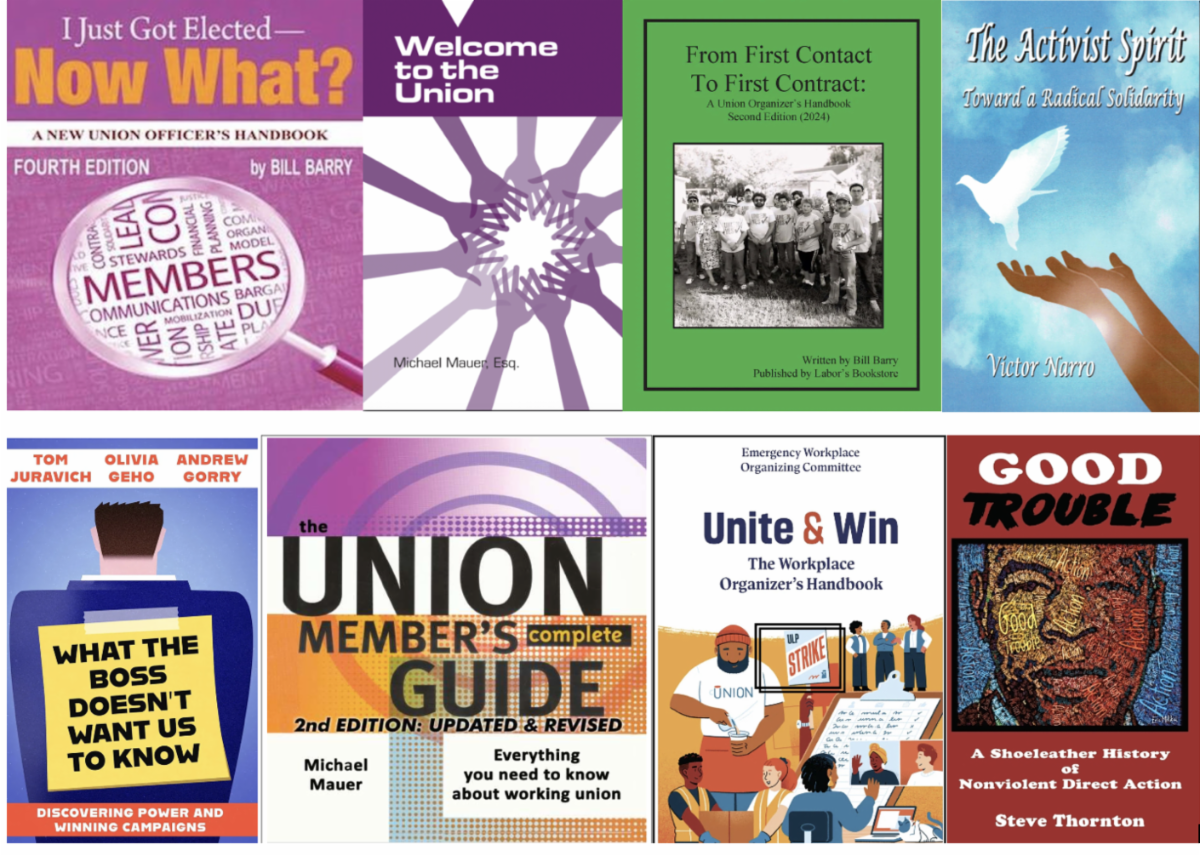
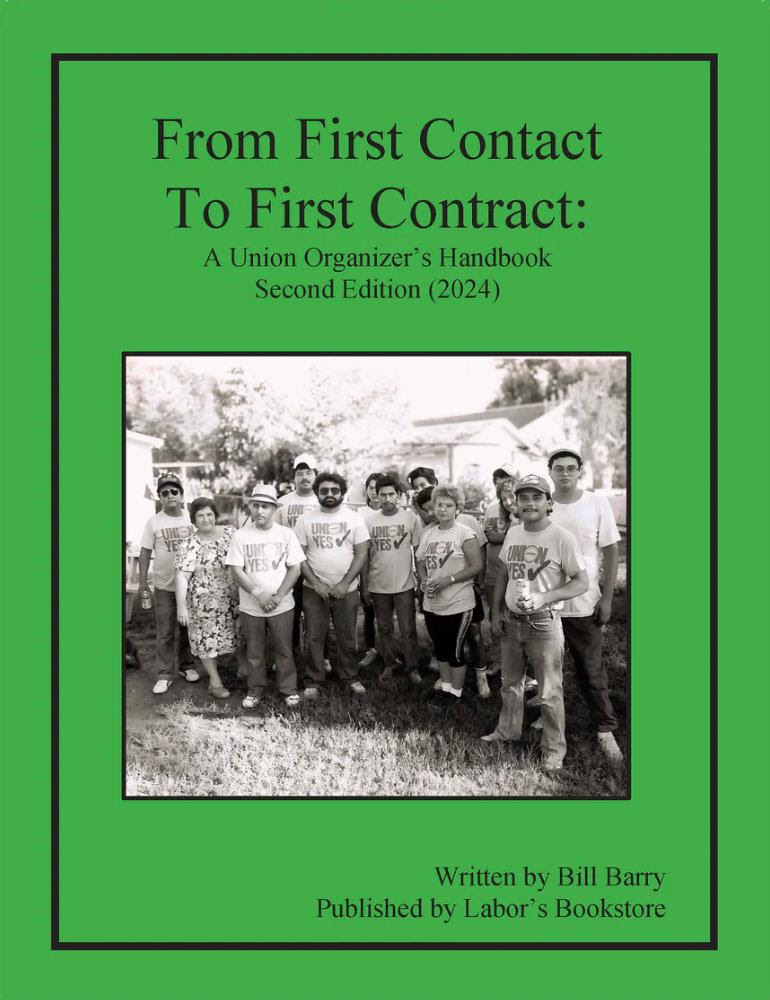
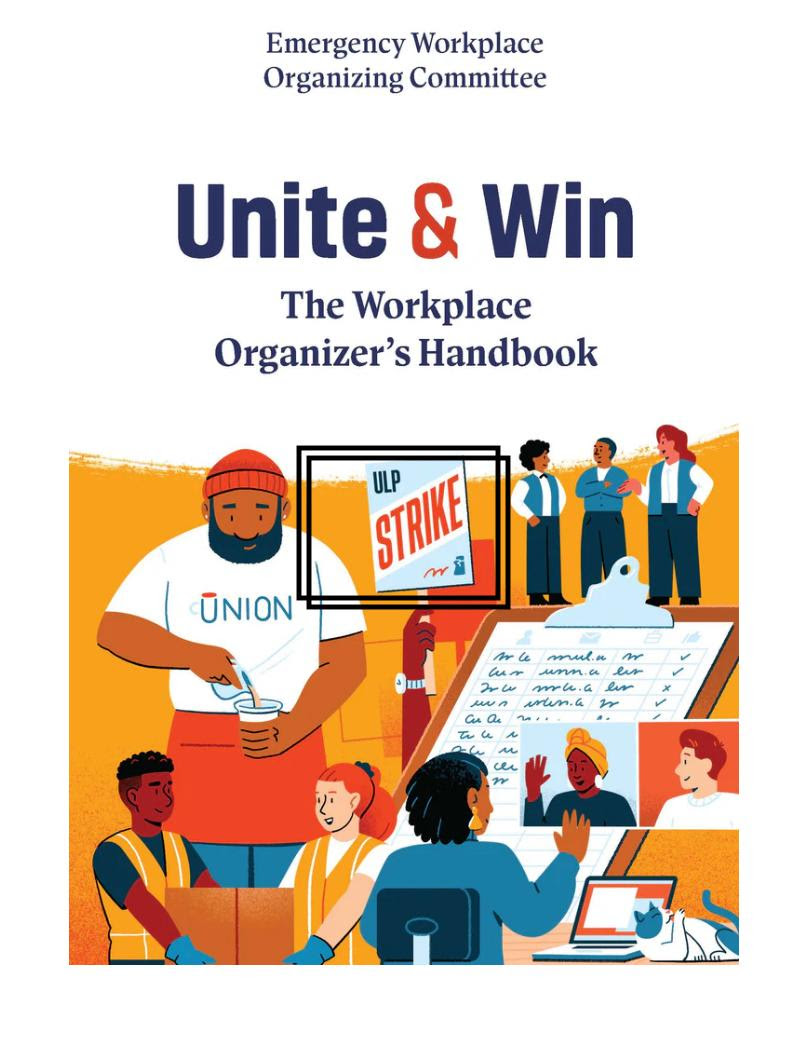
| | With grave new challenges from the current administration, Hard Ball Press is raising our game, with new books & new Staff. | | Click go to Hard Ball Press for fresh information about organizing the workplace and building union power. | | |
Hard Ball Press is thrilled to welcome Cynthia Selene Hernandez to our staff. Cynthia will take charge of new book development, design and marketing, beginning with a children's book about Women In Construction.
Cynthia began her organizing career during the Free Trade Area of the Americas protests in Miami in the early 2000s. As a student organizer in 2006, she took part in the Justice for Janitors campaign at Florida International University, which successfully advocated for improved wages and working conditions for janitorial staff.
With the support of a Pell Grant, Cynthia joined Florida International University's Labor Center (FIU), advancing from research intern to senior research associate and instructor. Her focus on wage theft led to the enactment of seven anti-wage theft county ordinances in Florida. After nearly a decade at FIU, she became the Executive Director of the South Florida AFL-CIO. She led labor and community coalitions to enhance wages and benefits for low-income families in Miami-Dade County.
In 2018, Cynthia joined Resilience Force as Florida Director, advocating for labor protections for resilience workers. As Hurricane Ian made landfall in Florida in 2022, she returned as Resilience Force National Training and Education Director.
| | | | Be sure to check out the latest organizing tools from Labor's Book Store and the latest labor news from Work-BItes. | | | | | |
New Studies
on the Left
Paperback $19.95
...is a journal of socialist theory and practice. It is the successor to ‘Dialogue and Initiative, published as an annual journal of the Committees of Correspondence for Democracy and Socialism in book form from 2012 to 2022. It will continue the CCDS policy of left unity, including articles with a variety of left perspectives, including debates.
This issue contains over 30 articles grouped under the headings of Analysis and Global Reach, Debate and Controversy, Labor, Socialism, and Book Reviews. Some are reprinted from other sources, but many appear here for the first time.
Among the authors are David Bacon, Joan Braune, Carl Davidson, Bill Fletcher, Jr., Jerry Harris, Jay Jurie, Paul Krehbiel, Sun Liping, Adewale A. Maye, Duncan McFarland, Jasmine Payne-Patterson, Vijay Prashad, Nikhil Pal Singh, Harry Targ, and Janet Tucker.
Table of Contents
Click HERE to purchase
| | |
CHANGEMAKER PUBLICATIONS: Recent works on new paths to socialism and the solidarity economy
Remember Us for Gift Giving and Study Groups
We are a small publisher of books with big ideas. We specialize in works that show us how a better world is possible and needed. Click Gramsci below for our list.
| |
522 Valencia St.
San Francisco, CA 94110
415 863-6637
| | | | | |