|
Dear Members, dear Colleagues,
This is my second message as President of the IAWMH, and I am pleased to share a number of updates and upcoming initiatives that reflect the ongoing work and spirit of our Society.
We begin by highlighting the success of the 10th IAWMH Congress held in Bangalore — a key milestone for our organization. A summary of the Congress, prepared by our Past President, Professor Prabha Chandra, is included in this newsletter. We are grateful for her continued contributions to the Society.
Starting in June 2025, we will introduce a new section in our newsletter. This feature will spotlight an article from the Archives of Women’s Mental Health that we found particularly relevant or innovative. While the initial selections will be made by the Board, we hope this section will evolve with contributions from our members, especially those in the early stages of their careers. The first commentary, written by Professor Chandra, is included in this edition and offers valuable insight.
As a reminder, The Archives of Women’s Mental Health is the official journal of the IAWMH, and all members have free access to its content.
In line with our goal to foster collaboration with other organizations committed to women’s mental health, we have initiated conversations with several societies. In this newsletter, Dr. Silvia Gaviria outlines a proposed partnership with the Women’s Section of the Latin American Psychiatric Association (APAL).
Also, we are also pleased to share a preliminary announcement about a thematic conference on Wars and Mental Health, scheduled for early 2026, in which IAWMH will take part.
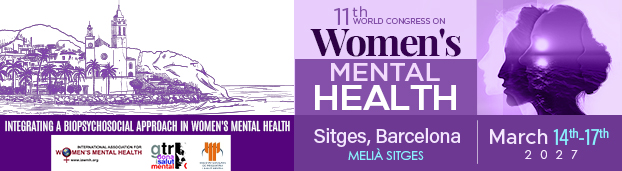
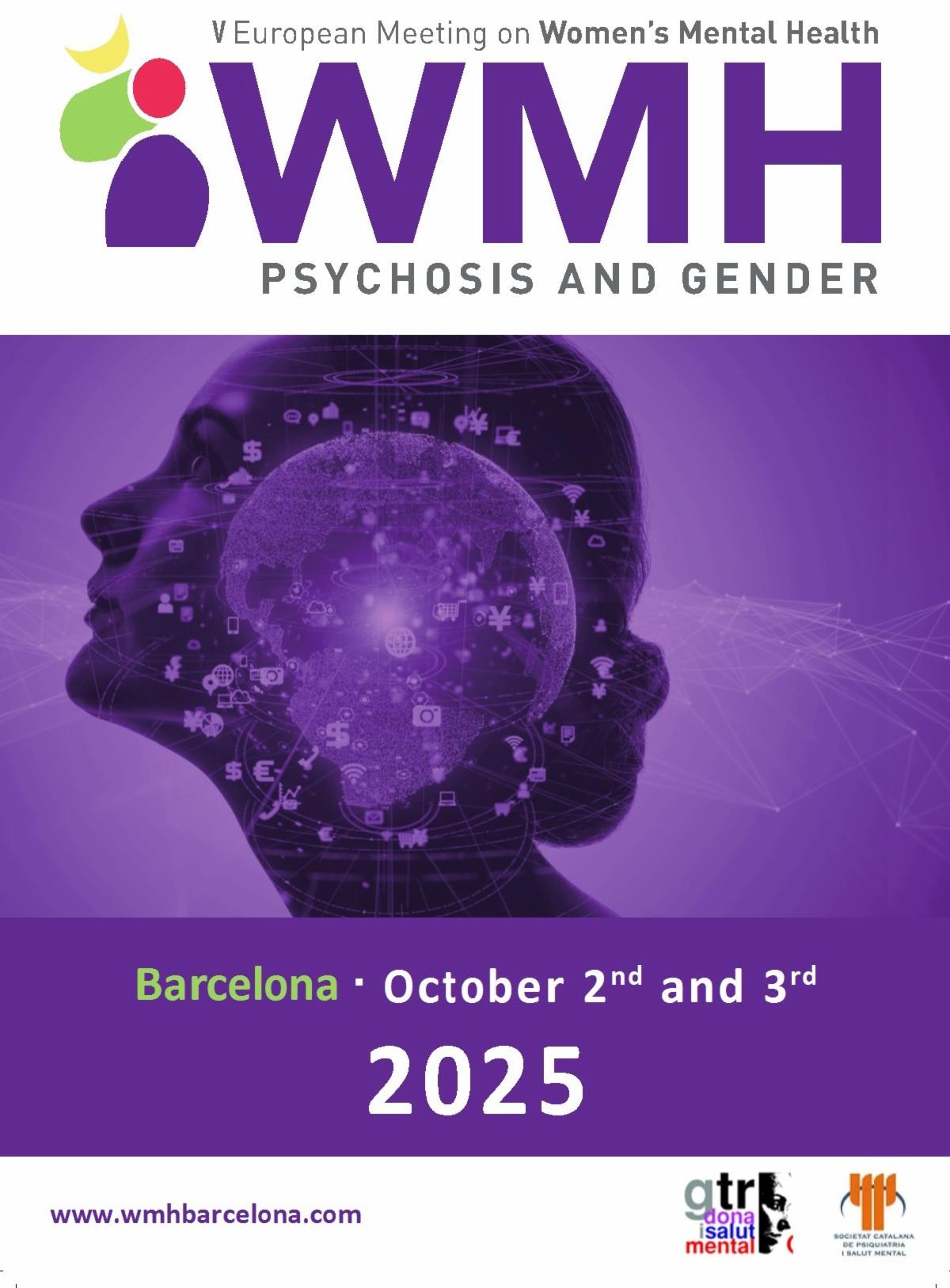
Additionally, we are proud to support the 5th European Meeting on Women’s Mental Health, Psychosis and Gender, to be held in Barcelona on October 2–3, 2025, where IAWMH is a partner society.
As always, we encourage you to reach out to me and the Board with your ideas, concerns, and proposals. Your input is vital as we continue to grow as a global advocate for women’s mental health.
With my best personal wishes
Judith Usall i Rodié
IAWMH President
Click here for IAWMH Leadership
“J’accepte la grande aventure d’être moi”
“I accept the great adventure of being me”
Simone de Beauvoir
| |
Report on the
10th World Congress on Women's Mental Health
5-8 March 2025 - Bangalore, India
| | |
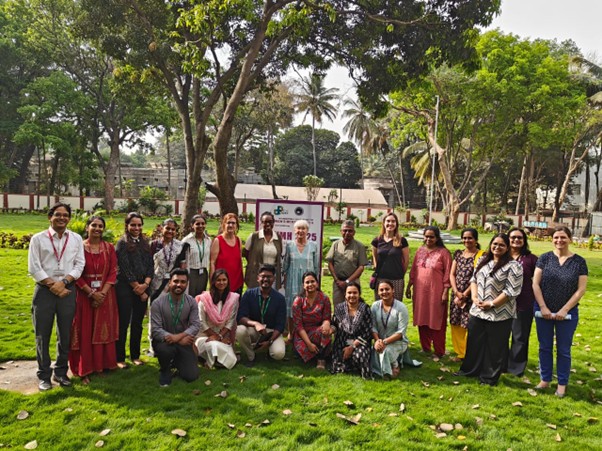
Compiled by Chethana Kishore, Pavitra Jayaram, Ashlesha Bagadia and Prabha Chandra (Co Hosts - NIMHANS and PARC, Bangalore, India)
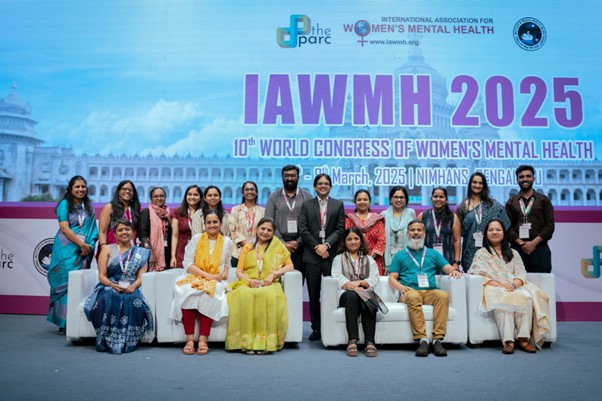
t was our pleasure and privilege to host the 10th World Congress of Women’s Mental Health, of the International Association for Women’s Mental Health (IAWMH). The conference was co-hosted by the National Institute of Mental Health and Neurosciences (NIMHANS) and The PARC from the 5th- 8th of March 2025 in Bengaluru, India.
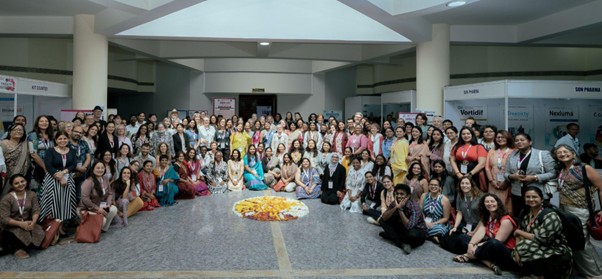
This landmark event had a confluence of around 650 mental health professionals and advocates, art therapists, researchers, policymakers, and individuals with lived experience from across the globe, with participation from over 38 countries. The central theme of the Congress was ’Inclusion and Integration Across the Life Span’, reflecting a commitment to examining women’s mental health in a holistic, inclusive manner across developmental stages, identities, and life circumstances.
The scientific program, chaired by Dr Judith Usall (President-Elect, IAWMH), featured a diverse array of formats, including 14 plenary lectures–comprising the presidential panel and presidential address–six panel discussions, 68 symposia, nine conference workshops, 13 pre-conference workshops, and competitive categories with 121 oral and 158 ePoster sessions.
| | | |
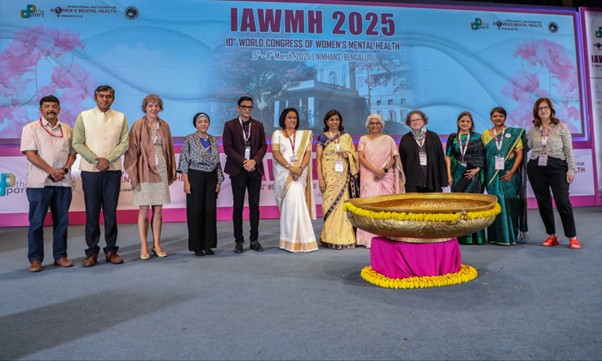
The Congress commenced with a vibrant opening ceremony that set the tone for the proceedings through a series of talks and panel discussions focusing on the history of psychiatry in India, current policies and mental health systems, strategic directions in women's mental health, and the powerful narratives of women with lived experience. Eminent speakers for this session included Dr Lade Smith, Prof Pratima Murthy, and Ms Neha Kirpal.
A total of 13 high-impact plenary sessions, including a Presidential Address and two virtual keynote talks, were the draw of the scientific content of the Congress. These plenaries featured leading voices in global mental health.
Prof Norman Sartorius discussed the key priorities for mental health in 2025 setting a visionary tone for the congress. Prof Gihan ElNahas provided insights on navigating mental health in the Arab states while Dr Hela Ouennich shared the best practices in perinatal mental health specific to the MENA region. Prof Vidita Vaidya gave us a glimpse as to how early adversity has a link with accelerated ageing. In the domain of clinical care Prof Lakshmi Yatham discussed the nuances of the management of bipolar disorders in women, Dr Lakshmi Vijayakumar highlighted the unanswered questions about suicide in women and girls, and Dr Judith Usall explored the challenges and complexities surrounding research in women and psychosis. Two engaging virtual talks, by Dr Gina Rippon examined the concept of gendered brain and by Prof Iris Sommer on gender and estrogens with regards to pharmacotherapy added a different facet to the neurobiology segment at the congress. Dr Christina Hoven shed light on the role assignment to infant girls to women’s mental health. Dr Vindhya Undurti gave a talk on caregiving and mismatch of gender role expectations- women’s mental health at the cusp of societal change.
Archives and online access to the talks
Selected abstracts from the congress will be published as a supplement in the Archives of Women’s Mental Health.
For those of you who missed the Congress, videos of select talks will also be made available soon. We thank Rohini Nilekani Philanthropies for supporting the recording and editing of this important repository.
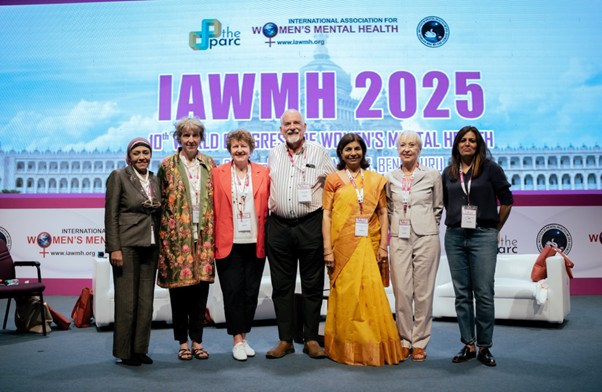
| The Presidents Panel titled “Women’s Mental Health – Vision 2025”, comprised distinguished panelists such as Prof. Gihan ElNahas, Prof. Florence Thibaut, Prof. Savita Malhotra, Dr. Aastha Tomar, Prof. Uriel Halbriech, Prof. Helen Herrmann, and Prof. Anita Riecher-Rössler. | | |
The Presidential address by the IAWMH Outgoing president, Prof Prabha Chandra focused on the various aspects that would be essential towards a women-friendly mental health care system.
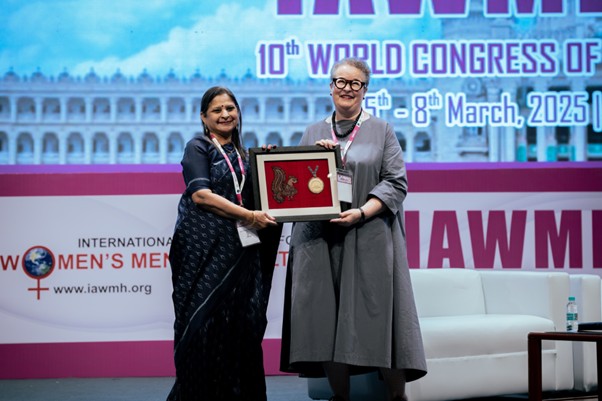
The Professor Donna Stewart Award was initiated at the conference to honour the contributions of Prof. Stewart for women's mental health. It was conferred on Prof. Jane Fisher in recognition of her outstanding contributions to the field of women’s mental health. She also headlined the plenary on consideration of gender is essential for prevention, practice and policy in women’s mental health.
| | |
The Congress also featured a series of pre-conference workshops designed to provide hands-on learning and skill-building opportunities for early-career professionals and seasoned practitioners alike.
Furthermore, thematic panel discussions and symposia covered a diverse range of themes comprising reproductive perinatal maternal mental health, trauma, conflict and related conditions, mental health conditions and management, addiction, psychosocial determinants, suicide, publishing, AI in mental health etc to name a few.
For early career professionals
| | |
The opportunities designed for early career professionals (ECP) was a big draw at the Congress. We were able to offer financial support to deserving ECPs –11 Full bursaries covering complete registration costs and 20 Partial bursaries in attending the congress. The Bursary Program was supported by India Mental Health Alliance and some plenary speakers.
Early career professionals also were given an opportunity to learn and interact with esteemed faculty: Dr Anita Riecher-Roessler, Dr Judith Usall Rodié, Dr Lade Smith, Dr Arun Ravindran, Dr Helen Sharp, Dr Antje Horsch, Dr Helen Herrman, Dr Sathya Rao, Dr Thara R, Dr Maria Muzik, Dr Florence Thibaut, Dr Astha Tomar, Dr Claudia Klier, Dr Pratima Murthy, Dr Jane Fisher, Dr Veerle Bergink, Dr Jodi Pawluski and Dr Gihan El Nahas, at the Breakfast with Mentors program that was organised on all days on the Congress.
The Dr. Ramachandra N. Moorthy Foundation also generously provided 50 scholarships for NIMHANS students, ensuring greater participation and exposure for young professionals. This support enabled aspiring mental health professionals to attend the Congress and engage in valuable learning experiences.
The conference also gave away 6 Best Oral and 6 best ePoster awards in the competitive categories which carried a gift Voucher and certificate of merit.
Centering voices of experts by experience as well as users and caregivers in the discourse and practice of women's mental health was a major focus at the IAWMH25. The India Mental Health Alliance highlighted lived experience through various segments across the conference including a powerful inaugural plenary by Ms. Neha Kirpal and a symposium. During the conference experts by experience shared stories and played an active role in scientific discourse at the conference to promote a culture of inclusivity, collaboration and respect in mental health care. The Alliance also supported bursaries for early career professionals.
The Conference Fringe
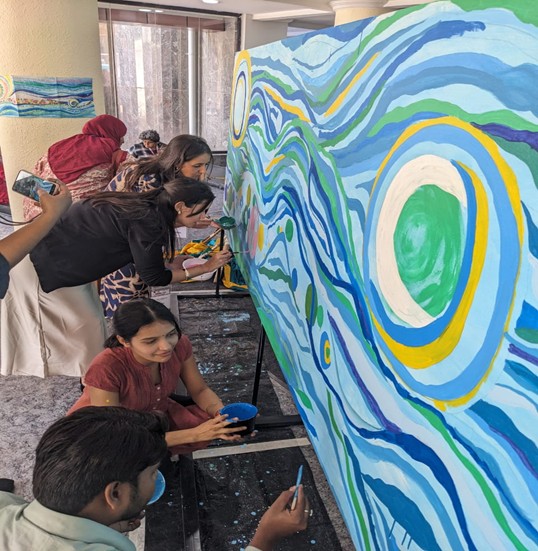
| | Designed to complement the powerful discussions happening at the heart of the conference, the conference fringe included a specially curated book stall by Champaca a women-led local book store, a live and growing art installation that invited delegates to participate and share their expressions on canvas curated by Bangalore based non-profit Foundation for Art and Health India, traditional Indian board games, and a Quiet Room for delegates to get away from the bustle of the conference designed by the conference co-hosts, The PARC. | |
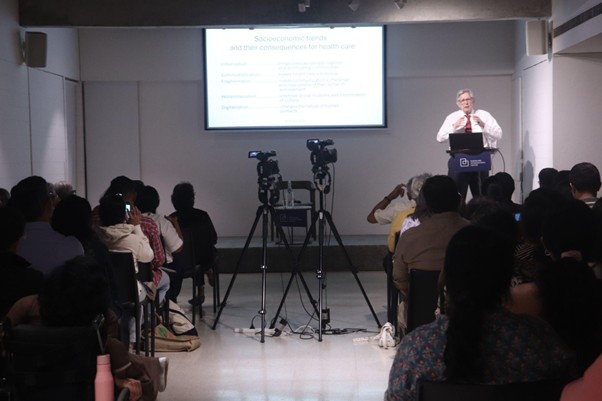
We also took Congress to the people of Bangalore with a book panel discussion on intergenerational trauma and mental health of women in the continued context of the Partition of India, a public talks by Dr Norman Sartorius at the Bangalore International Centre on caregivers and mental and Dr Jodi Pawluski at Science Gallery, Bangalore on the Mommy Brain.
Gala Dinner by El Camino Health
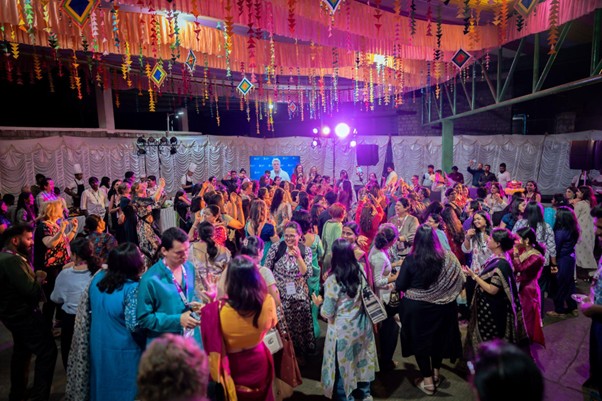
And there were fun and games too! All delegates were invited to shake a leg at the Gala Dinner, generously supported by our partners El Camino Health, California, USA. We thank the team from El Camino Health- Dr. Sandoval Dr. Katherine Taylor and Dr. Nirmaljit Dhami for their generosity and collaboration.
| | International Women’s Day Celebration with a special floral decoration – March 8th - the last day of the congress | | We come away from the Congress with new energy and ideas for women’s mental health and look forward to more learning in Barcelona! | | |
A Tribute to Women’s Courage Across Time and Cultures
10th World Congress on Women’s Mental Health, NIMHANS, Bengaluru – 5 March 2025
| | |
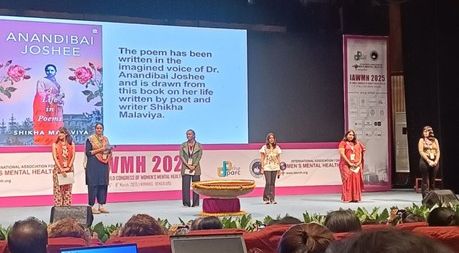
At the inaugural ceremony of the International Association for Women’s Mental Health’s 10th World Congress, held at NIMHANS in Bengaluru on 5 March 2025, selected excerpts from a larger found poem titled A Mental Photograph, from the book by writer and poet Shikha Malaviya, were recited. The poem is written in the imagined voice of Dr. Anandibai Joshi (1865-1887) who travelled alone from India to the United States in 1883 for her medical education, the first Indian woman to do so.
In a moment of international solidarity, six representatives from six countries came together to recite lines reflecting Dr. Anandibai’s story of courage and determination in the face of societal opposition, personal loss, and systemic barriers. The collective presence of Nicole Votruba (Germany), Mehr Dhami (United States), Phyllis Ohene-Agyei (Ghana), Daniela M. (Mexico), Ananta Khare (India), and Nicole Grainger (Australia) – [L to R] paid tribute not only to Dr. Joshi but also to women across the world who continue to challenge barriers and shape futures.
| |
Counteracting the Toxicity of Wars on our Brains
| | |
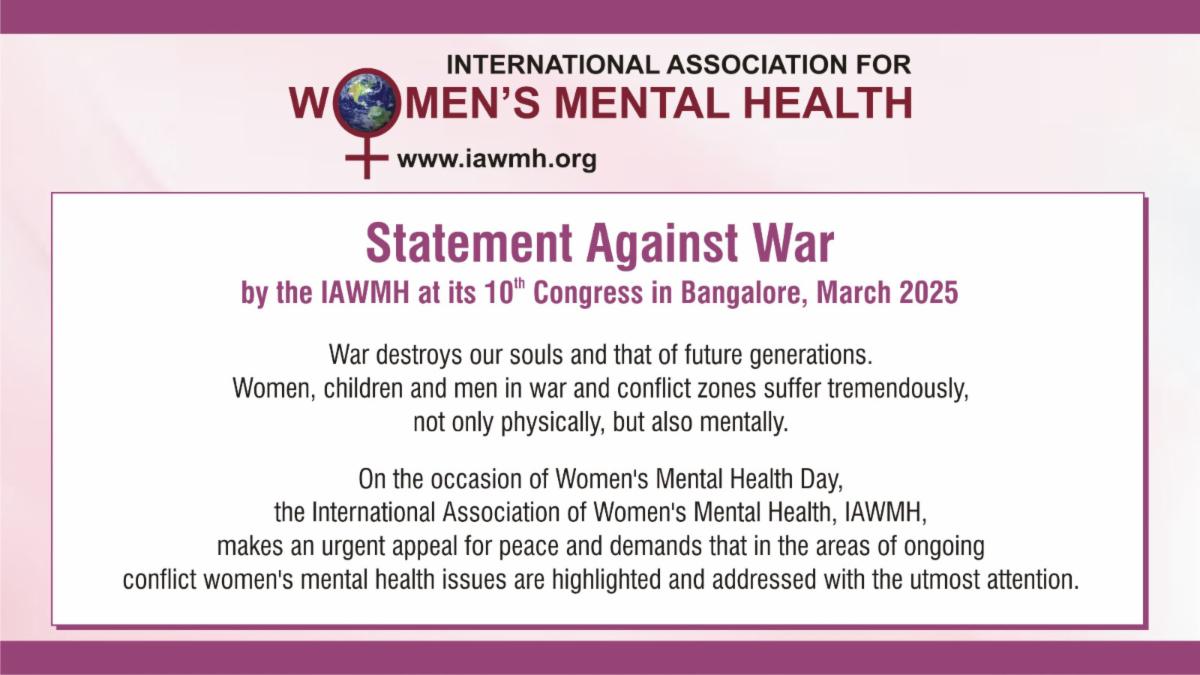
Because of the detrimental impact of the ongoing wars on peoples’ psychological and mental health and on their physical wellbeing and security, we are a group of committed - and worried- psychiatrists who are thinking and planning to organize a thematic conference on Wars and Mental Health, to be held early 2026, with the aim of sharing knowledge and expertise, devising strategies to mitigate the effects of wars and giving room for lived experiences.
Dr Josyan Madi Skaff ( Lebanon) - josyan.madiskaff@gmail.com
Prof. Ann Faerden (Norway) - ann.faerden@ous-research.no
| | |
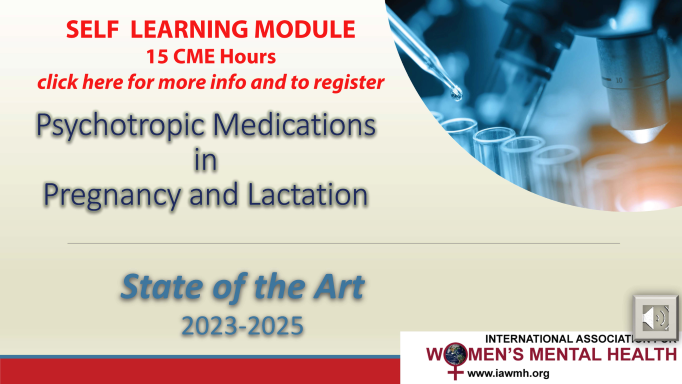
15 CME Hours - SELF-LEARNING MODULES
Psychotropic Medications in Pregnancy and Lactation
| | |
IAWMH is pleased to offer a Self Learning Module on Psychotropic Medications in Pregnancy and Lactation that will earn 15 CME hours, accredited by American Association of Continuing Medical Education (AACME), upon successful scoring of the knowledge assessment test upon completion of your study.
Click here for the Welcome Video for the course
IAWMH Members are Complimentary. $10 for a CME Certificate.
Non-Members registration will be $149, $99 LAMIC discounted fee.
Click here to register for the course
| | |
From the Editor-in-Chief of Our Journal,
Archives of Women’s Mental Health
| | |
Archives of Women’s Mental Health (AWMH) is the official journal of the International Association for Women’s Mental Health (IAWMH), the International Society for Psychiatric Disorders in Childbearing (Marcé), and the North American Society for Psychosocial Obstetrics and Gynecology (NASPOG).
| | |
A paper that captured my interest - by Dr. Prabha S. Chandra, Past President of the International Association for Women’s Mental Health (IAWMH),
Invisible Work: How Cognitive Labour Affects the
Mental Health of Mothers
| | |
The Archives of Women’s Mental Health is the official journal of the IAWMH and, under the leadership of Professor Anita Riecher-Rössler, has become one of the most sought-after journals for publishing and reading papers in this field.
Starting from June 2025, the IAWMH newsletter will feature an article (chosen by one of us) that we found most interesting from the previous 12 months of the Archives. While the selection will initially be led by the leadership of IAWMH, we hope this initiative will take on a life of its own, with members—especially early-career professionals—contributing to this section.
Articles published over the past year have been of exceptionally high quality. The thematic supplements have provided rich material on various topics such as women and conflict, refugee mental health and cognition and maternal mental health. While it was difficult to choose, the article I found most compelling explored cognitive household labour in young mothers and its implications for their mental health. This paper was published in the supplement titled Cognition and Motherhood (Aviv et al., 2025).
This is a fascinating study due to its attention to cognitive household tasks—a concept that is difficult to measure and often not recognized. Examples of cognitive tasks that mothers of young children might be expected to perform, involving thinking, planning, and organizing, include discussing with others the kind of childcare needed; identifying carers within the family, through websites, word of mouth, emails, Facebook posts, or agencies; managing transportation concerns; conducting interviews of helpers (scheduling, conducting, reference checking); planning work schedules; and negotiating terms of employment. Other examples include planning children’s meal menus and sourcing ingredients, handling doctors’ appointments, immunisation schedules and creating avenues for play and stimulation. These tasks, while not physical, require considerable effort and time and can be quite exhausting.
The study was conducted among cisgender heterosexual women who had a partner. The authors had two hypotheses: first, that women would report doing more of both cognitive and domestic labour than their male partners, and second, that this gender discrepancy would be greater for cognitive labour. Women were expected to spend more time planning tasks than men, even if task execution was more equally divided. The authors also hypothesised that mothers reporting larger shares of domestic labour would exhibit poorer psychological functioning and lower couple relationship quality. Mental health measures included depression, burnout, and stress.
A total of 322 mothers of young children (three years of age) were assessed for the division of both cognitive (“planning”) and physical (“execution”) household labour across 30 common household tasks, using cards that depicted or listed various activities. The authors then employed a series of multiple linear regression models to test associations, controlling for covariates such as work setting (remote vs. in-person), childcare arrangements, education, ethnicity, and income.
Several important findings emerged. Mothers reported being responsible for significantly more of the household workload than their male partners—not a surprise at all! Specifically, mothers reported greater responsibility for the cognitive labour of 29 out of 30 tasks and the physical labour for 28 out of 30 tasks. On average, mothers performed 72.57% of all cognitive labour compared to their partners’ 27.43%. They also reported doing 63.64% of all physical domestic labour, compared to 36.36% by their partners. Less cognitively demanding tasks unrelated to childcare (e.g., garbage, home maintenance, and bill payments) tended to be more equally divided, whereas cognitively demanding, child-related were largely handled by mothers.
Interestingly, the burden of physical household tasks was not associated with depressive symptoms, stress, personal burnout, or overall mental health. However, mothers who reported a greater share of the cognitive workload at home experienced poorer mental health and lower.
This study is interesting as it is one of the first studies to measure both cognitive and physical dimensions of the same household tasks and relate it to mental health of young mothers. It appears that cognitive labour may have a particularly significant impact on psychological well-being because it draws on mental reserves, yet remains invisible and is often unrecognized by both mothers and their families as either work or accomplishment.
Can we generalise these findings? This study was conducted in a high-income country, where mothers may have access to more benefits, better resources, and live in societies where housework is not strictly gender-defined. In cultures with high food insecurity or where women are traditionally responsible for both children and housework—often with meagre resources—this study’s findings may be even more relevant. Recognising the burden of excessive or one-sided cognitive labour related to childcare appears to identify a potential risk factor for poor maternal mental health. Addressing it may be crucial for prevention and early intervention strategies.
References
Aviv, E., Waizman, Y., Kim, E., & others. (2025). Cognitive household labor: Gender disparities and consequences for maternal mental health and wellbeing. Archives of Women’s Mental Health, 28(1), 5–14. https://doi.org/10.1007/s00737-024-01490-w
For Further Reading on the Topic
Reich-Stiebert, N., Froehlich, L., & Voltmer, J. B. (2023). Gendered mental labor: A systematic literature review on the cognitive dimension of unpaid work within the household and childcare. Sex Roles, 88(7–8), 475–494. https://doi.org/10.1007/s11199-023-01352-0
Seedat, S., & Rondon, M. (2021). Women’s wellbeing and the burden of unpaid work. BMJ, 374, n1972. https://doi.org/10.1136/bmj.n1972
| | |
Building Bridges: A Perspective on Cooperation
Between the IAWMH
(International Association for Women's Mental Health)
and APAL (Latin American Psychiatric Association)
| | |
Silvia Gaviria MD, MSc
Director of the Women's Section of APAL
Former General Secretary of the IAWMH
On April 29, a meeting between the IAWMH and APAL was held. The meeting was scheduled with the objective of establishing bridges and cooperation between both associations, to initiate joint projects and strengthen actions aimed at the social and mental well-being of women around the world.
The meeting was attended by the current president of the IAWMH, Judith Usall; the general secretary of APAL, Cora Luguercho; the president-elect of APAL, José Manuel Santa Cruz; Silvia Gaviria, director of the APAL Women's Section, and her three regional representatives: Mónica Flores, representing Central America and the Caribbean; Jenny López, representing the Andean countries; and Milagros Méndez, representing the Southern Cone.
During the meeting, topics such as continuing education, research, scientific publications, and cross-country support for the training of professionals in women's mental health were discussed. The importance of bringing women's mental health issues to the international academic agenda was also highlighted, aiming to expand scientific knowledge to other professions and specialties, fostering interdisciplinary collaboration across various academic and professional fields.
The president of the IAWMH has proposed a collaborative initiative, including webinars and other activities, to address key issues in women's mental health. These will focus on activities such as case presentations, courses and conferences. The goal is to promote teamwork and intersectorial participation to advance women's well-being.
Considering that the next APAL congress will be held in Cartagena de Indias, Colombia, in November 2027, the APAL Women's Section is proposing to hold an activity at the event in collaboration with the IAWMH. This proposal is also shared by the president-elect, Colombian psychiatrist José Manuel Santacruz, who adds that it is an interesting idea to strengthen the work of the different sections, especially the most active ones.
Lastly, we invite you to attend the XI International Congress on Women's Mental Health in Medellín, May 2026, supported by CES University.
| |
Looking for news from our members!
As we are preparing IAWMH Newsletters we want to highlight our members'
activities, awards and news. Let us know what's happening that would be of interest to
other IAWMH members. Send your news to Debby Tucker at debra@iawmh.org to be
included in the next newsletter.
| | | | |