|
USCA Delivers Statement to Treasury Hearing on 45Z
On May 27, USCA participated in the U.S. Department of the Treasury and the IRS public hearing on the proposed rule for implementation of the Section 45Z clean fuel production tax credit. USCA reiterated the negative impact that occurred in 2025 when canola was not eligible for the credit and the importance of finalizing the rule that implements changes enabling canola to access the credit. The USCA priorities for implementation of 45Z credit include:
- Implementation of provisions enacted in the Reconciliation bill to exclude indirect land use changes from emissions rates.
-
Implementation of provisions in the Reconciliation bill that address subsidized imports of used cooking oil by limiting credit eligibility to feedstocks grown or produced in North America.
- Updating the Direct Emissions calculations for canola
- Providing a separate pathway for biofuels produced from winter canola
- Including canola in any update to the 45ZCF-GREET model related to feedstocks produced using certain agricultural practices.
Read the USCA statement here: https://bit.ly/4u4j4OJ
| | |
ARPA-E Forum Focuses on Optimizing Canola
The Advanced Research Projects Agency – Energy (ARPA-E) held a workshop May 19-20 in Alexandria, VA, that included a strong focus on canola. ARPA-E is an agency within the United States Department of Energy tasked with funding the research and development of advanced energy technologies that have the potential to transform the energy landscape. The workshop was titled “Optimizing Biomass-based Diesel with AI" and explored options for optimizing crop oil yields and specifically for canola and winter canola that can be double-cropped.
Leading up to the workshop, ARPA-E representatives attended the USCA meeting in March, and USCA helped frame the issues and connect ARPA-E with industry experts. Two potential goals identified by ARPA-E are to reach 22 million acres of canola in the U.S. and to increase soybean oil content from 20% to 30%.
The workshop was intended to help inform ARPA-E on the worthiness of pursuing those goals, the challenges and breakthroughs needed to achieve them. USCA staff and several industry members participated in the workshop, including representatives of Bayer, Bunge, Chevron, Corteva, and Rubisco, as well as canola researchers from Washington State University and the University of Idaho.
USCA Board Members Tasso Sideris of Bunge and Brian Caldbeck of Rubisco Seeds served as speakers covering the oil supply chain and winter-canola double-cropping in the southern U.S.
A broader range of industry and researchers attended the workshop and their questions and comments served as a reminder of the large knowledge gap that exists outside of the USCA and immediate canola industry. USCA will follow up with ARPA-E on the workshop's takeaways and urge continued pursuit and investment in optimizing canola.
| | |
USDA Announces Plans and Timeline for Base Acre Additions
On May 26, the U.S. Department of Agriculture’s (USDA) Farm Service Agency (FSA) announced eligible landowners have from June 1 until Aug. 31, 2026, to review and consider base acre increases on farms enrolled in the Agriculture Risk Coverage (ARC) and Price Loss Coverage (PLC) programs, as authorized by provisions included in the Working Families Tax Cuts Act, also known as the One Big Beautiful Bill Act. Landowners will have the opportunity to increase base acres in preparation for enrollment in ARC and PLC beginning with the 2026 and future crop years. Nationwide, up to 30 million new base acres can be added by eligible farms.
FSA began notifying eligible landowners by direct mail that Base Allocation Summaries outlining potential base acre updates will be available for review beginning June 1, 2026. These Base Allocation Summaries can be accessed online at fsa.usda.gov/arc-plc using a Login.gov account. Landowners who do not currently have a Login.gov account are encouraged to contact their local FSA county office to obtain their Base Allocation Summary beginning June 1, 2026. The Base Allocation Summary should be reviewed and any necessary actions completed by Mon., Aug. 31, 2026.
To be eligible for new base acres, a current covered commodity must have been planted or prevented from being planted on the farm during the 2019 through 2023 crop years. The farm’s average planted and prevented planted acres during that period must exceed the total existing base acres for all covered commodities in effect on Sept. 30, 2024, excluding unassigned base acres. FSA farm total base acres cannot exceed the farm’s total cropland acres. If eligible requests exceed the nationwide cap of 30 million acres, USDA will apply an across-the-board, prorated reduction to all approved new base acres.
For more information, producers should contact their local FSA county office or visit the U.S. Department of Agriculture online at: fsa.usda.gov/state-offices
Read USDA FSA's Press Release: https://bit.ly/3RCkQJh
| |
Regulators and Lawmakers Looking at Fertilizer Issues
On May 28, the Federal Trade Commission (FTC) announced that it has launched an investigation into the fertilizer industry’s market concentration and pricing practices in the U.S.
The FTC Chairman Andrew Ferguson noted that fertilizer is the single largest increase in input costs for farmers across the United States since 2020 and while acknowledging that the high prices do not always mean illegal activity, the possibility of anti-competitive action in the fertilizer industry must be investigated. The Justice Department has launched a separate probe into potential anti-competitive practices of fertilizer companies.
On May 12, the Senate Agriculture Committee held a hearing titled “Perspectives on the Fertilizer Industry: Ensuring a Stable and Affordable Supply for American Producers.” Testifying at the hearing were Andy Green, a principal and senior adviser at Center Market Strategies; Trent Kubic, vice president of South Dakota Corn Growers; Eddie Melton, president of the Kentucky Farm Bureau Federation; Joshua Westling, CEO of J. Westling & Co.; and Corey Rosenbusch, president and CEO of The Fertilizer Institute.
| |
House Ag Committee Chairman Releases H2A Reform Bill
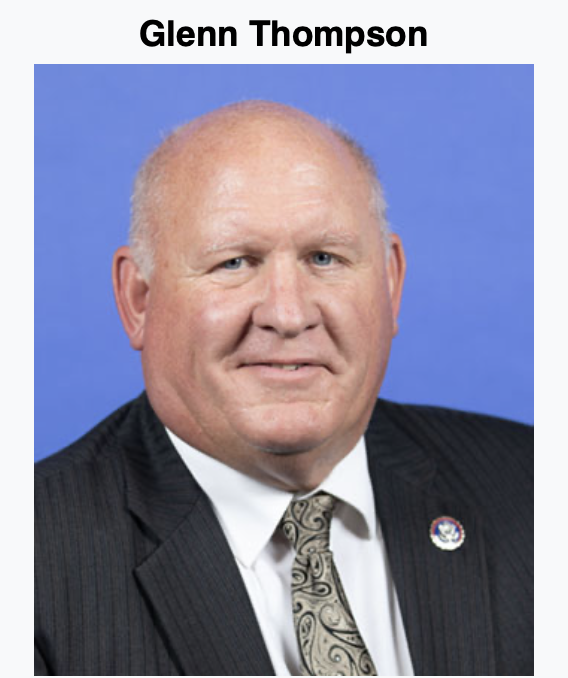
House Agriculture Committee Chairman G.T. Thompson (R-PA) is introducing a bill to reform the H-2A farm labor program. The bill is intended to reflect the needs and priorities of growers and ag employers. Notably, the bill would enable year-round workers, waive interview requirements for returning workers, allow employers to deduct housing costs from worker wages, and limit how much Adverse Effect Wage Rates can change from one year to the next. The bill will be referred to the House Judiciary Committee, which has primary jurisdiction over the H-2A program.
| | |
House Committee Advances Highway Bill
On May 22, the House Transportation and Infrastructure Committee advanced the Surface Transportation reauthorization bill, also known as the Highway Bill. The House measure would provide $580 billion for road, bridge and transportation infrastructure programs for five years. The Build America 250 Act was approved on a bipartisan 66-2 vote after a 14-hour committee markup. Of note for agricultural producers, the bill accommodates weight variance for load shifts, allowing dry bulk transporters to have up to 110% of the maximum weight on any axle. The bill streamlines seasonal CDL renewals, allowing agriculture industry employees to obtain temporary credentials to drive commercial vehicles in certain parts of the year. The committee also approved an amendment filed by Rep. Dusty Johnson (R-SD) that would allow states to raise weight limits to 91,000 pounds on federal interstates for vehicles with six axles through a voluntary pilot program. The next step for the bill is consideration by the full House, but no timeline has been announced.
| |
EPA Released Fungicide Strategy
On May 1, the Environmental Protection Agency released its draft fungicide strategy for determining how growers must mitigate harm to endangered species. The fungicide strategy follows the frameworks established in previous herbicide and insecticide strategies. The strategies are compelled by a court settlement agreed to by EPA, CropLife America and other industry groups, and the Center for Biological Diversity and Pesticide Action Network. The goal is to reduce harm to species listed under the Endangered Species Act from exposure to fungicides and enable EPA to address its ESA obligations comprehensively.
Once finalized, EPA may identify specific mitigation measures to be implemented on labels wherever the pesticide is applied and may also propose label language that requires a specific level of mitigation and directs users to EPA’s Mitigation Menu website. The strategy outlines the specific types of mitigation likely to make the cut. In many cases, since spray drift is considered a risk, EPA has identified adjuvants that can be used to reduce the distance a pesticide drifts off-field into species habitats.
EPA has identified 85 listed vertebrates, 39 listed invertebrates, and 136 listed plants that may require mitigation in Pesticide Use Limitation Areas (PULAs). A PULA is the specific geographic area associated with particular pesticide mitigation for a listed species or designated critical habitat.
EPA has indicated it will continue to engage with stakeholders and state partners to discuss updates and revisions to mitigation measures and implementation of the strategy. The FIFRA Endangered Species Task Force (FESTF) is providing resources and technical support for agricultural groups and has a resource hub: https://lens.festf.org
There is a public comment period for the Fungicide Strategy and comments are due June 29, 2026.
| |
USCA Joins Ag Coalition Letter Supporting USMCA
The USCA joined 145 agricultural organizations from the U.S., Mexico and Canada on a letter in support of a renewal and strengthening of the U.S.-Mexico-Canada Agreement (USMCA). The letter cites the significant economic benefits and the removal of regulatory barriers that are derived from the trilateral trade pact. The USMCA represents one of the largest trading blocs in the world, with over 500 million people, a $30 trillion-dollar GDP, and a trade volume of $1.7 trillion. The letter reiterates that the USMCA is key to maintaining a competitive global advantage that reduces reliance on distant supply chains and encourages investment across the region. Preserving the full trilateral framework of the agreement safeguards these advantages, as the integrated nature of North American agriculture depends on predictable and cooperative trading relationships among all three countries.
| |
Senate Democrats Raise Concerns About the USDA Research, Education, and Economics Mission Area Reorganization
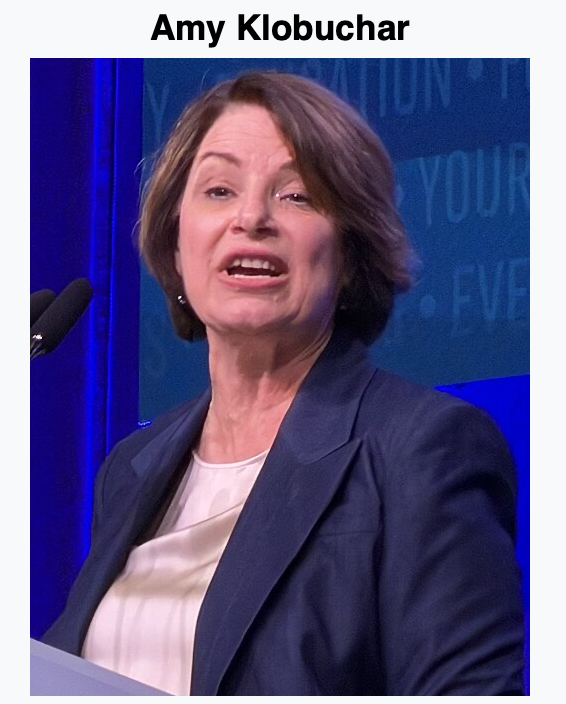
On May 14, Senator Amy Klobuchar (D-MN), the Ranking Member of the Senate Committee on Agriculture, led a letter to USDA expressing concerns about the reorganization of the Research, Education, and Economics (REE) mission area at the U.S. Department of Agriculture. The Senators cited concerns that the actions will erode the capacity of USDA’s research agencies and threaten their ability to deliver innovation and timely economic data for farmers, ranchers, and rural communities. They cited significant staff losses that resulted from previous relocations of the Economic Research Service (ERS) and the National Institute of Food and Agriculture (NIFA) in 2018 and 2019 and a loss of over 30 percent of staff within the National Agricultural Statistics Service (NASS) in 2025. The REE reorganization and restructuring announced this April proposes relocating REE mission area staff to over 27 locations within months. The letter was signed by 23 Democratic senators, including Klobuchar (D-MN), Baldwin (D-WI), Murray (D-WA), and Smith (D-MN).
| |
STB Accepts Rail Merger Application, But Pauses Review
On May 28, the Surface Transportation Board (STB) accepted Union Pacific and Norfolk Southern’s merger application. The board in January rejected UP and NS’s first merger application after finding it lacked the information necessary to proceed with the review. The companies submitted a revised application with additional information on May 6.
While accepting the application, the STB called on the companies to provide more information on enhanced competition, public benefits, market share projections, and other merger impacts. The board has temporarily paused further proceedings and asked UP and NS to submit supplemental information. The merger, if approved, would create a new Union Pacific Transcontinental Railroad, which would span approximately 50,000 miles and connect around 100 U.S. ports on the East, West and Gulf Coasts.
| | |
Dietitian Warns Against Misinformation Surrounding Seed Oils
In a recent STAT opinion article, registered dietitian and clinical inpatient dietitian Cole Hanson argues that the growing fear of seed oils is outpacing the scientific evidence. Writing from his experience working with cardiac patients, Hanson explains that decades of research support replacing saturated fats with unsaturated fats, including oils such as canola, soybean and sunflower oil, to help reduce cardiovascular risk.
The article also addresses common claims linking seed oils to inflammation and oxidation, noting that randomized controlled trials have not demonstrated harmful effects from normal dietary consumption. Hanson emphasizes that many health concerns associated with ultra-processed foods are more closely linked to the overall food product and dietary pattern than to the oils themselves.
Read the full opinion article from STAT: https://bit.ly/3ROornC
| | |
Tennessee Titans Remove Seed Oils From Team Meals
Tennessee Titans Head Coach Robert Saleh recently announced that seed oils have been removed from meals served inside the team’s training facility, sparking renewed discussion around nutrition and athlete performance. According to a Fox News article, Saleh said players have appreciated the change as the organization works to expand food options for the team.
The article also highlighted differing perspectives within the nutrition community. Researchers interviewed noted that current evidence does not support claims that seed oils are inherently harmful and emphasized that oils such as canola and soybean oil are often misunderstood because of their association with ultra-processed foods rather than the oils themselves.
Read the Fox News article: https://bit.ly/43BAw26
| | |
Review of 500 Studies Finds Seed Oils Are Safe and Heart-Healthy
An article published by EatingWell reviewed a recent scientific analysis examining more than 500 studies on seed oils and human health. According to the review, current evidence does not support common claims that seed oils increase inflammation or negatively impact heart health.
The article highlighted findings that replacing saturated fats with polyunsaturated fats, such as those found in canola oil, may help reduce cardiovascular risk. Researchers also noted that concerns surrounding ultra-processed foods should not automatically be attributed to the seed oils they contain.
Reviewed by dietitian Jessica Ball, M.S., RD, the article concludes that seed oils can be part of a healthy dietary pattern when used in moderation alongside whole, nutrient-dense foods.
Read the article from EatingWell: https://bit.ly/4aoa5kf
Read the study published in Critical Reviews in Food Science and Nutrition: https://bit.ly/4uKl0x6
Read the press release from SNI Global about the study: https://bit.ly/43AzJ1q
| | |
Researchers Track Invasive Swede Midge Near Prairie Borders
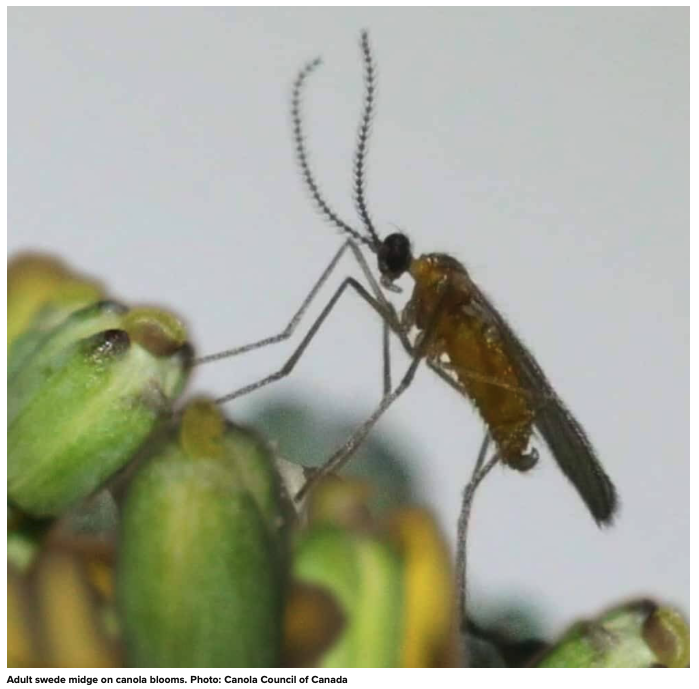
Researchers are closely monitoring two midge species that could impact Prairie canola production, according to a recent The Western Producer article. The primary concern is the swede midge, an invasive insect already established in eastern Canada that has recently been detected in Minnesota, raising concerns about potential westward spread into Prairie regions.
Swede midge larvae feed on developing canola flower buds and stems, which can prevent pod formation and significantly reduce yields. Researchers say early detection will be critical because control options become limited once populations are established.
The article also highlighted ongoing research into canola flower midge, a species already present across Western Canada. While current field damage has remained limited, researchers continue to monitor populations and study whether the insect could become economically significant in the future.
Read the article from The Western Producer: https://bit.ly/4nXtEWb
| |
|
COLOSS Conference - Pullman, WA
June 6 to June 12, 2026
The 2026 Local North America COLOSS Conference will be held June 6–12, 2026, at Washington State University in Pullman, Washington.
The WSU Department of Entomology is co-hosting “Nutrition, Landscape Change, and Honey Bee Health: A Trans-Atlantic Dialogue” in Pullman and the surrounding region. June 11 will include tours of canola fields in eastern Washington.
Please visit https://bit.ly/432DI6H for more information.
| |
PNW Canola Association Board of Directors Zoom Meeting
June 24, 2026 | 9 a.m. PDT, 10 a.m. MDT
For more information, contact: 808-283-7013
| |
WA Oilseed Commission Zoom Meeting
July 2, 2026 | 9 a.m. - 10 a.m. PDT
The Washington Oilseeds Commission quarterly meeting is Thursday, July 2, beginning at 9 a.m. via Zoom. This is a public meeting and Washington oilseed growers are welcome to attend and provide input.
| |
PNWCA Calendar Highlights Summer Canola Tours, Field Days and Educational Events
There are a variety of university and industry field days and tours in the PNW this summer that include canola - check the PNWCA calendar to find an event near you!
Learn more: https://pnwcanola.org/calendar/
| |
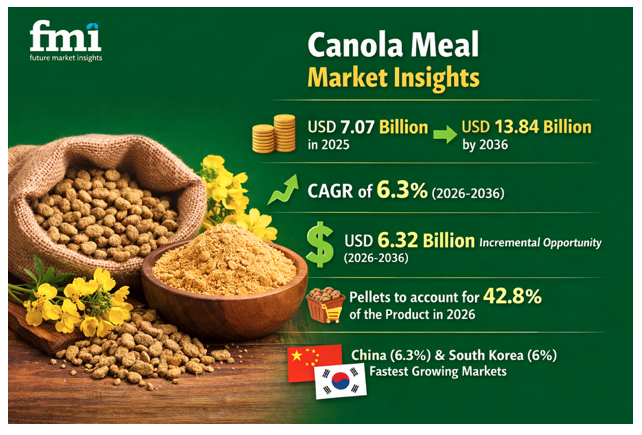
Global Canola Meal Market Projected to Reach $13.8 Billion by 2036
A new market analysis from Future Market Insights projects the global canola meal market will grow to an estimated $13.8 billion by 2036, driven by increasing demand for sustainable, protein-rich livestock feed ingredients. The report forecasts a 6.3% compound annual growth rate as livestock producers and feed manufacturers continue prioritizing nutritional efficiency, supply reliability and cost-effective feed solutions.
According to the report, canola meal is gaining importance across livestock, dairy, poultry and aquaculture sectors due to its high protein content and compatibility in feed formulations. Researchers also noted growing interest in sustainable agricultural by-products and feed efficiency optimization as additional drivers supporting long-term market expansion.
The analysis identified Asia-Pacific markets, particularly China and South Korea, as leading growth regions because of expanding livestock production and increasing feed demand.
Read the article from MorningStar: https://bit.ly/4uCvrmb
| |
Corteva Introduces Vylor as New Seed and Genetics Company
Corteva Agriscience recently announced the launch of Vylor, the name for its future standalone seed and genetics company expected to launch later this year following Corteva’s planned business separation.
According to the company, Vylor will focus on advancing seed and genetics innovation through technologies including gene editing, hybrid wheat development, disease resistance traits and next-generation biofuel feedstocks. Corteva said the new company will build on the Pioneer brand's legacy and longstanding work in agricultural innovation.
The announcement also highlighted Vylor’s focus on helping farmers address challenges tied to food security, energy demand and sustainable agriculture through advanced seed technology and genetics solutions.
Read the press release from Corteva: https://bit.ly/4f86MB4
Watch the video from Vylor: https://bit.ly/3RvTe8N
| |
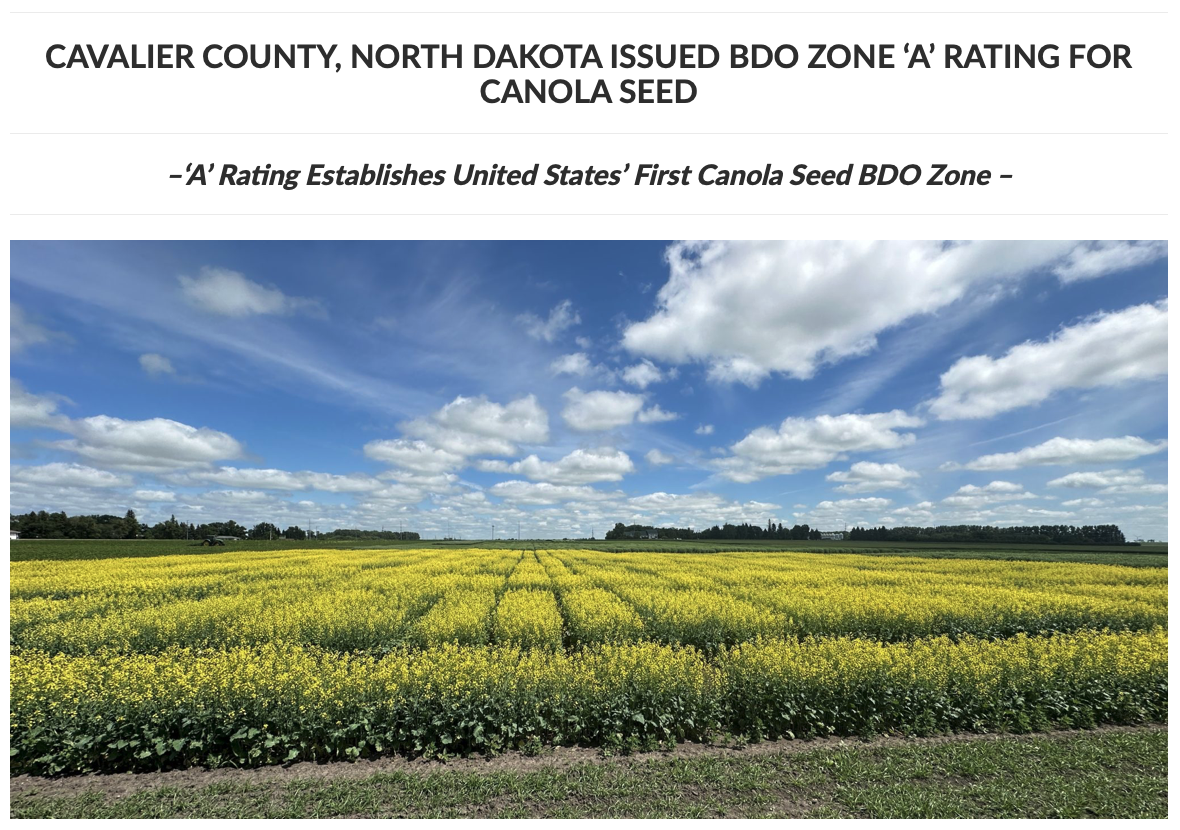
North Dakota’s Cavalier County Earns First-Ever Canola Seed BDO Zone ‘A’ Rating in North America
Cavalier County, North Dakota, has received the first-ever BDO Zone ‘A’ Rating in North America for canola seed, recognizing the region’s strong feedstock supply, infrastructure and potential for biobased development. The rating covers approximately 565,000 tons of canola seed annually within a 75-mile radius of Munich, N.D., and highlights the area’s experienced growers, strong transportation network, established markets and decades of canola research. Local leaders say the designation could help attract future canola processing investments and create new opportunities for producers and the regional economy.
Read the press release from BDO: https://bit.ly/4wSVmaC
| |
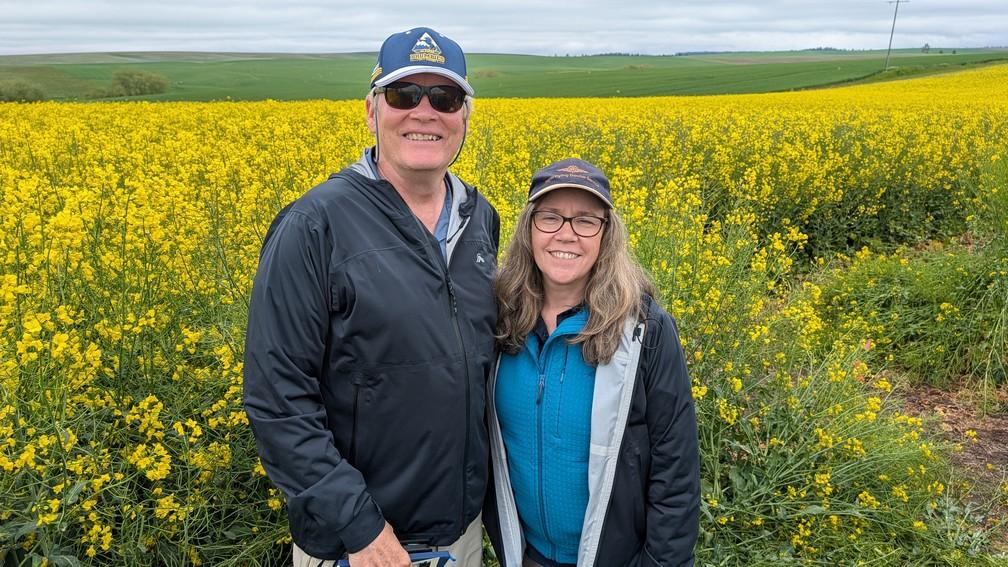
Pacific Northwest Canola Events Showcase Research, Innovation and Collaboration
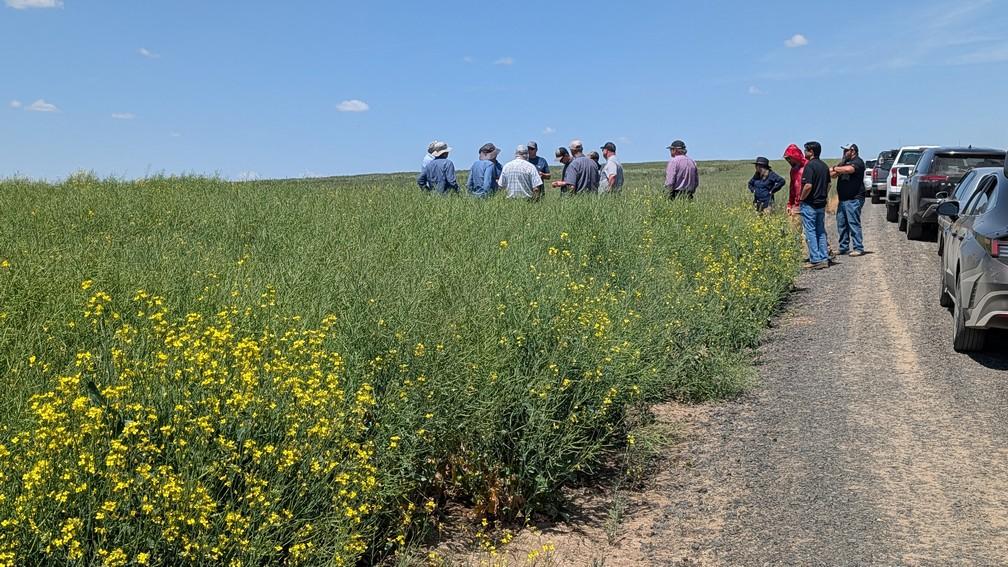
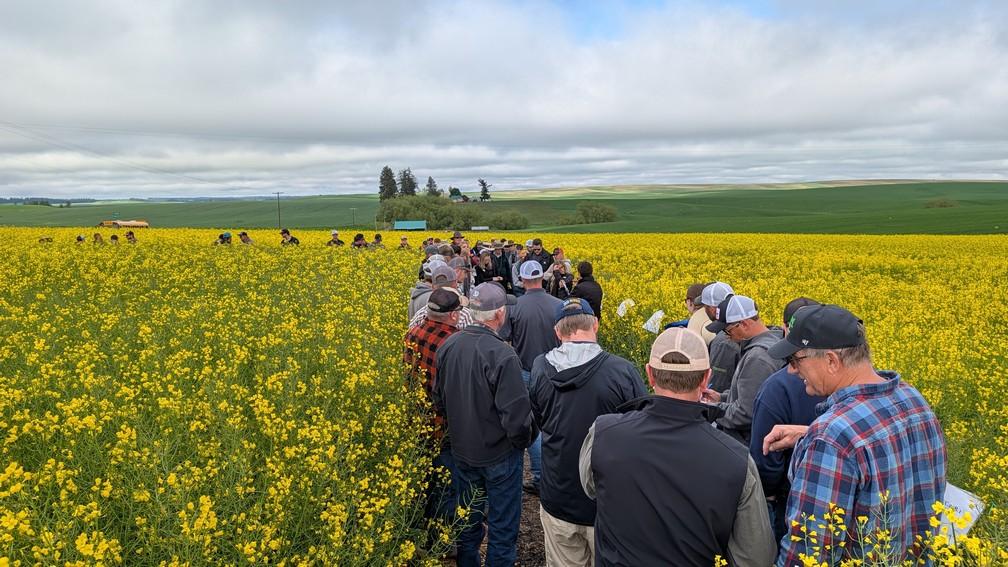
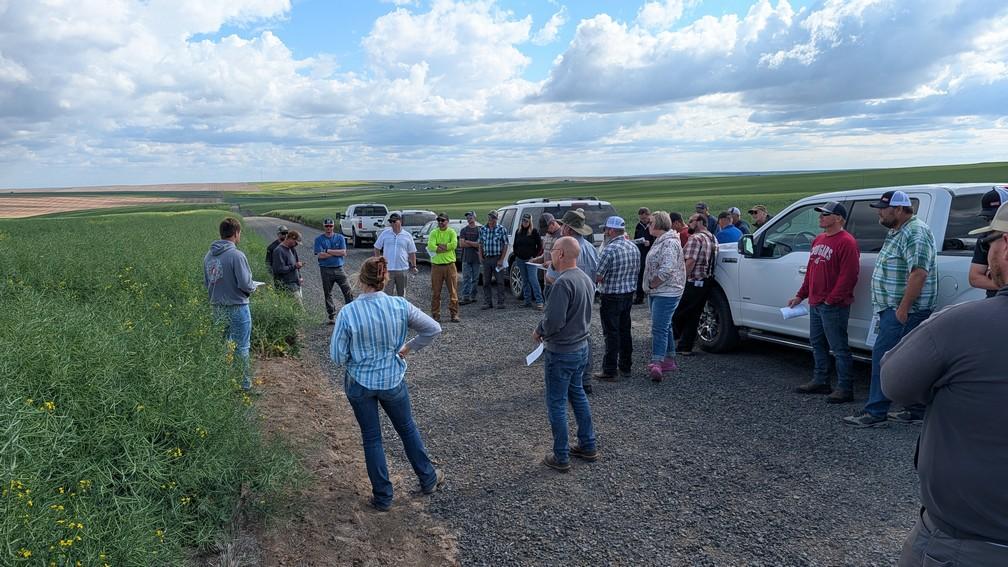
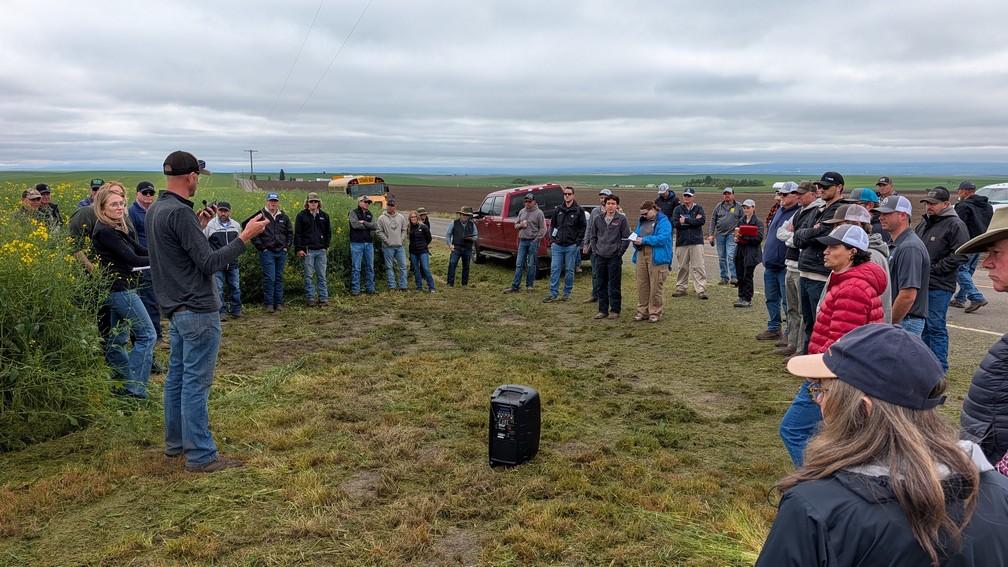
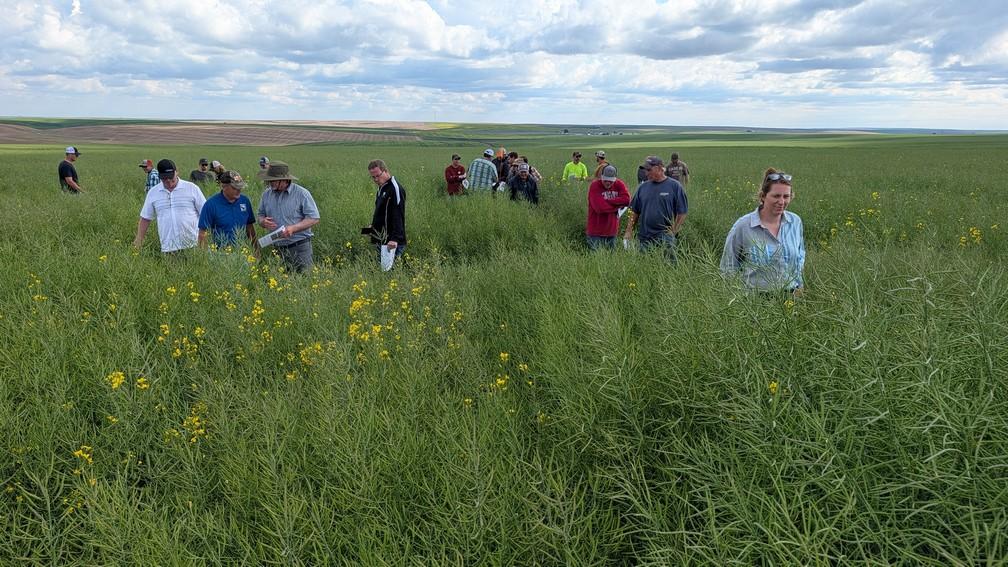
More than 150 canola growers, industry reps and university faculty and students attended canola events in Idaho and Washington the last week of May.
The week kicked off with a seminar from CSIRO-Australia canola/wheat researcher John Kirkegaard. Julianne Lilley (also a CSIRO researcher) shared information about a canola flowering calculator that aids in timing seeding date to optimize the flowering period, and thus yield. John & Julianne provided valuable insights into their research, ranging from breeding for systems resilience to managing soil water and nutrients through crop rotation.
Other highlights of the week included touring small and large-scale winter canola variety trials, interpreting drone imaging data of a large-scale fertilizer trial, market and insurance updates, canola insect and disease management, observing a long-term cropping systems trial, and learning about checkoff-funded canola research trial results.
The PNWCA is grateful to all sponsors, grower cooperators, presenters, collaborators, and attendees!
| | |
USCA works to support and advance U.S. canola production, marketing, processing, and use through government and industry relations. Since its establishment in 1989, the association has helped domestic canola acreage grow from virtually zero to about 2 million. To learn more about USCA, go to: www.UScanola.com
Want to promote your products or services to canola producers and industry members? Visit our advertising pages to find specs, deadlines and rates to advertise in the Canola Quick Bytes monthly e-newsletter.
| | | | |