https://files.constantcontact.com/fd73091e001/d6a85882-4d9f-43ce-b4d3-c07bf1da1ccb.png?rdr=truea=1134830823678
"To protect the Oregon coast by working with coastal residents for sustainable communities; protection and restoration of coastal and marine natural resources; providing education and advocacy on land use development; and adaptation to climate change."

Oregon Coast Alliance is the coastal affiliate of 1000 Friends of Oregon

Oregon Coast Alliance Newsletter

 Cannon Beach Dunes Initiative And Other News

Cannon Beach Dunes Initiative Moving Forward, With a Better Title


Wheeler City Council Approves Botts Marsh LLC Development


Bay City Approves on Remand the Mistybrook Project


DLCD Gearing up to Forge Rules for the New “Nature-Based Solutions” Law in Coastal Stabilization

Cannon Beach Dunes Initiative Moving Forward, With a Better Title

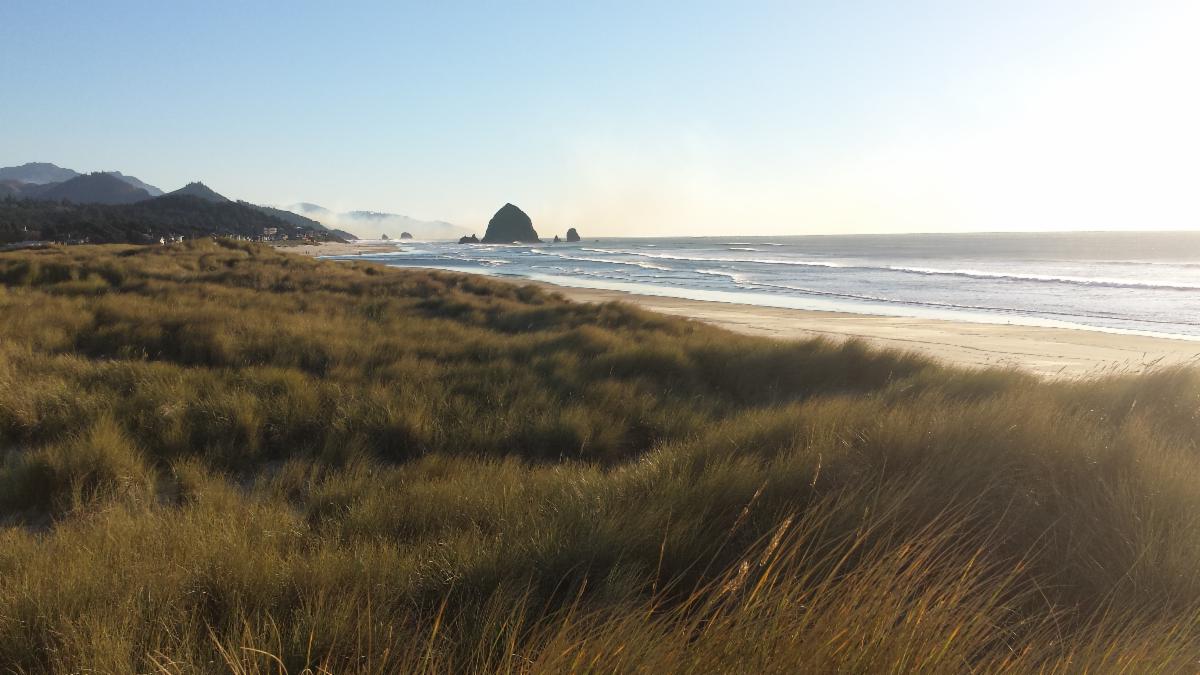
Cannon Beach Dunes with European Beach Grass. Courtesy ORCA.

The initiative begun by some oceanfront homeowners in Cannon Beach to change foredune management is now moving ahead and gathering signatures to place the proposal on the ballot for a vote. The original ballot title was challenged by concerned residents as being highly inaccurate, and the judge agreed. The ballot title now states clearly that that the new dune “management”mandate will be “publicly funded” — that is to say, it is an unfunded mandate. Cannon Beach has no pot of money available for the extensive new duties of dune-grading and monitoring that this ballot measure would require. Taxpayers will have to fund the new requirements if the measure passes, or the city will have to take money from city funds.


The measure will be a burden to Cannon Beach, requiring as it will the replacement of the city’s 2020 Foredune Management Plan (FMP) with requirements to constantly monitor the dunes for European Beach Grass, and to favor replanting with native dune plants. This sounds favorable; most people realize that native plants are better suited to the local environment. But in the case of cities built behind dunes as Cannon Beach is, the fact is that the native plants do not hold the dunes in place; they allow the dunes to move, erode, and blow sand. Beach Grass was introduced to stabilize dunes so that building could take place nearby, and is essential in built areas.


The town’s safety personnel report no safety issues at any of the dunes or beach access locations. Sand movement that sometimes creates higher-faced dunes is mainly a product of sand movement in the littoral cell, which happens continuously during the year. Cannon Beach’s best way forward is to follow the carefully worded FMP, which seeks to stabilize and manage the dunes in the community’s best interests. This initiative would benefit oceanfront homeowners who seek to regain the opportunity to grade the dunes for views, under the guise of aiding in safety and access. Don’t fall for it.

Wheeler City Council Approves Botts Marsh LLC Development

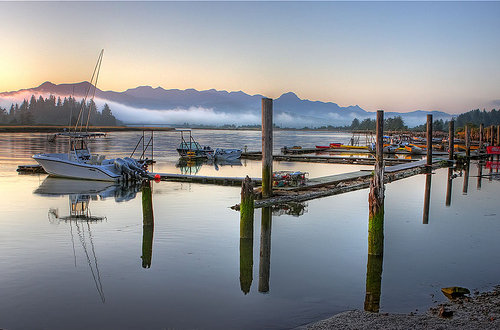
Wheeler Docks and Neahkahnie Mountain – Courtesy City of Wheeler

Wheeler City Council, on a unanimous vote, approved the Botts Marsh LLC development on the old piece of fill land at the north end of Wheeler. ORCA had appealed the planning commission approval up to Council. It is a sad day in Wheeler when the elected decision-makers have decided to pursue a chimera of economic development against the well-known wishes of the residents to maintain the the community’s small-town character. And not just any economic development, but a hotel, in an area with many short term rentals easily available. Wheeler itself does not allow STRs at this time, but there are many in surrounding communities, not to mention many hotels and motels. But more important are the health and safety issues involved, as the property is not stable land but old fill, on which development is chancy, as the applicant’s own geological report warns. Facing right onto Nehalem Bay, the property is also in a choice location for a tsunami, should one come barreling into the estuary.

Bay City Approves on Remand the Mistybrook Project

Bay City photo by Teresa Bergen

The project known in Bay City as the Mistybrook development came before City Council on remand recently. ORCA and a local resident had appealed the City Council approval to the Land Use Board of Appeals, but all parties agreed to a remand back to the city before the case was heard. The only two issues on remand were the two that ORCA brought before the court, one of which (the variance) was moot. The only other issue was the poorly done traffic study. Council ruled the changes the applicant made to it were sufficient to pass muster. The problems with this development are many, in that it does not comply with local ordinances on urban-level development. ORCA hopes as the development moves forward that local decision-makers ensure it does meet the standards the city requires.

DLCD Gearing up to Forge Rules for the New “Nature-Based Solutions” Law in Coastal Stabilization

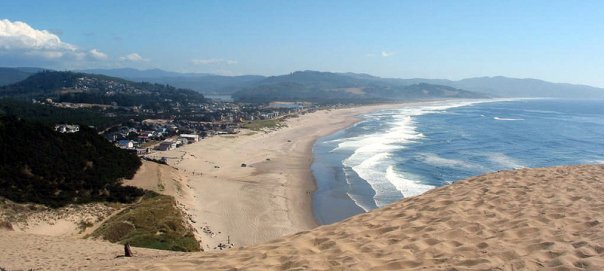
A View of Pacific City – Courtesy Mathew Dodson Wiki Commons

The Legislature in 2025 passed Senate Bill 504, which directs the Department of Land Conservation and Development to define and guide the use of different types of shoreline stabilization methods across coastal landscapes, with a strong preference for “nature-based solutions.”  The most common structural shoreline stabilization methods on the Oregon coast are seawalls and riprap revetments. The use of nonstructural solutions, such as vegetative stabilization, dune enhancement, and cobble beaches, is allowable and preferred under Goals 16, 17, and 18. 


However, none of the goals contain definitions for either structural or nonstructural nature-based solutions to shoreline stabilization, and this has caused much confusion and some poor planning along the coast. Likewise, the coastal goals do not currently provide detailed guidance for how and when nature-based solutions should be used instead of structural methods. DLCD will be beginning rulemaking on this important new law beginning this summer. A Rules Advisory Committee (RAC) is being set up to represent the stakeholders who will work with staff to create rules to implement the new law.

 
Quick Links...

Here's where you can make a difference for the Oregon coast.
Go to the ORCA website to make a donation or become a sustaining member. 

Contact Information
Contact Executive Director Cameron La Follette
by email or phone: 503-391-0210
You are receiving ORCA email communications as a donor or as a person who subscribed to this email newsletter. Please click Unsubscribe below if you wish to no longer receive the Oregon Coast Alliance Newsletter.
Facebook