|
ISDE 2026 Kyoto: Regular Registration Now Available
Missed the early registration deadline? No worries, regular registration for ISDE 2026 is now open, giving you continued access to secure your place at the 22nd ISDE World Congress for Esophageal Diseases in Kyoto, Japan, taking place from September 16–18, 2026.
This is your opportunity to join leading international experts in gastroenterology, surgery, oncology, and multidisciplinary care for three days of high-level scientific exchange, clinical innovation, and collaborative learning across the full spectrum of esophageal disease.
ISDE 2026 offers a unique platform to stay at the forefront of your field, gain global perspectives, and engage with the latest advances shaping clinical practice and research.
The scientific program continues to feature highly anticipated sessions designed for real-world clinical impact and cutting-edge discussion, including:
- S14. Management of Complications after Esophagectomy
- S23. Multidisciplinary Tumour Board
-
S28. The Evolution of Robotic Esophagectomy and more.
With regular registration now open, participants are encouraged to secure their place and begin planning their participation in what promises to be a landmark Congress for the global esophageal community in Kyoto.
| | |
Each new member brings unique expertise and perspectives that further strengthen our collective commitment to education, research, and international collaboration in the field of esophageal diseases.
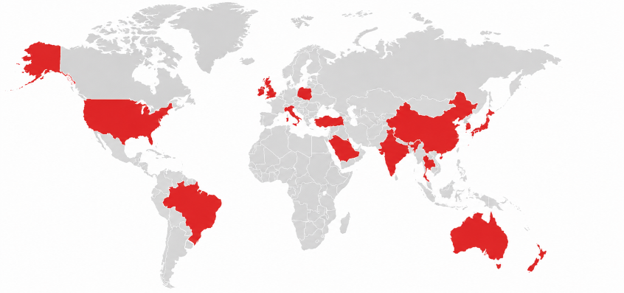
This month, we are proud to welcome 37 professionals from 14 countries around the world. Representing backgrounds in surgery, gastroenterology, endoscopy and oncology, these individuals contribute to the ongoing growth, diversity, and international reach of ISDE. Their names are listed below, along with a world map highlighting their home countries - a reflection of the global connections that continue to shape our community.
We extend a warm welcome to all of our newest members!
| | | Marcella Agosta, Surgery (Italy) | Mayilone Arumugasamy, Surgery (Ireland) | Liu Bowei, Surgery (China) | | Manish Kumar Budigi, Oncology (India) | So Young Byun, Gastroenterology (South Korea) | Mingyan Cai, Endsocopy (China) | | Cassidy Campbell, Surgery, (Australia) | Yongwoo Chung, Surgery (South Korea) | Andrew Conner, Surgery (United States) | | Chalerm Eurboonyanun, Surgery (Thailand) | Madelyn Gramlick, Surgery (Australia) | Paulo Gun, Endoscopy (Brazil) | | Haojun Hong, Surgery (China) | Tanvir Hossain, Surgery (United Kingdom) | Takeshi Iwaya, Oncology (Japan) | | Amit Javed, Surgery (India) | Shinichiro Kobayashi, Surgery (Japan) | Kentaro Kubo, Surgery (Japan) | | Suheelan Kulasegaran, Surgery (New Zealand) | Samuel Lalhruaizela, Surgery (India) | Kyle Mitchell, Surgery (United States) | | Alison Mungo, Surgery (United States) | Awrad Nasralla, Surgery (Saudi Arabia) | Colm Neary, Surgery (Ireland) | | Norbert Nowak, Surgery (Poland) | Kamil Nurczyk, Surgery (Poland) | Geraldine Ooi, Surgery (Australia) | | Riteshkumar Patel, Surgery (New Zealand) | Matteo Pittacolo, Surgery (Italy) | Yavuz Poyrazoglu, Surgery (Turkey) | | Lalchhandama Ralte, Surgery (India) | Hiroshi Saeki, Surgery (Japan) | Jirapat Samlee-on, Endoscopy (Thailand) | | Taeyoung Yun, Surgery (South Korea) | Panpanit Sukwarodwat, Surgery (Thailand) | Ritu Thakur, Surgery (India) | |
| Han Zhang, Gastroenterology (United States |
| | | ISDE Board Member Professor Florian Lordick Elected ESMO President for 2029–2030 | | |
The International Society for Diseases of the Esophagus (ISDE) proudly congratulates Professor Florian Lordick, ISDE Board Member, on his election as President of the European Society for Medical Oncology (ESMO) for the 2029–2030 term.
Professor Lordick's election is a tremendous honour and reflects his outstanding leadership, scientific excellence, and lifelong commitment to advancing cancer care. As a valued member of the ISDE Board of Directors, he has played an important role in strengthening the Society's mission to improve the care of patients with esophageal diseases through scientific excellence, global education, and multidisciplinary collaboration.
On behalf of the ISDE Executive Committee, Board of Directors, and members worldwide, we extend our sincere congratulations to Professor Florian Lordick on this well-deserved achievement. We wish him every success during his 2029–2030 ESMO Presidency and look forward to the continued impact of his leadership on the future of oncology and patient care worldwide.
| | |
Table of Contents:
Systematic Review And Meta-Analysis
Expert Review
Original Articles
Lessons Learned
Subscribe to Email Alerts
| | |
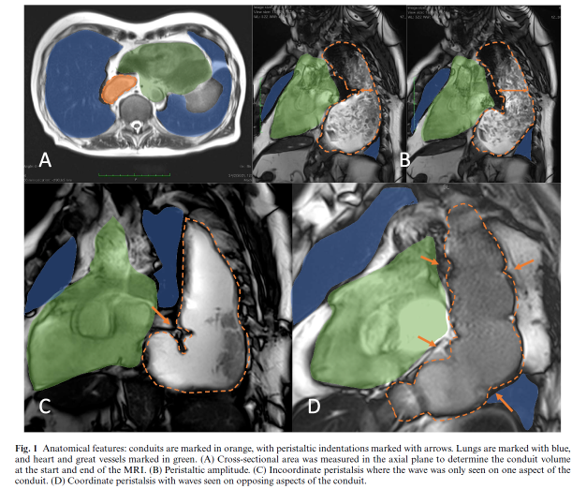
Lourensz et al. present a novel application of dynamic MRI to directly visualize and quantify peristalsis in the mature gastric conduit after esophagectomy. In this prospective study of 18 post-esophagectomy patients and 12 controls, peristaltic wave frequency was identical between conduits and healthy stomachs (5 waves per 90 seconds), while Gastric emptying was significantly reduced in conduit patients(0.10%vs15%p=0.01)- demonstrating that intrinsic gastric pacemaker activity persists despite vagal denervation- Yet this preserved peristalsis did not translate into effective conduit emptying — contractions were often uncoordinated and failed to achieve the wall apposition needed for bolus clearance. This dissociation between contractile activity and functional transit represents a key paradigm shift: in the gastric conduit, peristalsis may aid intraluminal mixing but is insufficient — and perhaps irrelevant — for emptying.
Instead, conduit geometry emerged as the dominant determinant of function. Acute angulation (<90°) in the sagittal plane dramatically prolonged emptying half-times compared with straighter conduits (444 vs. 127 minutes, p = 0.025), and conduits wider than 4 cm emptied significantly more slowly than narrower ones (286 vs. 76 minutes, p = 0.02). Delayed emptying correlated directly with worse reflux and overall gastrointestinal quality of life. Additionally, despite prior pyloric relaxing procedures, dynamic MRI frequently captured strong antral retropulsion, questioning the long-term durability of pyloromyotomy and pyloroplasty. The clinical message is clear: crafting a "straight and narrow" conduit — with uniform diameter below 4 cm and minimal mediastinal angulation — is the single most impactful modifiable factor for optimizing long-term conduit function and patient quality of life.
| | Follow ISDE on Social Media | |
All communications will generally come from membership@isde.net, please be aware of spam/malicious emails using ISDE information.
| | | | |