Volunteer Newsletter - June 2026 | | |
VOLUNTEER SUPPORT GROUP - SAVE THE DATE
Monday, JUNE 1, 5:00-6:30 pm
Please mark your calendars to attend our JUNE Volunteer Support Group. You have an important role in our caregiving team and these monthly groups provide essential support for your knowledge base and well-being. Come to enhance your skills and competencies, and gain insights from our shared experiences about this deeply rewarding work. Whether or not you currently have a family/patient assignment, active volunteers are encouraged to attend. Light refreshments will be provided. RSVPs are appreciated. Location: Kauai Hospice Conference.
| | GET READY TO LIGHT UP YOUR 4TH OF JULY | | |
ARTICLE: FAMILY CAREGIVERS PROVIDE $1 TRILLION IN ANNUAL LABOR
BY: DENNIS THOMPSON (HealthDay, March 27, 2026)
A new AARP report says the work of family caregivers amounts to more than $1 trillion a year, mostly unpaid. This amount exceeds all federal, state and local Medicaid spending. Their labor is the backbone of the nation’s long-term care system and is essential to helping millions of American seniors maintain their independence. It is the equivalent of nearly 24 million full-time workers, or roughly 17% of the entire U.S. full-time work force. Click here to read the article. Or, see the 9-page AARP Report “Valuing the Invaluable 2026” with charts and graphs.
| | |
BLOG ARTICLE: WHEN A DYING PERSON STOPS EATING - FOOD AT END OF LIFE
BY: BARBARA KARNES (May 13, 2026)
Food becomes a major concern for families when their special person is dying. "If the body is preparing to die from disease or old age, it will gradually slow down, cut back on food, and eventually stop eating altogether," explains Barbara Karnes, end-of-life nurse educator. With absolute honesty and compassion about the physical realities of dying, she writes: "The body is loosening its hold on life" and "not eating is one of the natural ways the body prepares for death." Click to read her blog post to better understand and demystify the challenging symptom of loss of appetite.
| |
GOOD QUOTES:
“That gap between what a patient whispers and what a family can bring themselves to say out loud is one of the most heartbreaking spaces in end-of-life care. The silence meant to protect everyone ends up isolating the one person who most needs to feel heard.”
~ Anao Zhang, PhD, LCSW - Psychosocial oncologist and researcher
SOURCE: EndWell Video - "Silence Causes More Suffering at the End of Life Than Death Itself" (12:45 minutes)
| |
| |
YOUTUBE: BEFORE I DIE – A DAY WITH TERMINALLY ILL PATIENTS
SOURCE: DEATH LAND, EPISODE 2
(14:17 minutes)
What does it feel like to know you’re dying? In episode two of Death Land, The Guardian's 8-episode documentary series, journalist Leah Green meets people who are coming to terms with nearing death. She follows palliative care doctor Sunita Puri as she helps her patients acknowledge their own mortality. Dr. Puri navigates the emotional and biological realities of terminal illness and helps patients prioritize comfort over the futile, aggressive prolonging of life. The series features intimate interviews with patients and families, aimed at normalizing conversations around death, and guiding us to shift from a fear-based perspective to understanding death as a natural process. Click to watch this episode.
| |
|
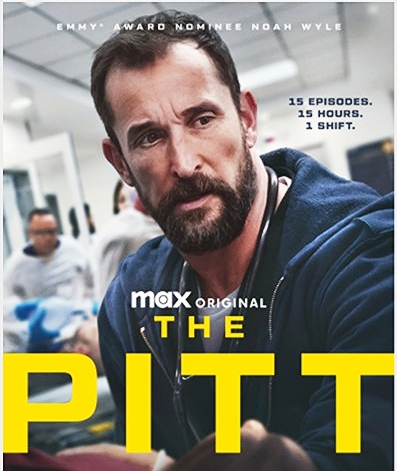
ARTICLE: MEET THE DOCTORS AND NURSES WHO MAKE "THE PITT" CAPTURE ER ENERGY
BY: CHRIS O'FALT (INDIE WIRE - April 10, 2026)
"Doctors are often medical shows’ harshest critics, but “The Pitt” seems to be the one they actually like. Doctors credit Max’s scripted medical drama, which spends a season exploring 15 hours in a Pittsburgh ER, with capturing the experience of working in a 2025 emergency room. For Season 1, “The Pitt” employed seven residency-trained, board-certified emergency physicians: four for the writing process, and three on-set medical advisors. Six nurses and physician assistants also served as specialty background players throughout production. Overseeing it all was co-executive producer Dr. Joe Sachs, who received his master in film studies while going to medical school — a combination motivated by his interest in public health education. While working for 30 years as a TV writer, Sachs continued to work part-time as an attending emergency physician at a teaching hospital and trauma center." If you're a fan or just curious about "The Pitt" click to continue reading this fascinating article.
| | |
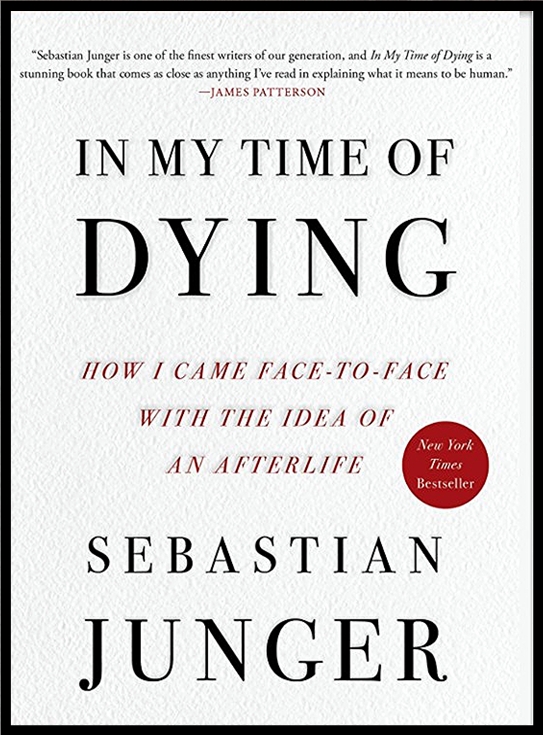
BOOK: IN MY TIME OF DYING – HOW I CAME FACE TO FACE WITH THE IDEA OF AN AFTERLIFE
BY: SEBASTIAN JUNGER (Published May 2024)
Sebastian Junger is an acclaimed American journalist, author and filmmaker famous for the best-selling book The Perfect Storm. His recent memoir In My Time of Dying, begins with a gripping, detailed account of nearly drowning while surfing on a frigid winter day at age 21. Thereafter, despite dozens of brushes with death as a war reporter in active combat zones, it is not until age 58, as a healthy and athletic man that a ruptured pancreatic aneurysm gravely results in a near-death experience. The book is a deeply personal exploration of mortality and how we grapple with phenomena that science may be unable to explain. It is part medical drama, part searing autobiography, and part rational inquiry into the ultimate unknowable mystery. Junger explains: "The book is written for everybody; it presumes to know nothing and explores all the possible theories that might explain the amazing experience we all call life." For a preview, read the transcript of his EndWell presentation: "Sebastian Junger: How Near-Death Experience Changes Life" or watch the video (16:14 minutes).
| | |
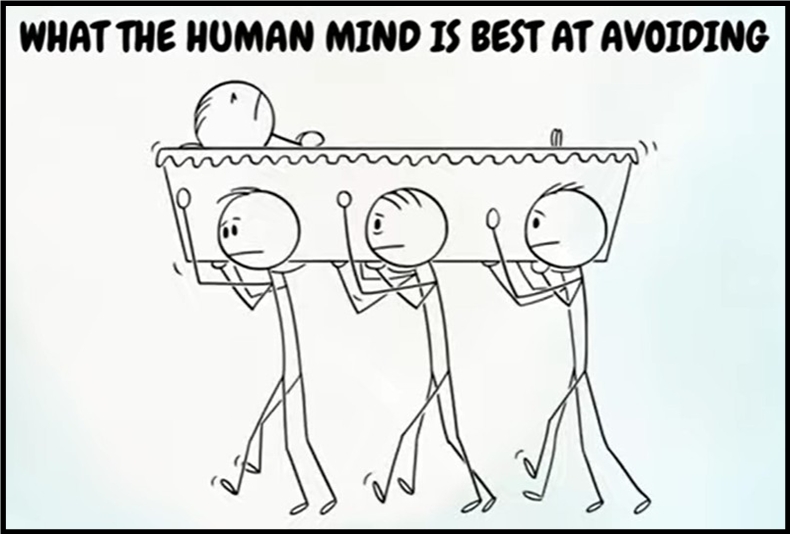
YOUTUBE: WHY SOME PEOPLE AVOID FUNERALS OR EMOTIONAL EVENTS (IT'S DEEPER THAN YOU THINK)
SOURCE: The Psychology of WHY
(3:48 minutes)
Emotional events often force people to confront loss, vulnerability, and memories they are not emotionally prepared to face. For some, avoidance becomes a survival response rather than a conscious choice. This animated video focuses on breaking down complex human responses and behaviors when facing emotional triggers. It helps explain how people process grief differently and why dealing with grief looks different for everyone. By understanding the complexities of human emotions and social interactions, we gain a deeper perspective on why some people distance themselves from events meant to bring people together. Click here to better understand the hidden psychological mechanisms behind avoidance presented in bite-sized, non-judgmental and relatable content.
| |
CONTACT: Rayne Regush, Volunteer Coordinator
| | | | |