|
Dear Community:
In this week's update, we are tracking critical national policy shifts that threaten our collective well-being. A proposed federal grant rule from the White House Office of Management and Budget (OMB) is raising deep concerns among scientists.
The regulation would prohibit federal funding from supporting "theories of disparate-impact liability"—the legal framework used to challenge policies that disproportionately harm marginalized groups. Researchers fear this broad language could jeopardize vital health disparities studies, and experts warn it may subject applications to intense scrutiny and discourage essential studies examining how race, income, and disability drive unequal health outcomes.
The National Institutes of Health has long funded this work to uncover why certain groups experience higher disease rates. We cannot allow progress to be dismantled. To protect our communities and ensure equitable care, we must work to support the researchers and organizations pursuing this lifesaving work. We Must Save Us.
Blessings to all of you for a safe and healthy week ahead.
Renee Mahaffey Harris
President & CEO
| |
Scientists warn proposed Trump-era grant rule could threaten health disparities research
A proposed federal grant rule is raising concerns among scientists. The proposed regulation from the White House Office of Management and Budget (OMB) would prohibit federal grant funding from supporting what it describes as “theories of disparate-impact liability.” Disparate impact is a legal concept that allows policies to be challenged if they disproportionately harm protected groups, even when there is no evidence of intentional discrimination. Researchers say the language could create uncertainty about whether some health disparities studies remain eligible for funding.
According to Stat, many scientists fear the proposal could subject grant applications to greater scrutiny or discourage research examining how factors such as race, income, disability or access to healthcare contribute to unequal health outcomes. While the rule does not explicitly ban health disparities research, researchers say its wording leaves room for broad interpretation during the grant review process.
NIH health disparities research seeks to understand why certain groups experience higher rates of diseases or poorer health outcomes and identify ways to improve care. The National Institutes of Health has long supported this work through dedicated programs and funding initiatives.
| |
Closing the Gaps in Men’s Health Through MTM and Community Engagement
June marks Men’s Health Month, and Men’s Health Week takes place June 14 through 21, 2026. The theme this year is “Partners in Care: For Better Life Spans Across the Life Span.”1 This emphasizes the crucial roles for families, communities, and care partners in improving men’s health outcomes.
The importance of men’s health has been a focus in pop culture, as well, with topics such as prostate cancer highlighted in the television show Grey’s Anatomy, mirroring the diagnosis of actor James Pickens Jr. As part of the health care team and as accessible members of the community, pharmacists can play an important role in men’s health through medication therapy management (MTM).
Recommending screenings is a crucial part of educating patients, as early detection and education can improve outcomes. As part of a social media campaign, pharmacists and other health care professionals can show support by wearing blue on Fridays throughout June.
|
Environmental exposures and cancer: the missing question
I didn’t learn about environmental health disparities in a classroom. I saw them growing up in San Pedro Sula, Honduras. I remember neighborhoods built from scrap materials, homes close to industrial waste, and families who seemed to face illness more often than chance alone could explain. At the time, I didn’t question it. Now, as I prepare for a career in medicine, I find myself revisiting those memories with a different perspective.
We often talk about cancer in terms of genetics and lifestyle. We ask patients about smoking, diet, and family history. But we rarely ask about the environments they come from. And yet, those environments may be shaping disease risk long before a patient ever steps foot in a clinic.
Research has consistently shown that environmental exposures play a meaningful role in carcinogenesis. Heavy metals such as arsenic and lead can persist in soil and contaminate water and food sources. Chronic arsenic exposure, for example, has been linked to increased risks of skin, bladder, and lung cancers.
What has struck me most is how ordinary these exposures can be. Patients are not only affected by industrial accidents or extreme conditions. They are exposed through daily routines. Produce grown in contaminated soil can carry trace amounts of heavy metals. Repeated contact with treated landscapes, such as agricultural fields or even golf courses, can increase exposure to pesticides. Long-term exposure to certain pesticides has been associated with cancers such as non-Hodgkin lymphoma.
|
Philadelphia-area STI disparities still fueled by stigma and misinformation, health care leaders say
Despite advances in treatment and prevention, sexually transmitted infections remain a stubborn public health challenge in Pennsylvania, according to health experts who say stigma, misinformation and uneven access to care continue to fuel infections.
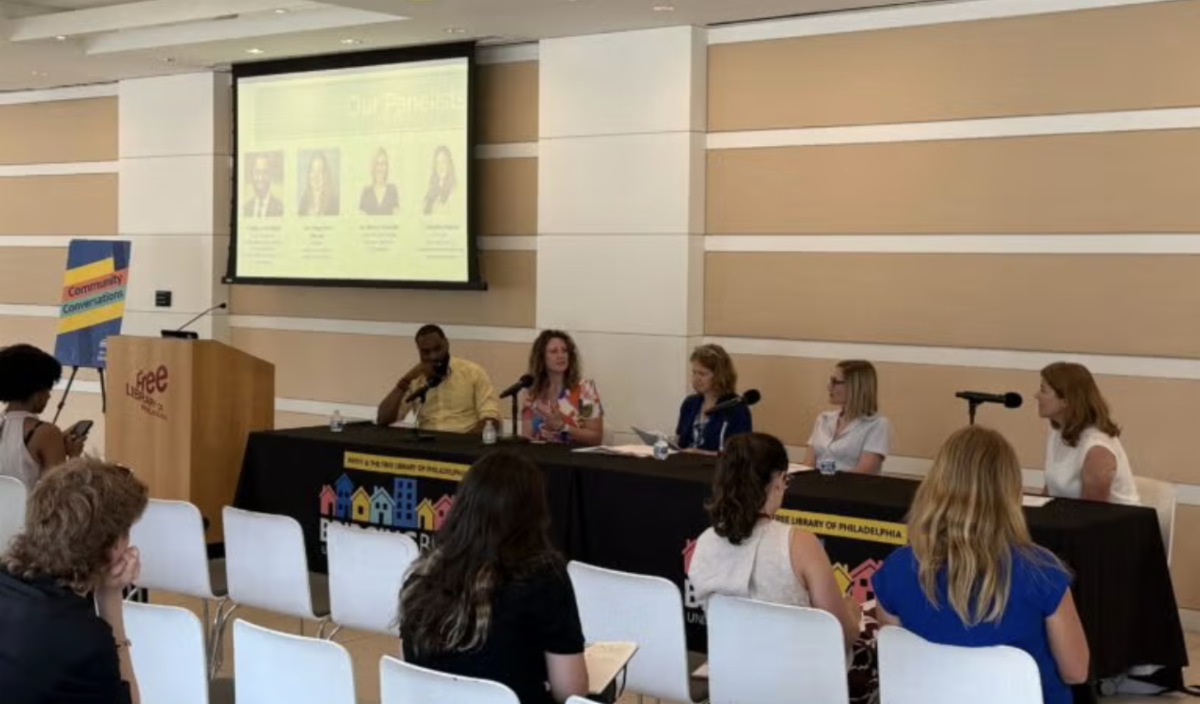
Those issues were the focus of a panel discussion Wednesday titled “Facing the Facts: HIV, STIs, and Health Equity in the Philadelphia Region,” where public health leaders discussed the barriers they encounter in reaching underserved populations. The event was hosted by the Parkway Central Library in Philadelphia, presented by WHYY’S Bridging Blocks and moderated by Maiken Scott, host of WHYY’s weekly health and science show, “The Pulse.”
|
A Coalition of Color Is Transforming Health Equity in Massachusetts
A recent report by the Boston Public Health Commission spells out in stark terms the state of Black life expectancy in Boston, a city where health disparities persist despite its rich array of health care resources. Not only do Black Bostonians die younger than every other racial and ethnic group in the city, the life expectancy gap has doubled over the past 10 years. Many of the premature deaths are driven by accidental drug overdoses and chronic conditions such as heart disease and diabetes.
Closing the racial gap in life expectancy, the report notes, will require equity-centered interventions that address health conditions along with factors that influence health, such as stable housing, economic security, and access to quality care.
|
Why Pharmacists Are Central to Closing Care Gaps in the New CKM Syndrome Guideline
In an interview with Pharmacy Times, Fátima Rodriguez, MD, an associate professor of cardiovascular medicine at Stanford Medicine, discussed how the newly published guideline addresses health equity by recommending routine screening for social drivers of health, such as food insecurity and housing instability.
Rodriguez highlighted the new PREVENT risk equations, which replace the Pooled Cohort Equations with a race-free, sex-specific model that factors in kidney function, hemoglobin A1c, and a 30-year risk horizon for younger adults. She also discussed the role of technology, including artificial intelligence (AI)–assisted screening, electronic health record (EHR)–integrated tools, and telehealth, in expanding equitable access to CKM care, emphasizing that these tools must be intentionally designed and validated across diverse populations. Rodriguez closed by underscoring the critical role pharmacists play in helping patients access and understand the growing number of multisystem therapies now available for cardiovascular, kidney, and metabolic disease.
| | |
More Articles of Interest\
JAMA Network, June 22, 2026
PubMed, June 2026
MedCity News, June 21, 2026
| | | | |