|
Dear Community:
This June, we emphasize proactive wellness by recognizing Men’s Health Month and Alzheimer's and Brain Awareness Month. We encourage men and boys in our neighborhoods to prioritize their physical and mental health, schedule regular check-ups, and get vital screenings. Simultaneously, we are fostering critical conversations about Alzheimer’s disease, dementia, and the importance of preserving lifelong brain health.
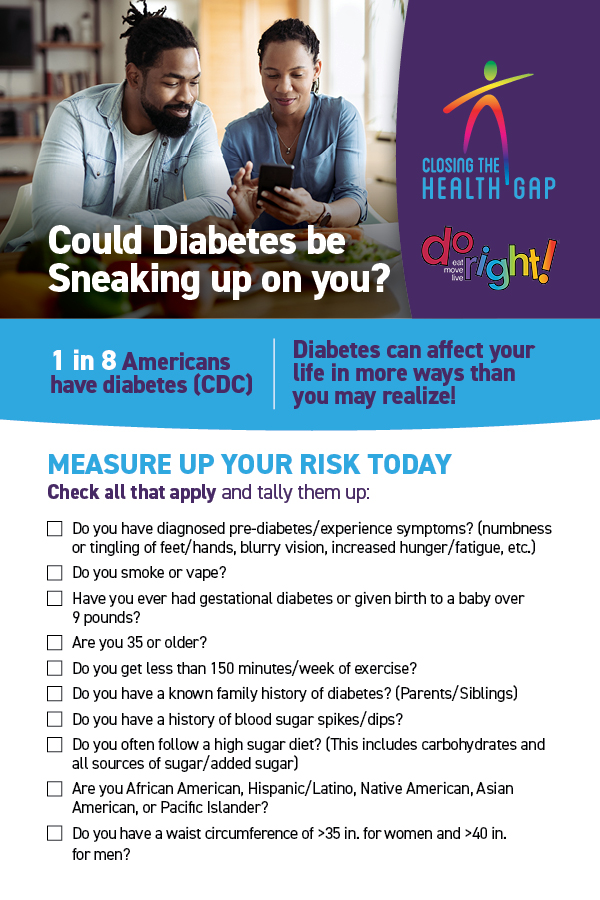
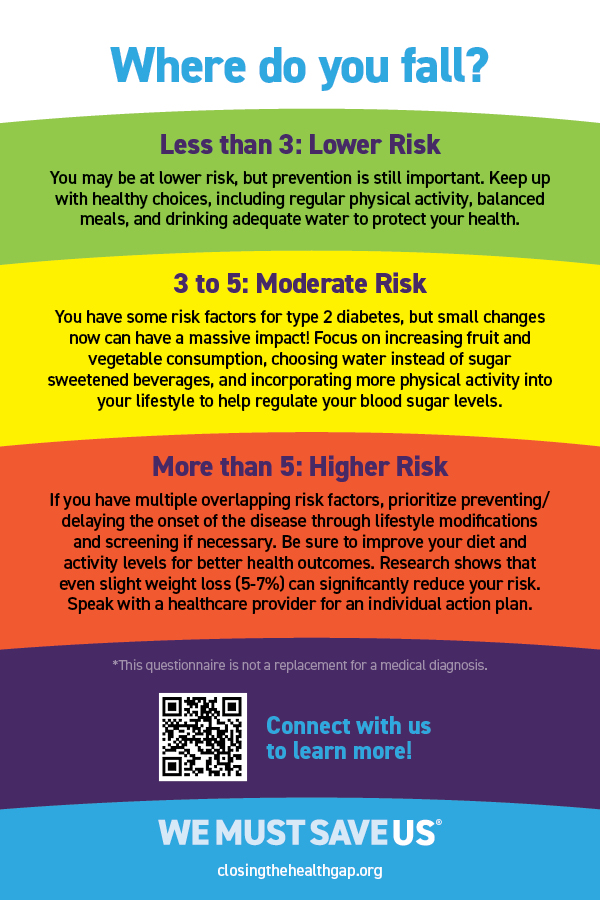
True wellness also requires continuous action against chronic conditions. Right now, 1 in 8 individuals are living with diabetes, a disease that impacts lives and families in deep and varied ways. To empower you, we've included a new questionnaire below to evaluate your personal risk level. Please complete this self-check, then follow up with a medical professional to talk about your options and establish a healthy path forward.
We cannot wait for external solutions; we must actively build a healthier future together. In everything we do, We Must Save Us.
Blessings to all of you for a safe and healthy week ahead.
Renee Mahaffey Harris
President & CEO
| | |
‘Totally Underrepresented’: The Push to Put Men’s Health on the Global Agenda
The 79th World Health Assembly closed last Saturday after a long week of negotiations over the globe’s most pressing health crises: financing gaps, rare diseases, a workforce shortage counted in the millions, a string of wars and humanitarian emergencies, and dozens of other resolutions.
Yet one policy area affecting half of the global population – men’s health – was, as almost every year, nowhere to be found on the agenda. For an assembly built to tackle the deepest global inequalities, crossed with the intense competition for funds across all global health policy areas amidst what the WHO calls a “global health financing emergency”, the case for prioritising the world’s dominant sex is far from an easy sell.
Its counterpart, women’s health, remains badly underfunded and under-researched. Only 6% of private healthcare capital goes to research on conditions affecting women, 0.5% of all neuroscience research conducted since the invention of MRI in the 1990s considers factors specific to women, and fewer than 5% of clinical trials report sex-disaggregated data. Women are also diagnosed later than men for more than 700 diseases, while spending 25% more of their lives in poor health than men.
| |
Climate Change and Cancer Care: Disruptions, Disparities, and Strategies for Resilient Oncology Systems
Our global climate is changing—increasing the frequency, intensity, and duration of extreme-weather related disasters—with direct consequences on human health. These extreme weather-related events are not only environmental crises—they are health system crises. Cancer care—from prevention to diagnosis, treatment, survivorship, and end-of-life care—is particularly affected by extreme weather events because of complex, time-sensitive, infrastructure-dependent, multidisciplinary, and resource-intense care. Although these events affect us all, disruptions are particularly impactful on those who live in settings where underlying community and health resources are limited. Therefore, preparedness and resilience planning specific to cancer care is crucial. Existing evidence-informed strategies to prepare and enhance resilience across clinical, institutional, and policy domains include climate resilience integration in clinical training and practice, adaptation of care delivery infrastructure and operations, knowledge and review of local climate vulnerabilities, and strengthened partnerships with community organizations. As extreme weather events increasingly threaten cancer care delivery, proactive, coordinated efforts by oncology professionals, health systems, and policy are essential to ensure high-quality care delivery.
| |
Closing The Alignment Gap: The Next Frontier For Whole-Person Care
The policy signal is clear—the future of US health care is accountable, whole-person care that meets people’s primary, specialty, behavioral health (BH), and social service needs. Accountable and integrated care models administered by the Centers for Medicare and Medicaid Services (CMS) and state Medicaid programs have proliferated, aiming to coordinate care and improve population health for those with complex medical and social needs.
To date, accountable care organizations (ACOs) and integrated care models addressing behavioral and maternal health have largely focused on payment and service delivery innovation. While both are necessary, neither has proven sufficient. For instance, Medicare’s ACO programs have delivered modest cost savings with improved clinical outcomes over the past decade, but their impact on broader population health remains less clear. The number of beneficiaries in accountable care programs rose 4.4 percent in 2026, but growth has plateaued. Closing the distance between the promise of accountable, whole-person care and the organizational readiness, relational infrastructure, and cross-sector capacity required to deliver it reliably is what we refer to as the alignment gap.
|
Study offers new evidence on role of health crises in driving housing instability and homelessness
Major health events increase the risk of housing instability and homelessness among Medicaid enrollees, according to a new study at Columbia University Mailman School of Public Health. These findings shed new light on the complex, bidirectional relationship between health and housing. The research examined housing outcomes following serious health events by tracking reported address changes over four years before and after a sudden hospitalization.
While decades of research have focused on how housing conditions shape health, until now there has been little attention paid to the reverse relationship: how adverse health events themselves can destabilize housing. The results are published in the Journal of Health Economics.
|
Closing Michigan’s growing healthcare gap
Michigan’s healthcare system is at a breaking point. Despite 95% of residents having medical coverage, the state ranks 43rd in the nation for health outcomes. For Detroit’s business leaders and labor organizations, the reality is even starker: coverage does not equal access. A strained system, defined by provider shortages and escalating costs, is leaving employees and union members waiting weeks for basic care, or worse, skipping it entirely.
According to a recent report from Marathon Health, more than 15% of Michiganders live with three or more chronic health conditions. The path to managing these conditions is blocked by provider shortages. Healthcare worker turnover rates have climbed to 93%, leading to rushed, reactive care. More than 40% of Michiganders report delaying care due to long wait times, while 65% have put off treatment because of costs. This gap is not just a clinical failure; it is an economic drain on the region’s employers and plan sponsors.
In response, a growing number of Detroit organizations are supplementing traditional insurance with advanced primary care (APC) offerings that remove access barriers—offering little- or no-cost appointments the same- or next-day at network health centers, where up to 90% of care needs can be met. Rather than reacting to health problems, APC shifts the focus to prevention, better access and stronger relationships between patients and providers.
|
The Future Of Maternal Health Must Center Black Women Across The Lifespan
On the heels of consecutive weeks dedicated to Black Maternal Health and Women's Health, maternal mortality disparities are once again in the national spotlight. But too often, public attention arrives only in high-stakes moments or crisis—during pregnancy, at birth, postpartum harm, or in the wake of preventable loss. The headlines ask what went wrong in a delivery room, emergency department, or postpartum ward, while far less attention is given to the years—sometimes decades—of inequity that made those outcomes more likely in the first place.
A growing movement in maternal health is now challenging this limited framework. Among those leading this shift is Ndidiamaka Amutah-Onukagha, Professor of Black Maternal Health at Tufts University School of Medicine. Under Dr. Amutah-Onukagha’s leadership, the newly expanded Center for Maternal Health Advancement in Boston, Massachusetts is offering a broader, lifespan-based vision of maternal health equity that centers Black women across the full arc of their lives.
Black maternal health has long illuminated the consequences of fragmented care systems, structural racism, underinvestment in preventive care, and the unequal distribution of medical resources. As Dr. Amutah-Onukagha explains:
“Maternal health is not defined by pregnancy alone. It is shaped by access to care, chronic stress, reproductive autonomy, and support across a woman’s life. The Center for Maternal Health Advancement allows us to deepen our impact by advancing equitable, dignified care for every mother facing barriers to quality healthcare.”
|
Patients With MS Have Lower Income Development Compared With Healthy Controls
A diagnosis of multiple sclerosis (MS) could have significant impacts on the income of patients with the condition in the long term, according to a new study published in the European Journal of Neurology. Patients with MS had lower income development when compared with other healthy controls, indicating disparities in quality of life for patients.
Patients with MS, a chronic autoimmune disease, can have various presentations of the disease, including a rapid progression that impairs physical and cognitive functioning. A period prior to the onset of MS has also been identified where patients who are later diagnosed with MS have an increased use of health care services and prescription medications and also can show reduced cognitive performance.2 This study aimed to assess the trajectory of gross income in patients with MS compared with healthy controls, including identifying when the difference in income begins.
| | | | |