|
Upcoming Important Dates:
-
Deadline: Sinkhole Conference Early Bird Price, June 11, 2026
-
Deadline: Scientist in Parks Application, June 14, 2026
-
Deadline: International Day of Cave and Karst Celebration Call for Papers, June 26, 2026
-
Deadline: International Conference on Subterranean Biology Abstracts, July 31, 2026
-
Deadline: Geological Society of America Abstract, August 6, 2026
| |
National Speleological Society Convention
Corydon, Indiana
July 6-10, 2026
| |
Eurokarst and Karst Commission of the International Association of Hydrogeology meeting
Neuchatel, Switzerland
August 31- September 4 ,2026
| |
International Conference on Subterranean Biology
Mangalia, Romania
September 7-12
| | International Day of Caves and Karst September 13 | |
The Sinkhole Conference
Albany, New York
October 5-9, 2026
| |
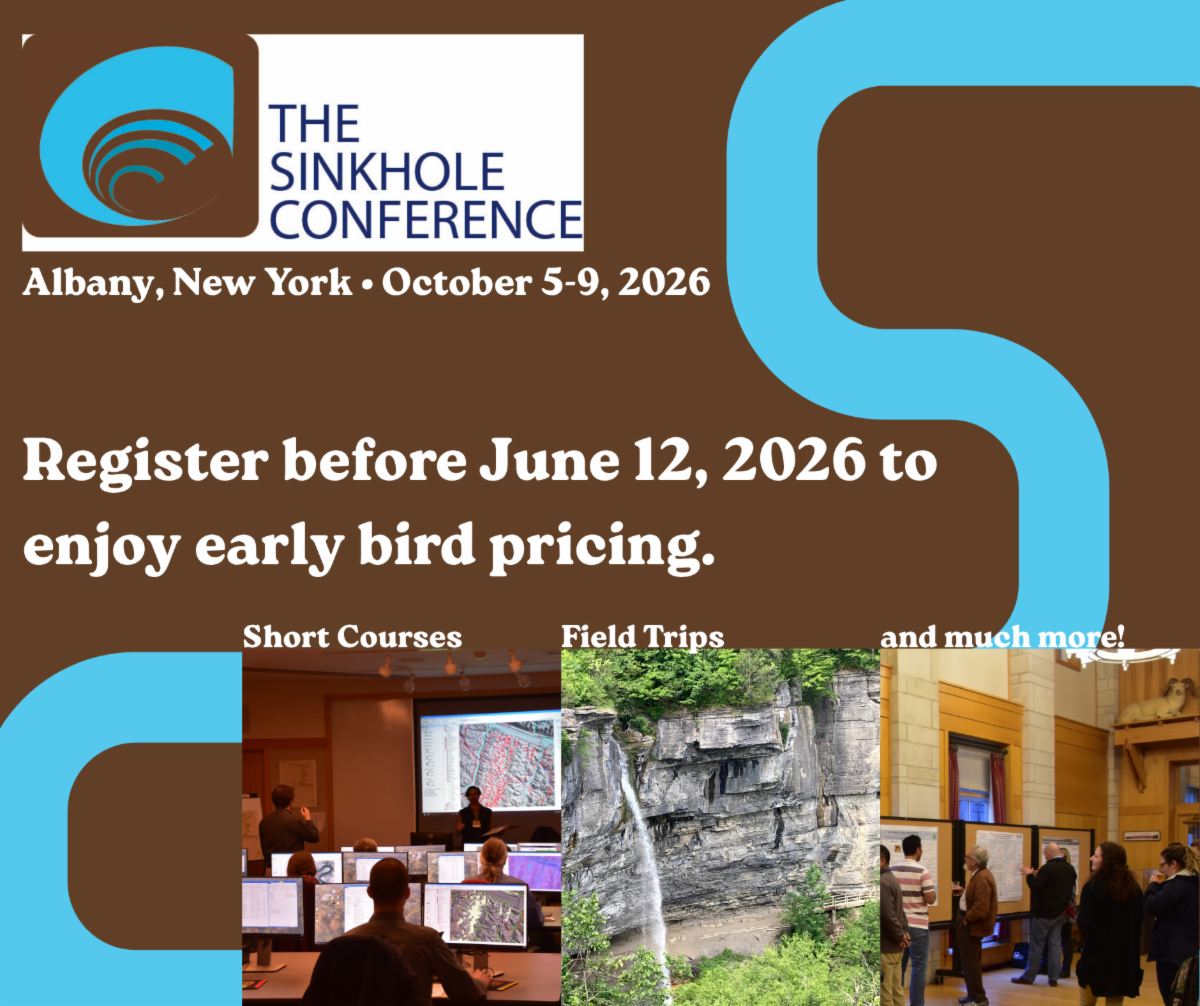
Register today to enjoy early bird pricing!
Early-bird registration ends this Thursday, June 11th, after which registration fees will increase. Secure your spot now at sinkholeconference.com.
If your work touches geohazards, groundwater systems, or infrastructure management, The 18th Multidisciplinary Conference on Sinkholes and the Engineering and Environmental Impacts of Karst is the definitive event of the year. This October, top geologists, engineers, and environmental scientists are gathering in Albany, NY, to tackle the unique challenges of karst.
Earn Professional Development Hours (PDHs): The conference is currently submitting short courses, field trips and select professional talks for PDH for approval with the New York State Council of Professional Geologists.
Don't miss out, on June 12th the prices will increase from $500 to $675.
| | | | | |
GSA abstract submissions are open! Deadline is August 6th, 2026. Please consider submitting to one of these sessions sponsored by the GSA Karst Division:
New Frontiers in Cave and Karst Science
We encourage submissions in any field of cave and karst science, with special emphasis on novel techniques, interdisciplinary approaches, and contributions from diverse early career researchers (students, postdocs, and faculty).
Biogeochemistry and Astrobiology of Caves and Karst
This session seeks abstracts on cave and karst ecosystems, biogeochemistry, and astrobiology, including but not limited to microbe-mineral interactions, subsurface habitability, subterranean ecosystems, microbial ecology, planetary analog studies, and extraterrestrial cave and karst features.
Karst Hazards and Monitoring
Hazards (e.g., sinkholes, pollution, radon, development) and monitoring approaches (e.g., GIS applications, historical data analyses) in karst landscapes, including technical applications (e.g., LiDAR, 3D scanning, geodatabase development) and management implications (resource management, education, policy, regulation).
Karst Hydrology and Hydrogeology
This session covers fundamental aspects of fluid-rock interactions within karst landscapes, including geologic, hydrogeologic, and hydrologic investigations. Appropriate topics range from dye tracing and aquifer processes to surface-subsurface hydrologic interactions and quantitative modeling.
Karst Sedimentary, Paleoclimate and Historical Records
Cave deposits (sediments, speleothems, tufa, etc.), karst environmental records (sedimentary, carbonate stratigraphy, etc.), and geoarchaeological and historical investigations to interpret past climates, landscapes, extreme events, and land-use histories, and to model or predict future changes.
| | | |
Scientist in Parks (SIP) program provides opportunities for early-career professionals within the National Parks System. This professional opportunity will start this fall and provides benefits such as living stipend, education award and even healthcare (52-week positions only). There are several positions related to caves and karst linked below:
| | | | |
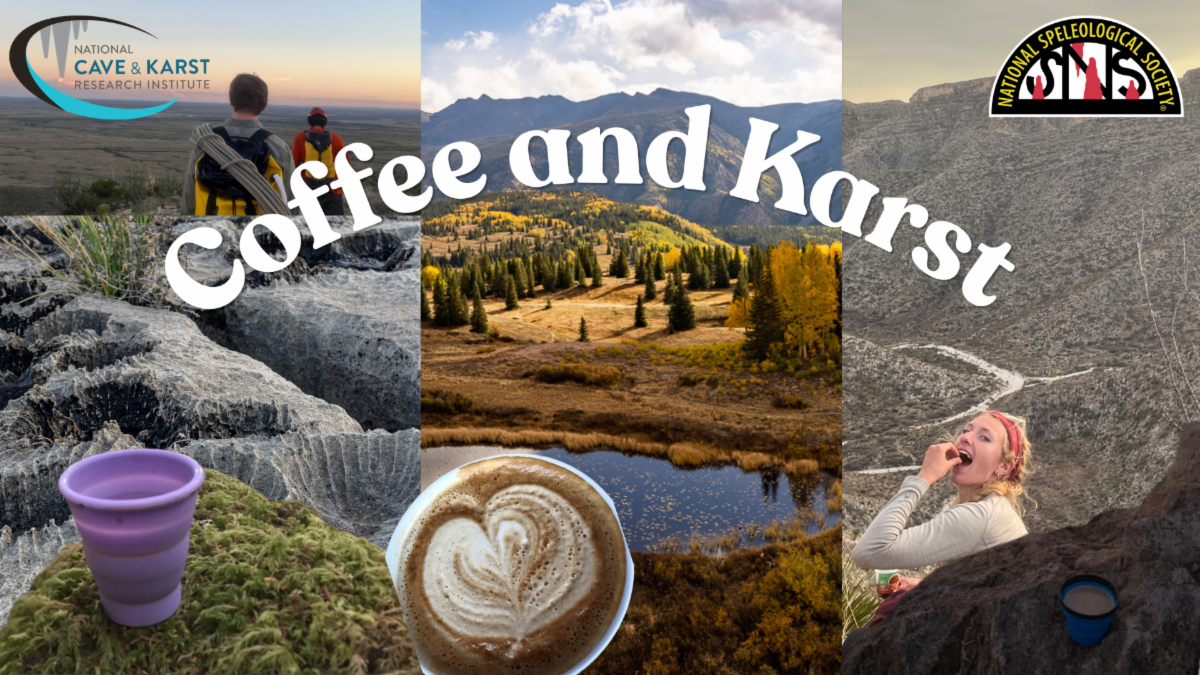
Start your morning at the National Speleological Society Convention with Coffee & Karst, an interactive roundtable event hosted by the National Cave and Karst Research Institute. On Tuesday and Wednesday morning, from 8AM to 9AM, grab a cup of coffee and join fellow cave and karst professionals for informal, yet serious discussions on the real-world challenges facing our community.
NCKRI's Coffee & Karst is designed to be casual, inclusive, and participant-driven: no microphones, no slide decks—just good conversation and a shared desire to support one another. Whether you come with a question or an answer (or both), you'll be helping build a stronger community.
We hope to see you there!
| | |
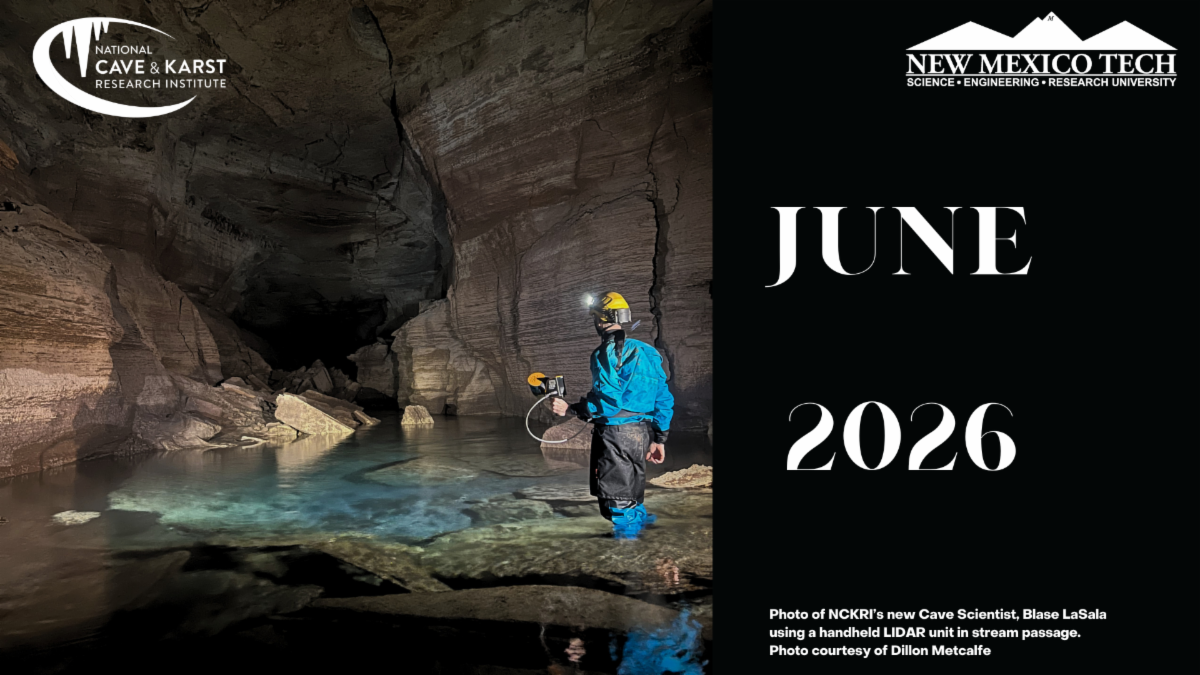
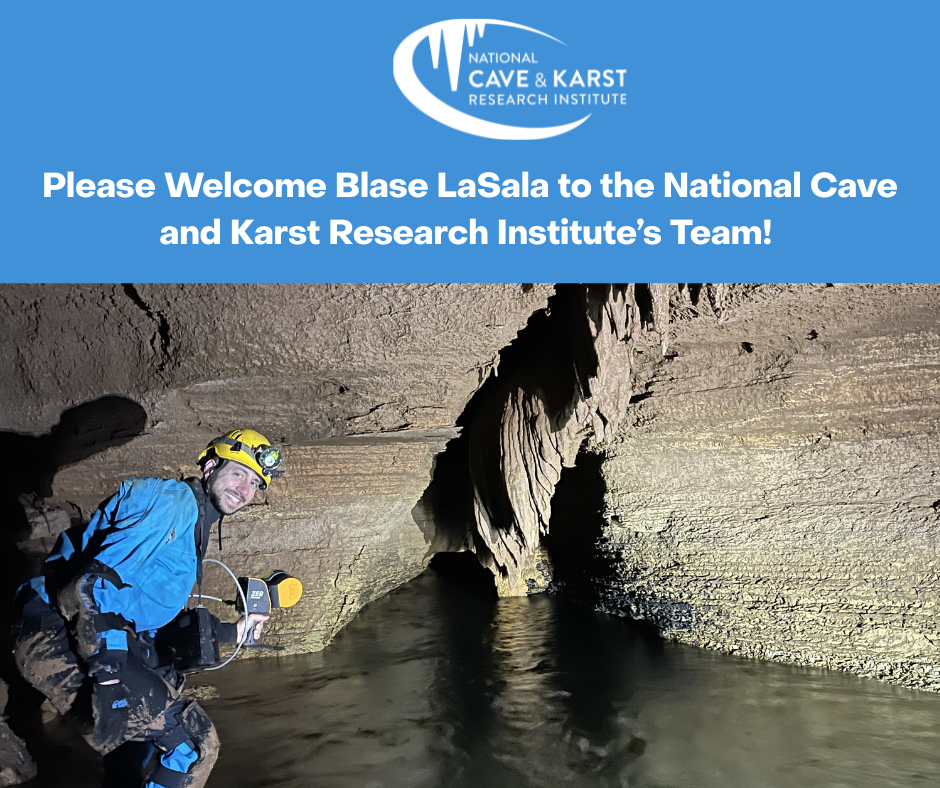
Karst Scientist Blase LaSala
Blase LaSala joined NCKRI this May as its new Karst Scientist. His dissertation research quantifies flow-path development within the Grand Canyon's deep karst aquifer by combining aerial and cave lidar with satellite imagery at high resolution and scale. He also brings over a decade of experience tackling cave and karst problems in public, private, and academic sectors. Drawn to research that supports resource management, education, and outreach, Blase has created cave models currently featured in virtual tours at several National Parks. In his free time he enjoys going on cave survey expeditions and working with bats.
| | |
Karst Research Technician:
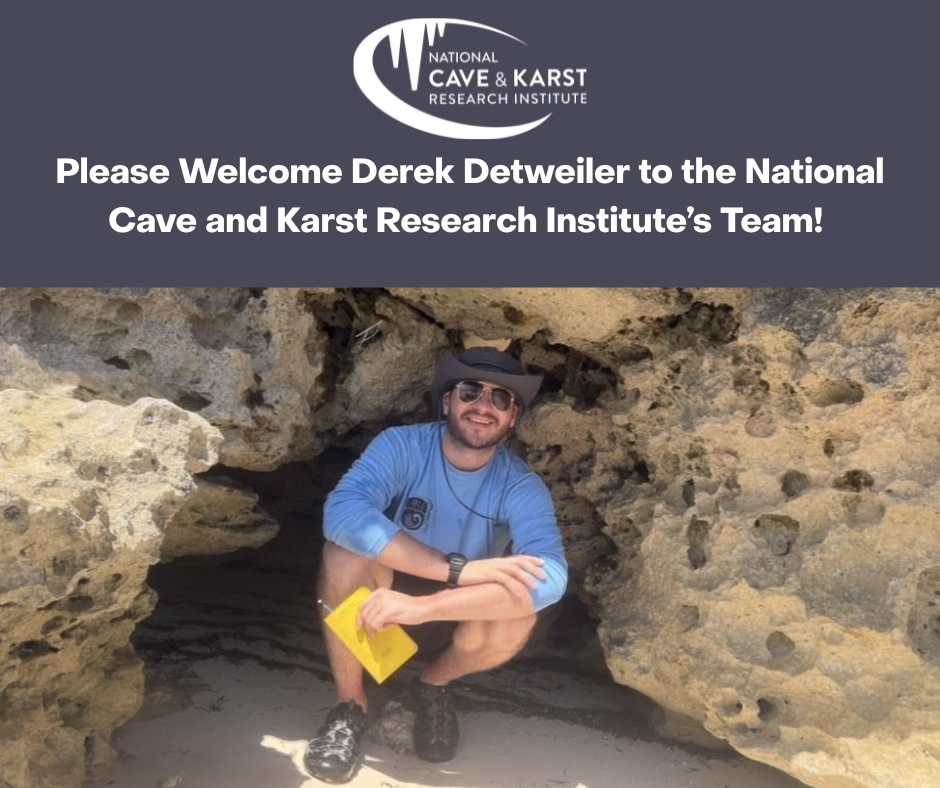
Derek Detweiler
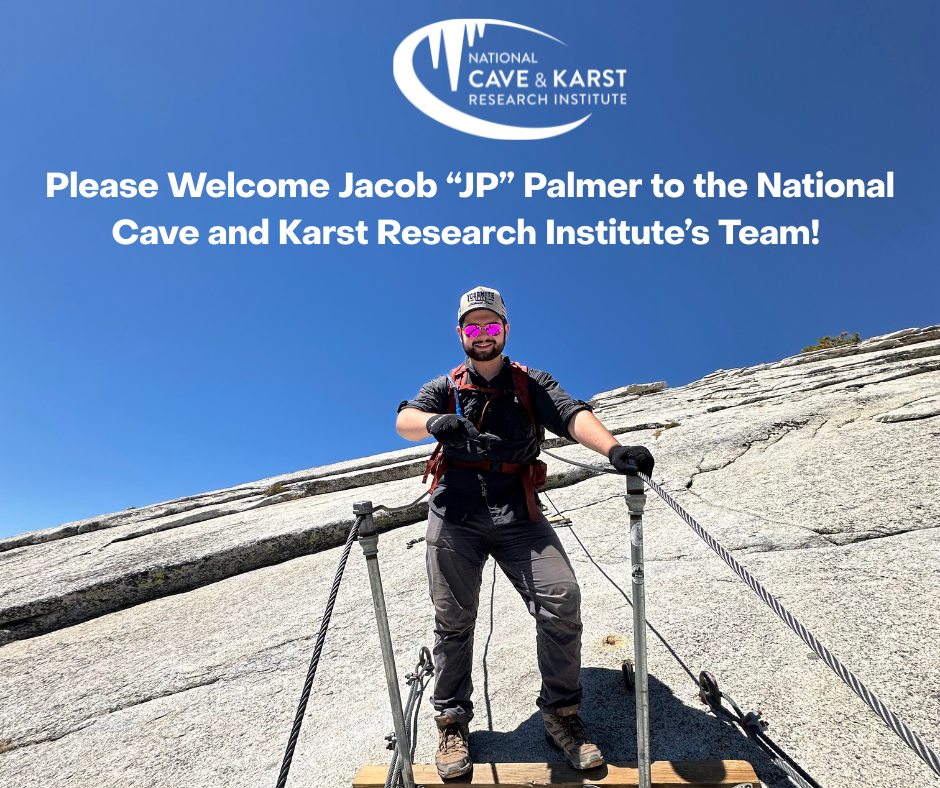
| | My name is Derek Detweiler, and I am excited to join the NCKRI team as a Karst Research Technician. I recently graduated with a Bachelor of Science from the Department of Earth, Environment, and Planetary Sciences at the University of Tennessee, Knoxville (Go Vols) as a Geology and Environmental Studies major with a concentration in Geology. My undergraduate research focused on aqueous geochemistry, biogeochemistry, and hydrology by studying geochemical and microbial shifts in the hyporheic zones of Central Texas rivers. I have always had an interest in caves and karst. I am excited to apply what I have learned from my time in Knoxville to the many new concepts that I will be introduced to while at NCKRI and during my graduate studies at New Mexico Tech. I am looking forward to spending time learning about the physiochemical and physicochemical properties of karst systems to help solve and manage real-world environmental challenges with the cave science community. | | | My name is JP, and I'm excited to have recently joined the NCKRI team as a karst research technician. Last month, I graduated from Trinity University in San Antonio, Texas with a Bachelor of Science in earth and environmental geosciences. I will begin my pursuit of a Master of Science in geology this fall at New Mexico Tech. In my undergraduate research, I modeled realistic normal faults to study the subsurface distribution of stress and strain which inform damage zone development and pathways of fluid flow. This research is useful to help us have a better understanding of how and where groundwater flows and is stored so that we can better utilize and protect these resources. I'm excited to learn a lot more about karst landscapes, particularly caves! | |
Karst Research Technician:
Jacob "JP" Palmer
| |
| | | |
Student Graduation
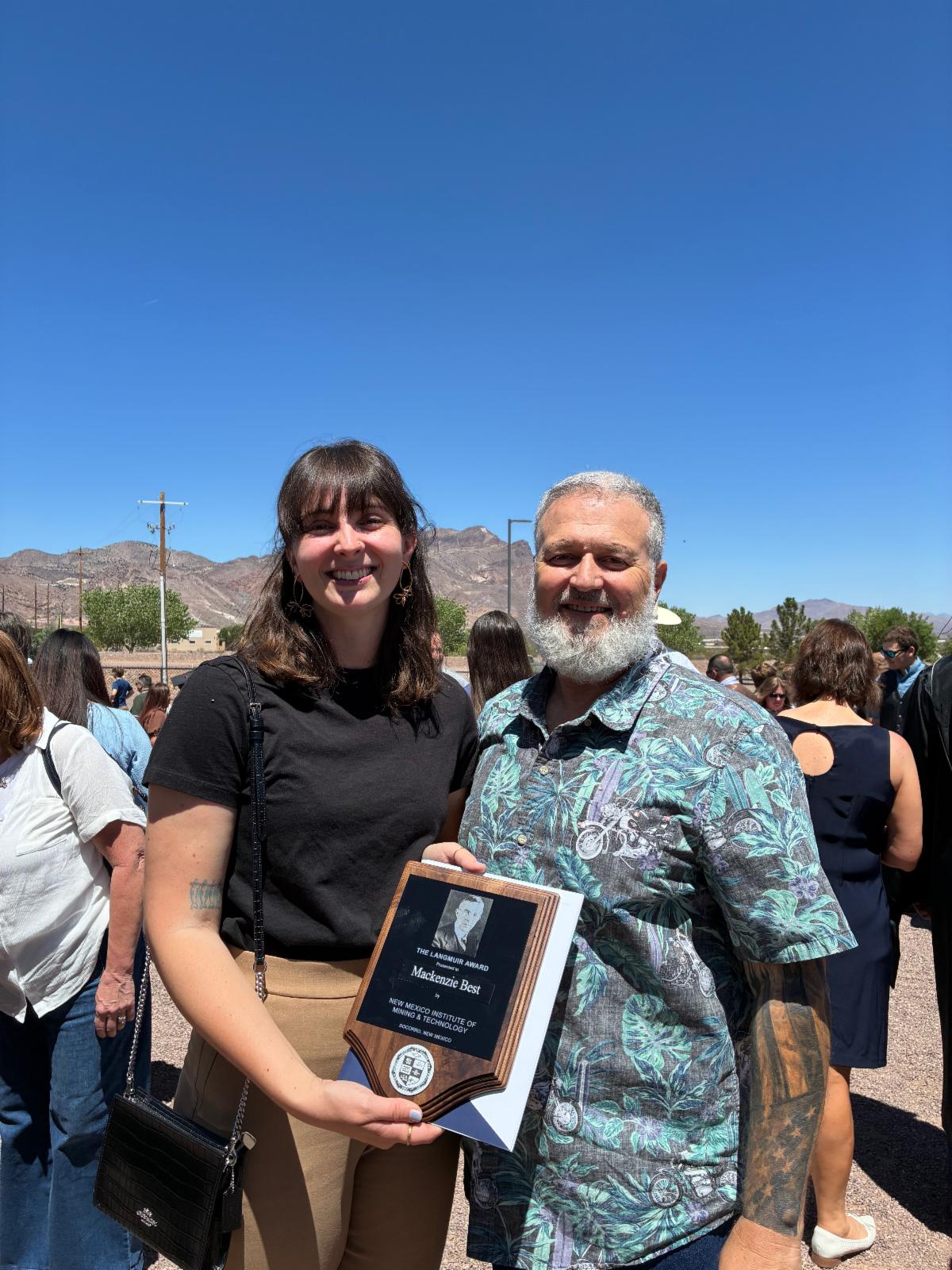
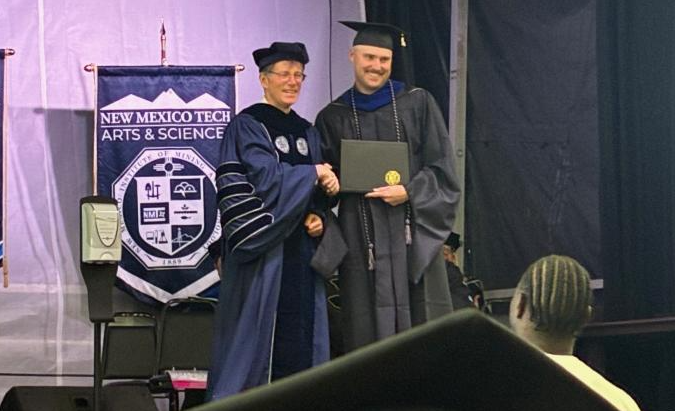
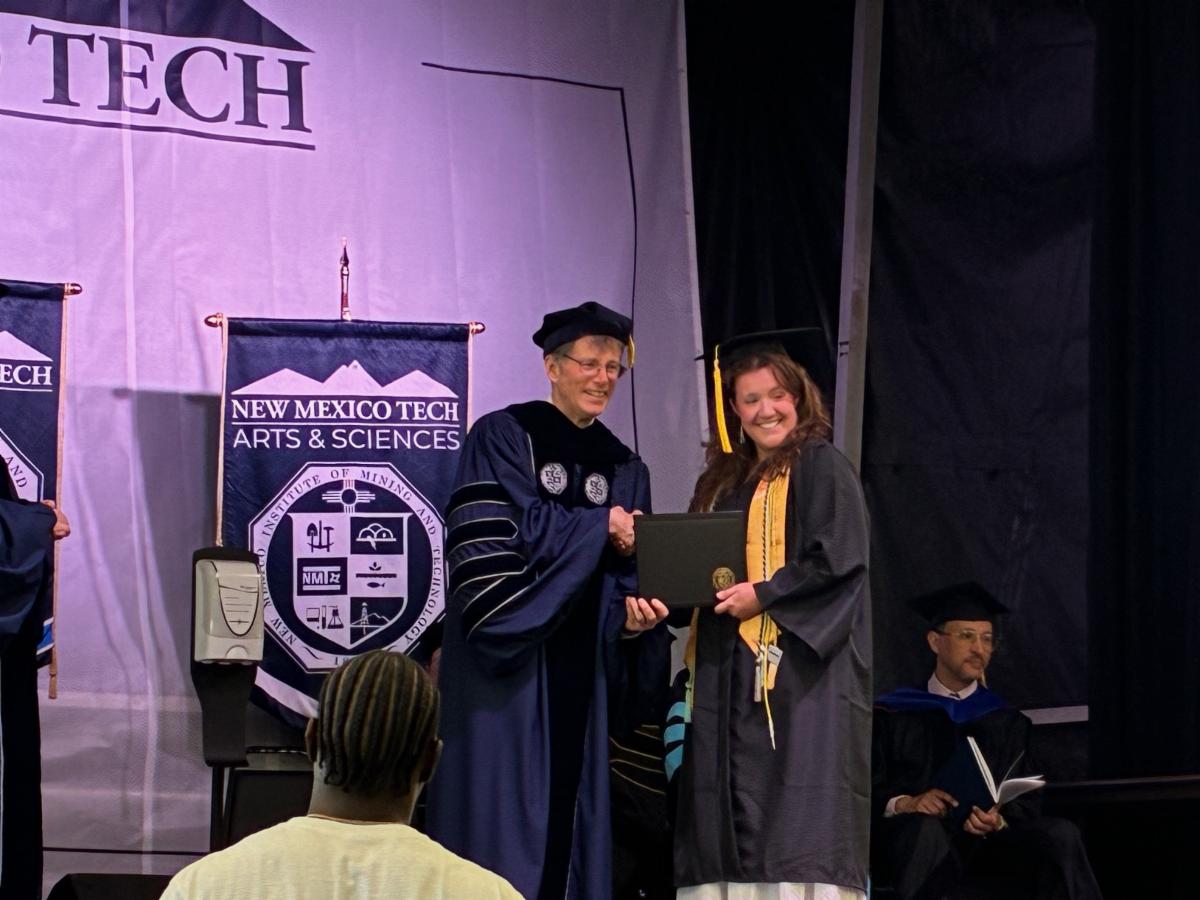
NMT’s commencement took place on Saturday, May 16th. Two graduate students in the NMT Geobiology Group, Evan Bowen and Anika Baloun both graduated with the MS degrees in Geology and Biology. Mackenzie Best (PhD Geobiology, 2025) was awarded the Langmuir Award, a prestigious honor presented annually during commencement that recognizes a student or recent graduate who has published an outstanding scientific research paper. Mackenzie earned the Langmuir Award for her recent publication “Volatilized Ammonia Supports Subterranean Ecosystems with Unusual Nitrogen Isotopic Signatures” that was published in Environmental Science and Technology earlier this year (https://doi.org/10.1021/acs.est.6c00328).
| |
Photos (right): 1. Mackenzie Best and her father, Jeff Best, with her Langmuir Award plaque that was awarded during the commencement ceremony. 2. Evan Bowen accepting his diploma certificate from NMT president Dr. Michael Jackson. Melina Karavousanos accepting her diploma certificate from NMT president Dr. Michael Jackson. Melina has been studying microbial communities in mine waste for her senior undergraduate thesis, and will remain at NMT in the Geobiology group for her graduate research on Oregon Caves National Monument
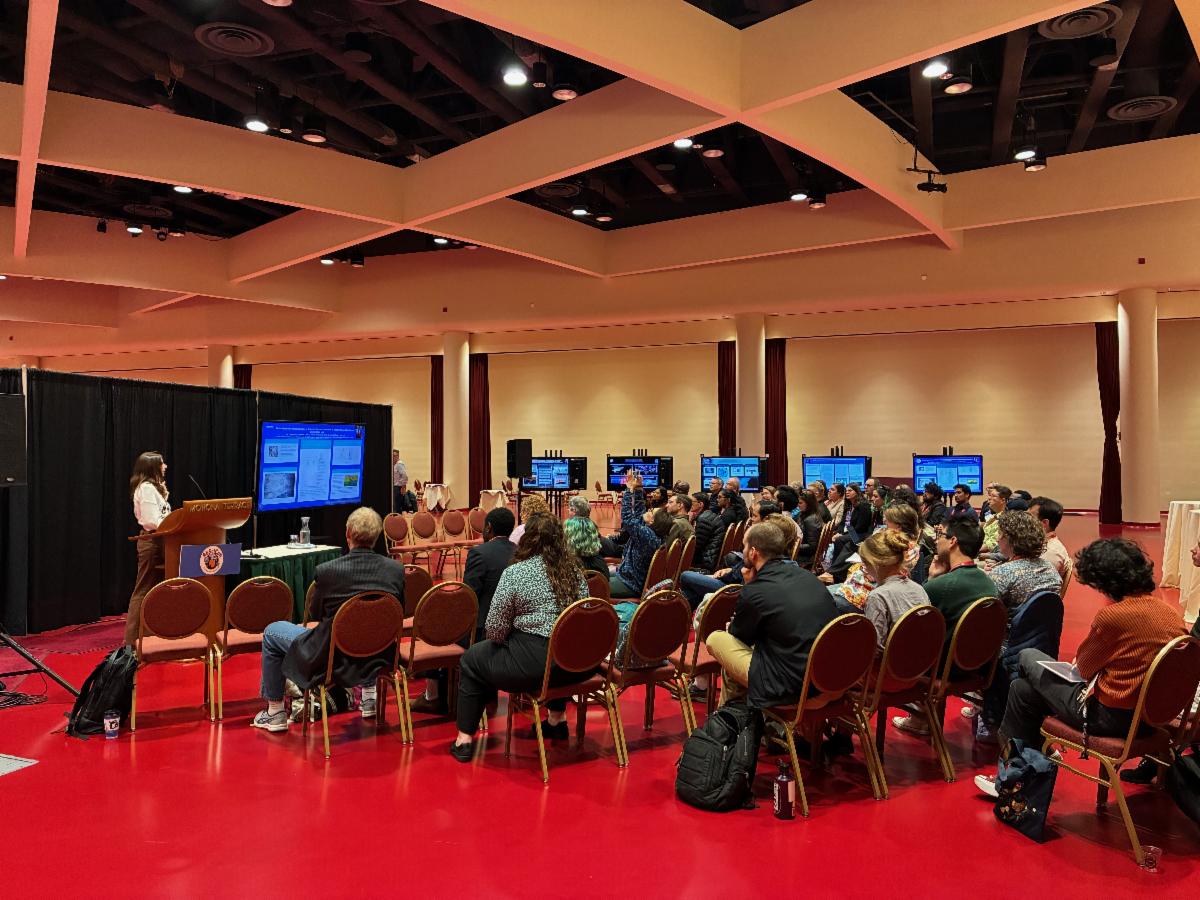
Photo (below): Zoe Havlëna presenting her research in the e-lightning session “Caves and Voids as Targets for Astrobiology Science” at AbSciCon 2026.
| | | |
The Astrobiology Science Conference (AbSciCon) took place on May17th-22nd, 2026 in Madison, Wisconsin. NCKRI Academic Director, Daniel Jones chaired two sessions. Joe Hoberg (PhD Geobiology at NMT) and Zoe Havlëna (former NMT Geobiology PhD) both presented their research.
| | | | Cave and Karst Resource Management | | | | |
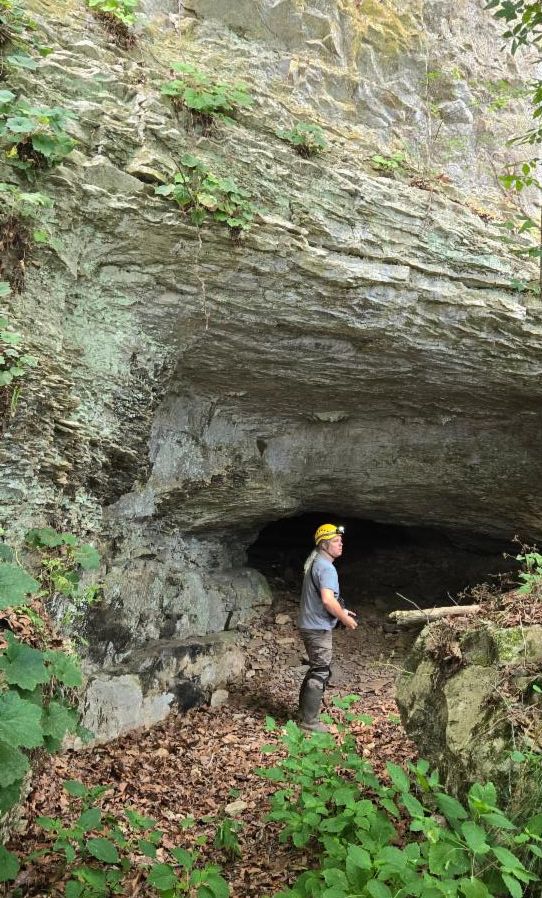
Andy Armstrong (NCKRI) and Benjamin Miller, (USGS) performed a site visit to Natchez Trace Parkway to assess cave and karst features in advance of a cave and karst management planning effort there. The northernmost 135 miles of the parkway are on karst landscapes stretching from Mississippi, through a corner of Alabama, and north through Tennessee to Nashville. Andy and Ben met with Natural Resources Manager Deanna Boensch and visited many springs, swallow holes, caves, and other karst features in all three states.
| Photo: Andy Armstrong assesses karst features along the Natchez Trace Parkway.
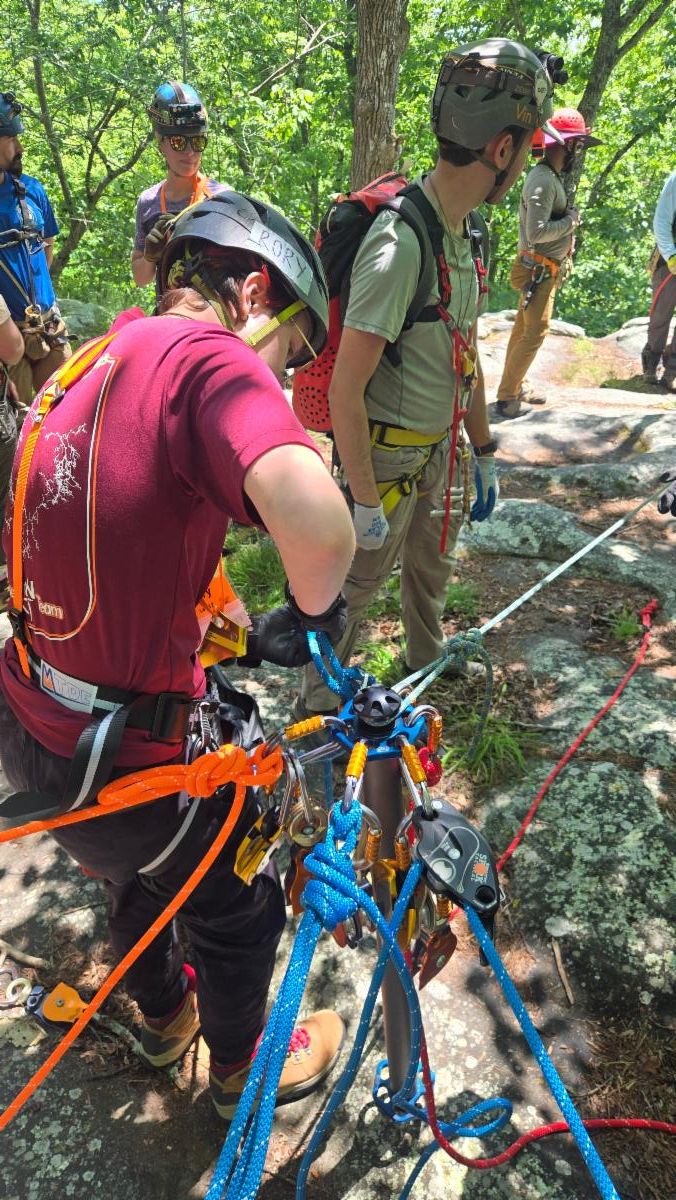
Photo by Ben Miller | Photo (below): Level 2 students build a multi-function anchor system incorporating their own personal descenders as components.
Photo by Andy Armstrong | | | |
National Cave and Karst Management Liaison, Andy Armstrong is an instructor with the National Cave Rescue Commission and attended their national seminar in Mentone, Alabama in May. The NCRC national seminar this year offered Level 1 Team Member, Level 2 Team Leader, Instructor Qualification, and a Bridge Course that introduced new curriculum to recent graduates. The NCRC has recently overhauled its curriculum including major updates including setting rigging bolts and screws for rescue and using commercially available patient packaging systems. Andy worked with the Level 2 class as an evaluator assessing delivery of the new curriculum.
| | | | The National Cave and Karst Institute is a research center of New Mexico Tech. NCKRI was created in partnership with the National Park Service, State of New Mexico, and the City of Carlsbad to be a nexus of research, stewardship, information and outreach for caves and karst while fostering interdisciplinary collaborations. Our mission is to promote and facilitate cave and karst research, education and sustainability. | | | | |