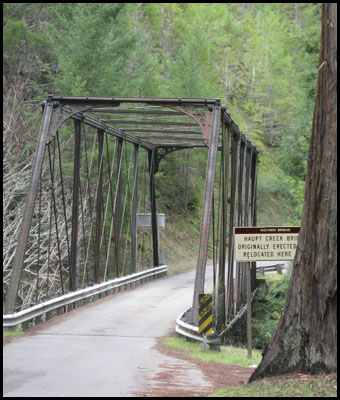
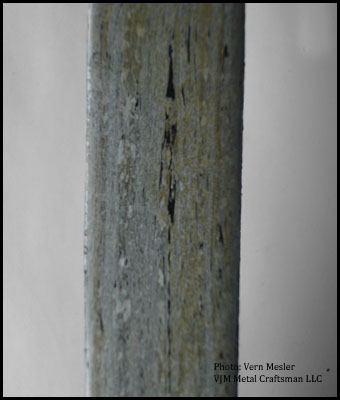
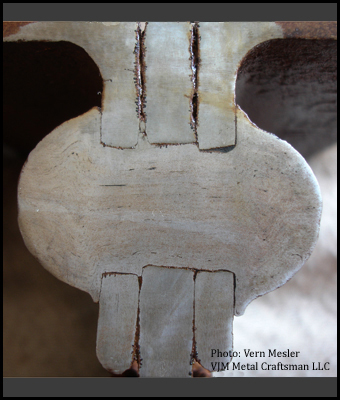
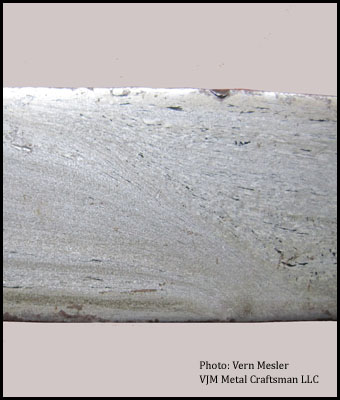
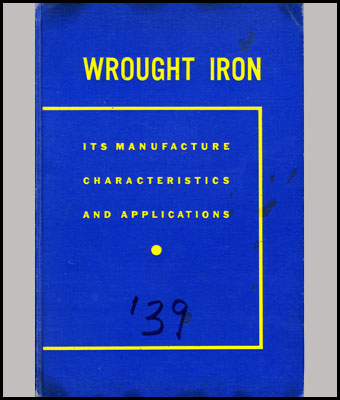
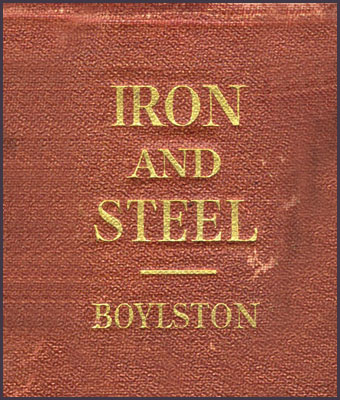
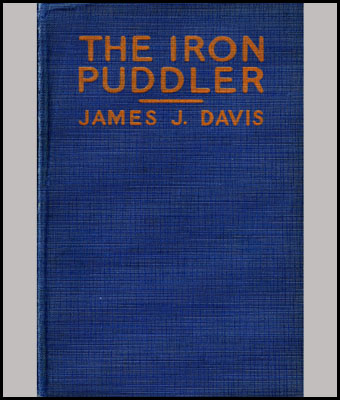
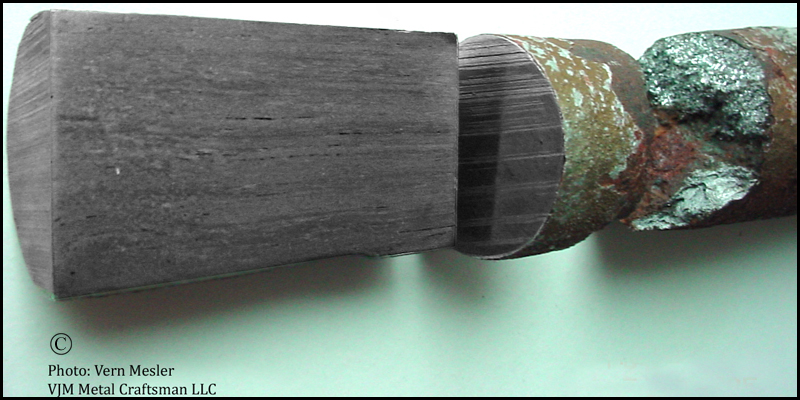
| Wrought iron in the early twentieth century was still considered to have a future because of its unique qualities. From the preface to the second edition of the A.M. Byers Company's handbook (1939) Wrought Iron: Its Manufacture, Characteristics and Applications: "During the past decade there has been a rapidly growing demand for wrought iron in many different products. This demand has been accompanied by a need for information on the qualities of the material and their application to present day problems." It is surprising that a metal widely used for centuries was so soon forgotten by many in the engineering and industrial fields. Although wrought iron is no longer found in recent construction, wrought iron structures are still in use today and knowledge of the characteristics of this metal important for preservation. In my work on century old metal bridges, preservation of wrought iron became an educational journey of discovery through books and articles. With the benefit of having skills in steel fabrication and in teaching welding, I developed an appreciation for this unique metal. Several books provided valuable information in the manufacture and use of wrought iron and an introduction to the iron-maker's language of the puddling furnace: the "pig boiler," "puddlers' candles" and "rabble" and the processes of "thickening the heat," "coming to nature" and "rolling the bloom." Wrought Iron: Its Manufacture, Characteristics and Applications [by Consulting Metallurgist J. Aston & Chief Metallurgist E. B. Story. (1939). Pittsburgh, PA: A. M. Byers Company] An Introduction to the Metallurgy of Iron and Steel [by Professor of Metallurgy H. M. Boylston. (1936). London: John Wiley & Sons] The Iron Puddler [life story by iron puddler J. J. Davis. (1922). New York, NY: Gossett & Dunlap] |