From the Editor
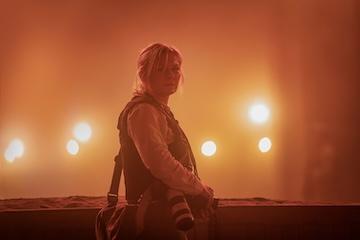
I finally had the chance to watch Alex Garland’s 2024 film Civil War. It’s not about “the” Civil War but, instead, depicts an imaginary civil war that rips across America. The film follows four journalists, including a photojournalist portrayed by Kirsten Dunst (right), as they travel the warn-torn landscape toward the besieged capital, Washington, D.C., where a third-term president bunkers down.
The forces in the film remained undefined. “Western Forces” led by California and Texas battle the apparently despotic federal government. Elsewhere, Florida secessionists are trying to lure one or both of the Carolinas into joining them. If you try and work out the internal logic of the coalitions, you miss the point. This isn’t a clear-cut red/blue dynamic or anything like a North/South one. As a sniper says during the film, he and his team are just trying to kill the people who are trying to kill them.
The journey of the journalists provides a kind of skeleton on which Garland hangs scene after scene of desolation, destruction, and destitution. Violence pock-marks everything and everywhere. An element of the absurd crops up like an unwanted ghost in the most random of places.
People who fetishize the idea of a modern civil war fail to consider what such a war would actually look like. These are the same people so curdled in their own partisanship that they’ve forgotten there’s such a thing as “the loyal opposition” and instead see only enemies. As one soldier in the movie asks, “What kind of American are you?” and the wrong answer gets a person killed.
Civil War gives us a glimpse of what neighbor versus neighbor might look like. For students of “the” Civil War, it might also helps us better understand what things must have looked like, even just a little, in border areas in the early 1860s.
Civil War fails toward the end when it turns itself into an action movie. Mostly, it seems like an excuse for Garland to blow up the Lincoln Memorial and invade the White House so audiences feel like they get a “wow” factor. But because spectacle hasn’t been the point of the film, the ending feels like a letdown rather than an earned adrenaline shot.
Until then, the movie invites us to travel a haunted landscape that we should never want to live in. As a cautionary tale, it reminds us what could happen if we don’t learn the lessons from our own Civil War history.
— Chris Mackowski, Ph.D.
Editor-in-Chief, Emerging Civil War
(photo courtesy of A24)
| | |
Eleventh Annual Emerging Civil War Symposium at Stevenson Ridge
ONE MONTH AWAY! Just a few tickets remain for the 2025 Emerging Civil War Symposium. You still have time—but HURRY!
Our 11th Annual Symposium, will take place August 1–3, 2025, at Stevenson Ridge in Spotsylvania Court House, Virginia. The theme will be “The Cities of War,” with keynote speaker Ted Savas speaking about the Augusta Powder Works and a Sunday tour of the city of Fredericksburg by John Hennessy. It is for sure going to be a great time!
For tickets visit our Symposium page.
| |
Eight Questions
with Evan Portman
This month we asked ECW author Evan Portman to answer eight questions so you can get to know him a little better beyond his many articles featured on the ECW blog. You can read his full bio here.
How did you get interested in the Civil War?
My parents and I went to an outdoors show in my hometown when I was 7 years old, and I randomly picked up a brochure from the Gettysburg gift center. After that, I was hooked. A few months later, a trip to the battlefield solidified my passion for the Civil War.
What's your favorite topic to study and why?
I enjoy studying the German American and Catholic experiences of the Civil War, I suppose because it’s part of my DNA. (I hail from a long line of German Catholics.) But much like other Civil War buffs, I’m a sucker for studying strategy, tactics, campaigns, and generalship.
Are you working on any projects at the moment?
I’m always working on something, but currently I’m devoting the summer to some book reviews and Emerging Civil War posts (so stay tuned!). I’ve spent a considerable amount of time on an upcoming ECW post that chronicles Col. Jacob Sweitzer’s brigade in the Wheatfield at Gettysburg.
Lightning Round
Favorite primary source?
Civil War letters of Br. Bonaventure Gaul, OSB.
Favorite Civil War-related monument?
38th Pennsylvania (9th Pennsylvania Reserves) Monument at Gettysburg.
Favorite unsung hero of the Civil War era?
Alexander Schimmelfennig.
What’s a bucket-list Civil War site you’ve not yet visited?
Chickamauga & Chattanooga National Military Park.
Favorite book by an ECW author?
A Season of Slaughter: The Battle of Spotsylvania Court House, May 8-21, 1864 by Kris White and Chris Mackowski
| | | |
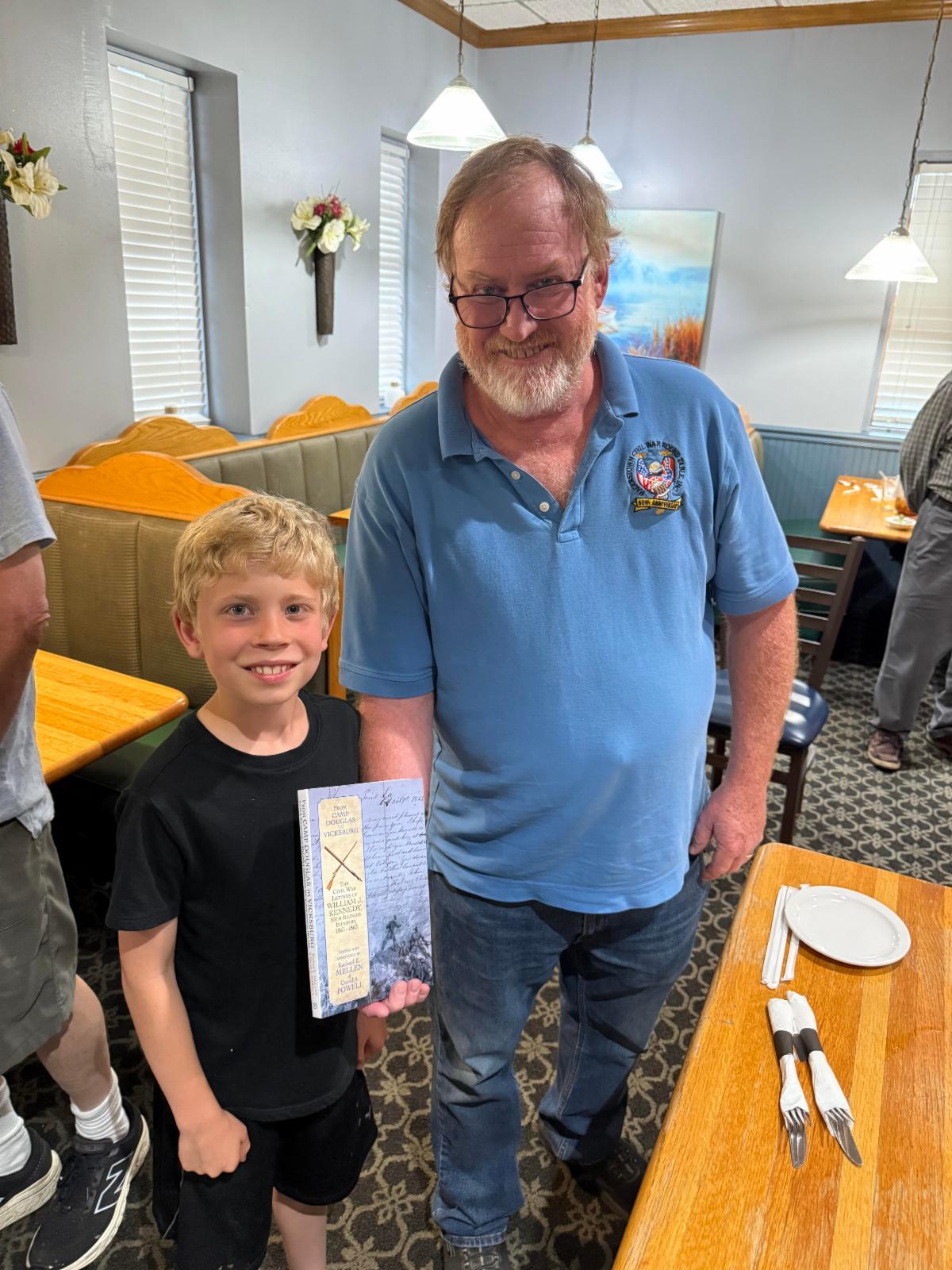
Dave Powell had the chance to meet and sign copies of his book for a future historian at the Lincoln Davis Roundtable where he gave an overview of Tullahoma to Atlanta. (photo courtesy of Larry De Maar)
| | |
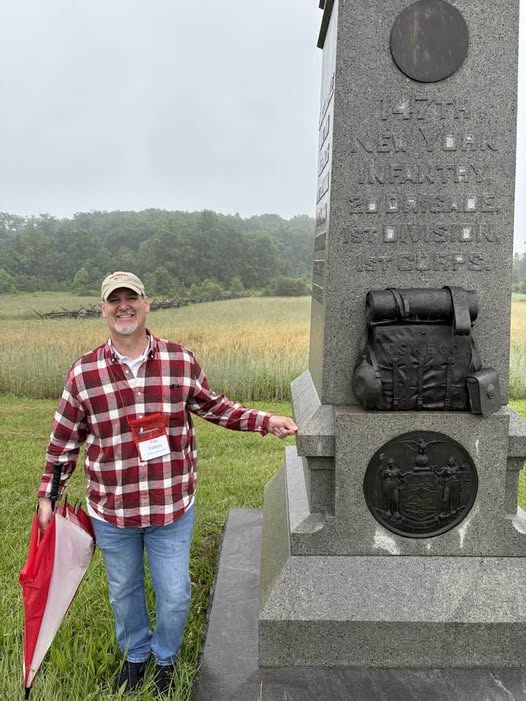
Tim Talbott attended the Gettysburg College Civil War Institute's Summer Conference from June 13 to June 17. The conference was packed with excellent, thought-provoking scholar presentations and tours. It was yet again a stellar five days of learning and camaraderie. While in Gettysburg, Tim also participated in the "Rally on the High Ground" demonstration on June 16 in support of the National Park Service and its employees. Lastly, Tim staffed an information table for the Battle of New Market Heights Memorial and Education Association at the Henrico County Juneteenth celebration on June 21.
| |
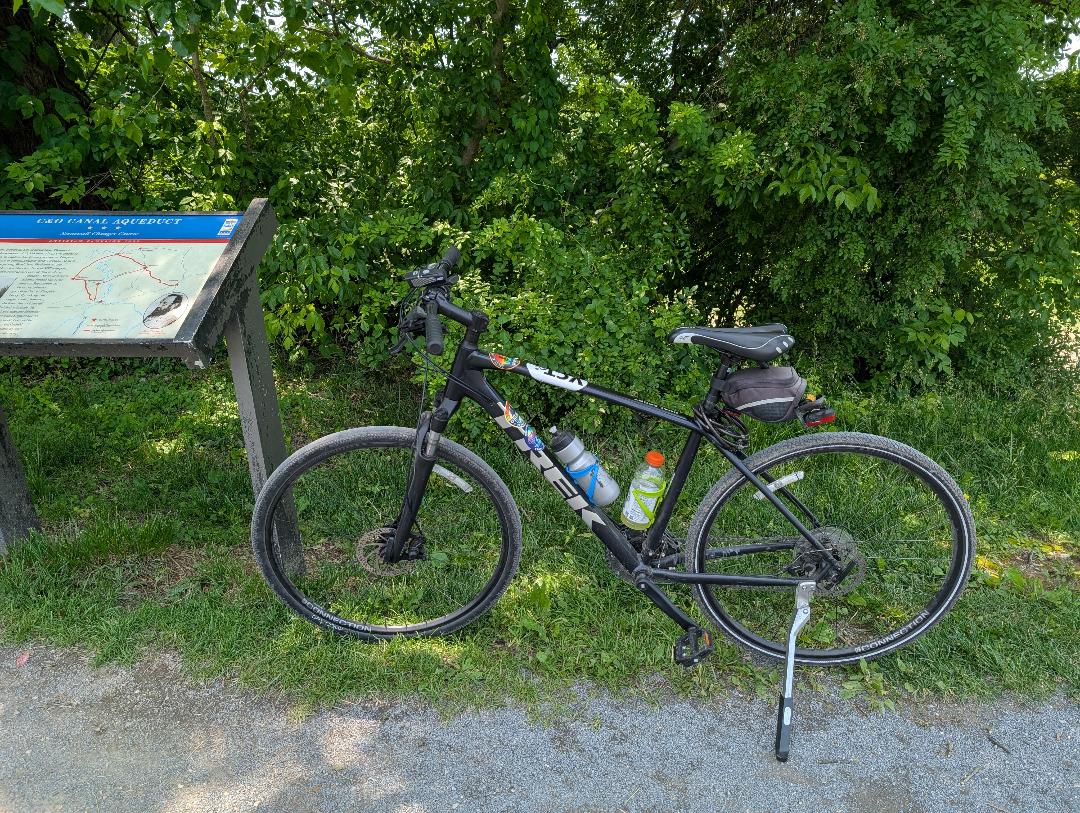
Bert Dunkerly recently did some biking along the C & O Canal in Maryland, taking in some great scenery and Civil War history. There may or may not have been adult beverages consumed afterwards.
| |
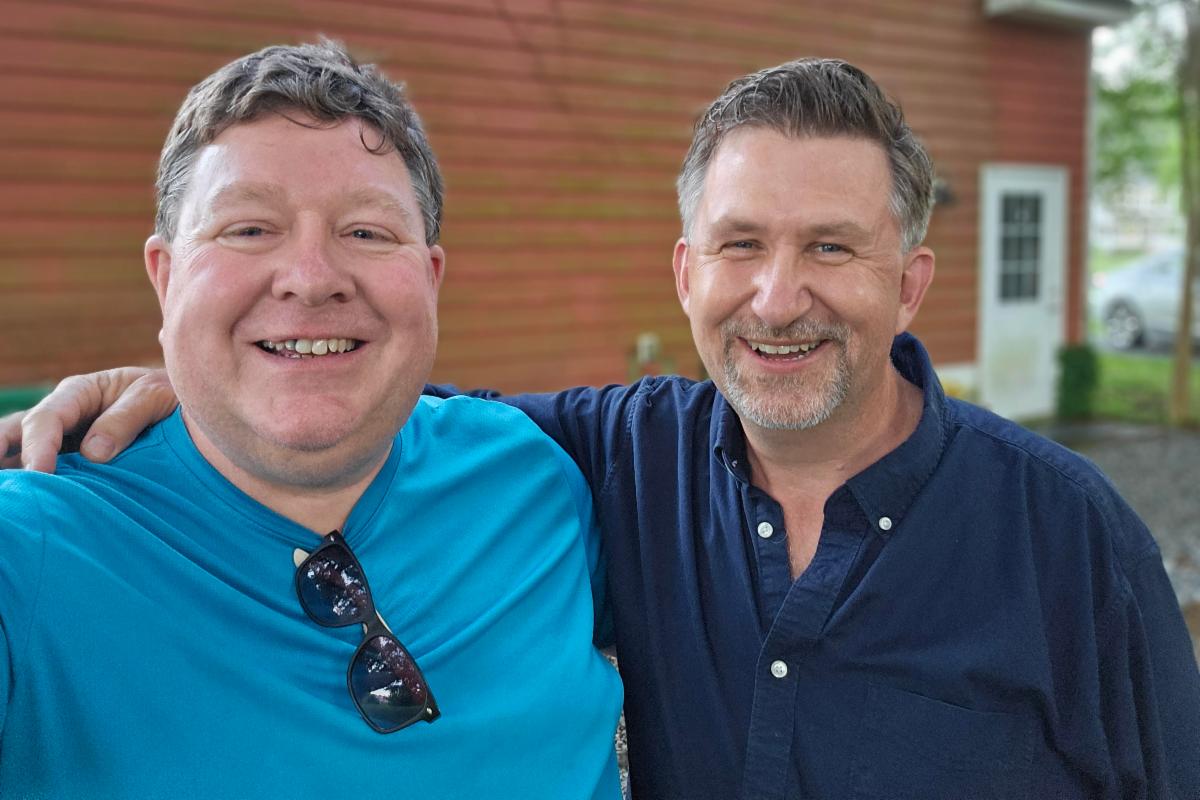
Terry Rensel (left) and Chris Mackowski celebrated their June 19 birthday together. Terry noted, "He ages, and I get younger and better looking by the day."
| |
Neil Chatelain is now deep into his summer semester. Between teaching and the ever-present Civil War researching, he has been giving presentations on campus about overcoming academic challenges and how to address use of AI in classes.
| | Doug Crenshaw has several tours coming up: Seven Days, Cold Harbor, Fort Harrison. | | |
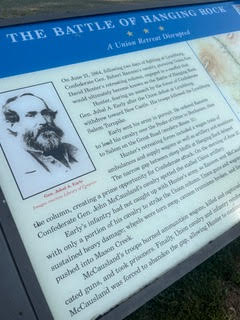
Kevin C. Donovan recently visited the site of the June 21, 1864, Battle of Hanging Rock. That battle took place near Salem, VA, during Maj. Gen. David Hunter’s retreat following his defeat at Lynchburg. Confederate cavalry fell upon Hunter’s artillery and supply train as it struggled to pass through a ravine while trying to reach the safety of the mountains of West Virginia. Two future U.S. presidents (Rutherford B. Hayes and William McKinley) were in Hunter’s column. The site features a display installed by Civil War Trails and a statute of George Morgan Jones in the uniform of a Confederate General. That statute—originally located in Lynchburg—was erected by Jones’s widow, who loved her husband more than historical accuracy. “General” Jones served as a private and cook in the Second Virginia Cavalry. He was not present at the battle
| |
Chris Kolakowski emceed the Army 250th ceremony in the Wisconsin State Capitol. You can watch video here.
Brian Kowell has been spending the summer reading, writing and researching. He has been also enjoying tennis and watching his grandkids play baseball and tennis.
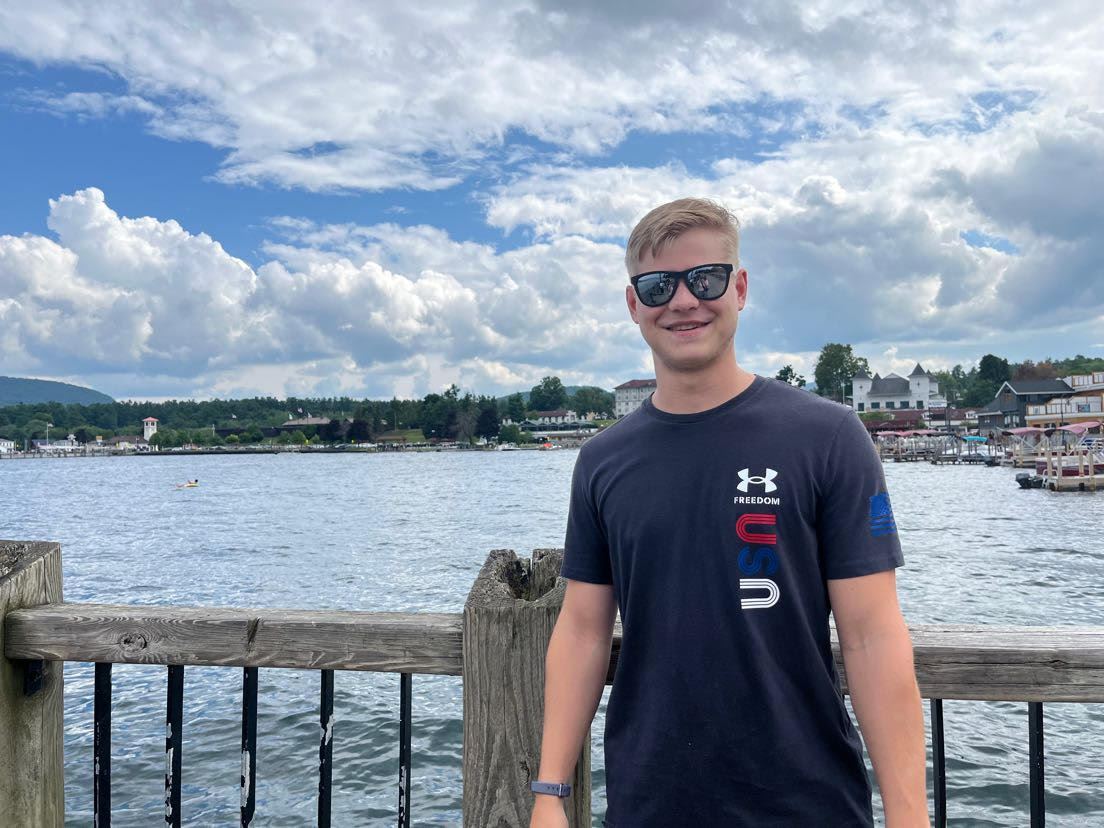
Evan Portman visited the Jimmy Stewart Museum in Indiana, PA, which commemorates the famous actor as well as his maternal grandfather, Union Gen. Samuel Jackson who served in the Civil War. Evan also went to the US Open at the historic Oakmont Country Club this month!
Brian Swartz spoke about Joshua L. Chamberlain and his wartime exploits at the Union Historical Society in Union, Maine on Wednesday, June 11. Some 35 people attended the program, and several people asked challenging questions afterwards.
Brian also spoke about "Maine's Mr. Moxie Fights at Donaldsonville" at the Thursday, June 12 meeting of the Joshua L. Chamberlain Civil War Round Table in Brunswick, Maine. Augustin Thompson, a captain in the 28th Maine Infantry Regiment, created the soft drink known as "Moxie" years after the Civil War ended.
| | |
ECW Bookshelf
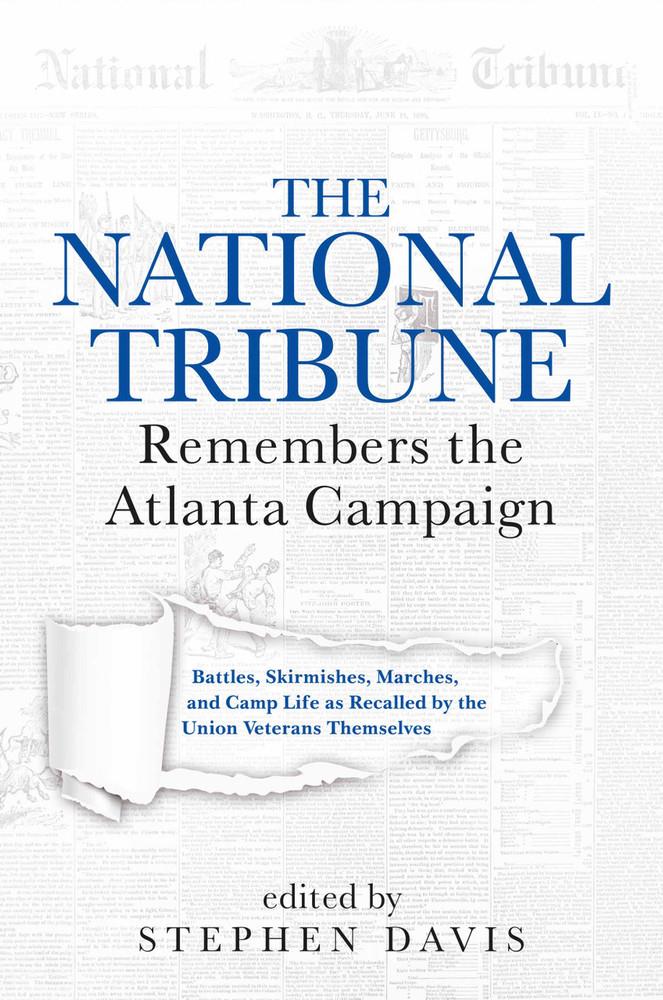
This month, ECW alum Stephen Davis and Savas Beatie released The National Tribune Remembers the Atlanta Campaign: Battles, Skirmishes, Marches, and Camp Life as Recalled by the Union Veterans Themselves.
As a repository for old soldiers’ writings, The National Tribune is unequaled yet remains mostly unused. Indeed, it is so good one might call it the Confederate Veteran for Billy Yank.
From 1877 to 1943, The National Tribune served as a compendium for Union veteran reminiscences, war yarns, and postbellum reflections. The firsthand treasure-trove began as an eight-page monthly newspaper in 1881 and within a few years it became a weekly. The Washington-based paper was founded by George E. Lemon, a veteran of the 125th New York. Initially an advocate for Union veteran pensions, The National Tribune hit its stride when it began publishing articles about the war penned by the Northern soldiers themselves.
Within three years John McElroy, a Union veteran with editing experience and the author of a dramatic memoir about his confinement at Andersonville (1879), assumed the reins as managing editor. His keen eye for detail and deep connections elevated the quality and quantity of the content and resulted in the publication of thousands of exclusive firsthand accounts. The National Tribune’s final issue was on December 30, 1943. By that late date, the Union veterans who had fought the war were nearly all gone.
More than 1,000 items were published on the Atlanta Campaign alone—articles, memoirs, and letters on every topic imaginable sent in by Union soldiers who had followed General Sherman into Georgia in 1864. The first appeared in June 1879 on the battle of Kennesaw Mountain. The National Tribune Remembers the Atlanta Campaign, edited by Stephen Davis, offers 70 selections pertaining to the Atlanta Campaign. Our hope is that these entries advance the cause of Civil War scholarship by bringing back into print an array of some of the most important writing about the conflict penned by the men who fought in it.
You can purchase your copy from Savas Beatie here!
To read more about the book, check out the ECW blog, here!
* * *
| |
| | |
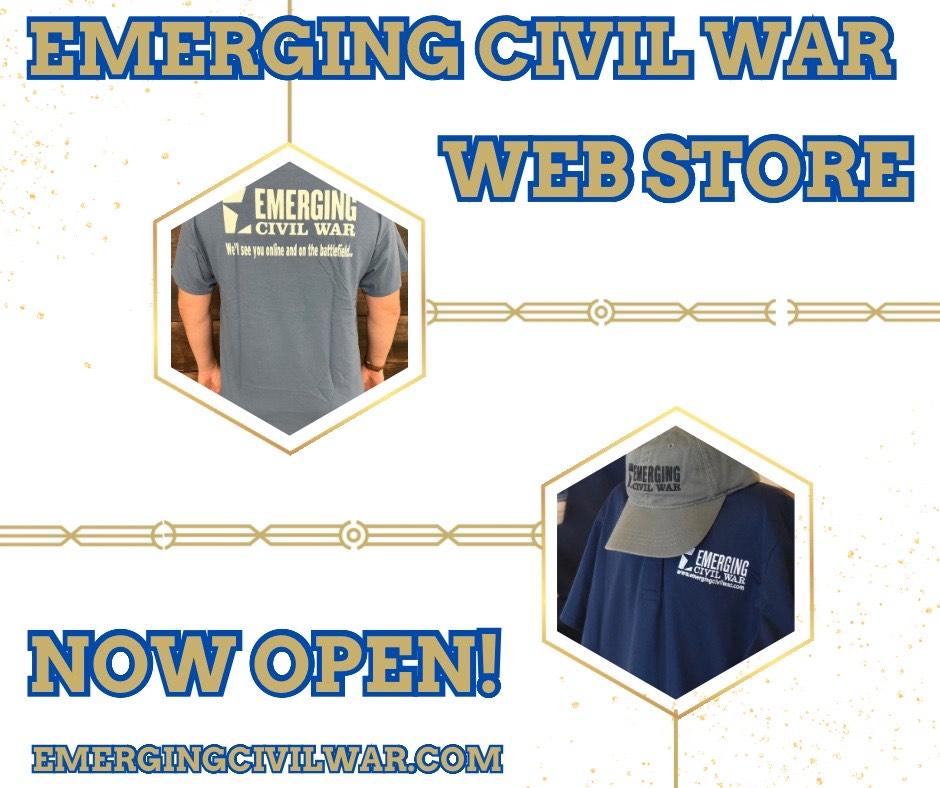
Check out the Emerging Civil War webstore on our website.
You can order goodies for the Civil War enthusiasts in your family: t-shirts, polos, cups, hats, books, and much more!
We'll have new swag coming soon, too, so keep a look out.
Visit the website store to order today.
| | | |
ECW Multimedia
On the Emerging Civil War Podcast in May, Chris Mackowski was joined by
-
Historian Richard Smith to talk about the meeting of the two orator/writers, Abraham Lincoln and Ralph Waldo Emerson and other Civil War connections to one of America's most literary communities. Listen to this episode now at Emerging Civil War.
-
Dr. Christian Keller, author of The Great Partnership, to discuss the relationship between Robert E. Lee and Stonewall Jackson and how that reverberated through the Army of Northern Virginia’s high command before, during, and after the Gettysburg Campaign. Listen to this episode now at Emerging Civil War.
You can find video versions of these podcasts and other exclusive interviews and content on our YouTube page, including a series of interviews with speakers from this year's ECW Symposium.
You can listen for free on Spotify or Apple Podcasts, or at https://emergingcivilwar.com/the-emerging-civil-war-podcast/.
| | |
Shrouded Veterans
by Frank Jasztrembski
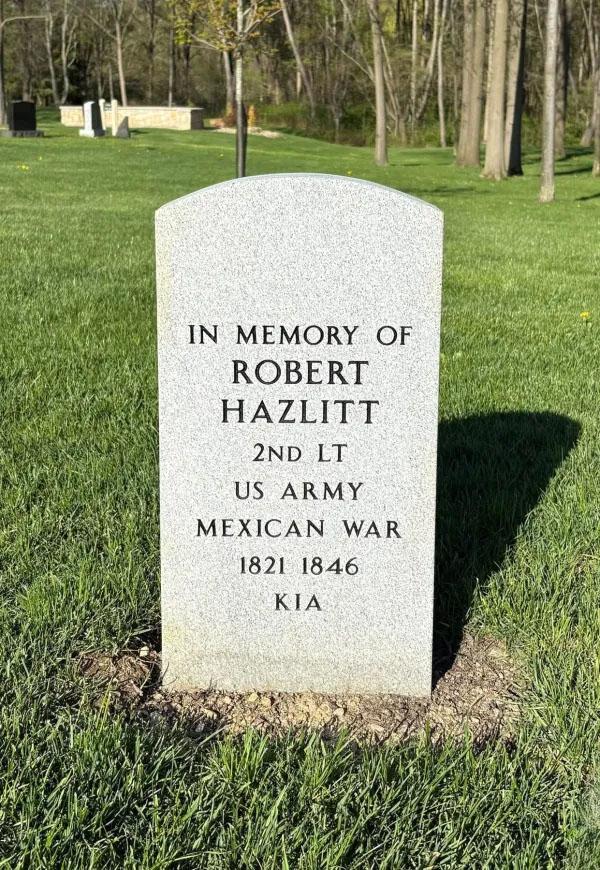
Nearly 180 years after his death, Lt. Robert Hazlitt — Ulysses S. Grant’s close friend — finally receives the recognition he was long denied.
You can read about Lt. Robert Hazlitt in our latest Emerging Civil War column, here.
To read more about other Shrouded Veterans, click here.
| |
Emerging Revolutionary War News
by Phill Greenwalt
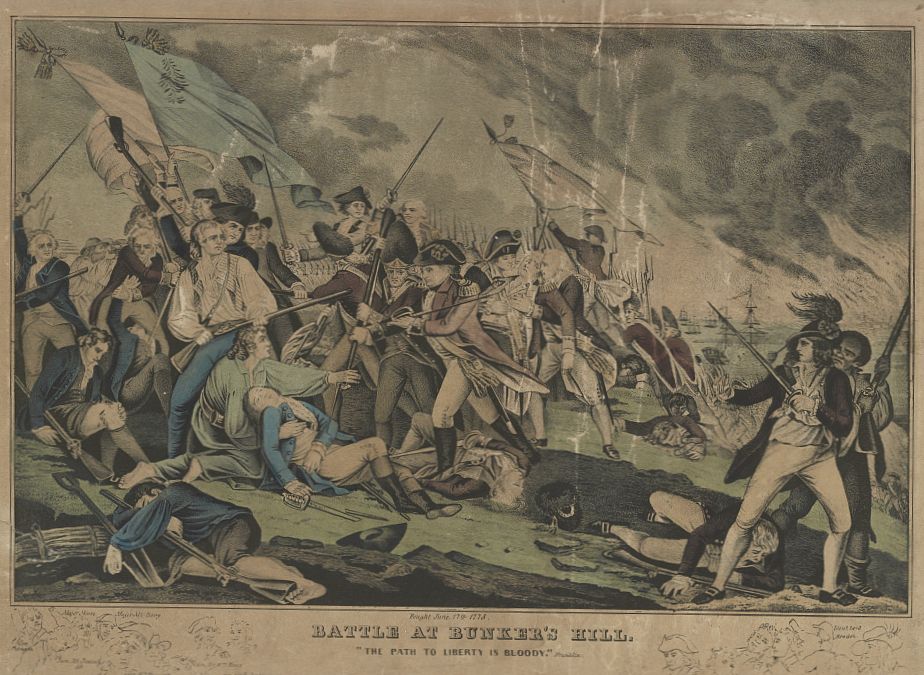
June saw another 250th anniversary of major importance to the cause of American independence during the American Revolution. The Battle of Bunker Hill, although fought on Breed's Hill, occurred on June 17, 1775. Although a British victory, the engagement had major ramifications that permeated the rest of the war. If you missed the anniversary, don't fret, Emerging Revolutionary War has you covered. Hop on over to our Facebook, YouTube, or better yet, our blog (www.emergingrevolutionarywar.org) to catch the "Rev War Revelry" about the battle, live videos from the field, and great blog content about certain aspects of the day.
A few upcoming events to put on your radar, and from the comfort of your own home. Check out Emerging Revolutionary War historian Billy Griffith as he does a few online presentations, from major wars that are bookends of the American Revolution, information below:
- July 30 - ABT Virtual Presentation - "The Boy Major: Joseph W. Latimer in the American Civil War"
- September 9 - ABT Virtual Presentation - "The Battle of Lake George: England's First Triumph in the French and Indian War"
Stay tuned as the "Rev War Revelry" returns to Facebook on Sunday, June 29, and YouTube shortly thereafter.
| |
|
You Can Help Support Emerging Civil War
Emerging Civil War is a 501(c)3 not-for-profit organization. If you’re interested in supporting “emerging voices” by making a tax-deductible donation, you can do so by visiting our website: www.emergingcivilwar.com; you can mail us a check at the address below (make checks payable to "Emerging Civil War"); or you can make a gift through PayPal.
Thank you!
| | | | |
July
2: Aaron Stoyack, “April 2: Day of Decision at Petersburg,” Tallahassee History Roundtable, Tallahassee, FL
6: Evan Portman, “Saint Vincent in the Civil War,” Westmoreland County Historical Society, Greensburg, PA
14: Ryan Quint, “Dranesville,” Rappahannock Valley Civil War Round Table
23: Chris Mackowski, "Stonewall Jackson at Harpers Ferry," American Battlefield Trust virtual event
August
2: Bert Dunkerly, “The French & Indian War in Western Pennsylvania,” Bushy Run Battlefield, Jeanette, PA
2: Jon-Erik Gilot, “The Civil War’s First Amputation,” National Museum of Civil War Medicine, Frederick, MD
3: Bert Dunkerly, “The French & Indian War in Western Pennsylvania,” Bushy Run Battlefield, Jeanette, PA
11: Tyler McGraw, “The Battle of Second Manassas,” Rappahannock Valley Civil War Round Table
21: Ryan Quint, “Dranesville,” Hampton Roads Civil War Round Table
| | | | |