Message from the Executive Director | |
|
With a very busy June behind us, there is just one simple message for this newsletter – Thank You!
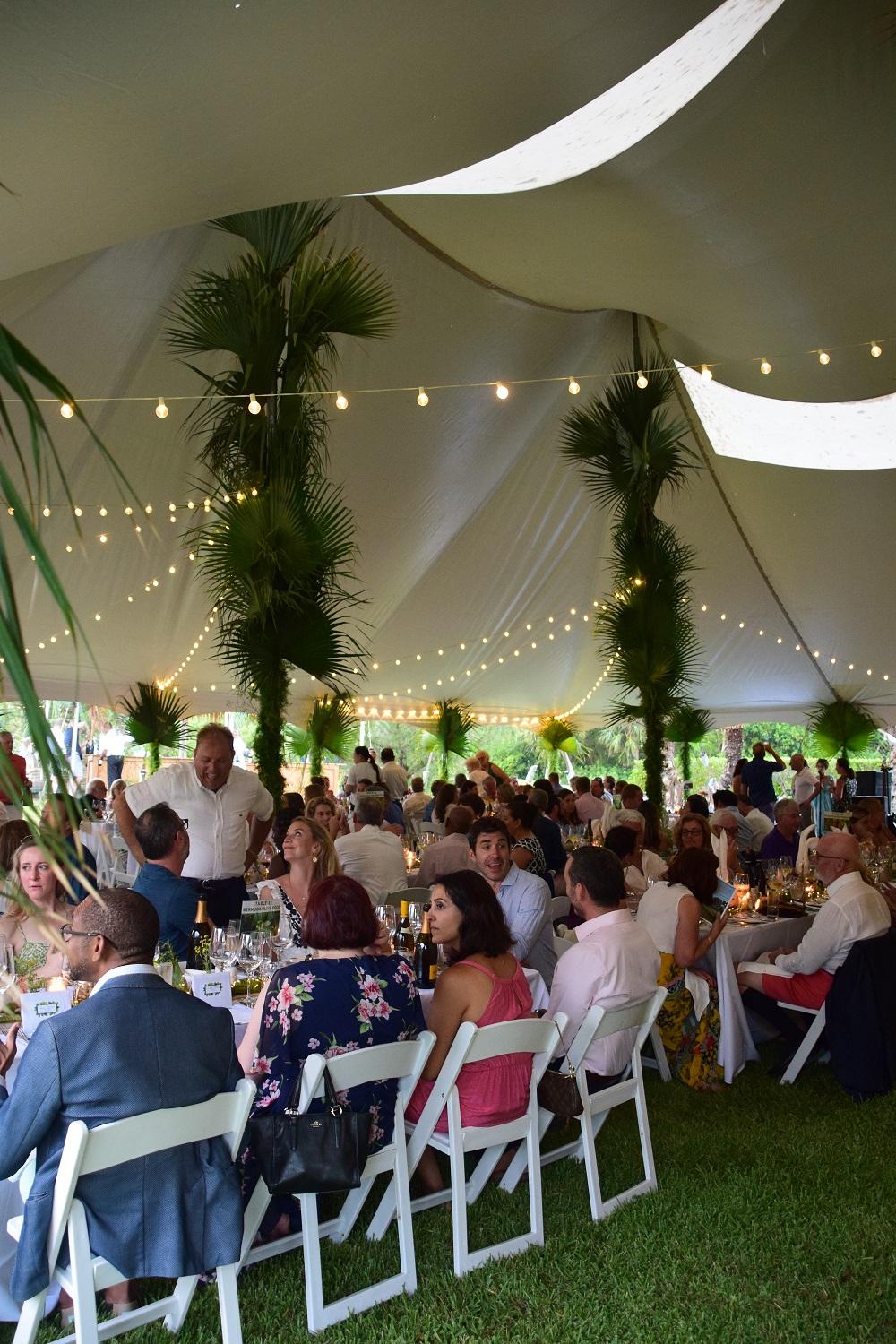
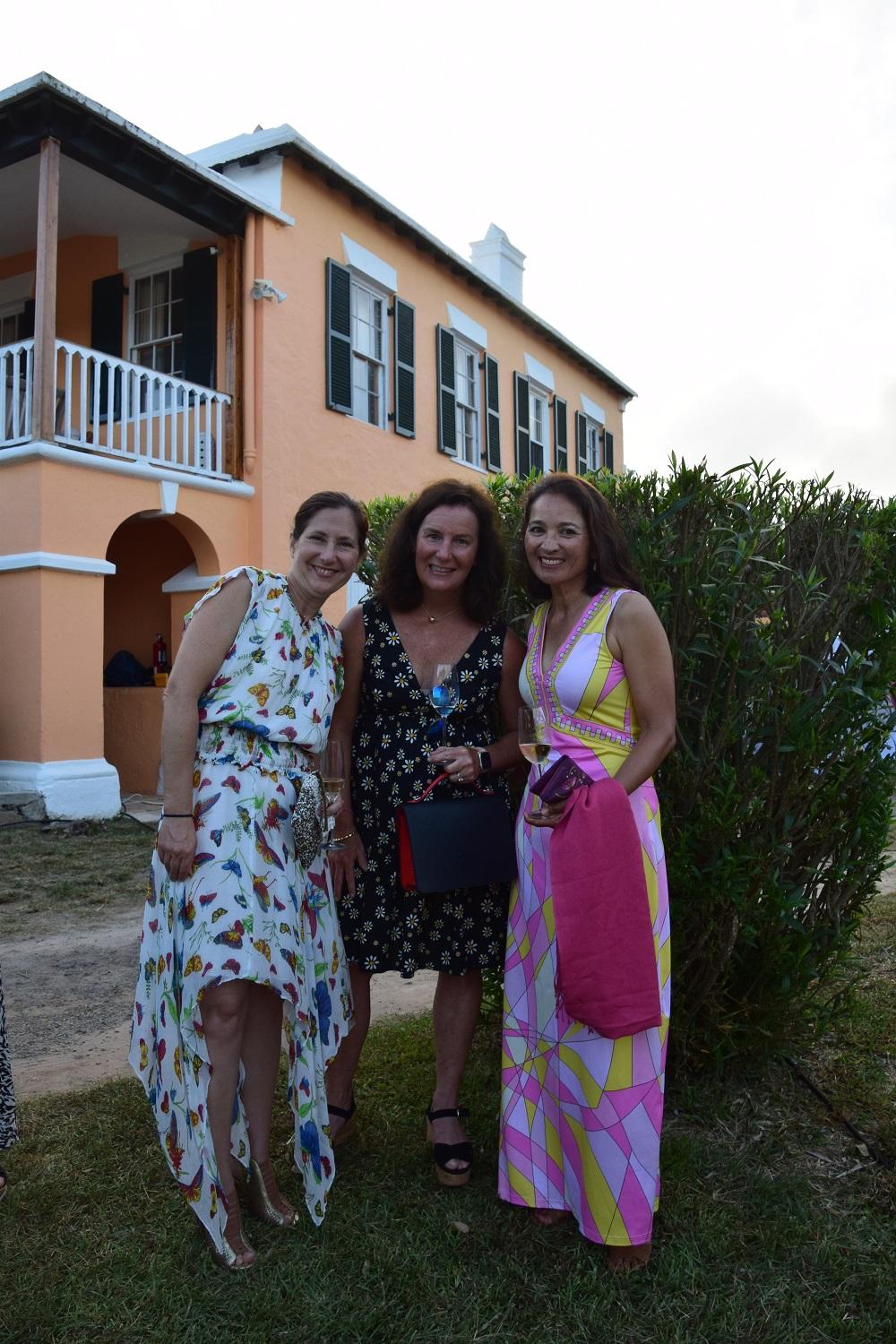
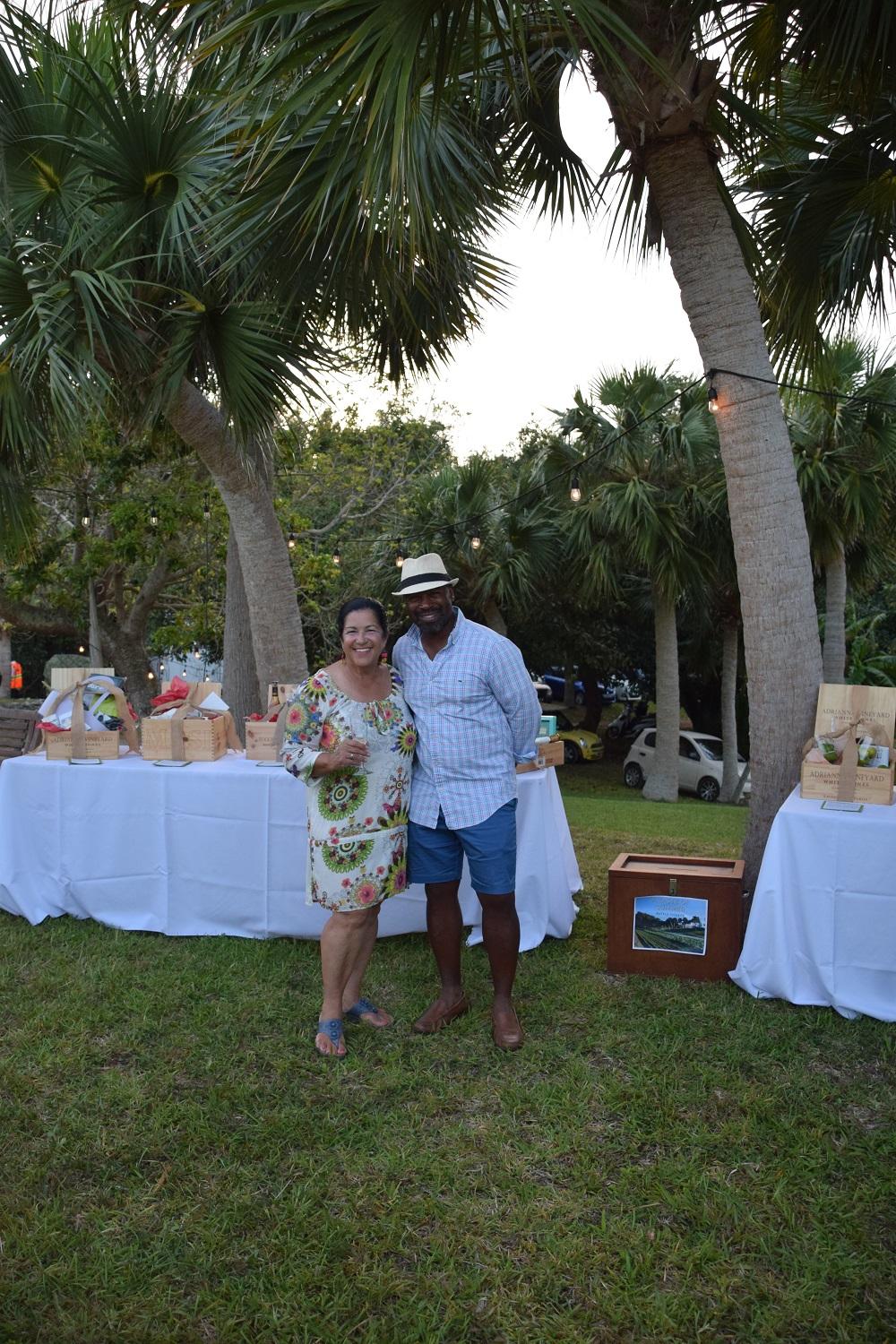
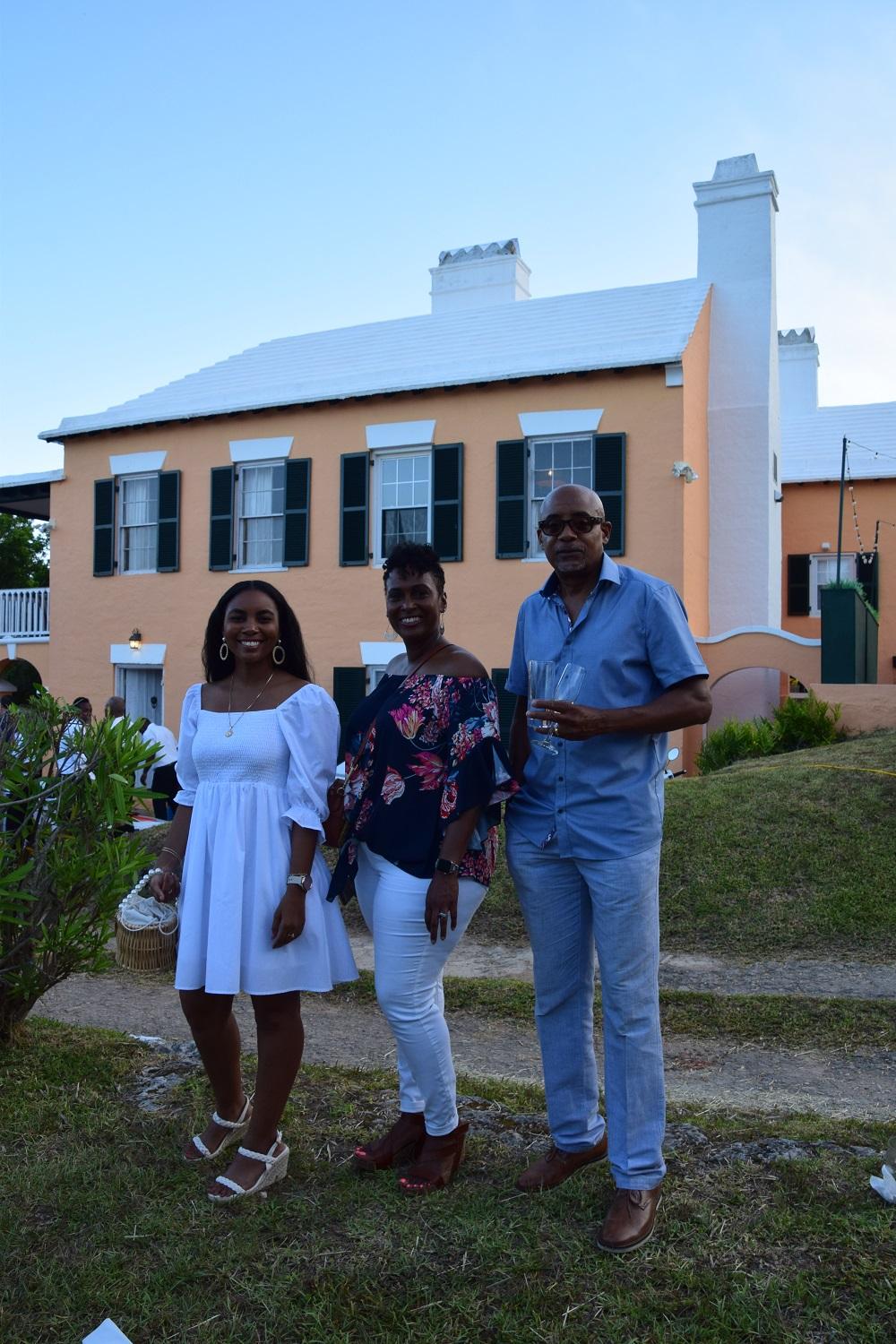
Thank you to everyone who helped make our fundraising gala dinner A Taste of Summer at Devondale on 11 June such a successful and fun event: the extraordinary hard-working dinner committee, those who donated auction and raffle box items, and everyone who attended and supported so generously on the night. It was a fabulous evening!
Thank you to all who have so kindly supported our 2022 Annual Appeal. Your donation helps to ensure that BNT can continue to champion the natural and cultural heritage that makes Bermuda special. If you haven’t already given, it’s not too late.
Thank you and congratulations to the winners of the Bermuda National Trust Awards 2022, for all that they have done for our island and for BNT. You can read about the winners and their inspiring achievements below.
Thank you to those standing for election to the Trust’s Council at the AGM on 30 June for devoting time, energy and expertise to help guide and govern this wonderful organisation.
Thank you to all who have shown me personally such great support in my first year as Executive Director.
Wishing everyone a very enjoyable summer!
| |
|
Karen Border
Executive Director
| |
A Taste of Summer, Fundraising Gala | |
A beautiful setting, perfect weather, wonderful entertainment and a delicious locally-sourced menu all combined to make our fundraising dinner A Taste of Summer a fabulous event. Held under marquee at BNT’s “Devondale” property on South Road, Devonshire on 11 June, 275 guests enjoyed a fun evening that featured the vocal talent of Joy Barnum, the culinary talent of Fourways Chef Suresh, in the lovely grounds of an historic home surrounded by arable fields. Thanks to the generosity of both donors and bidders, the silent and live auctions (led by Bruce Barritt) raised significant funds that will help support our work for Bermuda’s natural heritage. Mariette Savoie, Linda O’Shea, Robin Mayor, Amanda Outerbridge, Denise Ribaroff, Dorte Horsfield, Jordan Smith and Nicky Gurret deserve huge credit for making the event so special. | |
|
Annual Heritage Award Winners | |
|
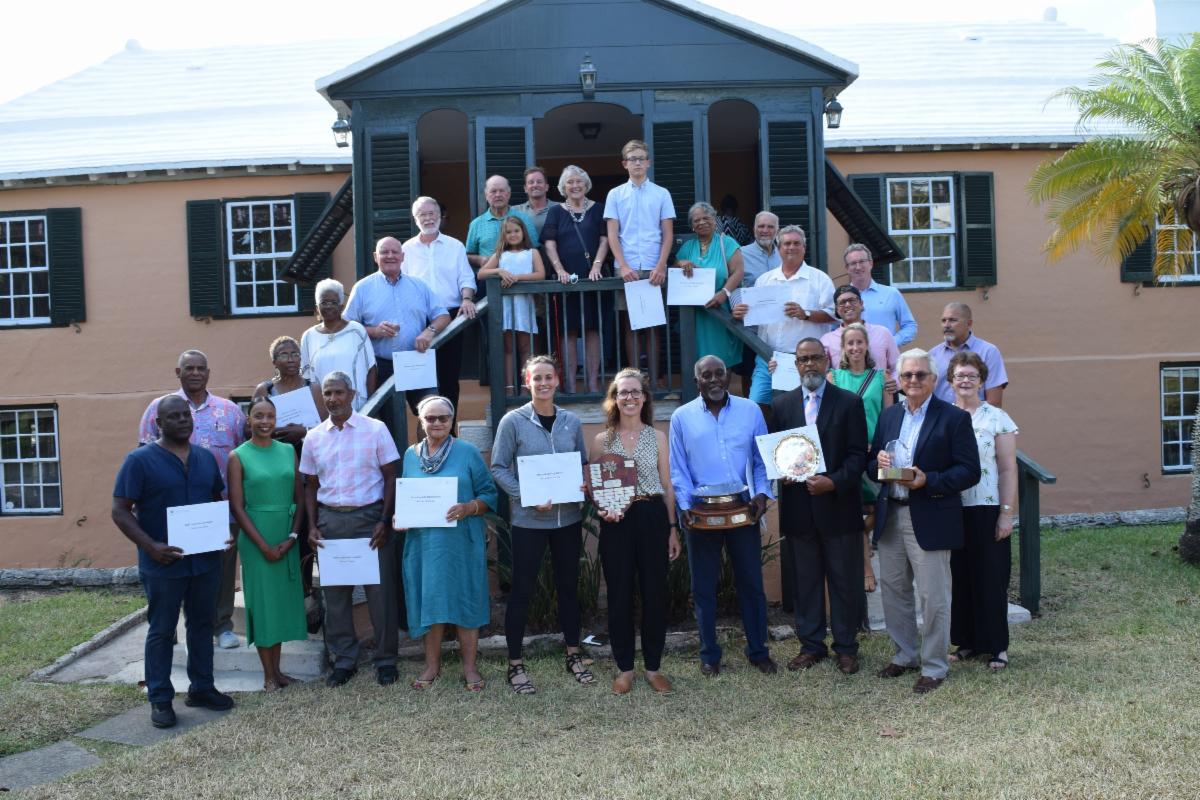
On Wednesday, 22 June, the annual heritage awards were presented by Trust President Alana Anderson at Trust Headquarters "Waterville" after a two-year gap.
The awards are presented annually to recognise individuals, organisations or groups who have worked for the benefit of Bermuda and its people, to preserve places of beauty, environmental significance or historical interest, buildings or artefacts, or animal and plant life to promote their appreciation.
Top award winners included Larry Mills, Richard Spurling, Chaplain Dr Kevin Santucci, Warwick Academy and 15-year-old Luke Foster for their contribution to Bermuda's cultural or natural heritage.
Other awards including preservation awards and awards for sensitive restorations of historic buildings were presented to the Wantley Matters Group, the St. George's Foundation, the St. George's Rotary Club, David Burrows, Dr Brent Fortenberry and Jane Ashburn, Alasdair and Rebecca Younie, with architect Geoff Parker and contractors Frank and Travis Lewis; Travis Burland and Jenne Gracie; Hugh Gillespie and Catherine Kennedy; Jordan and Rebecca Gunter; and James and Katie Berry.
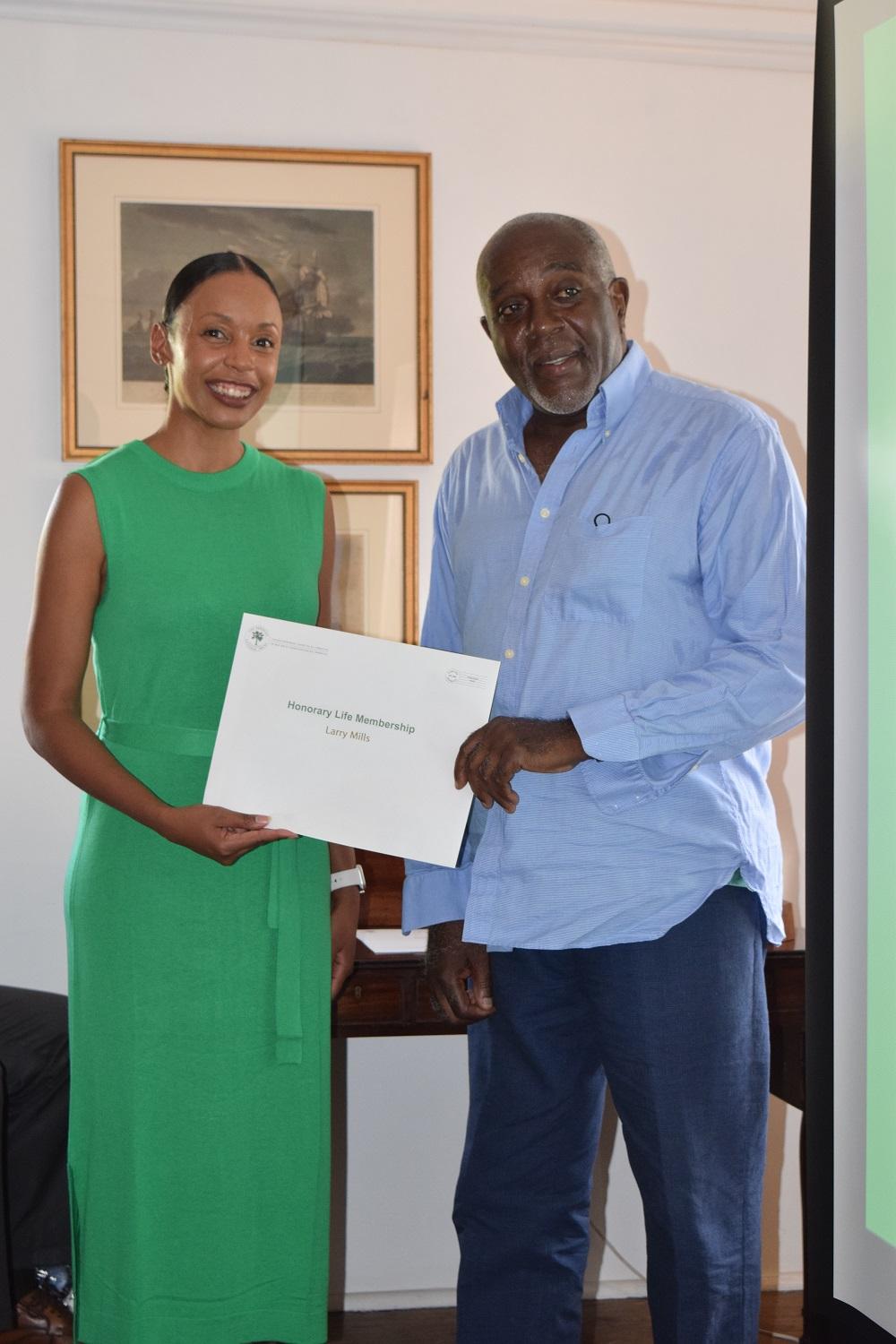
Several Honorary Life Memberships were given to individuals for their exceptional service to the Trust, including Ronnie Chameau, Alan Gorbutt, Tom James, Larry Mills, Ethel Patterson and Joy Wilson-Tucker.
Click here to read more about 2022 Annual Award Winners.
| |
The top award in the Preservation category – the Clipper Award – went to Larry Mills for his traditional building expertise and skills, and his willingness to share his knowledge with others. Larry is the acknowledged local expert on traditional Bermuda building methods. He has given many talks and demonstrations over years as well as working on many historic building conservation and restoration projects – including building the reproduction “Settler’s Cabben” at Carter House. | |  |
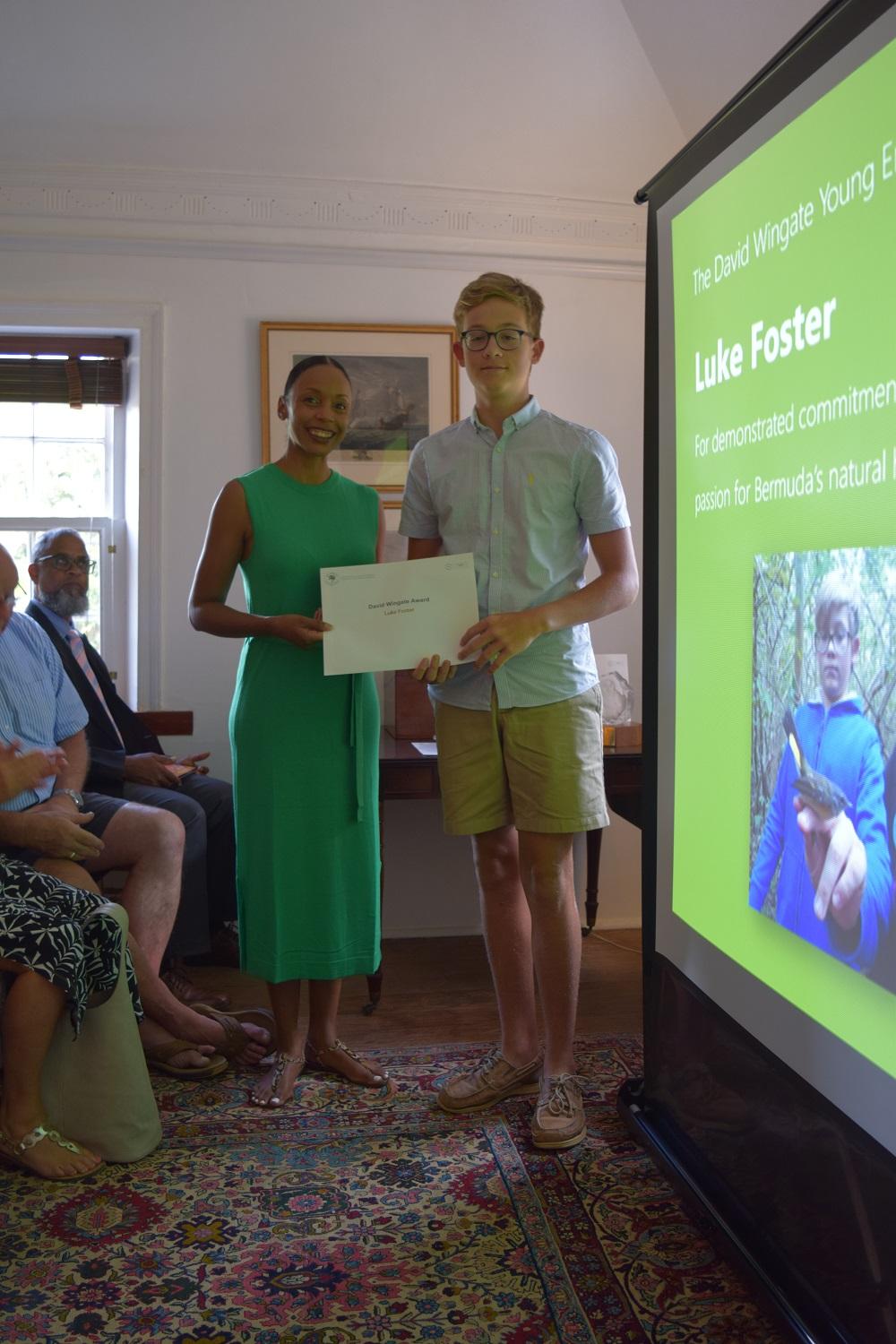
The Outstanding Young Environmentalist award was presented to Luke Foster, a 15-year-old student who has shown exceptional commitment and contribution to the preservation of Bermuda’s natural environment. Luke is a driving force within the Warwick Academy Natural History Club and an active member of the Bermuda Audubon Society. He has already made significant accomplishments as a local birder and has been tipped by David Wingate as likely to become one of Bermuda’s foremost conservationists. | |
Natural Heritage Update
Myles Darrell, Head of Natural Heritage
| |
Caring For Trees through the Summer Heat | |
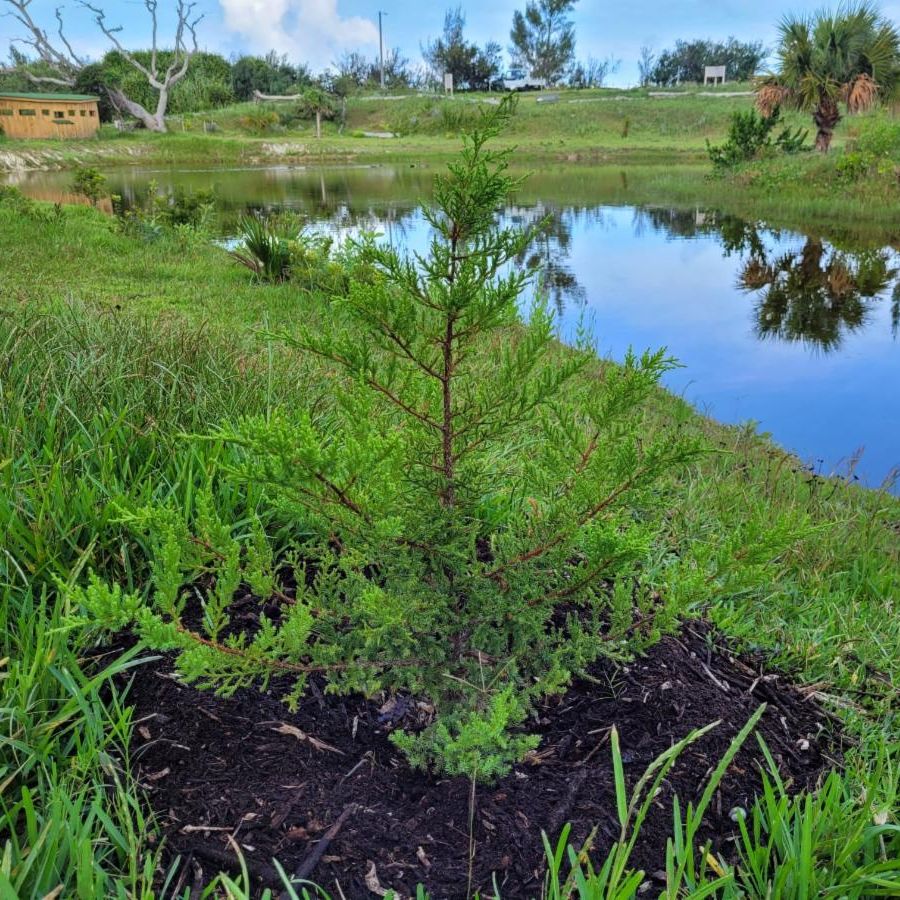
The recent drought and early tropical storm caused grave concern for all the juvenile trees planted of late. Amid drought conditions, it is important not to forget our trees, which are such valuable community amenities and resources.
Native and endemic plants have a greater capacity than introduced species to manage drought conditions, but still struggle when water is limited. For that reason, we stop planting on our reserves in the summer months, but there is still a great deal of work that can be done to keep the growth up and the momentum strong.
At this time of year, trees benefit from heavy mulching to increase moisture retention and suppress weed growth. Our native and endemic species tend not to grow a lot in the summer, while the exotic and invasive species take full advantage of the heat and sunlight to outgrow and smother where possible. Mulch is a great help to any tree, but you must apply it correctly or it could cause more problems than good. It is important that you apply the correct amount: too much mulch can draw in burrowing critters, block water and cause root rot. It’s best to spread an even amount of mulch from the trunk to the drip line of the tree so that when the sun is directly overhead all roots are fully shaded. Two to four inches of mulch laid around the tree in the shape of a donut, ensuring mulch isn’t right up against the trunk of the tree, should be sufficient.
Mulch should be reapplied every six months or so, especially in the tropics and sub tropics where soil depth tends to be limited. Mulching serves to do more than retain moisture, it also improves soil fertility and structure, encourages microbial activity, regulates temperatures, and limits erosion.
Unless you can water regularly, it’s probably too late to fertilise, as salts in fertilisers can be tough on dry roots and trees struggle to absorb nutrients in drought conditions. If you are one of the lucky ones who has water in the tank, be sure not to water directly on the trunk of trees, as this can cause root rot. It will be best to water in the early morning or evening to ensure full absorption.
Summertime brings a lot of excitement to our community and for good reason - who doesn’t want to spend more time outside, enjoy the feel of salt water on your skin and tuck into some BBQ in the shade of a Poinciana while music plays and people are dancing? But let’s not forget that when things are bubbling HOT, some of the leafy members of the community are most in need. Caring for them ensures the summer parties will continue for everyone, forever.
| |
Cultural Heritage Updates
Dr. Charlotte Andrews, Head of Cultural Heritage
| |
Enstar at Globe Museum
Corporate teambuilding connects your team and gives a huge boost to Bermuda National Trust!
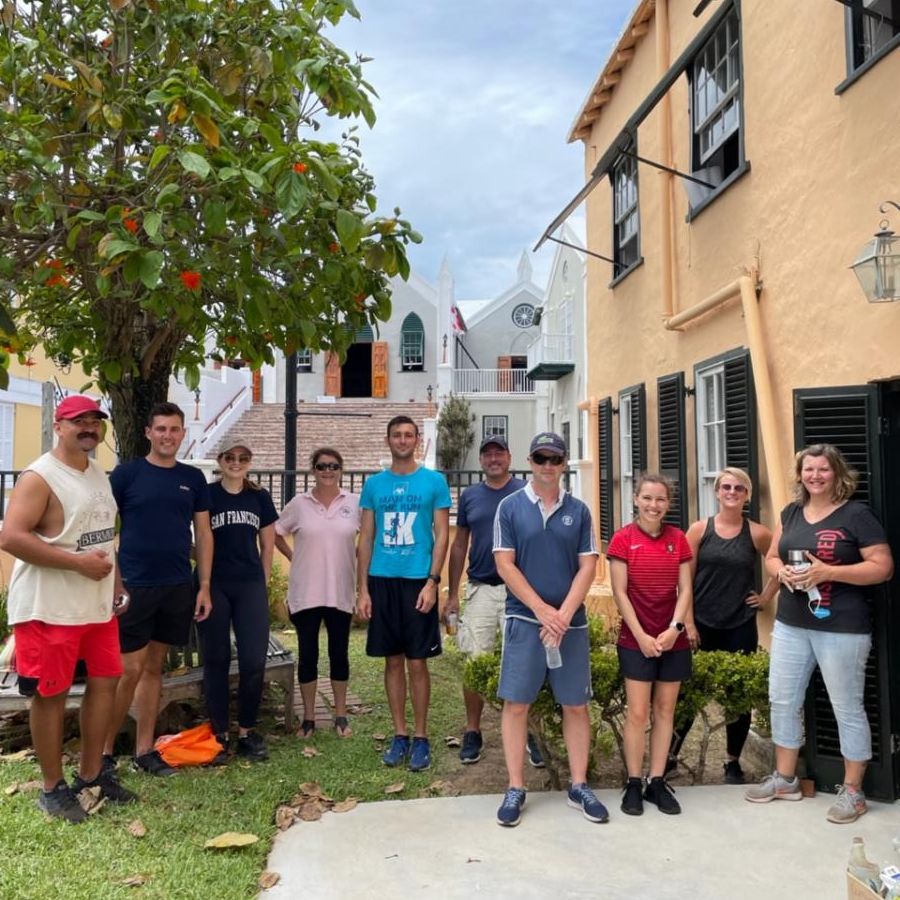
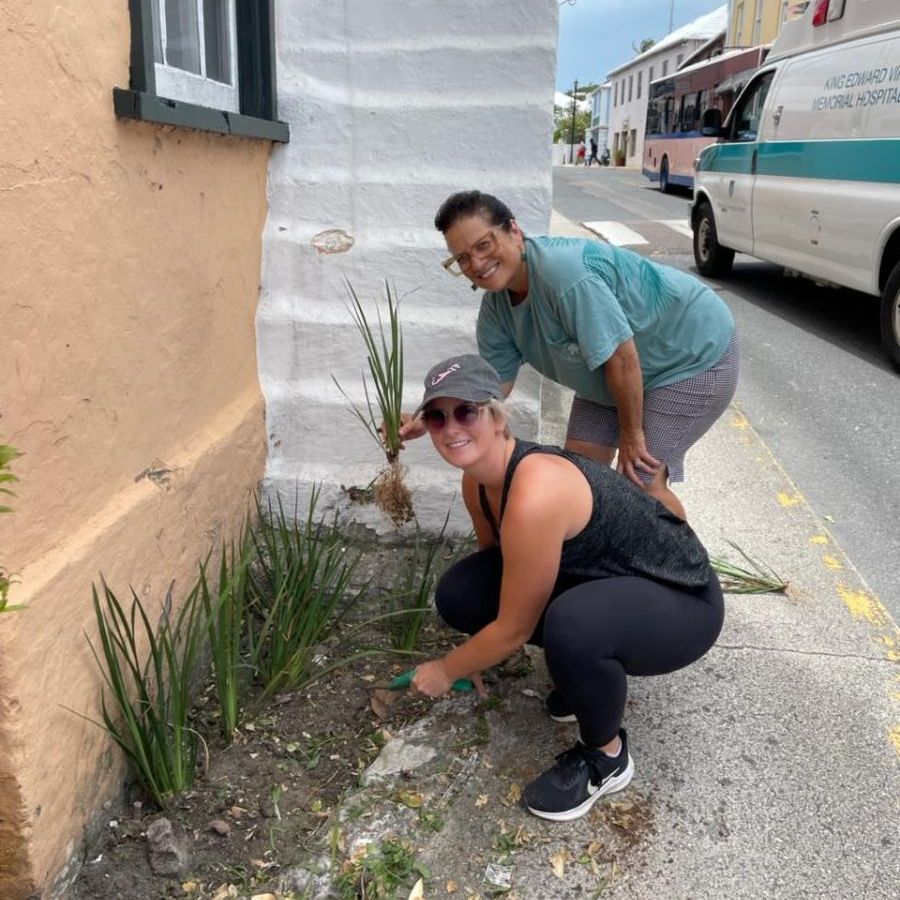
Enstar is the latest corporate team to pitch in at Trust heritage sites. Enstar employees tackled cleanup and conservation projects inside and outside the Globe museum in the heart of St. George’s—the Bermuda World Heritage Site.
The team of ten helped Dr. Charlotte Andrews, Nicky Gurret and Anna Stevenson to tackle projects the Trust’s small team has been trying to knock out. Enstar also provided a generous donation to the Trust to cover our staff time, museum and gardening supplies, and because they recognise the value such teambuilding provides.
Thank you Enstar for making a real difference to the Bermuda National Trust and our heritage mission!
| |
|
Waterville's chiseled and welcoming arms | |
|
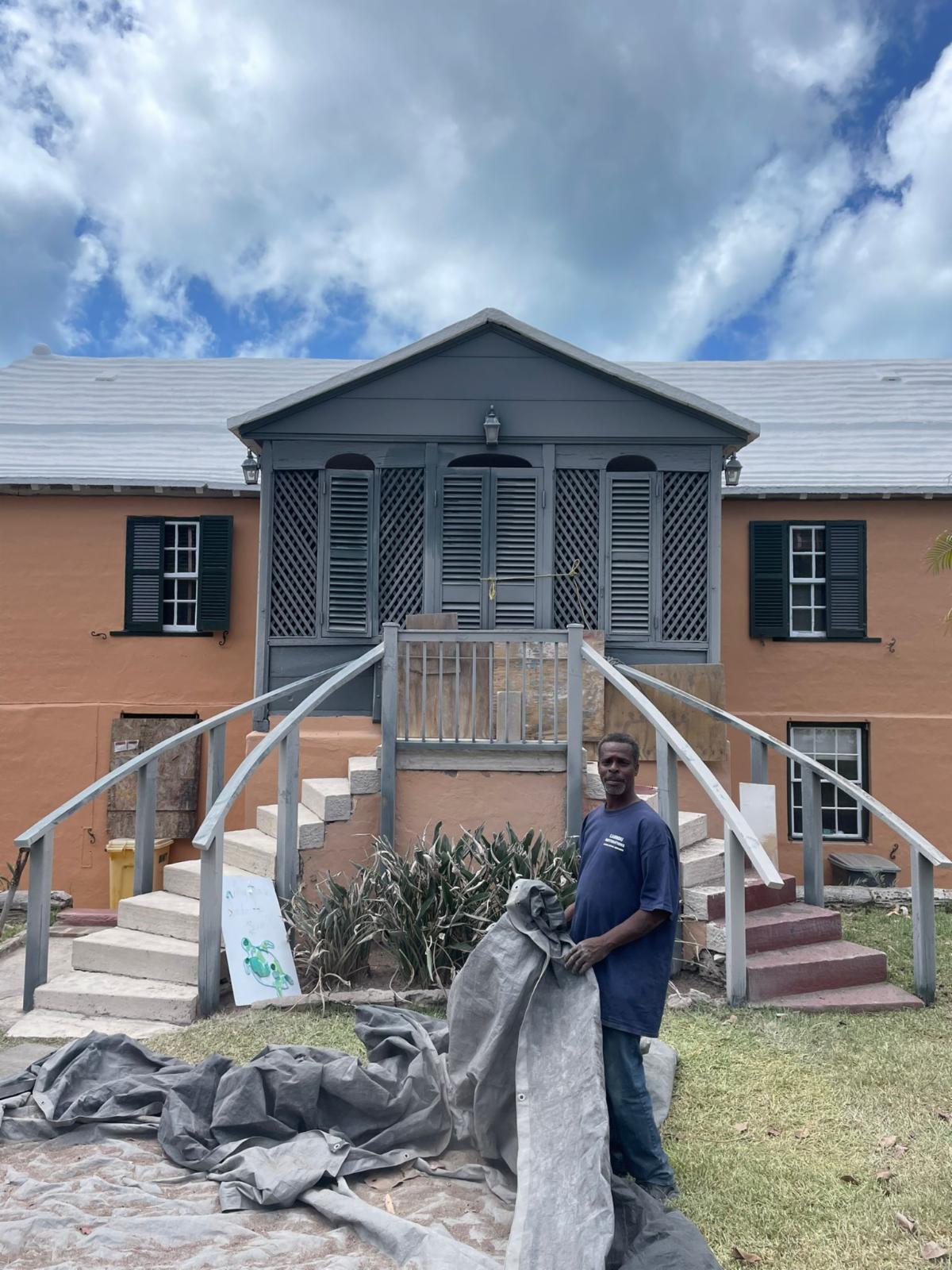
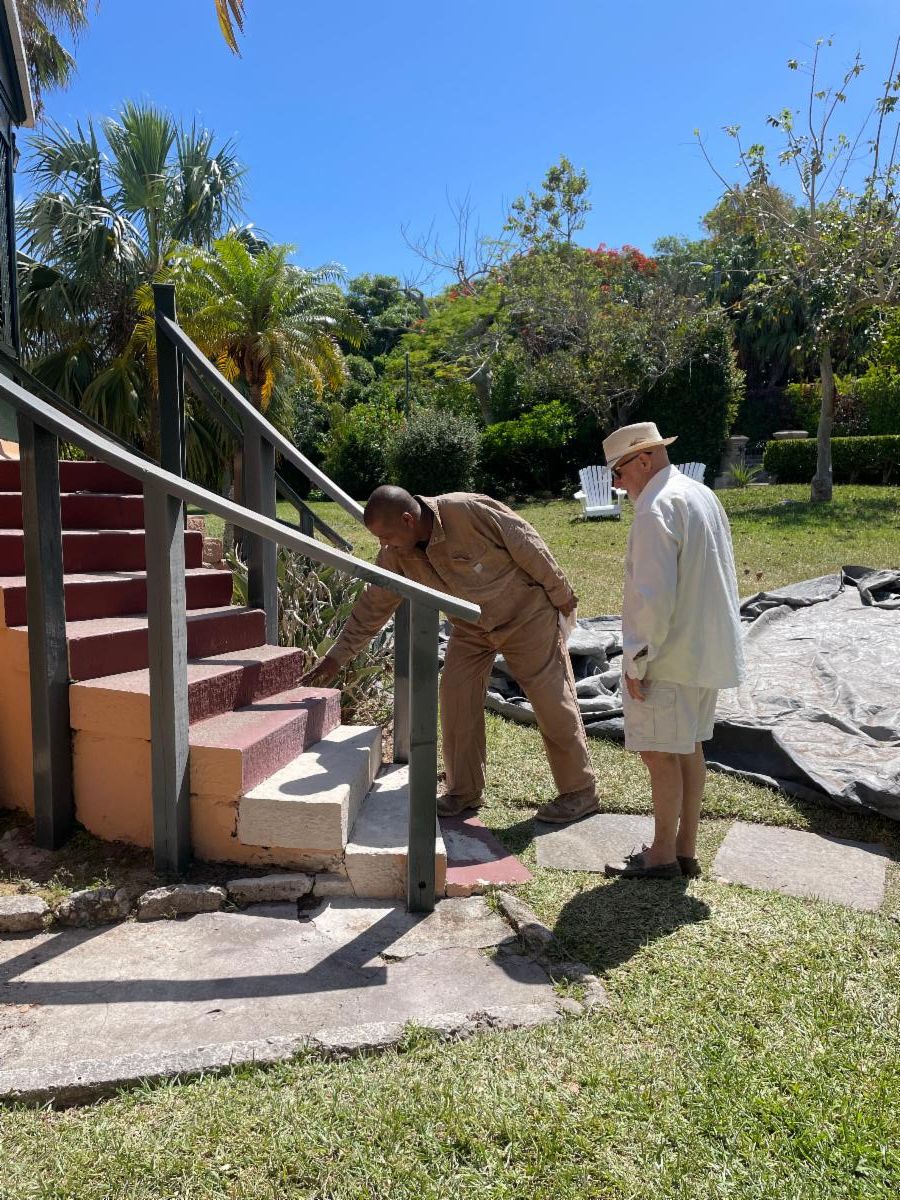
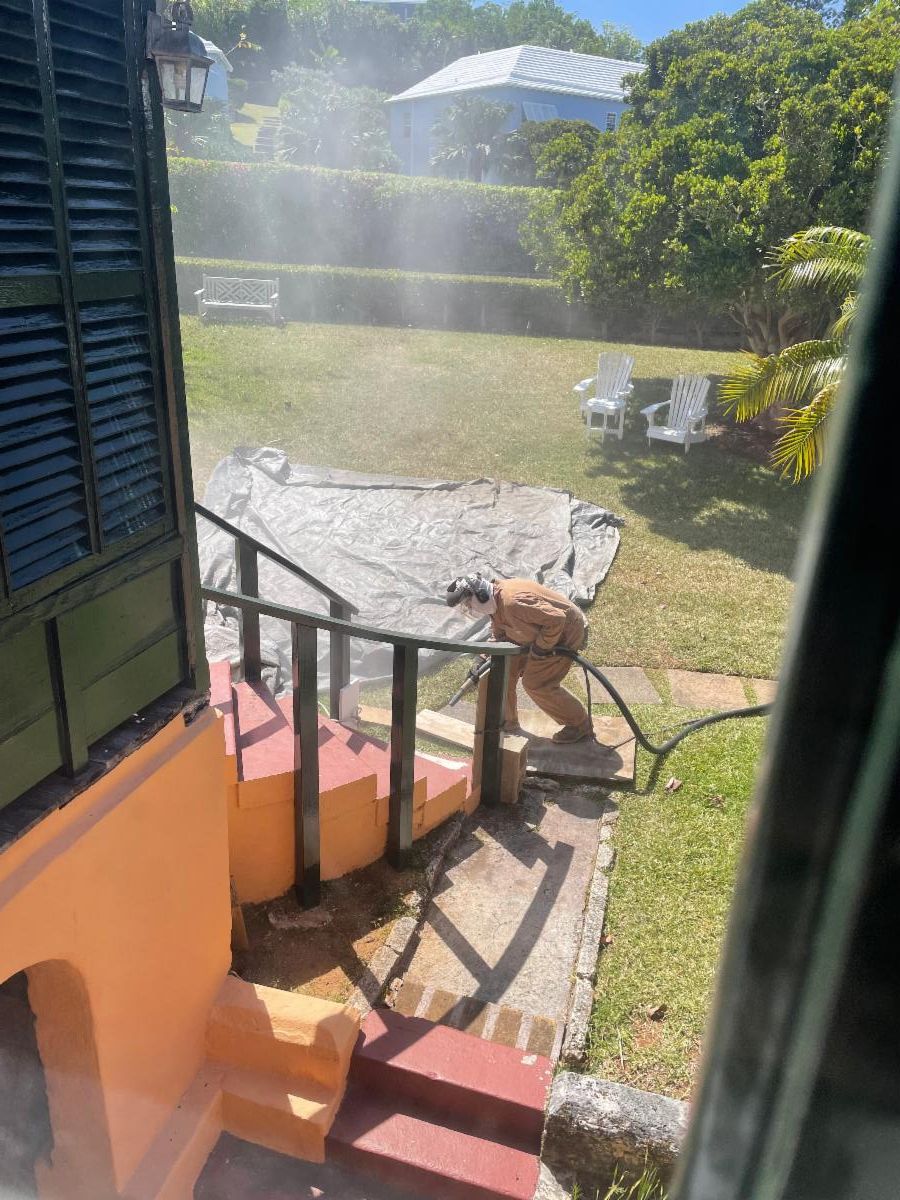
As Waterville is undergoing an exterior facelift, Pete Schindel of Bermuda Brickyard encouraged Head of Property & Facilities Nicky Gurret to see what lay beneath the red paint on the front steps.
In keeping with the first law of conservation to ‘do no harm’, Dr. Charlotte Andrews consulted built heritage experts Dr. Edward Harris, Larry Mills and Dr. Brent Fortenberry. Following Dr. Harris’ on-site inspection of a sandblasted test step, he confirmed that they are made of whole slabs of very hard Bermuda limestone (distinct from the soft limestone of many Bermuda homes). Once we were confident that the stonework would not be damaged by sandblasting, Canndu Restorations was given the go-ahead to expose all the steps. Embedded shells, corals and pink beach sand showcase the stone’s half-a-million year old geology.
The sandblasting revealed the original workmanship of the steps, which were hand carved from enormous slabs blasted out with gunpowder. Chisel marks are clear, including the standard technique of ‘scabbling’ with a ‘drafted margin’ on the side panels of the steps. Dr. Harris suspects the Waterville steps were relocated from another Bermuda historic building, most likely from the Dockyard or a military camp at Prospect or in St. George’s.
| |
|
Garrison Hospital (now Chelsea Apartments),
11 Redcoat Lane, St George’s
| |
|
This is part of a series of architectural articles by the Bermuda National Trust to highlight some of Bermuda's endangered historic buildings.
by Linda Abend and Margie Lloyd
| |
|
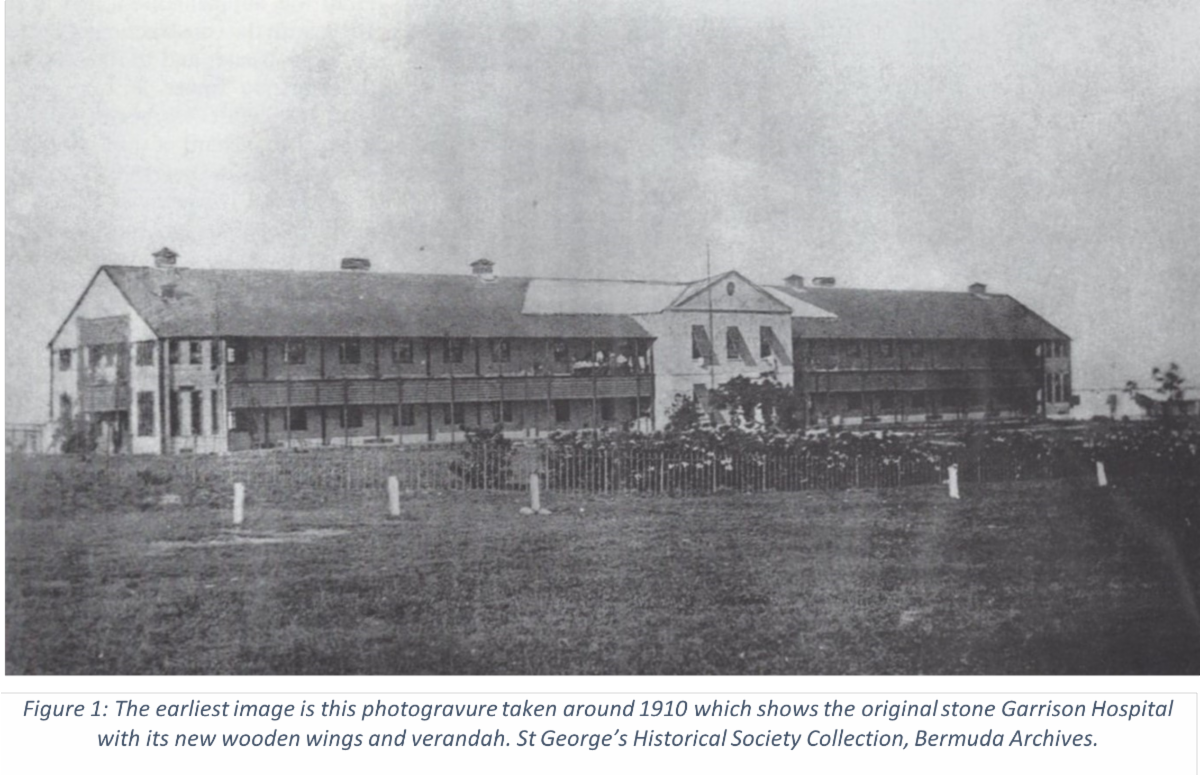
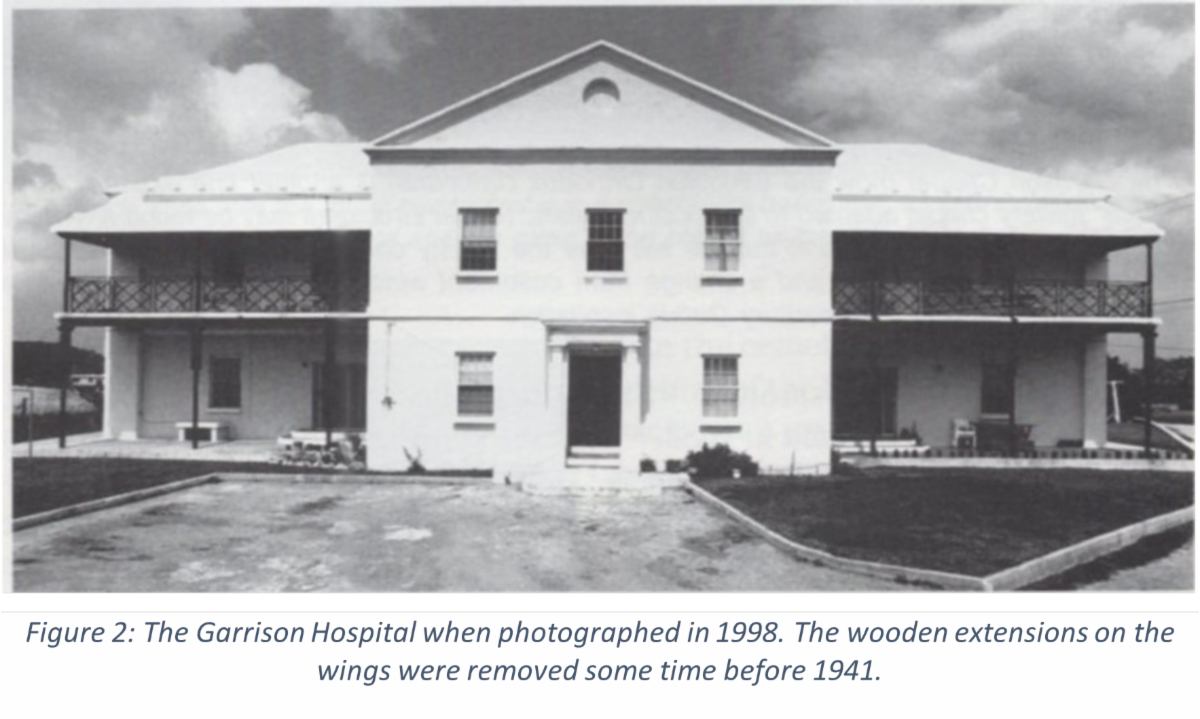
Located to the east of what once was the Royal Barracks with views of the sea on one side and the parade ground on the other is the old Garrison Hospital. It was built away from the barracks to prevent the spread of infectious diseases and to benefit from the ocean breezes then thought to be essential to the recovery of invalids. The Garrison Hospital was the largest and the last of the four military hospitals in St George’s and was built around 1819 on nine acres purchased from the Honourable Joseph Hutchison. A Member of Council and the health officer for the port of St George’s, Hutchison sold the War Department another ten-acre tract in 1830 before he returned to England.
The new hospital was intended to cope with the yellow fever epidemic which was proving particularly devastating to garrison personnel. It is interesting to compare the sentiment of some then to some in our current Covid situation today. When the Bermuda Gazette of 23 October 1819 reported that the number of deaths had exceeded 250, it was accused of an “invidious attempt to exaggerate the destructive effects of fever … and having no scruples of injuring the mercantile interests of St George’s”.
Click here to read the full article.
| |
An Update from our Maintenance Team | |
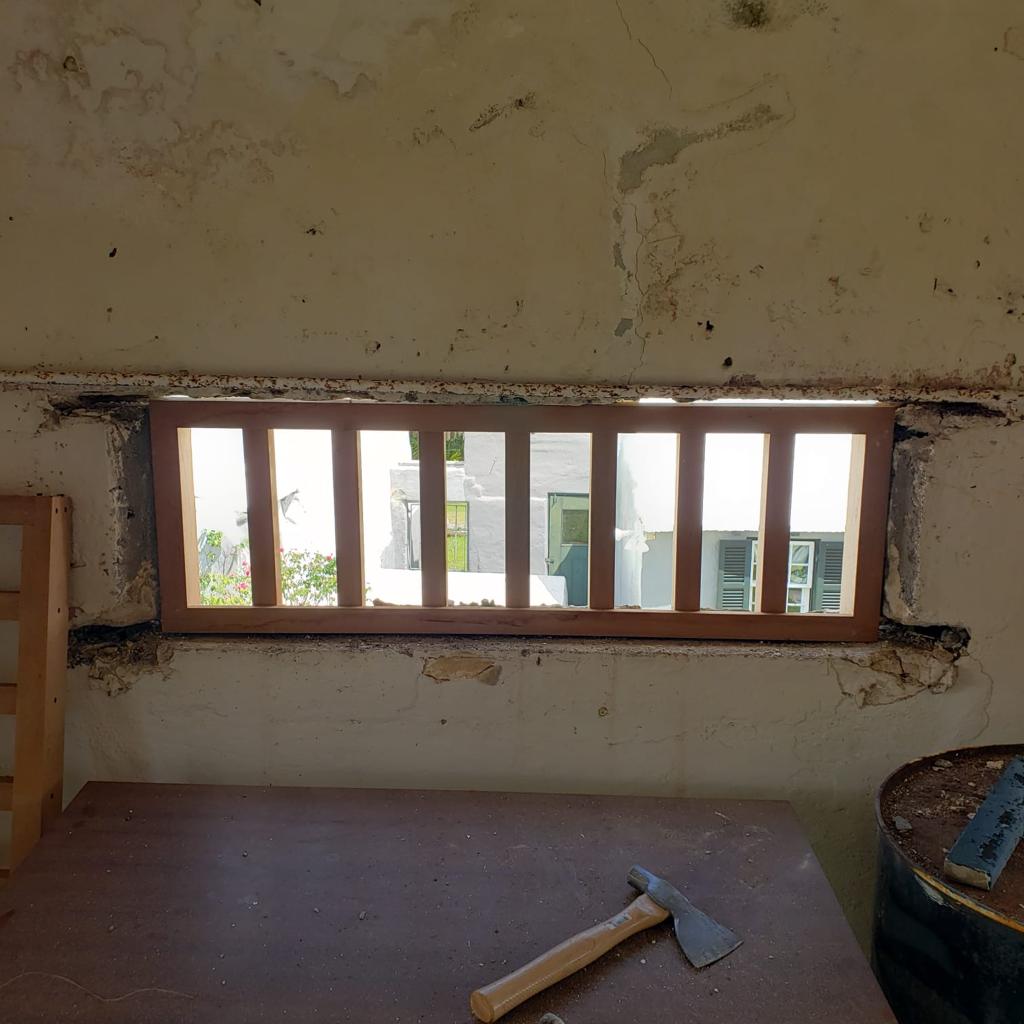
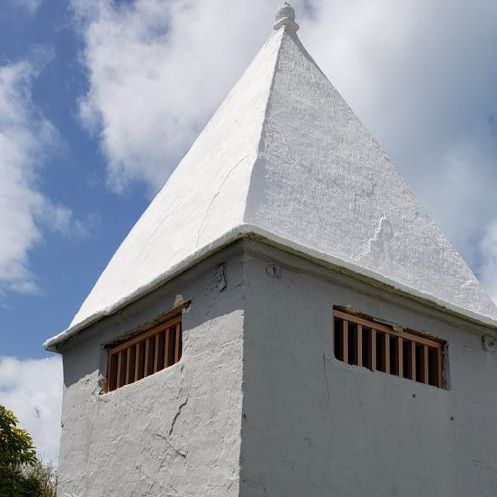
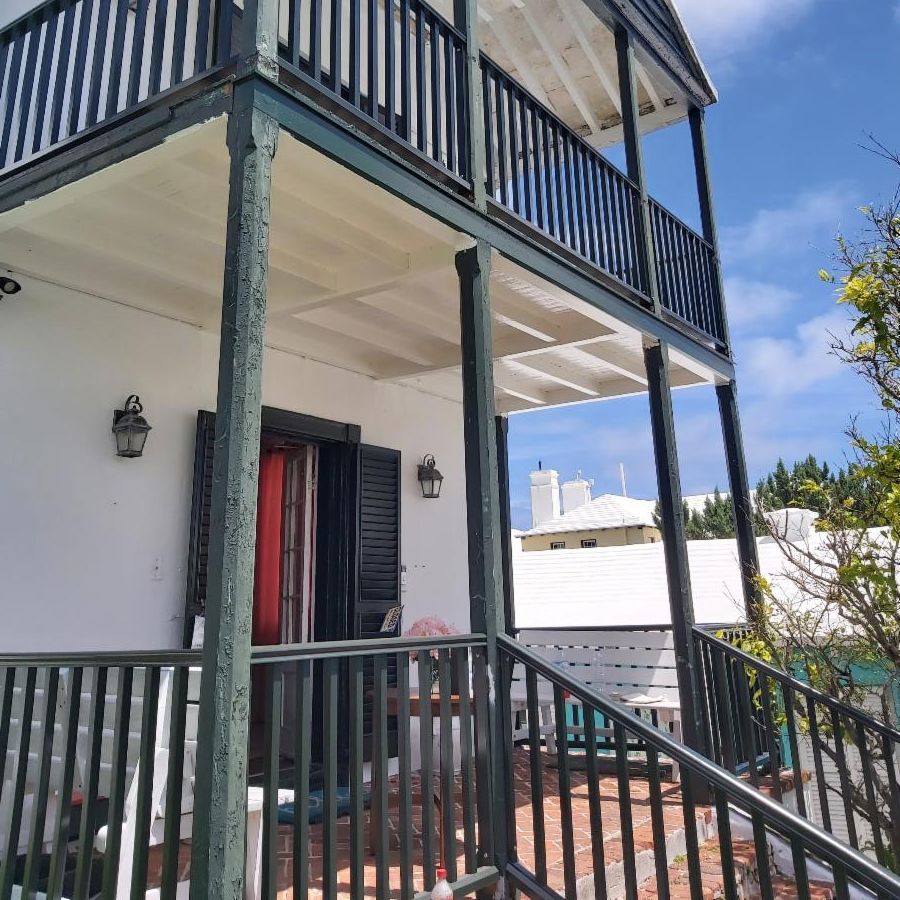
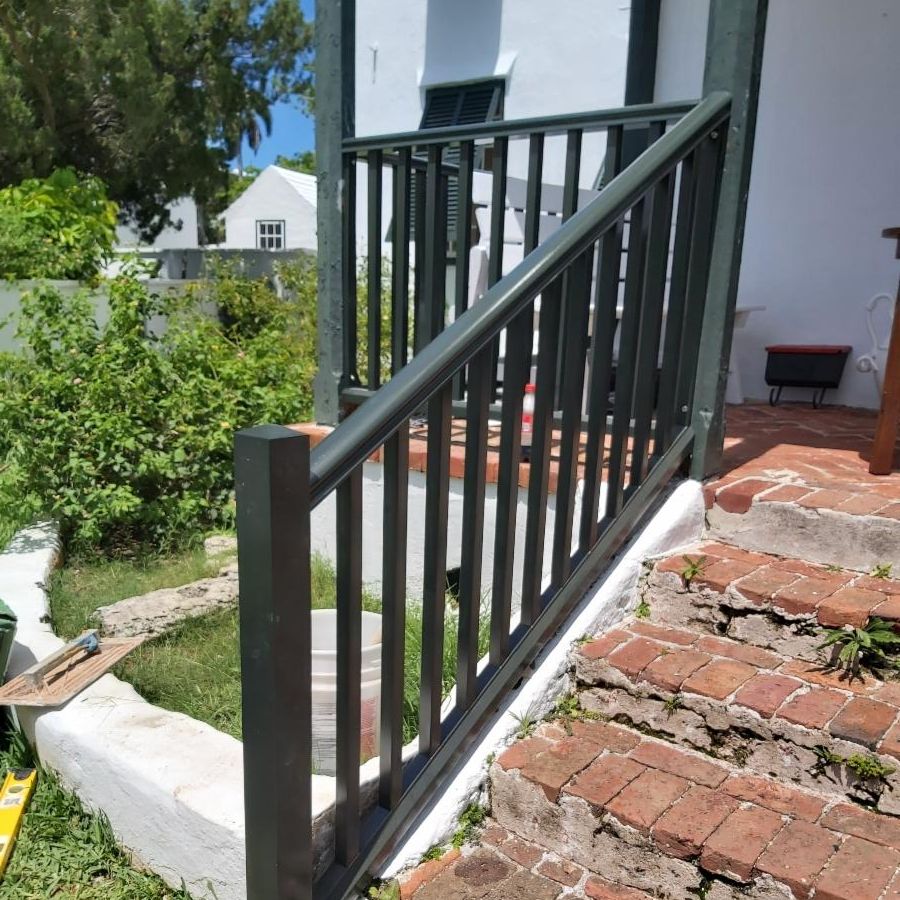
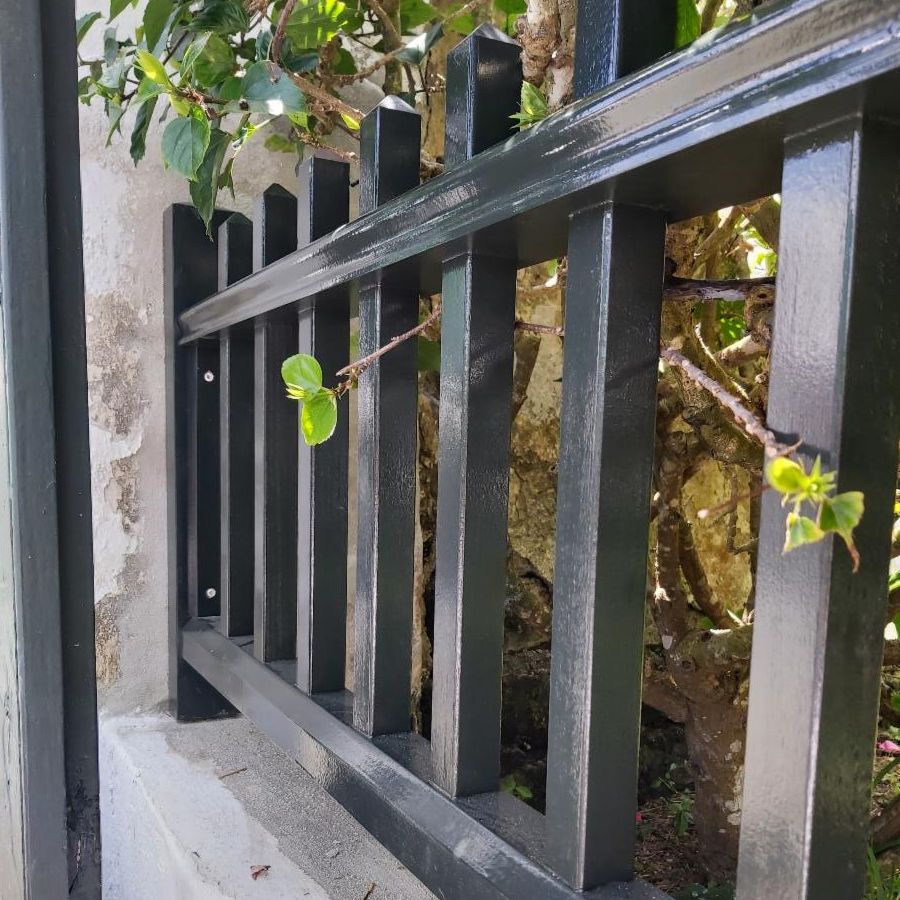
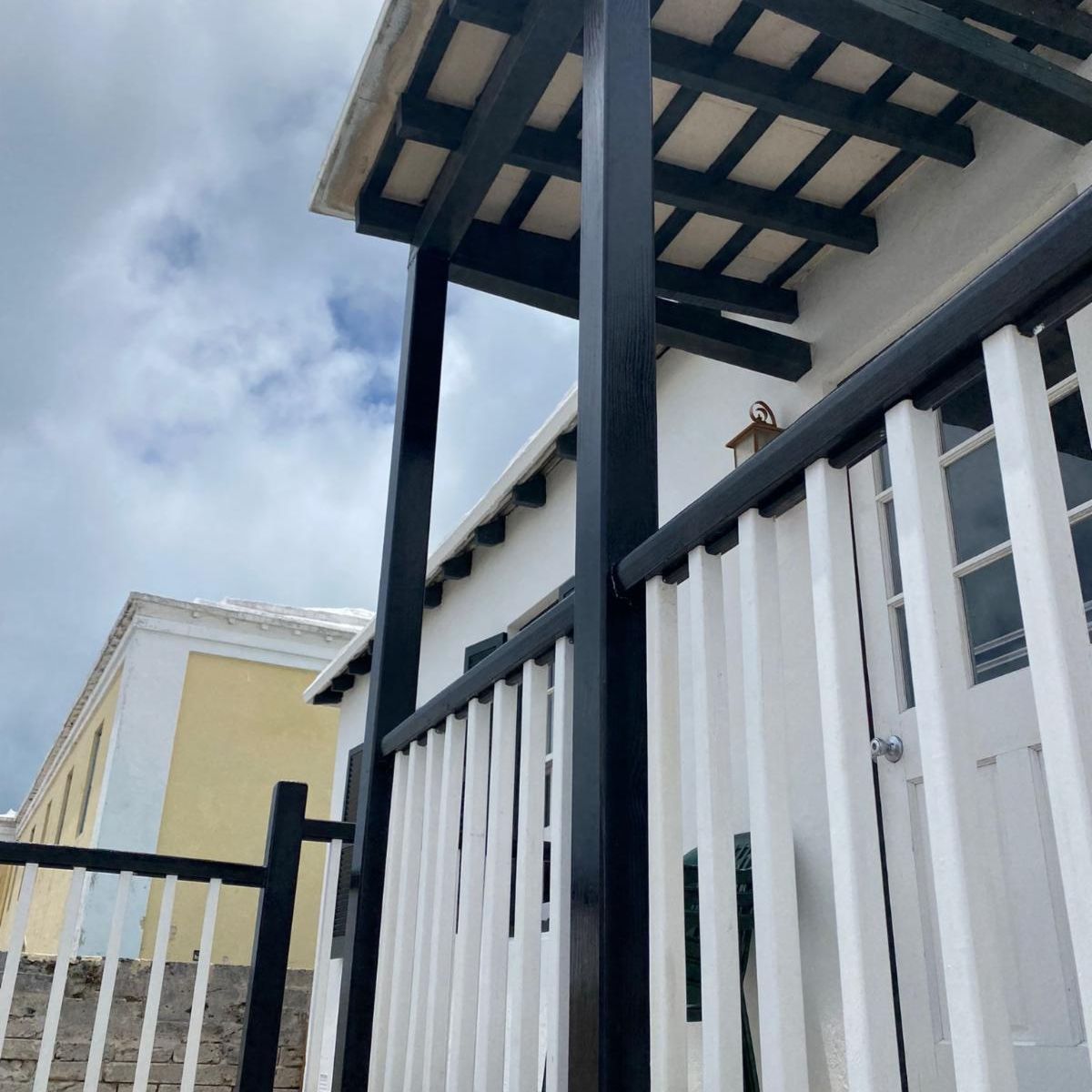
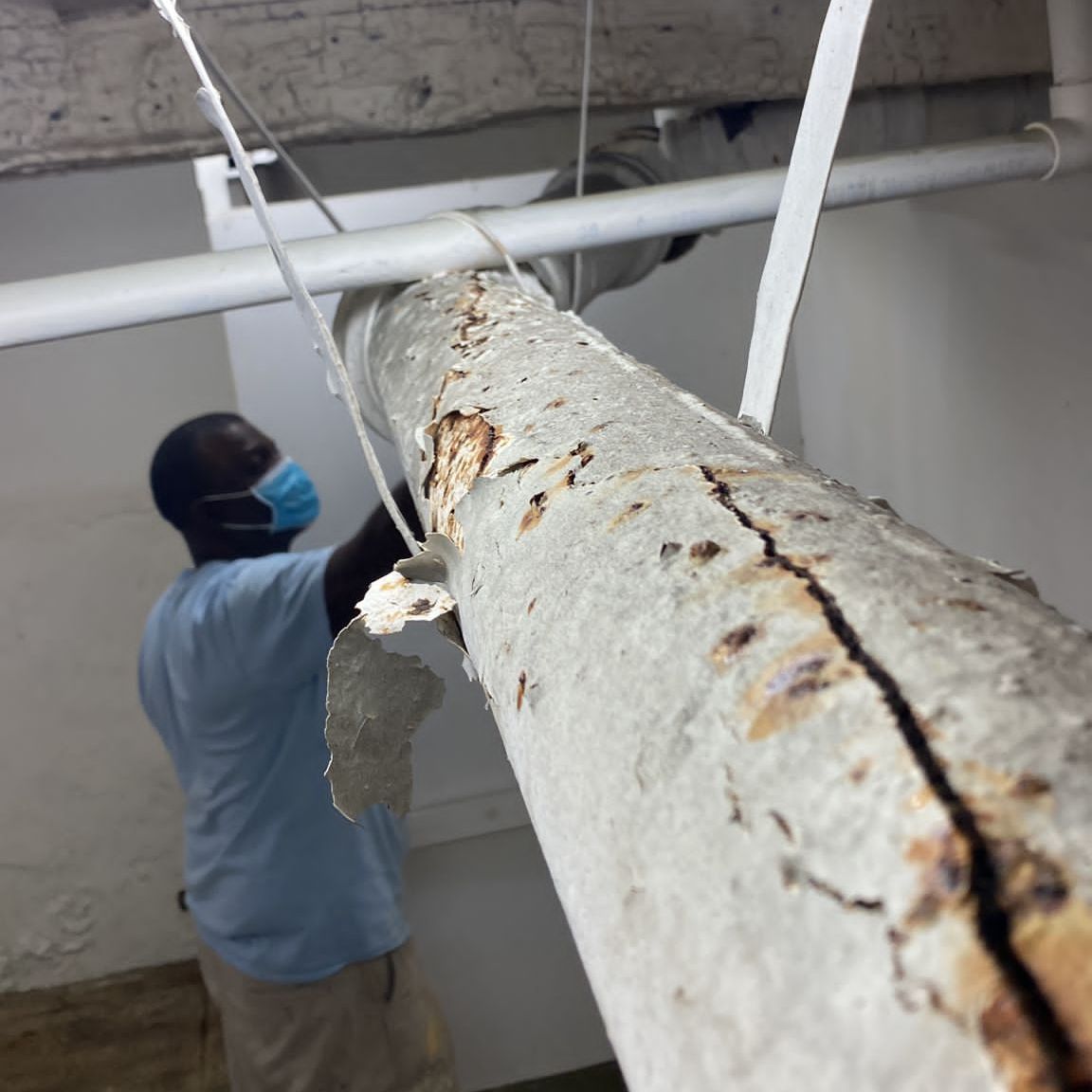
Our Maintenance team put a lot of effort into maintaining our properties. Here are some highlights of some of the work they have accomplished over the past month, some in collaboration with outside contractors. | |
The windows at the Springfield buttery have been replaced by Allan Van Putten and Jeremy Smith. | |
The wooden railings at Bridge House were replaced recently by CNC Carpentry, and still need some finishing touches along the entry gate, which will also be replaced. | |
The unsafe and rotten wooden railings at Davenport Cottage have been replaced with new wood railings by Foggo Carpentry. | | |
The Globe Hotel Museum has had the cast iron pipes removed and replaced with PVC pipes. | |
|
Trustworthy Gift Shop at the Globe Hotel
Open 11:00 am – 2:00 pm, Wednesdays and Thursdays.
You’ll find lots of great gift ideas at Trustworthy – locally made items, Bermuda National Trust merchandise, Bermuda cedar, cards, books, ceramics, candleholders, ornaments, games and much more. Trustworthy is run by volunteers and the proceeds go directly towards preserving Bermuda’s natural and cultural heritage.
| |
The Bermuda National Trust | bnt.bm | |
| | | |